On Courage

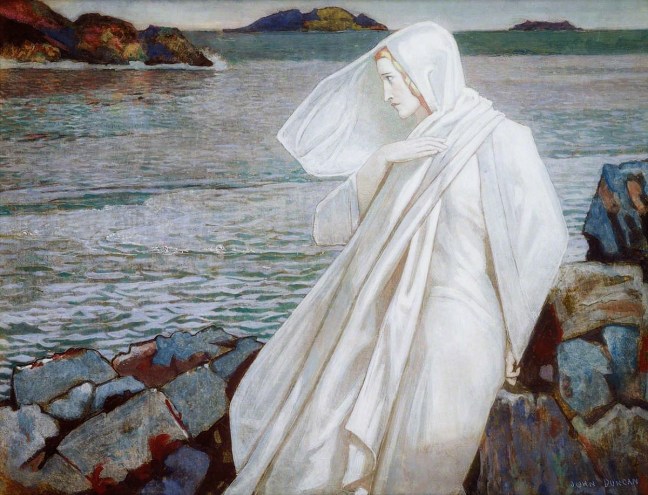
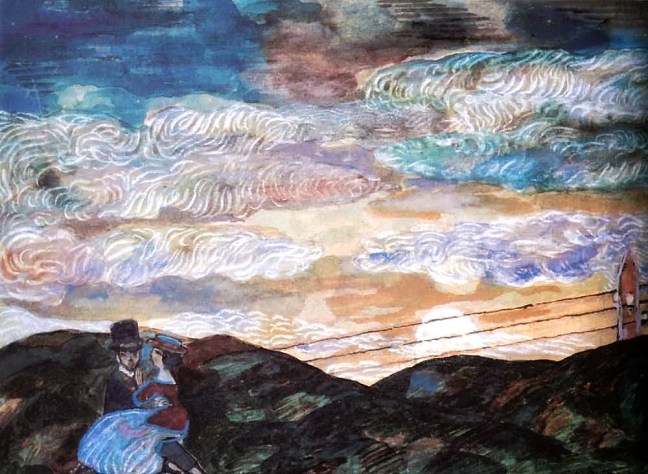
‘The Turn of the Tide’ – John Duncan – WikiArt

Not to suffer is not as desirable as we like to proclaim. We have mixed feelings towards our agonies and traumas. In fact, we have come to like the beastly thing. Suffering has given us many of the things we cherish in our life. Suffering has given us the hopes that we love to entertain, the pleasures we have developed as a routine of escape, and all the little addictions we enjoy in secret. It has shaped our drives and the nature of our beloved possessions. And our best friendships may have developed as a result of this beating pang in our heart. So this is not easy to let suffering go. A lot will go with it that is like the backbone of our beloved self. Being at peace and happy comes with a price.

There is some identity in our suffering, where is hidden a private treasure that we’d rather keep and nurture. If we are honest, we have to confess that our wounds have made us what we are, have formed the self that we believe we are, the personality that we have come to befriend. We haven’t fought our suffering with constancy, and have come to collude with it, socialise, associate, fraternise. We have indulged in every bit of it. We have surprised ourself having feelings for our pain, entertaining a secret love affair with everything that bites us. So to end suffering requires clarity and courage. For we won’t abandon a dream so easily, or put an end to a pleasure without balking. We need to be convinced. Our road to true happiness is paved with reluctance. We have a natural and well-rehearsed resistance to bliss.

[…]

Reflecting on how courage is found at the heart of ourself… (READ MORE…)

.

The Ultimate

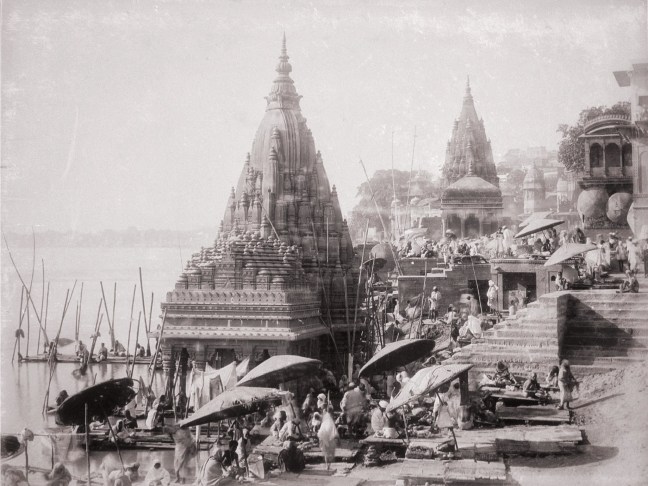
‘Benares, Temple of Tarhishwara or Well of Manikarankia – Samuel Bourne, 1860 – Wikimedia

The thing in ourself that has the capacity to know anything is itself not a thing. We can only exist in relation to things, but only the state of no-thing can we ever truly be. The illusion that we are something separate, a self — whatever we are — is due to the knowing of an object. When no such objective knowing is being activated, then there is no necessity to be anything. There is no purpose in being a self. The being that we appear to be is realised as void. And without a self to know them, things have no support for their reality. Within that perspective, all things dis-appear, are swallowed back into no-thingness, into where they have never ceased to be. This ultimate realisation is in fact not a realisation. It is the ultimate truth contained in simply being, when all duality has been nipped in the bud, unable to show any reality as such, lost in a being so subjective that nothing can be there which could be formed and recognised as ‘other’. This is the end of form. It is the state of no-thing that cannot be spoken of. It can only be approached, envisaged, but never lived as an objective experience, or from the position of an experiencer. It is the timeless, objectless point where the moth dis-appears into the flame of being. Its identity as ‘moth’ has been dis-qualified from itself to never be formed again. Now engulfed into the very no-thing that we are when all objectivity has dis-appeared, we are left with being, our pure essence, where no form could ever be formed. This is in fact, paradoxically, how a world, a thought, anything, can seem to appear — through the intercession of formlessness. This place is where we can never go. This thing is what we can never be. World, thought, self, death, bondage, liberation, are only the gaming of god, or infinite being, with no reality of their own. Only at the point of un-being, of coming to an end, can we ever be true, ultimate being. This is what ‘ultimate’ in fact means: ‘to come to an end’. To cease being anything is the ultimate truth of life. What is left is pure, essential, unqualified, infinite being, where no self or world could ever come to be. This, truly, is the ultimate. That ultimate, because of its purity, can bear in itself the illusion of being coloured or stained; because of its essentiality, can be divided in an endless chain of cause and effect; because of its unqualified nature, can adopt any form or quality; in reason of its unknowability, can be known through a multiplicity of names; and because of its infinite nature, can be seemingly separated as a multitude. And it does this without ever ceasing to be the ultimate. Now, know in all occasions that you are not a suffering self lost in the multitude, with a name, a form, and qualities — an entity living in a world, endlessly caught in multiple, arbitrary causes and effects. Know only being as your ultimate, uncreated self. There only is the abode of peace.

.

~~~

Text by Alain Joly

Photograph by Samuel Bourne (1834-1912)

~~~

.

Website:
Samuel Bourne (Wikipedia)

Suggestion:
Other ‘Ways of Being’ from the blog…

.

Remembrance

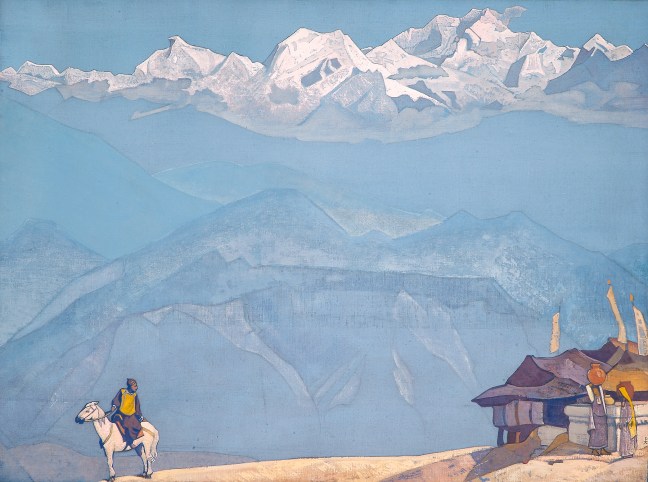
‘Remember’ – Nicholas Roerich, 1924 – WikiArt

All the things that stand out in us, and that we finally believe to be us — our story — are the rugged parts of our existence. They are what we fear or project. What we separate from and refuse to embrace. What we identify with and refuse to let go. What we have used for our identity, to shape our person, and draw some pride and contentment, or some shame and resentment. All the same. We are the children of circumstances and failures, of successes and apparent choices. Of sufferings. So we have shaped ourself with and from what we are not — from what we can remember and hook on. From events and ideas. From what can give us a form and a semblance of reality. But with all these, we are left only with what doesn’t truly satisfy us, doesn’t quench our thirst, doesn’t make us a rock but only a fragile, elusive entity. There is more to us than story and existence. There is what we cannot remember and make a story of. What we cannot fit into the shape of a person. What we have left unnoticed in the interstices of our life.

Why is it, do you think, that we often have difficulty remembering the happiest parts of our lives, which tend to disappear into thin air? Why cannot we seize happiness? Why is it that we seem to disappear in it and with it? That the best part of what we are, is the part less remembered and graspable? We tend to emphasise the foreground, the highlights, what exists, appears, and disappears. We have little consideration for what stands behind, unnoticed — the still, silent, benevolent matrix of it all. The unfathomable that we are, with its indomitable nature. That which lends a ground to all forms and appearances, including time and space. That which is not an object in our experience. Which is not an idea or a representation. Which is alive and can only be felt in and as the depth of our being. Which has the solidity of a rock that can never be moved. Which will never be a person, never have accidents, never be shamed or shaped by circumstances or events. This most profound nature of our being holds for us the peace and happiness which we are seeking in the foreground. We borrow the happiest parts of our existence to our own nature, while thinking it lies in chances and accidents.

If this nature of ourself is not felt, we will live with fear and lack. So this is our worthiest remembrance. This is where we have to be. To live as that field of being is to remember our nature as the rock-like essence of all beings, things and events. Then, this sublime identity that we have found ourself to be will matter more than any life achievement or result. It will be like the air we breathe. It is ourself seen in the conscious light of our being. In this, happiness is prevailing because it is the very colour of being. In fact, happiness is devouring our old self, which is why and how we as a separate entity disappear every time we feel at peace and content. Peace becomes our very identity — the eternal, ever-present nature of our being. Life then puts on the clothes of clarity and well-being, and our self deserts the ruggedness of the eventful life of time and place. What we ‘remember’, according to the etymology, is what we ‘call to mind’. So we ought to be cautious of what we remember or forget. That will condition our being happy or miserable.

.

~~~

Text by Alain Joly

Painting by Nicholas Roerich (1874-1947)

~~~

.

Website:
Nicholas Roerich (Wikipedia)

Suggestion:
Other ‘Ways of Being’ from the blog…

.

Creep

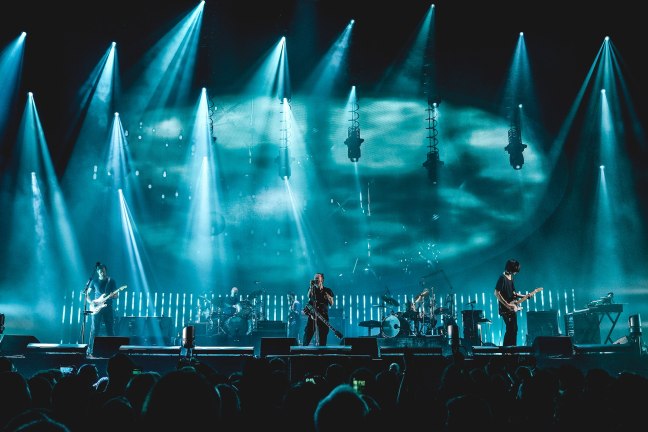
‘Radiohead @ TD Garden (Boston, MA)’ – by Kenny Sun – Wikimedia

I wonder if you have ever seen the face of love, what loving indifference is? I have some days ago, while watching a concert by Radiohead on the internet. It was during the band’s most celebrated hit, called ‘Creep’. This song is the stage of an unrequited love. But I suggest it goes further than that. It is the story of a rage, of not being enough. We all have lived through expectations that were turned down. We all have made efforts that didn’t pay off. We all want to feel special, to belong, to be at peace. We abhor being behind ourself, faking our contentment and control. So we all have known this feeling of being a ‘creep’, or at least of not being good enough. That’s why we live so hectically, constantly looking for better and more, wanting to feel complete, enough at last. Maybe that’s why the song happened to be such a hit, beyond its obvious musical qualities: it is like an echo of the secret battle we are engaged in, of our quiet desperation, and of our repeated attempt to put an end to our suffering.

I was watching the song being played, the singer yelling its rage amongst the gnashing saturated blasts coming from Jonny Greenwood’s guitar, lights illuminating the stage like a flash of lightning would. Then it surprised me. For just a few seconds, the camera caught in the public a young woman whose attitude was quiet, mildly concerned, but deeply tuned to herself. Everybody around her was involved, shouting, dancing, taking their share, drawing their identity and happiness from the vibes of the music. But she was not. Didn’t need to. Her need was to be quiet. Peace was her home. Beauty was where she was, and where she had landed on. She was tasting her being. She was taking it all in, but with a peaceful, loving indifference. For her, separation had been slain, and she had become a silent watcher, a taster of being, a madonna.

There was no need for her to dance and shout the lyrics of her favourite Radiohead song, for she dwelled in silence. It was all taking place somewhere else, in a placeless place where time was nowhere to been seen or experienced. All our objects of adoration are never the point, are never the goal. They are the means to feel and taste in ourself this most profound sense of peaceful being that is always here, always now with us, and that we miss in reason of our obsessive attachment to objects, with their derived outcomes and rewards. When the love or enthusiasm for an object — a song, a piece of art, a football match — is brought to its paroxysm, we merge with it, and in this merging forget our own person. This forgetting is the stage set for a meeting with ourself, for an encounter with our own silent being. We feel what we could call, a paradoxical serenity. So the pleasure of the senses is never the object of our desire, and never what our seeking is about. We are after something more elusive, the harder catch that is our own being. We long for this profound sense of peace and security that lives there as our identity. This serenity is not dependent on circumstances, but lies naturally in and as our most intimate being. This pure being is our true identity, and is in fact what we are really seeking behind all our pleasure oriented pursuits. Pleasure can never be a match to being. Pleasure is but the child of separation, while being is the realisation of our deepest identity as love, and its expression as oneness.

Love takes over experience. Love dominates experience, it brings it down to its knees, reveals what it is made of. Experience appears to be of secondary importance, not because it is not important, but because its importance lies in the light that shines on it and gives it its reality and meaning. We cease to be personally involved. We are just present, and this presence is our most precious and efficient involvement. We are indifferent not because we do not care, but in reason of the preeminence of love in our heart, with its acute, unfocused awareness. Love responds to the whole. There is no personal self present, that feels separate and insecure, fearing and seeking. That one is absent, leaving all the place to the quality of simply being, with no preferences in it, but with a total, impersonal, peaceful engagement. This peace is the most profound signature or identity contained in every experience that we go through. To recognise the nature of ourself as peaceful being, is to recognise the nature of experience as that one same peaceful being. We will never have to complain: ‘I wish I was special’. Never have to say: ‘I don’t belong here’. In love, there is no being a creep.

.

~~~

Text by Alain Joly

Photo by Kenny Sun (Wikimedia)

~~~

.

Website:
Creep (Radiohead Song) (Wikipedia)

Suggestion:
Other ‘Ways of Being’ from the blog…

.

The Formula of Life

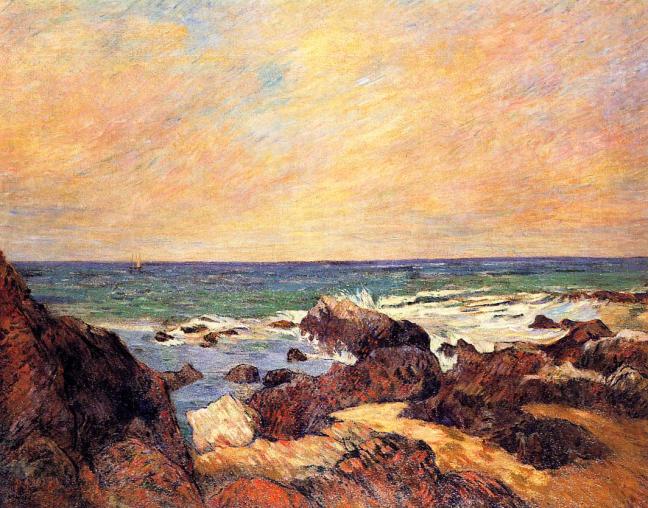
‘Rocks and sea’ – Paul Gauguin, 1886 – WikiArt

There is something mathematical about the spiritual life. You need to get the formula right, which is simply to recognise being as your one only identity. Simply being, with no addition to it. Concentrated being. If you cannot recognise yourself as that, then life will bounce back at you in endless, nasty, different ways. You will be made into somebody frail, vulnerable, suffering. Out of your failure at being who you truly are, you will draw an idea of who you are, a belief in being a separate entity, identifying yourself with your body-mind. This invented self is a diminution of your real identity. It has, inscribed in its very making, an imbalance, a lack. You will feel small, incomplete, at the mercy of beliefs and images, assailed by objects. You will be made uncertain, needy, a seeker of your lost identity. So you will then receive many of your experiences as a threat, as something that can hurt you, diminish you. That’s how fear arises, out of incompleteness, when there is a flaw in the equation of being. You are as to say behind yourself, mistaken. You have failed at just being, and are now being this and that. You have lost your anchor for a trip into objectivity. You have exchanged wholeness for separation.

Now you look everywhere frantically for something to complete you, and you find it a hundred times, in a passing object, in a success, an achievement, a bout of luck, a relationship. But these are fake friends that will fail you. For there is nothing here in the objective world that can match being. Dissatisfaction will hover over you again and again, no matter how many objective goals you may set your heart on, and attain. You will never resolve that equation. A flaw will remain, and your life formula will be left empty of meaning, unable to find its resolution. These objects that were your hope for fulfilment will finally come biting at you, for they are but the tricks that you have used as an escape from yourself. They are your being that you have let down, and split apart. They are your means to mend and repair yourself. But to project yourself in objects is to hope, expect, envy, and open the door to endless suffering. This wound is the sign of your incompleteness, the symptom of your failure at recognising your true identity. Every neglect or rejection of your true nature creates openings where experience will come and stand in front of you as something to be afraid of, or to desire. So you are never safe, never alone. It all comes back to you as a mirror of your own insufficiency.

Remember that you will attract to yourself everything that you cannot hold as your own, and understand. To be at peace in this life is a very simple matter. It lies in only one experience, which is the experience of being. Being is your universal health insurance. Being is your completeness, and therefore your well-being. If you don’t own in and as yourself your well-being, if you fail to occupy the totality of your experience — finding safety there — then you will be assailed by life. Experience will send its soldiers at you, which are but all that you cannot hold or recognise as being your own being. Hurt, confusion, fear, misunderstanding will become your usual, well-rehearsed environment, that you will accept as normal. They will become the weapons that turn against you every time you don’t fully integrate experience as the very blood and bones of infinite being. So don’t let experiences down, to live on their own, lost, clothed in separation and enmity. The enmity of experience is of your own making. You are responsible for what hits you or heals you. And you have in yourself, as yourself, the remedy for every hurt or suffering that overcome you. You have in and as your own being the ability to feel whole, complete, self-satisfied. There lies your natural competence at living. This is how you have experience always on your side, like a friend that you never fail to embrace. This is how you complete the formula of life — through clarity and brightness of being.

.

~~~

Text by Alain Joly

Painting by Paul Gauguin (1848-1903)

~~~

.

Website:
Paul Gauguin (Wikipedia)

Suggestion:
Other ‘Ways of Being’ from the blog…

.

Twisted Rainbow

‘Hope’ (detail) – George Frederick Watts, 1886 – WikiArt

Unhappiness is a strange thing, for against all appearances, and under serious investigation, it is not really found. We are making it up as we go along. In fact, there is no such thing as an absence of happiness. Yet we are nurturing this absence with great consistency, designing our so called unhappiness with care, through our thoughts, our memory, our attachments, our stubborn persistence. But only try to experience its effects outside your thoughts and feelings, in the absence of your mind, and you’d have to confess that you can’t find here anything like a misery. The reason is: unhappiness is not a thing in itself. It is veiled happiness. It is the covering up of your innate peace. It is past residues and future expectations tossing the tranquillity of the now. But all such disturbances, discomforts, or distresses, are always only temporary events, passing weathers distracting us from what is always here, always faithful, always to be trusted: the peace contained in simply being. This peace is in fact the very making and backbone of our lives, its solid background. It could never leave you no matter how hard you may try. Its not being felt is a form of snobbery. You have missed your innate joy in reason of your not looking in the right place. You have neglected your true, natural being for wanting to be somebody. You have been scorning yourself out of vainglory. In fact, unhappiness is but the simple mourning of a loved one who is missed: our true self. It is but a distraction from the boredom of our ignorance. Or a warning for a wrong turn taken.

Unhappiness is not found in physical pain, or in the natural grief following a loss. These are all compatible with happiness, as is a shared, compassionate sorrow. These are wise and healthy responses to life situations and challenges. Unhappiness is of a different nature. It is more like a habit or an indulgence. Often, we would rather be unhappy than shatter a well-rehearsed idea of ourself, in which we have invested our most cherished identity. Unhappiness is also the result of a fallacy, and a form of delusion. It is a shadow which we nourish through our belief in being a person caught between seeking and resisting, and the reward of fulfilment. Unhappiness is only as real as our limited self is. One will follow the other both in death and in birth. So really, unhappiness is a self-inflicted pain. In a way, we could say that it is a sin. It is ourself being driven away from our happy, forgotten nature, and bound to the suffering self which we have identified ourself with. It is our twisted rainbow in the sky of ignorance, that appears naturally without being truly there. It is created by the rain of all our renouncements, of our constant search for security and approval, through accumulation and avoidance. So next time you meet some measure of unhappiness in your life, don’t believe it. Don’t be caught up and allured by its convincing appearance. See through it until you find its referent. See that unhappiness is not real as affliction or suffering. It only exists as the sum of all that hinders the happiness which is the nature of your self as being. Your misery may in fact only be a passing, unassuming thought, maybe an innocent, unchallenged belief, or just a feeling hovering about, which you are taking too seriously. Not very much really. Hardly enough to send you far and away from the delight of simply being.

.

~~~

Text by Alain Joly

Painting by George Frederic Watts (1817-1904)

~~~

.

Websites:
George Frederic Watts ( Wikipedia)
Hope (Watts) (Wikipedia)

Suggestion:
– Other ‘Reveries’ from the blog…

.
Divine Presence

‘Dance at Moulin de la Galette’ – Pierre-Auguste Renoir, 1876 – WikiArt

You know sometime truth has its ways and character. You may be quietly sitting at home in silence, listening to some wise teaching. You may want to feel this unconditioned essence of yourself with your eyes closed, within — oh so within! — and feel enclosed in your beautiful, limitless, eternal self. But that appears to be difficult, not quite the day for it, not quite where you want to be. The ‘I am’ door is making a squeaky sound. Today is to see the face of god in all and everything, out in the world. Today is for the car horns and the smell of exhaust fumes. Today is for being in love with the cigarette butt lying in the gutter at the bus stop, and seeing that there is no more, no less here of presence than there is in the melodious swaying of trees in the summer breeze. Today is to feel my essence borrowed by the facades of buildings and by a nearby, wandering canal. It is to feel my own being shared with all passing strangers — oh, so many friends everywhere! — and with an inquisitive pigeon, or a happy dog coming along. Today is for being a seer and a hearer of beauty. It is for a wedding with truth, in the church of experience. It is for the world marrying its presence with freedom and ease, to the presence of my self. Today is to feel with my hands and eyes and ears, that the whole temple of life, from the hard matter-like objects to the thin air caressing my cheeks, and to the pregnancy of sounds — all that is produced by the senses — is but empty of its own substance, and full of the silent, pristine, ethereal presence of the divine.

Another day may present you with something entirely different. You may find yourself wearied by the world out there and crossed with experience. You may want to be at home, simply at home, and take a long journey within, to be taken into the purity contained in being only being. Today is for sitting quietly and for closing your eyes. It is for the feeling of being — unmixed, unadulterated, whole and held within. It is for the seeing of my interior, where thoughts now come one after the other, to die of their natural death. It is to feel that there is here a space which is ready to welcome my all, and has the power to look and to embrace. Today is for letting my feelings melt in the safe harbour of my being, and for marrying my sensations to the infinite space that contains them. It is wholly for the wondrous feeling that I am. Alone. Pregnant. The one that brings all identifications back to their original womb of presence. Today is to be without characteristics of any sort, and to bathe in emptiness and anonymity. It is for the caress of being, and for the never ending gaze towards infinity. Today is for the merriness in my heart, at the wedding of my self with the eternal now. It is to be showered with the knowing of my reality, and to have my being anointed with the peace contained within it. Today is for a honeymoon with my loving essence, and for a sacred communion with the nameless. It is to feel my own substance full of the silent, pristine, ethereal presence of the divine.

.

~~~

Text by Alain Joly

Painting by Pierre-Auguste Renoir (1841-1919)

~~~

.

Website:
– Pierre-Auguste Renoir (Wikipedia)

Suggestion:
– Other ‘Reveries’ from the blog…

.