Our Last Delusion

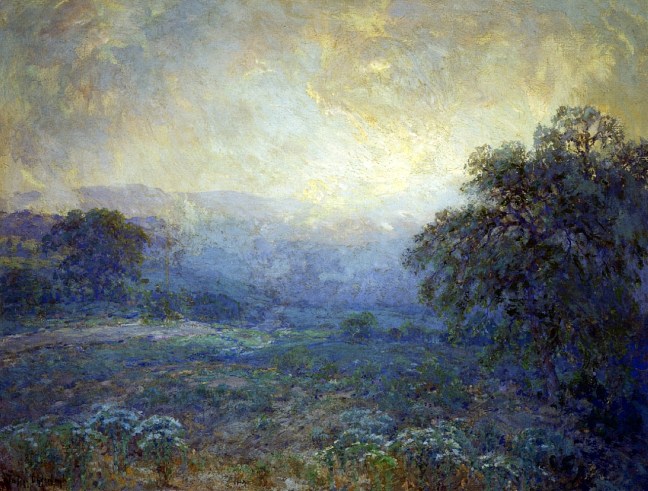
‘Løvsprett’ – Frits Thaulow, 1889 – Wikimedia

You won’t see a world outside the confines of the mind. The world is not there as an ultimate reality. It draws its many shapes out of the limitations of mind. It is sculpted by our senses. Thoughts are giving it its colour, shaping it for the purpose of a self. We blame it for our suffering, or praise it for our happiness. But its existence is a passing, illusory one, as it is for all thoughts, and for the body.

Although we as a body live in a world of limitation and finiteness, we in truth have our stand and our anchor in the deeper, conscious reality of our own undefeatable, limitless being. Happiness in the world never comes from experiencing the world. It comes from beyond the senses, beyond experience. It comes from beauty, which is the nature of the world when it is experienced from that part of ourself that is infinite.

Contentment in our mind is not given by our thoughts and our many feelings, but through experiencing them from the peaceful nature of our deepest reality as being. To live in the world is to be lost and to know suffering, but to have the world living within ourself is to know a joy that is free and independent from the ruthlessly changing nature of experience.

So free yourself from the world; it is not where you live. Rather, have the world close to your being, and see its nature as your own. This is the way to live in the world. See that it is still of the nature of mind. That it doesn’t own its own reality, but borrows it from the infinite, from the limitless, which is the nature of yourself as being.

So everything you seemingly do, you in fact never do. What you think you are, you are not. We live in a world of imagination. In fact, we only ever live in and as a reality that is shared, and that is our very nature. There, in that reality, is found the reality of our body-mind-world. This reality is the nature of everything and everyone we encounter in experience. It is our real world, our only home.

The impression that we live in a world that has its own reality is created, believed. The belief in being a body has created the world, has made it sprout out of a duality that we have ourself made up and manipulated. Outside this belief, everything re-enters the place it has never left, and the oneness it has never been separated from: infinite, eternal, seamless being.

This reality is what there only and ever is. Nothing exists beyond it, whether it is a world, a body, or a mind. To live as a body-mind in the world is to feel separate from it. It is to see ourself as a self. It is to have the arrogance of being our own self, and to see the world and circumstances as the provider of happiness. This is why we always look for contentment, security, stability, constancy. We mimic what we are before we actually know it.

And enlightenment is sill part of the world, still part of a belief. Its reality is invented, created for the sake of a self or an ego. Enlightenment is not about being enlightened. There is no such a thing as enlightenment, unless you want to cling to the reality of yourself as a body-mind. The belief in enlightenment is our last, ultimate delusion. It belongs to a non existent world, to a non existent self.

You have been the light of yourself — of selfless being — all along, but have played within the illusion of a world and a self, therefore concealing your own reality within that illusion. Re-assign yourself to your true nature. Then it doesn’t matter what you experience. It is not in what you experience — it is in what you are. It is all there. Nothing and no one exists beyond it. You have no use of enlightenment.

.

~~~

Text by Alain Joly

Painting by Frits Thaulow (1847-1906)

~~~

.

Website:
– Frits Thaulow (Wikipedia)

Suggestion:
– Other ‘Reveries’ from the blog…

‘Come to Me’

‘Norham Castle, Sunrise’ – J.M.W. Turner, 1845 – WikiArt

Sometimes you’re left with just three words. I read them under a statue of Christ in a cathedral, three simple words from the Gospel of Matthew, but a whole teaching if you listen. “Come to Me”. There is immense simplicity and clarity in these three words. They have a vertiginous meaning, if you follow the course of their true destination. If you accept the invitation. Not from a somebody, a person that existed. Not from a God, or a Son of God. Not from anything in particular, any objective presence which you could go to. The invitation is from yourself to yourself. In fact, ‘Come to Me’ is better read as ‘Come to the me’. Go to the ‘I’. Abide in what you are, be that presence of yourself. Be just as you are — don’t add a thing to yourself, don’t play the game of projection or belief. Don’t give yourself to somebody or something that is not you. Stay right there, right in what you already are, just as you already are. But still, there is a movement implied — a solicitation, a passage from place to placeless place. It says ‘Come to Me’ for a reason. In that paradoxe is contained the totality of our spiritual endeavour.

It is not a place you have to go to, but rather the noticing of the place you are in. The beholding of your true nature. What is this ‘I’ that we stumble on every time we say ‘I’? What is this being conscious, this being aware that I am? Did we look well enough? Did we miss something that we have to come to it, take a new invitation, be encouraged? See that you have made your ‘I’ into an assumption, a pretence, an affectation, something not worth a visit, not worth a discovery or an enquiry. In fact, we have been asked to function and obey, which means to follow. The rest has been wisely swept under the carpet of belief or religion. As if we had already discovered everything about what we are. As if consciousness wasn’t worth a second look. As if from then on, for our nature, we had to rely only on imagination, belief, things fancy, whimsical, hopeful, devoid of reality. Reality has been covered — so we think. There is no new land here, no new discovery or journey within, nothing that hasn’t already been charted.

But there is a coming that is subtle to the point of not implying time or place. A coming that cannot be measured by instruments, that cannot be objectified, seen by the senses. There is a coming where we already are, but with a new light shed on it. A light that we have missed for directing it all on objects, with the complicity of the senses. So the light of what we truly are was lost in its being misdirected. Our true nature was lost in our belief in being a body, a self, a person. Our purity of being was hidden inside our fascination for qualifications and objects. Our happiness was lost in our suffering. Our peace squandered by our restless seeking. So there is a journey within. A journey with no distance to be covered. A coming to where we already are. A coming or moving into view. A becoming perceptible. A coming back to ourself.

‘Come to me’. You may discover that you have God within. That this is what the God of religion is — what they meant — the ‘I’ within, your true being. Come back to yourself. Become perceptible. Come into view. Know yourself as you are. Come into the light which you are already in. See that you are, and who you are. Abide in the purity of plainly being. Be yourself for the first time. Be ‘I Am’ alone. ‘Come to me’.

~~~

Text by Alain Joly

Painting by J. M. W. Turner (1775-1851)

~~~

Website:
– J. M. W. Turner (Wikipedia)

Suggestion:
– Other ‘Reveries’ from the blog…

The Resurrection

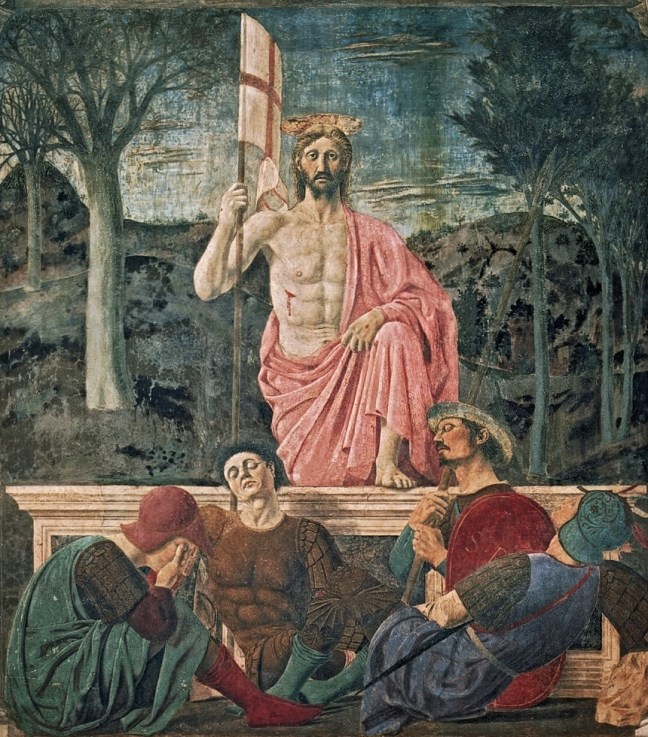
‘The Resurrection’ – Piero della Francesca, 1460 – WikiArt

There is a sleeping involved in our present living. It doesn’t seem to be so, but experience has become so habitual that it has put us in a sort of slumber, in a lethargy, so that we never feel what we are as we are. We live according to an idea, to a belief, and this idea of ourself is limiting us at every moment. It is hiding our own true, essential being in plain sight. And in this sleeping, in this ignorance of our own nature is contained all our suffering, all our many lacks, and the never ending conflicts that our life seems to harbour day after day.

Yet in our slumber is a reality that is only asking to rise to our noticing and to our knowing. It wants to resurrect. It longs to rise again. To show up after having been forgotten. It was never far — an already formed reality that we only need to remember, to re-form in its original and never diminished splendour. We have forgotten it because we overlooked that our self has been consistently made up over the years. We are the result of a long standing habit or belief. We have formed a belief of ourself, of who we are, unwaveringly, unceasingly, experience after experience, and then have forgotten that we ever did that.

We still believe to be pure, virgin, real, when we have in fact already pre-fabricated ourself, and have been soiled by experience. When the awareness of our being has been mixed, degraded, corrupted by the overwhelming presence of our senses, and by the many prints and traumas they have left in their wake. We have lost the freshness of our being to venture into time and space. We have lost our infinity for believing to be an entity, a person with personal qualities, fragilities and idiosyncrasies.

But notice that you are an already risen reality. That we have been raised eternally above the limitations of our body and mind, and have received the gift of our living in the peace of our spaceless being. We are a fully awake and never ending being, rising above all existing objects, entities, experiences. We are a being unmoved, that gives its indestructible reality for the possibility of time and place, of birth, movement, and death, but being itself unborn, immobile, and immortal.

The resurrection is the moment when we rise again, not as a body after its death, not as a mind after its dissolution, but as the unlimited nature which we are now the sons and daughters of — the undivided being that we are the being of. Our resurrection is the simple noticing of this true nature of ourself, that rises not because it was diminished or laid on the ground, but because it is eternally risen in and as our glorious being, were it not for our looking in the wrong direction, towards the only blind spot where it disappeared for a time from the slumber of our mournful gaze.

~~~

Text by Alain Joly

Painting by Piero della Francesca (1415-1492)

~~~

Websites:
– Piero della Francesca (Wikipedia)
– The Resurrection (Painting) (Wikipedia)

Suggestion:
– Other ‘Reveries’ from the blog…

‘Who Am I?’

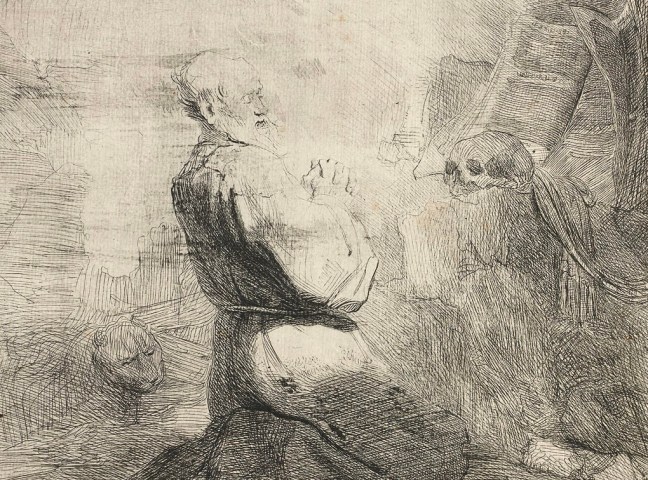
‘St. Jerome kneeling’ (detail) – Rembrandt, 1630 – WikiArt

The question of who I am is a big question. It is not being asked very often though. At least not in the way it should. We do as if. As if we all knew who we are. As if it wasn’t worth asking. As if it was a waste of time to do so. When we do ask about who we are, it is to fill ourself with objects, qualities, identities. We are gathering informations about our body, our emotions, skills, idiosyncrasies, tendencies, but not about ourself. We live as if on a racing track, never actually stopping the course of our acquired, rehearsed, believed identities. We never watch, inquire as if for the first time, as if we didn’t know. We are bragging. We don’t want to be humble, and learn about something that appears to be so simple, and goes — so we believe — without saying. But the truth is: it scares us. We are afraid to know. We have picked up, from the beginning of times, that this question is a question of immense implications. It is a deadly question. One that changes you, finishes you, shakes your very ground.

It is a question for a sacred remembering, to just notice what we already are, what is already here, but that we have been too distracted to see. It is a question to prevent us from going out all the time, from escaping ourself, to help us return to where we have always been — in the home of our inner being. It is a question for which we have to let go of our bodily refuge. A question for which we have to lose the self that has been our anchor so far. It is a question for the mind, although its answer is to be found outside every consideration of mind, thought, image, memory. It is a free fall that pushes us to look beyond our limitations, and gives us the gift of our limitlessness. It is a question with no end, not because there is no answer to it, but because the answer is a living answer, whose reality can never come to an end. It is an impossible question, for even before we have the occasion to utter it, we find it already answered through the act of our simply being.

The living answer to the question ‘Who am I?’, is ‘I Am’, which contains its own undefeatable, eternal, inescapable reality. ‘I Am’ is before the question ‘Who am I?’. ‘I Am’ is the living answer which swallows every single question on our identity. It takes us into itself, and shows our identity to be only being, a being so pure that nothing can be added to it. It is the only sacred knowledge there is, which all the words and rites of every religion have sought to deliver as the name ‘God’. A knowledge that they have failed to pass on with accuracy for going too far, and postulate outside of ourself the reality that is in fact our very own self, hiding in plain sight in and as our own aware being. So ‘Who am I?’ is a prayer that is clearing the path, recalling God in ourself in the form of ‘I Am’.

It is a question that opens the door for the peace that we have been looking for in every possible direction, except in the direction of our innermost self alone. It is a question that we ask with expectation and inquiry, and answer with the peace and joy that we find already here, beyond any expectation or understanding. It is an implicit question that we cannot help asking in the secrecy of our mind, but that we fail to form explicitly, expecting the answer to be outside our own being. It is an absolute question, that needs no other answer than going to the very aware being that initiated it, because of  its longing to be freed from everything that seems to limit it and veil it. It is our returning to what we have never ceased to be, but are failing to see for reason of looking in a thousand directions outside ourself. ‘Who am I?’ is a question that takes you to ‘I Am’, which is the only accurate description there is of our true identity. 

.

~~~

Text by Alain Joly

Painting by Rembrandt (1606-1669)

~~~

.

Website:
Rembrandt (Wikipedia)

Suggestion:
Other ‘Ways of Being’ from the blog…

.
Our Human Condition

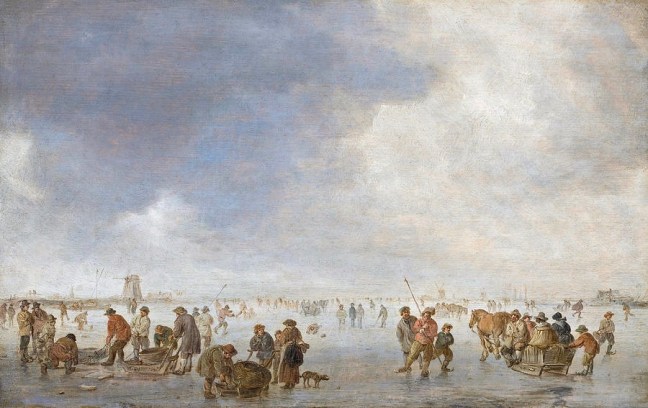
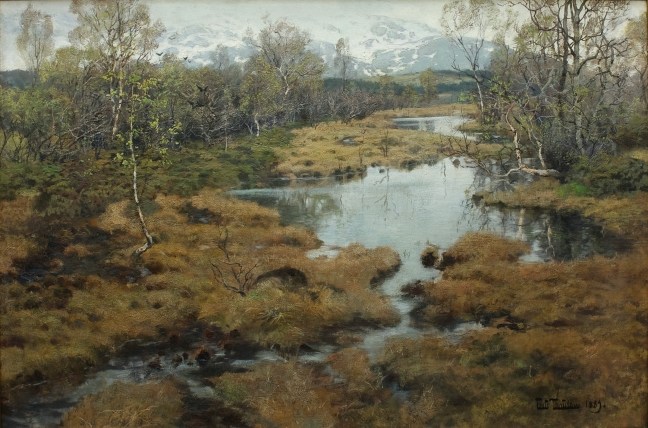
‘Winter Scene on the Ice’ – Jan van Goyen, 1641 – WikiArt

There is not a person in a thought, or in an assembly of thoughts. Not anymore than there is a person in a body or an emotion, or an activity of the body, a reaction after the emotion. These are but things that exist, but don’t make the complexity and radiance required in there being a person, an animal, or any kind of entity. This world is populated by objects, by appearances, by bodies, but not by persons or entities as such. There are no persons, nobody here that could claim to have its own, independent, separate reality. To think that there is, is an illusion, an invention, one of our many well-rehearsed thoughts.

But of course, beliefs have magic. If we believe to be a person, then we are one. If we believe that there are individuals, a world, untold suffering, then the source is obliging. It will create the reality of one such world, will give us the suffering we claim to have, will manufacture all our many conflicts, which we have come to be attached to, and to believe in. Everything is only a temporary, dreamlike appearance in and of reality, but not reality itself. The more you will believe to be a person, the more you will be one. The more consistency this person will acquire, the more suffering he or she will experience, and the more conflictual will be the world, for you have given them a reality they do not have — except for the reality of consciousness.

We have to keep knowing that we are aware, that we are awareness itself. Being a person is about knowing, not about a body, or a handful of thoughts. The body comes second to knowing. There is knowing first, and then a whole world unfolds, makes itself known. The reality of the world is in knowing, not in there being a world, not in there being a person. Knowing takes it all, wins the game. We’ve got to be aware of that. Then the world is shining. So is the person. They may not be truly here, in reality, but they shine with the transparency of knowing.

Every entity that exists, finds its reality within, from an inside experience. So to be a person is not to be a person, not in its reality. We are a person only from the vantage point of a thought, a belief, a representation, but not from inside, not from the depth of being. There, there is no person, no separation, no suffering, only the infinite body of knowing. After all, could a world with its own individual reality be harmonious or beautiful? Or is beauty or harmony conferred to the world by the grander reality of knowing? A world with its reality conferred by thoughts, beliefs, contains conflict, difficulties, suffering, for it is not recognised for what it is. We have confused the world with our misunderstanding, have rendered it an insecure place, and have made ourself an insecure person, constantly seeking its security in the insecurity of a world, which obviously is a vain enterprise.

So if there ever is to be a person, there is a person in infinity. If there ever is to be a world, there is a world in eternity. The world, our body, our thoughts, are all playgrounds for the infinite. Nothing more. If we do not know that, then we will be a suffering self, a person, living amongst the endless conflicts of the world. If we know we are infinity, then the world will oblige, and acquire the colours of the infinite. As for us, we will be playing being a person, or a thought, but with none of the sufferings or conflicts usually attached with their invented reality. We will remain infinity, eternity, in all occasions, no matter how much we live in time and place, and adopt for a while the limited vantage point of a body and a mind. Our own infinite reality will stay the only reality there is.

Now, imagine a world, a society of people where the only reality there is, is the reality of the infinite, of the eternal. What would this world be? What would our many personhoods be? Where could our suffering and conflicts stand in infinity? Where would our life turmoil thrive in eternity? The whole world — conflict, suffering, everything — stands within one single belief or misunderstanding. For the rest, eternity only is the one shaping the world. Infinity the one making a person — that is our human condition.

.

~~~

Text by Alain Joly

Painting by Jan Van Goyen (1596-1656)

~~~

.

Website:
Jan Van Goyen (Wikipedia)

Suggestion:
– Other ‘Reveries’ from the blog…

.

One Living Being

Truth is when the one who desires truth is not there. That one is a flaw. It is superimposed on the truth it is looking for, and veils it, makes it unreachable. It tramples it, literally. It makes it misty, obscure, mysterious. But truth is an obvious reality, if we don’t put it at a distance. If we don’t imagine it as something. Truth is not a thing, a concept. It is what we are — present, alive, real. Only we have to leave, recede, tiptoe. It’s all it takes, to not be boastful about it, to not think we don’t have it, to not assert the lie of our being someone. Being someone will push truth into the darkness, unseen therefore forgotten, hidden therefore to be sought. Our looking for it is the difficulty. Truth is to be approached with subtlety and utmost delicacy. Not that it is fragile, it is not. But it is sensitive to our feeling separate from it. It doesn’t like it. It shrinks at the thought of it, that we are looking for it, wanting it, being ambitious about it. Truth is not to be conquered, practised, refined. Truth is here fully dressed. It is our most fitting attire. The very being of our being. Massive. Obvious. If we let it open up, unfurl, spread its all-pervasive presence, and its creative, mind-blowing, self-evident, undeniable power and eminence.

But if we think we’re not enough, well then we’re not enough. If we want to indulge in being a person, a poor me, then we fall from a great height. We suffer from being separated from our essence, our quintessence. We feel the burden of our constant, intrinsic, congenital seeking. It becomes our identity, to be a self seeking, to live in separation, to be fearful of this condition, and a believer of ideas. We live in our mind, struggle with our beliefs, conflict with experience. We are not what we should be, and we feel it, know it, dread it. And we are crippled by our impending death, which we cannot understand, fathom, and marvel at. So it really comes down to ending a belief, a simple belief, that cheated us. That our body, our thoughts, feelings, senses are substantial when they are but a dream. That our being finds its reality in our body and mind when our essential is not there. Our essential draws its reality from a presence that is infinite, eternal, unfathomable, loaded with love, peace, and a creative impetus. Nothing else than this presence is at play in our experience. We realise that we are just one living being, which cannot be divided, and has no other than itself. We realise that we are that, in spite of all evidence and impression. This self that we believe ourself to be is in fact secretly made of that, if the mist of its fallacious reality breaks apart and reveals its hidden nature. There is no separate, distinctive, solitary self. Only this shared, glorious one being. Then it falls into place that, for exemple, “I and my Father are one.” (John, 10:30) And that “In him we live, and move, and have our being.” (Acts, 17:28)

.

~~~

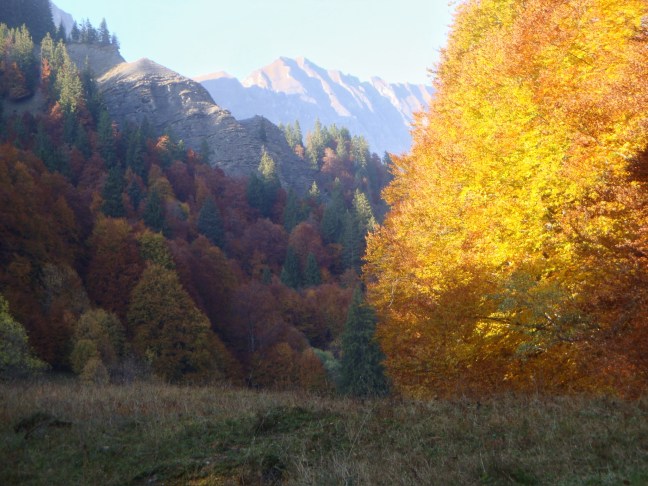
Text and photo by Alain Joly

~~~

.

Suggestion:
Other ‘Ways of Being’ from the blog…

.

Daily Calling

It is easy to look, easier than we think. Yes we have seen temples and churches by the thousands, endless acts of devotions, and pilgrims whose faith seems indestructible. Yes we have marvelled at yogis whose ability and constancy is a subject of awe, at monks whose dedication and celibacy seem unattainable. It may have dawned on us that this path is too rigorous, that spirituality in only for the chosen few, for the dedicated ones, whose lives are set on a perfect course for it. So we have renounced to go there, finding excuses — that we don’t have what it takes, that God has for us no calling, that I wouldn’t have half of the rigour that a serious spiritual path requires. So we have stayed where we are, repairing here and there a few cumbersome habits, loving our loved ones, sharing our usual skills with the world, battling with our thoughts, dealing with our sorrows. We didn’t dare, didn’t quite believe that the spiritual endeavour was our path, or the path of the majority of us. We stayed put. We gave up without even the beginning of an understanding.

But spirituality is not what we think. It is not a path of renunciation or remoteness. It is not about belief, opinion, or even conviction. It is about reality. It is about looking what there truly is, here and now. What our experience is made of. What there is behind the gloss of experience. That’s how we are spiritual, by looking for that part of ourself that is not a thought, not a sensation or a feeling, not the body that we have come to be identified with. That’s how we are religious, by finding this deeper identity of ourself that is wholly and naturally related to others and to everything. By recognising that ungraspable, unfathomable, deeper being that is our eternal home, which we have lost sight of in the tempestuous world of our many experiences, a world that has so far attracted the totality of our attention without our objecting. We have simply missed, maybe indulgently, that spirituality is about knowing who we are, no more than that. Spirituality is not about practice or achievement, for its only aim lies in recognising what is eternally here as the very fabric of our self. It is not about age, for age will never affect what we are in the depth of our being. It is not about health, for there is a place in ourself that is forever stamped with wholeness, which is another name for perfect health.

So we don’t need to go to churches or temples, for where we are is our church if we know how to make it so, and inhabit it, not with our worries and projections, but with who we are as our deepest being. And remember that the world makes for a marvellous temple, when we connect to it with our deeper self, and bathe it with the peace of our own being. We will be in touch with our spiritual being every time we experience love in our life. That’s why people have pets, so that they can stay in touch with their heart. That’s why we so dearly seek the intimacy of relationship in our life, so we can lose the distance that our minds have imposed on us. That’s why we love fulfilling our desires, for we know that we find there, in this fulfilling, a taste of our own loving, untouched, unconditioned being.

So there is a mass or a puja going on in every corner of every experience that we may have. There are hallelujahs that can rise any time, anywhere, anyhow, if we are willing to pause and look at what our present experience is made of. And know that we will never be asked to believe, or corrupt any part of our gorgeous being, for we have a duty to be faithful to our self as it is. The only practice or prayer we will ever have to perform is to recognise and be aware of the nature of our being. This true and only identity or nature is lying just behind every temporary appearances and objects that can be formed, named, and pointed to in experience. Know that the formless is our most intimate companion, for it doesn’t live in time or place or objects, but in and as the very ground that is our one and only identity and being. This connection to that deepest, most intimate being in our everyday life, is in itself the most religious endeavour there is, where spirit is discovered to be the only thing in presence, and the home where we find our joy, and our undefeatable reality.

.

~~~

Text and photo by Alain Joly

~~~

.

Suggestion:
– Other ‘Reveries’ from the blog…

.