The Person

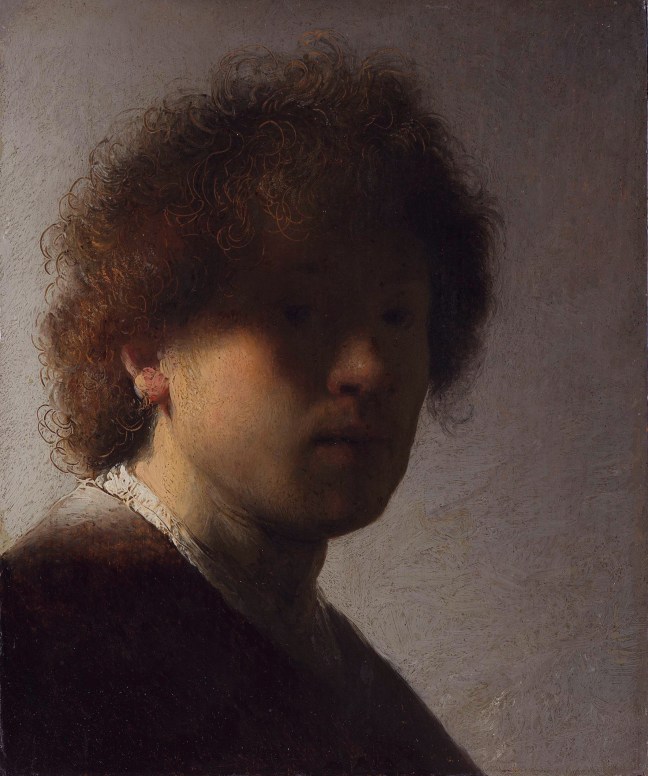
‘Self-Portrait with Dishevelled Hair’ – Rembrandt, 1628 (Rijksmuseum) – Wikimedia

There is immense pleasure in being a person when we are not a person. Then, the body-mind, the person, is not a burden anymore, it is a companion. We begin to enjoy its gentle presence, for it is rid of the constant search for happiness, peace, freedom. It is not on him anymore. She doesn’t have to bring about her joy. Doesn’t have to condition her freedom to her circumstances. The person is delivered. It doesn’t have to resist and be a fighter. Doesn’t have to struggle, suffer, hope, be in the constant grip of personal achievement and success. He can stop being a seeker, endlessly looking for what could make him good, content, relieved. She can stop having peace on her everyday agenda. These are given — naturally — as our nature, as ourself. They stop being the work of a person, his everyday load that he has to achieve, perform, be a success at — all the tyranny of it.

There is a presence that we feel is our own, our identity, that already gives us everything that we as a person would spend a lifetime looking for, and would for certain — that’s a universal secret, believe me on that — fail to secure. We already have a wonderful, pristine self in the form of our naked, unconditioned being, so the person doesn’t have to create a non existent self for itself. It doesn’t need to have this belief, that it is a self, that it is separate, that it lives inside a body and a mind. Self and identity are already provided. We share them with everyone and everything. We don’t have to be lonely. Don’t have to be limited by a form, and imprisoned by the boundaries of birth and death. Appearance and age stop being an issue. Comparison dies down. We expand as limitless being, outside even the boundaries of time. The body-mind acquires transparency.

Then we take him or her by the hand — the form, the limited body-mind, the person. Then it is like our best friend, freed from everything that made it small, separate, fearful. Then our body, although limited, will acquire and ride on the infinite nature of its beholder. Then our mind, which is bound by the boundaries of time and thought, will wander on the grounds of the eternal, where our being has its permanent home. Then our personhood shines, precisely because we are not a person. We become beautiful, attractive, and our actions bear the signature of the infinite. Then, being a person is important. And it is not a hindrance to our recognising who we are. On the contrary. The person becomes an emissary of truth, both within and without.

Then ‘what is’ is what we desire, and we don’t mind our circumstances. They satisfy us. We are free. We can be a person and find it a beauty to be so. The person is only here to pass on the impersonal desire of the infinite. It is here for God’s will, which is to be and act on God’s premises, in Its gorgeous name. Not to have a private agenda, in the name of the endless insecurities of a nonexistent, separate self. Not to be burdened by life, but to be the messenger of its secret glory. Then, she as a person is clothed in the dress of a delightful being, shining with an identity that she borrows from God’s identity, and partaking of a self that is the very self of universal being. Then he doesn’t find his person to have an existence separate from his not being a person. Person, no person, being, consciousness, God, life, existence — all one same infinite thing and being. And the person, against all odds, thrives in it.

~~~

Text by Alain Joly

Painting by Rembrandt (1606-1669)

~~~

Website:
– Rembrandt (Wikipedia)

Suggestion:
– Other ‘Reveries’ from the blog…

God’s Alliance

God is not a romantic. He wants the best for you, and will make sure that you have no peace until you know yourself exactly as you are, which is as He is. God is a tough mother. She will lead you to feel that you come from her very womb, and that you have within yourself the memory that you are as She is, which is infinite and eternal. God has no idea that you exist as a person. He knows none of your ideas or beliefs, none of your attachments or suffering. Your problems are of no interest to Her. If you want God to know you, make sure that you go to that part of yourself that is without qualifications, that is like your naked essence — what gives you the consciousness of everything. Make sure that you become just as Her being, and that you share of Her divine characteristics. Then God will know you as surely as He knows Himself. And you will know God as firmly as you know yourself. But don’t play the part of the poor little me. For you won’t see a single tear on the face of god, and will attract no compassion from Him. God knows you the moment you know God. That’s the beauty and magic of Her infinite presence.

Partake of the same ground of being that is God’s being, and you will come to love everyone in the way She loves you. Share the being of God Himself and you will bathe in the peace that God knows, and that is your own peace too. Know your being as being God’s being, and you will experience the joy that comes from the ease of simply being. The only way God can know you is through that part of yourself that is of the nature of His being. And the only way you can see God is by seeing yourself in the way He sees Himself. There is no knowing God through relationship. He is knowable through sameness only. Oneness is the common home that we all share. Everything and everyone partake of the same ground of being, and find their identity in God’s identity. This alliance of God with the ten thousand beings and things of existence is one of supreme intimacy. Once this intimacy with God has been established in your life, you will come to know God as you know yourself, and to know everything and everyone as God’s intimate being. Her interior as to say. His loving heart.

And God is a lover of the strictest reality. The idea that you have of yourself can never know God. And God can never know the belief that you have formed about yourself. They are mutually exclusive. If you want to be a person of your own, away from God, then God will retire and become absent from your life although still holding you in the most humble and loving way. The person that you believe yourself to be has no reality and cannot share of God’s reality. This is why you suffer, and know the plight of loneliness and separation. Give the idea of yourself up, and you will find yourself as having the self of God Himself. This is God’s special bond with you, to know you through His very being, which is your being too. This alliance with God suffers no approximation. Be of God’s humble nature, and She will share with you Her blissful being, offering Her infinite body as the world you live in and mix your being with. But be with your own limited, separate self, and God will know nothing of you, and you nothing of Him. You will be just a passing cloud with no reality, absent from even the most insignificant thought of God.

~~~

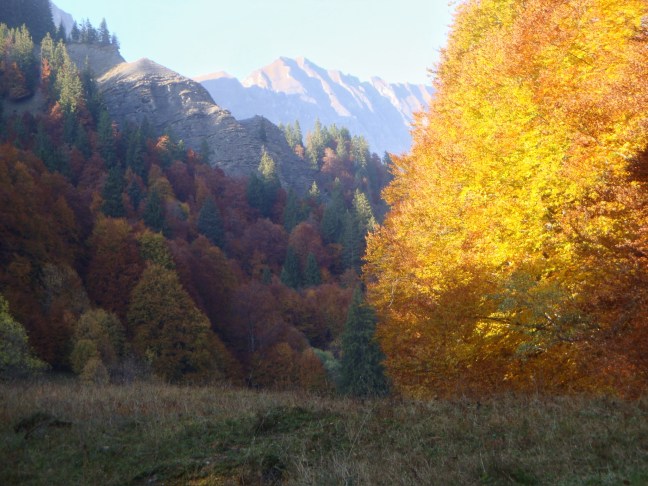
Text and photo by Alain Joly

~~~

Suggestion:
Other ‘Ways of Being’ from the blog…

An Impeccable Death

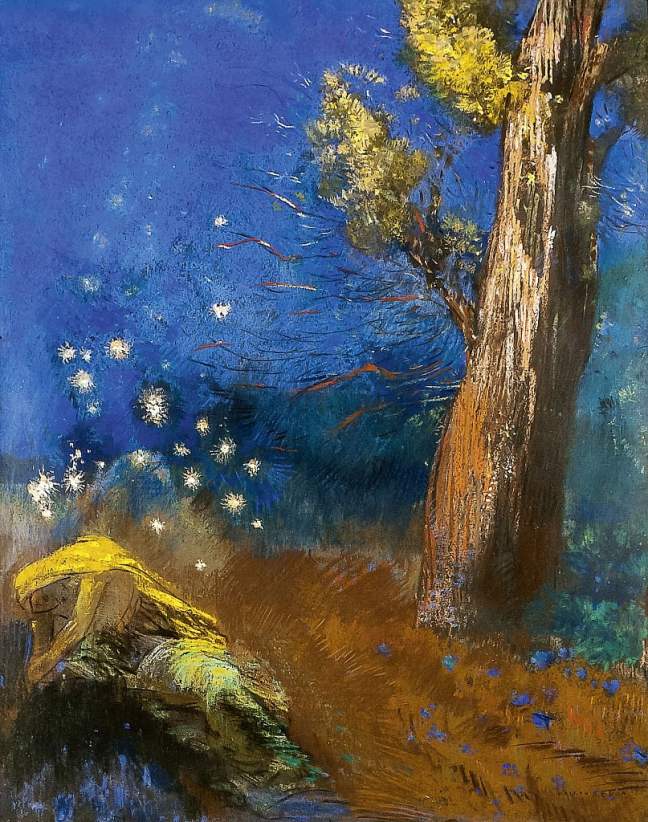
‘The Death of Buddha’ – Odilon Redon, circa 1899 – Wikimedia

It is striking to think that the day when we die is always today. It is not happening tomorrow, will not take place in the future. Death is for now. This is where and when it takes place. In the present. In presence. The death of the body, its ending, may take place in the future, but is not death. It doesn’t have the implications, the magnitude of it. The death of the body is like a wave that ceases to undulate, to imagine its difference, its conflicting attributes, and finally breaks before we notice that it is not what we are, that there is here, before it, as our very making and identity, an ocean of peace. This ocean is what death is — before we imagine to be a self that thinks itself separate.

We have been moulded in and as a presence that was never born and could never die. This inability to exist or appear as something distinct, or different, is real death. This incapacity to cease or find an ending at our being, is true ending. It is a place where we can never go. This place of being has no objectivity. It is nothing that we can be or project ourself to be. It is pure being, done, final, already perfected, unattached, a free fall. It is a death so complete that it has no object. It is not the death of something, of an object, of an entity — for such death is not truly death. It is the realisation that we are not what we have believed ourself to be. That there is not here an entity, a self that could be dying, that has an existence of its own. That realisation, and above all what is left here to be and live by, truly is death. And in that death is contained, concentrated, achingly shining, the whole of life.

So death is now. It is happening now without our noticing. It is achieved — our death, the one that we fear, that we have pushed away, that we don’t want to envisage, envision, is done, gone through already. It’s a matter of noticing what is — that we are not here, that nothing was born, that it would be curious to die, that what we are has no other attributes than being. How would you put to death something that is without attributes or qualities? How would you end something that was never born? Moreover, no appearance, or thing, or body, could ever die without it being the expression or the modulation of something untouched by death. That something exists deathless is the sine qua non for the existence of death itself. That’s why life itself thrives through the exercice of death. What is deathless is our being. It is being — that which we all share in, which we call eternity, or the infinite, for it is one, and being one, it cannot be measured, qualified, or put to death. That’s how we are immortal — through only being, which we share as the experience of love. Death is when we cannot die anymore. It is obliterating objectivity — therefore our existence as an entity. An impeccable death comes at this price.

.

~~~

Text by Alain Joly

Painting by Odilon Redon (1840-1916)

~~~

.

Website:
Odilon Redon (Wikipedia)

Suggestion:
Other ‘Ways of Being’ from the blog…

.
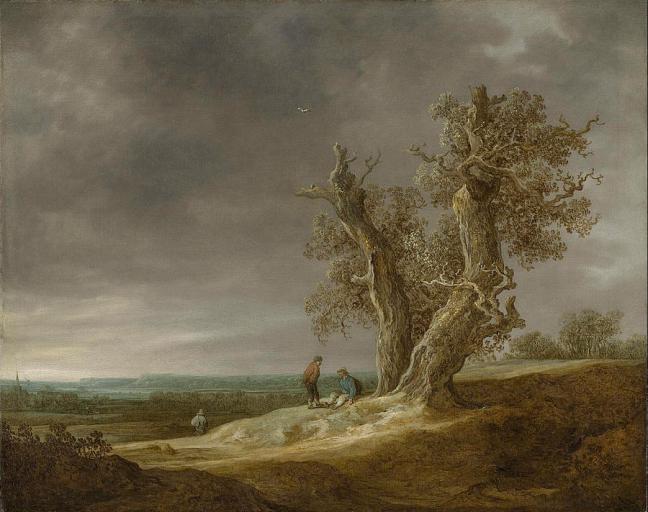
One Living Being

Truth is when the one who desires truth is not there. That one is a flaw. It is superimposed on the truth it is looking for, and veils it, makes it unreachable. It tramples it, literally. It makes it misty, obscure, mysterious. But truth is an obvious reality, if we don’t put it at a distance. If we don’t imagine it as something. Truth is not a thing, a concept. It is what we are — present, alive, real. Only we have to leave, recede, tiptoe. It’s all it takes, to not be boastful about it, to not think we don’t have it, to not assert the lie of our being someone. Being someone will push truth into the darkness, unseen therefore forgotten, hidden therefore to be sought. Our looking for it is the difficulty. Truth is to be approached with subtlety and utmost delicacy. Not that it is fragile, it is not. But it is sensitive to our feeling separate from it. It doesn’t like it. It shrinks at the thought of it, that we are looking for it, wanting it, being ambitious about it. Truth is not to be conquered, practised, refined. Truth is here fully dressed. It is our most fitting attire. The very being of our being. Massive. Obvious. If we let it open up, unfurl, spread its all-pervasive presence, and its creative, mind-blowing, self-evident, undeniable power and eminence.

But if we think we’re not enough, well then we’re not enough. If we want to indulge in being a person, a poor me, then we fall from a great height. We suffer from being separated from our essence, our quintessence. We feel the burden of our constant, intrinsic, congenital seeking. It becomes our identity, to be a self seeking, to live in separation, to be fearful of this condition, and a believer of ideas. We live in our mind, struggle with our beliefs, conflict with experience. We are not what we should be, and we feel it, know it, dread it. And we are crippled by our impending death, which we cannot understand, fathom, and marvel at. So it really comes down to ending a belief, a simple belief, that cheated us. That our body, our thoughts, feelings, senses are substantial when they are but a dream. That our being finds its reality in our body and mind when our essential is not there. Our essential draws its reality from a presence that is infinite, eternal, unfathomable, loaded with love, peace, and a creative impetus. Nothing else than this presence is at play in our experience. We realise that we are just one living being, which cannot be divided, and has no other than itself. We realise that we are that, in spite of all evidence and impression. This self that we believe ourself to be is in fact secretly made of that, if the mist of its fallacious reality breaks apart and reveals its hidden nature. There is no separate, distinctive, solitary self. Only this shared, glorious one being. Then it falls into place that, for exemple, “I and my Father are one.” (John, 10:30) And that “In him we live, and move, and have our being.” (Acts, 17:28)

.

~~~

Text and photo by Alain Joly

~~~

.

Suggestion:
Other ‘Ways of Being’ from the blog…

.
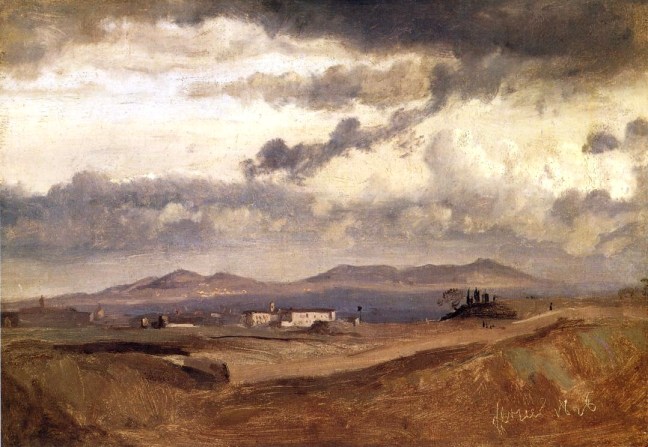
God’s Flower Bed

‘Fleur’ – Jean Benner, 1860 – WikiArt

.
The difficulty in the spiritual endeavour
is that we have to question the unquestionable. We have to doubt the obvious. We have to turn the stones that we have carefully placed here to pave the road. One such indisputable truth is that we choose our thoughts. That the decisions or actions we are taking, the thoughts or attitudes we are having, are the products of a controller, of a self that has them, chooses them. But is it so? Have we even tried to question it? Have we ever looked if there truly was a self here in capacity to choose? What if there wasn’t? What if this self, this ‘I’ that we seem to be, only drew its existence from our imagination? What if our own self was just another thought? If this entity that we love to pamper and strengthen was not there, not at all? If we have played a game with ourself? If there is here no person outside our indulgence in having the thought of one?

Many of our conflicts and problems in life come precisely from the belief that we are the chooser of our thoughts, that there is an ‘I’, a person here that runs the show when there is not. That’s the mistake, the original sin, to think of ourself as a doer, a thinker, a separate entity that has control, that manufactures happiness, freedom, and is responsible for our experience such as it is. We want to carry the load of our DNA, of our body, thoughts, habits, suffering, or even happiness, and not let them go. We want to be grandiose. The truth is: there is no personal ’I’ that can act on our thoughts or decision-making. These are better left alone, and informed by the only ‘I’ there is, that finds its true essence in the infinity of being, which is selfless. With this understanding or realising, we would come to treat what we have as a jewel of the most precious kind — beyond control but lovingly tailored for us by the universe and its supreme intelligence.

[…]

An enquiry on our ability to choose our thoughts or not… (READ MORE…)

.

On Desperation

‘Jeremiah mourning over the Destruction of Jerusalem’ (part) – Rembrandt, 1630 – WikiArt

What needs to be seen and understood is that the story of humanity, the story of every life lived here under the sun, is the story of a desperation. We are fighting off the feeling that something is lacking. We want to reach or attain something, and this something that we are looking for is the same thing for everybody. Whatever form may take our life search, our drives, our dreams, our desires, our pleasures, they are all here to make us feel at peace, content, whole. They are here to free us from ourself, from our search, from our never-ending desperation. Outside, we may put on the appearance of control, normality, and responsibility, but inside we are burning, seeking, longing for that which we have never been able to put into words, explain, rationalise, or make sense of. But in fact, we are looking for something that we already possess in infinite quantity, although unknowingly. We are craving for the abundance that we already have, searching for a peace that is already given, begging for a joy that is throbbing unnoticed in the background of our everyday experience.

Our suffering or desperation is the symptom of this misunderstanding. We fail to notice that we have what we are looking for, that it is here in plain view, already achieved, already formed in and as our most intimate identity. Our self is made of that sweet fire of peace, contentment, and sufficiency. So the misery we are in is only apparent, imagined, made up by our thinking about it, and by our looking for peace unnecessarily, out there, in the wrong place, in experience. There is no amount of effort that will ever help us to attain something that is already attained. On the contrary, the disturbance involved in seeking what we have will cause us misery, in the form of a desperate, separate sense of self. We are too eager. We never sit still, always foraging our experience to harvest some scattered drops of peace or joy, when our very being is already overflowing with them.

The only necessity, or even possibility of being a self separate from experience is through managing the tension involved in seeking a peace that is already our most intimate nature. Our self is the story, the memory of this seeking. When peace is here, there is no self present, no tension that could make us a suffering entity. In fact, we seem to proceed by distraction. We are not looking, and then we complain that it is not there. All our efforts to obtain an enduring peace in our life are vain and doomed to failure for the simple reason that peace is not a thing that can be had. Peace is something that we have to realise is present here and now. It is our vey being, what we are made of, our unborn reality. So there is no real, substantial suffering here to be rid of. It is not that suffering is not experienced. It is that its only reality is only in and as our imagined self. It is but the friction that goes with believing to be a separate entity. Suffering is essentially made of our believed self, which is but our constant seeking to alleviate this apparent misery. The ending of the belief in being a self, which is also the ending of time, space, and separation, will make fully apparent our nature as peace and happiness, in which there can be no suffering, no self, no seeking, no desperation.

.

~~~

Text by Alain Joly

Painting by Rembrandt (1606-1669)

~~~

.

Website:
Rembrandt (Wikipedia)

Suggestion:
– Other ‘Reveries’ from the blog…

.

Humanness

‘The Human Mountain: Towards the Light’ – Edvard Munch, 1927-29 – Wikimedia

There is no human being. This is quite extraordinary to think of it, and even positively mind-blowing. But turn it around as much as you may, the true self of man is not where a body is. It doesn’t take shelter there. A body, or even a mind for that matter, is way too small and inappropriate to house your beautiful being. There is no room there. For how could the infinite enter something that is finite, limited, prone to decay and death? How could something that knows no beginning and no end, be contained in a passing thought, in a mind which is changing, developing, forgetting, believing, cheating and being cheated? In being, you won’t find the beginning of a change, won’t find even the possibility of death. In being, there is no forgetting who you are. Only a mind can forget its own nature, not because there is something there that can forget, but because thoughts, feelings, perceptions, when they are believed to be yourself, are hindering your true nature, rendering it as if absent. What is left is only a cheating thought that believes itself to be real as self, when it is not.

There is nothing depressing in not being a human being, and nothing demeaning. Being is such a malleable thing that we still retain the illusion of being a human being, a person, as we do now, but with the difference that this illusion won’t hide the reality that is behind it, and that is our true identity. Losing our identity as a person doesn’t mean that we won’t feel compassion for another, or love for our beloved, for love is not contained in being a self separate from an other. Love doesn’t need to be directed. We are not doing love, let alone giving it. Love is the expression or signature contained in our simply being. It is the feeling of being that irradiates in every directions, and that is shared as that which we are here and now. And don’t think either that you will lose your ambition, but it will be reoriented to be not your ambition, but the very contagion of being in every aspect of your life and world. And don’t think that you will miss out on happiness, for happiness was never yours, never your expression, never contained in achieving or obtaining a thing that thought has said you desire. Happiness is the very feeling of being, that we cannot contain or limit, but which splashes over to colour life with a golden hue of oneness.

So there is only being taking momentarily the clothes of a human being. But being itself has no qualifications, no colours which would render it a definable entity. The colours and the qualifications are not pertaining to being. They are the property of everything that appears in being, but is not being. They are in body, thoughts, sensations, perceptions, in all the existing things that come and go, dancing to make the form of a world, of what we call a human, a dog, a mountain, or the parking lot in which we park our car. To be being won’t diminish our feeling of being a person. It will enrich it, for being is the essence of a person. Being is the essential of our experience as a human being, only we don’t see that, don’t know that. Our focusing on the belief to be an objective entity that thinks, feels, and perceives has made us blind to our reality. So let’s remind ourself that there are no limited human beings, but only one unlimited being. This knowing and feeling of being only one unlimited being is a source of constant awe in life. And this vision is what gives its true colour and reality to our imaginary humanness.

.

~~~

Text by Alain Joly

Painting by Edvard Munch (1863-1944)

~~~

.

Website:
Edvard Munch (Wikipedia)

Suggestion:
Other ‘Ways of Being’ from the blog…

,