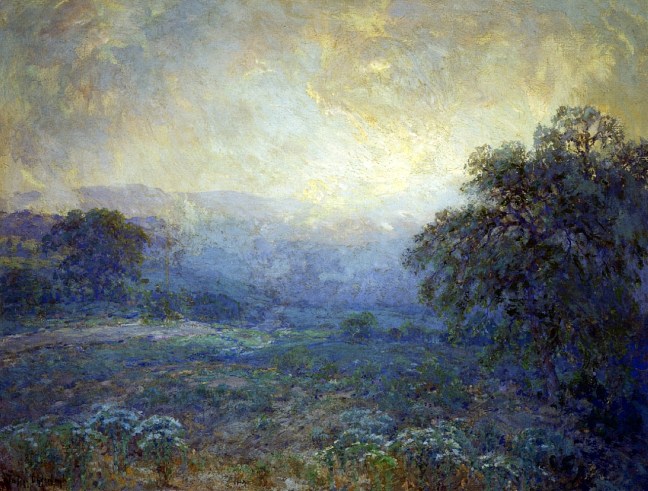
Our Human Condition

‘Winter Scene on the Ice’ – Jan van Goyen – WikiArt

There is not a person in a thought, or in an assembly of thoughts. Not anymore than there is a person in a body or an emotion, or an activity of the body, a reaction after the emotion. These are but things that exist, but don’t make the complexity and radiance required in there being a person, an animal, or any kind of entity. This world is populated by objects, by appearances, by bodies, but not by persons or entities as such. There are no persons, nobody here that could claim to have its own, independent, separate reality. To think that there is, is an illusion, an invention, one of our many well-rehearsed thoughts.

But of course, beliefs have magic. If we believe to be a person, then we are one. If we believe that there are individuals, a world, untold suffering, then the source is obliging. It will create the reality of one such world, will give us the suffering we claim to have, will manufacture all our many conflicts, which we have come to be attached to, and to believe in. Everything is only a temporary, dreamlike appearance in and of reality, but not reality itself. The more you will believe to be a person, the more you will be one. The more consistency this person will acquire, the more suffering he or she will experience, and the more conflictual will be the world, for you have given them a reality they do not have — except for the reality of consciousness.

We have to keep knowing that we are aware, that we are awareness itself. Being a person is about knowing, not about a body, or a handful of thoughts. The body comes second to knowing. There is knowing first, and then a whole world unfolds, makes itself known. The reality of the world is in knowing, not in there being a world, not in there being a person. Knowing takes it all, wins the game. We’ve got to be aware of that. Then the world is shining. So is the person. They may not be truly here, in reality, but they shine with the transparency of knowing.

Every entity that exists, finds its reality within, from an inside experience. So to be a person is not to be a person, not in its reality. We are a person only from the vantage point of a thought, a belief, a representation, but not from inside, not from the depth of being. There, there is no person, no separation, no suffering, only the infinite body of knowing. After all, could a world with its own individual reality be harmonious or beautiful? Or is beauty or harmony conferred to the world by the grander reality of knowing? A world with its reality conferred by thoughts, beliefs, contains conflict, difficulties, suffering, for it is not recognised for what it is. We have confused the world with our misunderstanding, have rendered it an insecure place, and have made ourself an insecure person, constantly seeking its security in the insecurity of a world, which obviously is a vain enterprise.

So if there ever is to be a person, there is a person in infinity. If there ever is to be a world, there is a world in eternity. The world, our body, our thoughts, are all playgrounds for the infinite. Nothing more. If we do not know that, then we will be a suffering self, a person, living amongst the endless conflicts of the world. If we know we are infinity, then the world will oblige, and acquire the colours of the infinite. As for us, we will be playing being a person, or a thought, but with none of the sufferings or conflicts usually attached with their invented reality. We will remain infinity, eternity, in all occasions, no matter how much we live in time and place, and adopt for a while the limited vantage point of a body and a mind. Our own infinite reality will stay the only reality there is.

Now, imagine a world, a society of people where the only reality there is, is the reality of the infinite, of the eternal. What would this world be? What would our many personhoods be? Where could our suffering and conflicts stand in infinity? Where would our life turmoil thrive in eternity? The whole world — conflict, suffering, everything — stands within one single belief or misunderstanding. For the rest, eternity only is the one shaping the world. Infinity the one making a person — that is our human condition.

.

~~~

Text by Alain Joly

Painting by Jan Van Goyen (1596-1656)

~~~

.

Website:
Jan Van Goyen (Wikipedia)

Suggestion:
– Other ‘Reveries’ from the blog…

.

A Word of Glory

Words don’t apply to truth. What we are cannot be described. We may have a lot to say about our preferences, our thoughts, our body, our circumstances and conditionings, but we won’t be able to say anything about who we are. We may try to. We may give a thousand explanations. We may come as close as possible, by saying that we are that which is aware, that we are consciousness, being, and a thousand other expressions. But we won’t get closer to the truth of who we are. Truth is not something that can be made into a concept, or an object. It is before every concept, before every object. It is before even ourself as a body-mind, as a person. It is before every single thought that we may have about ourself. It is the living, throbbing embrace of everything.

We cannot catch truth and put it in a box, or made it into a thought. It is elusive. We won’t find it in the world, no matter how hard we may look. It is within. It is who we are. It is what there is — our very being. We cannot miss our own being, what we are made of, what there is here that we call ‘myself’, or ‘I’. If we do miss it, then we are taking ourself to be what we are not. We have given in to an idea, to a concept. We have given allegiance to everything objective, easy, to stories about ourself, but not to ourself. We have not been ourself yet. Belief doesn’t reveal our true identity. It tramples it. It hides it. Truth requires no thought, no belief, no person or entity, even no world. Truth is only about itself. And to see truth is to see ourself, to be our own self that shines with glory. There is no truth but ourself. We know truth, when we know ourself.

All the words about truth are here to point to the truth without words. For when we know ourself, the reality of who we are, there is no thinking about truth, or about god, for we live and abide where words have melted into the reality they were pointing to. We have given in to our own reality. We have died in our own living presence. We have noticed that we are that which we were looking for, and that there is no looking beyond it. We are settled. We are made real, alive, complete. The relief contained in knowing who we are at last, this falling of ourself into the place of being that we have been and are eternally — that in itself feels like a tremor of peace, joy, and freedom. This place of being is unconditional love, wordless reality, living oneness. All things and all beings find their essence in it, and lose their own, individual reality. They are as if one word — a word whose only function is being its own living, glorious reality.

.

~~~

Text and photo by Alain Joly

~~~

.

Suggestion:
Other ‘Ways of Being’ from the blog…

.
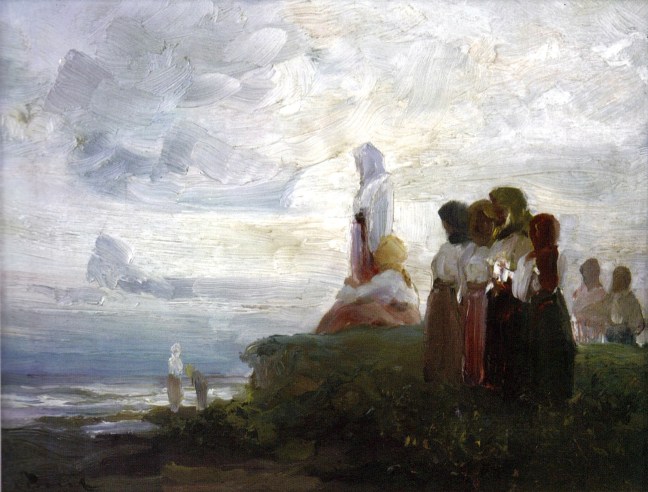
A Ghostly Thing

We only ever become within the course of time. We seem to always want to move cautiously, step by step. We don’t consider a becoming that could be achieved in an instant. Quicker even. A becoming free of the constraints of time or place, that could not be influenced by our thoughts, conditionings, beliefs, desires. A becoming that doesn’t find its worth in objective experience. A becoming that has no movement, that is still, confident, ever present. A becoming which bears in itself no change, and that was here before you even had the idea to change, or become, or evolve.

After all, when it comes to our identity, to who we truly are, ‘becoming’ seems to be a very poor idea. What could we become that we are not already? What is here in our very being that could become, that could be different, or better, or more? Our identity has been settled from time immemorial. It was here before even the appearance of time, which is but the product of our patterns of thinking. Before the appearance of place, which is but the product of our ability for sensing, seeing, hearing, touching. We have our identity and our perfection — our changelessness — hidden in being.

So, could we not become what we are? That’s the real question. How do we become our true identity? How do we espouse who we truly are, or be that thing which we are that cannot be deformed, changed, soiled, or even defined? That implies understanding both the one who wants to become, and that which he or she wants to become. There is a becoming, a change, a better or a worse, a less or a more, for the body-mind. But is there a becoming for ourself? Is there anyone here that could ever achieve becoming? Look for the one who wants to become, and notice that you will never find it. Becoming is a ghostly thing.

You cannot become. That’s a lovely idea, one that comes from another idea. From the belief that you are something, someone, that can change, evolve. There is in our being no room for change. Being is complete. It cannot be bent according to our beliefs, hopes, ambitions. So there is no becoming that which we are, and no one to become being — a better being, or a worse being. Being is the only thing shining in our being. There is no one here that could ever want to become. We may give to our body-mind more skills, more strength, better abilities, but to ourself, we can give nothing but the faculty of being only being.

So go only for what you already are. That’s truly what you want to become: what you already are. There is not a better becoming than that. That will spare you being a person caught in the effects and weariness of time and place. That will spare you being in the prison of a self, all the separation and loneliness involved in becoming anything or anyone. That will free you — to not become. That will give you exquisite joy — to only be what you are. That will give you certainty, confidence — to have your own being as your changeless, unbreakable horizon. May you become what you are. Believe me, this is heaven.

.

Creatures of a day! What is anyone?
What is anyone not? A dream of a shadow
Is our mortal being. But when there comes to men
A gleam of splendour given of heaven,
Then rests on them a light of glory
And blessed are their days.”
~ Pindar, 5th century BC (Pythian 8)

.

~~~

Text by Alain Joly

Quote by Pindar (c.518-c.438 BC)

Photo by Alain Joly

~~~

.

Website:
Pindar (Wikipedia)

Suggestion:
– Other ‘Reveries’ from the blog…

.

The Immeasurable

‘Study of Clouds over the Roman Campagna’ – Pierre-Henri de Valenciennes, 1782 – Wikimedia

There is a vast empty field of knowing within our experience, if we’re looking for it. It is vast not in regard to its sheer dimension, for it has none. Its vastness comes from its being without dimension, limit or edge. It is behind or before everything that we have taken to be ourself, including our body, our thoughts, our alleged self. It is here, motionless, massive, lending its very essence to everyone and everything. It’s easy to miss it, for it has not the objective quality that everything has in experience. We live in a field of objects that we can see, hear, touch, measure, be aware of. We are so fond of them that we have made ourself an object too, pretending to be our body, our mind, our thoughts. We have such a fascination for objects that we have become blind to that which holds them, and pervades everything. We are blind to our own essence, to our vastness, limitlessness — to that which makes objects experienced.

The consistency of objects around us has only the consistency of that which is aware of them. Objects do not own their own private essence, and neither do we. They find their essence and habitation in that which knows them. So we live in a world that is not defined by its edges, its limits. We should always understand that we live in vastness. That our world is empty of its own essence, and is only the expression of our being aware of it. It will never have another substance than the substance of knowing. So we live in emptiness, in infinity. The body may have its limits and constraints, but we do not.

We are devoid of what binds and limits our body-mind-world. So we should live our life as if there were around us only an empty knowing. Try it, to live as if unconstrained, unlimited, expanded. See that this is the truth of your being, this being not limited by time or place, this being free. Don’t engage your thoughts as if they were objects, but see them as an emanation of the silence they are made of. Thoughts are variations of silence. They are silence’s oscillations. If we are unaware of that silence, thoughts will come to veil it. If we see silence as our own nature, they will be messengers of its eloquent wisdom.

So the reality of thoughts is only the reality of the silence that holds them. Just as objects have only the reality of the knowing that knows them. And just as we ourself have only the reality of our nature as pure knowing — not as a body, nor as a mind, nor as anything limited. Limitation too is borrowed from the infinity that holds it and allows it, as eternity holds time. Where would an idea of time be, if it wasn’t within the eternity out of which it can be divided in past, present, future? Where would an idea of place be, if it wasn’t in the very infinity that permits it to exist? The structure of time and space is only for the convenience of a body and mind. We ourself have no such convenience, no such limits.

The world has beauty for it borrows its essence from the beauty and purity of that which holds it, and builds its form and structure with bricks after bricks of empty being. Emptiness is the body of this world of beings and things, which it moulds or shapes with its creative fullness. For emptiness can only exist in the fullness of being. We are only because of our being ‘being’. We are full of our own being, which is revealed as the being of everyone and everything. So there is in ourself and of ourself only an immensity. We are immense when we cannot be measured or limited in any way by our thoughts, body, or self. If we notice that this is so, that we are made of that immensity, that we are immeasurable, then we will lend to the world that same immensity of ourself, and we will notice between everyone and everything an impenetrable likeness. This likeness is born of the oneness that is the secret core of everything, and of all apparent multitude.

.

~~~

Text by Alain Joly

Painting by Pierre-Henri de Valenciennes (1750-1819)

~~~

.

Website:
Pierre-Henri de Valenciennes (Wikipedia)

Suggestion:
– Other ‘Reveries’ from the blog…

.

Our Sole Horizon

‘The Forest Distant Views’ – Ivan Shishkin, 1884 – WikiArt

The key in spiritual matters, is that we have to keep it very simple. We must not blow it out of proportion, exaggerate it, make a conundrum out of it. It is just a matter of looking, of breaking a little, stubborn habit. Nothing extraordinary. We keep looking away from our own being. We act as if we knew all about who we are, as if it were understood, that we are our body, that we are these thoughts that keep coming, which we judge, influence, direct according to what other thoughts say. We live in a little corner of ourself, feeling like a little king in our kingdom. We are so used to our own ways, to our concepts and explanations, to our beliefs and repetitive actions, that we have taken for granted to be just a person in a world. That’s what we were taught. That’s what we were conditioned to think. In fact, we are only followers. We play small. We are protecting our own establishment.

But we know more than that. In fact, we are all experts at being, without our realising. We are masters of freedom. We know that with just a little looking, a little asking, we could rock our lifeboat. We could make our life sensational, attractive, happy, tranquil. We have that hint in ourself, otherwise we wouldn’t be seeking, or working for happiness, improvement, progress, with such undeterred faith. We know that in spite of everything, the world has magic, and our life keeps inside it secrets of glory. That’s how we can face unspeakable suffering, trauma, violence, and the looming threat of death. Because we have in ourself the warmth and security of being, which we try to reenact in every possible and unreasonable ways, in our pleasures and our hopes, in our beliefs and our addictions.

The problem is that we have put a belief in front of what is. We have invented a self where there is only the wide expanse of being. Our whole identity is in being. We have no space to be anything else than being. Our whole life is being. Our body doesn’t even come close to being what we are, and neither does our mind. Being as consciousness takes it all, the whole of what we are, and of what everything is. Every appearance finds its essence in it, and lives in the gorgeous space it provides. We have all our senses embedded in being, and the world finds its reality in the reality of being. Consciousness has it all. It is all we will ever find. All that ever is. It may hide from our gaze, that being is our only landscape, our sole horizon, but it shows blatantly in every corner of experience, if we are willing to look.

In fact, it is so much here, so reachable, so knowable, that we are blind to it, unable to know it. That’s because we have attached ourself to another pseudo reality inside our own reality of being. We have chosen the lie of being somebody over the truth of being only being. We have chosen to be something, a body, a thought, an idea, a self, and have as a result lost, forgotten, limited the infinity of being, that is pervading our life to the point of being the only thing in presence. The truth is that we can never be something other than being. It’s a nice try to believe it, but it won’t happen, to be a suffering self, a limited body, and a mind with its own separate agenda. Everything that we think we are, we are not. We have to distance ourself from every qualification, from every belief, from every identity. We have to be naked of every addition to being in order to see our naked being, and to be in its gorgeous grip.

.

~~~

Text by Alain Joly

Painting by Ivan Shishkin (1832-1898)

~~~

..

Website:
Ivan Shishkin (Wikipedia)

Suggestion:
Other ‘Ways of Being’ from the blog…

.
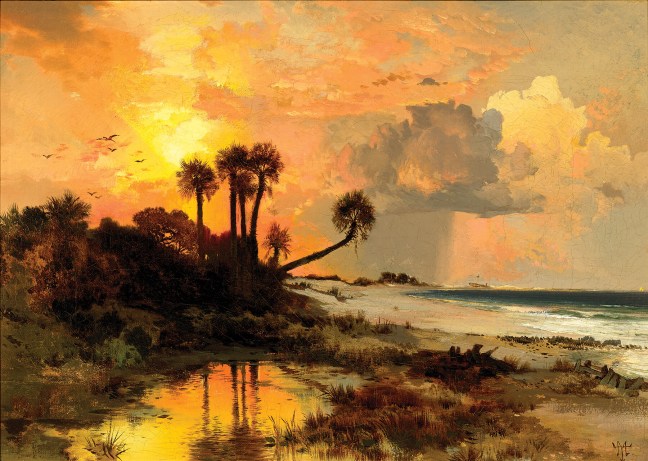
Salvation

‘Storm by a Lake’ – Pierre-Henri de Valenciennes, 1780 – WikiArt

Many religions have spoken of salvation, but the idea of being ‘saved’ is not fancied by most people. We don’t like it. People have their self-esteem. They want to feel that they can be responsible for themselves, that they have the resources to overcome whatever needs to be overcome in their life. They don’t want to rely on a god, or an external agency, or even a power. They don’t like to be put down, don’t fancy being a poor thing in need of being saved.

The good news is that there is no such external power or entity. We have it all in and as ourself, as our own being. Nothing exists or stands beyond or aside our being. This simple being that we are, which we are made of, which we draw our very existence from, is the only thing that has a reality. We won’t find a reality at a distance of our own being. The idea that there is a reality other than our own reality as being is only a belief. We won’t find a power beyond our own power, that could come to save us. This world of ourself was perfectly designed. It was made whole and one, so that we hold within ourself our own resource, our salvation, everything needed to live a gorgeous, peaceful, meaningful life.

So the idea of a salvation took us on the wrong track. It had us waiting, hoping, praying, expecting, while at the same time abhorring the idea of needing help. It gave us the idea or impression that we were an entity, a person with its own personal, separate being. It manipulated us to think that we were our story, and that we needed to be fixed, aggrandised, improved, saved. For after all, let’s be honest, we do need to be rescued from a peril. We do need to be delivered from the danger of suffering, of separation, loneliness, conflict. We do need to save ourself from our belief, idea, concept that we are squeezed in our body-mind, and limited by it.

With such an idea in mind, we have but the semblance of a life, but not life itself. We have been simulating having a life, pretending to know who we are, and then acting as if everything is as it should, as if suffering couldn’t be avoided, as if it were intrinsic to living. We have in fact ourself created the idea of a salvation, of a person at a loss, needing help. But the truth is, there is really no such a thing as salvation. Salvation is implied, or contained in being. Salvation means ending a belief. It means not taking ourself to be what we are not. It is the returning to our natural state of simply being.

This conceptualisation of our being into being a self, an entity, a separate being, is the road towards separation, isolation, suffering, conflict, and therefore salvation. It is our wrongdoing, our ‘sin’. But the sinner is an entity that we have created. We have made a sufferer, a sinner where there was only the peace of being. Through this creation of an illusory self, we have invited separation, duality, and have divided being into a self separate from other selves and things. We have given the world a reality independent of our own, and have made the glory of being into a self that has retired into the limits of the body-mind.

Our salvation is in the sin itself, in its ending. It is in being, before the birth of the idea that being requires being something, or someone. Before our identification with our body and mind, which has made suffering and conflict our daily companions. So salvation is always only an acknowledgment, a noticing. It is the knowing of our being as it is, and not as we have made it, through belief and habit. This is how we are doomed, in being a self separate from everything. And this is how we are saved, in being only being. This understanding does save for it tells to a mortal that he is immortal, and it assures a suffering self that she is blessed with a peaceful being. A sin is an unfortunate addition to plainly being. It is a simple exaggeration. We have created, invented a sinner where there was nothing but our gorgeous, infinite being.

But this is something that can be reversed. Salvation is natural, already here, achieved, contained in and as our own being. Salvation is being. The one in need of being saved is not there, has no reality other than in our mind. The idea of salvation or deliverance itself must go. It had found its use and meaning when we were but the thought of being someone. When this idea of being someone goes, when the qualification withers, being stays behind, resplendent, in no need of being saved whatsoever.

All this, the whole spiritual enchilada, is only a convenient story for the poor me. Deliverance is achieved in being. The sinner is an illusory superimposition on being, which is intrinsically already free. We have limited being, have made it an impotent thing. So there is ultimately no sinner, and no salvation. This is why we say that God is forgiving, because there is always at hand the realisation that there is in ourself, in being, no room or possibility for an entity separate from experience, and therefore for a sinner. In this discovery of our being whole, and One, is the birth of a love and a peace that is beyond understanding, beyond any making. In fact, we have been saved and safe all along. 

.

~~~

Text by Alain Joly

Painting by Pierre-Henri de Valenciennes (1750-1819)

~~~

.

Website:
Pierre-Henri de Valenciennes (Wikipedia)

Suggestion:
– Other ‘Reveries’ from the blog…

.

Hidden Fragrance

‘Autumn’ – Andrew Wyeth – WikiArt

There is majesty in being your own gorgeous, naked self. But thoughts come and spoil it all. We are always running up and down the line of time, feeding on memories, fearing the future we imagine, leaning on our hopes and expectations, bleeding from our constant suffering, building multiple roads of escape. We never leave ourself alone, never stay with the peace that is naturally the nature of our being. We are always on the move, indulging in the landscape of our many objective experiences, getting lost in them — after all, they are so many, so attractive. They seem to hold the secret of our happiness. So we spend a lifetime shaping them to our convenience, but they are reluctant.

In fact our thoughts have become primary when they should be secondary. They have become the fabric of our life, along with our many experiences, when they should have stayed only an ornament. There is a ground that stays still and silent under our many involvements with things, perceptions, sensations. These crowd us by the thousands, but we should not be deceived. They will want us to believe that they are us — our one and only identity, but don’t listen. There is a oneness that is here taking them all in, enveloping them, lending them the quiet blanket of its peaceful, infinite making. So be careful where you put your emphasis on, what you choose to recognise yourself to be. You are not an aggregation of body and mind content. You are the quiet aware presence which holds the ten thousand things of experience in its loving bosom, and gives them a light to be seen and experienced. Put there your life emphasis, for that presence is your very lifeblood.

So be watchful of what you take yourself to be. Will you marry your identity with all things objective, or with what gives them the ground where they thrive, are born and die? Will you go with the passing or with the ever staying? Will you have a fascination for the many or for the One? Be careful to always stay where you truly are, where you were never born and could never die, where peace is like your true body — before you venture in experience — and where your silent being is seen as the home that harbours every portion of your life. This is how you stand where only the infinite is, and where place is like its humble attendant. This is how you have your days spent in eternity, and time is like its useful valet, for the sake of your daily activities. And that’s how you view your many activities and relationships as a gorgeous play, and the peace of your being as the space where they thrive and are nourished. Don’t let anybody make you think or feel otherwise: Peace is the crux and heart of your life — its sometimes hidden, sometimes revealed fragrance. 

.

~~~

Text by Alain Joly

Painting by Andrew Wyeth (1917-2009)

~~~

.

Website:
Andrew Wyeth (Wikipedia)

Suggestion:
Other ‘Ways of Being’ from the blog…

.