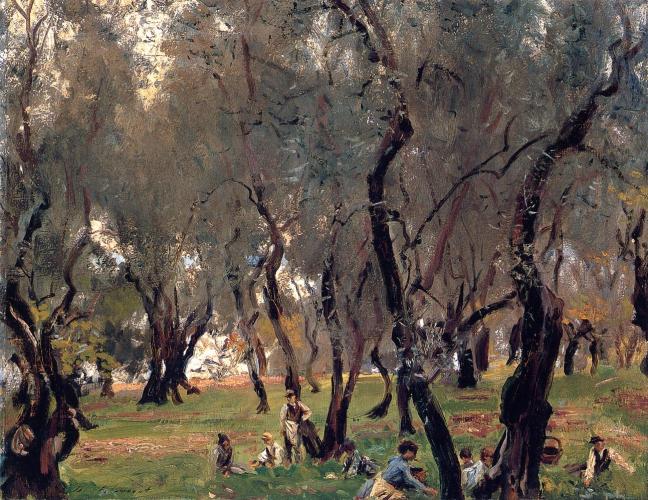
‘Norham Castle, Sunrise’ – J.M.W. Turner, 1845 – WikiArt
Sometimes you’re left with just three words. I read them under a statue of Christ in a cathedral, three simple words from the Gospel of Matthew, but a whole teaching if you listen. “Come to Me”. There is immense simplicity and clarity in these three words. They have a vertiginous meaning, if you follow the course of their true destination. If you accept the invitation. Not from a somebody, a person that existed. Not from a God, or a Son of God. Not from anything in particular, any objective presence which you could go to. The invitation is from yourself to yourself. In fact, ‘Come to Me’ is better read as ‘Come to the me’. Go to the ‘I’. Abide in what you are, be that presence of yourself. Be just as you are — don’t add a thing to yourself, don’t play the game of projection or belief. Don’t give yourself to somebody or something that is not you. Stay right there, right in what you already are, just as you already are. But still, there is a movement implied — a solicitation, a passage from place to placeless place. It says ‘Come to Me’ for a reason. In that paradoxe is contained the totality of our spiritual endeavour.
It is not a place you have to go to, but rather the noticing of the place you are in. The beholding of your true nature. What is this ‘I’ that we stumble on every time we say ‘I’? What is this being conscious, this being aware that I am? Did we look well enough? Did we miss something that we have to come to it, take a new invitation, be encouraged? See that you have made your ‘I’ into an assumption, a pretence, an affectation, something not worth a visit, not worth a discovery or an enquiry. In fact, we have been asked to function and obey, which means to follow. The rest has been wisely swept under the carpet of belief or religion. As if we had already discovered everything about what we are. As if consciousness wasn’t worth a second look. As if from then on, for our nature, we had to rely only on imagination, belief, things fancy, whimsical, hopeful, devoid of reality. Reality has been covered — so we think. There is no new land here, no new discovery or journey within, nothing that hasn’t already been charted.
But there is a coming that is subtle to the point of not implying time or place. A coming that cannot be measured by instruments, that cannot be objectified, seen by the senses. There is a coming where we already are, but with a new light shed on it. A light that we have missed for directing it all on objects, with the complicity of the senses. So the light of what we truly are was lost in its being misdirected. Our true nature was lost in our belief in being a body, a self, a person. Our purity of being was hidden inside our fascination for qualifications and objects. Our happiness was lost in our suffering. Our peace squandered by our restless seeking. So there is a journey within. A journey with no distance to be covered. A coming to where we already are. A coming or moving into view. A becoming perceptible. A coming back to ourself.
‘Come to me’. You may discover that you have God within. That this is what the God of religion is — what they meant — the ‘I’ within, your true being. Come back to yourself. Become perceptible. Come into view. Know yourself as you are. Come into the light which you are already in. See that you are, and who you are. Abide in the purity of plainly being. Be yourself for the first time. Be ‘I Am’ alone. ‘Come to me’.
.
~~~
Text by Alain Joly
Painting by J. M. W. Turner (1775-1851)
~~~
.
Website:
– J. M. W. Turner (Wikipedia)
Suggestion:
– Other ‘Reveries’ from the blog…
.