The Distant Country

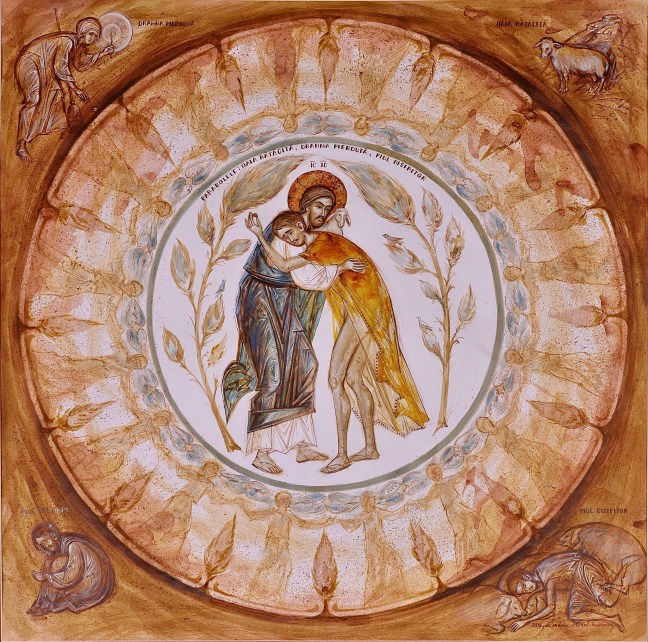
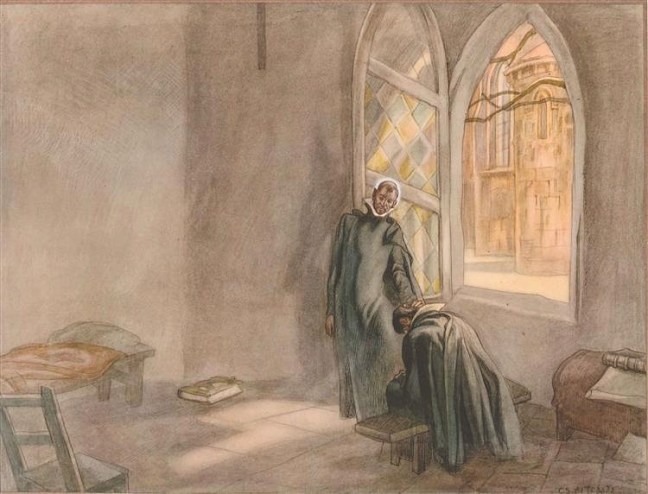
‘The return of the prodigal son’ – by Elena Murariu, 2018 – Wikimedia

How ironic this life is, isn’t it? How incongruous to have imagined that this is the real deal: being a person locked in and bound to the limits of a body. How astonishing to have this certainty to be a self that feels separate and needs to be fulfilled. To think we have to fight our way through the world, and suffer with such consistency. To have been persuaded that seeking is our way of life, without which we are doomed to poverty and stagnation. Yet the illusion of our being in a world is so convincing that we had to buy its many effects and constraints, and be subjected to its perils. So we have gone far away, thinking that we could live remote from our true home and identity, that we could roam the world on our own, and snob our essence. So we have landed into what we are not. We have lived the adventures of a person, gone through challenges and despair, carried ourself through time and space, and lived attached to worries and hopes, to the aches of regrets and loneliness, and the brief consolation contained in the occasional relief from our wrestling with the physicality of the world. So we have paid the price of such a lonesome, faraway trip. As Augustine of Hippo once said: “Distant country signifies forgetfulness of God“. We have left our father behind, despised his presence, judged his love as unworthy. Unhappiness is intrinsic in having mistaken an illusion for the reality, just as it is natural to be in the shadow when we hide from the sun. But maybe there is a return from our erroneous view. Maybe the time has come to stop being tied to a false idea, and to return from our adventures into deceitfulness.

Now see that this faraway trip is but the following of a belief. It is our being led into an illusion, a fantasy — shared by all — that the life in and as this body-mind is all the reality there is, and that the way we live and believe is our truthful condition, to which we have to submit ourself. We have swallowed that suffering is the condition of life, and the way to alleviate it resides in either circumstances, good luck, or smart choices. But in fact, suffering is but the consequence of our departure from our true, forgotten nature. It is the natural outcome of our prodigality, of our obsessive desire to possess and be more than what we already are, of our seeking happiness inside the development of our adventures into ego-land. But as far as we may have erred into agony and chance, there is chiselled in our very nature, a return into the open arms of our simple, inescapable being. This quiet resting as our innermost being is the home from which we should never depart, no matter how enticing is the call for an adventure in the distant land of separation. There is a father or mother here, a being eternal, always waiting for the return of their prodigal son or daughter. And it is in the nature of this return to be a welcoming one, for the simple reason that you are yourself the embrace contained in being only being. So your return to the father was never a return from any kind of reality, but the noticing that we had in fact never left its loving embrace, and that all that was needed is our letting go, our bowing to the grace contained in simply being.

.

~~~

Text by Alain Joly

Painting by Elena Murariu (born 1963)

~~~

.

Website:
Elena Murariu (Your Portal to the Art of Icon)

Suggestion:
– Other ‘Reveries’ from the blog…

.
The Greatest Trick

In fact, the understanding of our true nature is the simplest thing on earth. We have to, repeatedly, not be doing anything. The problem is: we cannot help but doing something, hoping something, trying something, anything, to get us where we think we should be. Where we are is never enough; never somewhere we should go to. What we are is not satisfying; we have to attain something that is better, no matter what. Even being, we think that we have to be being it — as if we were not already being. In all analysis, there is in fact such a thing as ‘nothing to do’ in spirituality, but only at the point when we are already not doing anything. If we are doing something, well, then we are doing something. This doing is an expression of our belief in not being ‘there’ yet, in our incompleteness, in our striving to get somewhere, to be someone. Then we have de facto missed all possibility of realisation: for we are already established in doing, in efforting. At this point, it is too late to not be doing anything. We need to revise our judgement.

We have been overtrained in doing. Maybe this doing is in fact what we have become — the essence of our self as a seemingly separate entity. We are born the moment we have the impulse of doing something, of being a doer, a knower. This is our original mistake, what we should never have been doing. We think we have to be somebody; to be nobody is a curse, a shame, an emptiness that we have to fill at all cost, even at the cost of losing ourself. So there is comfort in being a self, a somebody, in achieving something, in doing anything at all. The fact that we should be suffering for it, and be limited by it, well that’s the nature of existence, are we told. We are willing to pay that price for doing something, for being somebody. So let me do. Let me be. That’s how to feel ‘I am’ for now. That’s the story which was handed down to us. That’s how we have been regimented by society. And we have by now rehearsed it long enough, to perfection. We think that we’re not doing it when the doing has already been achieved. We are in fact implementing doing all the time while believing we are not doing it. This is the greatest trick that was ever performed on us.

[…]

A playful reflection into the question of the doer… (READ MORE…)

.

A Cathedral of Grace

We always want to be at a distance from experience. In fact, we keep behind, we don’t get involved — at least not entirely. We are aloof. We keep experience at bay. That allows for a certain safety, we think. But that distance is the distance we keep from ourself. This is the chasm we have opened, through which we have numbed ourself. So we had to fill this chasm with a belief in separation, with the idea of a being separate from other beings and things. In this chasm is born our loneliness, and the vast field of our search for happiness. This search is but our desperate attempt to fill the gap we have created and nourished. And this chasm is how we have been made to think ceaselessly about ourself. How we have been made to judge, hope, project, regret, complain, expect, believe. These are — we think — the measure of our control in life. But they are in fact the loss of our innocence. For this chasm or distance is what our suffering is made of. It is the way we have found to not be wholly being — being appearing to be a dangerous flame, of a consuming nature. So we have stepped safely aside. In this keeping away from the flame, in this refusal to die, is our chasm, our whole precipice of pain.

But this flame of being is in fact our fountain of peace. It is what makes us present, uncompromisingly one with experience, with nowhere to go but ourself, and nothing to be but that which we already are. In this place of being, we are not allowed distance, and time is proscribed. There is nowhere to go in being. Nothing to be but being. This flame of being will cancel the distance that was your safety. It will devour you, digest all your hopes and projections, burn your regrets, crush your fear, and debunk all idea of separation. You are thus crashing in being, and are consumed in its flame. Experience is now revealed to be nothing but the experiencing of your self within your self. You are given no room for separation, and are discovering yourself to be the sublime core of all that can possibly exist. You may look all you want, you won’t find yourself anywhere, for the simple reason that there is no location for you to be in. And you will find no space for a self to have experience, for the experiencer has dissolved in experiencing. This merging of your self with experience is how suffering is made impossible. This is how you are made present here and now, one with everything and everyone. And this is how you are made to feel in awe with what you see, hear, and touch. You are ravished to just be, and are suddenly placed at the teeming heart of your self, unable to not fully, gorgeously be. You are entering a cathedral of grace, and are placed in a well of light, amongst songs of glory.

.

~~~

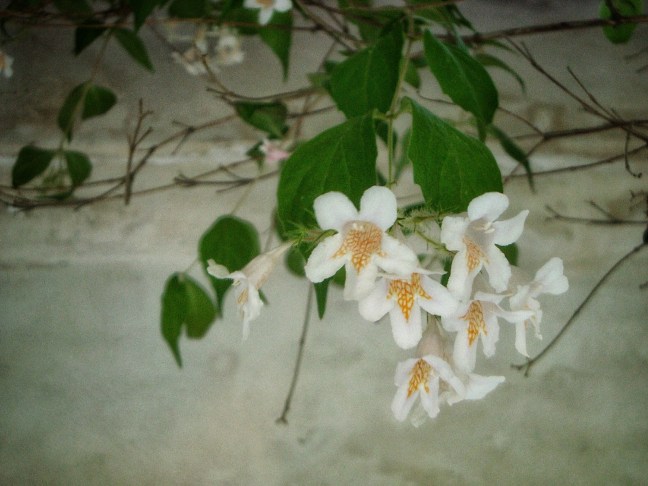
Text and photo by Alain Joly

~~~

.

Suggestion:
Other ‘Ways of Being’ from the blog…

.

Lectio Divina

‘The Great Boulevards’ – Pierre-Auguste Renoir, 1875 – WikiArt

I have been feasting on some words recently. I was sitting leisurely on a cafe’s terrace, watching life coming and going, browsing through my phone with some ideas in mind. And there it came, and took me by surprise, like a koan suddenly unveiled, a pathway revealed without my knowing. There it came, taking the form of one single, simple phrase that seemed innocuous, by Saint Augustine:

Is any man skilful enough to have fashioned himself?
~ Augustine of Hippo

And that emptied my mind. It made me sink into no content, aware of all that is now; my self suddenly made a container for life. We all feel that we are so smart and powerful, or so stupid and powerless. That we have made ourselves what we are, and feel in consequence the pride or shame of it. That we have destroyed, or elevated ourselves. That we are responsible for our happiness, our success, our failure. That we have moulded our thoughts and actions, wilfully designed them. That our beliefs are believed. Our thoughts thought. Our words uttered by a ‘somebody’ here, inside the skull. But these are all beliefs, and beliefs are flawed from the start. Beliefs need a believer to believe them, and look as you may, you will never find such one behind your deeds. For the simple reason that there is no self behind our selfing. We have therefore never been in charge, never been truly responsible for collecting what we have collected, for misusing what we have misused, and for making the mistakes that we have made. Except in hindsight, in thoughts and beliefs, in cascades of randomly built illusions and memories in which we are caught and made blind. And these are what we have busied ourselves managing and arranging into a sensible self. And that self has gotten in the way of our living harmoniously.

[…]

The ‘Lectio Divina’ of a quote by Augustine of Hippo… (READ MORE…)

.

The Ultimate Absolution

‘Spring Waters’ – Vilhelms Purvitis, 1910 – WikiArt

Isn’t it wonderful to discover that you cannot be destroyed? No matter the magnitude of your heartbreaks. No matter the betrayals and the dishonesties — all that is unforgivable in others or in yourself. No matter the untold suffering inflicted to your body or to your self. Isn’t it a blessing to notice that you cannot be broken no matter what? You can believe to be broken, sullied, doomed and punished for your sins. But in reality you are not and cannot be. You are as beautiful as you ever wished to be. Worse even. No quantity of imagination, no originality of a mind will ever prepare you to comprehend the pure and unsullied nature of your self, which equals to nothing but the beauty of your heart.

The only thing that can ever be hurt or sullied is a thought or a belief. You will be hurt in proportion to the extent of your identifications. The greater your illusion, and the sharper will be the pain when it is challenged, or diminished, or trampled. A belief is a living thing. It is not just a dead abstraction that can be easily ignored or overcome. A belief is as alive and sensitive as a self can be. We are made of that belief, we have clothed ourself with it and have become vulnerable to all that can undermine it. That’s how you become a sufferer. That’s how you can imagine to be sullied, diminished, destroyed. It is all contained in one single belief about yourself. And it can be released in one single act of contemplation: Seeing yourself as you are, and not as you imagine yourself to be.

[…]

An exploration into the true nature of forgiveness… (READ MORE…)

.

The Most Important Thing

That might be the most important thing of all. Not the meditations that leave you in a state of gratitude and wonder. Not the repeated understandings, no matter how deep and essential they are. Not the feelings of awe in front of that experience of oneness — the disappearance of yourself, and the appearance of your true, revealed, precious self. “I got it at last” were you thinking… But no. That would have been a bit too easy. None of these might do it in the final end. For these extraordinary revelations will eventually have to die down. For these experiences will have to end of their natural end. For these lack the last little remaining kick. There always seems to be another last ‘top of the mountain’. Another frontier. Another clarification. Another hope. Another deception. Another naïve expectation. And another waving hand and unwanted reminder from your sense of being a separate entity. “Hey, I’m still alive!” And back are you on your meditation cushion for another sprout of failing expectation.

That might be the most important thing of all. Not to leave a way out for yourself to escape and hide in a little corner. To grab yet another last little pleasure. To keep yet another wee sense of pride. To have yet a negligible remaining sense of being ‘me’ and enjoy the show from a distance. For these little remaining indulgences, no matter how small and inconsequential they may appear to be, will give rise once again to a fully grown sense of being a person. And this ‘person’ still has on a leash the dark beast of suffering that seems to come back with ever more strength and power. We might finally be eaten by it and be left here, a panting failure. We might never make it… The beast is barking now. Growling in the background. Waking itself up. Hungering for more and better with sharp scintillating teeth.

That might be the most important thing of all. Simply to give yourself up to just being. To not think you’re going to participate to your own banquet. You cannot be a guest of honour when you are yourself the one to be devoured. You just have to give it all up. Every thing of you. Every remaining bits or crumbs on the table of your apparent self. And it will have to be a pleasant offering. For it will never be forced on you. You are invited to die willingly. Or more precisely, to die understandably. To let go of that pestering little thought of yourself. That old haunting belief. That erroneous identity. Knowing that it’s your only chance. The last little thing left to do. That last remaining kick. The most important thing of all. So do it… That’s how you have a really joyful banquet.

.

You can’t both drink the cup
of the Lord and the cup of demons.
You can’t both partake of the table
of the Lord and of the table of demons
.”
~ 1 Corinthians 10:21 (The Bible)

.

~~~

Text and photo by Alain Joly

~~~

.

Website:
BibleGateway

.
Other ‘Ways of Being’ from the blog…

.