‘God Runs After You’

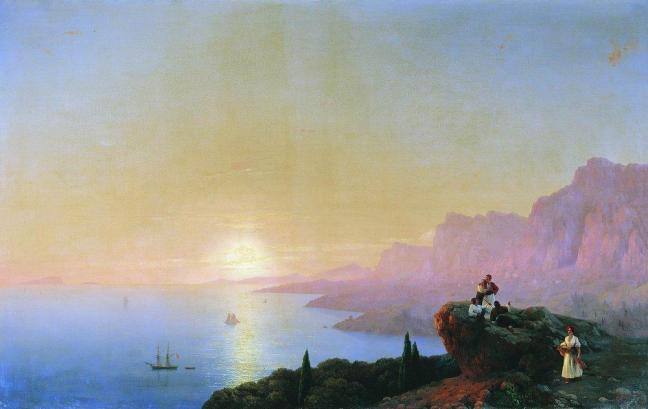
‘Sea bay’ – Ivan Aivazovsky, 1842 – WikiArt

Through our constant effort, we keep the effortless at bay. Even if we seemingly don’t do anything, we are always after something. So this constant, subtle pleading, asking, begging is closing all doors for truth to come in, to reveal itself to us. We are already dating someone else. Our mind is full of its rushing out in direction of an object, something that is going to satisfy us, to give us an identity, to fulfil us in some way. We are never truly longing. We are never an empty shell — always seeking, filling ourself with one thing or another. We don’t dare giving up, being vulnerable. We think we have to be someone, an entity in charge, a doer, a knower. We live with an armour, with layers that are concealing our true nature, even repelling it.

We have identities. We are full of them. The body is one, which we believe to be and be limited by. The mind is another, which we have adopted as being ourself — the ‘I’ that I am. We too believe in our thoughts, that we think define us, shape our identity. We are in a prison of our own making, made of bricks of memories, beliefs, hopes, desires, fears, that all concur to build a non-existing self of which we have now become the slave, and with which we have a dysfunctional, love-hate relationship. Even our ambition for truth is too much of an identity. Our desire for enlightenment is still a desire for fulfilment, another thing to achieve, a someone to be. Our true identity as pure, infinite being is not a new identity. It is not concealed or limited. It is not resisting, desiring, lacking anything. It is its own fulfilment — an identity that cannot be had, named or measured.

That’s what a true longing is — to be without ambition or desire of our own. To have even not a desire for truth, for which we will need an ego, and which still is a wall against the truth we seek — maybe the thinnest of all, but still a wall. Reality is to be realised, not achieved. It is in the word: ‘reality’ — which is we are that which is. There is no need of even the subtlest move towards it. It is all in the way we long for it. All in the way we build nothing that can go against it, or that could conceal it. This is the meaning of humility. We have to be lowly, on the ground, at the root of ourself, which is to be with our selfless being. We have it already — the being that we are after. It is all a matter of how quiet and accessible we can be. How we can be without a wall, without an identity. This is the most powerful longing there is — to be without any longing of our own making. To be without imagination or belief. To be watching only. Present. Already being — which we are anyhow. Not being an ambitious of some kind. There is no need to run after God. As Krishnamurti once put it so beautifully, “God runs after you.”

.

~~~

Text by Alain Joly

Quote by J. Krishnamurti (1895-1986)

Painting by Ivan Aivazovsky (1817-1900)

~~~

.

The quote is the title of a book consisting of eight hitherto unpublished discussions with Krishnamurti held in Malibu, California in 1970.

Bibliography:
– ‘God Runs After You’ – by J. Krishnamurti – (Krishnamurti Foundation India)

Websites:
Jiddu Krishnamurti
– Ivan Aivazovsky (Wikipedia)

Suggestion:
Other ‘Ways of Being’ from the blog…

Our Last Delusion

‘Løvsprett’ – Frits Thaulow, 1889 – Wikimedia

You won’t see a world outside the confines of the mind. The world is not there as an ultimate reality. It draws its many shapes out of the limitations of mind. It is sculpted by our senses. Thoughts are giving it its colour, shaping it for the purpose of a self. We blame it for our suffering, or praise it for our happiness. But its existence is a passing, illusory one, as it is for all thoughts, and for the body.

Although we as a body live in a world of limitation and finiteness, we in truth have our stand and our anchor in the deeper, conscious reality of our own undefeatable, limitless being. Happiness in the world never comes from experiencing the world. It comes from beyond the senses, beyond experience. It comes from beauty, which is the nature of the world when it is experienced from that part of ourself that is infinite.

Contentment in our mind is not given by our thoughts and our many feelings, but through experiencing them from the peaceful nature of our deepest reality as being. To live in the world is to be lost and to know suffering, but to have the world living within ourself is to know a joy that is free and independent from the ruthlessly changing nature of experience.

So free yourself from the world; it is not where you live. Rather, have the world close to your being, and see its nature as your own. This is the way to live in the world. See that it is still of the nature of mind. That it doesn’t own its own reality, but borrows it from the infinite, from the limitless, which is the nature of yourself as being.

So everything you seemingly do, you in fact never do. What you think you are, you are not. We live in a world of imagination. In fact, we only ever live in and as a reality that is shared, and that is our very nature. There, in that reality, is found the reality of our body-mind-world. This reality is the nature of everything and everyone we encounter in experience. It is our real world, our only home.

The impression that we live in a world that has its own reality is created, believed. The belief in being a body has created the world, has made it sprout out of a duality that we have ourself made up and manipulated. Outside this belief, everything re-enters the place it has never left, and the oneness it has never been separated from: infinite, eternal, seamless being.

This reality is what there only and ever is. Nothing exists beyond it, whether it is a world, a body, or a mind. To live as a body-mind in the world is to feel separate from it. It is to see ourself as a self. It is to have the arrogance of being our own self, and to see the world and circumstances as the provider of happiness. This is why we always look for contentment, security, stability, constancy. We mimic what we are before we actually know it.

And enlightenment is sill part of the world, still part of a belief. Its reality is invented, created for the sake of a self or an ego. Enlightenment is not about being enlightened. There is no such a thing as enlightenment, unless you want to cling to the reality of yourself as a body-mind. The belief in enlightenment is our last, ultimate delusion. It belongs to a non existent world, to a non existent self.

You have been the light of yourself — of selfless being — all along, but have played within the illusion of a world and a self, therefore concealing your own reality within that illusion. Re-assign yourself to your true nature. Then it doesn’t matter what you experience. It is not in what you experience — it is in what you are. It is all there. Nothing and no one exists beyond it. You have no use of enlightenment.

.

~~~

Text by Alain Joly

Painting by Frits Thaulow (1847-1906)

~~~

.

Website:
– Frits Thaulow (Wikipedia)

Suggestion:
– Other ‘Reveries’ from the blog…

The Person

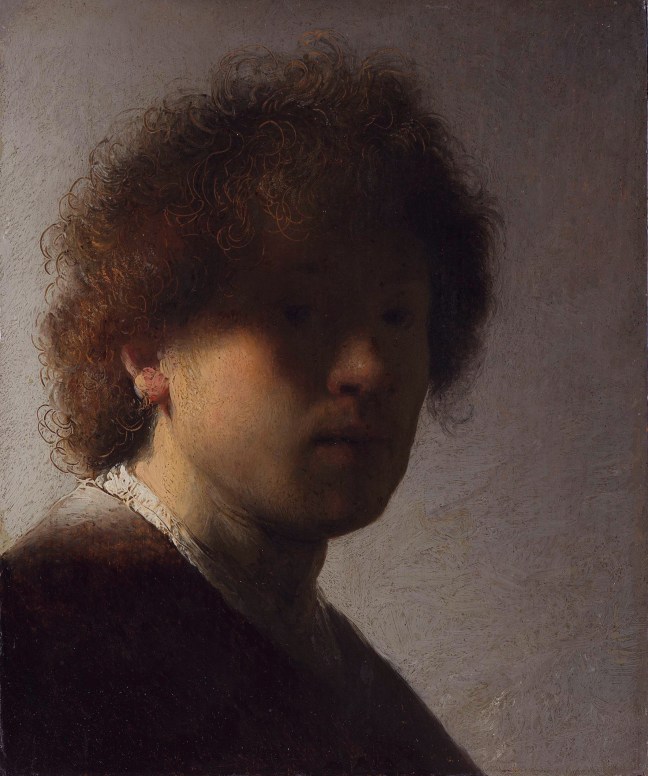
‘Self-Portrait with Dishevelled Hair’ – Rembrandt, 1628 (Rijksmuseum) – Wikimedia

There is immense pleasure in being a person when we are not a person. Then, the body-mind, the person, is not a burden anymore, it is a companion. We begin to enjoy its gentle presence, for it is rid of the constant search for happiness, peace, freedom. It is not on him anymore. She doesn’t have to bring about her joy. Doesn’t have to condition her freedom to her circumstances. The person is delivered. It doesn’t have to resist and be a fighter. Doesn’t have to struggle, suffer, hope, be in the constant grip of personal achievement and success. He can stop being a seeker, endlessly looking for what could make him good, content, relieved. She can stop having peace on her everyday agenda. These are given — naturally — as our nature, as ourself. They stop being the work of a person, his everyday load that he has to achieve, perform, be a success at — all the tyranny of it.

There is a presence that we feel is our own, our identity, that already gives us everything that we as a person would spend a lifetime looking for, and would for certain — that’s a universal secret, believe me on that — fail to secure. We already have a wonderful, pristine self in the form of our naked, unconditioned being, so the person doesn’t have to create a non existent self for itself. It doesn’t need to have this belief, that it is a self, that it is separate, that it lives inside a body and a mind. Self and identity are already provided. We share them with everyone and everything. We don’t have to be lonely. Don’t have to be limited by a form, and imprisoned by the boundaries of birth and death. Appearance and age stop being an issue. Comparison dies down. We expand as limitless being, outside even the boundaries of time. The body-mind acquires transparency.

Then we take him or her by the hand — the form, the limited body-mind, the person. Then it is like our best friend, freed from everything that made it small, separate, fearful. Then our body, although limited, will acquire and ride on the infinite nature of its beholder. Then our mind, which is bound by the boundaries of time and thought, will wander on the grounds of the eternal, where our being has its permanent home. Then our personhood shines, precisely because we are not a person. We become beautiful, attractive, and our actions bear the signature of the infinite. Then, being a person is important. And it is not a hindrance to our recognising who we are. On the contrary. The person becomes an emissary of truth, both within and without.

Then ‘what is’ is what we desire, and we don’t mind our circumstances. They satisfy us. We are free. We can be a person and find it a beauty to be so. The person is only here to pass on the impersonal desire of the infinite. It is here for God’s will, which is to be and act on God’s premises, in Its gorgeous name. Not to have a private agenda, in the name of the endless insecurities of a nonexistent, separate self. Not to be burdened by life, but to be the messenger of its secret glory. Then, she as a person is clothed in the dress of a delightful being, shining with an identity that she borrows from God’s identity, and partaking of a self that is the very self of universal being. Then he doesn’t find his person to have an existence separate from his not being a person. Person, no person, being, consciousness, God, life, existence — all one same infinite thing and being. And the person, against all odds, thrives in it.

~~~

Text by Alain Joly

Painting by Rembrandt (1606-1669)

~~~

Website:
– Rembrandt (Wikipedia)

Suggestion:
– Other ‘Reveries’ from the blog…

Love Actually

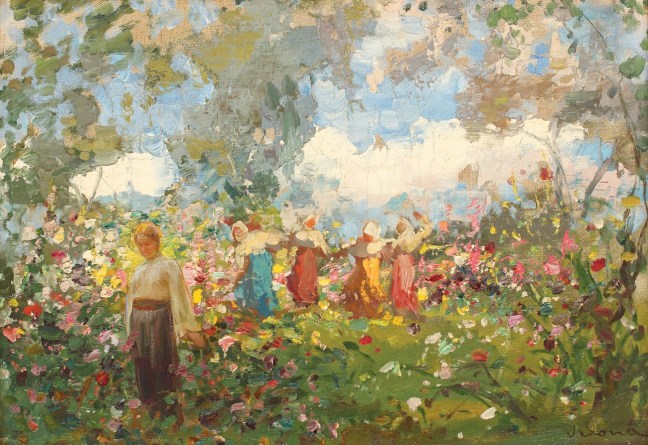
‘Sarbatoarea primaverii’ – Arthur Verona – Wikimedia

Love is the essence of everything, and our very nature. Because we don’t live separate and afar. We are not distant from each other. Nothing is. We have a natural intimacy with everything and everyone. This is not a theory, or a philosophical argument that we posit. This intimacy is our deepest reality, what we are, the property of our natural being, which we can feel, see, experience, but whose evidence has disappeared from our eyes. The reason is, we have preferred a theory to the reality, an illusion to the truth. Our life has stopped being natural. We have been faking it, living it according to beliefs, habits, conformity. But here, blatant in and as our very being, is a reality in which there is no time or place, no distance or separation, no otherness. And as we all know from experience, love is the abolition of time, of distance. Love is the end of separation, of otherness.

Love, which we may call beauty, for everything that we love is beautiful. Love, which we may call understanding, for to see love as the essence of life is the ultimate form of understanding. Love is to ‘stand in the midst of’. It is to stand with everything that is under, everything that is existing in our reality. It is to be connected, to be together with, to be of the same essence. So love is an expression of oneness, of our nature as the one and only reality there is. In the absence of separation — which is truth — we find love. In the absence of otherness — which is our reality — we find intimacy. We make love every time we are aware of our reality as only being. We manufacture love when time is discovered to be an idea, and separation a belief. To be in love is to realise our nature as being one with everything and everyone. It is to be unable to part with anything. It is humility at work. It is where division is only possible in a figment of our imagination. It is to be with what is, with no pulsion of escape or resistance. Love is both in the ache of separation and in the desire to be reunited. All seeking is done in the name of love.

To love is to stand in the midst of, to see no separation between an ‘I’ and a ‘he’ or a ‘she or a ‘it’. The more we stand as the quality of being aware, as that which knows all things, the more we have love as our daily companion. It is extraordinary that we can feel to be a body and a mind, when there is before these, in the subjective, the vast and unmissable expanse of that which is aware of them, which we have pushed away as a mere function of that body-mind. The body is something that we are aware of. We are not in the body. We are in the ‘aware of’. This being aware is our home, where we live, where we have our life. This is our placeless place. That which we cannot not be in. That which we cannot part from — our most intimate, unchanging identity. To be that knowingly, to live as that, is to love naturally and unconditionally. Every time we notice that there is a reality, a consciousness, a knowing presence before our body, thoughts, feelings, experience, world, then love appears to be the very material we and the world are made of. The first and last brick of our house. Our everything.

.

~~~

Text by Alain Joly

Painting by Arthur Verona (1868-1946)

~~~

.

Website:
Arthur Verona

Suggestion:
– Other ‘Reveries’ from the blog…

.

A Virtue of Old

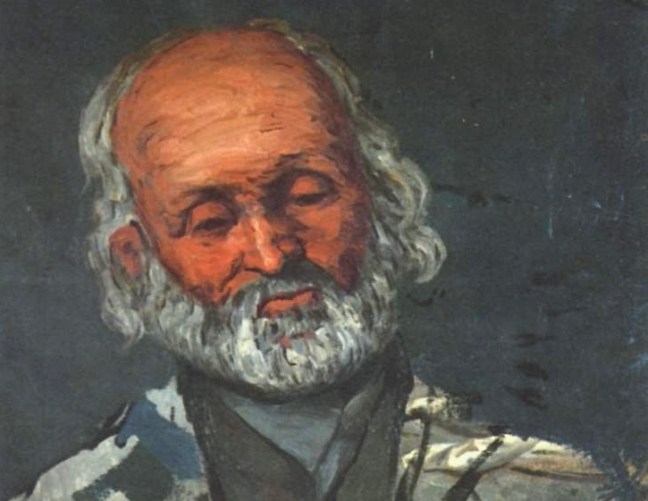
‘Portrait of an old man’ – Paul Cézanne, 1868 – WikiArt

Od age and ailments have an astonishing virtue. They teach us that our body and our mind have a weak reality, that they soften, do not last, crumble. They are like everything else. Their reality is passing, illusory, and ours is not what we have taken it to be. For we notice that as our body weakens, falls apart, we do not with it. We stay as strong as ever. We shine as something else. Not a body. Not a mind. Not an apparent self. But spirit. Our spirit strengthens. Our presence widens — if we care to look at all, to be aware, to not attach ourself to a dying object, to a withering skill. If we stay as our solid being, as that which we haven’t been attentive to so far, for reason of an irrational and obstinate fascination for our body-mind-experience, and our puny self.

So when these, that didn’t have a true reality, go; when these, that didn’t stand the mark of eternity, wither; then our fascination shifts for that which cannot go, wither, or crumble. For what stays massively behind. This reality of ourself hits us in the face — what we are, what we were even when we weren’t looking, weren’t interested, had our life within the limitations of our body-mind. Then it comes soothing us, telling us of our nature, of our grandeur. Then, what falls apart is not just our body or our skills, but also our beliefs about our mistaken reality. Our error as to what our nature is. Now we have a conversation with the infinite, and a rising love affair with the eternal. Now we have a compassion for what we believed ourself to be — body, mind, self, skill, experience — and that now have the humility to show their frail existence. Now we stop minding so much about them, and we find the peace that it is to do so.

So where do we choose to go when we cannot go anywhere, when places become fewer, when time stops being a promise, when circumstances lessen? Where is this place that our body cannot take us to, and that comprehends all that we as a body were chasing relentlessly? What is it that our thoughts cannot give us, and that we now find is here behind and before every thought, every belief, hope, or fantasy? There is a sumptuous gift behind every body or mind that loses grip on the objective world. There is a treasure in the quiet home of our self, when we are asked to stop seeking our happy self in a thousand places, practices, or experiences.

There comes a time when we cannot chase our preferences anymore. When we have to leave behind our dearest experiences. When we have no more time to become, attain, grasp that which we want to grasp, attain, become. But there is offered a time for letting go, for a sweet abandon, for uncovering that which in us can never wither, weaken, age, crumble, suffer any kind of ailment. There is a place which holds the whole world in its loving heart, and this place of love is ourself when we have renounced to find it within time, place, or circumstance. There is a virtue in not expecting from body, mind, world, experience, what they can never give us. There is a virtue in resting where we are, where we swallow body, mind, world in an instant, and are free in spite of circumstances.

.

~~~

Text by Alain Joly

Painting by Paul Cézanne (1839-1906)

~~~

.

Website:
Paul Cézanne (Wikipedia)

Suggestion:
Other ‘Ways of Being’ from the blog…

.
A Ghostly Thing

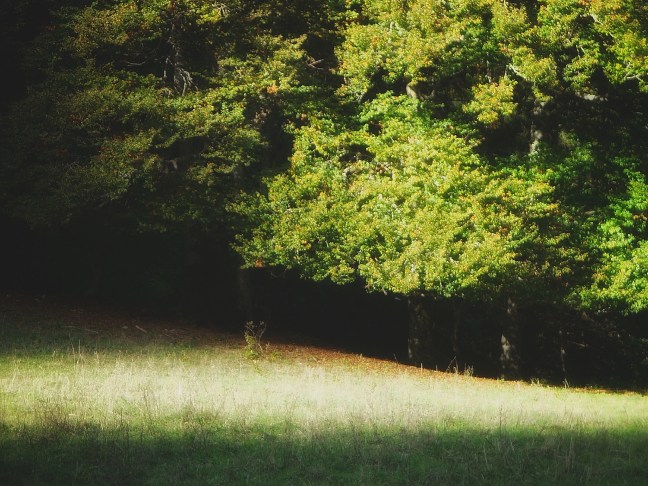
We only ever become within the course of time. We seem to always want to move cautiously, step by step. We don’t consider a becoming that could be achieved in an instant. Quicker even. A becoming free of the constraints of time or place, that could not be influenced by our thoughts, conditionings, beliefs, desires. A becoming that doesn’t find its worth in objective experience. A becoming that has no movement, that is still, confident, ever present. A becoming which bears in itself no change, and that was here before you even had the idea to change, or become, or evolve.

After all, when it comes to our identity, to who we truly are, ‘becoming’ seems to be a very poor idea. What could we become that we are not already? What is here in our very being that could become, that could be different, or better, or more? Our identity has been settled from time immemorial. It was here before even the appearance of time, which is but the product of our patterns of thinking. Before the appearance of place, which is but the product of our ability for sensing, seeing, hearing, touching. We have our identity and our perfection — our changelessness — hidden in being.

So, could we not become what we are? That’s the real question. How do we become our true identity? How do we espouse who we truly are, or be that thing which we are that cannot be deformed, changed, soiled, or even defined? That implies understanding both the one who wants to become, and that which he or she wants to become. There is a becoming, a change, a better or a worse, a less or a more, for the body-mind. But is there a becoming for ourself? Is there anyone here that could ever achieve becoming? Look for the one who wants to become, and notice that you will never find it. Becoming is a ghostly thing.

You cannot become. That’s a lovely idea, one that comes from another idea. From the belief that you are something, someone, that can change, evolve. There is in our being no room for change. Being is complete. It cannot be bent according to our beliefs, hopes, ambitions. So there is no becoming that which we are, and no one to become being — a better being, or a worse being. Being is the only thing shining in our being. There is no one here that could ever want to become. We may give to our body-mind more skills, more strength, better abilities, but to ourself, we can give nothing but the faculty of being only being.

So go only for what you already are. That’s truly what you want to become: what you already are. There is not a better becoming than that. That will spare you being a person caught in the effects and weariness of time and place. That will spare you being in the prison of a self, all the separation and loneliness involved in becoming anything or anyone. That will free you — to not become. That will give you exquisite joy — to only be what you are. That will give you certainty, confidence — to have your own being as your changeless, unbreakable horizon. May you become what you are. Believe me, this is heaven.

.

Creatures of a day! What is anyone?
What is anyone not? A dream of a shadow
Is our mortal being. But when there comes to men
A gleam of splendour given of heaven,
Then rests on them a light of glory
And blessed are their days.”
~ Pindar, 5th century BC (Pythian 8)

.

~~~

Text by Alain Joly

Quote by Pindar (c.518-c.438 BC)

Photo by Alain Joly

~~~

.

Website:
Pindar (Wikipedia)

Suggestion:
– Other ‘Reveries’ from the blog…

.

Salvation

‘Storm by a Lake’ – Pierre-Henri de Valenciennes, 1780 – WikiArt

Many religions have spoken of salvation, but the idea of being ‘saved’ is not fancied by most people. We don’t like it. People have their self-esteem. They want to feel that they can be responsible for themselves, that they have the resources to overcome whatever needs to be overcome in their life. They don’t want to rely on a god, or an external agency, or even a power. They don’t like to be put down, don’t fancy being a poor thing in need of being saved.

The good news is that there is no such external power or entity. We have it all in and as ourself, as our own being. Nothing exists or stands beyond or aside our being. This simple being that we are, which we are made of, which we draw our very existence from, is the only thing that has a reality. We won’t find a reality at a distance of our own being. The idea that there is a reality other than our own reality as being is only a belief. We won’t find a power beyond our own power, that could come to save us. This world of ourself was perfectly designed. It was made whole and one, so that we hold within ourself our own resource, our salvation, everything needed to live a gorgeous, peaceful, meaningful life.

So the idea of a salvation took us on the wrong track. It had us waiting, hoping, praying, expecting, while at the same time abhorring the idea of needing help. It gave us the idea or impression that we were an entity, a person with its own personal, separate being. It manipulated us to think that we were our story, and that we needed to be fixed, aggrandised, improved, saved. For after all, let’s be honest, we do need to be rescued from a peril. We do need to be delivered from the danger of suffering, of separation, loneliness, conflict. We do need to save ourself from our belief, idea, concept that we are squeezed in our body-mind, and limited by it.

With such an idea in mind, we have but the semblance of a life, but not life itself. We have been simulating having a life, pretending to know who we are, and then acting as if everything is as it should, as if suffering couldn’t be avoided, as if it were intrinsic to living. We have in fact ourself created the idea of a salvation, of a person at a loss, needing help. But the truth is, there is really no such a thing as salvation. Salvation is implied, or contained in being. Salvation means ending a belief. It means not taking ourself to be what we are not. It is the returning to our natural state of simply being.

This conceptualisation of our being into being a self, an entity, a separate being, is the road towards separation, isolation, suffering, conflict, and therefore salvation. It is our wrongdoing, our ‘sin’. But the sinner is an entity that we have created. We have made a sufferer, a sinner where there was only the peace of being. Through this creation of an illusory self, we have invited separation, duality, and have divided being into a self separate from other selves and things. We have given the world a reality independent of our own, and have made the glory of being into a self that has retired into the limits of the body-mind.

Our salvation is in the sin itself, in its ending. It is in being, before the birth of the idea that being requires being something, or someone. Before our identification with our body and mind, which has made suffering and conflict our daily companions. So salvation is always only an acknowledgment, a noticing. It is the knowing of our being as it is, and not as we have made it, through belief and habit. This is how we are doomed, in being a self separate from everything. And this is how we are saved, in being only being. This understanding does save for it tells to a mortal that he is immortal, and it assures a suffering self that she is blessed with a peaceful being. A sin is an unfortunate addition to plainly being. It is a simple exaggeration. We have created, invented a sinner where there was nothing but our gorgeous, infinite being.

But this is something that can be reversed. Salvation is natural, already here, achieved, contained in and as our own being. Salvation is being. The one in need of being saved is not there, has no reality other than in our mind. The idea of salvation or deliverance itself must go. It had found its use and meaning when we were but the thought of being someone. When this idea of being someone goes, when the qualification withers, being stays behind, resplendent, in no need of being saved whatsoever.

All this, the whole spiritual enchilada, is only a convenient story for the poor me. Deliverance is achieved in being. The sinner is an illusory superimposition on being, which is intrinsically already free. We have limited being, have made it an impotent thing. So there is ultimately no sinner, and no salvation. This is why we say that God is forgiving, because there is always at hand the realisation that there is in ourself, in being, no room or possibility for an entity separate from experience, and therefore for a sinner. In this discovery of our being whole, and One, is the birth of a love and a peace that is beyond understanding, beyond any making. In fact, we have been saved and safe all along. 

.

~~~

Text by Alain Joly

Painting by Pierre-Henri de Valenciennes (1750-1819)

~~~

.

Website:
Pierre-Henri de Valenciennes (Wikipedia)

Suggestion:
– Other ‘Reveries’ from the blog…

.