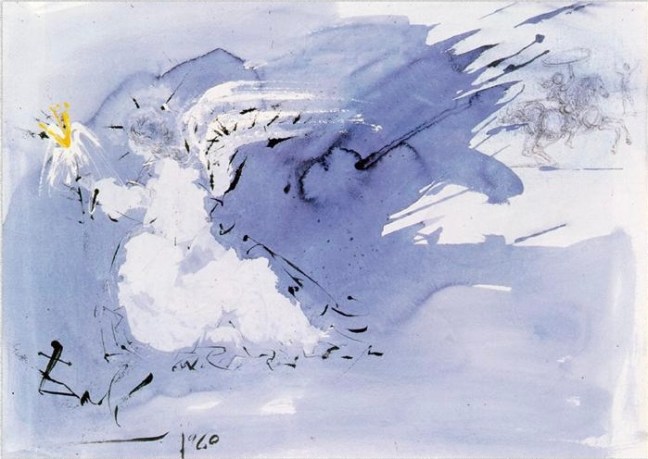
‘I Am with You Always’

‘The rest’ – Marc Chagall, 1968 – WikiArt

There is no ambiguity with God. This has been said in a thousand different ways, in every corner of every page of the Bible for example, that God is with us, that there is in us, as us, a presence hidden in plain sight, that won’t let go of us ever. That it is the very making of ourself, our sublime identity — what we live our life with and could never depart from. We couldn’t doubt it in the least, for with just the right kind of looking, and with no effort whatsoever, we could see it, feel it, sense it, that we are that, and not truly our body or mind, let alone our thoughts, our story, our problems, our suffering. “I am with you always, to the end of the age”, that’s from ‘Matthew 28:20’. So there is no worry to be had. We are not alone. That’s just an impression, an invention, that we are separate, insecure, fragile. In fact, we couldn’t be without it. In ‘Zephaniah 3:17’, they say “The Lord your God is in your midst”. That’s what they mean, that our mind finds its ground in this very presence, in this being of ours that is in fact borrowed from God’s being. In ‘1 Corinthians 3:16’, they are even more specific, clearer on that subject, “God’s Spirit dwells in you”. It couldn’t be plainer and clearer. Why don’t we listen?

And we profit from an inbuilt, intrinsic protection in our life. After all, haven’t we gone through illnesses and floods, through a thousand aches, and is not death itself called eternal rest? Haven’t we lived in the constant grip of desire and worry, hassled by a quiet, ever going despair? And yet, are we not beautiful now as we are, after having gone through all this? Are we not pristine beings, untouched by it all, made of this unsurpassable, never changing awareness of being? In ‘Isaiah 41:10’, God is reported to have said: “I will strengthen you, I will help you, I will uphold you with my righteous right hand.” And in ‘Zephaniah 3:17’, it is written that God is the “mighty one who will save”. They wouldn’t say that if they don’t mean it. But we won’t be saved in an hypothetical future, at the time of death. We are being saved now, kept virgin of every objective experience, if we are willing to look. Furthermore, there is an inner peace that has landed in and as our very being since time immemorial. This inner peace expresses itself as joy or love, which we have experienced even amongst our ignorance. Isn’t life worth living for these fleeting moments of joy? And isn’t love our most precious, cherished, sought after experience, that seems to be a miracle beyond understanding? In ‘Zephaniah 3:17’, they say, clothed in the most exquisite poetry: “He will rejoice over you with gladness; he will quiet you by his love; he will exult over you with loud singing.”

So, as is advised in ‘1 Chronicles 16:11’, “Seek the Lord and his strength; seek his presence continually!” Which means we ought to stay with that part of ourself that lies peacefully below the hustle and bustle of existence, before everything that can be pointed at and named, and that is therefore not truly ourself. But God is not happy with only being our being, with filling us with its own infinite being. This presence is also made of the gorgeous fabric of love. This is where love finds its reality, in the innocence of our being, in awareness. So if we love, this love is not our own. We have not manufactured it, let alone directed it. “We love because he first loved us”, it is said in ‘1 John 4:19’. This is what our being feels like, when it is kept pure, unsoiled by our attachment to experience. Love is what we feel when we have relinquished everything in ourself that is mistakingly taken to be us, but is not. In ‘1 John 4:19’, we are being reminded of this eternal truth, that “God is love, and whoever abides in love abides in God, and God abides in him.” And this love, this being of God, is not something that can be had. It lives and breathes only through our being it. The world of things, of objectivity, cannot apprehend it, “cannot receive, because it neither sees him nor knows him”, as is said in ‘John 14:17’. So we are it, not have it, not know it. As long as we believe to be an entity, a something, a someone, we have separated ourself from our reality as God or consciousness. Yet everything, everyone, is eternally made of this being, which is God’s being, and finds its identity and essence as that. After all, didn’t God make that very clear, when saying in ‘Jeremiah 23:24’, “Do I not fill heaven and earth?” To which God could have added: I am all beings and all things, their secret identity, their essence which is only spirit. As I have said and proved a zillion times: ‘I am with you always’.

.

~~~

Quotes taken from the Bible

Text by Alain Joly

Painting by Marc Chagall (1887-1985)

~~~

.

Website:
Marc Chagall (Wikipedia)

Suggestion:
– Other ‘Shreds of Infinity’ from the blog…

.

On Desperation

‘Jeremiah mourning over the Destruction of Jerusalem’ (part) – Rembrandt, 1630 – WikiArt

What needs to be seen and understood is that the story of humanity, the story of every life lived here under the sun, is the story of a desperation. We are fighting off the feeling that something is lacking. We want to reach or attain something, and this something that we are looking for is the same thing for everybody. Whatever form may take our life search, our drives, our dreams, our desires, our pleasures, they are all here to make us feel at peace, content, whole. They are here to free us from ourself, from our search, from our never-ending desperation. Outside, we may put on the appearance of control, normality, and responsibility, but inside we are burning, seeking, longing for that which we have never been able to put into words, explain, rationalise, or make sense of. But in fact, we are looking for something that we already possess in infinite quantity, although unknowingly. We are craving for the abundance that we already have, searching for a peace that is already given, begging for a joy that is throbbing unnoticed in the background of our everyday experience.

Our suffering or desperation is the symptom of this misunderstanding. We fail to notice that we have what we are looking for, that it is here in plain view, already achieved, already formed in and as our most intimate identity. Our self is made of that sweet fire of peace, contentment, and sufficiency. So the misery we are in is only apparent, imagined, made up by our thinking about it, and by our looking for peace unnecessarily, out there, in the wrong place, in experience. There is no amount of effort that will ever help us to attain something that is already attained. On the contrary, the disturbance involved in seeking what we have will cause us misery, in the form of a desperate, separate sense of self. We are too eager. We never sit still, always foraging our experience to harvest some scattered drops of peace or joy, when our very being is already overflowing with them.

The only necessity, or even possibility of being a self separate from experience is through managing the tension involved in seeking a peace that is already our most intimate nature. Our self is the story, the memory of this seeking. When peace is here, there is no self present, no tension that could make us a suffering entity. In fact, we seem to proceed by distraction. We are not looking, and then we complain that it is not there. All our efforts to obtain an enduring peace in our life are vain and doomed to failure for the simple reason that peace is not a thing that can be had. Peace is something that we have to realise is present here and now. It is our vey being, what we are made of, our unborn reality. So there is no real, substantial suffering here to be rid of. It is not that suffering is not experienced. It is that its only reality is only in and as our imagined self. It is but the friction that goes with believing to be a separate entity. Suffering is essentially made of our believed self, which is but our constant seeking to alleviate this apparent misery. The ending of the belief in being a self, which is also the ending of time, space, and separation, will make fully apparent our nature as peace and happiness, in which there can be no suffering, no self, no seeking, no desperation.

.

~~~

Text by Alain Joly

Painting by Rembrandt (1606-1669)

~~~

.

Website:
Rembrandt (Wikipedia)

Suggestion:
– Other ‘Reveries’ from the blog…

.

Holy Ground

We have no being of our own. We have built our existence as a person, as a body, as a bouquet of perceiving faculties, on a ground that is not our ground. We are borrowers, incomplete entities, which is the reason for our restlessness, for our many lacks, and for our sense of insufficiency. Wholeness and plenitude are attributes of the ground or essence. This essence is hidden because we are overlooking it. We, on our choice, have displaced our attention to what we mistakenly take to be ourself: our thoughts, feelings, sensations and perceptions — all that makes a narrative, that gives us an appearance, a consistency, an existence. But one such existence is a fraud. It is not what we essentially are. We have displaced our self, our identity, from the ground to the landscape, from the essence to the superfluous appearances that owe their existence to that universal, infinite being or ground.

But an appearance can never make us. A thought doesn’t make an identity. An idea, an image, a body, are not what we are in essence. But they all have a common ground, hence our confusion in our perceived identity. This common ground is our deepest sense of being, the consciousness that is found at the root of ourself. If only we were aware that what is seeing, thinking, perceiving in us, is actually the ground, not ourself; that what is experiencing, what is aware in our everyday life, is in fact this supreme, infinite ground, then we would acquire a very different idea or perception about ourself, another responsibility, another awe, another reverence for our reality. Our reality would be discovered to be the ground of all beings, called ‘god’ in the spiritual literature. God is not a word for a thing or a person, but for a living experience, a taste, the feeling of being that has its reality here and now. It is not distant, not dependent on a belief. It is a hard reality, accessible in all experience. It is our true nature, what we are, and what we know we are, without a shadow of doubt.

God is not a guess, a maybe, a question. God is a certainty, an evidence, and the answer to our suffering. It is our very conscious sense of being, the very thing which in us makes for the feeling ‘I’, for what I am in truth and in depth. It is our one and only reality. If we do live from that essential ‘I’, then we live from inside the holiest of temples. We cease living and acting from a private, separate sense of an individual self. Behind the veil of our mist, of our everyday fascination for mind, body, appearance, existence, is a presence that is revealed when we let go of ourself. It bears in its DNA the savour of holiness, and of a quiet, unbreakable happiness. Holiness is not an attribute of things, places or people for which we may have reverence. Sacredness doesn’t belong to the landscape, or the object. It is rather the natural expression of our true self, of ‘I’. It is in abiding in our true nature or essence that we feel a deep reverence for everyone and everything. What is sacred is our intimate, infinite being, and this being draws its holiness from its one pristine, untarnished, infinite nature. Wholeness makes for holiness. Holiness belongs to the ground, and the ground has it in its nature to shower benevolence to all hosted appearances. This is how we have, shining in our experience, the qualities of peace, love, beauty. They are all offsprings of the holy ground, which is ourself.

.

~~~

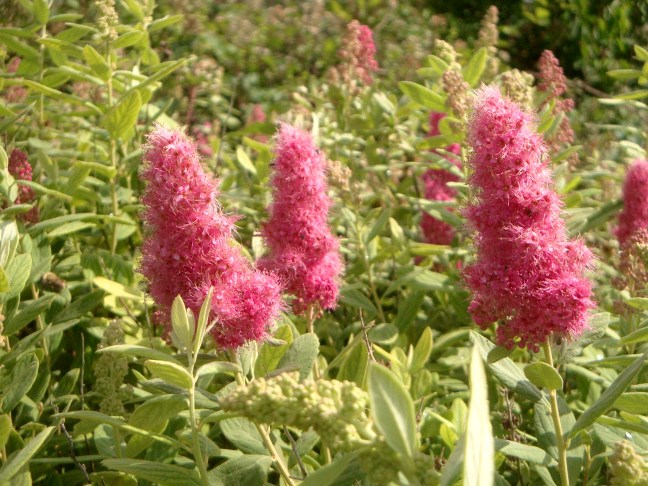
Text and photo by Alain Joly

~~~

.

Suggestion:
Other ‘Ways of Being’ from the blog…

.
On God’s Existence

‘Calm on the Mediterranean Sea’ – Ivan Aivazovsky, 1892 – WikiArt

There is no god. God is an invention that we have placed far away, out there, as an object for our prayers and hopes. As an entity to whom we can address our suffering. God was given that role so that we are not alone. We have divided ourself up into a self here and another greater self there, between which reside our secret longings and our beliefs. We have made god into a handy projection, for our convenience. A soothing presence who will be there for us after death, whom we can trust and rely on, whom we can give ourself to, and find protection in. We feel good in that undoubted certainty of a god.

But there is no god outside of ourself, no distant god, either in place or time. Of this we can be sure. Because wherever we may travel, however far we may go, we find only ourself. We are bound to our own being which we feel in a ‘here’, and in a ‘now’. So we fail in going somewhere that is outside ourself. It’s an impossible task. We cannot go there. Not in a million years. So god cannot be found outside of ourself. Nothing can. Everywhere is here. And every time is now. The only place for god to be is in our own being. There is no other place to be — even for god. There is no way around it. But we have first to understand our own being, our own nature. There, in ourself, is the resolution of the conundrum of god.

So what is this place of ourself, to which we are bound? What is it made of? If we leave our body aside, and our many thoughts and sensations, if we leave the world out of the picture, what is left of ourself that we can say is here, is now? What is this consciousness that we have lived with for as long as we can remember, and for which we seem to have but little interest ? This thing which has held our peace, our happiness, our perceived sense of beauty, even if only experienced rarely or fleetingly? This consciousness that is holding us, that is giving us our very existence, holding our suffering and our conflicts? Should we not feel grateful to have been held with such consistency? To have been held with our feelings, whether happy or sorrowful? To have been lent a body, whether healthy or sick, and a mind, though both may be just a passing dream?

This thing which is here undoubtedly, showing that peace is possible, that beauty is real, that happiness is within reach, is this not our most profound self? Is it not our very being? What we are here? What we are now? And this god which cannot be anywhere outside of ourself, could this god not be this, this very presence of ourself? Our very being? Our very consciousness? Which we are by nature every day of our life? That which can be felt in every bit of our heart and soul? That can give an explanation for ‘there is no god’? That can give a reality to ‘there is god’? That can show that, in fact, not only there is god, but there is only god? That everything, all that we are and experience, is god? That the god which we had thought at a distance, is nothing but the loving presence and reality of ourself and of everything? That life is nothing but the living, pulsating being of god, which we are only and wholly? And which we share with every other apparent being, and every possible appearance? And that this, is the one thing that ever was, and will ever be? And that this, is not inside ourself, for of ourself it is seen that there is not? And that this, is not outside either, for there is no being outside something inexistant? And that now, at the end of our journey, and all things considered, is realised that god is not even god? Because for a god to be, there would have to be separate things and selves to give it a form, and to call it god. There would still have to be a trace of suffering. There would still have to be separation. So there’s got to be no god. God is only for the poor fellows. But for who we are, there is no god. Only being being, at the most. Beyond that, nothing much can be said, lest we should invent some other god.

.

~~~

Text by Alain Joly

Painting by Ivan Aivazovsky (1817-1900)

~~~

.

Website:
Ivan Aivazovsky (Wikipedia)

Suggestion:
– Other ‘Reveries’ from the blog…

.

The Fantasy of a Self

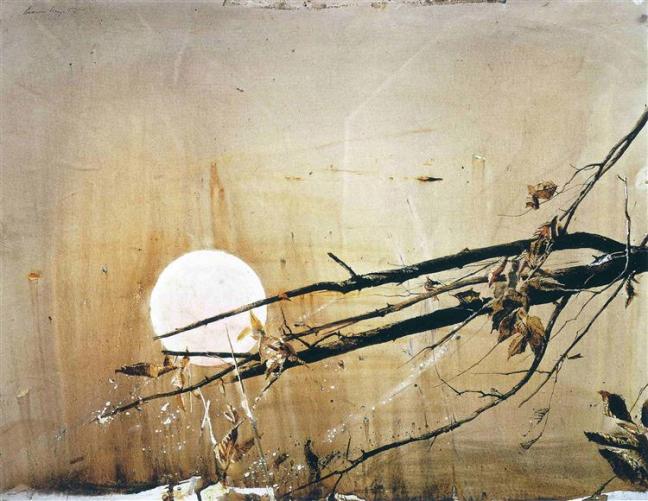
‘Moonlight’ – Winslow Homer, 1874 – WikiArt

We only ever land where we are. There is no escape from where we are. Where we are, is all there is. I mean this deepest place of ourself, from which we have never been separated, is the very thing which we have been looking for in a thousand distant places, in endless situations, in hopes and expectations, in projections, attachments, identifications. Our mind has been thirsting for this place of peace for as long as we can remember, and it has been escaping us with perfect consistency. For there is a rule attached to this place: we can’t find it outside of ourself. And the reason is: there is no place outside of ourself. Ourself — what we are here and now — contains all that we could long for. It is the home which we have left through our contant looking for it in the wrong direction. Our seeking is way too aggressive for its tender being. Our peaceful home lies in the nest that our being is, and this nest of being is where all existence finds its birth and takes its journey.

The problem with accessing our being — our peaceful home — is that we have introduced a self. We have posited a self that is separate from the peace it is looking for. And if peace is situated at a distance from ourself, therefore where we are is the place where peace is not. We have superimposed a self on our peaceful being, and in doing so have invited suffering, which is but the seeking for our lost peace or happiness. It all comes from the connivance of a few thoughts, feelings and sensations, which have set themselves up as a self. It is all part of a scheme on their part, and a gross one if you ask me. For how could something that is coming and going have a self? Something as flittering as a thought, or a sensation, could never produce a self. The self that we think we are, and that we feel is at a distance from experience, is fabricated. It is a product that we have elaborated to feel secure. But we cannot find security in a self. Security is rather the absence of a self, and the merging of ourself with experience, which is felt as oneness.

This self, without our noticing, has created untold damages, it has made life into a havoc. It has invented a within and a without, a here and there, a now and then, when there is in fact only a seamless experience. All these distinctions are of course necessary for our functioning in a world, but they are not the reality. And to ignore their reality is to transform them from a few peaceful, useful devices into brigands that have made experience either something to be feared and avoided, or desired and pursued. In other words, being a self has made experience into a dependence, a battlefield for our own imaginary benefit. But in fact, there is in reality only a now that is ever present and eternal, and a here that has no boundary, no limit, and is infinite. And there is a within that we will cease seing within, for after all thoughts and images are filtering experience to the point of making it their own creation. Thoughts are not just within. They are scattered all over the field of experience, colouring everything we see or hear. And the without will cease being without. For where could without be if not in our intimate experience. So the trees, the houses, and the dog we meet in the street are part of our very own being, for there is only one being out of which they could make an appearance. Where would another being than our being be? To posit another being than our being, or a without without, or a within within, or a there, or a then, is to be absent to our true being or nature, and to live in a world scattered about and fragmented, where reigns every bit of suffering and conflict. But to live as the One renders without within, within without, there here, then now, and our being just only one being. The rest is but a fantasy which we can either buy and suffer from, or borrow and play with.

.

~~~

Text by Alain Joly

Painting by Winslow Homer (1836-1910)

~~~

.

Website:
Winslow Homer (Wikipedia)

Suggestion:
Other ‘Ways of Being’ from the blog…

.
Our Only Landscape

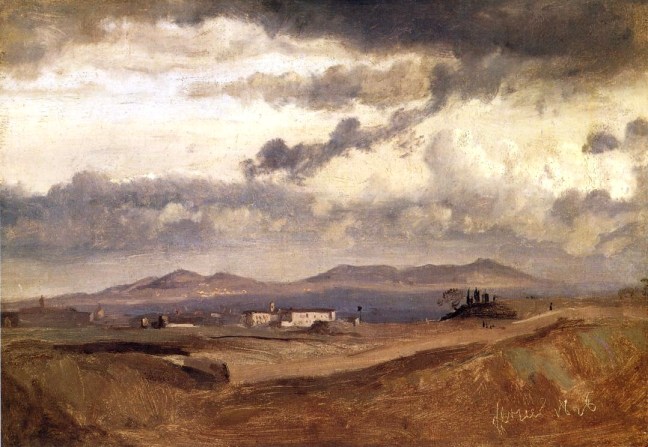
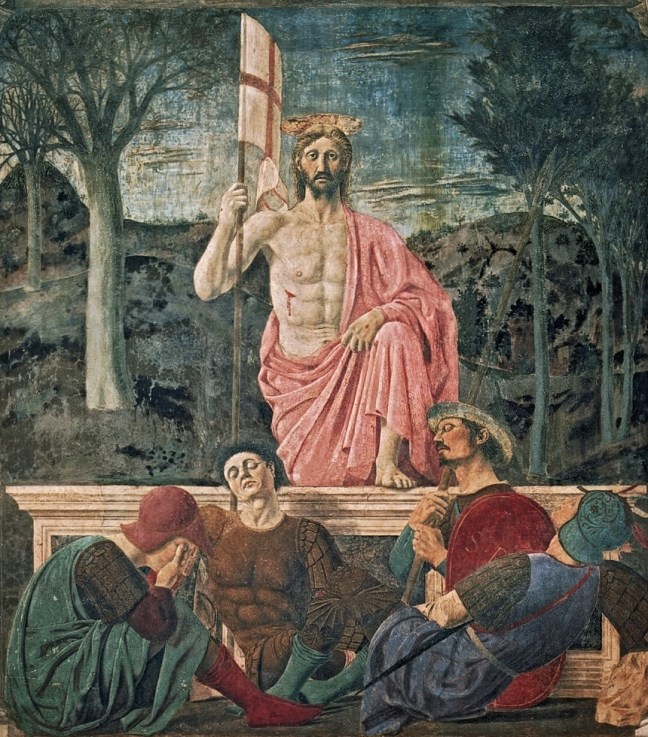
‘An Autumn Landscape with a view of Het Steen’ – Peter Paul Rubens – WikiArt

We are always wandering about, always attracted by a thousand things. Falling for every passing experience. Looking for the fleeting promise it might carry. The reason is: we are so vulnerable to happiness. We want it above all else, at all cost. We know we deserve it, that it is our due, that it is natural, in the order of things, to be happy, rested, at peace. So our mind is never still. Seeking to obtain it. Longing to have it given. Working for it relentlessly. Sometime pretending to be happy if necessary. If it is what it takes. After all, this is the game we are being asked to play. This is our fate, that we have accepted as the norm, and to which we have complied and have been a slave. We would do anything to feel alive, contented, our heart full, our mind at peace, secure, on top of things. And we feel depressed when being turned down. Lost and disheartened at every bout of despair or suffering.

But maybe it is all an unfortunate misunderstanding. Maybe we have taken a wrong turn, and were embarked in our own forgetfulness, distracted by the general consensus. Maybe there is no need to wander about. Maybe experience is of no need to us for happiness. Maybe happiness is not found in experience, not in the least. Maybe working for it creates a distance, a gap, throwing it far and away, like something never reached, never quite here. Maybe hoping for it makes us a self, an illusory entity that needs to obtain peace through the satisfaction given by objects, events, favourable circumstances, which makes us dependent and fearful. What an irony it would be, if it were just this, just this misunderstanding, and that happiness was in fact right here, already spread in and as our sense of being, offered to us with a ruban — a gift eternal for our simply being here and now. How clumsy on our part, to have looked away from ourself for that which is not only in ourself, but our very own self itself. How foolish it all was.

So, this is how it is! We are already fixed in our being, which is peace, which is joy, and have been so all along. We have missed that: that this was our belonging, our identity, to be at peace, firm, stable, fastened, secure in our simply being. And that this simply being was enough, the completion we were after, what we thought was to be earned at the very end of a deceitful string of efforts. Adding to simply being is where we made the mistake, where the wrong turn was taken. We had to stay where we were, and simply notice where we actually were, and what we in fact truly were. Being was not a little thing, undeserving of attention. Being was the completion, everything: you, happiness, peace, experience, the world, all gathered in and as the simple experience of only being. That’s how you lose all wandering, all attraction to things, exchanging them for the one only attraction worth falling for, which is yourself. You have to fall for yourself, for your being. You have to let being embrace you, and swallow you. Then, you won’t have to be anything, won’t have to look for something or someone other than yourself. For you are the fact of being, and this in itself is all the landscape you will ever need and find yourself in.

.

~~~

Text by Alain Joly

Painting by Peter Paul Rubens (1577-1640)

~~~

.

Website:
Peter Paul Rubens (Wikipedia)

Suggestion:
Other ‘Ways of Being’ from the blog…

.
Where is True Home

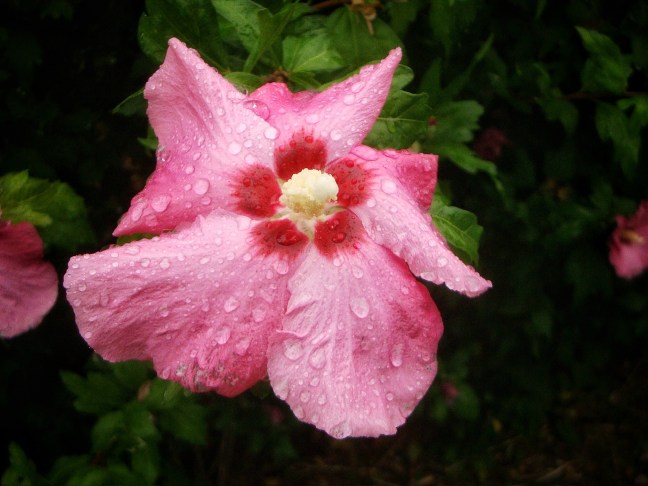
Where can we find what is ‘our own’ in our experience? What is fitting? Where do we draw a sense of belonging from? Most of the time, we do not feel that we fit in, that we have a place. We feel insecure, so we secure an identity in a thousand things. We borrow from an object our appeasement. We make objects our own, we inhabit our thoughts, we adorn ourself with qualities, and we take shelter in a body. That’s what we do to fit in, and find security: we lose ourself in an ‘other’. We beg for anything that we could call our own, for fear of staying alone, and be left a nobody. We make up a self, and then call it ‘our own’. And that place of our own we find — and have defined — in a thousand shaky, unreliable places and things. But it is a bad try. In fact, we have burgled our own home of belongings that are not ours.

How are we going to find a home, if we keep rummaging through experience for every object that fits our needs? We ought to be disinterested for a while. We need to be disowned, dispossessed of every property or belonging that we have so far acquired, clung to, and in definitive stolen. For this is where true ownership is found, in not belonging. This is how a decent property is secured, by having no place to be. We ought to live free from all the accumulations that we have gathered and identified with. For our true home is not placed on the crest of experience, is not built on the sand of insecurity, and is not limited by the fence of limitation. It is not for a self, or a place, to produce the quality of enduring peace. Peace is already here, wholly achieved, in the home that our being truly is.

Live so that you don’t have to steal in your own house. You have it all. Your property extends to infinity and the world is the garment of your whole being. So in being, wherever you are is your home, and whatever you need is found here, in you, as you, with all the peace and security that pertain to a true home. You fit in when there is no space between yourself and what you long for. Being no space, you won’t have an urge to seek outside of yourself your identity and your happiness. Home is the recognition that you are already home. To be is to be home. There is no achieving it, let alone work for it. Be exactly where you are, in and as your own being — the place which you could never not be in. And if you find that a sense of indomitable peace is accompanying you there, then be in no doubt that this is home — what is your own, where you fit in, where you belong. Truly.

.

~~~

Text and photo by Alain Joly

~~~

.

Suggestion:
– Other ‘Reveries’ from the blog…

.