The Intimacy of Experience

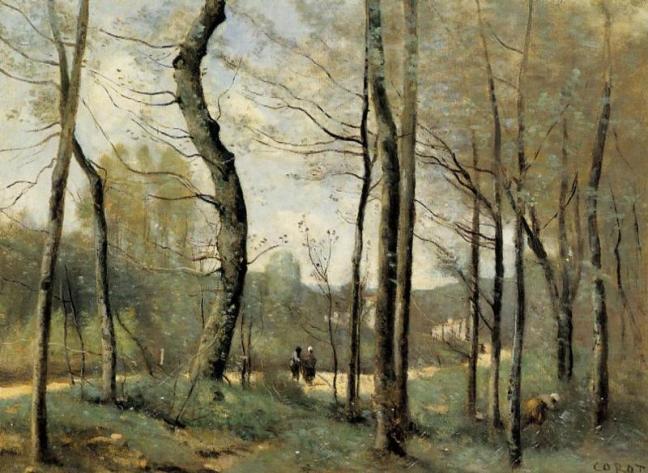
‘First Leaves, near Nantes’ – Camille Corot, 1855 – WikiArt

.
I will tell you where to be
. Be where every experience feels an equally good experience. Don’t be attached to judgment and comparison. These are the mind’s favorite tools and activities. The mind tricks you to believe that experience is an uneven ground. That according to the content of your experience, you will be gifted with either happiness or suffering, peace or conflict, harmony or disorder. So the experience you are having becomes extraordinarily important. We become dependent on what happens to us, and come to dread it. So we retire into the secure place of our habitual self, with its cortège of worry, control, expectation, and manipulation.

There is a place in us where you don’t find experience to be such a determining factor. Where you will not let experience determine you, fix you, limit you. You won’t be shaped by its content. You won’t be made into something, someone, with qualities and flaws, to be judged, evaluated, compared with — the likeness of experience — in fact, just another object. The mind is a manufacturer of objects, entities, persons, fixing the insubstantial nature of your being into a self to be moulded and made either happy or miserable. To be made happy by an experience is to be cheated on by it: we are being manipulated, and made to believe an illusion. To let experience make us miserable is sheer deceitfulness, it is us being easily dazzled by the treachery and artifice of objects.

[…]

Continue this exploration of the nature of experience… (READ MORE…)

.

Spiritual Wine

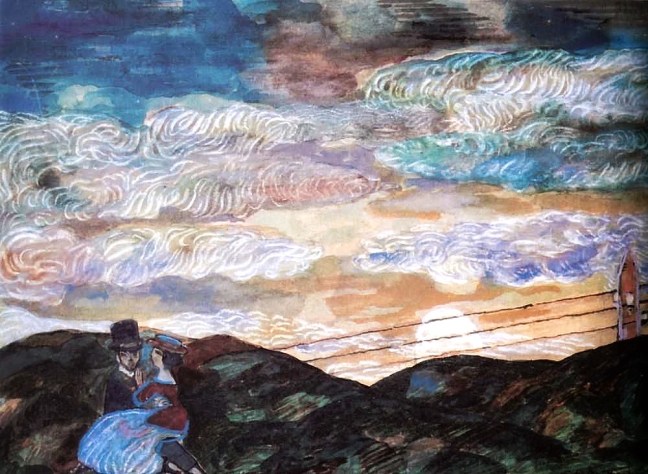
‘Lovers under the moon’ – Serge Sudeikin, 1910 – WikiArt

The word ‘spiritual’ is quite a nebulous one. It is used indiscriminately, carelessly, for a bewildering array of wildly different practices or beliefs. Krishnamurti didn’t like the word, which he found ‘ugly’, ‘romantic’, ‘unpleasant’, and used it cautiously. So maybe the time has come to clean the word, to give it some of its forgotten brilliance, and dig out its original meaning and raison d’être. I would start with the suggestion that the word ‘spiritual’ simply wants to point something at us: that the world, the whole of it, our experience, everything, is in fact made of ‘spirit’. Spirit is all there is, the only thing in presence. And believe me, this is a timely pointer, for most of us believe the world to be a hard reality, made of something solid, composed of a variety of different objects — our body-mind being considered one such object. So the word has the virtue of reminding us of our true nature, of the nature of everything as spirit, or consciousness.

But it is only a provisional word, one for our time of misunderstanding. There will come a time when the suggestion that experience is made of spirit will be a matter of fact, something integrated, not to be thought about anymore. The word will then become redundant, to be replaced by another word of a higher intensity and meaning. Or maybe there won’t be any need for a word to describe reality. Reality will have been understood, digested, lived as the fact of simply being. Spirituality will have become useless. There will be no need of spirituality, no need even of the word ‘happiness’, or ‘peace’. Once you are wholly, and only spirit, which is peace, which is happiness, what need is there to mention it? There will be no seeking either. After all, what you are, you are. Identity will have been achieved. No suffering around. Seeking obsolete. Out of date. To be disposed of. What will remain is a splendour, indescribable, filling the world of experience to the brim with its essence.

Also, spirit means ‘breath’. It is the breath of life, a thing invisible, transparent, quietly sitting in the background, and yet essential and life-giving. It is what is playing us, giving us an identity and a sweetness of living. For spirit is like the air we breathe. It is still, silent, empty, yet a breath that can blow our mind and make us like an inextinguishable fire. It is the breath of god that we have left unnoticed time after time, but whose presence is holding us in its firm embrace. It is a breath of devastating effects, laying us waste, destroying all traces of suffering and separation, blowing our self away, not by slaying it but by showing this self to be just the air within the divine breath of god. You had thought yourself a hard, solid, but fragile entity, and are now shown to be empty yet as indestructible as is a fire in the wind. That’s what being spiritual, or spirit-like, truly means.

Spirit also means character, and courage. It doesn’t pretend, and rejects a lukewarm understanding. It is uncompromising and free. It is not afraid, not conditioned by the hazards of life. It stays firm, alone, whole, undisturbed. Spirit is eternally high, but mingles with the lowly too, for it is humble by nature. And it has clarity as its best asset, for it is blessed with the purity contained in knowing without being itself a knower. This knowing is undivided, self-contained, total, applying to all and everything. This is what makes it holy, a spirit which cannot be taken apart, and which contains universes beyond universes. It has a religious quality, a sanctity that is beyond what humans have called sacred. The wholeness of spirit cannot be broken, dampened, violated, injured, or even changed. Its holiness lies in the fact that it is one without any division or addition.

And spirit is music too. It has a sound to it, and it is our duty to play it, or rather being played by it — the musician being god, or spirit itself. Our being is found to be the breath of god, the movement of consciousness singing our life on the reed of our apparent self. As that, we may become the vessel of a life whose notes have risen above the ten thousand things of existence, to be taken by various harmonies of silence, peace, love — all carried by a quiet but devastating breeze of inner joy, like a hum. We are like God’s music, and our experience is bathing inside it, and being made melody. This is what spirituality is, and what a life lived in and as spirit sounds like.

“‘Tis the fire of Love that is in the reed, ‘tis the fervour of Love that is in the wine”, Rumi once wrote in the Masnavi. So spirit is a delightful beverage too. It is what gives us this gentle drunkenness which is the state of our self when it recognises itself to be but God’s being. In Spirit, we are intoxicated by the ‘Love that is in the wine’. For this nectar, we are willing to pay the price of surrender at the tavern.

.

~~~

Text by Alain Joly

Painting by Serge Sudeikin (1882-1946)

~~~

.

Website:
– Serge Sudeikin (Wikipedia)

Suggestion:
– Other ‘Reveries’ from the blog…

.

The Possibility We Are In

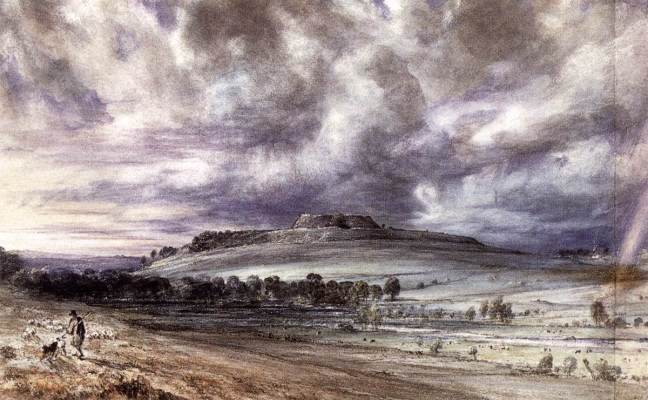
‘Old Sarum’ – John Constable, 1834 – WikiArt

Whatever there is is God’s presence felt. And whatever we may feel of God’s presence, is what there is here and now, including what exists and appears. It is all here for our recollecting, all here that we can be and be god like. Every experience that we may have, every sorrow and every joy, every fear or trust, every ugly or beautiful appearance, is felt and seen because of our being first. To watch anything is to be watched in return by a presence watching. We can make ourself disappear in it, and be without a self, without the self we have always known and colluded with. And we can share of that impersonal, infinite being that is not ours, but that we can be and embrace as our own. So ‘I am’ is the secret door opener within us, that will give us the world we are in. We will have an aggrandised property, or a world made of the very size of ourself, infinite, manageable, and towards which our being may shine a benevolent beam of light and peace. That I feel is a possibility.

The world will have its secret identity disclosed to us. And we too will have our secret identity revealed. Both being made one, and ourself being of it. Others will cease being others. They will join us as that shared one being. There won’t be any jealousy or comparison, but a rejoicing in and as that oneness felt. Our fate and destiny will be contained inside us, within our own being. There won’t be a time to hope for, or a place to fail in, or a self to mess up. There won’t be a fear of tomorrow, or a regret of yesterday, for both will have merged in and as the being that we are. Time and place will have come to be only convenience. And our very being will have come to be the time and place we are in. That too is a possibility.

The knowing of our own being will have come to be our only experience. The many will have shrunk into the one, and the infinite will have subdued our senses, and made itself seen, heard, touched, and contained within our experience. Happiness will cease being a temporary achievement, and will become the flavour of our shared being with people and things. We will have joy woven into every single corner of our life. That’s the possibility we have at hand.

Movement will be seen as the manifold expression of stillness, and silence recognised as the only component of our living symphony. Turmoil will be felt as this last bit of ourself that we have yet to embrace — not something to be afraid of, but an opportunity that we welcome. We have to see this as a possibility.

So this life is the garden of Eden we once extricated ourself from, but have in fact never left otherwise than in our imagination. And love is not an occasional encounter, but the very air we take our breath from. I’m just throwing the possibility in the air.

Now we recognise after all, that the being of God is what we are — the possibility we are in, without there being a God or a ‘we’.

.

~~~

Text by Alain Joly

Painting by John Constable (1776-1837)

~~~

.

Website:
– John Constable (Wikipedia)

Suggestion:
Other ‘Ways of Being’ from the blog…

.

On Courage

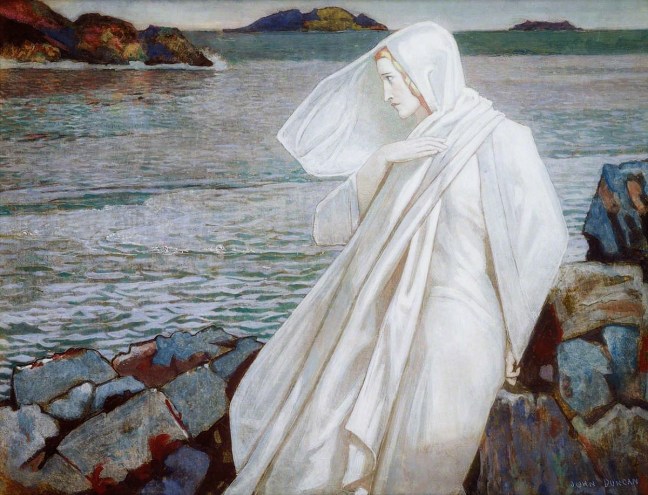
‘The Turn of the Tide’ – John Duncan – WikiArt

Not to suffer is not as desirable as we like to proclaim. We have mixed feelings towards our agonies and traumas. In fact, we have come to like the beastly thing. Suffering has given us many of the things we cherish in our life. Suffering has given us the hopes that we love to entertain, the pleasures we have developed as a routine of escape, and all the little addictions we enjoy in secret. It has shaped our drives and the nature of our beloved possessions. And our best friendships may have developed as a result of this beating pang in our heart. So this is not easy to let suffering go. A lot will go with it that is like the backbone of our beloved self. Being at peace and happy comes with a price.

There is some identity in our suffering, where is hidden a private treasure that we’d rather keep and nurture. If we are honest, we have to confess that our wounds have made us what we are, have formed the self that we believe we are, the personality that we have come to befriend. We haven’t fought our suffering with constancy, and have come to collude with it, socialise, associate, fraternise. We have indulged in every bit of it. We have surprised ourself having feelings for our pain, entertaining a secret love affair with everything that bites us. So to end suffering requires clarity and courage. For we won’t abandon a dream so easily, or put an end to a pleasure without balking. We need to be convinced. Our road to true happiness is paved with reluctance. We have a natural and well-rehearsed resistance to bliss.

[…]

Reflecting on how courage is found at the heart of ourself… (READ MORE…)

.

Remembrance

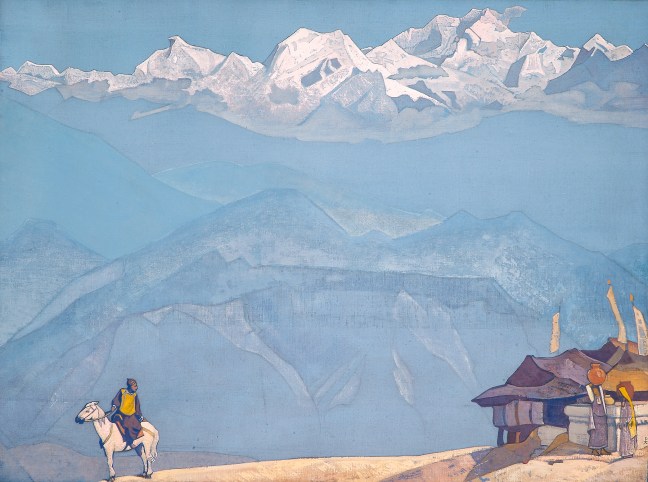
‘Remember’ – Nicholas Roerich, 1924 – WikiArt

All the things that stand out in us, and that we finally believe to be us — our story — are the rugged parts of our existence. They are what we fear or project. What we separate from and refuse to embrace. What we identify with and refuse to let go. What we have used for our identity, to shape our person, and draw some pride and contentment, or some shame and resentment. All the same. We are the children of circumstances and failures, of successes and apparent choices. Of sufferings. So we have shaped ourself with and from what we are not — from what we can remember and hook on. From events and ideas. From what can give us a form and a semblance of reality. But with all these, we are left only with what doesn’t truly satisfy us, doesn’t quench our thirst, doesn’t make us a rock but only a fragile, elusive entity. There is more to us than story and existence. There is what we cannot remember and make a story of. What we cannot fit into the shape of a person. What we have left unnoticed in the interstices of our life.

Why is it, do you think, that we often have difficulty remembering the happiest parts of our lives, which tend to disappear into thin air? Why cannot we seize happiness? Why is it that we seem to disappear in it and with it? That the best part of what we are, is the part less remembered and graspable? We tend to emphasise the foreground, the highlights, what exists, appears, and disappears. We have little consideration for what stands behind, unnoticed — the still, silent, benevolent matrix of it all. The unfathomable that we are, with its indomitable nature. That which lends a ground to all forms and appearances, including time and space. That which is not an object in our experience. Which is not an idea or a representation. Which is alive and can only be felt in and as the depth of our being. Which has the solidity of a rock that can never be moved. Which will never be a person, never have accidents, never be shamed or shaped by circumstances or events. This most profound nature of our being holds for us the peace and happiness which we are seeking in the foreground. We borrow the happiest parts of our existence to our own nature, while thinking it lies in chances and accidents.

If this nature of ourself is not felt, we will live with fear and lack. So this is our worthiest remembrance. This is where we have to be. To live as that field of being is to remember our nature as the rock-like essence of all beings, things and events. Then, this sublime identity that we have found ourself to be will matter more than any life achievement or result. It will be like the air we breathe. It is ourself seen in the conscious light of our being. In this, happiness is prevailing because it is the very colour of being. In fact, happiness is devouring our old self, which is why and how we as a separate entity disappear every time we feel at peace and content. Peace becomes our very identity — the eternal, ever-present nature of our being. Life then puts on the clothes of clarity and well-being, and our self deserts the ruggedness of the eventful life of time and place. What we ‘remember’, according to the etymology, is what we ‘call to mind’. So we ought to be cautious of what we remember or forget. That will condition our being happy or miserable.

.

~~~

Text by Alain Joly

Painting by Nicholas Roerich (1874-1947)

~~~

.

Website:
– Nicholas Roerich (Wikipedia)

Suggestion:
Other ‘Ways of Being’ from the blog…

.

The Religious Life

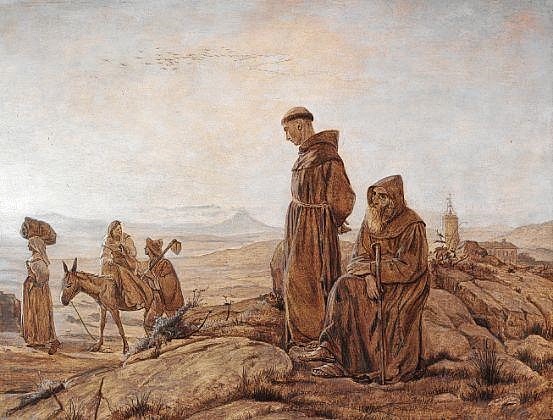
‘Two monks’ – Carl Bloch, 1861 – WikiArt

Spirituality is an exaggeration. We need to exaggerate our commitment to truth, and be ‘spiritual’ for a time. We need to take on this role. Being is to be favoured at the expense of experience. This is the way to re-establish a lost truth, to re-assert what we truly are against what we have conditioned ourself to be, by force of habit. It takes a lot to fight an addiction, to forget a well-rehearsed habit, to extricate ourself from our deeply imbedded identifications with our body and mind. What’s running in our head has a persuasive power, and perceptions have a way to project everything perceived as being out there, into what we commonly conceptualise as a world separate from ourself. So spirituality is a sort of rehab. We go to the church or the temple only because of our failure in making a cathedral of our experience. We attend the mass in reason of our not being grateful for the given bread of our life. And we meditate for lack of noticing that the meditator is a superimposition on our simple experience of being. We’re overdoing it, but it’s for the good cause. We need a magnifying glass to notice what is hidden in the cacophony of experience.

But spirituality is not a way of life. it is a temporary overemphasis, a dramatisation. We were never meant to be spiritual, or a believer in a religion. Religion is a teaching, a suggestion to realign ourself with truth rather than with an acquired belief. It is the temporary treatment for our suffering. It is the gentle scolding of a parent when we have made a mistake. It is benevolence — an encouragement towards a happier living. It is a bond and a reverence towards the simple reality of our being. So spirituality is an effort towards effortlessness. It is an attempt to recognise the given in ourself, amongst all the things that we have acquired and wrongly identified with. We have to dig out our true nature as pure, undivided, peaceful being, and have to be for a while a zealot for this, an ultra, a devotee of being, and to leave experience alone, to restrict our commitment with the world of things. It is a descent into spirit, before spirit pervades the totality of experience.

So all the paraphernalia of religion, all the words and practices of spirituality, and the endless commenting on the commenting, are only a means to acquire what we already have and already are, although unknowingly. Practice is to just be, and be happy. Prayer is to live a life that has meaning and clarity. Meditation is to have a vision of what we are, and with that vision, to love and share our deepest nature with others and with the world. It is to restore reality, in order to give ourself back to it. Because we cannot understand, feel, love, and just be, we have elaborated rituals, prayers, teachings. Spirituality is not the truth, only the means to access it, as devotion to a deity is but the path towards true, unconditional love. So we might want to push our practice. We might have to snob experience for a while, to leave it in the marge, in order to concentrate on our being only being. And we might want to stay there, in being — a yogi of presence. We don’t want to be an occasional visitor. We long to be a resident, to have being as our eternal companion. To feel that we are that naturally, and effortlessly. We want to drop all affectation. Effort is only a temporary device, to defeat a bias acquired over life times, and instilled by a whole society. We want to be free of ourself, and to quit being a believer, or a practitioner.

Then life becomes a temple, whether we are in the busy heart of a city, or in a monastery, whether we live the active life of a working hero, or the silent one of a dedicated monk. There will be a day when our life will take place in the clarity of being. When our daily activities will receive the flow of a constant radiance of meaning and beauty. When love will be the very canvas of all our relationships. When our duties and chores will be clothed with a flavour of sacredness. On that day, this tragic and magnificent exaggeration that spirituality is, will be replaced by a life that is discovered to be unaffected, spontaneous, uninhibited, relaxed, and genuine. Maybe this truly is the religious life.

.

~~~

Text by Alain Joly

Painting by Carl Bloch (1834-1890)

~~~

.

Website:
– Carl Bloch (Wikipedia)

Suggestion:
– Other ‘Reveries’ from the blog…

.
The Formula of Life

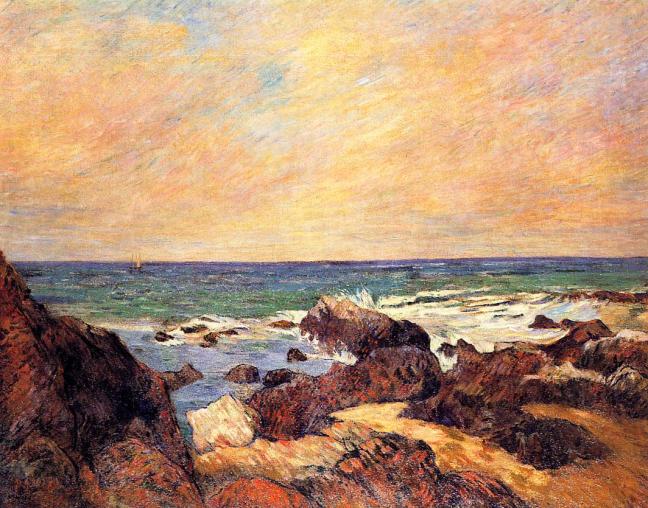
‘Rocks and sea’ – Paul Gauguin, 1886 – WikiArt

There is something mathematical about the spiritual life. You need to get the formula right, which is simply to recognise being as your one only identity. Simply being, with no addition to it. Concentrated being. If you cannot recognise yourself as that, then life will bounce back at you in endless, nasty, different ways. You will be made into somebody frail, vulnerable, suffering. Out of your failure at being who you truly are, you will draw an idea of who you are, a belief in being a separate entity, identifying yourself with your body-mind. This invented self is a diminution of your real identity. It has, inscribed in its very making, an imbalance, a lack. You will feel small, incomplete, at the mercy of beliefs and images, assailed by objects. You will be made uncertain, needy, a seeker of your lost identity. So you will then receive many of your experiences as a threat, as something that can hurt you, diminish you. That’s how fear arises, out of incompleteness, when there is a flaw in the equation of being. You are as to say behind yourself, mistaken. You have failed at just being, and are now being this and that. You have lost your anchor for a trip into objectivity. You have exchanged wholeness for separation.

Now you look everywhere frantically for something to complete you, and you find it a hundred times, in a passing object, in a success, an achievement, a bout of luck, a relationship. But these are fake friends that will fail you. For there is nothing here in the objective world that can match being. Dissatisfaction will hover over you again and again, no matter how many objective goals you may set your heart on, and attain. You will never resolve that equation. A flaw will remain, and your life formula will be left empty of meaning, unable to find its resolution. These objects that were your hope for fulfilment will finally come biting at you, for they are but the tricks that you have used as an escape from yourself. They are your being that you have let down, and split apart. They are your means to mend and repair yourself. But to project yourself in objects is to hope, expect, envy, and open the door to endless suffering. This wound is the sign of your incompleteness, the symptom of your failure at recognising your true identity. Every neglect or rejection of your true nature creates openings where experience will come and stand in front of you as something to be afraid of, or to desire. So you are never safe, never alone. It all comes back to you as a mirror of your own insufficiency.

Remember that you will attract to yourself everything that you cannot hold as your own, and understand. To be at peace in this life is a very simple matter. It lies in only one experience, which is the experience of being. Being is your universal health insurance. Being is your completeness, and therefore your well-being. If you don’t own in and as yourself your well-being, if you fail to occupy the totality of your experience — finding safety there — then you will be assailed by life. Experience will send its soldiers at you, which are but all that you cannot hold or recognise as being your own being. Hurt, confusion, fear, misunderstanding will become your usual, well-rehearsed environment, that you will accept as normal. They will become the weapons that turn against you every time you don’t fully integrate experience as the very blood and bones of infinite being. So don’t let experiences down, to live on their own, lost, clothed in separation and enmity. The enmity of experience is of your own making. You are responsible for what hits you or heals you. And you have in yourself, as yourself, the remedy for every hurt or suffering that overcome you. You have in and as your own being the ability to feel whole, complete, self-satisfied. There lies your natural competence at living. This is how you have experience always on your side, like a friend that you never fail to embrace. This is how you complete the formula of life — through clarity and brightness of being.

.

~~~

Text by Alain Joly

Painting by Paul Gauguin (1848-1903)

~~~

.

Website:
– Paul Gauguin (Wikipedia)

Suggestion:
Other ‘Ways of Being’ from the blog…

.