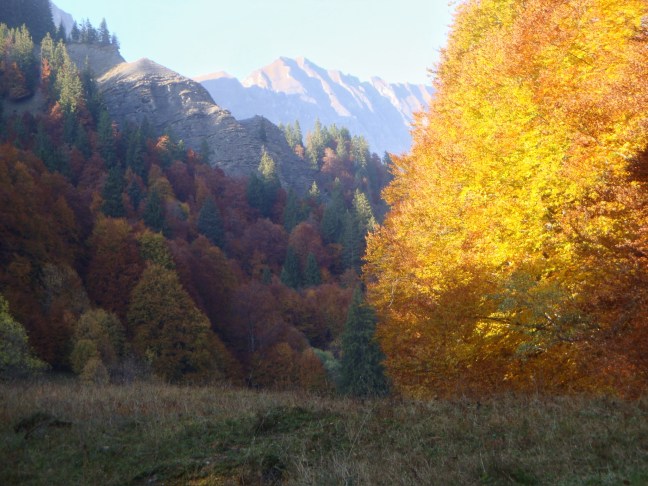
Humanness

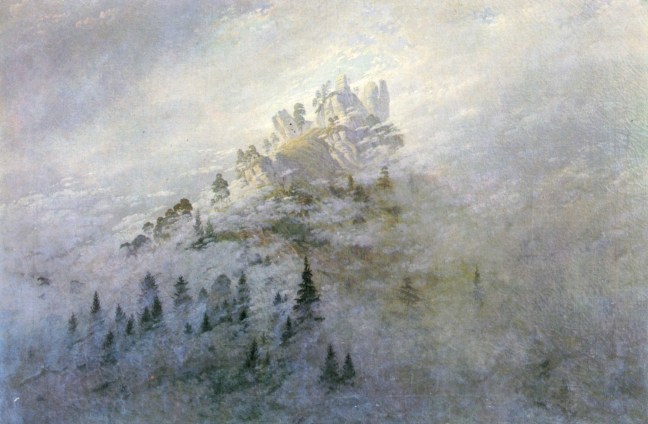
‘The Human Mountain: Towards the Light’ – Edvard Munch, 1927-29 – Wikimedia

There is no human being. This is quite extraordinary to think of it, and even positively mind-blowing. But turn it around as much as you may, the true self of man is not where a body is. It doesn’t take shelter there. A body, or even a mind for that matter, is way too small and inappropriate to house your beautiful being. There is no room there. For how could the infinite enter something that is finite, limited, prone to decay and death? How could something that knows no beginning and no end, be contained in a passing thought, in a mind which is changing, developing, forgetting, believing, cheating and being cheated? In being, you won’t find the beginning of a change, won’t find even the possibility of death. In being, there is no forgetting who you are. Only a mind can forget its own nature, not because there is something there that can forget, but because thoughts, feelings, perceptions, when they are believed to be yourself, are hindering your true nature, rendering it as if absent. What is left is only a cheating thought that believes itself to be real as self, when it is not.

There is nothing depressing in not being a human being, and nothing demeaning. Being is such a malleable thing that we still retain the illusion of being a human being, a person, as we do now, but with the difference that this illusion won’t hide the reality that is behind it, and that is our true identity. Losing our identity as a person doesn’t mean that we won’t feel compassion for another, or love for our beloved, for love is not contained in being a self separate from an other. Love doesn’t need to be directed. We are not doing love, let alone giving it. Love is the expression or signature contained in our simply being. It is the feeling of being that irradiates in every directions, and that is shared as that which we are here and now. And don’t think either that you will lose your ambition, but it will be reoriented to be not your ambition, but the very contagion of being in every aspect of your life and world. And don’t think that you will miss out on happiness, for happiness was never yours, never your expression, never contained in achieving or obtaining a thing that thought has said you desire. Happiness is the very feeling of being, that we cannot contain or limit, but which splashes over to colour life with a golden hue of oneness.

So there is only being taking momentarily the clothes of a human being. But being itself has no qualifications, no colours which would render it a definable entity. The colours and the qualifications are not pertaining to being. They are the property of everything that appears in being, but is not being. They are in body, thoughts, sensations, perceptions, in all the existing things that come and go, dancing to make the form of a world, of what we call a human, a dog, a mountain, or the parking lot in which we park our car. To be being won’t diminish our feeling of being a person. It will enrich it, for being is the essence of a person. Being is the essential of our experience as a human being, only we don’t see that, don’t know that. Our focusing on the belief to be an objective entity that thinks, feels, and perceives has made us blind to our reality. So let’s remind ourself that there are no limited human beings, but only one unlimited being. This knowing and feeling of being only one unlimited being is a source of constant awe in life. And this vision is what gives its true colour and reality to our imaginary humanness.

.

~~~

Text by Alain Joly

Painting by Edvard Munch (1863-1944)

~~~

.

Website:
Edvard Munch (Wikipedia)

Suggestion:
Other ‘Ways of Being’ from the blog…

,

The Fantasy of a Self

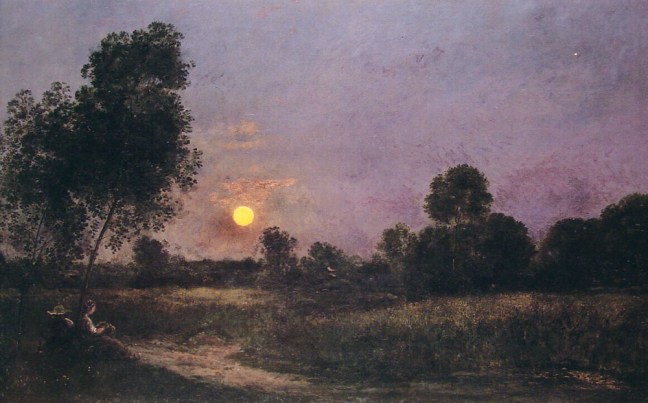
‘Moonlight’ – Winslow Homer, 1874 – WikiArt

We only ever land where we are. There is no escape from where we are. Where we are, is all there is. I mean this deepest place of ourself, from which we have never been separated, is the very thing which we have been looking for in a thousand distant places, in endless situations, in hopes and expectations, in projections, attachments, identifications. Our mind has been thirsting for this place of peace for as long as we can remember, and it has been escaping us with perfect consistency. For there is a rule attached to this place: we can’t find it outside of ourself. And the reason is: there is no place outside of ourself. Ourself — what we are here and now — contains all that we could long for. It is the home which we have left through our contant looking for it in the wrong direction. Our seeking is way too aggressive for its tender being. Our peaceful home lies in the nest that our being is, and this nest of being is where all existence finds its birth and takes its journey.

The problem with accessing our being — our peaceful home — is that we have introduced a self. We have posited a self that is separate from the peace it is looking for. And if peace is situated at a distance from ourself, therefore where we are is the place where peace is not. We have superimposed a self on our peaceful being, and in doing so have invited suffering, which is but the seeking for our lost peace or happiness. It all comes from the connivance of a few thoughts, feelings and sensations, which have set themselves up as a self. It is all part of a scheme on their part, and a gross one if you ask me. For how could something that is coming and going have a self? Something as flittering as a thought, or a sensation, could never produce a self. The self that we think we are, and that we feel is at a distance from experience, is fabricated. It is a product that we have elaborated to feel secure. But we cannot find security in a self. Security is rather the absence of a self, and the merging of ourself with experience, which is felt as oneness.

This self, without our noticing, has created untold damages, it has made life into a havoc. It has invented a within and a without, a here and there, a now and then, when there is in fact only a seamless experience. All these distinctions are of course necessary for our functioning in a world, but they are not the reality. And to ignore their reality is to transform them from a few peaceful, useful devices into brigands that have made experience either something to be feared and avoided, or desired and pursued. In other words, being a self has made experience into a dependence, a battlefield for our own imaginary benefit. But in fact, there is in reality only a now that is ever present and eternal, and a here that has no boundary, no limit, and is infinite. And there is a within that we will cease seing within, for after all thoughts and images are filtering experience to the point of making it their own creation. Thoughts are not just within. They are scattered all over the field of experience, colouring everything we see or hear. And the without will cease being without. For where could without be if not in our intimate experience. So the trees, the houses, and the dog we meet in the street are part of our very own being, for there is only one being out of which they could make an appearance. Where would another being than our being be? To posit another being than our being, or a without without, or a within within, or a there, or a then, is to be absent to our true being or nature, and to live in a world scattered about and fragmented, where reigns every bit of suffering and conflict. But to live as the One renders without within, within without, there here, then now, and our being just only one being. The rest is but a fantasy which we can either buy and suffer from, or borrow and play with.

.

~~~

Text by Alain Joly

Painting by Winslow Homer (1836-1910)

~~~

.

Website:
Winslow Homer (Wikipedia)

Suggestion:
Other ‘Ways of Being’ from the blog…

.

Demons and Angels

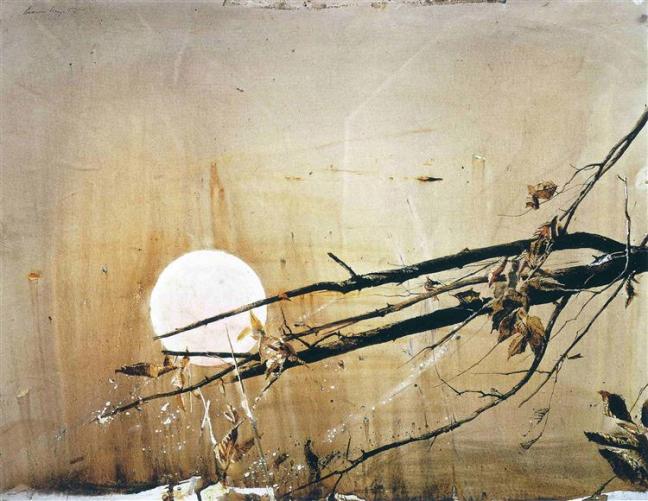
‘Magnolias’ – Carmen Delaco, 2022 – WikiArt

We are only ever made of thoughts. Sometime, thoughts come elaborate, with clearly defined words, perfect punctuation, following their due purpose. And sometime not. Sometime, they come as lightnings, striking us with a belief, an old stale repetitive assumption. Sometime, they linger unsaid, not pronounced, sneaking in but making untold damages. Sometime they don’t even need to be expressed. They have taken us over, have made a puppet of our life, tearing it apart in every mindless direction. All these thoughts are like little devils, unseen demons, unnoticed burglars stealing our identity. We have been brought to our knees, at the mercy of every one of their injunctions. We have been made just a collection of them, and nothing but an assumption. An idea of ourself. A self literally made up by the constant assault of thoughts, and by our believing them — belief being yet another thought.

Look in every direction you may. Notice here the coming of a hope, of a longing that takes form, but is yet just a thought. And when a worry comes, that this longing may never be fulfilled, it is just another thought that comes dancing with it. Attend to your expectations, to how you now imagine a future event. See how this evocation of the future comes as just another thought in your mind, for there is only ever thinking about the future. The future doesn’t exist, is always only imagined by a random thought. A regret, a desire, a fear, any bout of suffering or satisfaction, any feeling, comes wrapped in and as a thought. Thoughts are everywhere in our world. Even our body, our action, our world, are coloured and shaped by a thought or an image that condition their being perceived. A habit is a thought that took root and grew confident, unchecked, and many of our conditionings were once thoughts that have formed to become the established norm. As long as there is a thought somewhere in the system, that comes to define us, to give us a stand, an identity, that identifies with the body, that separates from the world, that gives a fleeting joy, or a tenacious pain, then we are not alone. We are not independent. We are not being our own identity. We have given it all up to thoughts, and have lost our being in them.

So go behind it all. Go before everything that appears for a while and recedes. Go before every worry, every hope, every mindless desire, behind every dull satisfaction that lingers lazily, every fear that strikes and leaves its trail inside you. Go to the place in you before every thought. Visit that portion of yourself where thoughts are of no consequence, where they are made trivial, ridiculous in their powerlessness. Go where distance is not, for thought as time has created the gap between yourself and your true nature, a gap where hides every shades of conflict and suffering in yourself — which are again thoughts. And go where you discover yourself to be unbreakable, unsoilable, eternal, for death too is another of your endless thoughts, maybe the most perverse one, but one that doesn’t stand being seriously investigated. Notice that thought is always some kind of thing, and that there is one place in yourself that a thing, that a thought, will never touch, or affect, or change: it is that portion of emptiness in yourself, which is only full of itself, and is therefore inaccessible to a thought — any thought. That placeless place is your peaceful being, your identity, who you truly are. To stand as that will freeze dead all the many thoughts whose only function was to give you support or approval, identity or escape, or contentment. These are burglar- or demon-thoughts, that come to lie to you, and try to impose their views on everything and on yourself. But a thought that is starting its journey from that virgin place of being is but a devotee and an angel, respecting your true identity and carrying in its wings the offering of your being, which is love. It is but a servant of the higher intelligence of truth. In general, demons are many, and angels are but a few.

.

~~~

Text by Alain Joly

Painting by Carmen Delaco (born 1976)

~~~

.

Website:
Carmen Delaco (WikiArt)

Suggestion:
– Other ‘Reveries’ from the blog…

.

Apocalypse

‘Traditional bhavachakra wall mural’ – By Wonderlane (Sakya Monastery of Seattle) – Wikimedia

There is a beautiful and meaningful contrast in Buddhism. It is to be found in the approach to impermanence (‘anicca’), which can be a very effective pathway to our true nature. It says: everything that passes away is not it, is not you. Notice everything in and around you, and see that it won’t be always here. The house where you live will be destroyed, and no objects you possess will stay forever, including your body, and the billions of other bodies, including the trees, the seas, the mountains, the air you breathe. Eventually, they will all go. Your thoughts, emotions, qualities, character, mind, that you think characterise you, well… The planets will wither too, the suns will die down, and space even may one day be swallowed back where it once was seemingly born.

Scan your experience and try to find something that doesn’t pass away. But go far enough. For then will come, like a new dawn, the revelation that there is something here that never passes away. There is a permanence, a nature, that is your very being, which will never not be, and which swallows in its own profound nature all things discovered to be devoid of their own independent natures. So in the end, nothing really passes away, for all the separate objects of your experience do not possess their own individual, separate nature, which could be considered impermanent. Impermanence is when you think you are a body. But in fact, permanence is all there is, and it is lived and seen as the one being that we truly are.

With this understanding, you will come to realise that your suffering also cannot stand the revelation of your completeness. What you called ‘suffering’ can only exist in the belief that all objects have their own separate existence. Believing yourself to be one such separate object, you find yourself to be incomplete, not enough, therefore seeking in objects your happiness or completeness, which you could of course never find. You started with a wrong view in mind, which made everything down the line unsatisfactory, and biased. That’s why the Buddhist term for suffering ´dukkha’ has the meaning of an ‘unstable stand’, or more poetically, the ‘badly fitting axle-hole of a cart or chariot’ giving ‘a very bumpy ride’. So what then? Suffering never actually existed? Was it all in our mind? Created by a simple belief, an ill-fitting understanding, a shaky representation, that rendered our world unstable, untrue?

In Buddhism, the positive is never named. What is is never mentioned. That’s why it is said that our existence bears the three qualities of ‘impermanence’, ‘suffering’, and ‘no-self’. You will never find a self in something that it always in movement, always changing. No self in things, no self in a thought, no self in a body, no self in you — this is how far it goes. There is no self inside your body-mind. There cannot be. This is logic. No phenomenon could ever hosts a self. There is ‘no self-existent essence’, as suggests the Buddhist term ‘anattā’. Essence cannot just exist. It would make it appear or disappear. The essence of all things, including your own self, is infinite, not limited, not bound to any phenomenon. So ‘no-self’ in Buddhism is only a strategy for you to realise that the only self in presence is the nature or being of all things and selves, which we are, but cannot comprehend or even name. This is what the wisdom of Buddhism has put in practice in such an eloquent and radical way. Not even a name are you given for your own being. The nameless, you can only be.

So the ‘three marks of existence’ of Buddhism are nothing but the story of an apocalypse. ‘Impermanence’, ‘suffering’, and ‘no-self’, may give you a rather apocalyptic vision of your existence. But this is only if you have forgotten that the word ‘apocalypse’ means in fact ‘revelation’. The apocalyptic picture of our existence in this world is used as a wake-up call to push us into the revelation of our true nature as being. It is all about strategy. Do not take religious teachings to be the real thing. They are but teachings that point to a deeper, unnameable truth — the turning around of an apocalypse into the revelation of our true being.

.

~~~

Text by Alain Joly

Photo of ‘bhavachakra’ mural by Wonderlane

~~~

.

Website:
Three Marks of Existence (Wikipedia)

Suggestion:
– Other ‘Reveries’ from the blog…

.
A Safe Harbour

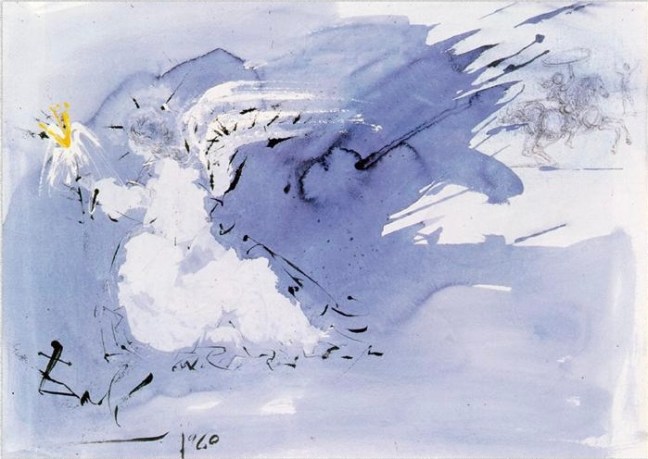
‘Sea against a rocky shore’ – Ivan Aivazovsky, 1851 – WikiArt

In our relative existence, we are always only a simple human being, a disciple of truth. We are seeking to merge the relative with the absolute, and to raise the finite where the infinite compels it to be. There is no being a super human, with a perfected soul. There is no being a specialist in the field of spirituality. The knower is a so shy and humble presence that it won’t show up when you are there. You will hide it with the boastful assertion of your own self. So if you want to espouse your true nature, you will have to feel yourself as almost nothing. You will have to stop reifying yourself, and make your person a servant of truth. There is a soothing freedom from pride and arrogance to be experienced in our human life.

The feeling of separation is what makes you assert yourself. To only and simply be is felt to be insufficient. You need to be or have something that makes you whole and happy, which you then seek through objects, qualities, qualifications, events, circumstances. To be somebody, to be important is the privilege of incompleteness. Being has no privilege, is not a superior position. it won’t make you anything. It won’t give you an advantage. You’d have to be miserable for that. You’d have to be limited. Your nature as peace doesn’t belong to you the person. When you have realised yourself as the one being that you truly are, then it won’t make you anything, it won’t give you a pedestal. Your knowing is in not knowing. In simply being.

There is a special, humble glory that lies in not being a self that feels separate. Peace is the perfume of your divine nature, that stands unaffected before the person that you happen to be. It is the nature that lends itself to the making of the world and to the selfing of its myriad of apparent entities. It is the secret power behind all appearances. Your nakedness is the key for its being seen and felt in your existence. You will then live from the stand of that knowing presence. Your self will cease feeling separate and superior. Your person will be depersonalised, will have infinity as its ‘I’ identity, and love as its guiding principle. But you won’t get any pride out of it, for your person is now devoid of its own, personal substance.

It is no accident that the life of many truth seekers is expressed through poverty and nakedness. In not possessing, in being undefended, as is the case for nuns, monks, hermits, anchorites. There is joy in not owning your own self, and your own identity. There is release in being at the service of the loving, silent being which you have discovered yourself to be. You have lost the prestige and identity contained in being a seeker. For there is no seeking in being. Being contains the gist of that which you want to obtain or achieve through your constant seeking — the juice of it. Being is the heart of life, and its reward. The Eden which you have placed far and away, as a cherished belief or possibility, is now found here, in the simple knowing of your being.

So there are no Shris, Maharshis, Bhagavans, Rinpoches, Maharaj-s, or Your Holiness, at the level of the person. There are even no sages. All these titles are only for ‘being’, for the reverence of truth, for the One. There is always only one Bhagavan. One Rimpoche. One sage. The peace contained in simply being is not another quality that is added to you as a person. A person, a body-mind, doesn’t have peace. Peace or understanding doesn’t belong to you. It is not for the person. It is all contained in that which lends you consciousness. It is in the presence that makes you, out of which you draw your personhood, and which allows you to love, live, and share. You are not an autonomous, self-contained person. You are infinity lending itself to a portion of finitude. How would an appearance be conscious, if it wasn’t for the presence which contains and creates this appearance? This peaceful, infinite presence is all there truly is. The One you have to bow to. Your teacher and your beloved. Your safe harbour in the storm of appearances.

.

~~~

Text by Alain Joly

Painting by Ivan Aivazovsky (1817-1900)

~~~

.

Website:
Ivan Aivazovsky (Wikipedia)

Suggestion:
– Other ‘Reveries’ from the blog…

.
Anatomy of a Desire

You must not desire the truth. You must let the truth desire you. For truth has the greatest desire, the most efficient one, to which yours is but a pale copy. It is the desire to be itself alone, unaccompanied, unsoiled. In the fulfilment of that desire, truth will swallow you, will undress you and render you transparent, nonexistent, naked. You’d be inspired to let go, to give in, to trust that desire which is so greater than yours. For your desires are small, inadequate, vile, selfish. They won’t get you where you truly want to be. They will miss the mark. Every time.

So don’t desire truth. Don’t make it like something you can possess. Truth is in fact already possessing you, the only one in command. So undress your being of the superfluous. The superfluous is all the beliefs attached to yourself, that makes you a self that feels separate, an entity in a body, delineated by its thoughts and feelings, that looks up to experience, and betrays its profound suffering through its constant desire for fulfilment.

Notice that your desire has no true owner. The one that desires is not really there. It is but an idea, a desperate attempt to feel that you are complete. But you won’t feel complete by means of desiring, for desire is already the sign of your incompleteness. The problem with being a desirer is that it places you ahead of your natural identity as being. It is a position of ignorance with a plan and a hope. The desirer is a made-up entity whose unacknowledged goal is to consolidate itself. So don’t make truth like a projected goal to be achieved. The desired object of enlightenment, or realisation, was never intended. It was in fact all for the desirer, to strengthen your false identity as a self, to adorn the temple of separation, to attach yourself to another idea. Liberation is not in desiring to be liberated.

[…]

Continue this exploration of desire in matters of truth… (READ MORE…)

.

Where is True Home

Where can we find what is ‘our own’ in our experience? What is fitting? Where do we draw a sense of belonging from? Most of the time, we do not feel that we fit in, that we have a place. We feel insecure, so we secure an identity in a thousand things. We borrow from an object our appeasement. We make objects our own, we inhabit our thoughts, we adorn ourself with qualities, and we take shelter in a body. That’s what we do to fit in, and find security: we lose ourself in an ‘other’. We beg for anything that we could call our own, for fear of staying alone, and be left a nobody. We make up a self, and then call it ‘our own’. And that place of our own we find — and have defined — in a thousand shaky, unreliable places and things. But it is a bad try. In fact, we have burgled our own home of belongings that are not ours.

How are we going to find a home, if we keep rummaging through experience for every object that fits our needs? We ought to be disinterested for a while. We need to be disowned, dispossessed of every property or belonging that we have so far acquired, clung to, and in definitive stolen. For this is where true ownership is found, in not belonging. This is how a decent property is secured, by having no place to be. We ought to live free from all the accumulations that we have gathered and identified with. For our true home is not placed on the crest of experience, is not built on the sand of insecurity, and is not limited by the fence of limitation. It is not for a self, or a place, to produce the quality of enduring peace. Peace is already here, wholly achieved, in the home that our being truly is.

Live so that you don’t have to steal in your own house. You have it all. Your property extends to infinity and the world is the garment of your whole being. So in being, wherever you are is your home, and whatever you need is found here, in you, as you, with all the peace and security that pertain to a true home. You fit in when there is no space between yourself and what you long for. Being no space, you won’t have an urge to seek outside of yourself your identity and your happiness. Home is the recognition that you are already home. To be is to be home. There is no achieving it, let alone work for it. Be exactly where you are, in and as your own being — the place which you could never not be in. And if you find that a sense of indomitable peace is accompanying you there, then be in no doubt that this is home — what is your own, where you fit in, where you belong. Truly.

.

~~~

Text and photo by Alain Joly

~~~

.

Suggestion:
– Other ‘Reveries’ from the blog…

.