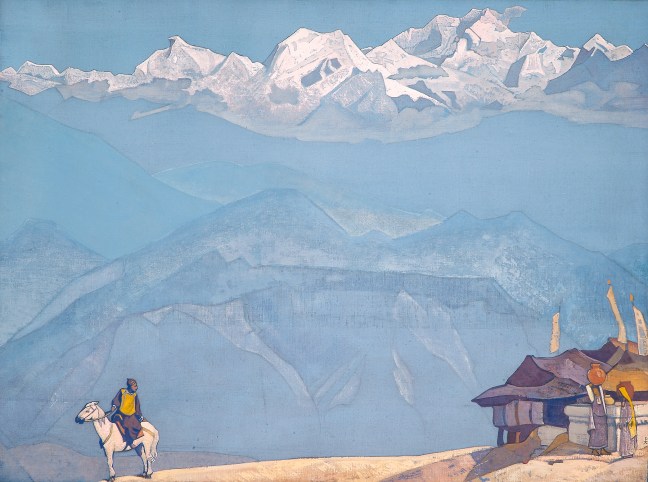
The Impeded Buddhas

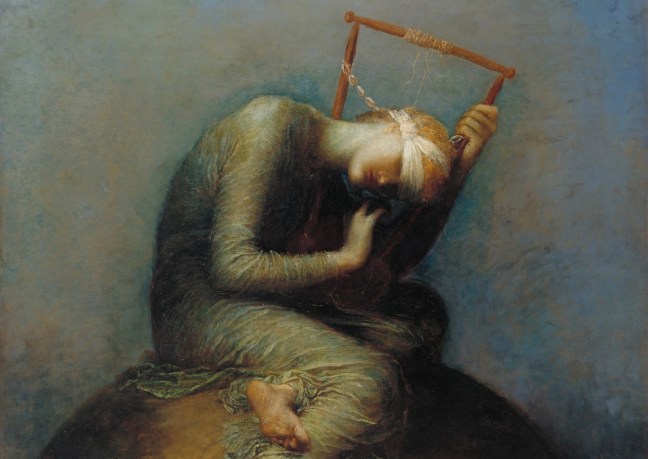
Holy Thread’ – by Rajasekharan Parameswaran – Wikimedia

This is what we want against all odds. No matter what. All of us. We want that love, that piece of eternity, although we may not voice it that way. Yet everything tells us that we will never get it. We can’t have it. It is not something to be had, and we know it. We have experienced its elusiveness a thousand times. But that knowledge doesn’t appease our seeking. This indefatigable quest is ingrained in our system. Something deep inside us is missing, is not quite completed. There is an insufficiency, a suffering that sets us on this path of longing. And this seeking has become such an intimate part of our lives, and has taken so many banal, inconspicuous forms, that it is not often noticed or recognised as such. But the fact is: all that we are truly looking for in our life is this deep, abiding peace, which ultimately comes from love. This is our path. Our journey. To get to that point where we don’t have to suffer and strive.

The problem comes with defining our search precisely. We are being too vague about it. Most of the time, it is not taken seriously. So we stroll about, taking divergent, contradictory roads. We are only interested in bits and pieces. A little happiness here and there will do. Our quest remains a fearful one, and mostly consists in avoiding difficulties, in being attached to what we have, and in acquiring little pleasures. But all we do through this, is to battle with happiness. In fact, the whole of our life is made of that, of this frustrated happiness, this thwarted love. Everything we do — including our most unkind, insensitive, foolish, ignorant actions — we do out of our deep, inner desire for happiness. In a way, we are all spiritual seekers. We are all engaged in the same frantic battle to be happy, at peace, rested, unafraid. We are all brothers and sisters in arms. We may do it in the most clumsy, mindless way, and be punished for it. Or we may be gifted with a thirsty, pointed mind, and all the tools necessary to meditate and recognise our true nature. So this seeking is not for a few elected, but extends to humanity’s tireless striving for betterment.

In fact, we are all — without our realising — accomplished Buddhas, beings of light. But we have chosen to identify with our shortcomings, our failures, our reactive patterns, our sorrows, all the inner waste that life produces along the way. Their objective nature makes them easier to associate with. Unfortunately, by doing so, we have troubled our innate clarity, have limited our infinite nature, and have soiled our innocence. We have become ignorant of who we are. We have confused our luminous, peaceful being with a few passing, trifling occurrences. We have all made the same mistake. Our self is the story of a disillusionment, of a shrouded delight to just be. We are all impeded Buddhas. Paradoxically, our nature as peace and happiness, because of its being veiled by our prejudiced sense of self, is the reason for our feeling incomplete, inadequate, and is in consequence the cause of our suffering. So most of our seeking is a direct product of our natural predisposition towards peace and happiness. Our disentangling from this false, unfortunate association may take us on various roads of varying difficulty and intensity. But the truth behind it all is that everyone — everyone — we meet on our journey is our equal partner in this most sacred quest. This recognition would go a long way in establishing some measure of love in our wounded world.

.

~~~

Text by Alain Joly

Painting by Rajasekharan Parameswaran (born 1964)

~~~

.

Website:
Rajasekharan Parameswaran (Wikipedia)

Suggestion:
– Other ‘Reveries’ from the blog…

.

The Flame without Smoke

©️ Krishnamurti Foundation India

.

Love is the only flame without smoke.”
~ J. Krishnamurti

.

The flame and the smoke is an analogy Krishnamurti referred to sometimes. For him, the flame is this burning centre of being that “can never be expressed with words”, that “is beyond the clutches of time”, and that is often expressed as love. The smoke is of the mind. It is “the smoke of envy, of holding, of missing, of recalling the past, of longing for tomorrow, of sorrow and worry; and this effectively smothers the flame.” The smoke is often what we take to be the flame but is not. It is all that is passing, all the thoughts, feelings, perceptions — the smoke that we have gathered to form experience, and that we take to be ourself, our centre of being. This wilful, separate, time bound, suffering self has appropriated the feeling of being when it is in fact the very smoke that is veiling our true nature. Being only is that flame without smoke. It is our true identity and “the source of all happiness”.

I have gathered, over the years, on social medias, many of the most striking quotes by Krishnamurti, that popped up on my screen. These, I found, acted on me like little koans, that had the power to pierce the smoke of the mind, and reveal the subtlest truths. They are like candies which, when chewed upon carefully, reveal the flame of what we truly are. They are short and easy, but need to be taken seriously. They can crack open our resistance, and show us that flame without smoke. I share them here with you…

~~~

Do not pursue what should be,
but understand what is.”
~ J. Krishnamurti

~

Love is not at the end of time.
It is now, or it isn’t.
And hell is when it is not
…”
~ J. Krishnamurti

~

Thought is never free because it is based on knowledge,
and knowledge is always limited.”
~ J. Krishnamurti

~

It is essential to understand the seeker,
before you try to find out what it is he is seeking
.”
~ J. Krishnamurti

~

The ego is a ring of defence around nothing.”
~ J. Krishnamurti

[…]

Discover more of this selection of quotes by Jiddu Krishnamurti… (READ MORE…)

.

Unto the Ages of Ages

If people only knew. That they are so close. So close to living with the most profound peace in their heart. So close. So close to having a panoramic understanding of what it is to be who we are. So close to knowing the reason behind the word ‘God’. What it means. What it is, here, now, in this human life. If only they knew. If only we knew. How there is a joy that stands hidden just behind our everyday suffering. A joy, quiet and indestructible, that is present now, at the time of our indomitable sorrow. A joy that permeates our most stubborn feelings of despair. If only they knew. That silence is the very temple of their being, where the most sublime healing can take place. A silence where we can let everything go, to be the pristine self that we have always been. At last. Ah! If only they knew.

If only people knew. That life has an inherent, unnoticed simplicity. That the world that stands in front of them, is not quite the world they had in mind. If only we knew. That we own the beauty we see, we hear. That we hold the world, right here, close, so close to our being. That we were never parted from it. That it is our expression, and that we make it just the way we are. If only we had noticed. That love is not another feeling. Not something we choose to give or to hold back. That there is a love, so wide, so close, so natural. A love we cannot help. A love that is the structure of our self. Its profound nature. Ah! If only they knew. We. Us all. How it could change the dice. How it could make love our shared temple. To live in. Now. Here. If only we knew. How close it stands from us. If only. Ah!

And yet we know. Don’t we? We all know. We know that what we get is not the real deal. That this life is not quite the life we were meant to live. This is why we have hopes, dreams, expectations, projections. This is why we place love, friendship, happiness, beauty at the top of our list. We have that hint, that intuition. We know that the promise is here. That it stands close. So close. Ready to wash our eyes. Ready to speak its word to our ear. A word that we haven’t yet deciphered. Haven’t yet pronounced. That will bridge what we know with what we don’t know yet. And this word is ourself. What we are. A logos in our sky. That needs to be uttered once. Just once. A crossing of our bridge. To finally know what we knew. What we forgot. That which is eternally ours. Unto the ages of ages.

.

~~~

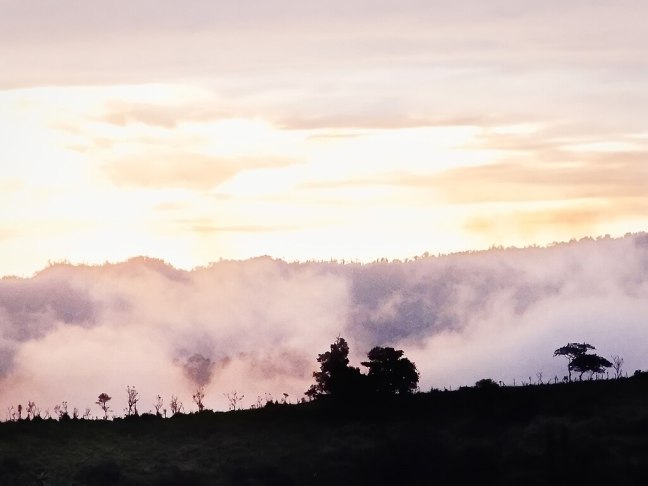
Text and photo by Alain Joly

~~~

.

Suggestion:
– Other ‘Reveries’ from the blog…

.

The Will of God

‘The Wind Blows’ – Hugo Simberg, 1897 – WikiArt

God’s will is what is happening now. Not as a body or an entity, not as a form or any kind of event. The reason is: form has already happened. Every object comes from the past. It has traversed at least a length of time to land in the field of awareness. Like a thought has. A thought is never now. It is the termination of something that took place a moment ago. It is an achieved result. But there is something in our experience that doesn’t come from the past, that hasn’t travelled any distance to be here, and that hasn’t moved through time to be now. So if you want to know what is God’s will, find the only thing in your life that is not a thing, that hasn’t yet taken form, and therefore needs neither space nor time to be. Find that which cannot be found, that which is formless, that which hasn’t travailed. For God’s will doesn’t come second, it cannot be a result, for such a thing would need a cause for itself to be. No. God’s will is first. As a ‘first’, it is in capacity to initiate, to create. But what is created is never itself God’s will, for it is already formed, with a life of its own. It is corruptible as form. So go to the essence, the origin. Find the incorruptible in yourself — that one uncreated thing — and take that only to be the will of God.

So we are in our essence uncreated. This is our identity, to be without form, forever here, forever now, eternally landed, therefore without a will of our own. For what would a separate will be but a thing already formed, an effect with already a cause; and therefore not the causeless, therefore not God’s will. So if we want our life to follow a divine trajectory, we have to give our utmost attention to who we are. That will condition the rest of our existence. That matters the most: that little name we give to ourself, that little identity. Start with the truth of who you are, and be only concerned with the tail of that star. Make yourself bright with it — that’s how to follow God’s will. Be that one that is in no capacity to be a follower. Stand as and for the truth of being and be concerned with nothing else but that. That is the only possible will you can afford. Any other kind of will is not your own, although it may appear to be. So don’t expect to have a will, for a will is but an appearance that has formed in yourself. Go to yourself first. Go for that part of yourself that has no will but God’s will. You will find there a will that encompasses all other wills — for what is a will but the will to be happy, rested, fulfilled? Only at the condition of being without a will of your own can you embrace the one will of your true identity as being. Being is in fact its own will, for it has as its DNA the purpose of all wills, which is the peace of living. From that peace firmly set in your heart, any will is the will of God.

.

~~~

Text by Alain Joly

Painting by Hugo Simberg (1873-1917)

~~~

.

Website:
Hugo Simberg (Wikipedia)

Suggestion:
Other ‘Ways of Being’ from the blog…

.
That Flickering Flame

‘Mary Magdalene with Oil Lamp’ (part)  – Georges de la Tour, 1630-35 – WikiArt

The simple feeling of being — away from the contingencies of being a separate self enthralled, or assailed by objective experience — that feeling, that wee flame, needs to be attended at all costs, watched over patiently, and finally protected. Otherwise it will wither in no time, pushed by the winds of our egocentric activities, wiped out by our stubborn beliefs. Being can be such a shy being. But always remember: it is eager to shine; it is eager to warm your life up with its soft, tender flame. And it will bring you that little light you need, to find your way through the maze of existence. That flickering light is stronger than you think. At first, it might appear to be hesitant, wavering as if to die with any sudden burst of a boastful thought, or the surging of a distressing feeling. But look closer. For the apparent flickering of that little, intermittent flame is yours. You are that angry shadow threatening to shut its light off yourself. You are that cold gust ready to send its warmth far and away from your life, and leave you freezing like a lonely being. So be yourself that shyness, that hesitancy. Watch that you don’t come to disturb the flame of your self. Be that flickering entity, always ready to retire and fade your cumbersome presence off that joyous fire of being. That’s the extent of your attending: your not being there, your acceptance to die or surrender, your willing to fragilise that imposant self which you have identified yourself with along the way — that invention of yourself. That is all this wee flame needs to set fire to your existence, to inflame your being as to show it to be indestructible, and to shed a bright light on your true nature as being infinite and eternal — not that shy, fragile, flickering, coming and going presence. For presence is a wildly enthusiastic blaze if you let it be. It can burn you in a second, so as to render you inexistent. It is a firestorm that will scatter you in a thousand fluttering ashes, to leave you as you truly are: A peaceful being. A flame of happiness. Shining brightly like an ebullient sea of love. See what a little attending can do — a little nurturing! The humble succouring of a wee, flickering flame…

.

~~~

Text by Alain Joly

Painting by Georges de La Tour (1593-1652)

~~~

.

Websites:
Georges de La Tour (Wikipedia)
Magdalene with the Smoking Flame (Wikipedia)

Suggestion:
Other ‘Ways of Being’ from the blog…

.
The Resting Place

There is no resting place until the real comes into being.“
~ J. Krishnamurti (‘The World Within’)

.

Where could we find a resting place, when we are running in a thousand directions for a sparkle of relief or happiness? Where could rest be, when we are constantly afflicted with every form of suffering and doubt? There is always something brewing in our mind, something that needs to be arranged or perfected. Dissatisfaction is rampant, forever displaying its multiple consequences and leaving us gasping for a peace that is eluding us again and again. In other words, we are stuck in an eternal roundabout, with no clear directions on offer, except for the same old directions that we have explored a thousand times, to no avail. Yet rest is an essential. We know it from intuition. We know it as our deepest knowledge, our only certainty in life. There is a home — of this we are certain. Otherwise we wouldn’t be running around in this constant, infatigable search for love, peace, joy, and the likes. Our stubborn seeking is a proof that the stamp of life is to be found in easiness, naturalness. We are not meant to struggle and strive.

It is interesting to notice that peace always comes in the form of a recognition. We are not here on uncharted grounds. We have explored this chamber of peace a thousand times before. Only we keep forgetting it. In fact, our search for peace and happiness in the field of objective experience is nothing but our many clumsy attempts at remembering. Yet in reality, not truly so. For we should rather proclaim that our search in the field of objective experience is nothing but our many successful attempts at forgetting. How do we forget that which cannot be forgotten? How do we miss the obvious? How do we obscure the light? Well, just by being a self in its own right. Just by thinking to be a self separated from the field of experience. And therefore looking in that field for experiences that will relieve us from our constant seeking. That’s the perfect catch-22. So we become choosy, selective, a slave to experience, forever oscillating between being its victim or its conqueror. But this unfortunate manoeuvre is what puts us afar from the peace we are looking for. Peace is in fact nothing but our deepest, most intimate identity as being. And experience is nothing but a vassal of peace when we have recognised who we truly are.

Only be that eternal being curled in and as your self, and no experience will ever be a source for joy or a cause for suffering. Let your being infuse in and as eternal being, and peace will appear to be the very structure of your self — its indestructible nature. Don’t ever go out for peace, but rather find it within, as the revelation of your utmost being. There is a cabinet of peace waiting for your noticing. It is that very place of rest that you have been longing for, and expecting to find in situations and circumstances, when it is simply the very expression of your inner sense of being. See this peace as your only reality. Be of it, as much as it is of you. And let it pervade your being until it has conquered every corner of experience. Peace will then be seen as the fabric of every thing and being encountered. You will start noticing it in the many figures of life. In every bird flying across the sky. In every towel used to dry your hands. In the business of city hassle. Even in the harsh words addressed to hurt you. Peace is like a torrent of rain falling at your doorstep. It will wash your self clean of any impurities of experience. As it will equally clean experience of any residue of your self. Then will you and experience walk hand in hand under the vault of an unbreakable peace. Each intimately woven with the other, yet both being the children or emanation of an indissoluble unity.

.

~~~

Text and photo by Alain Joly

~~~

.

Bibliography:
– ‘The World Within: You Are the Story of Humanity’ – by J. Krishnamurti – (CreateSpace Independent Publishing Platform)

Website:
J. Krishnamurti

Suggestion:
– Other ‘Reveries’ from the blog…

.

Christ (noun)

‘Christ Pantocrator mosaic in Hagia Sophia, Istanbul’ – Unknown, 13th AD – Wikimedia
. Sometimes, the simplest questions are the ones never asked. Like, for example: ‘What is ‘Christ’?’ Were we ever curious about it? To know why this word was chosen to represent what it represents. Don’t we want to know? A word that has lent itself to a whole religion, that has been used to name a person —Jesus — who was worshipped for millennias, who is nothing less but the son of God, and who claims to be the solution to the relief of our suffering, to our being cleansed of our faults, and to our being reborn, resurrected, and blessed eternally. Don’t we want to know, to approach it with an inquisitive mind? Just once? But it’s like we are being afraid. A sort of strange ‘fear of god’ that we have deep down, both as lovers of god or as atheists. Especially in religious matters, where it feels that we are often satisfied with a hazy understanding, a shaky belief, or a quick judgement, and are never prone to go deeper than that. ‘This is too big for us! Too remote! Where too much is at stake! So we’re not going to shake that boat! Not now!’ And so… This is how we keep a simple misunderstanding safe, how we keep an old stale belief alive, and how we keep at bay the truth of who we are… but we’re not going to do that now. Now is for truth. Now we have come to know at last! And one way to start an inquiry, in our highly conceptualised world, is to humbly dig for the etymology of the word that defines the thing we want to know about. That usually reveals some deeply buried secrets. So… ‘Christ’ comes from the Greek word ‘chrīstós’ meaning the ‘anointed one’. A meaning that is shared with the Hebrew word ‘mašíaḥ’, translated as Messiah. To be anointed is to be smeared or rubbed with oil, typically in a ceremonial way. It is a form of consecration, of elevation. It was used throughout history in multiple ways, for example as a form of medicine, or for the blessing of a king, or to attract the influence of the divine. But behind all the pompousness of it, is simply an act of redemption: We want to be happy, to be brought back to a state of health and harmony. It is the desire to elevate ourself from our conditioned ways of thinking and believing, and find the peace that we all think to deserve. It is the longing to be relieved from our suffering, and to rest at last in our own glorious being. […] An exploration of the meanings hidden in the word ‘Christ’… (READ MORE…) .