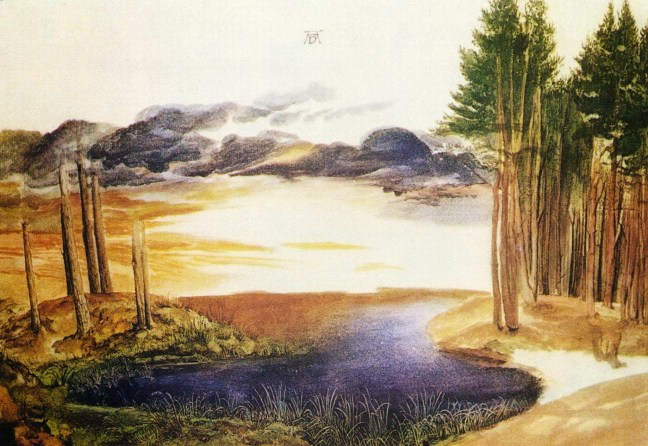
Meditation in a Nutshell

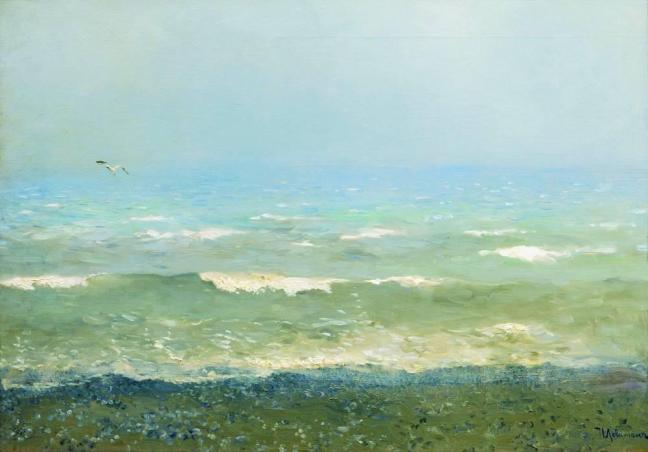
‘Mediterranean Seacost’ – Isaac Levitan, 1890 – WikiArt

When you have an hour in front of you given to meditation or contemplation, don’t ever think that you are engaging in something that is happening in time and place. It is not an hour that you have, that you occupy with an activity. Nothing is taking place, and nothing is lasting in time. Forget these well-rehearsed notions. Your meditation is a presence in which time and place cease to appear as a frame in which you live. They die out in yourself, are melted in your essence, to never reappear quite in the same way. They are washed by your living presence. You are cleansed of their conceptual limitations. Meditation is like a good bath, and you are the water. Nobody is having a bath. Presence is not what you are in. Presence is what you are, and you are nowhere to be found.

There is only a sinking, a deepening of presence. Borders are discovered to be not there. Walls falling all around. Divisions re-assembled. Your being ceases to be mistaken for a limited entity, but is solely the wild, unlimited, unlocated, dimensionless expanse of the nature of everything and everyone. You are in a place that doesn’t have any location, and where time cannot enter. Presence is the only thing in presence. Your life ceases to take place in time, which appears to be just a tool that finds its expression through your thinking process. And space is the illusion that perceptions are creating for you to have a location. Presence provides you with all the necessary appearances to create a body-mind-world. Meanwhile, you as pure being remain untouched, changeless, massive, solid, teeming. Meditation as an activity has ended. Who could possibly meditate in the absence of a meditator?

You have now landed in a spot where you have no need to be a separate entity, and no advantage for it. You have ceased being a person with a story and a destiny. Your body doesn’t qualify you anymore, and is not the recipient of your self. You have become independent, free, non-aligned. You acquire the proportions of a whole world, which has now become your most intimate body. You have lost all qualifications, all identities, and have surrendered to the one all encompassing, all pervading being. Nothing could describe you now. What you are has been relieved of every objective substance. You couldn’t worry the least for your self, which you discover to be devoid of even the possibility of being harmed, diminished, or impaired. Suffering appears to you like the most exotic thing there is. Hope is not even on the list, and all impulse of seeking is gone and forgotten. Wholeness fills you all, and makes you the thing you had previously sought, hoped and suffered for, in every possible direction except in the direction of your own present, inescapable being.

What you have longed for is what you are, which is being alone. When you have been stripped of all the attributes that pertain to time and place, to qualities, conditionings, situations, objects, including the body-mind-world you apparently live in, then you may come upon what you truly are. A being alone, unattached, empty of place, devoid of time, fierce and fearless like a peaceful, unmovable, gargantuan warrior. Why a warrior? Because you as being have subdued all forms, and have been made the vanquisher and pacifier of every division, limitation, separation, and defect. You have consented to your formless nature. This verily, is meditation in a nutshell.

.

~~~

Text by Alain Joly

Painting by Isaac Levitan (1860-1900)

~~~

.

Website:
Isaac Levitan (Wikipedia)

Suggestion:
– Other ‘Reveries’ from the blog…

The Ultimate

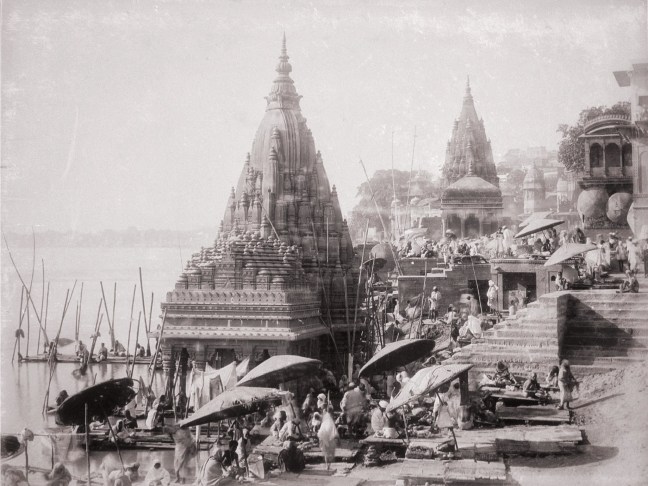
‘Benares, Temple of Tarhishwara or Well of Manikarankia – Samuel Bourne, 1860 – Wikimedia

The thing in ourself that has the capacity to know anything is itself not a thing. We can only exist in relation to things, but only the state of no-thing can we ever truly be. The illusion that we are something separate, a self — whatever we are — is due to the knowing of an object. When no such objective knowing is being activated, then there is no necessity to be anything. There is no purpose in being a self. The being that we appear to be is realised as void. And without a self to know them, things have no support for their reality. Within that perspective, all things dis-appear, are swallowed back into no-thingness, into where they have never ceased to be. This ultimate realisation is in fact not a realisation. It is the ultimate truth contained in simply being, when all duality has been nipped in the bud, unable to show any reality as such, lost in a being so subjective that nothing can be there which could be formed and recognised as ‘other’. This is the end of form. It is the state of no-thing that cannot be spoken of. It can only be approached, envisaged, but never lived as an objective experience, or from the position of an experiencer. It is the timeless, objectless point where the moth dis-appears into the flame of being. Its identity as ‘moth’ has been dis-qualified from itself to never be formed again. Now engulfed into the very no-thing that we are when all objectivity has dis-appeared, we are left with being, our pure essence, where no form could ever be formed. This is in fact, paradoxically, how a world, a thought, anything, can seem to appear — through the intercession of formlessness. This place is where we can never go. This thing is what we can never be. World, thought, self, death, bondage, liberation, are only the gaming of god, or infinite being, with no reality of their own. Only at the point of un-being, of coming to an end, can we ever be true, ultimate being. This is what ‘ultimate’ in fact means: ‘to come to an end’. To cease being anything is the ultimate truth of life. What is left is pure, essential, unqualified, infinite being, where no self or world could ever come to be. This, truly, is the ultimate. That ultimate, because of its purity, can bear in itself the illusion of being coloured or stained; because of its essentiality, can be divided in an endless chain of cause and effect; because of its unqualified nature, can adopt any form or quality; in reason of its unknowability, can be known through a multiplicity of names; and because of its infinite nature, can be seemingly separated as a multitude. And it does this without ever ceasing to be the ultimate. Now, know in all occasions that you are not a suffering self lost in the multitude, with a name, a form, and qualities — an entity living in a world, endlessly caught in multiple, arbitrary causes and effects. Know only being as your ultimate, uncreated self. There only is the abode of peace.

.

~~~

Text by Alain Joly

Photograph by Samuel Bourne (1834-1912)

~~~

.

Website:
Samuel Bourne (Wikipedia)

Suggestion:
Other ‘Ways of Being’ from the blog…

.

Vedantic Logic

Hampi Vijayanagara, Karnataka – India

We are always too late with our identity. We come after. We experience something within, a sensation, an unease, a thought, and then say: I am that. We start from what happens, from experience, out of which we draw some identity. We are lazy. We identify with what comes. We experience our body, and draw the conclusion that this body is what we are at the deepest level. And then we live from there, from this conclusion, from this belief, this concept of ‘me-my-body’ — which we refer to as ‘I’. Our chance has passed. We have drawn comfort in that conclusion, but have invited its many companions of voyage too, which are suffering, fear, lack, and the likes. We have given ourself to the wind of arbitrary experiences. We depend on everything that passes uninvited. No wonder we suffer, finding there no stability, and no peace. We are at the mercy of what comes. So we are desperately trying to shape what comes, in order to shape our identity, and derive from it some elements of happiness. Hence our constant striving, seeking, debating with life, struggling with what we are, and with what the world brings.

We think that all the responsibility falls on us, that we are the designers of our identity. We are little ghosts exhorting themselves to happiness. And every time we fail and fall from this imaginary pedestal, we head for another direction, another hope, another expectation, and so goes our life — dependent and miserable. Until we finally listen. Until we see that there is an identity before any experience of body and mind. It isn’t that difficult to see and understand. This is only logic. This is, as Swami Dayananda Saraswati used to say, Vedantic logic: “Vedantic logic and worldly logic are diagonally opposite. Worldly logic is: ‘I experience sorrow; therefore I’m sorrowful’. Whereas vedantic logic is: ‘I experience sorrow; therefore I’m not sorrowful’.” So we have to go further back, and it takes some courage. For we are so gullible. We don’t have any true, reasonable stand. Yet, the way we speak betrays our intuition that we are not fully identified with our body and mind. After all, we constantly comment on them. We are not fully implicated. We put ourself at a distance from our own identities, but don’t go far enough. We stay somewhere along the way, as a self separate from it all. We don’t finish the journey. We don’t look well enough. We presuppose we are something, a somebody, a person, and leave ourself there, close, so very close from a higher, nobler truth.

Cannot there be an experience where ‘I’ is really, truly ‘I’? Where ‘I’ cannot be projected or conceptualised? Where it is not belittled, depreciated? Where it cannot be coloured, biased, conditioned? Where it is here in ourself, as ourself, like a pure, unalloyed, super subjective identity which is like a tower in our life, knowing everything that comes without having to be anything, without drawing an identity from it? And experiencing every single object of body-mind-world while staying itself unaffected, unaltered, and whole? After all, when we say ’I am depressed’, what we really say is that ’I’ is ‘depressed’. ‘Depressed’ has become my new identity. So ‘I’ is being repressed, suppressed for a while, replaced by ‘depressed’. But the good news is that if there is an ‘I’ that can be depressed, this same ‘I’ is here standing before the state of being depressed. There is a being before being depressed. We have let ourself being coloured, forgetting that we are in fact that which is here to be coloured. We have lent ourself to the first coming visitor. But the Vedantic logic is here to remind us that when depression is on us, or affects us, it only hides our true identity for a while. It conceals us but doesn’t change us. We stay what we are — a being untouched — depression being only what clouds us for a time. There is something here under cover, a reality, a presence, an aware being that is only being itself. This being can never be touched by depression or sorrow. What is touched by sorrow is a belief, an idea, a projection of ourself as an entity that can be affected by the passing weathers of life. Meanwhile, this pure, innocent being that we are, and that is our one only identity, stays on, living its life of being only being, while a non-existing self is playing depressed and being melodramatic.

.

~~~

Text and photo by Alain Joly

Quote by Swami Dayananda Saraswati (1930-2015)

~~~

.

Website:
Dayananda Saraswati (Wikipedia)

Suggestion:
– Other ‘Reveries’ from the blog…

.
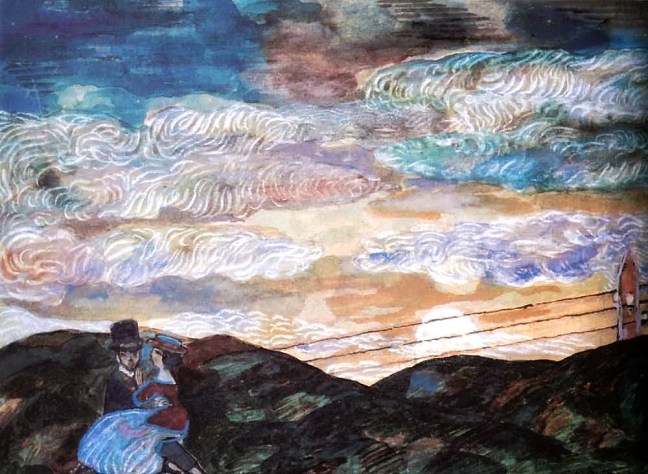
Remembrance

‘Remember’ – Nicholas Roerich, 1924 – WikiArt

All the things that stand out in us, and that we finally believe to be us — our story — are the rugged parts of our existence. They are what we fear or project. What we separate from and refuse to embrace. What we identify with and refuse to let go. What we have used for our identity, to shape our person, and draw some pride and contentment, or some shame and resentment. All the same. We are the children of circumstances and failures, of successes and apparent choices. Of sufferings. So we have shaped ourself with and from what we are not — from what we can remember and hook on. From events and ideas. From what can give us a form and a semblance of reality. But with all these, we are left only with what doesn’t truly satisfy us, doesn’t quench our thirst, doesn’t make us a rock but only a fragile, elusive entity. There is more to us than story and existence. There is what we cannot remember and make a story of. What we cannot fit into the shape of a person. What we have left unnoticed in the interstices of our life.

Why is it, do you think, that we often have difficulty remembering the happiest parts of our lives, which tend to disappear into thin air? Why cannot we seize happiness? Why is it that we seem to disappear in it and with it? That the best part of what we are, is the part less remembered and graspable? We tend to emphasise the foreground, the highlights, what exists, appears, and disappears. We have little consideration for what stands behind, unnoticed — the still, silent, benevolent matrix of it all. The unfathomable that we are, with its indomitable nature. That which lends a ground to all forms and appearances, including time and space. That which is not an object in our experience. Which is not an idea or a representation. Which is alive and can only be felt in and as the depth of our being. Which has the solidity of a rock that can never be moved. Which will never be a person, never have accidents, never be shamed or shaped by circumstances or events. This most profound nature of our being holds for us the peace and happiness which we are seeking in the foreground. We borrow the happiest parts of our existence to our own nature, while thinking it lies in chances and accidents.

If this nature of ourself is not felt, we will live with fear and lack. So this is our worthiest remembrance. This is where we have to be. To live as that field of being is to remember our nature as the rock-like essence of all beings, things and events. Then, this sublime identity that we have found ourself to be will matter more than any life achievement or result. It will be like the air we breathe. It is ourself seen in the conscious light of our being. In this, happiness is prevailing because it is the very colour of being. In fact, happiness is devouring our old self, which is why and how we as a separate entity disappear every time we feel at peace and content. Peace becomes our very identity — the eternal, ever-present nature of our being. Life then puts on the clothes of clarity and well-being, and our self deserts the ruggedness of the eventful life of time and place. What we ‘remember’, according to the etymology, is what we ‘call to mind’. So we ought to be cautious of what we remember or forget. That will condition our being happy or miserable.

.

~~~

Text by Alain Joly

Painting by Nicholas Roerich (1874-1947)

~~~

.

Website:
Nicholas Roerich (Wikipedia)

Suggestion:
Other ‘Ways of Being’ from the blog…

.

The Religious Life

Two monks’ – Carl Bloch, 1861 – WikiArt

Spirituality is an exaggeration. We need to exaggerate our commitment to truth, and be ‘spiritual’ for a time. We need to take on this role. Being is to be favoured at the expense of experience. This is the way to re-establish a lost truth, to re-assert what we truly are against what we have conditioned ourself to be, by force of habit. It takes a lot to fight an addiction, to forget a well-rehearsed habit, to extricate ourself from our deeply imbedded identifications with our body and mind. What’s running in our head has a persuasive power, and perceptions have a way to project everything perceived as being out there, into what we commonly conceptualise as a world separate from ourself. So spirituality is a sort of rehab. We go to the church or the temple only because of our failure in making a cathedral of our experience. We attend the mass in reason of our not being grateful for the given bread of our life. And we meditate for lack of noticing that the meditator is a superimposition on our simple experience of being. We’re overdoing it, but it’s for the good cause. We need a magnifying glass to notice what is hidden in the cacophony of experience.

But spirituality is not a way of life. it is a temporary overemphasis, a dramatisation. We were never meant to be spiritual, or a believer in a religion. Religion is a teaching, a suggestion to realign ourself with truth rather than with an acquired belief. It is the temporary treatment for our suffering. It is the gentle scolding of a parent when we have made a mistake. It is benevolence — an encouragement towards a happier living. It is a bond and a reverence towards the simple reality of our being. So spirituality is an effort towards effortlessness. It is an attempt to recognise the given in ourself, amongst all the things that we have acquired and wrongly identified with. We have to dig out our true nature as pure, undivided, peaceful being, and have to be for a while a zealot for this, an ultra, a devotee of being, and to leave experience alone, to restrict our commitment with the world of things. It is a descent into spirit, before spirit pervades the totality of experience.

So all the paraphernalia of religion, all the words and practices of spirituality, and the endless commenting on the commenting, are only a means to acquire what we already have and already are, although unknowingly. Practice is to just be, and be happy. Prayer is to live a life that has meaning and clarity. Meditation is to have a vision of what we are, and with that vision, to love and share our deepest nature with others and with the world. It is to restore reality, in order to give ourself back to it. Because we cannot understand, feel, love, and just be, we have elaborated rituals, prayers, teachings. Spirituality is not the truth, only the means to access it, as devotion to a deity is but the path towards true, unconditional love. So we might want to push our practice. We might have to snob experience for a while, to leave it in the marge, in order to concentrate on our being only being. And we might want to stay there, in being — a yogi of presence. We don’t want to be an occasional visitor. We long to be a resident, to have being as our eternal companion. To feel that we are that naturally, and effortlessly. We want to drop all affectation. Effort is only a temporary device, to defeat a bias acquired over life times, and instilled by a whole society. We want to be free of ourself, and to quit being a believer, or a practitioner.

Then life becomes a temple, whether we are in the busy heart of a city, or in a monastery, whether we live the active life of a working hero, or the silent one of a dedicated monk. There will be a day when our life will take place in the clarity of being. When our daily activities will receive the flow of a constant radiance of meaning and beauty. When love will be the very canvas of all our relationships. When our duties and chores will be clothed with a flavour of sacredness. On that day, this tragic and magnificent exaggeration that spirituality is, will be replaced by a life that is discovered to be unaffected, spontaneous, uninhibited, relaxed, and genuine. Maybe this truly is the religious life.

.

~~~

Text by Alain Joly

Painting by Carl Bloch (1834-1890)

~~~

.

Website:
Carl Bloch (Wikipedia)

Suggestion:
– Other ‘Reveries’ from the blog…

.
Creep

‘Radiohead @ TD Garden (Boston, MA)’ – by Kenny Sun – Wikimedia

I wonder if you have ever seen the face of love, what loving indifference is? I have some days ago, while watching a concert by Radiohead on the internet. It was during the band’s most celebrated hit, called ‘Creep’. This song is the stage of an unrequited love. But I suggest it goes further than that. It is the story of a rage, of not being enough. We all have lived through expectations that were turned down. We all have made efforts that didn’t pay off. We all want to feel special, to belong, to be at peace. We abhor being behind ourself, faking our contentment and control. So we all have known this feeling of being a ‘creep’, or at least of not being good enough. That’s why we live so hectically, constantly looking for better and more, wanting to feel complete, enough at last. Maybe that’s why the song happened to be such a hit, beyond its obvious musical qualities: it is like an echo of the secret battle we are engaged in, of our quiet desperation, and of our repeated attempt to put an end to our suffering.

I was watching the song being played, the singer yelling its rage amongst the gnashing saturated blasts coming from Jonny Greenwood’s guitar, lights illuminating the stage like a flash of lightning would. Then it surprised me. For just a few seconds, the camera caught in the public a young woman whose attitude was quiet, mildly concerned, but deeply tuned to herself. Everybody around her was involved, shouting, dancing, taking their share, drawing their identity and happiness from the vibes of the music. But she was not. Didn’t need to. Her need was to be quiet. Peace was her home. Beauty was where she was, and where she had landed on. She was tasting her being. She was taking it all in, but with a peaceful, loving indifference. For her, separation had been slain, and she had become a silent watcher, a taster of being, a madonna.

There was no need for her to dance and shout the lyrics of her favourite Radiohead song, for she dwelled in silence. It was all taking place somewhere else, in a placeless place where time was nowhere to been seen or experienced. All our objects of adoration are never the point, are never the goal. They are the means to feel and taste in ourself this most profound sense of peaceful being that is always here, always now with us, and that we miss in reason of our obsessive attachment to objects, with their derived outcomes and rewards. When the love or enthusiasm for an object — a song, a piece of art, a football match — is brought to its paroxysm, we merge with it, and in this merging forget our own person. This forgetting is the stage set for a meeting with ourself, for an encounter with our own silent being. We feel what we could call, a paradoxical serenity. So the pleasure of the senses is never the object of our desire, and never what our seeking is about. We are after something more elusive, the harder catch that is our own being. We long for this profound sense of peace and security that lives there as our identity. This serenity is not dependent on circumstances, but lies naturally in and as our most intimate being. This pure being is our true identity, and is in fact what we are really seeking behind all our pleasure oriented pursuits. Pleasure can never be a match to being. Pleasure is but the child of separation, while being is the realisation of our deepest identity as love, and its expression as oneness.

Love takes over experience. Love dominates experience, it brings it down to its knees, reveals what it is made of. Experience appears to be of secondary importance, not because it is not important, but because its importance lies in the light that shines on it and gives it its reality and meaning. We cease to be personally involved. We are just present, and this presence is our most precious and efficient involvement. We are indifferent not because we do not care, but in reason of the preeminence of love in our heart, with its acute, unfocused awareness. Love responds to the whole. There is no personal self present, that feels separate and insecure, fearing and seeking. That one is absent, leaving all the place to the quality of simply being, with no preferences in it, but with a total, impersonal, peaceful engagement. This peace is the most profound signature or identity contained in every experience that we go through. To recognise the nature of ourself as peaceful being, is to recognise the nature of experience as that one same peaceful being. We will never have to complain: ‘I wish I was special’. Never have to say: ‘I don’t belong here’. In love, there is no being a creep.

.

~~~

Text by Alain Joly

Photo by Kenny Sun (Wikimedia)

~~~

.

Website:
Creep (Radiohead Song) (Wikipedia)

Suggestion:
Other ‘Ways of Being’ from the blog…

.

The Ending of Time

Don’t wait for the right time, make this time right.” I read this quote lately, attributed to Neem Karoli Baba. Let’s meditate on it. For no uttering of a master is ever innocuous and randomly said. It comes from a deep source that is ever overflowing. If you do catch what it means, if you chew what these words contain of wisdom and truth, you will see how the now of time blends into the now of being. For there is no now of time. The now of time is a well-rehearsed illusion. Its only reality is practical, for the right functioning of the body in the field of experience. But there is one other reality that is here now, and this is the reality of yourself, of who you are truly in and as the eternal now of your being. In this newly discovered reality, you will notice that there is no possibility of waiting for the right time. The right time for an understanding is a handy projection to give you the hope that you need, and spare you an immediate death, a confrontation with your true self. Your hidden assumption behind the so-called ‘right time’ is: ‘You should better postpone. You should better wait. There is a sometime that will come right one day in the future. So keep at it. Keep meditating, keep practising. The fruit will come eventually. You will come to deserve it. But not here, not now. It is for another now — a future now.’ But let’s be cautious here. For the right time will never come. Of that I can assure you. It can’t. This time is not there. It has no reality. It is an escape. A postponing for your own sake. Cleverness at work. There is no waiting with truth. This timeless now that your being is made of, is the only time there is and will ever be. Assert this truth. Lean towards it. See that understanding already shines in and as your own being. Spare yourself the waiting. The ‘right time’ is a spiritual myth.

Make this time right. Make it the ever flowing home of your being. Feel that you are now, the now you seek in the future, and this now can never leave you. This now will never pass, and never come to be. This now has grown to infinite proportion. It envelops you. It cannot be pushed to another now, for now is always one. It has no duration. Feel that you are yourself this ‘right time’ which you want to postpone and find in the future. Sink into it. Make it disappear as time, and reveal its true identity as being. That’s how you make this time right: by being the being that you are. By living your truth. By sensing that what you are is not an object in time and space, but is the very container in which time and space can spread their limbs. Time is what thought has superimposed on the reality of being. If you stay at the level of time, it means that you are still living in your thoughts, and are lured by their promises. To make this time right is to go beyond thought. It is to pierce time through — which is yourself as thought — and discover that beyond time is a nature that is timeless. Beyond the idea of your being a separate, time-bound entity, is a presence that is always here, always now, and therefore always true and right. This presence doesn’t need a now to come into being. This presence is what you are, untouched by time or place, ignorant of even the possibility of ignorance, and devoid of any idea of lack or seeking. You will never again wait or expect to be anything other than what you are now, for being is your true and unavoidable, indissociable nature. From now on, this time of now will forever be the right one, for the simple reason that it bears within itself the ending of time, and the revealing of the unborn. In fact, the ultimate virtue of time is in the eternity that it hides.

.

~~~

Text and photo by Alain Joly

Quote by Neem Karoli Baba (1900-1973)

~~~

.

Website:
Neem Karoli Baba (Wikipedia)

Suggestion:
Other ‘Ways of Being’ from the blog…

.