The Religious Life

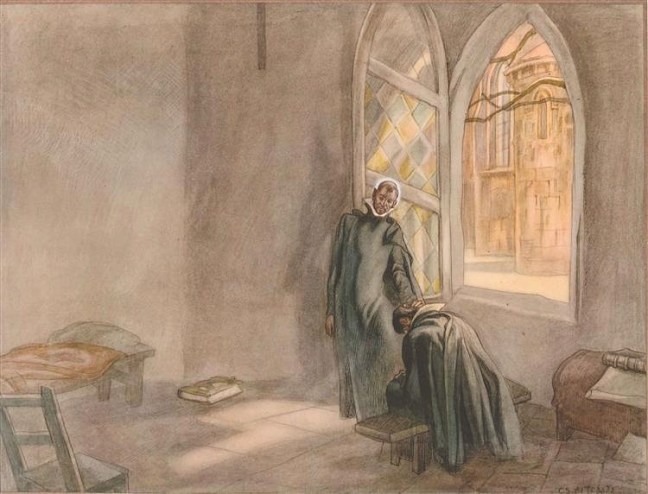
Two monks’ – Carl Bloch, 1861 – WikiArt

Spirituality is an exaggeration. We need to exaggerate our commitment to truth, and be ‘spiritual’ for a time. We need to take on this role. Being is to be favoured at the expense of experience. This is the way to re-establish a lost truth, to re-assert what we truly are against what we have conditioned ourself to be, by force of habit. It takes a lot to fight an addiction, to forget a well-rehearsed habit, to extricate ourself from our deeply imbedded identifications with our body and mind. What’s running in our head has a persuasive power, and perceptions have a way to project everything perceived as being out there, into what we commonly conceptualise as a world separate from ourself. So spirituality is a sort of rehab. We go to the church or the temple only because of our failure in making a cathedral of our experience. We attend the mass in reason of our not being grateful for the given bread of our life. And we meditate for lack of noticing that the meditator is a superimposition on our simple experience of being. We’re overdoing it, but it’s for the good cause. We need a magnifying glass to notice what is hidden in the cacophony of experience.

But spirituality is not a way of life. it is a temporary overemphasis, a dramatisation. We were never meant to be spiritual, or a believer in a religion. Religion is a teaching, a suggestion to realign ourself with truth rather than with an acquired belief. It is the temporary treatment for our suffering. It is the gentle scolding of a parent when we have made a mistake. It is benevolence — an encouragement towards a happier living. It is a bond and a reverence towards the simple reality of our being. So spirituality is an effort towards effortlessness. It is an attempt to recognise the given in ourself, amongst all the things that we have acquired and wrongly identified with. We have to dig out our true nature as pure, undivided, peaceful being, and have to be for a while a zealot for this, an ultra, a devotee of being, and to leave experience alone, to restrict our commitment with the world of things. It is a descent into spirit, before spirit pervades the totality of experience.

So all the paraphernalia of religion, all the words and practices of spirituality, and the endless commenting on the commenting, are only a means to acquire what we already have and already are, although unknowingly. Practice is to just be, and be happy. Prayer is to live a life that has meaning and clarity. Meditation is to have a vision of what we are, and with that vision, to love and share our deepest nature with others and with the world. It is to restore reality, in order to give ourself back to it. Because we cannot understand, feel, love, and just be, we have elaborated rituals, prayers, teachings. Spirituality is not the truth, only the means to access it, as devotion to a deity is but the path towards true, unconditional love. So we might want to push our practice. We might have to snob experience for a while, to leave it in the marge, in order to concentrate on our being only being. And we might want to stay there, in being — a yogi of presence. We don’t want to be an occasional visitor. We long to be a resident, to have being as our eternal companion. To feel that we are that naturally, and effortlessly. We want to drop all affectation. Effort is only a temporary device, to defeat a bias acquired over life times, and instilled by a whole society. We want to be free of ourself, and to quit being a believer, or a practitioner.

Then life becomes a temple, whether we are in the busy heart of a city, or in a monastery, whether we live the active life of a working hero, or the silent one of a dedicated monk. There will be a day when our life will take place in the clarity of being. When our daily activities will receive the flow of a constant radiance of meaning and beauty. When love will be the very canvas of all our relationships. When our duties and chores will be clothed with a flavour of sacredness. On that day, this tragic and magnificent exaggeration that spirituality is, will be replaced by a life that is discovered to be unaffected, spontaneous, uninhibited, relaxed, and genuine. Maybe this truly is the religious life.

.

~~~

Text by Alain Joly

Painting by Carl Bloch (1834-1890)

~~~

.

Website:
Carl Bloch (Wikipedia)

Suggestion:
– Other ‘Reveries’ from the blog…

.

Creep

‘Radiohead @ TD Garden (Boston, MA)’ – by Kenny Sun – Wikimedia

I wonder if you have ever seen the face of love, what loving indifference is? I have some days ago, while watching a concert by Radiohead on the internet. It was during the band’s most celebrated hit, called ‘Creep’. This song is the stage of an unrequited love. But I suggest it goes further than that. It is the story of a rage, of not being enough. We all have lived through expectations that were turned down. We all have made efforts that didn’t pay off. We all want to feel special, to belong, to be at peace. We abhor being behind ourself, faking our contentment and control. So we all have known this feeling of being a ‘creep’, or at least of not being good enough. That’s why we live so hectically, constantly looking for better and more, wanting to feel complete, enough at last. Maybe that’s why the song happened to be such a hit, beyond its obvious musical qualities: it is like an echo of the secret battle we are engaged in, of our quiet desperation, and of our repeated attempt to put an end to our suffering.

I was watching the song being played, the singer yelling its rage amongst the gnashing saturated blasts coming from Jonny Greenwood’s guitar, lights illuminating the stage like a flash of lightning would. Then it surprised me. For just a few seconds, the camera caught in the public a young woman whose attitude was quiet, mildly concerned, but deeply tuned to herself. Everybody around her was involved, shouting, dancing, taking their share, drawing their identity and happiness from the vibes of the music. But she was not. Didn’t need to. Her need was to be quiet. Peace was her home. Beauty was where she was, and where she had landed on. She was tasting her being. She was taking it all in, but with a peaceful, loving indifference. For her, separation had been slain, and she had become a silent watcher, a taster of being, a madonna.

There was no need for her to dance and shout the lyrics of her favourite Radiohead song, for she dwelled in silence. It was all taking place somewhere else, in a placeless place where time was nowhere to been seen or experienced. All our objects of adoration are never the point, are never the goal. They are the means to feel and taste in ourself this most profound sense of peaceful being that is always here, always now with us, and that we miss in reason of our obsessive attachment to objects, with their derived outcomes and rewards. When the love or enthusiasm for an object — a song, a piece of art, a football match — is brought to its paroxysm, we merge with it, and in this merging forget our own person. This forgetting is the stage set for a meeting with ourself, for an encounter with our own silent being. We feel what we could call, a paradoxical serenity. So the pleasure of the senses is never the object of our desire, and never what our seeking is about. We are after something more elusive, the harder catch that is our own being. We long for this profound sense of peace and security that lives there as our identity. This serenity is not dependent on circumstances, but lies naturally in and as our most intimate being. This pure being is our true identity, and is in fact what we are really seeking behind all our pleasure oriented pursuits. Pleasure can never be a match to being. Pleasure is but the child of separation, while being is the realisation of our deepest identity as love, and its expression as oneness.

Love takes over experience. Love dominates experience, it brings it down to its knees, reveals what it is made of. Experience appears to be of secondary importance, not because it is not important, but because its importance lies in the light that shines on it and gives it its reality and meaning. We cease to be personally involved. We are just present, and this presence is our most precious and efficient involvement. We are indifferent not because we do not care, but in reason of the preeminence of love in our heart, with its acute, unfocused awareness. Love responds to the whole. There is no personal self present, that feels separate and insecure, fearing and seeking. That one is absent, leaving all the place to the quality of simply being, with no preferences in it, but with a total, impersonal, peaceful engagement. This peace is the most profound signature or identity contained in every experience that we go through. To recognise the nature of ourself as peaceful being, is to recognise the nature of experience as that one same peaceful being. We will never have to complain: ‘I wish I was special’. Never have to say: ‘I don’t belong here’. In love, there is no being a creep.

.

~~~

Text by Alain Joly

Photo by Kenny Sun (Wikimedia)

~~~

.

Website:
Creep (Radiohead Song) (Wikipedia)

Suggestion:
Other ‘Ways of Being’ from the blog…

.

The Ending of Time

Don’t wait for the right time, make this time right.” I read this quote lately, attributed to Neem Karoli Baba. Let’s meditate on it. For no uttering of a master is ever innocuous and randomly said. It comes from a deep source that is ever overflowing. If you do catch what it means, if you chew what these words contain of wisdom and truth, you will see how the now of time blends into the now of being. For there is no now of time. The now of time is a well-rehearsed illusion. Its only reality is practical, for the right functioning of the body in the field of experience. But there is one other reality that is here now, and this is the reality of yourself, of who you are truly in and as the eternal now of your being. In this newly discovered reality, you will notice that there is no possibility of waiting for the right time. The right time for an understanding is a handy projection to give you the hope that you need, and spare you an immediate death, a confrontation with your true self. Your hidden assumption behind the so-called ‘right time’ is: ‘You should better postpone. You should better wait. There is a sometime that will come right one day in the future. So keep at it. Keep meditating, keep practising. The fruit will come eventually. You will come to deserve it. But not here, not now. It is for another now — a future now.’ But let’s be cautious here. For the right time will never come. Of that I can assure you. It can’t. This time is not there. It has no reality. It is an escape. A postponing for your own sake. Cleverness at work. There is no waiting with truth. This timeless now that your being is made of, is the only time there is and will ever be. Assert this truth. Lean towards it. See that understanding already shines in and as your own being. Spare yourself the waiting. The ‘right time’ is a spiritual myth.

Make this time right. Make it the ever flowing home of your being. Feel that you are now, the now you seek in the future, and this now can never leave you. This now will never pass, and never come to be. This now has grown to infinite proportion. It envelops you. It cannot be pushed to another now, for now is always one. It has no duration. Feel that you are yourself this ‘right time’ which you want to postpone and find in the future. Sink into it. Make it disappear as time, and reveal its true identity as being. That’s how you make this time right: by being the being that you are. By living your truth. By sensing that what you are is not an object in time and space, but is the very container in which time and space can spread their limbs. Time is what thought has superimposed on the reality of being. If you stay at the level of time, it means that you are still living in your thoughts, and are lured by their promises. To make this time right is to go beyond thought. It is to pierce time through — which is yourself as thought — and discover that beyond time is a nature that is timeless. Beyond the idea of your being a separate, time-bound entity, is a presence that is always here, always now, and therefore always true and right. This presence doesn’t need a now to come into being. This presence is what you are, untouched by time or place, ignorant of even the possibility of ignorance, and devoid of any idea of lack or seeking. You will never again wait or expect to be anything other than what you are now, for being is your true and unavoidable, indissociable nature. From now on, this time of now will forever be the right one, for the simple reason that it bears within itself the ending of time, and the revealing of the unborn. In fact, the ultimate virtue of time is in the eternity that it hides.

.

~~~

Text and photo by Alain Joly

Quote by Neem Karoli Baba (1900-1973)

~~~

.

Website:
Neem Karoli Baba (Wikipedia)

Suggestion:
Other ‘Ways of Being’ from the blog…

.

Undivided Being

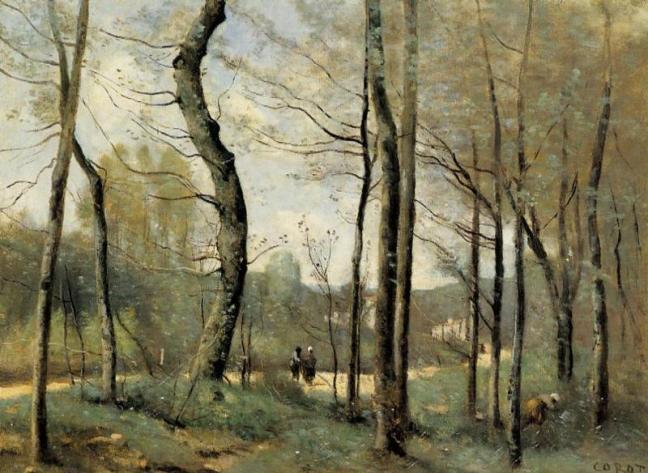
‘The Virgin Islands In Bezons’ – Charles-Francois Daubigny, 1855 – WikiArt

We all want to be happy. That’s our most profound desire. Everything we do is only expressing that longing. We want to be whole, free from contradiction and suffering. That’s the quiet or not so quiet battle that our life is, whether we acknowledge it or not. That’s being human in a nutshell. Really, humanhood is a quest. As an individual, that’s all we are seeking. But are we really an individual? Are we really a particle amongst the space of humanity? Are we truly a self contained in a body, an ‘indivisible entity’ as the word ‘individual’ has sought to make us believe? In Latin, ‘individuum’ stands for ‘atom’. But in fact, we feel that we are not yet an individual — we are divided, torn apart, haven’t quite found the person that we have the urge to be. Our limits are blurry. Our qualities are evasive. Our purpose is hazy. We often don’t find ourself in ourself. There is a blank there if we look carefully. So what is truly existing in us? What is here that is worth being called myself, or ‘I’? What is being an individual?

Now, most people don’t like being told. Our being is a much too serious affair to be delegated to another. We want to feel for ourself. We want to feel both what we are, and that we are. That’s why we keep looking, seeking, failing, finding, falling, doubting. We keep dancing the life we are in, by all means. We are seeking ourself in all that comes. In fact, just being an individual doesn’t seem to make it. We feel there is more to us than being a separate entity, delineated by the limits of our body and mind. It doesn’t fit — doesn’t quite match our intuition. It doesn’t feel that we are that limited. It doesn’t feel that we truly know what we are. Maybe it never was about our bodies. Maybe our individuality takes its source in infinity. This is what we were meant to be. This is what an individual is, undivided, not distinguished from everything, devoted to the quality of being that encompasses the universe and beyond. We were never a thing, a particle. Only, it seems that we have squeezed our indivisibility into a body to fit the general consensus.

Paradoxically, it is not in our differences that we find our individuality, but in the sameness of being. Our differences are simply the residues, the negligible expressions of a conditioning at the level of the body-mind. They are not an expression of our individuality. They do not represent us. We are not to be defined by the small, but by the expanded field of our awareness, the immensity of being. In a strange way, this identity-less identity is making us the very person or individual that we have always wanted to be. Do you want to be the best version of yourself? So be. Just be. Be that formless, identity-less being that you are and have missed for wanting to be only qualities or talents. Qualities and talents need our being first for their field of expression. We are their container. Without this silent presence of being that we are, they remain simple goods that we use to buy a semblance of composure, with its flickering moments of satisfaction and pride. Our being identified with them is the cause of your suffering. But there will come a time when being will be seen as the only mark or evidence of our individuality. Being is what our individuality is made of. It is our true body. Idiosyncrasies and differences are but the crumbs left at the table of experience.

In fact, being is what being an individual is. Our individuality is found in the shining of being. Not in the shining of our conditioning and idiosyncrasies. We will learn to see our so-called qualities behind us, almost non-existent, choked by the brightness of being. Bodies are only points of view. And minds are the tools for the government of our body. Our self is not there, not located. It is an expansion. Being an individual is being whole, undivided. It is to find our completeness in and through the world. It is to see and feel that the totality of experience is made of being, and that being is the essence of our individuality. Being an individual means that we are not a divided, broken up, an assembly of body, thoughts, feelings, experiences that makes for a person. How could we be an individual when we draw our identity from scattered objects that tear us apart and leave us confused — unanchored to our deepest self? We own our freedom to the recognition of our individuality, which consists of undivided being. The word speaks for itself. An individual is an undivided being. It is not found in our qualities and idiosyncrasies, not in our body and mind. We draw our individuality from simply being.

.

~~~

Text by Alain Joly

Painting by Charles-Francois Daubigny (1817-1878)

~~~

.

Website:
Charles-Francois Daubigny (Wikipedia)

Suggestion:
– Other ‘Reveries’ from the blog…

.
The Formula of Life

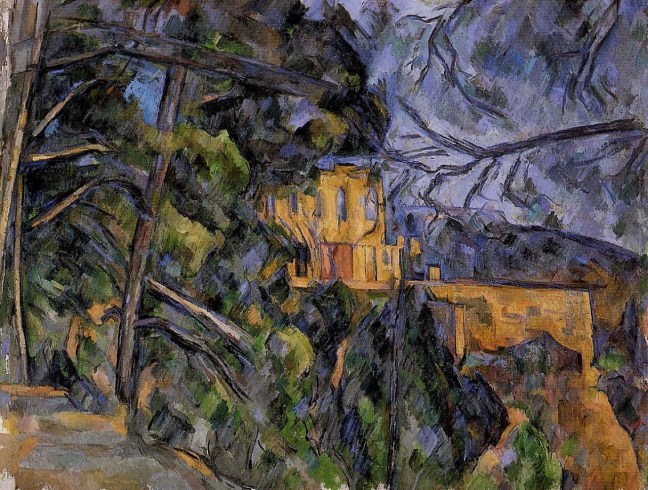
‘Rocks and sea’ – Paul Gauguin, 1886 – WikiArt

There is something mathematical about the spiritual life. You need to get the formula right, which is simply to recognise being as your one only identity. Simply being, with no addition to it. Concentrated being. If you cannot recognise yourself as that, then life will bounce back at you in endless, nasty, different ways. You will be made into somebody frail, vulnerable, suffering. Out of your failure at being who you truly are, you will draw an idea of who you are, a belief in being a separate entity, identifying yourself with your body-mind. This invented self is a diminution of your real identity. It has, inscribed in its very making, an imbalance, a lack. You will feel small, incomplete, at the mercy of beliefs and images, assailed by objects. You will be made uncertain, needy, a seeker of your lost identity. So you will then receive many of your experiences as a threat, as something that can hurt you, diminish you. That’s how fear arises, out of incompleteness, when there is a flaw in the equation of being. You are as to say behind yourself, mistaken. You have failed at just being, and are now being this and that. You have lost your anchor for a trip into objectivity. You have exchanged wholeness for separation.

Now you look everywhere frantically for something to complete you, and you find it a hundred times, in a passing object, in a success, an achievement, a bout of luck, a relationship. But these are fake friends that will fail you. For there is nothing here in the objective world that can match being. Dissatisfaction will hover over you again and again, no matter how many objective goals you may set your heart on, and attain. You will never resolve that equation. A flaw will remain, and your life formula will be left empty of meaning, unable to find its resolution. These objects that were your hope for fulfilment will finally come biting at you, for they are but the tricks that you have used as an escape from yourself. They are your being that you have let down, and split apart. They are your means to mend and repair yourself. But to project yourself in objects is to hope, expect, envy, and open the door to endless suffering. This wound is the sign of your incompleteness, the symptom of your failure at recognising your true identity. Every neglect or rejection of your true nature creates openings where experience will come and stand in front of you as something to be afraid of, or to desire. So you are never safe, never alone. It all comes back to you as a mirror of your own insufficiency.

Remember that you will attract to yourself everything that you cannot hold as your own, and understand. To be at peace in this life is a very simple matter. It lies in only one experience, which is the experience of being. Being is your universal health insurance. Being is your completeness, and therefore your well-being. If you don’t own in and as yourself your well-being, if you fail to occupy the totality of your experience — finding safety there — then you will be assailed by life. Experience will send its soldiers at you, which are but all that you cannot hold or recognise as being your own being. Hurt, confusion, fear, misunderstanding will become your usual, well-rehearsed environment, that you will accept as normal. They will become the weapons that turn against you every time you don’t fully integrate experience as the very blood and bones of infinite being. So don’t let experiences down, to live on their own, lost, clothed in separation and enmity. The enmity of experience is of your own making. You are responsible for what hits you or heals you. And you have in yourself, as yourself, the remedy for every hurt or suffering that overcome you. You have in and as your own being the ability to feel whole, complete, self-satisfied. There lies your natural competence at living. This is how you have experience always on your side, like a friend that you never fail to embrace. This is how you complete the formula of life — through clarity and brightness of being.

.

~~~

Text by Alain Joly

Painting by Paul Gauguin (1848-1903)

~~~

.

Website:
Paul Gauguin (Wikipedia)

Suggestion:
Other ‘Ways of Being’ from the blog…

.

The Face of the Infinite

For many things in life, we are exigent, demanding. We won’t let things be as they are. We are picky — we want more and better. We expect, hope, resist, desire, and are rarely satisfied. We are seekers of advantageous situations, and have a good idea of what they can be. Yet when it comes to ourself, to knowing who or what we are, we lose all inquisitiveness. We take ourself for granted. We may want to be more loving, less violent, have more of the good qualities, and less of the bad ones, but who is the ‘I’ that desires these things, we don’t want to know. Maybe we have an intuition that there is great danger in uncovering our true identity. After all, it was never talked about, a sort of family secret that society doesn’t want you to interfere with. Even religion is not clear about it, that encourages you to rather follow, pray, and submit yourself to God, but not to know who you are. At least not in a clearly stated way. You may know about anything you want, but please keep yourself out of it. In fact, ‘Know Thyself’ is the least encouraged commandment in this world of ours, and that alone should be enough to fuel our curiosity.

So who am I? What is my identity? What is this last part of my experience that is yet to pioneer and fully settle in? Which has remained untouched, virgin of our constant and fanatic rummaging? Which hasn’t yet been recognised for the simple reason that it is not a place we can know, let alone go to? It is so ourself that it cannot be seen, felt, experienced as something objective, or as an entity. This land of ourself has slipped out of our attention. We are blind to our eternal home. We have left behind us, untackled, unidentified, in the darkness of our wilful mind, the vibrant sky of our being. So what is my true identity? What is this unchanging substance that is the formless form of my being? In other words, what am I identical with, or the same as? ‘Same’, in its most ancient etymology, has the meaning of ‘one’. So we can rule out all the separate, isolated objects that we project ourself to be — that includes our body and our mind, and the many thoughts we’re thinking. Our identity is not in something which we identify with, but in the expression of oneness — the one being that is by definition free from all identification. This identity with the One has been achieved from time immemorial. We don’t need to come back to it, to rehearse it, or affirm it. Our identity has dissolved into the One, which is identified with no other than itself.

Where does unity or oneness live in my experience? In what portion of my conscious being can I feel an absence of otherness? Where do I find in myself no distinction, variation, or divergence, not even a breach that would differentiate me from reality? Where am I wholly and only being? What is it that I truly am, with no intervention of a past or a future? Where is this within that is also without? What is this ‘I’ that I could never ever cease to be? Who am I when all objectivity and multiplicity have died down? Where do I find an absence of ‘me’ in myself? Or rather, where do I find a sense of ‘me’, in me, that is not already the ‘me’ of everything and everyone? Where am I when every remnant of a seeking mind has left? Where do I find an individuality that is not universality? Where could I not find God’s presence in my experience? Where is this ‘where’, where I can never say where, what, when, how, why to what I am? And lastly, where have now all my questions dissolved? Only settle for a living, silent answer. Any other verbal or conceptual answer at this point would ruin it all. It would be like slamming the door in the face of the infinite.

.

~~~

Text and photo by Alain Joly

~~~

.

Suggestion:
– Other ‘Reveries’ from the blog…

.
A Chronicle of Thought

‘Transept of Ewenny Priory, Glamorganshire’ – J.M.W. Turner, 1797 – WikiArt

Most of our thinking is so much unnecessary work. Consider all the worries we had, that have been fuelled by thought, and have now evaporated into thin air. Think of all our expectations and dreams that were never fulfilled, replaced by just being what we are now. There’s been so much energy wasted in these internal fights with reality. So much presence that we have missed or hidden for being tied up with these endless rounds of endless thoughts. Thinking can be a damaging factor in our being aware of our utmost reality. And we most often don’t need to have thoughts to actually be caught in their net. Thoughts are good at delegating. They will sooner than we think be replaced by chronic tensions, nasty feelings, diffuse depression, and the uneasiness of being a self. All the troubles contained in being a person — the endless suffering that goes with it, and the seeking that never seems to stop. In fact, we have been sculpted by our thoughts. We owe thoughts all that we have seemingly become. It really gives me shivers to think about it.

Our thoughts are both the cause and result of the idea of ourself they have imposed on us over time. We have been a follower of thoughts. We have been conditioned by them. They have us in their spell, and we could spend a lifetime without confronting them, without going right to the bottom of their essence. Have you ever met a thought face to face? Do it now. Ask your next unnecessary thought that simple question: ‘Why are you here?’, and see its reaction. See how it will shy away and retreat. Thoughts are not courageous beings. They thrive out of our carelessness. They love our being inattentive. It goes the same way with the self they have made us into. If it is left to act alone, that self will never leave you out of its own will. It will keep hiding your most truthful identity. It will continue feeding you with its thoughtfully rehearsed beliefs and illusions. You will keep being an entity. You won’t see the infinite that your being is made of. Silence and eternity will keep evading you. They too are shy — they don’t like when that boastful self is around.

Thoughts are silent workers, and pernicious ones. We think we have them when they in fact have us. The problem is not so much in their being there, but in what they have left in their trail for us to believe in. That’s why we call them ‘thought’ — a past participle. Thoughts are known when they have already been thought. They are agents from the past, that are here for a mission. They have created an entity that is in turn thinking them with the view of keeping itself strong and alive. So we are caught and doomed, aren’t we? Well… maybe not. Maybe thoughts too have their weaknesses, and I’ll tell you one. Pierce your thoughts through to get to their ground of being. Your freedom from thoughts is in your looking beyond them. And your freedom from being a self is in giving attention to what beholds that self, to what gives it the light necessary for its appearance, and for the knowing of your thoughts. Everything that you can know is lit by a knowing faculty. Be engrossed by that light, be only that one, for there is no thinker behind any of your thoughts, and no knower behind any of your ‘knowns’. Espouse the being in you that is responsible for being aware of everything — thoughts, objects, experiences, the feeling of being a self separate from the world. Just stay present in, as, and to this deepest, most intimate presence — the one which you cannot know, or even be as an object, and which will deliver you from being a self. In that deliverance is contained the severing of all the thoughts that are like the bricks and walls of your illusory self. You will hear the sound of the rubbles crashing at your feet. This sound is the sound that freedom makes. Silence comes afterwards — and this silence is you, who you are before the coming of any thought, truthful or not. But really, nothing is new here — after all, Paul the Apostle said it all long ago in far more succinct terms:

Whenever anyone turns to the Lord, the veil is taken away.
Now the Lord is the Spirit, and where the Spirit of the Lord is, there is freedom.
And we all, who with unveiled faces contemplate the Lord’s glory,
are being transformed into his image with ever-increasing glory.”
~ 2 Corinthians, 3:16-18

.

~~~

Text by Alain Joly

Quote by Paul the Apostle (5-64/65 AD)

Painting by J.M.W. Turner (1775-1851)

~~~

.

Websites:
Paul the Apostle (Wikipedia)
J.M.W. Turner (Wikipedia)

Suggestion:
– Other ‘Reveries’ from the blog…

.