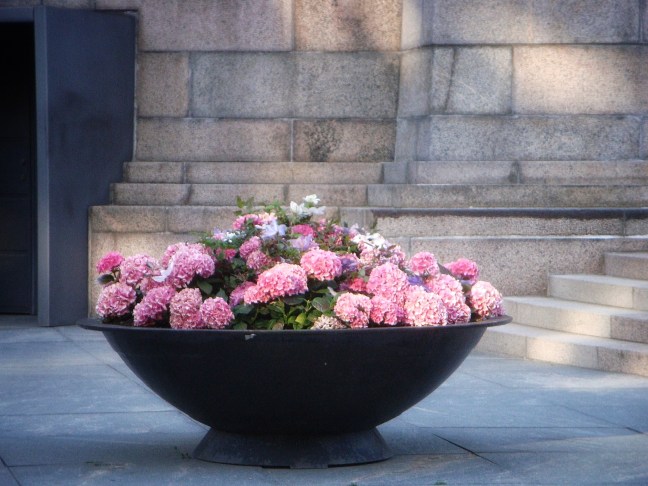
The Mystic Heart of Sport

‘The national game’ – Arthur Streeton, 1889 (Art Gallery of New South Wales) – Wikimedia

.
Brendan McNamee
is my newly invited guest on ‘The Dawn Within’. Brendan is an independent scholar and lecturer with a PhD at the University of Ulster in Ireland. He is the author of numerous books and essays on a wide range of writers, including John Banville, Michel Houellebecq, Gerald Murnane, Elizabeth Bowen, Sean O’Casey, Flannery O’Connor, W B Yeats and others. I’d like to present here one of his essays called ‘The Mystic Heart of Sport’. My attention was one day drawn to this eloquent title, while browsing through the platform ‘Academia’.

The text speaks about sport in general, using here the example of football, and mingling its wonderful argument with quotes by William Blake, Meister Eckhart, or W. B. Yeats. Brendan McNamee shows that “the conflict” on the football pitch is “between gods and mortals”, between “time and eternity”, both “inextricably entwined”. At its best, a game of football can give birth to “moments that justify sport at its best being called ‘poetry in motion’. Moments of sheer grace” when “skill and spontaneity join hands and, momentarily, dancer and dance are one.” I hope you will enjoy Brendan’s skilful writing and exposition as much as I have…

.

Eternity is in love with the productions of time.”
~ William Blake

.
~~~

The Mystic Heart of Sport

.
In The Hitchhiker’s Guide to the Galaxy Arthur Dent makes the startling discovery that white mice, rather than being the objects of experiments carried out by humans, were in fact carrying out experiments on humans. I wonder if a similar principle might be applied to sport. Take any high-stakes football match. Passions run high. The passion, on the parts of both players and spectators, is primarily for victory. The players receive a huge ego (and cash) boost, and from the fans’ point of view, a win for their team is, by some mysterious process of osmosis, a win for themselves. This lust for victory is so intense that the other source of sporting joy, the quality of the game itself, is often relegated to a secondary position, rendered lip service, of course, but seen really as essentially a means to an end. This, I would contend, is topsy-turvy. I want to argue here that it is the lust for victory that should serve the game, not the other way around, and that this order of things reflects a wider truth about life itself.

[…]

Discover Brendan McNamee’s skilful essay on the mystic of sport… (READ MORE…)

.

The Burning Bush

‘The Icon of Theotokos the Unburnt Bush’ (detail) – 19th AD, Museum of Radomysl Castle, Ukraine – Wikimedia

Don’t be shy. Come out of the bush. That bush which is of your own making. The hazy bush of your thoughts, feelings, and the ten thousand things perceived. All that you have invented to keep your self going, to give it a form and a lustrous appearance. This is a bush of endless confusion and deceit. Don’t get entangled in its thorny maze, to be kept here safe but miserable. Don’t be lured into the bush of your apparent self, with its intricate problems, and its endless, unresolvable knots. Don’t make that bush your prison, be it a golden one. Don’t let it dictate your life, to forever seek in the world all that can soothe and heal for a time. And don’t expect that you will find in other similar bushes the remedy to your entanglement. You can gather as many bushes you like, they will never make a marriage worth of the name. Any other thought-induced bush will be revealed as being lost in the same, inherent, desperate obscurity which your self is lost in.

Don’t be deceived once more. Don’t be shy. Come out of the bush. Put it on fire. Burn it to the ground. You’d be surprised of what is left behind. How do you burn a bush? Expose it to the sun of your being. How do you expose the false, but by seeing the truth? How do you fight the fear of death, but by realising your immortality? How do you disengage yourself from your endless suffering, but by recognising your true nature as peace and happiness? You have a sun at hand that is more than happy to help you in that enterprise. Expose the mirror of your separation to that sun and its burning rays will strip this idea naked of any true reality. Show yourself. Come out of the bush. Let that pure being do its job on you. Let it burn that bush of yours down to its roots.

And don’t expect a desolate land after that. There will be no carpet of black, sullen, malodorous ashes. Be audacious, for you will only burn the false that is in you. All that doesn’t truly stand on its own. All that which is not. All that you have made up. These sure will go to never return. These are the unburnt bush of your apparent self. For how do you burn something that isn’t there? How do you extricate something that wasn’t truly entangled in the first place? How do you spot the unseen? How do you kill the invisible? As for the burnt ground, you will only meet what truly is. As for the desolation, you will only be welcomed with opulent love and beauty. As for the loss and suffering, you will only be exposed to the profound peace of your essential being. You will be blessed to notice a self that was here all along but that you had been made blind to. This is where this fire is not a fire of destruction but one of creation. This is where this fire is a never ending fire where no bush, no seeds of folly can ever thrive.

.

~~~

Text by Alain Joly

Painting by Museum of Ukrainian Home Icons

~~~

Websites:
Museum of Ukrainian Home Icons
Radomysl Castle (Wikipedia)

.

Other ‘Ways of Being’ from the blog…

.
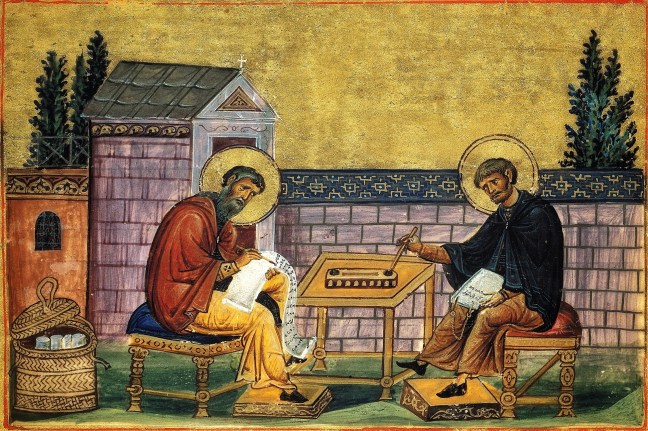
Awareness is All

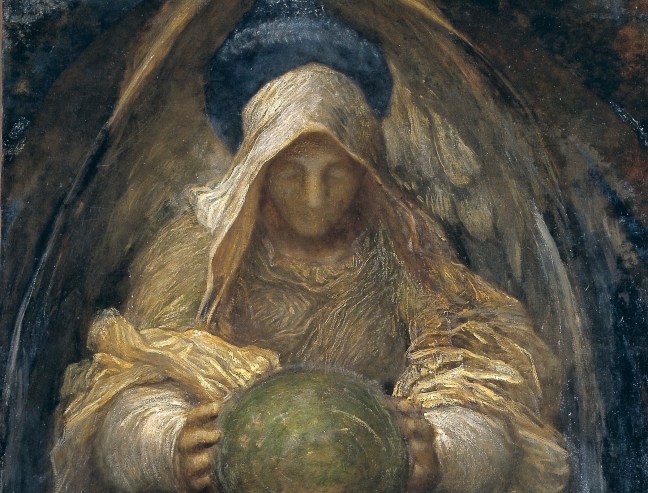
‘Conscious Capability’ – George Harvey (1806-1876) – WikiArt

.

The very fact of being aware of what is is truth.”
~ J. Krishnamurti

.

If you observe yourself carefully, awareness can be felt as a truly overwhelming presence. It is actually all there is, and that can be easily proved. Let’s take an experience like our current experience, since no other than this one present, living experience, has ever existed and will ever do. We cannot divide experience, make it into bits and pieces to be compared or analysed. Experience is not limited to its content. You cannot separate content from its recipient. That’s the first clue for our investigation: Experience is undivided, unbroken awareness.

But let’s not be too quick on this, and jump to an easy conclusion. Let’s look thoroughly at our experience. What are the things that occupy us? What is actually filling this presence of ours? Let’s take our thoughts for example. There seems to be a steady arrival of them in our mind. All kinds of thoughts. The organised ones and the messy ones. The scared, confused, barely audible ones, and the vindicative ones. The happy ones and the weeping ones. Some that are useful in the course of a day, and others utterly useless and gratuitous, that are here solely to soothe our broken sense of self, or escape from a dreadful, imagined reality. Let’s face it: most of our thoughts are actually mad thoughts owned by a barely identifiable owner.

[…]

Explore how the nature of our experience is made of awareness… (READ MORE…)

.

The State of Things

‘Self-portrait’ (detail) – Rembrandt, 1658 (Frick Collection) – WikiArt

It is crucial in life to have a clear view of the state of things. Not to be left behind with an erroneous understanding or interpretation. For there are wolves out there, that want you to go astray. They will lure you to adopt their own inherited beliefs. They will push you in the direction of your fall. So be watchful of everything you don’t fully understand.

They will want you to believe that you are surrounded by people or others. That these ‘others’ are objects of fear, pain or pleasure, that you will be drawn to either avoid or use for your own happiness. Nothing could be more remote from the truth. At no time or place will you be asked to meet anybody but yourself. Your own glorious self who happens to be also the self of all apparent others. People are but the varied and beautiful expressions of the one being that stands as your being too. In consequence, they will become colleagues, partners, sharers of that same one being, and therefore beloveds. You will see them as blooming flowers that belong to the same aware field of consciousness. This field is the only self there is, present in everyone and every being as your very own being too. This, truly is the state of things.

[…]

A meditative reflexion on the state of things in our experience… (READ MORE…)

.

The Castle

Château de Menthon-Saint-Bernard – France

.
There is a monument in your being
. Something unmovable, unbreakable. Something from which you can never part. Something you can never divorce from. Try to move away from yourself, to separate yourself from your experience, dis-extricate yourself from the massive presence of your being, and see that you cannot do it. Feel this impossibility. Let it itself move you. Let it itself disengage you. Feel how this disengagement is death itself, the removal of all that you have believed was you, and is now discovered not to be. That will shatter you, break you in a thousand pieces, to never be gathered again, never be put together ever. You will be dislodged from yourself. This is irrevocable death. And that death is the only existing portal for life.

Yet what dies is just a thought. A castle of beliefs that you have built in the air of your being. This castle was never really there, although you have inhabited it, occupied its chambers, busied yourself with its imperious injunctions. There is a way out of this donjon. You have to go to the presence of your being. This sense of being is the indestructible ground on which you have built this fatuous mansion of yourself. Some call it the ground of being. Some call it the ‘I Am’. A base you can never part from. The portal you can never deviate from. One that will never let you down, or betray you, if only you could notice its unmistakable presence. That base is itself this castle of happiness that you have hungered for all your life. One that needs not being built, that needs not being added to. So everything that you have strenuously built for yourself will find its primal redundancy, will be reabsorbed in your only true mansion. A castle with only one chamber — home of being — provider of happiness.

.

~~~

Text and photo by Alain Joly

~~~

.

Other ‘Ways of Being’ from the blog…

.
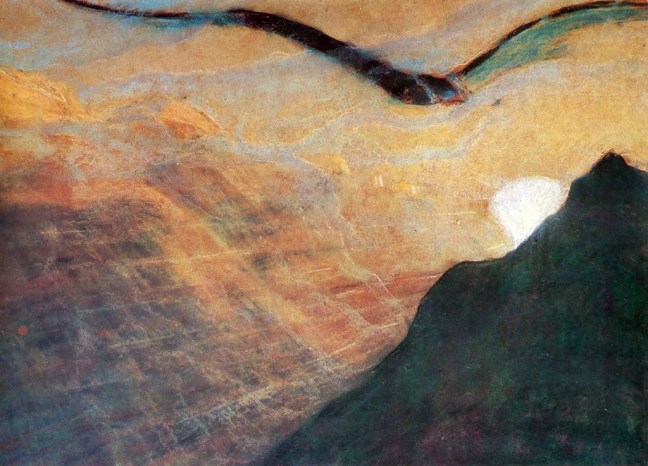
The Mystical Doctor

‘View of Toledo’ – El Greco, 1596 (Metropolitan Museum of Art) – Wikimedia

.During the night of 2 December 1577, in the city of Toledo in central Spain, a priest was imprisoned by a group of Carmelites who were refusing Teresa of Ávila’s reformation projects for their Order. He was jailed for 9 months in a monastery under brutal conditions. He was publicly beaten at least weekly, confined in a cell of barely 10 by 6 feet, with only a little light passing through a hole during the day, with bread and scraps of salt fish for a meal, and no change of clothes. But his burning love of god, along with his unfailing devotion and clarity of mind, allowed the 35 years old friar to compose, along with other shorter poems, the greater part of a sumptuous poem — ‘The Spiritual Canticle’ — about a bride’s search for her beloved. The poem, symbolising the soul seeking union with god, and inspired by the ‘Songs of Songs’ of the Bible, starts with these eloquent lines:.

Where have You hidden Yourself,
And abandoned me in my groaning, O my Beloved?
You have fled like the hart,
Having wounded me.
I ran after You, crying; but You were gone
.”
~ ‘The Spiritual Canticle’

The name of this priest and poet was John of the Cross, a Spanish Catholic mystic born in 1542 near Ávila, to whom we owe some of the brightest exposition of truth in the Christian world. Thomas Merton, who held him in very high esteem, presented him as “one of the greatest as well as the safest mystical theologians God has given to His Church.” John of the Cross was born in a poor family of Jewish converts to Catholicism, and received a simple education. He entered the Carmelite Order, made his First Profession when 21, and met Teresa of Ávila a few years later, of whom he remained a faithful associate all his life. Although not a scholar, his studies in theology and philosophy allowed him to quote abundantly from the Bible, and be acquainted with the work of St. Thomas Aquinas.

Although I have chosen to quote here only from the poem ‘The Spiritual Canticle’, John of the Cross is the author of many other poems, among which the renowned ‘The Dark Night’ — better known as ‘The Dark Night of the Soul’ — and ‘The Ascent of Mount Carmel’. His poems have a rich and powerful imagery and are considered to be masterpieces of Spanish poetry. Although they transpire with beauty and meaning, they are not to be readily understood. This is why John of the Cross wrote precise and extensive commentaries on them, some soaring pieces of teaching whose beauty and profundity is sometimes breathtaking. The most exquisite poetry is here going hand in hand with both a great depth of understanding, and the sweetest accents of devotion. The commentaries were written in prose but are here occasionally presented in a free verse form when they lent themselves to it. I am sharing the 1909 translation made by David Lewis, with corrections by Benedict Zimmerman. Listen with what tender accents of poetry and longing the bride is here conversing with her bridegroom, and how a suffering soul who has tasted of the divine is longing for “the secret chamber of God”, which is nothing but the pure consciousness that is hiding in our innermost being:

.
O you soul, then, most beautiful of creatures,
who so long to know the place where your Beloved is,
that you may seek Him, and be united to Him,
you know now that you are yourself
that very tabernacle where He dwells,
the secret chamber of His retreat where He is hidden.
Rejoice, therefore, and exult, because all your good
and all your hope is so near you as to be within you;
or, to speak more accurately, that you can not be without it.”
~ ‘The Spiritual Canticle’, 1.8 (Commentaries)

[…]

Discover the rich poetry and commentaries of John of the Cross… (READ MORE…)

.

The Hypochondria of Being

‘The Imaginary Invalid’ – Honoré Daumier, 1860-62  – Wikimedia

There may have been a time in your life when you had a glimpse or experience that you had considered to be a major event or happening, some breaking news coming from god’s mouth. And yet you were left after it with only scattered shreds of truth. You had failed to inhabit your experience and make it yours. You had stayed on its threshold and didn’t dare to visit its interior and be blessed by it. You remained where and who you always were, with the bitter taste of a failed enlightenment as a topping. So you have entertained the memory of it. You have placed this experience on a pedestal. Worshipped it as something to be attained or achieved.

So you have searched for it. You have enquired, read, experienced, shared. Slowly, almost inadvertently, you have gathered some understanding. You have sailed on the sea of existence, harvesting here a tiny piece of truth, there a hazy recognition, maybe even a glimpse of a wee realisation, which you have again locked behind closed doors. And you have sailed further. It made you push or widen your understanding even more. Silently. Surreptitiously. Until one day home is coming closer to you. You find yourself inhabiting this truth. It is making itself known as being only who you are, or that which you are. It suddenly takes you by surprise and clarity. This is what it is!

[…]

A playful interpretation of the nature of spiritual experience… (READ MORE…)

.