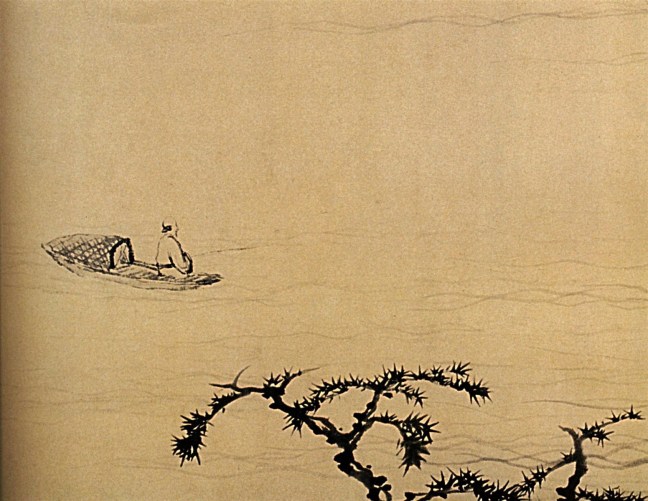
The Buddha Nature

‘Buddha Painting at Amazing Banyan Tree’ – Utsav Rock Garden – Wikimedia

When you see the representation of a Buddha in meditation — or a Shiva or a goddess —, it is not about a person or a god, not about an entity, no matter how mythical or divine he or she might be. It is yourself represented. It is the description of your own aware being. Present. Self-sufficient. Undisturbable. Undivided. Not dispersed. It is a representation of consciousness — that thing or essence of which we are made, and with which we are all having our many experiences. It is the very form of being. It is an attempt to make seen what cannot be seen, to make graspable that which cannot be grasped. It is the form of the formless. It is teaching itself. It is truth in a condensed and visible form.

To see it that way will never make you laugh again at the expressions of devotion in front of statues. It is not to say that the immense majority of believers do not see in these statues the representation of a person or a god, but rather to emphasise the truer significance behind these objects of devotion. They are reminders of truth, wake up calls from the bottomless being contained in your own being. They are beseeching you to direct your attention inwards. You are being asked to devote your attention to your self, to worship your own being, to not disperse yourself in the ten thousand things and the endless dance of thoughts and feelings, but to focus on that which is before them, that which is seeing them all. That is your true self, and that true self is Buddha-nature.

A Buddha in meditation is not a Buddha in meditation. It doesn’t tell you that you should meditate. It is rather the expression of the very being that sits as your very self or awareness. In other words, it is you. You are this close to a Buddha sitting in meditation. A breath away. Less than a breath, you are it to a point that you can never even envisage. That’s what keeps you so far remote from it. This is the real belief: to think of yourself as being a common person and not a Buddha. Imagination is taking you far away from your true self. Don’t let it do that to yourself. Don’t be so malleable as to follow the injunctions of a voice in your head. Sit down in yourself and look within. Surrender to the presence of your innermost being. Stay with it. Admire it. Your true nature is nothing but Buddha-nature. It is the only thing that you must not be asked to believe. It’s just for the realising.

.

~~~

Text by Alain Joly

Painting by Utsav Rock Garden

~~~

.

Website:
Utsav Rock Garden

.

Other ‘Ways of Being’ from the blog…

.

The Gospel According to St. Matthew

‘The Gospel According to St. Matthew’ – by Pier Paolo Pasolini – (With Enrique Irazoqui)

.

The motivation that unites all of my films
is to give back to reality
its original sacred significance
.”
~ Pier Paolo Pasolini

.

The famous Italian film director Pier Paolo Pasolini made this beautiful statement about his art: “When I make a film, I shift into a state of fascination with an object, a thing, a fact, a look, a landscape, as though it were an engine where the holy is about to explode.” This can be immediately felt as we stroll amongst the first scenes of his 1964 movie ‘The Gospel According to St. Matthew’. We are met with an angelic Mary looking at a bewildered Joseph leaving home after the discovery of her pregnancy. Silence prevails and only a concert of bird’s songs can be heard. Joseph wanders in solitude in a landscape that is desolate yet teeming with presence and energy. He comes to the edge of a town and kneels against a nearby stretch of land where a bunch of children are playing, giving like a lullaby of innocence to Joseph who closes his eyes and abandons himself to the moment. This is the chosen time when an androgynous angel appears and gives him the revelation of the divine nature of Mary’s pregnancy.

[…]

Discover the magnificent film by Pasolini on the Gospel of Matthew… (READ MORE…)

.

The Great Replacement

You can always add to experience. You can always have more thoughts. Or different ones. More refined ones. Changes can always occur and always will. You can always fall down to the lowest of the lowest, and judge yourself undeserving. And that is more thoughts about yourself. You can always imagine anything. This is endless, all this activity. It will never stop. It will never reveal any truth worth of the name. It will keep going, headlessly, aimlessly, meaninglessly, like an illusion feeding on itself in order to give itself a seeming reality. Go anywhere in your objective experience, be it your feelings, your sensations, your perceptions, your body, the world out there, none of these will bring an inch of the happiness you are desperately running after. This enterprise is doomed to bankruptcy. It will leave you broke, feeble, mortal, prone to regular fits of unhappiness. It will leave you with not a penny of certainty, not a pebble of solidity, and a very little share of that life-giving energy which you are naturally entitled to. So what are we going to do now? We cannot stop thinking, feeling, perceiving, doing. We need a new comer in the picture. A special adviser. A rock of solidity in our changing sea of uncertainty. Who is going to win the game? When we have turned round and around the table for a new name, a new shareholder, another hope, another fake answer, another bout of shaking certainty, then maybe, it might dawn on us that:

The prodigal son is already at home. Everything we need is present within and without, here and there, now and then, enveloping our vey experience with its all pervading knowing. This something cannot be named, cannot be emptied of itself, and will not make the slightest effort for you. It was here all along, ignored, unnoticed, yet having the dimension of a sky, the solidity of a rock, and the certainty of something that was here before the coming of universes beyond universes. It is like discovering in yourself the wisest of gurus present at hand, in all circumstances. It is your eternal refuge waiting for you to come in. But beware now, for that unfailing refuge, that wisest of gurus, that beloved amongst the beloveds, is you. It is you, you understand? Not something to be reached. Not something far and away. You have nowhere to go, nothing to be, no time to wait for, except being your own unfailing, wise, beloved self. You are it all. Here. Now. Whatever. Whenever. Wherever. Release that old, worn out Chief Operating Officer of yours, and replace it with being. Look around now and relax. Being is all there is.

.

~~~

Text and photo by Alain Joly

~~~

.

Other ‘Ways of Being’ from the blog…

.
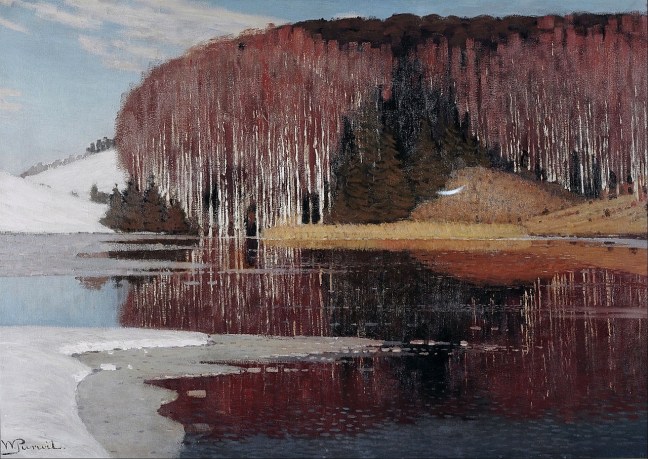
On Parmenides

‘The School of Athens’ – by Raphael, 1509 (fresco at the Vatican City) – Wikimedia

.

There is nothing,
and there will never be anything,
outside of being
.”
~ Parmenides (trans. Francis Lucille)

.

The Oxford Dictionary wrote this very concise description of Parmenides: “Greek philosopher. Born in Elea in south-western Italy, he founded the Eleatic school of philosophers. In his work ‘On Nature’, written in hexameter verse, he maintained that the apparent motion and changing forms of the universe are in fact manifestations of an unchanging and indivisible reality.” This statement is a quintessential definition of non-duality, and a summary of Parmenides’ work expressed as far as the early fifth century BC, in the cradle of western civilisation. The depth of understanding and vision required to make such statement has puzzled and influenced many a philosopher since, and has aroused the interest of countless spiritual seekers. This spiritual message is worth a good attention here.

Parmenides is the author of one single work, a poem of which only fragments have remained over the years. It survived because the around 800-verse original poem was abundantly quoted by his pairs, and could be re-formed in a shorter version, as known today, of 160 verses. His poem, today translated as ‘On Nature’, ‘On Reality’, or simply ‘Fragments’, is comprised of three parts of which the second and most important has survived in its almost entirety.

[…]

A study of Parmenides’ statement of truth in his poem ‘On Nature’… (READ MORE…)

.

Taking Sides

Don’t you want to be just made of that? To wholly embrace this experience? Not to stay in a little corner, to be always wanting, claiming, hoping, complaining, but to find yourself being the bearer of all things, merging with the ten thousand colours of experience — not being just one side of it? To be whole is never a matter of choice, but parting is. Awareness is always choiceless. If you exert a choice, in the form of a chooser, then chances are that you don’t know the true nature of living. You’re not aware, no — not yet aware. You’re still sleeping in a dark cave. You haven’t contemplated all that life is. You haven’t truly been amongst the trees, and been taken by the harmonious course of a bird. You haven’t been a lover of the grass, and a true partner of that heap of dried, dead leaves in the autumn air. You haven’t quite yet mingled with the clouds, and merged your being with the being of the sky. No, not quite yet. For now, you’re just being a chooser.

Don’t cheat on your true self and being, by partnering with a thought, a feeling, or some particular object. Don’t be abused by the noises and colours of experience, to the detriment of the silent presence that hosts them. There is something profoundly sad about taking sides — identifying with opinions, beliefs, preferences, judgments. For really, to take sides is to be a self. It is to play in the limited courtyard of your thoughts and feelings, and not be touched by the immensity of not knowing, of having no preferences, of not being a chooser. To take sides means: you haven’t let reality be as it is. You have intervened, and in doing so, have limited your self, have made it into a poor little thing.

For taking sides will send you on the dangerous road to fear, loneliness, and confusion. It will make you retire in the fake refuge of your separate self. Remember this: every time you take sides, every time you exert a control, you are not being ‘you’ — I mean your true ‘I’. You have been dragged and caught by the cunningness of a thought. You have been robbed of your essential self. You have made yourself into a point of view with a limited scope and understanding. You have been squeezed in a little corner of your invention. I am begging it to you now: Stop being anything. Don’t think yourself to be a body, and therefore be an insider. Don’t push away experience, and therefore be an outsider. Don’t be sidetracked with a sideshow. No. Make your true self the real show of experience. You won’t regret it. You will be standing on the stage of life under a shower of light and applauds. For then, you have vanquished all that separating gig. You have given your life the colour of life itself. You have treated your being with the being of all selves and things. And you have exchanged your never ending complaints with a life lived in utter thankfulness. Just by not taking sides.

.

~~~

Text and photo by Alain Joly

~~~

.

Other ‘Ways of Being’ from the blog…

.
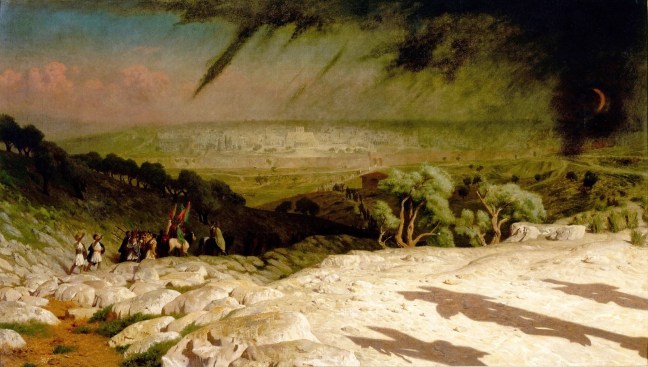
A Tower of Watchfulness

‘Still Life, Pink Roses’ – Vincent van Gogh, 1890 – WikiArt

.

We keep receiving invitations
from presence all the time.
But we turn them away
too often — and it’s a shame.

They could take care of our path
with the elegance of
their coming into being.
Paving it as it were.
Illuminating it.

For they are graceful messengers
blooming from the depth
of our innermost being.
They abhor objectivity.
They form surreptitiously
above and amongst
all that is unconscious
in ourself.
They are prodding little bells
that are here for a mission:
To wake us up.
To lure us into presence.

They may come suddenly as
the insistent call of a blackbird.
Its song a joyful reminder —
Stop it! Come back! —
so that you may let yourself
fall back into presence.
So that you may be reminded
of the intimacy of your
most tender being.

Honouring these invitations
is an ever present Sadhana.
One that requires very little effort.
For this is the effort of just
being — Being presence.
A tower of watchfulness.

.

~~~

Text by Alain Joly

Painting by Vincent Van Gogh (1853-1890)

~~~

.

Website:
Vincent Van Gogh (Wikipedia)

Suggestion:
Voices from Silence (other poems from the blog)

.

Imagine a Life

Krishnamurti said it in very clear, unmistakable terms nearly a century ago. So did the ancient sages of India, the early Sufis, the original Zen masters of China, and the great Meister Eckhart, all in their own way. So there is no room for confusion anymore. Cease being entangled in your own, unfounded beliefs. Stop breeding and comforting them by thinking them out, perceiving them away, and feeling them in, therefore giving them a reality of their own. Be reasonable for once. All this ceaseless activity must come to an end. Remember what Krishnamurti said in such irrevocable terms.

Stop giving the world a reality of its own by pushing it at a distance from yourself. It will make you retreat in your body, where you will feel small, unsafe, required to manage a universe, and make impossible choices. Stop thinking to be your body only, squeezing your self in such pitiful way, bullying it, hurting it to the point where it is made unhappy and careless, fearful and resentful, its original innocence and beauty transformed into some hideous thing. All this could be avoided in one single glance and action, if only we had truly listened …

[…]

A meditation invoking a famous statement by J. Krishnamurti… (READ MORE…)

.