Awareness is All

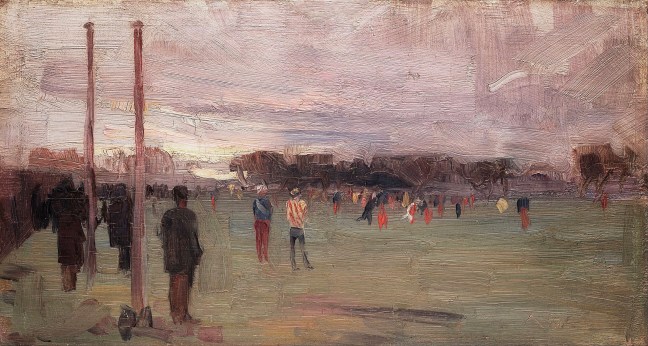
‘Conscious Capability’ – George Harvey (1806-1876) – WikiArt

.

The very fact of being aware of what is is truth.”
~ J. Krishnamurti

.

If you observe yourself carefully, awareness can be felt as a truly overwhelming presence. It is actually all there is, and that can be easily proved. Let’s take an experience like our current experience, since no other than this one present, living experience, has ever existed and will ever do. We cannot divide experience, make it into bits and pieces to be compared or analysed. Experience is not limited to its content. You cannot separate content from its recipient. That’s the first clue for our investigation: Experience is undivided, unbroken awareness.

But let’s not be too quick on this, and jump to an easy conclusion. Let’s look thoroughly at our experience. What are the things that occupy us? What is actually filling this presence of ours? Let’s take our thoughts for example. There seems to be a steady arrival of them in our mind. All kinds of thoughts. The organised ones and the messy ones. The scared, confused, barely audible ones, and the vindicative ones. The happy ones and the weeping ones. Some that are useful in the course of a day, and others utterly useless and gratuitous, that are here solely to soothe our broken sense of self, or escape from a dreadful, imagined reality. Let’s face it: most of our thoughts are actually mad thoughts owned by a barely identifiable owner.

[…]

Explore how the nature of our experience is made of awareness… (READ MORE…)

.

The State of Things

‘Self-portrait’ (detail) – Rembrandt, 1658 (Frick Collection) – WikiArt

It is crucial in life to have a clear view of the state of things. Not to be left behind with an erroneous understanding or interpretation. For there are wolves out there, that want you to go astray. They will lure you to adopt their own inherited beliefs. They will push you in the direction of your fall. So be watchful of everything you don’t fully understand.

They will want you to believe that you are surrounded by people or others. That these ‘others’ are objects of fear, pain or pleasure, that you will be drawn to either avoid or use for your own happiness. Nothing could be more remote from the truth. At no time or place will you be asked to meet anybody but yourself. Your own glorious self who happens to be also the self of all apparent others. People are but the varied and beautiful expressions of the one being that stands as your being too. In consequence, they will become colleagues, partners, sharers of that same one being, and therefore beloveds. You will see them as blooming flowers that belong to the same aware field of consciousness. This field is the only self there is, present in everyone and every being as your very own being too. This, truly is the state of things.

[…]

A meditative reflexion on the state of things in our experience… (READ MORE…)

.

The Castle

Château de Menthon-Saint-Bernard – France

.
There is a monument in your being
. Something unmovable, unbreakable. Something from which you can never part. Something you can never divorce from. Try to move away from yourself, to separate yourself from your experience, dis-extricate yourself from the massive presence of your being, and see that you cannot do it. Feel this impossibility. Let it itself move you. Let it itself disengage you. Feel how this disengagement is death itself, the removal of all that you have believed was you, and is now discovered not to be. That will shatter you, break you in a thousand pieces, to never be gathered again, never be put together ever. You will be dislodged from yourself. This is irrevocable death. And that death is the only existing portal for life.

Yet what dies is just a thought. A castle of beliefs that you have built in the air of your being. This castle was never really there, although you have inhabited it, occupied its chambers, busied yourself with its imperious injunctions. There is a way out of this donjon. You have to go to the presence of your being. This sense of being is the indestructible ground on which you have built this fatuous mansion of yourself. Some call it the ground of being. Some call it the ‘I Am’. A base you can never part from. The portal you can never deviate from. One that will never let you down, or betray you, if only you could notice its unmistakable presence. That base is itself this castle of happiness that you have hungered for all your life. One that needs not being built, that needs not being added to. So everything that you have strenuously built for yourself will find its primal redundancy, will be reabsorbed in your only true mansion. A castle with only one chamber — home of being — provider of happiness.

.

~~~

Text and photo by Alain Joly

~~~

.

Other ‘Ways of Being’ from the blog…

.

The Mystical Doctor

‘View of Toledo’ – El Greco, 1596 (Metropolitan Museum of Art) – Wikimedia

.During the night of 2 December 1577, in the city of Toledo in central Spain, a priest was imprisoned by a group of Carmelites who were refusing Teresa of Ávila’s reformation projects for their Order. He was jailed for 9 months in a monastery under brutal conditions. He was publicly beaten at least weekly, confined in a cell of barely 10 by 6 feet, with only a little light passing through a hole during the day, with bread and scraps of salt fish for a meal, and no change of clothes. But his burning love of god, along with his unfailing devotion and clarity of mind, allowed the 35 years old friar to compose, along with other shorter poems, the greater part of a sumptuous poem — ‘The Spiritual Canticle’ — about a bride’s search for her beloved. The poem, symbolising the soul seeking union with god, and inspired by the ‘Songs of Songs’ of the Bible, starts with these eloquent lines:.

Where have You hidden Yourself,
And abandoned me in my groaning, O my Beloved?
You have fled like the hart,
Having wounded me.
I ran after You, crying; but You were gone
.”
~ ‘The Spiritual Canticle’

The name of this priest and poet was John of the Cross, a Spanish Catholic mystic born in 1542 near Ávila, to whom we owe some of the brightest exposition of truth in the Christian world. Thomas Merton, who held him in very high esteem, presented him as “one of the greatest as well as the safest mystical theologians God has given to His Church.” John of the Cross was born in a poor family of Jewish converts to Catholicism, and received a simple education. He entered the Carmelite Order, made his First Profession when 21, and met Teresa of Ávila a few years later, of whom he remained a faithful associate all his life. Although not a scholar, his studies in theology and philosophy allowed him to quote abundantly from the Bible, and be acquainted with the work of St. Thomas Aquinas.

Although I have chosen to quote here only from the poem ‘The Spiritual Canticle’, John of the Cross is the author of many other poems, among which the renowned ‘The Dark Night’ — better known as ‘The Dark Night of the Soul’ — and ‘The Ascent of Mount Carmel’. His poems have a rich and powerful imagery and are considered to be masterpieces of Spanish poetry. Although they transpire with beauty and meaning, they are not to be readily understood. This is why John of the Cross wrote precise and extensive commentaries on them, some soaring pieces of teaching whose beauty and profundity is sometimes breathtaking. The most exquisite poetry is here going hand in hand with both a great depth of understanding, and the sweetest accents of devotion. The commentaries were written in prose but are here occasionally presented in a free verse form when they lent themselves to it. I am sharing the 1909 translation made by David Lewis, with corrections by Benedict Zimmerman. Listen with what tender accents of poetry and longing the bride is here conversing with her bridegroom, and how a suffering soul who has tasted of the divine is longing for “the secret chamber of God”, which is nothing but the pure consciousness that is hiding in our innermost being:

.
O you soul, then, most beautiful of creatures,
who so long to know the place where your Beloved is,
that you may seek Him, and be united to Him,
you know now that you are yourself
that very tabernacle where He dwells,
the secret chamber of His retreat where He is hidden.
Rejoice, therefore, and exult, because all your good
and all your hope is so near you as to be within you;
or, to speak more accurately, that you can not be without it.”
~ ‘The Spiritual Canticle’, 1.8 (Commentaries)

[…]

Discover the rich poetry and commentaries of John of the Cross… (READ MORE…)

.

The Hypochondria of Being

‘The Imaginary Invalid’ – Honoré Daumier, 1860-62  – Wikimedia

There may have been a time in your life when you had a glimpse or experience that you had considered to be a major event or happening, some breaking news coming from god’s mouth. And yet you were left after it with only scattered shreds of truth. You had failed to inhabit your experience and make it yours. You had stayed on its threshold and didn’t dare to visit its interior and be blessed by it. You remained where and who you always were, with the bitter taste of a failed enlightenment as a topping. So you have entertained the memory of it. You have placed this experience on a pedestal. Worshipped it as something to be attained or achieved.

So you have searched for it. You have enquired, read, experienced, shared. Slowly, almost inadvertently, you have gathered some understanding. You have sailed on the sea of existence, harvesting here a tiny piece of truth, there a hazy recognition, maybe even a glimpse of a wee realisation, which you have again locked behind closed doors. And you have sailed further. It made you push or widen your understanding even more. Silently. Surreptitiously. Until one day home is coming closer to you. You find yourself inhabiting this truth. It is making itself known as being only who you are, or that which you are. It suddenly takes you by surprise and clarity. This is what it is!

[…]

A playful interpretation of the nature of spiritual experience… (READ MORE…)

.

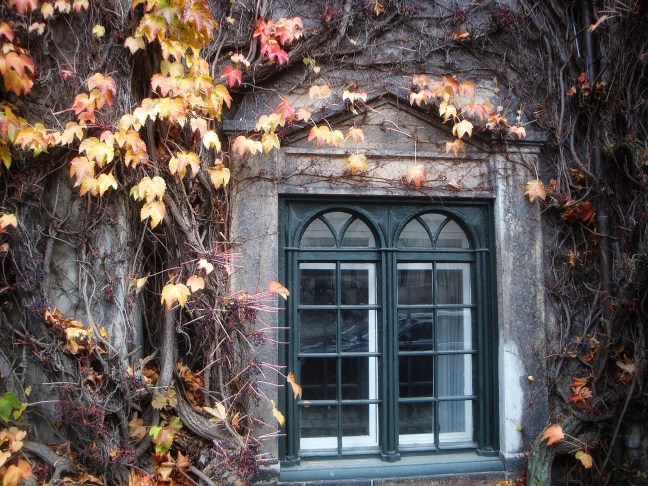
The Incidental Life

I would like to live the incidental life. Not the one that is a toil. Not the one that finds its significance in happenings and accidents, in various changes or transformations, in happy or sad expressions. I don’t want to be dependent on the forms of life for my happiness. I don’t want to be bound to its many injunctions, be they ones that are imposed or desired. For this is how life acquires its tragic quality. This is how life becomes something that we have to endure or bear with. Something that we have to go through with clenched teeth — which is with hope and belief. Something that we can be happy with, or grateful for, only if we take the right decisions, make the right efforts, and have some good luck too. I don’t want my life to be so brittle and uncertain. To be so imprisoned in endless causes and conditionings. And to have fear as its background music. No. I don’t want to be so grandiose. I want the incidental life.

To have an incidental life is to forever place our gaze on the horizon of being. This gaze implies surrendering to what is, or not minding what happens, as Krishnamurti once affirmed. This gaze will make you see life as being drenched in beauty and love. And this gaze will render you to your eternal, inborn, given nature of peace, happiness, and freedom. This is when experience clothes itself in a sumptuous dress of truth or understanding. One that will allow you, in familiar terms, to leave your life alone. For it can verily and simply take care of itself. Life doesn’t need your painstaking involvement. It doesn’t fancy your pity or concern or greed. Doesn’t want to be taken advantage of. Let your life be in its right place, which is the place of humility. This is where it will find its true colours and expressions. This is when it will rid itself of all the suffering that encumbered it. This is how it will find its own sacred purpose. Don’t give your life an undue position. Don’t take what is secondary to be foremost. And what is foremost to be secondary. See only being as foremost. This is the sun of life: this being. Its essence and direction. The rest? Well, let it be incidental.

.

~~~

Text and photo by Alain Joly

~~~

.

Other ‘Ways of Being’ from the blog…

.

The Highest Language

‘Silence’ – Odilon Redon, 1911 – WikiArt

In our language, the word ‘silence’ is defined as the complete absence of sound, or the abstinence of speech. Yet silence has fascinated us beyond these elementary descriptions to evoke the unknown and the mysterious. Something in silence speaks to us, and is a presence beyond its apparent nature as absence. Spiritual teachers from all traditions have abundantly used the word for its richness of meaning and its powerful evocative dimension. So pregnant and profound is this experience of silence that the word has often been likened to awareness or the nature of god’s silent being. Among others, Ramana Maharshi has often pointed silence as being the ultimate teacher in these matters, and Krishnamurti has described it in supremely effective and graceful words just below. This page is dedicated to their many expressions of silence:

~~~

The experience of silence alone is the real and perfect knowledge.”
~ Ramana Maharshi (‘Be as You Are’)

~

Keep silence, that you may hear Him speaking
Words unutterable by tongue in speech
Keep silence, that you may hear from that Sun
Things inexpressible in books and discourses.
Keep silence, that the Spirit may speak to you
.”
~ Rumi (‘Masnavi i Ma’navi’)

~

Accept what comes from silence.
Make the best you can of it.
Of the little words that come
out of the silence, like prayers
prayed back to the one who prays,
make a poem that does not disturb
the silence from which it came
.”
~ Wendell Berry

[…]

Read these many quotes on silence by various teachers… (READ MORE…)

.