On Passing Away

We think that most of our life is taking place in the field of body, thoughts, feelings, and sense perceptions — all of these making a self and a world, and the myriads of experiences that come as a result. This is what our life seems to be for the most part. But look again. Because in fact, no. It is not like this. That’s where the misunderstanding lies. Most of our human experience — not to say the whole of it — is spent in being. In emptiness. In vastness. Of course there is a body here that can be sensed. And feelings can be felt. And objects perceived. And thoughts are occurring all the time. And with them a sense of a separate self has been born. And all this joyous team seems to have acquired reality, and has in consequence been cursed with a measure of drama and suffering. But much was missed along the way. For in fact, none of these really took the place we imagined. None of it is taking any place, any space, or occupying any length of time. For the whole space of experience is already occupied by our sense of being. Life in its totality is made of one indivisible reality that fills our experience to the brim. This reality as being precedes experience — experience being nothing but being manifesting itself within itself.

So this is an announcement for the deceased self that we have been engrossed in all this time. Body, thoughts, feelings, senses, will continue their existence, but will lose their identity as a self. Custody will be returned to whom it always and forever belonged: pure, unlimited being. In its quality of the only inheritor of the feeling of being, ‘I’ or consciousness is now made the one true identity for all selves, and the only essence or ‘is-ness’ for all objects of experience. For we are in fact eternity, which our presence as a time-bound self has veiled. We are in truth the infinity of being, which our insistance in being a separate being has limited. And we are in reality peace itself, which our relentless seeking for happiness has sent in the hidden. There never was a self, and there never was a world. Not in the way we have imagined it. Not with the reality we have conferred to them. Being has drowned them long ago; and has given them the only reality to which they are entitled to belong. That’s how anyone, and anything, and any experience can be made to rest in peace: In giving in to being. In passing away.

.

~~~

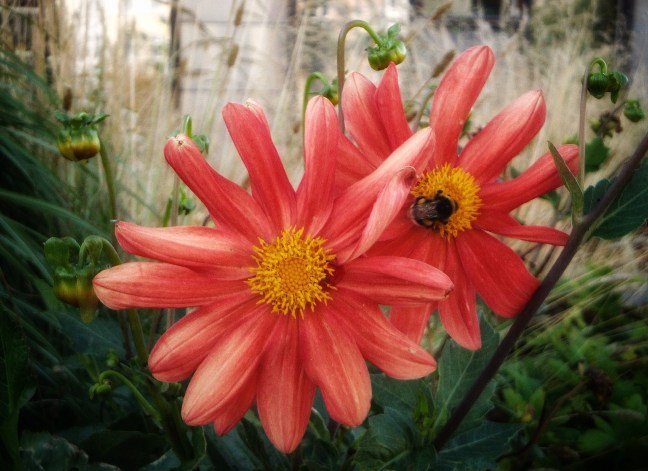
Text and photo by Alain Joly

~~~

.

Suggestion:
Other ‘Ways of Being’ from the blog…

.
The Straight Story

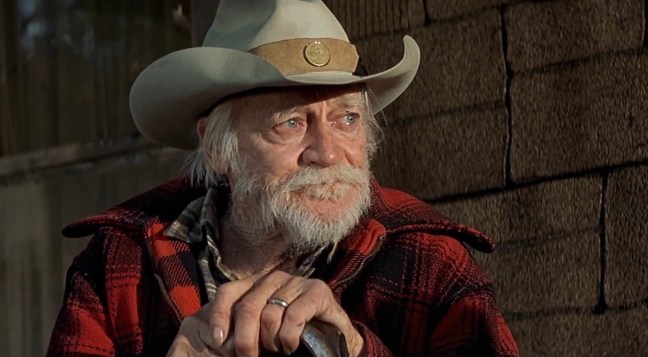
‘The Straight Story’ – by David Lynch (with Richard Farnsworth)

.

When I catch an idea for a film,
I fall in love with the way cinema can express it
.”
~ David Lynch

.

Have you ever seen a film made of love? Well, I have. And no further than this morning. A modest, not very well-known masterpiece by David Lynch, called ‘The Straight Story’. It is based on a true story: In 1994 in the United States, Alvin Straight — an old man — decides to pay a visit to his brother who has just suffered a stroke. They haven’t spoken for ages, out of an old rancour, so he wants to repair and reunite. With a clear mind, he embarks on a 390 kilometres journey from Laurens, Iowa, to Mount Zion in the Wisconsin, but he does it in his own inimitable way. On a riding lawn mower!… With bad hips and two sticks for help, and a refusal of doctors. With a maximum speed of about 8 kms per hour, and a trailer to pull. And with love as a luggage.

As often when it comes to starting a spiritual journey, it all begins with a fall and the subsequent realisation that something needs to be changed. And in order to make our quest a successful one, we have to make the journey just as important as the destination. And this is what Alvin does. His trip becomes an occasion for adventure. Everything he meets, he does with the eyes of wonder, and the now is the only time in which his travel takes place. Everything is important. Everything matters. The journey is not just a means to an end. We don’t reach infinity step by step anymore than we meet eternity in time. Every meeting with truth is made in truth’s home. And every encounter with our true nature is made within, in and as our innermost sense of being. No matter the extent of our understanding, in order to be, we have to be being. And Alvin, clearly, knows it all too well.

[…]

Some reflections on seeing this film by David Lynch… (READ MORE…)

.

Isn’t Life a Simple Thing?

We as an apparent body and mind are nothing but the conditions met for the apparition of a world and all the resulting experiences that take place within it. We are simply housing the thoughts, feelings, and sense perceptions necessary to enact experience, and give it a shine of reality. But the essential of what we are is neither in thoughts, nor in feelings, nor in sense perceptions. The essential of a mind is made of consciousness. Awareness is its structure and its backbone, without which there would be nothing left. If it wasn’t for its awaring quality, our mind would be no mind. Our thoughts would crumble and disappear to never reappear. Our feelings and sensations would suddenly blacken and decay in an instant, to be never formed again. And the world would be swallowed back into infinity, if it wasn’t for the consciousness that gave it its essence and knowability. Look as you may, you won’t find a mind of your own anywhere. At best, just a few scattered thoughts, and the momentary and illusory appearance of a self.

Observe carefully. A few thoughts can never make a mind; and neither could some random feelings. You couldn’t own the necessary self that you need to function in a world, without some inseparable and indispensable measure of knowing. So it is all about knowing. It is all about being conscious. Awareness holds it all together — your body; your thoughts and feelings; your world as sense perceptions. All of these come into existence at the only condition that an ‘awareness’ is present. If awareness goes, you go. If consciousness goes, everything with you go. The world goes. No bodies viable. No flower fields. No Milky Way. Everything falling apart. Universe shut black. Just a mess! That’s the power of consciousness! Far from being a mere function of the body, awareness is what holds the body and the world together. It is the essence of everything. It is the indispensable matrix. It is the ocean in which the waves and currents of thoughts, sensations, and world are dancing. And it has no home where to rest but itself. In fact, it is itself a resting place for all apparent minds, bodies, things, selves that make up a world. Consciousness gives existence with its being, allows relationship with its knowing faculty, and brings the consolidation of happiness with its loving nature. Then it returns into itself and stays there, in utter peace and completeness — replete with itself. And when you have seen it all as it is, and yourself as you are — indivisible being — then might come simply a swell of awe. God, isn’t life a simple thing?

.

~~~

Text and photo by Alain Joly

~~~

.

Suggestion:
Other ‘Ways of Being’ from the blog…

.

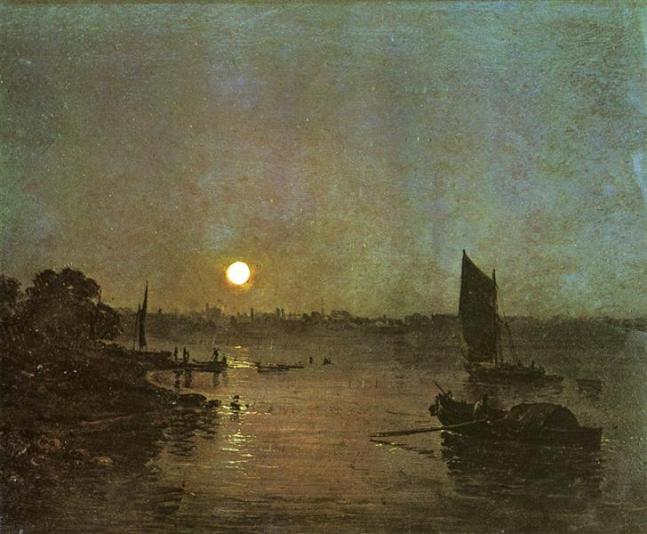
Turner’s Moon

‘Moonlight, A Study at Millbank’ – J.M.W. Turner, 1797 – WikiArt

This text is directly inspired by an analogy used by the teacher of non-duality Rupert Spira. I found it to have such evocative power that words started to pour out and I couldn’t stop them. This text is therefore dedicated to Rupert and his timeless vision and teaching.

~~~

Sometime a painting just comes timely to move your heart. It is a gorgeous landscape painting, depicting a coastline and the sea, with boats and fishermen in the moonlight. At Millbank, Turner was painting in dark, subtle hues of black, blue, and purple browns, to define a night, leaving here and there traces of light, golden reflections on the water. In the wide expanse of the sky, he had left one portion of the painting untouched. Pure as white. Undarkened. For the painter had a view in mind. He was to paint a moon, bright and resplendent. And no moon was ever so bright.

This part of the scenery that wasn’t painted, it was you. You, before you were made a person, before the identification with thoughts, feelings, body, story, hurts, memories, projections, beliefs. The nature of the moon was that part of you that was left unseen, unexplored, but that had quietly illuminated you all along, giving you a self and an identity without your knowing, lending you a hidden strength for your bruised self, and bathing you in its unheard silence. It was the trusted one, the one reliable thing in a life of relentless changes and challenges. It was the peace of your true self, the precious being that had been covered up by the night of objective experience. This is the moon Turner had meant to convey.

[…]

A meditation on the evocative power of Turner’s painting… (READ MORE…)

.

Lectio Divina

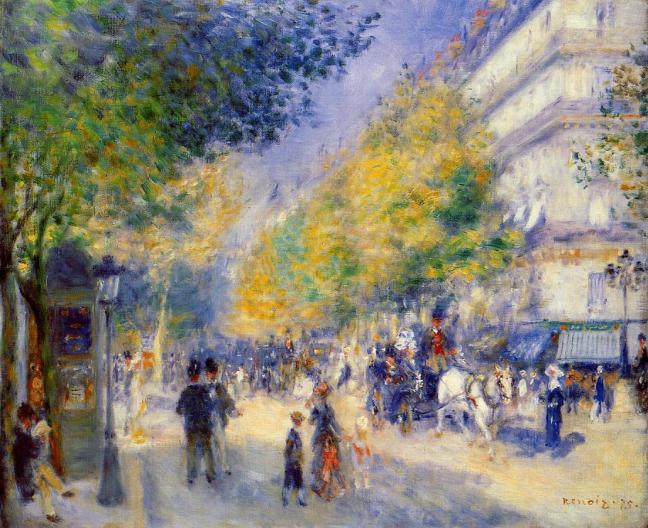
‘The Great Boulevards’ – Pierre-Auguste Renoir, 1875 – WikiArt

I have been feasting on some words recently. I was sitting leisurely on a cafe’s terrace, watching life coming and going, browsing through my phone with some ideas in mind. And there it came, and took me by surprise, like a koan suddenly unveiled, a pathway revealed without my knowing. There it came, taking the form of one single, simple phrase that seemed innocuous, by Saint Augustine:

Is any man skilful enough to have fashioned himself?
~ Augustine of Hippo

And that emptied my mind. It made me sink into no content, aware of all that is now; my self suddenly made a container for life. We all feel that we are so smart and powerful, or so stupid and powerless. That we have made ourselves what we are, and feel in consequence the pride or shame of it. That we have destroyed, or elevated ourselves. That we are responsible for our happiness, our success, our failure. That we have moulded our thoughts and actions, wilfully designed them. That our beliefs are believed. Our thoughts thought. Our words uttered by a ‘somebody’ here, inside the skull. But these are all beliefs, and beliefs are flawed from the start. Beliefs need a believer to believe them, and look as you may, you will never find such one behind your deeds. For the simple reason that there is no self behind our selfing. We have therefore never been in charge, never been truly responsible for collecting what we have collected, for misusing what we have misused, and for making the mistakes that we have made. Except in hindsight, in thoughts and beliefs, in cascades of randomly built illusions and memories in which we are caught and made blind. And these are what we have busied ourselves managing and arranging into a sensible self. And that self has gotten in the way of our living harmoniously.

[…]

The ‘Lectio Divina’ of a quote by Augustine of Hippo… (READ MORE…)

.

The Impossibility of Knowing

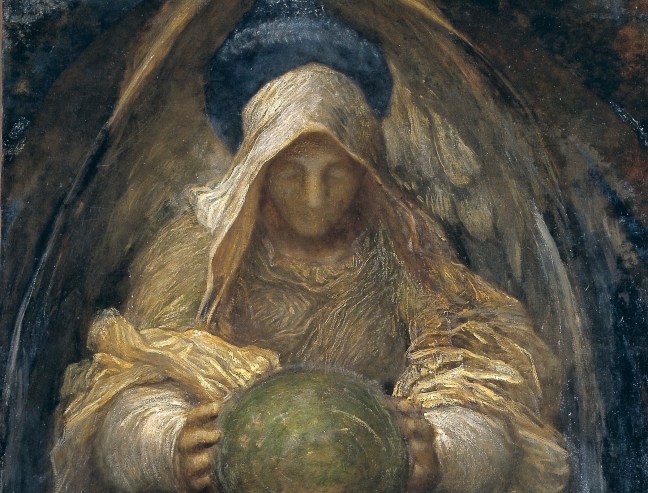
‘All Pervading’ (detail) – George Frederick Watts, 1887 – WikiArt

.

Beat on that thick cloud of unknowing
with a sharp dart of longing love,
and do not give up, whatever happens
.”
~ The Cloud of Unknowing (Anonymous)

.

Habit is a driving force in our lives, yet it doesn’t have good reviews: it is an object of critics. It is making us dull and repetitive. It is non-creative, indolent, designed for our self-protective needs. It is born out of fear, uncertainty. It is a shield for what we feel bullies and thwarts us, and is thereby blocking our sensitivity and vulnerability. Habit debases love. But habit is not the real culprit in this affair: it is a victim of the one more fundamental habit of knowing.

Humanity is steeped in apparent knowing. We all have a posture of knowing. To know is the great pretension. Games are invented to praise and reward the people who know. The injunction to know is overwhelming. It is the believed road to success and wealth. Not knowing is a humiliation. We could take pride in knowing anything, in being ignorant, in the most ridiculous things, only to save us from being suspected of not knowing. For knowledge is believed to be gold. But although conceptual knowledge is indeed of great value in our society, the posture of knowing is nevertheless the greatest impediment to seeing who we truly are, and how to live our lives free and happy.

We don’t speak here of knowledge in the sense of conceptual or relative knowledge. Most of the knowledge necessary for our body and mind to function in the world is valid and necessary, of course open to mistakes and misinterpretations, but is not what we are discussing here. We are investigating fundamental knowledge, or knowledge as essence, the primal act of being.

[…]

An essay on the articulation between knowing and not knowing… (READ MORE…)

.

The Wisdom of Humility

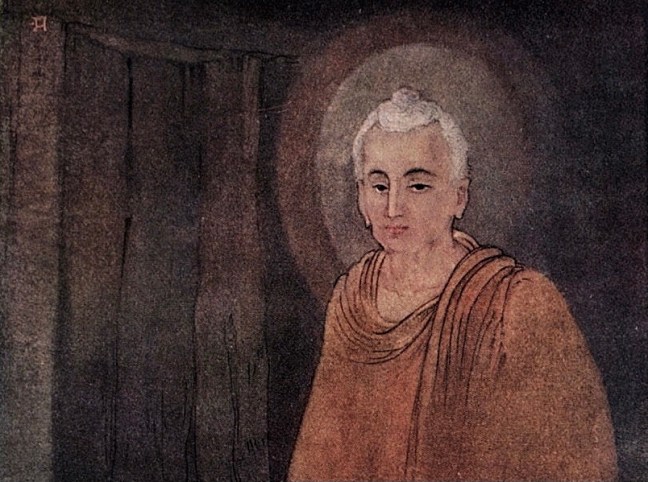
‘Buddha as mendicant’ (Part) – Abanindranath Tagore, 1914 – Wikimedia

.

To look into and understand the meaning and implications of being truly humble, of that state of humility which we often hear about — but rarely fully understand — is a precious thing. The word ‘humble’ finds its roots in the Latin ‘humilis’ which means ‘lowly’, literally ‘on the ground’ (from ‘humus’ meaning ‘earth’). Its etymology covers both the more active aspect contained in being ‘humiliated’, or being ‘humbled’, and the one that refers to the state, or quality, of being ‘selfless’. The first one gives the primary importance to the self that we are, to this separate entity that we believe to be, and which needs to be rendered humbler, smaller, lower. But why would we want to do that? Why, if it wasn’t for our deep intuition that this self is illusory, false, and is ultimately preventing our true identity of peace and happiness to be recognised and realised? 

This inherent peace contained in just ‘being’ refers to the second aspect of the word. Being humble is being without self, without the belief of being separate from objective experience. We are not this restless entity that wants to achieve, to aggrandise itself, and needs to be rendered low. We are rather this pure being whose very nature is complete, and already, unconditionally humble. Otherwise, why would Shiva or Buddha be portrayed as a mendicant? Therefore, the solution to our chronic state of suffering and conflict does not lie in having more, or less, or better ‘self’, but in realising, and living from, this deep and already achieved peace that we are. This realisation, and the action that is born of it, is what true humility is about. This simple phrase from the Bible made it crystal clear long ago: “When pride comes, then comes disgrace, but with humility comes wisdom.” (Proverbs 11:2)

I am sharing here a few quotes that will further explore this deep and essential question:

~~~

In a space of humility,
no conflict is possible
.”
~ Éric Baret (‘Let the Moon be Free’)

~

Humility contains in itself the answer to all the great problems of the life of the soul. It is the only key to faith with which the spiritual life begins: for faith and humility are inseparable. […] If we were incapable of humility we would be incapable of joy, because humility alone can destroy the self-centeredness that makes joy impossible.”
~ Thomas Merton (‘Seeds of Contemplation’)

[…]

Discover many more quotes on this question of humility… (READ MORE…)

.