The Distant Country

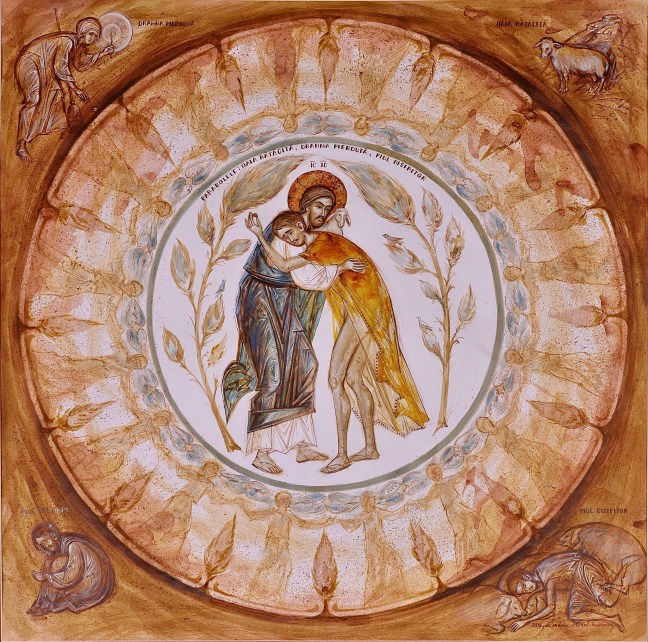
‘The return of the prodigal son’ – by Elena Murariu, 2018 – Wikimedia

How ironic this life is, isn’t it? How incongruous to have imagined that this is the real deal: being a person locked in and bound to the limits of a body. How astonishing to have this certainty to be a self that feels separate and needs to be fulfilled. To think we have to fight our way through the world, and suffer with such consistency. To have been persuaded that seeking is our way of life, without which we are doomed to poverty and stagnation. Yet the illusion of our being in a world is so convincing that we had to buy its many effects and constraints, and be subjected to its perils. So we have gone far away, thinking that we could live remote from our true home and identity, that we could roam the world on our own, and snob our essence. So we have landed into what we are not. We have lived the adventures of a person, gone through challenges and despair, carried ourself through time and space, and lived attached to worries and hopes, to the aches of regrets and loneliness, and the brief consolation contained in the occasional relief from our wrestling with the physicality of the world. So we have paid the price of such a lonesome, faraway trip. As Augustine of Hippo once said: “Distant country signifies forgetfulness of God“. We have left our father behind, despised his presence, judged his love as unworthy. Unhappiness is intrinsic in having mistaken an illusion for the reality, just as it is natural to be in the shadow when we hide from the sun. But maybe there is a return from our erroneous view. Maybe the time has come to stop being tied to a false idea, and to return from our adventures into deceitfulness.

Now see that this faraway trip is but the following of a belief. It is our being led into an illusion, a fantasy — shared by all — that the life in and as this body-mind is all the reality there is, and that the way we live and believe is our truthful condition, to which we have to submit ourself. We have swallowed that suffering is the condition of life, and the way to alleviate it resides in either circumstances, good luck, or smart choices. But in fact, suffering is but the consequence of our departure from our true, forgotten nature. It is the natural outcome of our prodigality, of our obsessive desire to possess and be more than what we already are, of our seeking happiness inside the development of our adventures into ego-land. But as far as we may have erred into agony and chance, there is chiselled in our very nature, a return into the open arms of our simple, inescapable being. This quiet resting as our innermost being is the home from which we should never depart, no matter how enticing is the call for an adventure in the distant land of separation. There is a father or mother here, a being eternal, always waiting for the return of their prodigal son or daughter. And it is in the nature of this return to be a welcoming one, for the simple reason that you are yourself the embrace contained in being only being. So your return to the father was never a return from any kind of reality, but the noticing that we had in fact never left its loving embrace, and that all that was needed is our letting go, our bowing to the grace contained in simply being.

.

~~~

Text by Alain Joly

Painting by Elena Murariu (born 1963)

~~~

.

Website:
Elena Murariu (Your Portal to the Art of Icon)

Suggestion:
– Other ‘Reveries’ from the blog…

.
A Treasure of Understanding

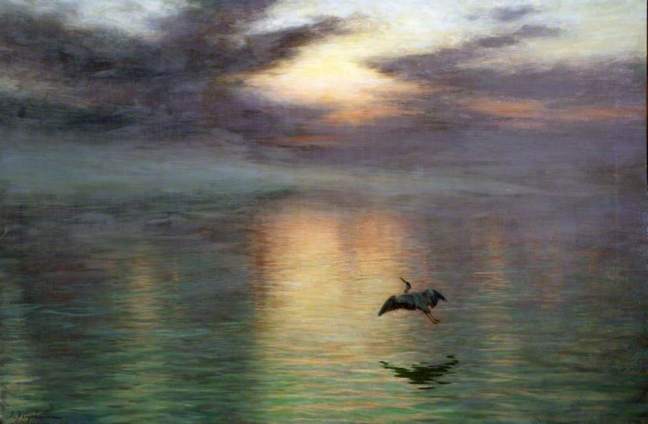
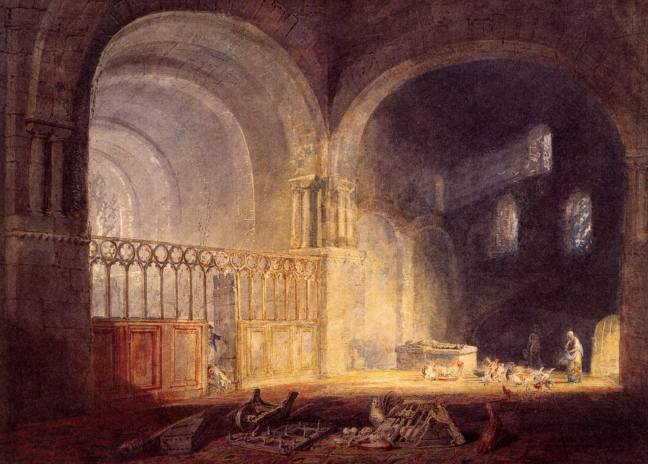
‘Dawn’ – Joseph Farquharson, 1903 – WikiArt

There is no such a thing as conceptual understanding in matters of spirituality. As soon as we form an idea, a concept, an image, a projection about ourself, we are still where we have always been: in our mind, in the known, in grounds we have already trodden a thousand times. These grounds are the grounds of our misunderstanding, where beliefs have already shaped and conditioned the idea we have about ourself. An idea that we rehearse and consolidate with every thought or act springing out of the field of our conceptual world. No understanding can ever come from this barren field. For one good, essential reason, which is that our understanding comes from only being. Being is the field of our understanding. Being is understanding itself. And the mind — with the ego which it gives rise to — is the only thing that is hindering our coming in contact with being in its purest form. That’s why concepts and ideas can never be understanding itself. They hide our clarity. In fact, they trample it.

So, should you ever want to come in contact with the pristine vibe contained in understanding, then a little digging is a necessary prerequisite. Don’t stay in your mind, take a new breath, be an explorer. You may use the tool of mind as you use a spear to dig a treasure. But please don’t take the spear for the treasure. This treasure is the treasure of being that stands unseen below the surface of your wrestling with concepts and ideas. Don’t let being be undermined by the description or explanation of the method. A beautiful image of truth will never be truth itself. It won’t hold the true taste of it. You won’t get its exquisite perfume, unless you see what stands under your mind and your ego. Understand your being by being only being. Throw the spear out. Finish the digging with your bare hands if required. Be yourself your treasure.

You come to an understanding when you stand under everything that is appearing or forming in your experience. Being is what stands under. It is the one thing that doesn’t change, that can never die or dis-appear, and out of which everything objective or knowable come into existence, and is under the scrutiny of your senses. But objective experience can never lead you to any understanding. Not out of its own will. You have to coerce yourself, make your own acquired, conceptual idea of reality recede and reveal its illusory, invented nature. You have to make what was, what will be, what should be, and what seems to be, into what is. That’s where understanding lives, in what is, in the here and now of your essential being. Understanding is implicit to being, and being explicit in understanding. Feel your being in its purest form, and see that you are yourself the understanding that you have craved to achieve through your mind.

So being stands under your apparent self which, in its light, is discovered to be non-existent, or rather only existent as being. That being is your true support, deserving all your praises. Actually, it is the support of everything, the great pervader — that’s why some have called it the creator. Not that it creates while being outside of its creation, but rather it is the substantial essence of everything — what makes a world possible and viable. So to understand yourself is to touch this essence through your being it, and to praise that part of yourself which you can never not be with, and which comes with a special flavour of well-being. That’s how you feel your true nature, through that subtle yet indestructible joy of simply being, which your never satisfied body-mind-self could never give you other than fleetingly. Understanding as being comprehends everything. It holds and embraces all life in the fullness of its presence. So to understand is to rest in your natural being, which requires no commenting or even understanding. You are, and this is that.

.

~~~

Text by Alain Joly

Painting by Joseph Farquharson (1846-1935)

~~~

.

Website:
Joseph Farquharson (Wikipedia)

Suggestion:
– Other ‘Reveries’ from the blog…

.
Huang Po

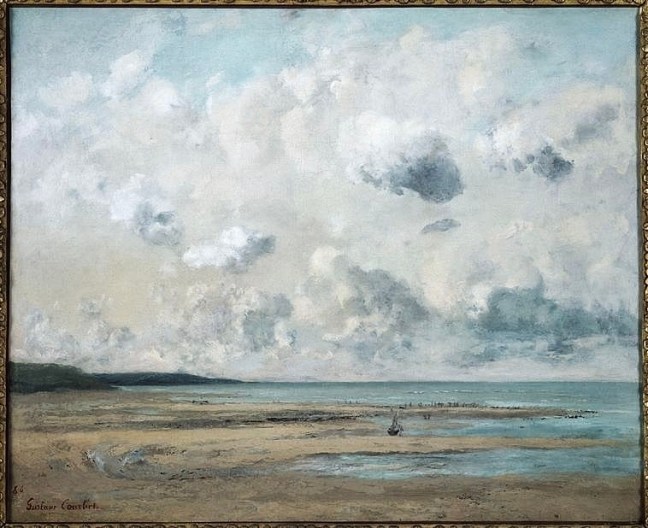
’Zen Encounter (Niaoke Daolin and Bai Juyi)’ – Kenko Shokei, 16th AD – Wikimedia

.

This Dharma is Mind, beyond which there is no Dharma;
and this Mind is the Dharma, beyond which there is no mind.”
~ Huang Po (Ch.7)

.

Every religion has its mystical counterpart, where beliefs, rituals, and book studies are replaced by self-investigation, direct experience, and understanding. Buddhism is no exception. Out of the nimbus of Buddha’s awakening came a single practice called by the simple word ‘chán’, which means ‘meditation’ (‘dhyāna’ in Sanskrit). Bound by the rigorous practice of watching their mind and recognising its true nature — which is called Buddha-Nature in Buddhism — a whole dynasty of influential Patriarchs and Masters have transmitted this tradition known as Zen in the West. Huang Po was one such eminent Chinese Master. His concise work called ‘On the Transmission of Mind’ is one of the world’s major expositions of truth. Recorded by the scholar of the time P’ei Hsiu, this collection of Huang Po’s sayings and sermons opens with this simple, illuminating phrase:

.
All the Buddhas and all sentient beings
are nothing but the One Mind,
beside which nothing exists.”
~ Huang Po (Ch.1)

.
In this book, Huang Po wants to make very clear and very simple, that all understanding, all mystery, all the content of Zen practice, is to be found here, in ourself, as ourself, as our Mind, and that this Mind of ours, of all of us, is the Buddha. In other words, what we take to be our everyday little, separate, private self is, when investigated, nothing but the one supreme being that we share with all other beings. This understanding is what Huang Po calls the Way. This is the only recognition that we need:

.
To awaken suddenly to the fact
that your own Mind is the Buddha,
that there is nothing to be attained
or a single action to be performed –
this is the Supreme Way.”
~ Huang Po (Ch.13)

[…]

Read more about the teaching of Chinese Zen master Huang Po… (READ MORE…)

.

A False Impression

There is an impression that I am the one who knows, or is aware. But this is a false impression and an unfortunate one. In fact, we as a body-mind don’t know anything, for the good reason that there is no one here that is in charge of the knowing. We don’t have this ability. It is not for us to know anything. Knowing doesn’t belong to an individual, separate self. We owe our knowing to something that knows us first, and lends us that potential. That really gives a totally different perspective to our existence, and grants us a gorgeous humbleness: Knowing is without a knower. The knower is but a set of thoughts that we have superimposed on awareness. It is entirely made up. It is of our invention, to give us a wee importance — after all, we all want a little attention. Knowing is in the nature of being. And being is the nature of everything. Knowing is all there is. It is the light of our world, indissociable from our experience. We as selves are just shadows. Everything is dancing and taking place without our being in any way party to it. At best, we are just a colouring, a point of view, an avatar governed by some divine rules which we have perilously chosen to ignore. This is our feebleness: wanting to own and appropriate, being more than what we already are. But in doing so, we have in fact belittled ourself. We have made ourself separate from the life we live in. We have created a self where there is none. We have awakened the devil of suffering in us.

So leave the knowing in some more skilful hands. It will spare you a lot of trouble and misunderstanding. You won’t have to be a person — all the heaviness contained in it. You won’t have to be a self that knows, but knowing will appear to be your one and only self — the entirety of your being. This pure and sublime knowing will give a measure of beauty and happiness in your life. It will encompass everything. It will widen your perspective and make you profoundly secure. You will know your being with precision and clarity, and live both in remoteness and intimacy — remoteness for a serene view on your experience, and intimacy for the delight contained in oneness. And love will be your everyday companion, the deepest essence of your being. And you will be clothed in understanding, which you believed could be achieved through your being a knower. Not at all. Understanding comes when you cease being a self, a knower, when you let go of all identities and egoistic purposes. Then it comes: the understanding — the knowing that knowing is all there is, and that you don’t need to be any more than that. So learn to keep at bay all private, egoistic desires to be anything other than this impersonal, undivided presence of yourself, that has the capacity of being and knowing. You have no need to be a knower, or a doer of anything in your life. Let the show run by itself. Only give it your golden, loving indifference. That’s the most glorious thing you can do in this life. You will be showered by the benefits of it.

.

~~~

Text and photo by Alain Joly

~~~

.

Read this essay from the blog ‘The Impossibility of Knowing’…

Suggestion:
Other ‘Ways of Being’ from the blog…

.

Twisted Rainbow

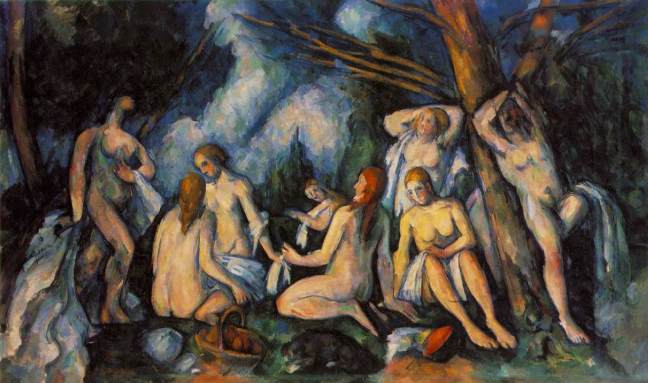
‘Hope’ (detail) – George Frederick Watts, 1886 – WikiArt

Unhappiness is a strange thing, for against all appearances, and under serious investigation, it is not really found. We are making it up as we go along. In fact, there is no such thing as an absence of happiness. Yet we are nurturing this absence with great consistency, designing our so called unhappiness with care, through our thoughts, our memory, our attachments, our stubborn persistence. But only try to experience its effects outside your thoughts and feelings, in the absence of your mind, and you’d have to confess that you can’t find here anything like a misery. The reason is: unhappiness is not a thing in itself. It is veiled happiness. It is the covering up of your innate peace. It is past residues and future expectations tossing the tranquillity of the now. But all such disturbances, discomforts, or distresses, are always only temporary events, passing weathers distracting us from what is always here, always faithful, always to be trusted: the peace contained in simply being. This peace is in fact the very making and backbone of our lives, its solid background. It could never leave you no matter how hard you may try. Its not being felt is a form of snobbery. You have missed your innate joy in reason of your not looking in the right place. You have neglected your true, natural being for wanting to be somebody. You have been scorning yourself out of vainglory. In fact, unhappiness is but the simple mourning of a loved one who is missed: our true self. It is but a distraction from the boredom of our ignorance. Or a warning for a wrong turn taken.

Unhappiness is not found in physical pain, or in the natural grief following a loss. These are all compatible with happiness, as is a shared, compassionate sorrow. These are wise and healthy responses to life situations and challenges. Unhappiness is of a different nature. It is more like a habit or an indulgence. Often, we would rather be unhappy than shatter a well-rehearsed idea of ourself, in which we have invested our most cherished identity. Unhappiness is also the result of a fallacy, and a form of delusion. It is a shadow which we nourish through our belief in being a person caught between seeking and resisting, and the reward of fulfilment. Unhappiness is only as real as our limited self is. One will follow the other both in death and in birth. So really, unhappiness is a self-inflicted pain. In a way, we could say that it is a sin. It is ourself being driven away from our happy, forgotten nature, and bound to the suffering self which we have identified ourself with. It is our twisted rainbow in the sky of ignorance, that appears naturally without being truly there. It is created by the rain of all our renouncements, of our constant search for security and approval, through accumulation and avoidance. So next time you meet some measure of unhappiness in your life, don’t believe it. Don’t be caught up and allured by its convincing appearance. See through it until you find its referent. See that unhappiness is not real as affliction or suffering. It only exists as the sum of all that hinders the happiness which is the nature of your self as being. Your misery may in fact only be a passing, unassuming thought, maybe an innocent, unchallenged belief, or just a feeling hovering about, which you are taking too seriously. Not very much really. Hardly enough to send you far and away from the delight of simply being.

.

~~~

Text by Alain Joly

Painting by George Frederic Watts (1817-1904)

~~~

.

Websites:
George Frederic Watts ( Wikipedia)
Hope (Watts) (Wikipedia)

Suggestion:
– Other ‘Reveries’ from the blog…

.
The Incandescence of Being

‘Wharfedale’ – John Atkinson Grimshaw, 1872 – WikiArt

Spirituality is not a contest. It is not in achieving something, and knowing myself is not about aggrandising what I am. It is not in holding on to an idea, be it a most noble one. It is not in perfecting my being. ‘I am’ is self-sufficient and already fully realised. Any desire for perfection or achievement will keep you at the level of a self. You won’t have let go of yourself. You won’t have fully opened the door, will have kept a space which is but an escape or exit out of your primal being — the death that it implies. It is always tempting to not let what is be, to keep colouring our essence, to still want to hold a share, a participation, a glory, an advantage. Somewhat, our desire to be something prevents us to just notice and be that which we are already, without a single addition to it — not even a last little perfecting, not even a criticism or the rectifying of something, not the desire for more freedom or less ego, nothing to compare or compete with, nothing at all. Otherwise we remain just a part longing for the One, and therefore keeping it as an object to be attained, and rendering ourself separate or insufficient just as we are. There is no comparing what is. There is no arguing with the One. So just allow yourself to be, with nothing else behind it. Let go of all that you are, or should be, or will be, in an instant, with not even a second look. Enter where you have never ceased to be, and finally come to be what you are, just as you are. Daring that — to make no further step, to cease wanting anything, to give your last breath and descend into your utmost, pristine being. For there is no ascending being, but simply recognising that being — such as it is — is all there is to myself.

You see: all the spiritual practices, all the teachings, and the long hours of meditation, are only here in the waiting of something very simple to happen. They are here to help you realise that you have it already, that you have already arrived where you want to be, that you already bask in the peace and happiness you covet, and have been trying to secure in a thousand useless, pointless ways. So really, the spiritual endeavour is nothing at all. It is the simple retirement or returning into your essential am-ness, just as it is now, right in the middle of your agony. Why is it such a tedious task: to arrive at last where you are, to be what you are already being, and accept to receive what has already been given to you? The very presence or intimacy in which you are spending your hours and days is all the light you need, and contains all the understanding that you have been striving to possess year after year. And this treasure of life isn’t even wrapped or hidden. It was there all along with you and as you, open and thriving as the very being with which you are now living your present day confusion and suffering. You have been all the way showered by its thousand glorious alleluias, while imagining yourself as deaf and blind. So don’t think that this cannot be enough — what you are. It has all been nicely packed for you, right at this moment, just as you are, offered to your noticing. So don’t keep pushing, adding, expecting. We are far too zealous. Remember that anything you may see, hear, feel, think, is contained in one essential and pristine matrix of being. This matrix is this big light of knowing that we must learn to recognise as our very self, before any sense of time, space, world, perception, quality, or doing, is added to it. We just need a little look — to precise our vision — and we may see, just now, just here, in this present experience, that all the passing objects of our life are but the colouring of an incandescence. This incandescence is our being, and our very self.

.

~~~

Text by Alain Joly

Painting by John Atkinson Grimshaw (1836-1893)

~~~

.

Website:
John Atkinson Grimshaw (Wikipedia)

Suggestion:
Other ‘Ways of Being’ from the blog…

.

The Frailty of Naming

‘Still life with Apples’ – Paul Cezanne, 1890 – WikiArt

We really have made a muddle of it all, by believing that all things nameable are so in reason of their being there. It has made what is truly here — formless, absolute, undeniable being — seemingly absent in reason of its not being perceivable and nameable. Our true and essential being is unnameable because it has no objective quality. To name it is to spiritualise it, to give it a form, and finally destroy it. It is to set ourself as a being outside of it, which we are able to name, or describe. So if you have named yourself, know that you are therefore not there. You are still a shadow, a belief, a repetition, a form incompatible with the formless. And if you have qualified yourself as this or that, know that these limits, expressions, or colours you have imposed on yourself are illusions, the clothing of your reality, but not reality itself, not your nature, not the truth of your essential being, not the nameless, not that which is here and now, beyond any shadow of doubt. The named is for absence, and the nameless for presence. For how could you name presence, how could you give a qualification to something which is so here that it could never be there, so now that it could never be then, therefore never made into an object there and then, at a distance from yourself, in capacity to be named.

What is truly here, when it is recognised, ceases to be named. It is the nameless, the unnameable. The names we give to consciousness, to god, to that which is aware and constitutes us for the most part, are only provisional names, given when we are still part of the things that are named, still a person, an entity, a self. But this entity is not truly here. If we can name ourself, it is in reason of our being made into something objective through endless names and qualifications. So make yourself nameless, approach yourself so fully, investigate it so thoroughly, that you cannot name it anymore. Un-name yourself, strip it from objectivity or qualification until you are recognised as being only being. Then notice that you cease to be nameable. You are too close to yourself for that. Then the only way to name that reality of yourself is to not give it a name but to say simply ’I Am’. ‘I Am’ is the only name we can give to God’s being, and its supreme subjectivity indicates that its reality can only be felt as your own reality or being. It is the intensity of its subjective nature that prevents it from being given a name.

[…]

A reflection on what can be named and what cannot… (READ MORE…)

.