Where is True Home

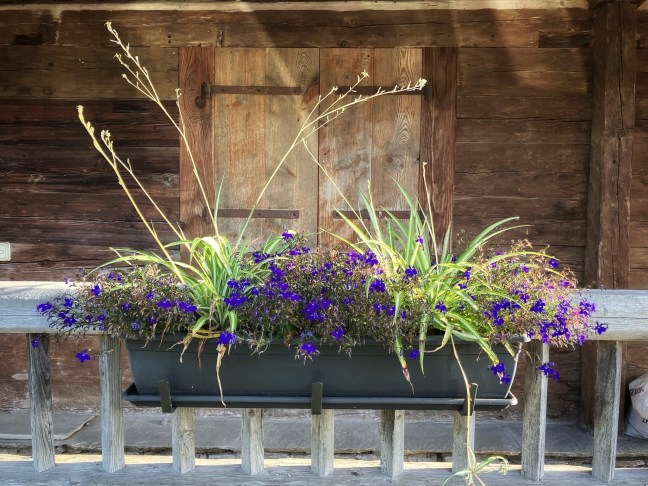
Where can we find what is ‘our own’ in our experience? What is fitting? Where do we draw a sense of belonging from? Most of the time, we do not feel that we fit in, that we have a place. We feel insecure, so we secure an identity in a thousand things. We borrow from an object our appeasement. We make objects our own, we inhabit our thoughts, we adorn ourself with qualities, and we take shelter in a body. That’s what we do to fit in, and find security: we lose ourself in an ‘other’. We beg for anything that we could call our own, for fear of staying alone, and be left a nobody. We make up a self, and then call it ‘our own’. And that place of our own we find — and have defined — in a thousand shaky, unreliable places and things. But it is a bad try. In fact, we have burgled our own home of belongings that are not ours.

How are we going to find a home, if we keep rummaging through experience for every object that fits our needs? We ought to be disinterested for a while. We need to be disowned, dispossessed of every property or belonging that we have so far acquired, clung to, and in definitive stolen. For this is where true ownership is found, in not belonging. This is how a decent property is secured, by having no place to be. We ought to live free from all the accumulations that we have gathered and identified with. For our true home is not placed on the crest of experience, is not built on the sand of insecurity, and is not limited by the fence of limitation. It is not for a self, or a place, to produce the quality of enduring peace. Peace is already here, wholly achieved, in the home that our being truly is.

Live so that you don’t have to steal in your own house. You have it all. Your property extends to infinity and the world is the garment of your whole being. So in being, wherever you are is your home, and whatever you need is found here, in you, as you, with all the peace and security that pertain to a true home. You fit in when there is no space between yourself and what you long for. Being no space, you won’t have an urge to seek outside of yourself your identity and your happiness. Home is the recognition that you are already home. To be is to be home. There is no achieving it, let alone work for it. Be exactly where you are, in and as your own being — the place which you could never not be in. And if you find that a sense of indomitable peace is accompanying you there, then be in no doubt that this is home — what is your own, where you fit in, where you belong. Truly.

.

~~~

Text and photo by Alain Joly

~~~

.

Suggestion:
– Other ‘Reveries’ from the blog…

.
The Impossible Deed

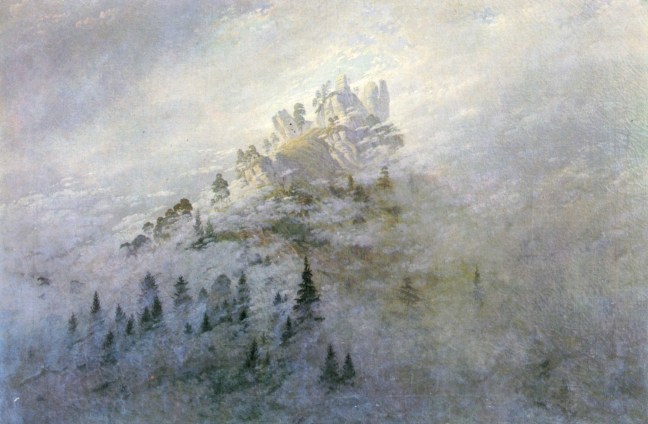
‘Pond in the wood’ – Albrecht Durer, 1496 – WikiArt


We are used to knowing
. We have been trained in it, brainwashed with it, and drained by it. Knowing has been privileged at the expense of being. So we have become expert knowers, professional doers, but at being, we are infants, clumsy, penniless. We are without a self worth the name. We are homeless without knowing it. We are without a solid ground — a trembling, uncertain little thing living in the wilderness of objects, battling in the haziness of beliefs, having no place to truly be, to truly rest. We are a wanderer of ignorance, a nescient soul lacking the elementary knowledge of its own being.

But OK, I will give us that. I understand this urge to know. Knowing gives us a bright, shiny sense of self. A fantastic ego. It is rewarding. Being gives nothing, is completely unproductive. At least, so we think. But this knowing of our being is not any kind of knowledge. The will to know the ‘I’ is a sacred will, a holy endeavour. If we want to know ourself, we will come to know it. This is a desire that cannot be left unfulfilled. This knowledge cannot resist any serious enquiry. It will give in sooner than we think. But it is a hard one to desire. The difficulty resides in wanting to know. We shy away from that desire. There is something there we’d rather stay away from. We would rather know beforehand what we have to know, and remain on shallow land. We don’t want to rock the boat of our being. After all, this is where we stand. We don’t want to be swept away from our cherished ideas and beliefs, and be deprived of the security we have so dearly earned. We would rather stay a seeker of the known.

But try it now — to know yourself. And do it with your mind, with your usual knowing faculty. Go there, at the heart of your self. Decide it. Make it your goal: to know who or what you are. It doesn’t matter where you begin. But go not to the periphery, to that which you can know as an object. Go to the heart of your self, to that thing which you have called ‘I’ all your life. What is this ‘I’ that you are being all the time? This ‘I’ is never visited. But now is the day. Go there. Find out what it is. See that you will meet there like an impassable, impenetrable wall. You will find closed doors. All your knowing, your ego, your accumulations: this has made a blocking stone. This has barred the entry, has prevented all true seeing, all knowing worthy of the name. Feel that you cannot go there with your mind. But this impossibility is gold. So keep at it. Keep pushing. Don’t be shy. Use both shoulders if needed. Give it all the strength you have. It will recede. I promise you. Everything can be known. This is no exception.

Notice that what you come against is yourself. This impossibility of knowing the ‘I’ lies in your belief in being an entity. The knower is the obstacle, the impassable wall that bars the way. To know yourself is an impossible deed. You can never know who you are, because who you are is only contained in ‘you are’ — in the feeling of ‘I am’, of being. We are so unaware of our being. Being has been forgotten, relegated in the background, replaced by a knower, a doer, a busy self that insists on knowing who he or she is. But to know ourself, the knower has to first realise itself as being. To know is to be, and to be knowingly. This knowledge dips its reality in being. There is no knowing ourself without being first. Knowing here is only achieved through being, which is the knowing of ‘I’ without a knower. The will to know dissolves into being, which is the only knower there is and will ever be.

This knowledge is found in and as the being of the one who wants to know. You can only know who you are by being it, or rather by simply and only being. In that field of self-knowledge, being is knowing. Being is the knowing done without a knower, and therefore without an object known. It is a pure, unalloyed knowing. Everything you ever wanted to know, to be, attain, achieve, all the content of every sacred book, all happiness, all longings, is found in being, in that which you already are. Your amness is the gate code cracked. You will find who you are on the other side of knowing, which is being. And it is delivered with peace, which is the nature of being. This knowledge is the only knowledge that doesn’t take place in duality. It is achieved in the oneness implied in plainly being. So this impossible deed has now been transformed as the infinite being that we were all along, but had veiled through our insistence in being a knower of the known. We don’t know who we are with our knowing faculty. Ourself is the only thing we cannot know as an object. We know our identity through the fact of simply being. There is no other knowing than being. Being is what we are, without a single ripple of a knower knowing. Know that and you will be reborn as the unborn.

.

~~~

Text by Alain Joly

Painting by Albrecht Dürer (1471-1528)

~~~

.

Website:
Albrecht Dürer (Wikipedia)

Suggestion:
– Other ‘Reveries’ from the blog…

.
Spiritual Wine

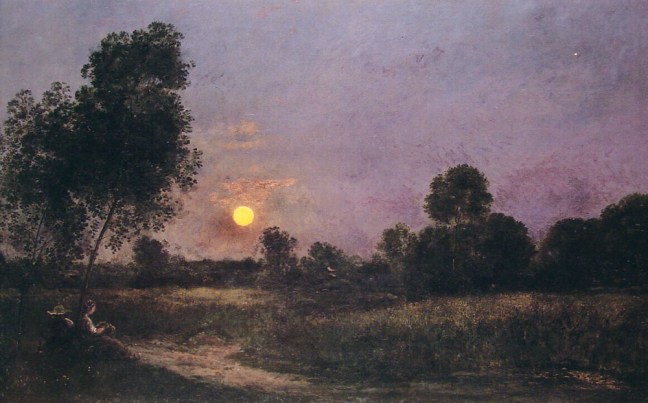
‘Lovers under the moon’ – Serge Sudeikin, 1910 – WikiArt

The word ‘spiritual’ is quite a nebulous one. It is used indiscriminately, carelessly, for a bewildering array of wildly different practices or beliefs. Krishnamurti didn’t like the word, which he found ‘ugly’, ‘romantic’, ‘unpleasant’, and used it cautiously. So maybe the time has come to clean the word, to give it some of its forgotten brilliance, and dig out its original meaning and raison d’être. I would start with the suggestion that the word ‘spiritual’ simply wants to point something at us: that the world, the whole of it, our experience, everything, is in fact made of ‘spirit’. Spirit is all there is, the only thing in presence. And believe me, this is a timely pointer, for most of us believe the world to be a hard reality, made of something solid, composed of a variety of different objects — our body-mind being considered one such object. So the word has the virtue of reminding us of our true nature, of the nature of everything as spirit, or consciousness.

But it is only a provisional word, one for our time of misunderstanding. There will come a time when the suggestion that experience is made of spirit will be a matter of fact, something integrated, not to be thought about anymore. The word will then become redundant, to be replaced by another word of a higher intensity and meaning. Or maybe there won’t be any need for a word to describe reality. Reality will have been understood, digested, lived as the fact of simply being. Spirituality will have become useless. There will be no need of spirituality, no need even of the word ‘happiness’, or ‘peace’. Once you are wholly, and only spirit, which is peace, which is happiness, what need is there to mention it? There will be no seeking either. After all, what you are, you are. Identity will have been achieved. No suffering around. Seeking obsolete. Out of date. To be disposed of. What will remain is a splendour, indescribable, filling the world of experience to the brim with its essence.

Also, spirit means ‘breath’. It is the breath of life, a thing invisible, transparent, quietly sitting in the background, and yet essential and life-giving. It is what is playing us, giving us an identity and a sweetness of living. For spirit is like the air we breathe. It is still, silent, empty, yet a breath that can blow our mind and make us like an inextinguishable fire. It is the breath of god that we have left unnoticed time after time, but whose presence is holding us in its firm embrace. It is a breath of devastating effects, laying us waste, destroying all traces of suffering and separation, blowing our self away, not by slaying it but by showing this self to be just the air within the divine breath of god. You had thought yourself a hard, solid, but fragile entity, and are now shown to be empty yet as indestructible as is a fire in the wind. That’s what being spiritual, or spirit-like, truly means.

Spirit also means character, and courage. It doesn’t pretend, and rejects a lukewarm understanding. It is uncompromising and free. It is not afraid, not conditioned by the hazards of life. It stays firm, alone, whole, undisturbed. Spirit is eternally high, but mingles with the lowly too, for it is humble by nature. And it has clarity as its best asset, for it is blessed with the purity contained in knowing without being itself a knower. This knowing is undivided, self-contained, total, applying to all and everything. This is what makes it holy, a spirit which cannot be taken apart, and which contains universes beyond universes. It has a religious quality, a sanctity that is beyond what humans have called sacred. The wholeness of spirit cannot be broken, dampened, violated, injured, or even changed. Its holiness lies in the fact that it is one without any division or addition.

And spirit is music too. It has a sound to it, and it is our duty to play it, or rather being played by it — the musician being god, or spirit itself. Our being is found to be the breath of god, the movement of consciousness singing our life on the reed of our apparent self. As that, we may become the vessel of a life whose notes have risen above the ten thousand things of existence, to be taken by various harmonies of silence, peace, love — all carried by a quiet but devastating breeze of inner joy, like a hum. We are like God’s music, and our experience is bathing inside it, and being made melody. This is what spirituality is, and what a life lived in and as spirit sounds like.

‘Tis the fire of Love that is in the reed, ‘tis the fervour of Love that is in the wine”, Rumi once wrote in the Masnavi. So spirit is a delightful beverage too. It is what gives us this gentle drunkenness which is the state of our self when it recognises itself to be but God’s being. In Spirit, we are intoxicated by the ‘Love that is in the wine’. For this nectar, we are willing to pay the price of surrender at the tavern.

.

~~~

Text by Alain Joly

Painting by Serge Sudeikin (1882-1946)

~~~

.

Website:
Serge Sudeikin (Wikipedia)

Suggestion:
– Other ‘Reveries’ from the blog…

.
On Courage

‘The Turn of the Tide’ – John Duncan – WikiArt

Not to suffer is not as desirable as we like to proclaim. We have mixed feelings towards our agonies and traumas. In fact, we have come to like the beastly thing. Suffering has given us many of the things we cherish in our life. Suffering has given us the hopes that we love to entertain, the pleasures we have developed as a routine of escape, and all the little addictions we enjoy in secret. It has shaped our drives and the nature of our beloved possessions. And our best friendships may have developed as a result of this beating pang in our heart. So this is not easy to let suffering go. A lot will go with it that is like the backbone of our beloved self. Being at peace and happy comes with a price.

There is some identity in our suffering, where is hidden a private treasure that we’d rather keep and nurture. If we are honest, we have to confess that our wounds have made us what we are, have formed the self that we believe we are, the personality that we have come to befriend. We haven’t fought our suffering with constancy, and have come to collude with it, socialise, associate, fraternise. We have indulged in every bit of it. We have surprised ourself having feelings for our pain, entertaining a secret love affair with everything that bites us. So to end suffering requires clarity and courage. For we won’t abandon a dream so easily, or put an end to a pleasure without balking. We need to be convinced. Our road to true happiness is paved with reluctance. We have a natural and well-rehearsed resistance to bliss.

[…]

Reflecting on how courage is found at the heart of ourself… (READ MORE…)

.

Meditation in a Nutshell

‘Mediterranean Seacost’ – Isaac Levitan, 1890 – WikiArt

When you have an hour in front of you given to meditation or contemplation, don’t ever think that you are engaging in something that is happening in time and place. It is not an hour that you have, that you occupy with an activity. Nothing is taking place, and nothing is lasting in time. Forget these well-rehearsed notions. Your meditation is a presence in which time and place cease to appear as a frame in which you live. They die out in yourself, are melted in your essence, to never reappear quite in the same way. They are washed by your living presence. You are cleansed of their conceptual limitations. Meditation is like a good bath, and you are the water. Nobody is having a bath. Presence is not what you are in. Presence is what you are, and you are nowhere to be found.

There is only a sinking, a deepening of presence. Borders are discovered to be not there. Walls falling all around. Divisions re-assembled. Your being ceases to be mistaken for a limited entity, but is solely the wild, unlimited, unlocated, dimensionless expanse of the nature of everything and everyone. You are in a place that doesn’t have any location, and where time cannot enter. Presence is the only thing in presence. Your life ceases to take place in time, which appears to be just a tool that finds its expression through your thinking process. And space is the illusion that perceptions are creating for you to have a location. Presence provides you with all the necessary appearances to create a body-mind-world. Meanwhile, you as pure being remain untouched, changeless, massive, solid, teeming. Meditation as an activity has ended. Who could possibly meditate in the absence of a meditator?

You have now landed in a spot where you have no need to be a separate entity, and no advantage for it. You have ceased being a person with a story and a destiny. Your body doesn’t qualify you anymore, and is not the recipient of your self. You have become independent, free, non-aligned. You acquire the proportions of a whole world, which has now become your most intimate body. You have lost all qualifications, all identities, and have surrendered to the one all encompassing, all pervading being. Nothing could describe you now. What you are has been relieved of every objective substance. You couldn’t worry the least for your self, which you discover to be devoid of even the possibility of being harmed, diminished, or impaired. Suffering appears to you like the most exotic thing there is. Hope is not even on the list, and all impulse of seeking is gone and forgotten. Wholeness fills you all, and makes you the thing you had previously sought, hoped and suffered for, in every possible direction except in the direction of your own present, inescapable being.

What you have longed for is what you are, which is being alone. When you have been stripped of all the attributes that pertain to time and place, to qualities, conditionings, situations, objects, including the body-mind-world you apparently live in, then you may come upon what you truly are. A being alone, unattached, empty of place, devoid of time, fierce and fearless like a peaceful, unmovable, gargantuan warrior. Why a warrior? Because you as being have subdued all forms, and have been made the vanquisher and pacifier of every division, limitation, separation, and defect. You have consented to your formless nature. This verily, is meditation in a nutshell.

.

~~~

Text by Alain Joly

Painting by Isaac Levitan (1860-1900)

~~~

.

Website:
Isaac Levitan (Wikipedia)

Suggestion:
– Other ‘Reveries’ from the blog…

Vedantic Logic

Hampi Vijayanagara, Karnataka – India

We are always too late with our identity. We come after. We experience something within, a sensation, an unease, a thought, and then say: I am that. We start from what happens, from experience, out of which we draw some identity. We are lazy. We identify with what comes. We experience our body, and draw the conclusion that this body is what we are at the deepest level. And then we live from there, from this conclusion, from this belief, this concept of ‘me-my-body’ — which we refer to as ‘I’. Our chance has passed. We have drawn comfort in that conclusion, but have invited its many companions of voyage too, which are suffering, fear, lack, and the likes. We have given ourself to the wind of arbitrary experiences. We depend on everything that passes uninvited. No wonder we suffer, finding there no stability, and no peace. We are at the mercy of what comes. So we are desperately trying to shape what comes, in order to shape our identity, and derive from it some elements of happiness. Hence our constant striving, seeking, debating with life, struggling with what we are, and with what the world brings.

We think that all the responsibility falls on us, that we are the designers of our identity. We are little ghosts exhorting themselves to happiness. And every time we fail and fall from this imaginary pedestal, we head for another direction, another hope, another expectation, and so goes our life — dependent and miserable. Until we finally listen. Until we see that there is an identity before any experience of body and mind. It isn’t that difficult to see and understand. This is only logic. This is, as Swami Dayananda Saraswati used to say, Vedantic logic: “Vedantic logic and worldly logic are diagonally opposite. Worldly logic is: ‘I experience sorrow; therefore I’m sorrowful’. Whereas vedantic logic is: ‘I experience sorrow; therefore I’m not sorrowful’.” So we have to go further back, and it takes some courage. For we are so gullible. We don’t have any true, reasonable stand. Yet, the way we speak betrays our intuition that we are not fully identified with our body and mind. After all, we constantly comment on them. We are not fully implicated. We put ourself at a distance from our own identities, but don’t go far enough. We stay somewhere along the way, as a self separate from it all. We don’t finish the journey. We don’t look well enough. We presuppose we are something, a somebody, a person, and leave ourself there, close, so very close from a higher, nobler truth.

Cannot there be an experience where ‘I’ is really, truly ‘I’? Where ‘I’ cannot be projected or conceptualised? Where it is not belittled, depreciated? Where it cannot be coloured, biased, conditioned? Where it is here in ourself, as ourself, like a pure, unalloyed, super subjective identity which is like a tower in our life, knowing everything that comes without having to be anything, without drawing an identity from it? And experiencing every single object of body-mind-world while staying itself unaffected, unaltered, and whole? After all, when we say ’I am depressed’, what we really say is that ’I’ is ‘depressed’. ‘Depressed’ has become my new identity. So ‘I’ is being repressed, suppressed for a while, replaced by ‘depressed’. But the good news is that if there is an ‘I’ that can be depressed, this same ‘I’ is here standing before the state of being depressed. There is a being before being depressed. We have let ourself being coloured, forgetting that we are in fact that which is here to be coloured. We have lent ourself to the first coming visitor. But the Vedantic logic is here to remind us that when depression is on us, or affects us, it only hides our true identity for a while. It conceals us but doesn’t change us. We stay what we are — a being untouched — depression being only what clouds us for a time. There is something here under cover, a reality, a presence, an aware being that is only being itself. This being can never be touched by depression or sorrow. What is touched by sorrow is a belief, an idea, a projection of ourself as an entity that can be affected by the passing weathers of life. Meanwhile, this pure, innocent being that we are, and that is our one only identity, stays on, living its life of being only being, while a non-existing self is playing depressed and being melodramatic.

.

~~~

Text and photo by Alain Joly

Quote by Swami Dayananda Saraswati (1930-2015)

~~~

.

Website:
Dayananda Saraswati (Wikipedia)

Suggestion:
– Other ‘Reveries’ from the blog…

.
The Religious Life

Two monks’ – Carl Bloch, 1861 – WikiArt

Spirituality is an exaggeration. We need to exaggerate our commitment to truth, and be ‘spiritual’ for a time. We need to take on this role. Being is to be favoured at the expense of experience. This is the way to re-establish a lost truth, to re-assert what we truly are against what we have conditioned ourself to be, by force of habit. It takes a lot to fight an addiction, to forget a well-rehearsed habit, to extricate ourself from our deeply imbedded identifications with our body and mind. What’s running in our head has a persuasive power, and perceptions have a way to project everything perceived as being out there, into what we commonly conceptualise as a world separate from ourself. So spirituality is a sort of rehab. We go to the church or the temple only because of our failure in making a cathedral of our experience. We attend the mass in reason of our not being grateful for the given bread of our life. And we meditate for lack of noticing that the meditator is a superimposition on our simple experience of being. We’re overdoing it, but it’s for the good cause. We need a magnifying glass to notice what is hidden in the cacophony of experience.

But spirituality is not a way of life. it is a temporary overemphasis, a dramatisation. We were never meant to be spiritual, or a believer in a religion. Religion is a teaching, a suggestion to realign ourself with truth rather than with an acquired belief. It is the temporary treatment for our suffering. It is the gentle scolding of a parent when we have made a mistake. It is benevolence — an encouragement towards a happier living. It is a bond and a reverence towards the simple reality of our being. So spirituality is an effort towards effortlessness. It is an attempt to recognise the given in ourself, amongst all the things that we have acquired and wrongly identified with. We have to dig out our true nature as pure, undivided, peaceful being, and have to be for a while a zealot for this, an ultra, a devotee of being, and to leave experience alone, to restrict our commitment with the world of things. It is a descent into spirit, before spirit pervades the totality of experience.

So all the paraphernalia of religion, all the words and practices of spirituality, and the endless commenting on the commenting, are only a means to acquire what we already have and already are, although unknowingly. Practice is to just be, and be happy. Prayer is to live a life that has meaning and clarity. Meditation is to have a vision of what we are, and with that vision, to love and share our deepest nature with others and with the world. It is to restore reality, in order to give ourself back to it. Because we cannot understand, feel, love, and just be, we have elaborated rituals, prayers, teachings. Spirituality is not the truth, only the means to access it, as devotion to a deity is but the path towards true, unconditional love. So we might want to push our practice. We might have to snob experience for a while, to leave it in the marge, in order to concentrate on our being only being. And we might want to stay there, in being — a yogi of presence. We don’t want to be an occasional visitor. We long to be a resident, to have being as our eternal companion. To feel that we are that naturally, and effortlessly. We want to drop all affectation. Effort is only a temporary device, to defeat a bias acquired over life times, and instilled by a whole society. We want to be free of ourself, and to quit being a believer, or a practitioner.

Then life becomes a temple, whether we are in the busy heart of a city, or in a monastery, whether we live the active life of a working hero, or the silent one of a dedicated monk. There will be a day when our life will take place in the clarity of being. When our daily activities will receive the flow of a constant radiance of meaning and beauty. When love will be the very canvas of all our relationships. When our duties and chores will be clothed with a flavour of sacredness. On that day, this tragic and magnificent exaggeration that spirituality is, will be replaced by a life that is discovered to be unaffected, spontaneous, uninhibited, relaxed, and genuine. Maybe this truly is the religious life.

.

~~~

Text by Alain Joly

Painting by Carl Bloch (1834-1890)

~~~

.

Website:
Carl Bloch (Wikipedia)

Suggestion:
– Other ‘Reveries’ from the blog…

.