The Ultimate Absolution

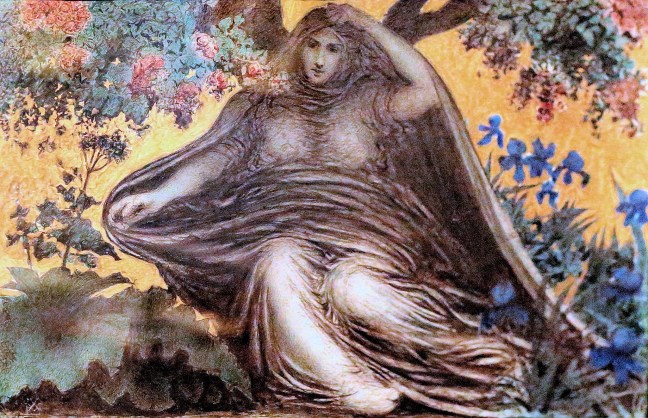
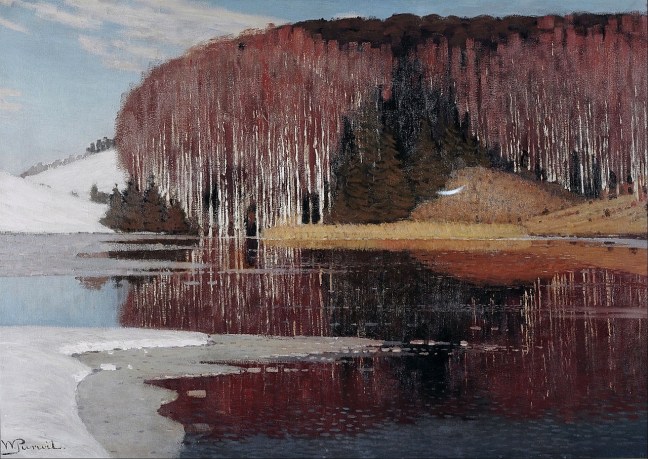
‘Spring Waters’ – Vilhelms Purvitis, 1910 – WikiArt

Isn’t it wonderful to discover that you cannot be destroyed? No matter the magnitude of your heartbreaks. No matter the betrayals and the dishonesties — all that is unforgivable in others or in yourself. No matter the untold suffering inflicted to your body or to your self. Isn’t it a blessing to notice that you cannot be broken no matter what? You can believe to be broken, sullied, doomed and punished for your sins. But in reality you are not and cannot be. You are as beautiful as you ever wished to be. Worse even. No quantity of imagination, no originality of a mind will ever prepare you to comprehend the pure and unsullied nature of your self, which equals to nothing but the beauty of your heart.

The only thing that can ever be hurt or sullied is a thought or a belief. You will be hurt in proportion to the extent of your identifications. The greater your illusion, and the sharper will be the pain when it is challenged, or diminished, or trampled. A belief is a living thing. It is not just a dead abstraction that can be easily ignored or overcome. A belief is as alive and sensitive as a self can be. We are made of that belief, we have clothed ourself with it and have become vulnerable to all that can undermine it. That’s how you become a sufferer. That’s how you can imagine to be sullied, diminished, destroyed. It is all contained in one single belief about yourself. And it can be released in one single act of contemplation: Seeing yourself as you are, and not as you imagine yourself to be.

[…]

An exploration into the true nature of forgiveness… (READ MORE…)

.

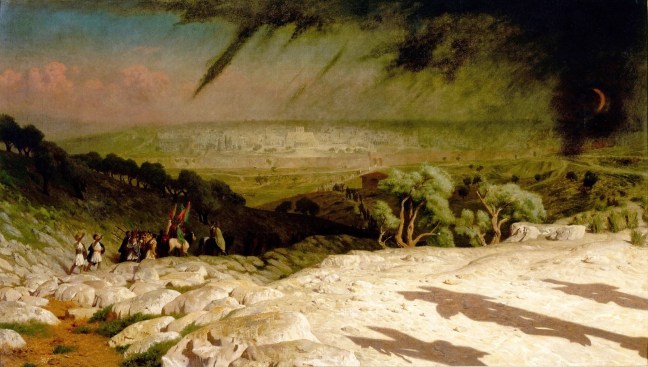
‘Consummatum Est’

‘Consummatum Est’ – Jean-Léon Gérôme, 1867 – Wikimedia

I happened to visit a church recently, and was intrigued by one single sentence placed just under the main crucifix, which read in French as: “Tout est consommé”. I had never heard this particular formulation before. These words appear in the Gospel of John (19:30), and have been translated into “It is finished” in modern English. These are the very last words uttered by Jesus on the cross before he relinquished his bodily existence, and was resurrected as pure being. In Latin, it runs as “Consummatum Est’.

Consummatum Est

All is consummated, which means all is finished, accomplished, brought to completion. It means we are wholly with the ‘highest’, nothing is left that lingers in separation. All that is other than god, other than the very presence or being that we are, has been consummated, put into the fire of consciousness, eaten, devoured, transformed into its very essence. The truth of it has been exposed, and the objects — all that seems to have its proper existence — have been revealed to be of one single essence. The ten thousand things have been digested, transformed into the truth of their being. They have been revealed as the One. The illusion of multiple existence has been seen for what it is: one being giving no room for an other. Anything that stood as separate or ‘other’, has been consummated into the fire of emptiness. Not a barren emptiness, but a living one, a fertile emptiness, teeming with possibilities, with creativity. Everything that was objective has been devoured into supreme subjectivity, which is nothing but the feeling of being, in which all existing things have found their home, have dissolved their separate identities, have bargained their many names for the Nameless. The many have been revealed as being one. Therefore whole, complete, in need of no ‘other’, or ‘better’, or ‘more’. The many shadows of obscurity or illusion have returned into the light of their essential being. They have disappeared, have relinquished their illusory separateness, incompleteness, or ignorance to return into the truth of their ultimate being as oneness, fullness, or understanding. The shadow of existence always shows up as many. But the pure light of being is revealed as one. This is an end, a finish line, because there is no more to be revealed, no more to be added, understood, analysed, enquired. This is a natural completion, a form of creative death, which means the realisation of the very nature of death as the living aliveness of pure being. It is whole, therefore unattached, innocent, incapable of being sullied or diminished, immune to death, and open to the infinite. Finally, you come to the understanding that this consumption is the sublime alchemical process, the transfiguration through which suffering is metamorphosed into peace, separation into oneness, and death into eternal life. This is the realisation, awakening, or resurrection of our true essence that was buried under, or veiled by, our illusory sense of self and the constant toil of life in the forms of suffering and death. In other words, you have been crucified on the altar of ultimate being. ‘Consummatum Est’.

.

~~~

Text by Alain Joly

Painting by Jean-Léon Gérôme (1824-1904)

~~~

.

Websites:
Jean-Léon Gérôme (Wikipedia)
‘Consummatum Est’ – Painting (Wikipedia)

Suggestion:
Other ‘Ways of Being’ from the blog…

.

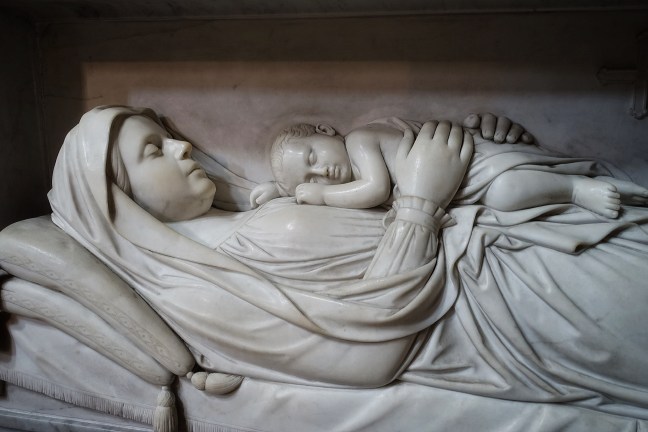
Treasures of Grace

In Basilica di Santa Maria del Popolo, Rome

.“The heart is but a small vessel;
and yet dragons and lions are there,
and there likewise are poisonous creatures
and all the treasures of wickedness;
rough, uneven paths are there, and gaping chasms.

There also is God, there are the angels,
there life and the Kingdom,
there light and the apostles,
the heavenly cities and the treasures of grace:
all things are there.”

~ Macarius of Egypt (Homilies 43:7)

.

~~~

Quote by Macarius of Egypt (c. 300-391)

Photo by Alain Joly

~~~

.

Bibliography:
– ‘Fifty Spiritual Homilies of Saint Macarius the Egyptian’ – by Macarius of Egypt – (Aeterna Press)

Website:
Macarius of Egypt (Wikipedia)

Suggestions:
Sayings of the Church Fathers
Beauty in Essence (other pointers from the blog)

.

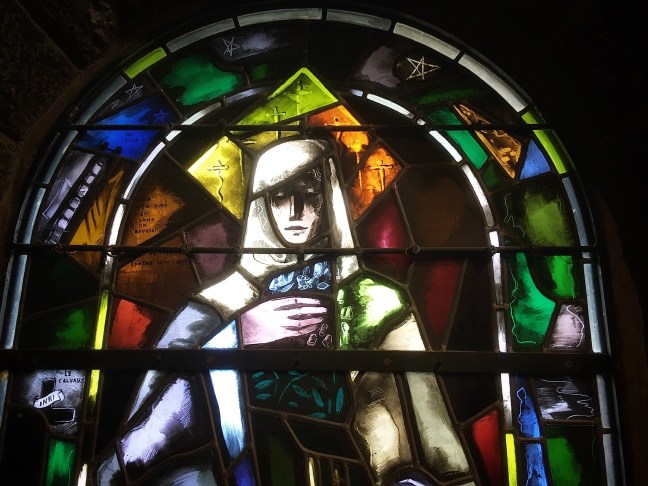
The Glory of ‘I Am’

Stained glass by Adeline Hébert-Stevens in Church of Passy, France

First, you have to dig. You have to dig beneath every thing that qualifies you. You have to find that pure ‘I am’ hidden under all that this ‘I am’ is or can be. You have to find the raw substance of that which you are referring to when you say simply ‘I am’. What is this pure, unqualified ‘I am’? Over the years, piles over piles of experiences, beliefs, conditioning, have acquired substance and have overwhelmed this simple experience of ‘I am’. This substance has mutated into an apparent self, and ‘I am’ has been buried under it, and made into a collection of ‘I am this’, ‘and this’, ‘and this’, ‘and also this’. So that we can never ever truthfully feel ‘I am’ anymore. It is gone. ‘I am’ is gone with the wind of endless qualifications.

So we have now to resurrect that ‘I am’. To un-qualify it. To strip it bare of its qualities, of its acquired competences and idiosyncrasies. We have to purify the wine of our self, distil it to its essence. An essence that was never lost but only diluted, made secondary and unimportant, when it is in fact the only thing there is. This essence is simply the realisation of an emptiness that is the core of our being, that we never had the guts to look at, or enquire into, but which a simple question and a good-will to find out, could simply reveal with a dumbfounding ease and precision.

[…]

A celebration of the purity of being, before it becomes qualified… (READ MORE…)

.

A Ground for Life

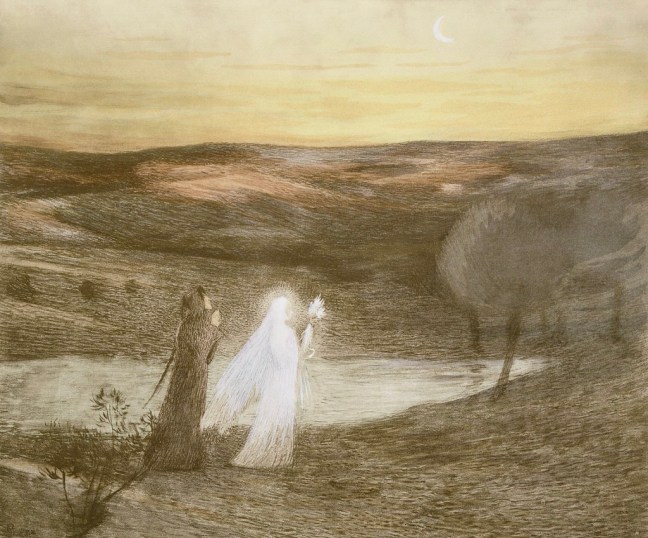
‘Awakening’ – Xavier Mellery – Photo by Jean Louis Mazieres (Flickr)
The difficulty in this endeavour is that as long as you feel yourself to be a person, you will never know your most profound being. As long as you see the world as being an other-than-yourself, you will never feel the presence of your utmost being. For you will be like above ground — not grounded in your self. You will be a wanderer, forever looking for a destination in other things or beings. And nowhere will you find the home of your true being, for you are forever lost in a world of which you are only a part. And never will you know who you are, for you are living in a place to which you do not belong — a place that is separate from life itself. This unfortunate place has taken the form of a fake, created self or entity, which is but an imagined representation for an equally imagined world. Life has escaped you. And you will keep being above ground, out of tune, forever misplaced, making yourself a sufferer, and a sinner. You will then lose sight of your original mistake. You will start thinking that you have been placed here powerless, doomed to win your happiness at every time-bound step on the road. You will start bending under the weight of this so-called fate of life, from which you will try to escape over and over again. You will lose sight of your self, looking blindly in all possible directions, except in the direction of your beloved home, which is your own, eternally present being. That’s how you become headless, engaged with a thousand things, in a thousand directions, and attempting to find in them a purpose and a peace of living for your bruised self. You have been led through mysteries which only existed as projections. And you have kept running steadily away from your one and only true mystery: the beloved and forever here, forever now, home for your self as being. Here is the truth: Plain being is the ground and the destination; the only existing home for your peace and thrill of living. And life’s purpose is to cancel the imagined distance between your supposed, suffering self living above ground, and the true and happy ground of being which you already are here and now.

.

~~~

Text by Alain Joly

Painting by Xavier Mellery (1845-1921)

~~~

.

Website:
Xavier Mellery (Wikipedia)

.

Other ‘Ways of Being’ from the blog…

.
At Heaven’s Gate

‘Dante rencontre Béatrix’ – Henri-Jean Guillaume Martin, 1898 – Wikimedia

There is a guard posted at the entrance of the Kingdom of Heaven. Mind you it’s a gentle guard, open, benevolent, understanding, but she has her ways. Not everybody can enter. You need to fulfil some precise requirements. She has seen it all — people wanting to enter with all their heavy luggage. Trunks after trunks of thoughts, beliefs, hopes, memories, loaded with cumbersome feelings. People have such unreasonable faith! That’s when she smiles gently:
— Well, you need to empty yourself… It’s not the way to qualify for happiness. Besides I guess that with such a heavy load on your back, you must be coming with your share of suffering. Suffering is not wanted here. It’s a no go. You cannot enter with it. Sharpen your vision first.
— But… are you some kind of select, private club? Can I not come as I am? With all my sore feelings and my crap?
— Mmm, technically you can, but you must first present us with a correct identity. We need to know who you are — without your feelings and your crap, as you said. Without your sorrow and self-pity, without your dreams and hopes, all your fears and concerns, your prayers and righteousness. Without all the things that situate you and render you like a self which you never were. You need to know who you are before all that you think define you. Did you ever look at it?

[…]

A playful interaction and dialogue recorded at Heaven’s Gate… (READ MORE…)

.

Masters of Knowing

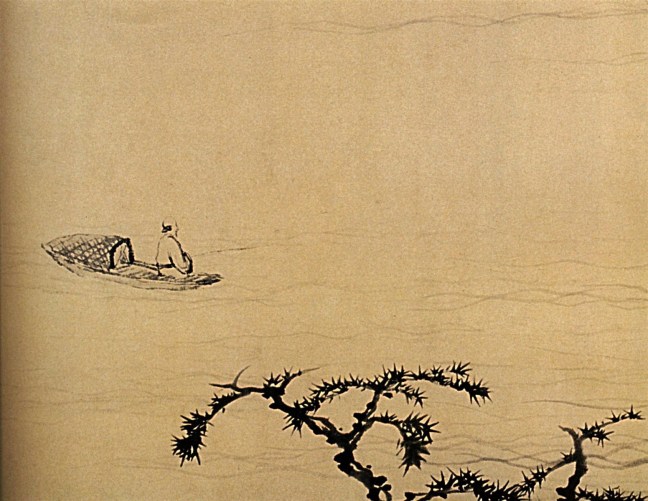
‘At the discretion of River’ – Shitao, 1656-1707 – WikiArt

It seems to me that, at some point, we have to cease worrying about our lives. There will always be something to worry about, to be concerned with, to hope, regret, project, expect, envy. This is an endless, futile road with no visible finish line. And it also seems to me that, at some point, we have to question our constant spiritual reading, listening, this position of being forever a stranger, one who needs to know, to gain his or her position as being. Not that there is no beauty in reading an expression of truth from a talented seer, or listening to a perfect line of reasoning that brings you to the open field of your eternal self. Not that there is no necessity of seeing oneself as a humble beginner in matters of truth. Not at all. But we must come to the simple realisation that we have it all exposed in front of us, in our everyday, every moment experience of being. We are innate specialists of being.

Any sincere and thorough looking at our simple sense of being, any visit to the temple of our presence, always at hand, always on the map of the now, always accessible, contains in itself treasures of learning and understanding. This is our place of abiding — this being. Our cherished home. Never at a distance. Not a painstaking enterprise. Not requiring the perfect set-up or circumstances, the right number of retreats, the sufficient amount of reading, or the many hours spent on the cushion — for being is always present, always on display, in no need of practice or effort whatsoever. Being has the naturalness of something that can never leave us. It is closer than our blood and breath. So we have to abide by its rules, and notice it rather than seek to attain it.

[…]

Continue reading this praise to being’s intrinsic, evident nature… (READ MORE…)

.