A Chronicle of Thought

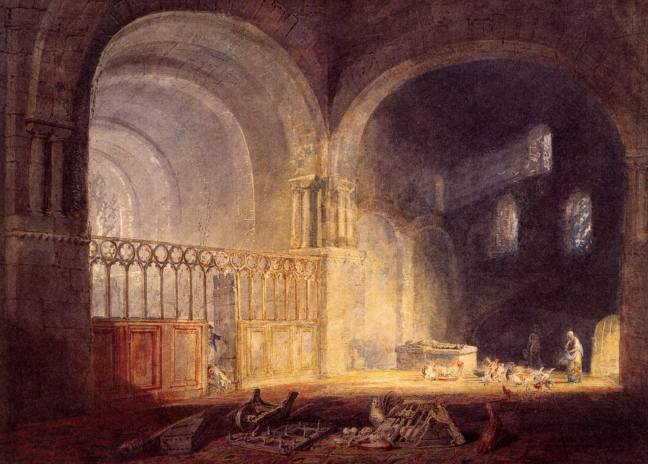
‘Transept of Ewenny Priory, Glamorganshire’ – J.M.W. Turner, 1797 – WikiArt

Most of our thinking is so much unnecessary work. Consider all the worries we had, that have been fuelled by thought, and have now evaporated into thin air. Think of all our expectations and dreams that were never fulfilled, replaced by just being what we are now. There’s been so much energy wasted in these internal fights with reality. So much presence that we have missed or hidden for being tied up with these endless rounds of endless thoughts. Thinking can be a damaging factor in our being aware of our utmost reality. And we most often don’t need to have thoughts to actually be caught in their net. Thoughts are good at delegating. They will sooner than we think be replaced by chronic tensions, nasty feelings, diffuse depression, and the uneasiness of being a self. All the troubles contained in being a person — the endless suffering that goes with it, and the seeking that never seems to stop. In fact, we have been sculpted by our thoughts. We owe thoughts all that we have seemingly become. It really gives me shivers to think about it.

Our thoughts are both the cause and result of the idea of ourself they have imposed on us over time. We have been a follower of thoughts. We have been conditioned by them. They have us in their spell, and we could spend a lifetime without confronting them, without going right to the bottom of their essence. Have you ever met a thought face to face? Do it now. Ask your next unnecessary thought that simple question: ‘Why are you here?’, and see its reaction. See how it will shy away and retreat. Thoughts are not courageous beings. They thrive out of our carelessness. They love our being inattentive. It goes the same way with the self they have made us into. If it is left to act alone, that self will never leave you out of its own will. It will keep hiding your most truthful identity. It will continue feeding you with its thoughtfully rehearsed beliefs and illusions. You will keep being an entity. You won’t see the infinite that your being is made of. Silence and eternity will keep evading you. They too are shy — they don’t like when that boastful self is around.

Thoughts are silent workers, and pernicious ones. We think we have them when they in fact have us. The problem is not so much in their being there, but in what they have left in their trail for us to believe in. That’s why we call them ‘thought’ — a past participle. Thoughts are known when they have already been thought. They are agents from the past, that are here for a mission. They have created an entity that is in turn thinking them with the view of keeping itself strong and alive. So we are caught and doomed, aren’t we? Well… maybe not. Maybe thoughts too have their weaknesses, and I’ll tell you one. Pierce your thoughts through to get to their ground of being. Your freedom from thoughts is in your looking beyond them. And your freedom from being a self is in giving attention to what beholds that self, to what gives it the light necessary for its appearance, and for the knowing of your thoughts. Everything that you can know is lit by a knowing faculty. Be engrossed by that light, be only that one, for there is no thinker behind any of your thoughts, and no knower behind any of your ‘knowns’. Espouse the being in you that is responsible for being aware of everything — thoughts, objects, experiences, the feeling of being a self separate from the world. Just stay present in, as, and to this deepest, most intimate presence — the one which you cannot know, or even be as an object, and which will deliver you from being a self. In that deliverance is contained the severing of all the thoughts that are like the bricks and walls of your illusory self. You will hear the sound of the rubbles crashing at your feet. This sound is the sound that freedom makes. Silence comes afterwards — and this silence is you, who you are before the coming of any thought, truthful or not. But really, nothing is new here — after all, Paul the Apostle said it all long ago in far more succinct terms:

Whenever anyone turns to the Lord, the veil is taken away.
Now the Lord is the Spirit, and where the Spirit of the Lord is, there is freedom.
And we all, who with unveiled faces contemplate the Lord’s glory,
are being transformed into his image with ever-increasing glory.”
~ 2 Corinthians, 3:16-18

.

~~~

Text by Alain Joly

Quote by Paul the Apostle (5-64/65 AD)

Painting by J.M.W. Turner (1775-1851)

~~~

.

Websites:
Paul the Apostle (Wikipedia)
J.M.W. Turner (Wikipedia)

Suggestion:
– Other ‘Reveries’ from the blog…

.

The End of Self-Improvement

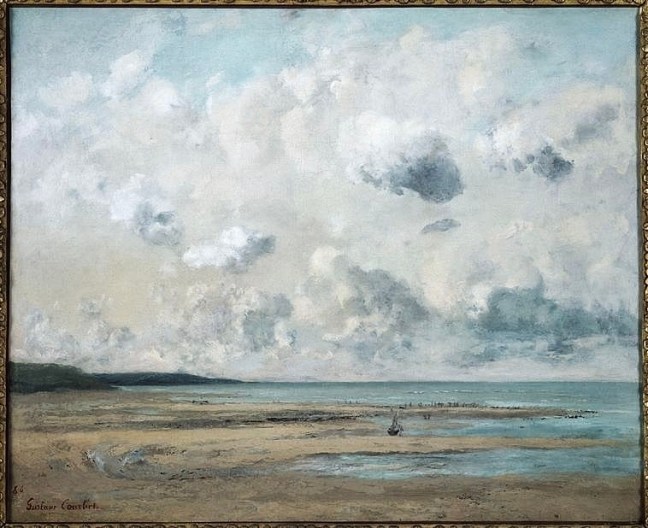
‘Shores of Normandy’ – Gustave Courbet, 1866 – WikiArt

.

To know that your Self has not changed,
this illustration itself is enough.”
~ Ramana Maharshi

.

There is no ameliorating emptiness, developing the unborn, aggrandising what is, and expecting the timeless to be anything more or different than what it is. Being leaves no room for improvement because it is not a thing, it is not a result, a something that has a cause. How do you improve the non-objective? How does the infinite progress? How do you make better a self that is absent as self — as something different or separate from experience? So self-improvement is a misunderstanding and a form of violence. It is an imposition, a belief that we squeeze to fit our idea of reality, an objection to the innate perfection of what is. It is mind-made, a product, a progeny of conditioning. It is designed for the continuation of our belief in being a self or entity that can be objectively defined. And remember this: every object, every ‘thing presented to the mind’ — as Latin word ‘objectum’ stands for — is in fact nothing but something thrown in the way of your knowing who you are. This is the meaning of Latin ‘obicere’ — ‘ob-‘: ‘in the way of’ and ‘jacere’: ‘to throw’. The self that you believe yourself to be, and that you strive to improve, is your hindrance. It is what makes you blind to your true nature.

To improve on a self is to make it continue, it is to give it credit, to give it the existence it never had. After all, we all want to feel real, to see that we can act, and have a power on our self. So we have the desire to consolidate and sculpt our being through rendering it an object that we can manipulate. We want to make a profit of our self, and see a return on our investment. In fact, to improve myself is nothing but a form of merchandising. It is a trade and a transaction. It is retail management, the ‘cutting off’ of our self with the aim of maximising profits. But don’t ever forget that if you are able to improve yourself, you can therefore also make it deteriorate, worsen, decline, decay. So what then?… is self-improvement decay, error, illusion? Is it ourself going astray, being mislaid? Are we really so sure that our being could ever decay? That awareness is a so fragile thing?

[…]

On how there is no improving our self and being… (READ MORE…)

.

The Story of It All

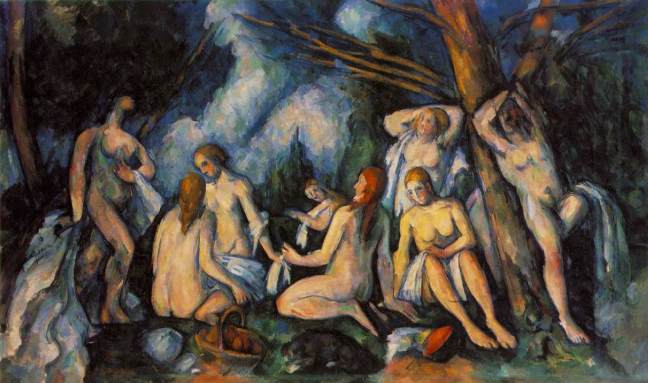
‘Large Bathers’ – Paul Cézanne, 1905 – WikiArt

There is a hidden presence everywhere we go, that hides within our experience. It is concealed within its own shining, and is the reason for our seeing and experiencing anything. It seems to be woven into our very being, to have married its being to our being. Would we want to separate ourself from it, that we wouldn’t know where to go. In fact, there is no way outside ourself. We have it all here as we are. Our life is unfolding within that which is ‘myself’. We are the garden of our self, of all our human endeavour, of our quest and of our finding, of our lack and of our glory. All that we live for, when reduced to its core target, is to be relieved from our chronic sense of not having enough. We feel there is a thing here to be found, without knowing what it is. So we become blind to ourself, and are consequently driven into the world, seeking there in the distance of time or place, what is already here in and as our very self. We are our own hidden remedy, our secret paradise. We have shrouded the infinite within ourself, and are erring within our own misconception.

In fact, we have been misled by our having a body, imagining us inside it rather than it inside us. We have belittled ourself, have lost faith, squeezing ourself into a thought that we have aggrandised to being an entity. We are a trick of the mind — nothing more — and have lived caught within our own creation, struggling inside our own mistake, wrestling with a world that we have stripped of its essence. We have divided our experience into separate objects, and have reduced ourself to being one such object. Now we are striving to unravel our own mistake, to defeat our foolish, unfortunate belief — hence our suffering and our struggling. Our life has been made into a scream for peace and justice, and the silence of simply being has retired within us, into the hiding place where we have pushed it. We have shied away from our truthful nature, and wandered off from simply being naked being. We have clothed our emptiness with the garment of a self delineated by thought and identification. We have limited the infinite to our convenience, and squeezed eternity into the burden of time.

But there is a dawn here just as we are. There is a light ready to overcome our night. For we never got lost far from our home, never took our stand away from our own being. So our journey is always only the shortest step from ourself to ourself. We have to return where we never left. We have to get acquainted with ourself, with who we truly are, and get accustomed to our being — much wider than we ever noticed. We have a sky at our disposal when we have dismissed the thousands fascinations and identifications with everything that is at a distance from ourself, and is the prey to our mind and our senses. There, curled within and prolonged without, treated so far with contempt, is our own indomitable self. There, trampled by a belief about ourself that we have imposed on everything, is a magnificence. There, is the being of our being, what we-the-seeker have sought everywhere except in its own place of living, which is ourself. We have missed it because it was the last thing investigated, the last stone lifted, for being too close and intimate. Who could have thought that the sought was the seeker?

Now we only have to be that ground of being alone, at the exception of all that is moving and changing in it, and that isn’t us, not truly us. We only have to sink beneath the moving sea of our multiple, insatiable experiences, and let ourself reach that part of ourself that cannot be known or possessed, and is yet our undeniable self and identity. Here we discover that our being is the being of everyone and everything, and that we are bound to this totality by love. Here every single thing in our experience is unraveling itself back to its essence, taking its right place within it — and that essence is found to be our essence. And god’s being too finds its right place and meaning in and as ourself — and we too have our place in god. And our so precious peace is now teeming as our own being, and justice is found right under every step we are taking. Now we have silence as our very best companion, and our seeking — which was our suffering — has been buried under it. Now we are right where we were supposed to be when the world became a world, and the son of god became a woman or a man. And now…

Now let me rest and live and walk the world as I am, alone and one, and all in I.


~~~

Text by Alain Joly

Painting by Paul Cezanne (1839-1906)

~~~

.

Website:
Paul Cezanne (Wikipedia)

Suggestion:
– Other ‘Reveries’ from the blog…

.

Entangled Life

There’s been a trend here for millennia. I would call it the trend of entanglement. Or maybe it is rather a habit, a belief, an erroneous view that we are bound, attached, entangled to our life, to its situations and circumstances. We are enmeshed in our thoughts, worries, conditionings, capacities, habits, patterns of living from which we get no release. Thankfully our sleep comes timely everyday to deliver us from the demon of entanglement. Yet we have to bow to the evidence that our perpetual seeking is nothing but our repeated attempts at freeing ourself from the prison of entanglement. We have tied ourself to its relentless effects, and are suffering consequently. We have failed to see that our entanglement is born out of our belief in being separated from the life we are in. We most of the time feel alone, detached, broken up, disconnected from our surroundings which as a result challenge us, and against which we have to fight, or from which we must repeatedly flee into further separation. That’s the life we live in for the most part. That’s what we have. An entangled life.

Now, the reason we feel so overcome and ruled by our circumstances — and often defeated by them — is that we take our many entanglements for a reality. Through our being a person, we have made everything that is ‘other’ a possible threat or cure, and live therefore in constant insecurity — hence our compulsive seeking or avoiding. But we haven’t gone far enough, to find out that there is a supreme, sacred entanglement, which ties us to our self in an irrevocable way. This entanglement with our being is devoid of all previous entanglements. It ties us in an embrace so total that our person feels merged with the being it is made of, and discovers itself to be not there, or rather to be only one, undivided being with no need or possibility to be tied to anything but itself. That’s how the feeling of being entangled is vanquished: by a more radical, ultimate, terminal form of entanglement. An entanglement with no entanglement in it, for it has disentangled itself from all objectivity or otherness, and be made into a subjectivity so absolute that it has only itself as a possible other — which means no otherness at all. This absence of otherness is the surfacing of a life that we discover to be devoid of inner suffering or conflict. It is a life of freedom, untied, disentangled, and therefore spacious, peaceful, and bound only to its essence, which is love.

.

~~~

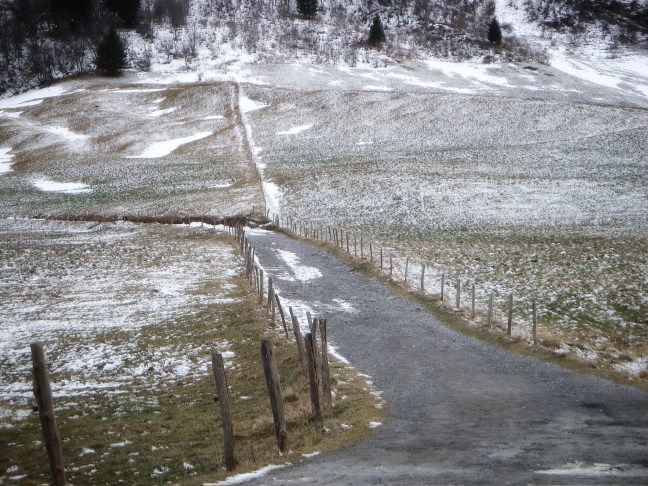
Text and photo by Alain Joly

~~~

.

Suggestion:
Other ‘Ways of Being’ from the blog…

.
The Distant Country

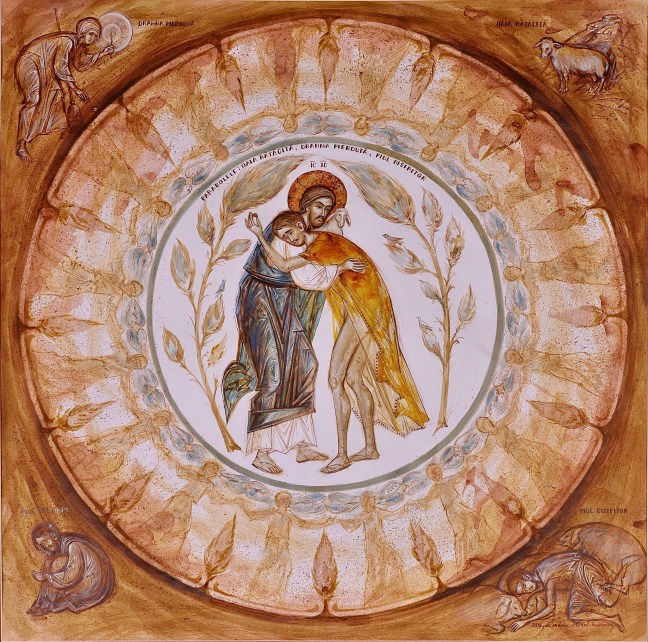
‘The return of the prodigal son’ – by Elena Murariu, 2018 – Wikimedia

How ironic this life is, isn’t it? How incongruous to have imagined that this is the real deal: being a person locked in and bound to the limits of a body. How astonishing to have this certainty to be a self that feels separate and needs to be fulfilled. To think we have to fight our way through the world, and suffer with such consistency. To have been persuaded that seeking is our way of life, without which we are doomed to poverty and stagnation. Yet the illusion of our being in a world is so convincing that we had to buy its many effects and constraints, and be subjected to its perils. So we have gone far away, thinking that we could live remote from our true home and identity, that we could roam the world on our own, and snob our essence. So we have landed into what we are not. We have lived the adventures of a person, gone through challenges and despair, carried ourself through time and space, and lived attached to worries and hopes, to the aches of regrets and loneliness, and the brief consolation contained in the occasional relief from our wrestling with the physicality of the world. So we have paid the price of such a lonesome, faraway trip. As Augustine of Hippo once said: “Distant country signifies forgetfulness of God“. We have left our father behind, despised his presence, judged his love as unworthy. Unhappiness is intrinsic in having mistaken an illusion for the reality, just as it is natural to be in the shadow when we hide from the sun. But maybe there is a return from our erroneous view. Maybe the time has come to stop being tied to a false idea, and to return from our adventures into deceitfulness.

Now see that this faraway trip is but the following of a belief. It is our being led into an illusion, a fantasy — shared by all — that the life in and as this body-mind is all the reality there is, and that the way we live and believe is our truthful condition, to which we have to submit ourself. We have swallowed that suffering is the condition of life, and the way to alleviate it resides in either circumstances, good luck, or smart choices. But in fact, suffering is but the consequence of our departure from our true, forgotten nature. It is the natural outcome of our prodigality, of our obsessive desire to possess and be more than what we already are, of our seeking happiness inside the development of our adventures into ego-land. But as far as we may have erred into agony and chance, there is chiselled in our very nature, a return into the open arms of our simple, inescapable being. This quiet resting as our innermost being is the home from which we should never depart, no matter how enticing is the call for an adventure in the distant land of separation. There is a father or mother here, a being eternal, always waiting for the return of their prodigal son or daughter. And it is in the nature of this return to be a welcoming one, for the simple reason that you are yourself the embrace contained in being only being. So your return to the father was never a return from any kind of reality, but the noticing that we had in fact never left its loving embrace, and that all that was needed is our letting go, our bowing to the grace contained in simply being.

.

~~~

Text by Alain Joly

Painting by Elena Murariu (born 1963)

~~~

.

Website:
Elena Murariu (Your Portal to the Art of Icon)

Suggestion:
– Other ‘Reveries’ from the blog…

.

Twisted Rainbow

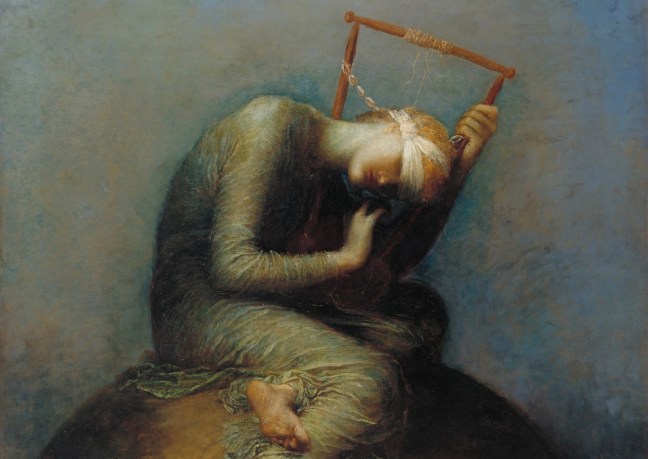
‘Hope’ (detail) – George Frederick Watts, 1886 – WikiArt

Unhappiness is a strange thing, for against all appearances, and under serious investigation, it is not really found. We are making it up as we go along. In fact, there is no such thing as an absence of happiness. Yet we are nurturing this absence with great consistency, designing our so called unhappiness with care, through our thoughts, our memory, our attachments, our stubborn persistence. But only try to experience its effects outside your thoughts and feelings, in the absence of your mind, and you’d have to confess that you can’t find here anything like a misery. The reason is: unhappiness is not a thing in itself. It is veiled happiness. It is the covering up of your innate peace. It is past residues and future expectations tossing the tranquillity of the now. But all such disturbances, discomforts, or distresses, are always only temporary events, passing weathers distracting us from what is always here, always faithful, always to be trusted: the peace contained in simply being. This peace is in fact the very making and backbone of our lives, its solid background. It could never leave you no matter how hard you may try. Its not being felt is a form of snobbery. You have missed your innate joy in reason of your not looking in the right place. You have neglected your true, natural being for wanting to be somebody. You have been scorning yourself out of vainglory. In fact, unhappiness is but the simple mourning of a loved one who is missed: our true self. It is but a distraction from the boredom of our ignorance. Or a warning for a wrong turn taken.

Unhappiness is not found in physical pain, or in the natural grief following a loss. These are all compatible with happiness, as is a shared, compassionate sorrow. These are wise and healthy responses to life situations and challenges. Unhappiness is of a different nature. It is more like a habit or an indulgence. Often, we would rather be unhappy than shatter a well-rehearsed idea of ourself, in which we have invested our most cherished identity. Unhappiness is also the result of a fallacy, and a form of delusion. It is a shadow which we nourish through our belief in being a person caught between seeking and resisting, and the reward of fulfilment. Unhappiness is only as real as our limited self is. One will follow the other both in death and in birth. So really, unhappiness is a self-inflicted pain. In a way, we could say that it is a sin. It is ourself being driven away from our happy, forgotten nature, and bound to the suffering self which we have identified ourself with. It is our twisted rainbow in the sky of ignorance, that appears naturally without being truly there. It is created by the rain of all our renouncements, of our constant search for security and approval, through accumulation and avoidance. So next time you meet some measure of unhappiness in your life, don’t believe it. Don’t be caught up and allured by its convincing appearance. See through it until you find its referent. See that unhappiness is not real as affliction or suffering. It only exists as the sum of all that hinders the happiness which is the nature of your self as being. Your misery may in fact only be a passing, unassuming thought, maybe an innocent, unchallenged belief, or just a feeling hovering about, which you are taking too seriously. Not very much really. Hardly enough to send you far and away from the delight of simply being.

.

~~~

Text by Alain Joly

Painting by George Frederic Watts (1817-1904)

~~~

.

Websites:
George Frederic Watts ( Wikipedia)
Hope (Watts) (Wikipedia)

Suggestion:
– Other ‘Reveries’ from the blog…

.

The Reluctant Messiah

‘Christ on the Mount of Olives’ – Paul Gauguin, 1889 – Wikimedia

.

Father, if thou be willing, remove this cup from me:
nevertheless not my will, but thine, be done.”
~ Luke, 22:42

.

Maybe it is more serious than you think. Maybe the line has been crossed without your noticing. Maybe there is no return to being what you imagined to be: A self, a person, self-contained in a body, armed with all the thoughts needed to represent you. Maybe there is no memory left of this old belief, and that you have to let it all go, all the kaleidoscope of separation, all the daunting suffering, all the interplay and thrill contained in being just one piece in the puzzle of life. Now all pieces have been joined to fade into one single presence with no pieces in it, a presence that you have espoused, that you have recognised to be your home — inherited and inhabited since before the dawn of time. Now you may have to move in with fear and reverence, for living in that new identity has consequences. It might transform you beyond your recognising, and in more drastic ways than you had expected.

It might shatter your dearest hopes and expectations, that were here in your heart, entertained to the point of cultivation. It might give you what you have sought all along, and stop dead every single desire for an ‘other’ to satisfy and fulfil you. It might demolish a dream, and disintegrate the map of yourself, that described who you were in such lively, never-ending details. It might silence you, when you so much enjoyed the delightful babbling of your anxious mind. And I won’t mention all your intimately held treasures of belief, all your ideas and opinions, that have put together that carefully built image of yourself: how they might be dampened, damaged, discarded for being found redundant.

[…]

Read more about how our resistance can be made into surrender… (READ MORE…)

.