The Treasure Within

‘Morning mist in the mountains’ – Caspar David Friedrich, 1808 – WikiArt

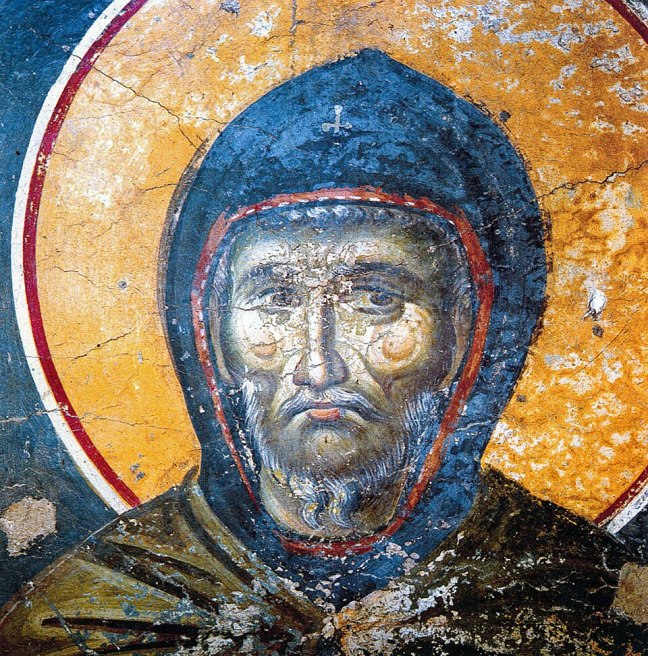
There is something in us, a presence, a feeling of being, that can say I Am. Nothing else can. No body can. For how could a body say I Am, which is but a bundle of tissues, a physical structure that can only be seen as an object, at a distance. That which is at a distance cannot say I Am. I Am is for the innermost of your being, for what is here beyond a shadow of doubt, in you, as you, indissociable of yourself. Feel that I Am is for that which never moves, is never tired or sick, is never concerned by age, or beliefs, or any passing content of the mind. Go for what in yourself is indestructible, constant, that could never be hurt, and notice that that is the thing which is necessary, responsible for your being able to say I Am. I Am is your anchor, the lighthouse you must never depart from. If you do, you will be plagued with suffering and grab the first thing you could identify with, amongst others your body, and your mind content. Thought is a good client for providing you with a fake identity. It mimics a self to perfection where there is none, where there is only here a presence infinite, borderless, shared by all. Without that, no I Am would be possible. No I Am would be there, and no humans either, no beings, nothing at all, just a black, empty void.

I Am is the light that makes life possible, that renders it palpable, sensible, experienced. You could say that for an object to find its isness, its existence, there would have to be an I Am first, there would have to be an essence, a ground that gives all things and all beings their shape, length, width, and existence. This essence is that without which there’d be no you, no possibility to say I Am. That without which there’d be no support for your thoughts. That without which your body could not in a zillion aeons find its ground, its birth, its death, and its life and beating heart. Thought has nothing to do with your asserting I Am. It is in no way involved in it. It will try to convince you, that thought is behind it all, is the voice of your being, the one that can say I Am. The body has convincing arguments too. They two form a good pair. But don’t be deceived. These are not where you draw your sense I Am from. I Am is deeper. I Am is fundamental, not a passing thought or feeling, bound to an object, to a body. I Am embraces all things and all beings. Even the world could not be thriving and bubbling without having its grounding essence. It needs, for its rising and falling, for its being seen, heard, felt, a something that holds it and creates it, like the content of a dream needs the mind of a dreamer. The world would be at a loss without I Am.

And in fact it is: at a loss. For why do you think the world is plagued with suffering and conflict? If you ever find yourself suffering or in conflict, it is that you have lost your I Am. You have given it, bargained it to a body, or a story, or some mere random thoughts. You have exchanged it for an ambition, an eagerness to be something, somebody, and to feel the reward of it. I Am is without a reward, without a body, faultless, pristine. It doesn’t know the meaning of suffering, or conflict, or confusion. So keep it always close to you, don’t lose its splendid gaze. For your body, mind, and random thoughts are all craving to take on the role of a self and blind you, conceal in the process your gorgeous, inborn, god given identity. They’ll happily send I Am to the wrong place, to keep it unnoticed, forgotten. But I Am is always here, like a patient presence, holding even your ignorance in its benevolent hands. It will wait for your looking, your noticing, the better days of your realising who you are, that is found here nestled within I Am. You owe I Am everything, right to your feeling of being, behind the mere words.

For there is a Word behind the words, which I Am is the pointer to. A living, pulsating reality. Call it being, call it god, call it Word. We have made I Am into a mere body, a limited self, and have therefore compelled ourself to look outside for our peace and completeness. The seeking for our lost completeness is what is called suffering. But the way to overcome suffering and conflict in our lives lies within, in our very being, in what is hidden in plain sight every time we say I Am. A human being can never have its private sense of I Am, for being is shared in equal measure by all beings and things. It is boundless and has within it the peace and completeness that you had been looking for without, as a result of your misplacing I Am. I Am owns its peace and completeness through its being alone, whole, One, and therefore unable to be parted, or lost, or forgotten. So have a good look every time you say simply I Am, and recognise it for what it is, and not what you believe it is. Don’t limit I Am to a projected, illusory, made up entity. I Am is the gorgeously carved door to your being happy and whole, and to have the world reflecting that wholeness and happiness. It is your treasure within, that you have ignored, or misused. So repair the sense I Am in yourself, and give it back to its original, initial, pristine glory and undefeatable reality.

.

~~~

Text by Alain Joly

Painting by Caspar David Friedrich (1774-1840)

~~~

.

Website:
Caspar David Friedrich (Wikipedia)

Suggestion:
– Other ‘Reveries’ from the blog…

.

Intimacy

‘Untitled’ – Charles-Francois Daubigny – WikiArt

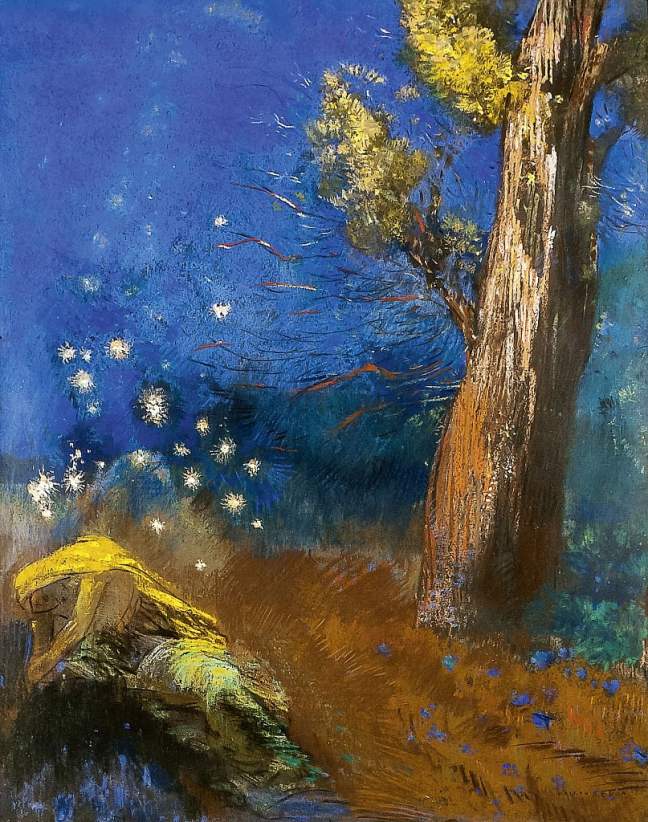
Spirituality is about intimacy. Nothing else. That is all you will feel, when you go to the right place, when your most tender being comes towering in your life: intimacy. Intimacy with everyone and everything. When you are not content about being a person, about only living the life of body and senses, about all things objective that can be seen, heard, felt, then is left something that you could never comprehend. Then comes that innermost part of yourself which is now found to impress and impregnate both you and your experience. Then comes something measureless. This was already your most familiar experience, although you have made it a stranger in your life, for engaging only with the shallow, with the surface, the easy, the habitual, the measurable. These will never take you to intimacy but to separation, remoteness, distance, and finally discord. So go to what is not only passing, but to what is inmost, intrinsic, that cannot be discarded and dispensed with. Your world will open to something precious beyond understanding, which is the intimacy contained in experience as a whole, when it is not dampened by your insistence in being something separate from experience.

Intimacy feels like being with a close friend, when nothing needs to be said other than simply to live, enjoy, and taste presence. Intimacy is to make yourself and experience as precious as a lover. In that process, it melts you down, so that you are nowhere to be found. This absence of yourself is love, which is your freedom, and the thriving of this presence which you are and have always been without your noticing. It will bring everybody and everything — the whole world — close to your self. So close that you won’t see a difference between your experience and your own self. You will be revealed as one boundless presence — the undefeatable essence of your being, before the thousands things of experience come to soil it, dampen it. You will be in love, inside love, for intimacy is just another word for it. Intimacy is about shared being. It may seem personal, but it is not. What makes it seem personal is that we involve the body-mind, that we think binds it. In fact, intimacy has nothing to do with the body and the mind. It is a warmth without limit or end.

In its purest form, being sends us in a place of immediate intimacy with everyone and everything, a sense of togetherness, of belonging that cannot be helped. Intimacy is a gathering in and as being, whether we are two people, or ten, or a hundred. We feel an absence of plurality, or otherness. It can be informed in a split of a second, deploying itself from a place unknown and unknowable. Its appearance is free, unconditioned by time. Its disappearance is impossible, only apparent or believed. It comes from a place which has neither a beginning nor an end, and is not bound to the limitations of space. It reveals itself as something fundamental to our living this life, but which we have failed to notice was here. It is the highest degree of your essence. Being intimate is the last place in yourself you will ever visit. There is no beyond it. It will come as your last day, your final breath, for there is no living as a separate entity, as a private being, once you have drunken at its source, and suffered its irrevocable implications. To be intimate is to die to yourself, and disappear in the radiance of only and simply being.

.

~~~

Text by Alain Joly

Painting by Charles-François Daubigny (1817-1878)

~~~

.

Website:
Charles-François Daubigny (Wikipedia)

Suggestion:
– Other ‘Reveries’ from the blog…

.
The Silent Heart

‘Silencio’ – Eliseu Meifrèn p, 1900 – Wikimedia

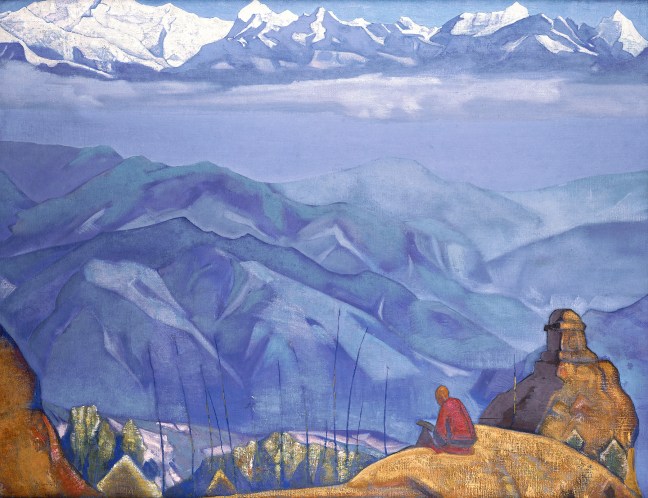
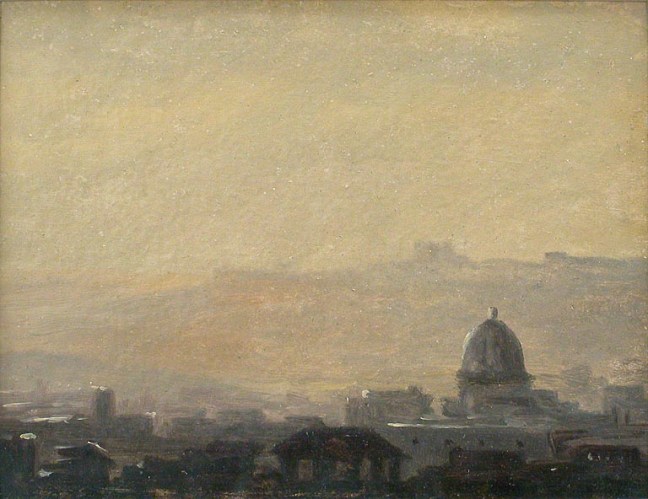
Silence in the spiritual endeavour is taken to be much more than the absence of noise. It is in fact stillness. Silence is the absence of movement. It is the quiet reality that lies at the very heart of our being. By silencing the mind, we get to our silent heart — the silent heart of being that lies deep down within ourself. In fact, not so deep down. This is one of these illusions, to think that our heart, our silent being lies deep down, hidden, buried. In fact, our silent heart is showering our existence. It is our natural state, teeming, unmissable, that we have made seemingly absent, that we have silenced with the deafening noise of our mind, of our endless chattering, and of this belief a million times rehearsed that we are something, a thinking entity divided from every other thing or entity, and a private, personal self that we believe is attached to the body.

In fact, our mind is made of that silence. Only, we have added so much to it that our silent, unsubstantial heart has been overwhelmed by our many thoughts, feelings, sensations, perceptions that got all our attention. We have crowded our mind and have stripped it of its natural identity, which is simply being. We have silenced silence. We have mixed it with everything objective, noisy, agitated. So it has seemingly disappeared, although still overwhelmingly present. It is not that it is hidden, but we have transferred our natural, silent identity as being, to a fake identity as body, thoughts, senses. We have exchanged being for existence. We have downgraded ourself from simply being to being something. From pure, unalloyed awareness to that which this awareness is aware of. From silence to the crowding of that silence. We are crowded beings, living at the surface of things, dancing and struggling with everything superficial. We have broken the pact that tied us to the infinite, which is our true home and identity.

It results that we have become a person, when we are truly this silent, depersonalised, but utterly intimate heart of being which is the birthplace of all things and all beings. We are that which is before everything that appears and is the prey to our senses. We are this non-substantial substance that allows everything to find an existence. But we are not ourself a thing existing, a person. We are the still and silent being that is the heart of ourself and of all possible existence. Being something is to transfer our identity to that which we are aware of. But this identity has no reality other than in our thoughts and imagination. It is a belief. In plainly and only being, devoid of the imagination of mind, of its restless and ephemeral content, there is an aware silence. A silent heart. Still beating as our eternal, undefeatable identity. We have to live there, for this is the life we are meant to live. Anything else is a corrupted, even poisoned position. The state of the world is here to prove it, to attest that we have displaced our gorgeous identity away from the silent ground of being, to live in and as an appearance, and to believe in what is only a passing dream.

.

~~~

Text by Alain Joly

Painting by Eliseu Meifrèn (1857-1940)

~~~

.

Website:
Eliseu Meifrèn (Wikipedia)

Suggestion:
Other ‘Ways of Being’ from the blog…

.

A Ceremony for Peace

– ‘Full Moon’ – Andrew Wyeth, 1980 – WikiArt

When you have discarded everything in yourself that is not consistent, that will let you down, or change, or leave, or won’t meet your most profound aspirations, then look carefully at what is left behind, that could never let you down, or change, or leave. What is here no matter what, beyond expectations, beyond the agitation of the mind, and your fascination for experience. What is here that cannot be attained, or obtained, for you can only obtain what you don’t already have. Look at that. Look at what is left in you, as you, that cannot be manipulated or bargained for. Feel it, let it acquire prominence, allow it to reveal itself to your attention.

This is what matters: this deeper part of yourself which is untouched, pristine, unconditioned. It matters tremendously. In fact, this is what all spiritual and religious traditions have been calling you to understand or realise. But it isn’t an easy thing to see, for it blends within your experience and hides inside it. Yet, if you look with the right amount of purpose and focus, it will blow your mind as something which is filling the space as your very own identity and being, and had been here always, unnoticed, silent. Now it is revealed as the peace and happiness which you have been looking for in the content of experience, and are now blessing your heart through the simple experience of being only being, which you discover is your natural, and effortless condition.

Everybody knows that he is, or she is. It is an obvious sensation: to be. But then we forget it, take it for granted, stop paying attention. We become obsessed by everything objective, by everything in experience that we can see, hear, touch, feel. We become preoccupied, consumed, tormented by our body and mind, by our circumstances and life events, by what makes us happy or sad, by prestige, failure, pride or shame. We forget that we have left behind, now hidden in the background, one simple thing, one simple fact of living, which is the knowing of our being, this road back to our green pastures, that is here quietly present, every time we say ‘I Am’.

Through force of habit, we let that down, judge it irrelevant, certain that this has only a secondary importance, maybe even no importance at all, that we are, that we know our being, that we can say with certainty and absolute confidence: ‘I Am’. We fly off to dangerous countries, clinging to suffering and uncertainty, navigating between hope and disappointment, making happiness or peace a thing to obtain, gain, deserve. We’re not seeing that it is our identity, our given essence, to be contented, peaceful, creative. That we must not bypass happiness, or pass by it, through it, near it, without even a second glance. That our quiet sense of being is our chance, our remedy, our secret longing granted.

Happiness is simply the knowing of being, the shining of this simple, gorgeous sensation of our being present outside all consideration of body, mind, senses, and world. It is that simple if we are willing to look. In fact, god has placed the secret for happiness, the recipe for peace, right under our nose, on a silver plate, wrapped with a golden ribbon. We can unwrap it every time we become aware of being. Every time we slow down and rest there, in the simple, naked experience ‘I Am’. And then it opens up, it becomes evident, that peace is in being, that joy is in ‘I Am’, that life is spent here, under the gorgeous vault of simply and only being. Then being becomes a ceremony for peace, joy, or love. And then… Well then, everything is for the first time.

.

~~~

Text by Alain Joly

Painting by Andrew Wyeth (1917-2009)

~~~

.

Website:
Andrew Wyeth (Wikipedia)

Suggestion:
– Other ‘Reveries’ from the blog…

.

One Living Being

Truth is when the one who desires truth is not there. That one is a flaw. It is superimposed on the truth it is looking for, and veils it, makes it unreachable. It tramples it, literally. It makes it misty, obscure, mysterious. But truth is an obvious reality, if we don’t put it at a distance. If we don’t imagine it as something. Truth is not a thing, a concept. It is what we are — present, alive, real. Only we have to leave, recede, tiptoe. It’s all it takes, to not be boastful about it, to not think we don’t have it, to not assert the lie of our being someone. Being someone will push truth into the darkness, unseen therefore forgotten, hidden therefore to be sought. Our looking for it is the difficulty. Truth is to be approached with subtlety and utmost delicacy. Not that it is fragile, it is not. But it is sensitive to our feeling separate from it. It doesn’t like it. It shrinks at the thought of it, that we are looking for it, wanting it, being ambitious about it. Truth is not to be conquered, practised, refined. Truth is here fully dressed. It is our most fitting attire. The very being of our being. Massive. Obvious. If we let it open up, unfurl, spread its all-pervasive presence, and its creative, mind-blowing, self-evident, undeniable power and eminence.

But if we think we’re not enough, well then we’re not enough. If we want to indulge in being a person, a poor me, then we fall from a great height. We suffer from being separated from our essence, our quintessence. We feel the burden of our constant, intrinsic, congenital seeking. It becomes our identity, to be a self seeking, to live in separation, to be fearful of this condition, and a believer of ideas. We live in our mind, struggle with our beliefs, conflict with experience. We are not what we should be, and we feel it, know it, dread it. And we are crippled by our impending death, which we cannot understand, fathom, and marvel at. So it really comes down to ending a belief, a simple belief, that cheated us. That our body, our thoughts, feelings, senses are substantial when they are but a dream. That our being finds its reality in our body and mind when our essential is not there. Our essential draws its reality from a presence that is infinite, eternal, unfathomable, loaded with love, peace, and a creative impetus. Nothing else than this presence is at play in our experience. We realise that we are just one living being, which cannot be divided, and has no other than itself. We realise that we are that, in spite of all evidence and impression. This self that we believe ourself to be is in fact secretly made of that, if the mist of its fallacious reality breaks apart and reveals its hidden nature. There is no separate, distinctive, solitary self. Only this shared, glorious one being. Then it falls into place that, for exemple, “I and my Father are one.” (John, 10:30) And that “In him we live, and move, and have our being.” (Acts, 17:28)

.

~~~

Text and photo by Alain Joly

~~~

.

Suggestion:
Other ‘Ways of Being’ from the blog…

.

God’s Flower Bed

‘Fleur’ – Jean Benner, 1860 – WikiArt

.
The difficulty in the spiritual endeavour
is that we have to question the unquestionable. We have to doubt the obvious. We have to turn the stones that we have carefully placed here to pave the road. One such indisputable truth is that we choose our thoughts. That the decisions or actions we are taking, the thoughts or attitudes we are having, are the products of a controller, of a self that has them, chooses them. But is it so? Have we even tried to question it? Have we ever looked if there truly was a self here in capacity to choose? What if there wasn’t? What if this self, this ‘I’ that we seem to be, only drew its existence from our imagination? What if our own self was just another thought? If this entity that we love to pamper and strengthen was not there, not at all? If we have played a game with ourself? If there is here no person outside our indulgence in having the thought of one?

Many of our conflicts and problems in life come precisely from the belief that we are the chooser of our thoughts, that there is an ‘I’, a person here that runs the show when there is not. That’s the mistake, the original sin, to think of ourself as a doer, a thinker, a separate entity that has control, that manufactures happiness, freedom, and is responsible for our experience such as it is. We want to carry the load of our DNA, of our body, thoughts, habits, suffering, or even happiness, and not let them go. We want to be grandiose. The truth is: there is no personal ’I’ that can act on our thoughts or decision-making. These are better left alone, and informed by the only ‘I’ there is, that finds its true essence in the infinity of being, which is selfless. With this understanding or realising, we would come to treat what we have as a jewel of the most precious kind — beyond control but lovingly tailored for us by the universe and its supreme intelligence.

[…]

An enquiry on our ability to choose our thoughts or not… (READ MORE…)

.

‘I Am with You Always’

‘The rest’ – Marc Chagall, 1968 – WikiArt

There is no ambiguity with God. This has been said in a thousand different ways, in every corner of every page of the Bible for example, that God is with us, that there is in us, as us, a presence hidden in plain sight, that won’t let go of us ever. That it is the very making of ourself, our sublime identity — what we live our life with and could never depart from. We couldn’t doubt it in the least, for with just the right kind of looking, and with no effort whatsoever, we could see it, feel it, sense it, that we are that, and not truly our body or mind, let alone our thoughts, our story, our problems, our suffering. “I am with you always, to the end of the age”, that’s from ‘Matthew 28:20’. So there is no worry to be had. We are not alone. That’s just an impression, an invention, that we are separate, insecure, fragile. In fact, we couldn’t be without it. In ‘Zephaniah 3:17’, they say “The Lord your God is in your midst”. That’s what they mean, that our mind finds its ground in this very presence, in this being of ours that is in fact borrowed from God’s being. In ‘1 Corinthians 3:16’, they are even more specific, clearer on that subject, “God’s Spirit dwells in you”. It couldn’t be plainer and clearer. Why don’t we listen?

And we profit from an inbuilt, intrinsic protection in our life. After all, haven’t we gone through illnesses and floods, through a thousand aches, and is not death itself called eternal rest? Haven’t we lived in the constant grip of desire and worry, hassled by a quiet, ever going despair? And yet, are we not beautiful now as we are, after having gone through all this? Are we not pristine beings, untouched by it all, made of this unsurpassable, never changing awareness of being? In ‘Isaiah 41:10’, God is reported to have said: “I will strengthen you, I will help you, I will uphold you with my righteous right hand.” And in ‘Zephaniah 3:17’, it is written that God is the “mighty one who will save”. They wouldn’t say that if they don’t mean it. But we won’t be saved in an hypothetical future, at the time of death. We are being saved now, kept virgin of every objective experience, if we are willing to look. Furthermore, there is an inner peace that has landed in and as our very being since time immemorial. This inner peace expresses itself as joy or love, which we have experienced even amongst our ignorance. Isn’t life worth living for these fleeting moments of joy? And isn’t love our most precious, cherished, sought after experience, that seems to be a miracle beyond understanding? In ‘Zephaniah 3:17’, they say, clothed in the most exquisite poetry: “He will rejoice over you with gladness; he will quiet you by his love; he will exult over you with loud singing.”

So, as is advised in ‘1 Chronicles 16:11’, “Seek the Lord and his strength; seek his presence continually!” Which means we ought to stay with that part of ourself that lies peacefully below the hustle and bustle of existence, before everything that can be pointed at and named, and that is therefore not truly ourself. But God is not happy with only being our being, with filling us with its own infinite being. This presence is also made of the gorgeous fabric of love. This is where love finds its reality, in the innocence of our being, in awareness. So if we love, this love is not our own. We have not manufactured it, let alone directed it. “We love because he first loved us”, it is said in ‘1 John 4:19’. This is what our being feels like, when it is kept pure, unsoiled by our attachment to experience. Love is what we feel when we have relinquished everything in ourself that is mistakingly taken to be us, but is not. In ‘1 John 4:19’, we are being reminded of this eternal truth, that “God is love, and whoever abides in love abides in God, and God abides in him.” And this love, this being of God, is not something that can be had. It lives and breathes only through our being it. The world of things, of objectivity, cannot apprehend it, “cannot receive, because it neither sees him nor knows him”, as is said in ‘John 14:17’. So we are it, not have it, not know it. As long as we believe to be an entity, a something, a someone, we have separated ourself from our reality as God or consciousness. Yet everything, everyone, is eternally made of this being, which is God’s being, and finds its identity and essence as that. After all, didn’t God make that very clear, when saying in ‘Jeremiah 23:24’, “Do I not fill heaven and earth?” To which God could have added: I am all beings and all things, their secret identity, their essence which is only spirit. As I have said and proved a zillion times: ‘I am with you always’.

.

~~~

Quotes taken from the Bible

Text by Alain Joly

Painting by Marc Chagall (1887-1985)

~~~

.

Website:
Marc Chagall (Wikipedia)

Suggestion:
– Other ‘Shreds of Infinity’ from the blog…

.