‘Who Am I?’

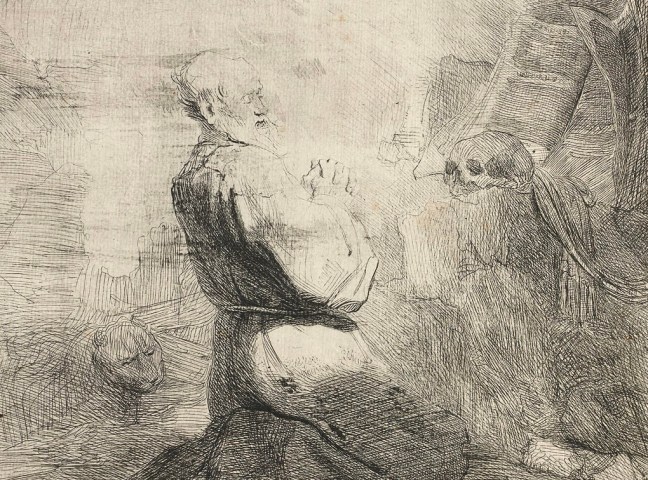
‘St. Jerome kneeling’ (detail) – Rembrandt, 1630 – WikiArt

The question of who I am is a big question. It is not being asked very often though. At least not in the way it should. We do as if. As if we all knew who we are. As if it wasn’t worth asking. As if it was a waste of time to do so. When we do ask about who we are, it is to fill ourself with objects, qualities, identities. We are gathering informations about our body, our emotions, skills, idiosyncrasies, tendencies, but not about ourself. We live as if on a racing track, never actually stopping the course of our acquired, rehearsed, believed identities. We never watch, inquire as if for the first time, as if we didn’t know. We are bragging. We don’t want to be humble, and learn about something that appears to be so simple, and goes — so we believe — without saying. But the truth is: it scares us. We are afraid to know. We have picked up, from the beginning of times, that this question is a question of immense implications. It is a deadly question. One that changes you, finishes you, shakes your very ground.

It is a question for a sacred remembering, to just notice what we already are, what is already here, but that we have been too distracted to see. It is a question to prevent us from going out all the time, from escaping ourself, to help us return to where we have always been — in the home of our inner being. It is a question for which we have to let go of our bodily refuge. A question for which we have to lose the self that has been our anchor so far. It is a question for the mind, although its answer is to be found outside every consideration of mind, thought, image, memory. It is a free fall that pushes us to look beyond our limitations, and gives us the gift of our limitlessness. It is a question with no end, not because there is no answer to it, but because the answer is a living answer, whose reality can never come to an end. It is an impossible question, for even before we have the occasion to utter it, we find it already answered through the act of our simply being.

The living answer to the question ‘Who am I?’, is ‘I Am’, which contains its own undefeatable, eternal, inescapable reality. ‘I Am’ is before the question ‘Who am I?’. ‘I Am’ is the living answer which swallows every single question on our identity. It takes us into itself, and shows our identity to be only being, a being so pure that nothing can be added to it. It is the only sacred knowledge there is, which all the words and rites of every religion have sought to deliver as the name ‘God’. A knowledge that they have failed to pass on with accuracy for going too far, and postulate outside of ourself the reality that is in fact our very own self, hiding in plain sight in and as our own aware being. So ‘Who am I?’ is a prayer that is clearing the path, recalling God in ourself in the form of ‘I Am’.

It is a question that opens the door for the peace that we have been looking for in every possible direction, except in the direction of our innermost self alone. It is a question that we ask with expectation and inquiry, and answer with the peace and joy that we find already here, beyond any expectation or understanding. It is an implicit question that we cannot help asking in the secrecy of our mind, but that we fail to form explicitly, expecting the answer to be outside our own being. It is an absolute question, that needs no other answer than going to the very aware being that initiated it, because of  its longing to be freed from everything that seems to limit it and veil it. It is our returning to what we have never ceased to be, but are failing to see for reason of looking in a thousand directions outside ourself. ‘Who am I?’ is a question that takes you to ‘I Am’, which is the only accurate description there is of our true identity. 

.

~~~

Text by Alain Joly

Painting by Rembrandt (1606-1669)

~~~

.

Website:
Rembrandt (Wikipedia)

Suggestion:
Other ‘Ways of Being’ from the blog…

.
A Ghostly Thing

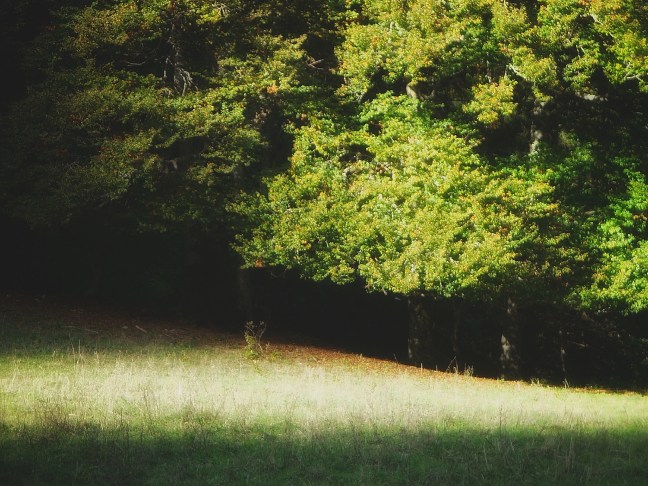
We only ever become within the course of time. We seem to always want to move cautiously, step by step. We don’t consider a becoming that could be achieved in an instant. Quicker even. A becoming free of the constraints of time or place, that could not be influenced by our thoughts, conditionings, beliefs, desires. A becoming that doesn’t find its worth in objective experience. A becoming that has no movement, that is still, confident, ever present. A becoming which bears in itself no change, and that was here before you even had the idea to change, or become, or evolve.

After all, when it comes to our identity, to who we truly are, ‘becoming’ seems to be a very poor idea. What could we become that we are not already? What is here in our very being that could become, that could be different, or better, or more? Our identity has been settled from time immemorial. It was here before even the appearance of time, which is but the product of our patterns of thinking. Before the appearance of place, which is but the product of our ability for sensing, seeing, hearing, touching. We have our identity and our perfection — our changelessness — hidden in being.

So, could we not become what we are? That’s the real question. How do we become our true identity? How do we espouse who we truly are, or be that thing which we are that cannot be deformed, changed, soiled, or even defined? That implies understanding both the one who wants to become, and that which he or she wants to become. There is a becoming, a change, a better or a worse, a less or a more, for the body-mind. But is there a becoming for ourself? Is there anyone here that could ever achieve becoming? Look for the one who wants to become, and notice that you will never find it. Becoming is a ghostly thing.

You cannot become. That’s a lovely idea, one that comes from another idea. From the belief that you are something, someone, that can change, evolve. There is in our being no room for change. Being is complete. It cannot be bent according to our beliefs, hopes, ambitions. So there is no becoming that which we are, and no one to become being — a better being, or a worse being. Being is the only thing shining in our being. There is no one here that could ever want to become. We may give to our body-mind more skills, more strength, better abilities, but to ourself, we can give nothing but the faculty of being only being.

So go only for what you already are. That’s truly what you want to become: what you already are. There is not a better becoming than that. That will spare you being a person caught in the effects and weariness of time and place. That will spare you being in the prison of a self, all the separation and loneliness involved in becoming anything or anyone. That will free you — to not become. That will give you exquisite joy — to only be what you are. That will give you certainty, confidence — to have your own being as your changeless, unbreakable horizon. May you become what you are. Believe me, this is heaven.

.

Creatures of a day! What is anyone?
What is anyone not? A dream of a shadow
Is our mortal being. But when there comes to men
A gleam of splendour given of heaven,
Then rests on them a light of glory
And blessed are their days.”
~ Pindar, 5th century BC (Pythian 8)

.

~~~

Text by Alain Joly

Quote by Pindar (c.518-c.438 BC)

Photo by Alain Joly

~~~

.

Website:
Pindar (Wikipedia)

Suggestion:
– Other ‘Reveries’ from the blog…

.

Not A Thing

‘Seascape’ – Théodore Rousseau, 1831 – WikiArt

Although we feel to be inside the world, there is an identity in us that is not of the world. Rather the world is in that identity. The world — everything — has been made the likeness of ourself, should ourself be seen not as a thing, but as that which could never be made into a form of any kind. That’s how and when you know who you are, when you are not a thing, not an entity, not anything that can be named or qualified. There is not a thing here that you can be. We have inherited this habit, this insistence in being something. So we have pinpointed ourself and have given it a substance of its own. In this trying to be something, we have been rendered suffering adults, drenched in belief and habit, in fear and hope, addicted to security. We have lost our childhood, what is here before every qualification, and that we only worship remotely, as something precious and lost — our innocence, the playfulness contained in living, the not knowing, the absence of urge, the sense of awe, the leisure contained in plainly and simply being.

So be like a child, who has it all. Be like before every incarnation that you have been forced to identify with, in order to fit in, to feel aggrandised. Our urge to be something has deprived us from our being sufficient, fulfilled in and as our own being. By adding to being, we have lost what gave us our true essence, our identity, our security. It all came from that acquired, mindlessly rehearsed, and deeply ingrained belief that we are not enough, that we are separate, that we have to achieve, progress, be competent. There is no joy in fitting, in being proper. There is no competence involved in being who you are. Any child knows it. Babies are masters in knowing being. We’re just the bragging ones, the ones who have made life a travail, an ordeal, for silly reasons of being something. We spend all our precious time in alleviating the suffering and inadequacy we have ourself created.

There is no suffering in being. We should have left it there, when we were only being, contented in our own presence, before the thought arose that there had to be more and better than just being. The thought of it has made a mess. Now we are in the world rather than the world is inside us. Now we are something or someone, rather that being nothing that can be named, objectified, personalised, belittled or limited. Now we have created travail and conflict rather than staying quietly in the joy and peace contained in being only being. Now we are isolated beings rather than all gathered in our one shared being. Now we are many, divided, scattered, broken up, instead of being one before oneness itself, which is like being the one child of God’s undivided, unbroken, one being. This not being something is not a posture of the mind. It is the noticing of our true nature, of what is here in and as ourself that could never be made something. Our sense of being imperfect, isolated beings is born of a simple lack of attention. We have not seen the obvious. That we are the unborn, the infinite, the ‘not a thing’, and that as that, we hold in one single embrace everything that can be named and exists in time and place, everything that can be given a birth and a death, and that is now like the One inside the One. 

.

~~~

Text by Alain Joly

Painting by Théodore Rousseau (1812-1867)

~~~

.

Website:
Théodore Rousseau (Wikipedia)

Suggestion:
Other ‘Ways of Being’ from the blog…

.

The Silent Heart

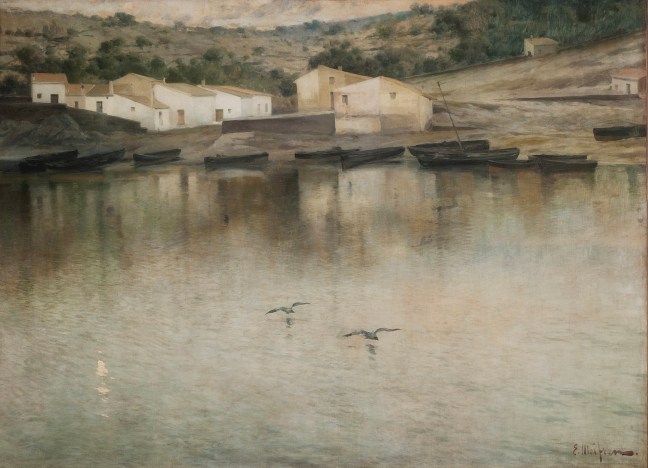
‘Silencio’ – Eliseu Meifrèn p, 1900 – Wikimedia

Silence in the spiritual endeavour is taken to be much more than the absence of noise. It is in fact stillness. Silence is the absence of movement. It is the quiet reality that lies at the very heart of our being. By silencing the mind, we get to our silent heart — the silent heart of being that lies deep down within ourself. In fact, not so deep down. This is one of these illusions, to think that our heart, our silent being lies deep down, hidden, buried. In fact, our silent heart is showering our existence. It is our natural state, teeming, unmissable, that we have made seemingly absent, that we have silenced with the deafening noise of our mind, of our endless chattering, and of this belief a million times rehearsed that we are something, a thinking entity divided from every other thing or entity, and a private, personal self that we believe is attached to the body.

In fact, our mind is made of that silence. Only, we have added so much to it that our silent, unsubstantial heart has been overwhelmed by our many thoughts, feelings, sensations, perceptions that got all our attention. We have crowded our mind and have stripped it of its natural identity, which is simply being. We have silenced silence. We have mixed it with everything objective, noisy, agitated. So it has seemingly disappeared, although still overwhelmingly present. It is not that it is hidden, but we have transferred our natural, silent identity as being, to a fake identity as body, thoughts, senses. We have exchanged being for existence. We have downgraded ourself from simply being to being something. From pure, unalloyed awareness to that which this awareness is aware of. From silence to the crowding of that silence. We are crowded beings, living at the surface of things, dancing and struggling with everything superficial. We have broken the pact that tied us to the infinite, which is our true home and identity.

It results that we have become a person, when we are truly this silent, depersonalised, but utterly intimate heart of being which is the birthplace of all things and all beings. We are that which is before everything that appears and is the prey to our senses. We are this non-substantial substance that allows everything to find an existence. But we are not ourself a thing existing, a person. We are the still and silent being that is the heart of ourself and of all possible existence. Being something is to transfer our identity to that which we are aware of. But this identity has no reality other than in our thoughts and imagination. It is a belief. In plainly and only being, devoid of the imagination of mind, of its restless and ephemeral content, there is an aware silence. A silent heart. Still beating as our eternal, undefeatable identity. We have to live there, for this is the life we are meant to live. Anything else is a corrupted, even poisoned position. The state of the world is here to prove it, to attest that we have displaced our gorgeous identity away from the silent ground of being, to live in and as an appearance, and to believe in what is only a passing dream.

.

~~~

Text by Alain Joly

Painting by Eliseu Meifrèn (1857-1940)

~~~

.

Website:
Eliseu Meifrèn (Wikipedia)

Suggestion:
Other ‘Ways of Being’ from the blog…

.
A Ceremony for Peace

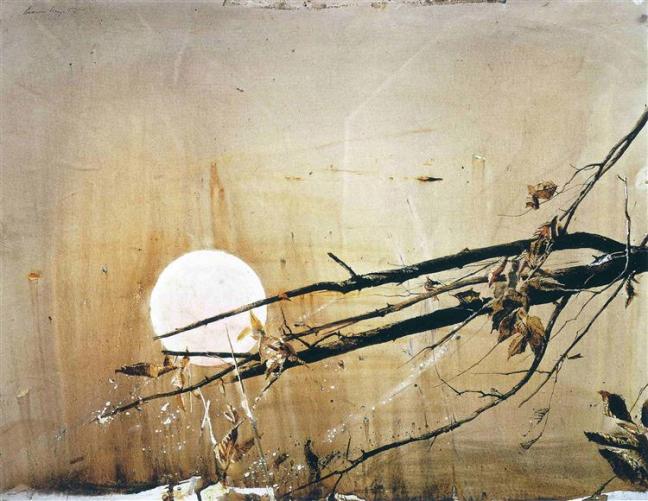
– ‘Full Moon’ – Andrew Wyeth, 1980 – WikiArt

When you have discarded everything in yourself that is not consistent, that will let you down, or change, or leave, or won’t meet your most profound aspirations, then look carefully at what is left behind, that could never let you down, or change, or leave. What is here no matter what, beyond expectations, beyond the agitation of the mind, and your fascination for experience. What is here that cannot be attained, or obtained, for you can only obtain what you don’t already have. Look at that. Look at what is left in you, as you, that cannot be manipulated or bargained for. Feel it, let it acquire prominence, allow it to reveal itself to your attention.

This is what matters: this deeper part of yourself which is untouched, pristine, unconditioned. It matters tremendously. In fact, this is what all spiritual and religious traditions have been calling you to understand or realise. But it isn’t an easy thing to see, for it blends within your experience and hides inside it. Yet, if you look with the right amount of purpose and focus, it will blow your mind as something which is filling the space as your very own identity and being, and had been here always, unnoticed, silent. Now it is revealed as the peace and happiness which you have been looking for in the content of experience, and are now blessing your heart through the simple experience of being only being, which you discover is your natural, and effortless condition.

Everybody knows that he is, or she is. It is an obvious sensation: to be. But then we forget it, take it for granted, stop paying attention. We become obsessed by everything objective, by everything in experience that we can see, hear, touch, feel. We become preoccupied, consumed, tormented by our body and mind, by our circumstances and life events, by what makes us happy or sad, by prestige, failure, pride or shame. We forget that we have left behind, now hidden in the background, one simple thing, one simple fact of living, which is the knowing of our being, this road back to our green pastures, that is here quietly present, every time we say ‘I Am’.

Through force of habit, we let that down, judge it irrelevant, certain that this has only a secondary importance, maybe even no importance at all, that we are, that we know our being, that we can say with certainty and absolute confidence: ‘I Am’. We fly off to dangerous countries, clinging to suffering and uncertainty, navigating between hope and disappointment, making happiness or peace a thing to obtain, gain, deserve. We’re not seeing that it is our identity, our given essence, to be contented, peaceful, creative. That we must not bypass happiness, or pass by it, through it, near it, without even a second glance. That our quiet sense of being is our chance, our remedy, our secret longing granted.

Happiness is simply the knowing of being, the shining of this simple, gorgeous sensation of our being present outside all consideration of body, mind, senses, and world. It is that simple if we are willing to look. In fact, god has placed the secret for happiness, the recipe for peace, right under our nose, on a silver plate, wrapped with a golden ribbon. We can unwrap it every time we become aware of being. Every time we slow down and rest there, in the simple, naked experience ‘I Am’. And then it opens up, it becomes evident, that peace is in being, that joy is in ‘I Am’, that life is spent here, under the gorgeous vault of simply and only being. Then being becomes a ceremony for peace, joy, or love. And then… Well then, everything is for the first time.

.

~~~

Text by Alain Joly

Painting by Andrew Wyeth (1917-2009)

~~~

.

Website:
Andrew Wyeth (Wikipedia)

Suggestion:
– Other ‘Reveries’ from the blog…

.

‘I Am with You Always’

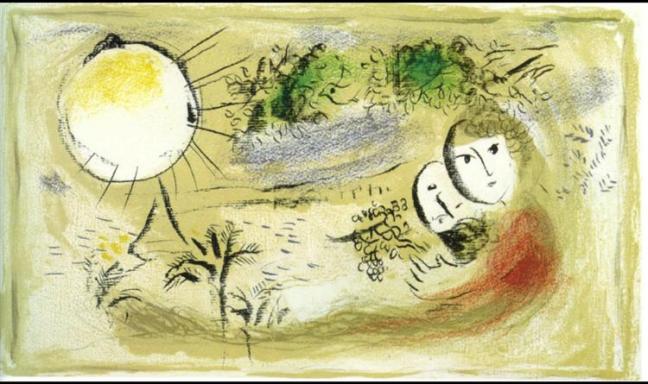
‘The rest’ – Marc Chagall, 1968 – WikiArt

There is no ambiguity with God. This has been said in a thousand different ways, in every corner of every page of the Bible for example, that God is with us, that there is in us, as us, a presence hidden in plain sight, that won’t let go of us ever. That it is the very making of ourself, our sublime identity — what we live our life with and could never depart from. We couldn’t doubt it in the least, for with just the right kind of looking, and with no effort whatsoever, we could see it, feel it, sense it, that we are that, and not truly our body or mind, let alone our thoughts, our story, our problems, our suffering. “I am with you always, to the end of the age”, that’s from ‘Matthew 28:20’. So there is no worry to be had. We are not alone. That’s just an impression, an invention, that we are separate, insecure, fragile. In fact, we couldn’t be without it. In ‘Zephaniah 3:17’, they say “The Lord your God is in your midst”. That’s what they mean, that our mind finds its ground in this very presence, in this being of ours that is in fact borrowed from God’s being. In ‘1 Corinthians 3:16’, they are even more specific, clearer on that subject, “God’s Spirit dwells in you”. It couldn’t be plainer and clearer. Why don’t we listen?

And we profit from an inbuilt, intrinsic protection in our life. After all, haven’t we gone through illnesses and floods, through a thousand aches, and is not death itself called eternal rest? Haven’t we lived in the constant grip of desire and worry, hassled by a quiet, ever going despair? And yet, are we not beautiful now as we are, after having gone through all this? Are we not pristine beings, untouched by it all, made of this unsurpassable, never changing awareness of being? In ‘Isaiah 41:10’, God is reported to have said: “I will strengthen you, I will help you, I will uphold you with my righteous right hand.” And in ‘Zephaniah 3:17’, it is written that God is the “mighty one who will save”. They wouldn’t say that if they don’t mean it. But we won’t be saved in an hypothetical future, at the time of death. We are being saved now, kept virgin of every objective experience, if we are willing to look. Furthermore, there is an inner peace that has landed in and as our very being since time immemorial. This inner peace expresses itself as joy or love, which we have experienced even amongst our ignorance. Isn’t life worth living for these fleeting moments of joy? And isn’t love our most precious, cherished, sought after experience, that seems to be a miracle beyond understanding? In ‘Zephaniah 3:17’, they say, clothed in the most exquisite poetry: “He will rejoice over you with gladness; he will quiet you by his love; he will exult over you with loud singing.”

So, as is advised in ‘1 Chronicles 16:11’, “Seek the Lord and his strength; seek his presence continually!” Which means we ought to stay with that part of ourself that lies peacefully below the hustle and bustle of existence, before everything that can be pointed at and named, and that is therefore not truly ourself. But God is not happy with only being our being, with filling us with its own infinite being. This presence is also made of the gorgeous fabric of love. This is where love finds its reality, in the innocence of our being, in awareness. So if we love, this love is not our own. We have not manufactured it, let alone directed it. “We love because he first loved us”, it is said in ‘1 John 4:19’. This is what our being feels like, when it is kept pure, unsoiled by our attachment to experience. Love is what we feel when we have relinquished everything in ourself that is mistakingly taken to be us, but is not. In ‘1 John 4:19’, we are being reminded of this eternal truth, that “God is love, and whoever abides in love abides in God, and God abides in him.” And this love, this being of God, is not something that can be had. It lives and breathes only through our being it. The world of things, of objectivity, cannot apprehend it, “cannot receive, because it neither sees him nor knows him”, as is said in ‘John 14:17’. So we are it, not have it, not know it. As long as we believe to be an entity, a something, a someone, we have separated ourself from our reality as God or consciousness. Yet everything, everyone, is eternally made of this being, which is God’s being, and finds its identity and essence as that. After all, didn’t God make that very clear, when saying in ‘Jeremiah 23:24’, “Do I not fill heaven and earth?” To which God could have added: I am all beings and all things, their secret identity, their essence which is only spirit. As I have said and proved a zillion times: ‘I am with you always’.

.

~~~

Quotes taken from the Bible

Text by Alain Joly

Painting by Marc Chagall (1887-1985)

~~~

.

Website:
Marc Chagall (Wikipedia)

Suggestion:
– Other ‘Shreds of Infinity’ from the blog…

.

The Taste of Being

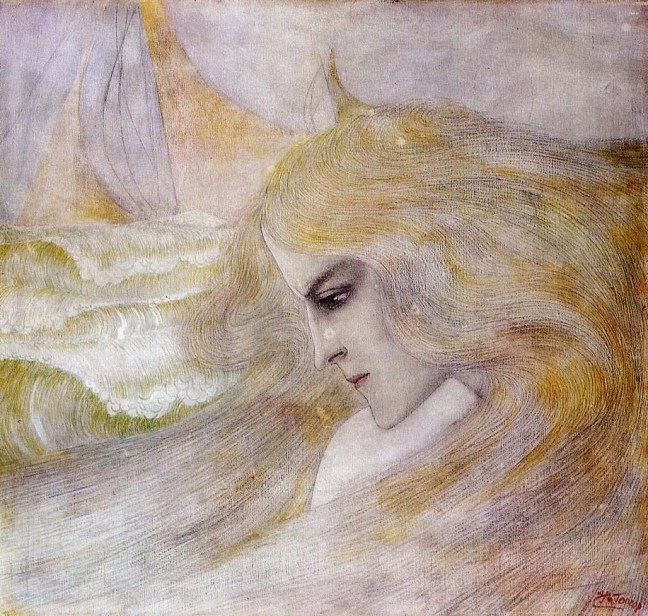
‘Oceanide’ – Jan Toorop, c.1893 – WikiArt

In life, you would never cross a friend or a beloved without smiling at him, giving her a greeting, at least an acknowledgement, or reaching for his hand. That’s the same with your inner being, with that beautiful, friendly presence that is the core of what you are. You’ve got to notice her, to be friendly. It doesn’t take very much, in the middle of your day, to smile at that quiet inner being, to acknowledge that it is here, no matter the hustle and bustle you may go through. It takes no time at all, to see that you are not alone, not a self separate from everything else, not a loner, that you’ve got a friend here for you, that longs to be seen as your very identity and being. After all, how long does a gaze take ? How easy is a passing attention? How little is a momentary taste of your quiet essence, lying just below any of your sufferings or worries, just before your many losses or shortcomings, mixed right within the script of your daily activities and thinking?

Only it is a shy presence, so you have to make the first move. You have to go and look for her in the crowd, amongst the ten thousand things of experience. Once you see him, once you catch his firm gaze, you will come to see only him, only that, at the expense of everything else in experience that now appears to be caught in that same all-pervading gaze. You will see how quickly you come to enjoy your friend after a time. Awareness has a natural eagerness for you. It is inclined to have you in its warm embrace. So you will fancy holding her hand a little longer, won’t be satisfied with a gaze or a smile. You will go for a cuddle, or a long warm hug, to get to taste of his loving presence. You will feel this taste to be more than a crush, or a quick passing relationship. You will feel drawn to stay there, to move in, to have her as the marrow of your self, to bring him so close so there is only him, only her, only that, but no you.

There comes a time when you won’t need to go very far to meet your beloved, for she is everywhere you are. You will notice that every experience you have is pervaded by his presence. So you don’t have to move with her, for you have already been married with this presence for ages upon ages. In fact, it is all you are, and there is none beside it, not even your own illusory self which you have come to believe in, and whose reality you take for granted. Now you begin to see that your beloved is not your beloved, but your very own self and identity. The moment you see that, you will lose him. You will remain alone. You will stop needing, begging, pretending. There won’t be any remembering who you are, because who you are will have been established without a shadow of doubt. You will be yourself the beloved you had previously pushed at a distance, to be sought or realised. You won’t be aggrandised by his or her presence anymore. This inner presence is so much your own self and identity, that you will happily surrender all your multiple identities to that one identity, and acquire the humility that goes with being only one being. There is no beloved but you, no other beloved than you. Let all your many sensations and perceptions melt into that one identity of your being. The taste of being is the pinnacle of experience, and its most refined, sought after savour. You come to taste it when there is here, in yourself, as yourself, only one being, one friend, one beloved, and one taste.

.

~~~

Text by Alain Joly

Painting by Jan Toorop (1858-1928)

~~~

.

Website:
Jan Toorop (Wikipedia)

Suggestion:
Other ‘Ways of Being’ from the blog…

.