Boundary

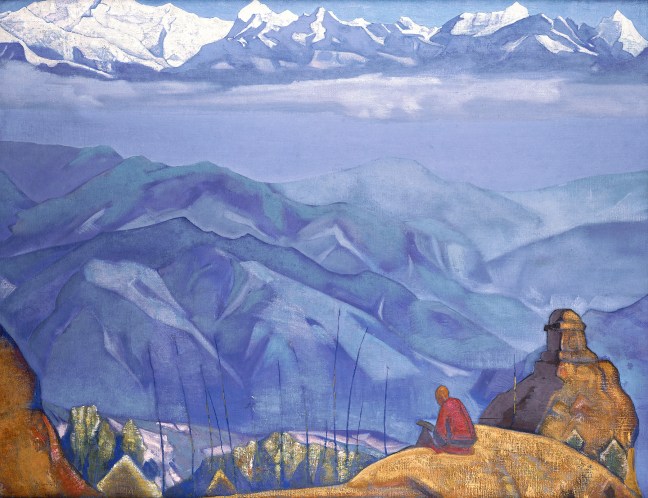
‘Book of Wisdom’ – Nicholas Roerich, 1924 – WikiArt

It is naive to imagine that there is a boundary or separation between consciousness and the world we are conscious of. It would be extraordinary to find that boundary, where our consciousness ends and where the outside world begins. We have an apparent and necessary boundary between body-mind and world, for our convenience, for practical purposes, and have left it there as an unquestionable fact. And everybody has complied, including scientists, that this separation must exist, that consciousness is a competence of the body, that it cannot be challenged, that it would be madness, beyond reason to do so. But there is an impossibility here. For this boundary can never be found at the deepest level, or even conceptualised. It is inexistant. Something like a pure invention. But this illusion of a separation was broken, seen through long ago, in the world of mind, of which our spiritual traditions are experts. Sages have seen long ago that there was here, between consciousness and the objective world, a seamless relationship, an undoubted oneness, no boundary, no separation, not even an unlikeness. It was all one with nothing besides it. The world is wholly contained in Mind, as Mind, and Mind or consciousness is all we are, all there is — our fundament.

So we have invented the reality of a world out of the reality of consciousness. After all, it is a beautiful find, a gorgeous dream, that we have a world, and that this world was shaped, sculpted by our five senses for as long as our senses have existed, and for as long as our bodies have been made the inevitable side effects of the appearance of a world. Everything — world, body, mind, senses — is an appearance in a more fundamental, non-objective reality. So nothing new, or other, or different was ever introduced in our reality. Reality is all there is. Consciousness is our playground, our only field or ground, and it is hosting everything in and as itself, including our apparent self. This is how we have a father and a son. A reality, and a temporary, individual, apparently located point of view on that reality. But between father and son, between reality and ourself, there is only one seamless consciousness. God has made sure that all things and beings find a habitation within him — or her. And then, ‘within’ was too taken away, for how would you have a within and a without when there is only the One?

So we have to meditate on the appearance of this world. On what is hiding behind it. On what it teaches us on our nature, on our reality, on our humanness. By the way, being human is by no means derogatory. In its most ancient Sanskrit root, the word for ‘human’ means: “The being whose essence is the capacity for self-remembrance of its divine nature.” So this knowledge of the reality of the world is a sacred knowledge. For with that knowledge firmly held, you can now enjoy personhood without the burden of separation, without the suffering that is its natural outcome. So we don’t have to be spiritual anymore. We have acquired our personhood, our humanness. Our nature has been realised, uncovered, in its primal, intended truth, and it is once and for all. Now we can enjoy a world for the first time. Now we can be lovers. Watchers. Listeners. Devoid of the superfluous. Free of our cumbersome, limiting beliefs. Recognising and accepting God’s will as our own. 

.

~~~

Text by Alain Joly

Painting by Nicholas Roerich (1874-1947)

~~~

.

Website:
Nicholas Roerich (Wikipedia)

Suggestion:
– Other ‘Reveries’ from the blog…

.
A Universal Cure

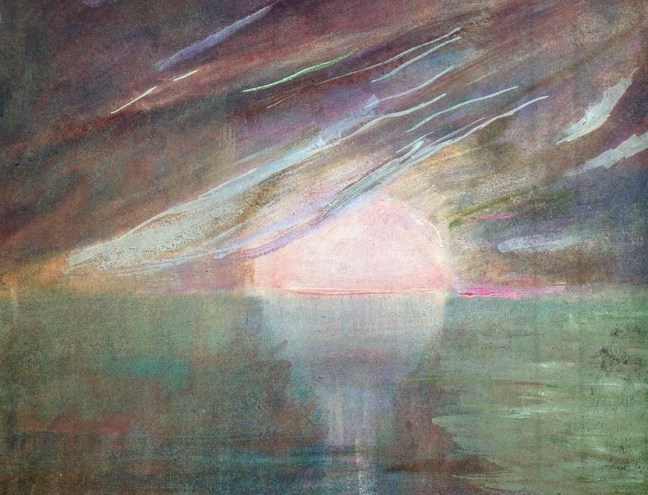
‘Creation of the World XIII’ (part) – Mikalojus Konstantinas Ciurlionis, 1906 – WikiArt

The part that we’re playing is not small. We are not living in a corner, limited by the skin of our bodies, and the world is not limited to the time and space in which it seems to unfold and have its conflicts and sufferings. The world has a foot in the infinite. In fact not just a foot, it is bathed in infinity, in eternity, and so are we, we who have been made small and suffering entities by our limiting beliefs and prejudices. We are ruling the world with our thoughts and then blame ourself for it. For the results are of course as limited as our thoughts can be. We have made the world the hostage of our limitations, and its hostility is in fact our own, that we have projected unto it. We believe and think we can only play small and limited, but in fact, we haven’t quite seen ourself as we are, and from this blindness comes the entirety of the world’s agony, and ours too.

Fortunately, ours and the world’s true essence comes spilling over in every possible way through the manifestation of beauty, and through the many expressions of love or peace. That’s what makes it so attractive in spite of all, and that’s where we should be way more curious than we are. Beauty, love, intelligence, peace, are not created by the random structure of a body and the passing thoughts in our mind. This is not where they are manufactured. They are born of infinity and wholeness. They are the expressions of the One, which we can never own. We are in fact rather owned by them, embraced by the infinity that is their reality. We must surrender to this god given identity. We don’t have to play small. Would we think of god playing small? So why would we of ourself, who are like the arm and willpower of God in God’s dream? So we don’t have to play small in this world. We ought to play our given, sacred part. We ought to be what we are and recognise ourself and the world as a whole, indivisible being. A being that is nothing but our own, that is experienced here and now every time we say ‘I Am’, and that we are fortunate enough to share in.

Act on the world from within. Mould it from there, from the source of yourself and of the world, from the ground of being that you feel as your own being, and that is the common ground of all beings and all things. This ground has the best ability. Religions haven’t called it Paradise or Eden for nothing. There is always a truth behind every misunderstood word. This ground of being is where you can play big, from within, from the interior of everything and everyone. You don’t have to create a new reality. It’s already there within and without, for the taking and for the looking. This reality is already here, already yours. There is love and harmony woven in the fabric of life, just here and now in and as our given experience. Our efforts to heal ourself and the world are veiling this reality, and so are our limited thoughts, which carry the false reality of there being persons and separation instead of the reality of one being and the peace contained in the infinite. Our own unlimited being is the ground where we can play big, for it is as large as God’s being if we are willing to notice its real, undefeatable nature. In fact, being is a universal cure, and it’s always at hand.

.

~~~

Text by Alain Joly

Painting by Mikalojus Konstantinas Ciurlionis (1875-1911)

~~~

.

Website:
Mikalojus Konstantinas Ciurlionis (Wikipedia)

Suggestion:
Other ‘Ways of Being’ from the blog…

.

A Ceremony for Peace

– ‘Full Moon’ – Andrew Wyeth, 1980 – WikiArt

When you have discarded everything in yourself that is not consistent, that will let you down, or change, or leave, or won’t meet your most profound aspirations, then look carefully at what is left behind, that could never let you down, or change, or leave. What is here no matter what, beyond expectations, beyond the agitation of the mind, and your fascination for experience. What is here that cannot be attained, or obtained, for you can only obtain what you don’t already have. Look at that. Look at what is left in you, as you, that cannot be manipulated or bargained for. Feel it, let it acquire prominence, allow it to reveal itself to your attention.

This is what matters: this deeper part of yourself which is untouched, pristine, unconditioned. It matters tremendously. In fact, this is what all spiritual and religious traditions have been calling you to understand or realise. But it isn’t an easy thing to see, for it blends within your experience and hides inside it. Yet, if you look with the right amount of purpose and focus, it will blow your mind as something which is filling the space as your very own identity and being, and had been here always, unnoticed, silent. Now it is revealed as the peace and happiness which you have been looking for in the content of experience, and are now blessing your heart through the simple experience of being only being, which you discover is your natural, and effortless condition.

Everybody knows that he is, or she is. It is an obvious sensation: to be. But then we forget it, take it for granted, stop paying attention. We become obsessed by everything objective, by everything in experience that we can see, hear, touch, feel. We become preoccupied, consumed, tormented by our body and mind, by our circumstances and life events, by what makes us happy or sad, by prestige, failure, pride or shame. We forget that we have left behind, now hidden in the background, one simple thing, one simple fact of living, which is the knowing of our being, this road back to our green pastures, that is here quietly present, every time we say ‘I Am’.

Through force of habit, we let that down, judge it irrelevant, certain that this has only a secondary importance, maybe even no importance at all, that we are, that we know our being, that we can say with certainty and absolute confidence: ‘I Am’. We fly off to dangerous countries, clinging to suffering and uncertainty, navigating between hope and disappointment, making happiness or peace a thing to obtain, gain, deserve. We’re not seeing that it is our identity, our given essence, to be contented, peaceful, creative. That we must not bypass happiness, or pass by it, through it, near it, without even a second glance. That our quiet sense of being is our chance, our remedy, our secret longing granted.

Happiness is simply the knowing of being, the shining of this simple, gorgeous sensation of our being present outside all consideration of body, mind, senses, and world. It is that simple if we are willing to look. In fact, god has placed the secret for happiness, the recipe for peace, right under our nose, on a silver plate, wrapped with a golden ribbon. We can unwrap it every time we become aware of being. Every time we slow down and rest there, in the simple, naked experience ‘I Am’. And then it opens up, it becomes evident, that peace is in being, that joy is in ‘I Am’, that life is spent here, under the gorgeous vault of simply and only being. Then being becomes a ceremony for peace, joy, or love. And then… Well then, everything is for the first time.

.

~~~

Text by Alain Joly

Painting by Andrew Wyeth (1917-2009)

~~~

.

Website:
Andrew Wyeth (Wikipedia)

Suggestion:
– Other ‘Reveries’ from the blog…

.
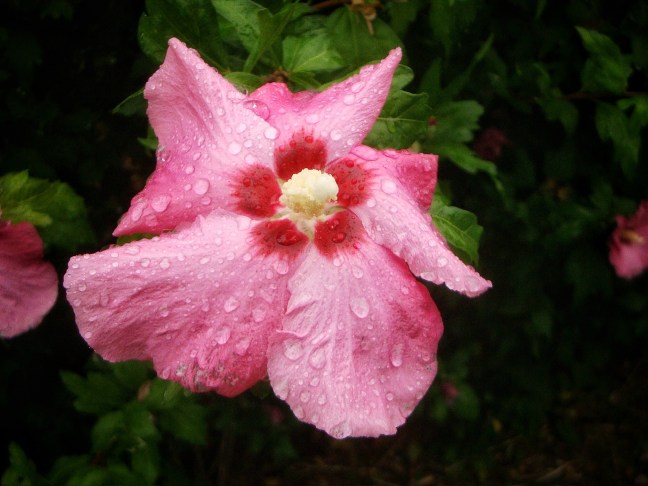
God’s Flower Bed

‘Fleur’ – Jean Benner, 1860 – WikiArt

.
The difficulty in the spiritual endeavour
is that we have to question the unquestionable. We have to doubt the obvious. We have to turn the stones that we have carefully placed here to pave the road. One such indisputable truth is that we choose our thoughts. That the decisions or actions we are taking, the thoughts or attitudes we are having, are the products of a controller, of a self that has them, chooses them. But is it so? Have we even tried to question it? Have we ever looked if there truly was a self here in capacity to choose? What if there wasn’t? What if this self, this ‘I’ that we seem to be, only drew its existence from our imagination? What if our own self was just another thought? If this entity that we love to pamper and strengthen was not there, not at all? If we have played a game with ourself? If there is here no person outside our indulgence in having the thought of one?

Many of our conflicts and problems in life come precisely from the belief that we are the chooser of our thoughts, that there is an ‘I’, a person here that runs the show when there is not. That’s the mistake, the original sin, to think of ourself as a doer, a thinker, a separate entity that has control, that manufactures happiness, freedom, and is responsible for our experience such as it is. We want to carry the load of our DNA, of our body, thoughts, habits, suffering, or even happiness, and not let them go. We want to be grandiose. The truth is: there is no personal ’I’ that can act on our thoughts or decision-making. These are better left alone, and informed by the only ‘I’ there is, that finds its true essence in the infinity of being, which is selfless. With this understanding or realising, we would come to treat what we have as a jewel of the most precious kind — beyond control but lovingly tailored for us by the universe and its supreme intelligence.

[…]

An enquiry on our ability to choose our thoughts or not… (READ MORE…)

.

‘I Am with You Always’

‘The rest’ – Marc Chagall, 1968 – WikiArt

There is no ambiguity with God. This has been said in a thousand different ways, in every corner of every page of the Bible for example, that God is with us, that there is in us, as us, a presence hidden in plain sight, that won’t let go of us ever. That it is the very making of ourself, our sublime identity — what we live our life with and could never depart from. We couldn’t doubt it in the least, for with just the right kind of looking, and with no effort whatsoever, we could see it, feel it, sense it, that we are that, and not truly our body or mind, let alone our thoughts, our story, our problems, our suffering. “I am with you always, to the end of the age”, that’s from ‘Matthew 28:20’. So there is no worry to be had. We are not alone. That’s just an impression, an invention, that we are separate, insecure, fragile. In fact, we couldn’t be without it. In ‘Zephaniah 3:17’, they say “The Lord your God is in your midst”. That’s what they mean, that our mind finds its ground in this very presence, in this being of ours that is in fact borrowed from God’s being. In ‘1 Corinthians 3:16’, they are even more specific, clearer on that subject, “God’s Spirit dwells in you”. It couldn’t be plainer and clearer. Why don’t we listen?

And we profit from an inbuilt, intrinsic protection in our life. After all, haven’t we gone through illnesses and floods, through a thousand aches, and is not death itself called eternal rest? Haven’t we lived in the constant grip of desire and worry, hassled by a quiet, ever going despair? And yet, are we not beautiful now as we are, after having gone through all this? Are we not pristine beings, untouched by it all, made of this unsurpassable, never changing awareness of being? In ‘Isaiah 41:10’, God is reported to have said: “I will strengthen you, I will help you, I will uphold you with my righteous right hand.” And in ‘Zephaniah 3:17’, it is written that God is the “mighty one who will save”. They wouldn’t say that if they don’t mean it. But we won’t be saved in an hypothetical future, at the time of death. We are being saved now, kept virgin of every objective experience, if we are willing to look. Furthermore, there is an inner peace that has landed in and as our very being since time immemorial. This inner peace expresses itself as joy or love, which we have experienced even amongst our ignorance. Isn’t life worth living for these fleeting moments of joy? And isn’t love our most precious, cherished, sought after experience, that seems to be a miracle beyond understanding? In ‘Zephaniah 3:17’, they say, clothed in the most exquisite poetry: “He will rejoice over you with gladness; he will quiet you by his love; he will exult over you with loud singing.”

So, as is advised in ‘1 Chronicles 16:11’, “Seek the Lord and his strength; seek his presence continually!” Which means we ought to stay with that part of ourself that lies peacefully below the hustle and bustle of existence, before everything that can be pointed at and named, and that is therefore not truly ourself. But God is not happy with only being our being, with filling us with its own infinite being. This presence is also made of the gorgeous fabric of love. This is where love finds its reality, in the innocence of our being, in awareness. So if we love, this love is not our own. We have not manufactured it, let alone directed it. “We love because he first loved us”, it is said in ‘1 John 4:19’. This is what our being feels like, when it is kept pure, unsoiled by our attachment to experience. Love is what we feel when we have relinquished everything in ourself that is mistakingly taken to be us, but is not. In ‘1 John 4:19’, we are being reminded of this eternal truth, that “God is love, and whoever abides in love abides in God, and God abides in him.” And this love, this being of God, is not something that can be had. It lives and breathes only through our being it. The world of things, of objectivity, cannot apprehend it, “cannot receive, because it neither sees him nor knows him”, as is said in ‘John 14:17’. So we are it, not have it, not know it. As long as we believe to be an entity, a something, a someone, we have separated ourself from our reality as God or consciousness. Yet everything, everyone, is eternally made of this being, which is God’s being, and finds its identity and essence as that. After all, didn’t God make that very clear, when saying in ‘Jeremiah 23:24’, “Do I not fill heaven and earth?” To which God could have added: I am all beings and all things, their secret identity, their essence which is only spirit. As I have said and proved a zillion times: ‘I am with you always’.

.

~~~

Quotes taken from the Bible

Text by Alain Joly

Painting by Marc Chagall (1887-1985)

~~~

.

Website:
Marc Chagall (Wikipedia)

Suggestion:
– Other ‘Shreds of Infinity’ from the blog…

.

Holy Ground

We have no being of our own. We have built our existence as a person, as a body, as a bouquet of perceiving faculties, on a ground that is not our ground. We are borrowers, incomplete entities, which is the reason for our restlessness, for our many lacks, and for our sense of insufficiency. Wholeness and plenitude are attributes of the ground or essence. This essence is hidden because we are overlooking it. We, on our choice, have displaced our attention to what we mistakenly take to be ourself: our thoughts, feelings, sensations and perceptions — all that makes a narrative, that gives us an appearance, a consistency, an existence. But one such existence is a fraud. It is not what we essentially are. We have displaced our self, our identity, from the ground to the landscape, from the essence to the superfluous appearances that owe their existence to that universal, infinite being or ground.

But an appearance can never make us. A thought doesn’t make an identity. An idea, an image, a body, are not what we are in essence. But they all have a common ground, hence our confusion in our perceived identity. This common ground is our deepest sense of being, the consciousness that is found at the root of ourself. If only we were aware that what is seeing, thinking, perceiving in us, is actually the ground, not ourself; that what is experiencing, what is aware in our everyday life, is in fact this supreme, infinite ground, then we would acquire a very different idea or perception about ourself, another responsibility, another awe, another reverence for our reality. Our reality would be discovered to be the ground of all beings, called ‘god’ in the spiritual literature. God is not a word for a thing or a person, but for a living experience, a taste, the feeling of being that has its reality here and now. It is not distant, not dependent on a belief. It is a hard reality, accessible in all experience. It is our true nature, what we are, and what we know we are, without a shadow of doubt.

God is not a guess, a maybe, a question. God is a certainty, an evidence, and the answer to our suffering. It is our very conscious sense of being, the very thing which in us makes for the feeling ‘I’, for what I am in truth and in depth. It is our one and only reality. If we do live from that essential ‘I’, then we live from inside the holiest of temples. We cease living and acting from a private, separate sense of an individual self. Behind the veil of our mist, of our everyday fascination for mind, body, appearance, existence, is a presence that is revealed when we let go of ourself. It bears in its DNA the savour of holiness, and of a quiet, unbreakable happiness. Holiness is not an attribute of things, places or people for which we may have reverence. Sacredness doesn’t belong to the landscape, or the object. It is rather the natural expression of our true self, of ‘I’. It is in abiding in our true nature or essence that we feel a deep reverence for everyone and everything. What is sacred is our intimate, infinite being, and this being draws its holiness from its one pristine, untarnished, infinite nature. Wholeness makes for holiness. Holiness belongs to the ground, and the ground has it in its nature to shower benevolence to all hosted appearances. This is how we have, shining in our experience, the qualities of peace, love, beauty. They are all offsprings of the holy ground, which is ourself.

.

~~~

Text and photo by Alain Joly

~~~

.

Suggestion:
Other ‘Ways of Being’ from the blog…

.

On God’s Existence

‘Calm on the Mediterranean Sea’ – Ivan Aivazovsky, 1892 – WikiArt

There is no god. God is an invention that we have placed far away, out there, as an object for our prayers and hopes. As an entity to whom we can address our suffering. God was given that role so that we are not alone. We have divided ourself up into a self here and another greater self there, between which reside our secret longings and our beliefs. We have made god into a handy projection, for our convenience. A soothing presence who will be there for us after death, whom we can trust and rely on, whom we can give ourself to, and find protection in. We feel good in that undoubted certainty of a god.

But there is no god outside of ourself, no distant god, either in place or time. Of this we can be sure. Because wherever we may travel, however far we may go, we find only ourself. We are bound to our own being which we feel in a ‘here’, and in a ‘now’. So we fail in going somewhere that is outside ourself. It’s an impossible task. We cannot go there. Not in a million years. So god cannot be found outside of ourself. Nothing can. Everywhere is here. And every time is now. The only place for god to be is in our own being. There is no other place to be — even for god. There is no way around it. But we have first to understand our own being, our own nature. There, in ourself, is the resolution of the conundrum of god.

So what is this place of ourself, to which we are bound? What is it made of? If we leave our body aside, and our many thoughts and sensations, if we leave the world out of the picture, what is left of ourself that we can say is here, is now? What is this consciousness that we have lived with for as long as we can remember, and for which we seem to have but little interest ? This thing which has held our peace, our happiness, our perceived sense of beauty, even if only experienced rarely or fleetingly? This consciousness that is holding us, that is giving us our very existence, holding our suffering and our conflicts? Should we not feel grateful to have been held with such consistency? To have been held with our feelings, whether happy or sorrowful? To have been lent a body, whether healthy or sick, and a mind, though both may be just a passing dream?

This thing which is here undoubtedly, showing that peace is possible, that beauty is real, that happiness is within reach, is this not our most profound self? Is it not our very being? What we are here? What we are now? And this god which cannot be anywhere outside of ourself, could this god not be this, this very presence of ourself? Our very being? Our very consciousness? Which we are by nature every day of our life? That which can be felt in every bit of our heart and soul? That can give an explanation for ‘there is no god’? That can give a reality to ‘there is god’? That can show that, in fact, not only there is god, but there is only god? That everything, all that we are and experience, is god? That the god which we had thought at a distance, is nothing but the loving presence and reality of ourself and of everything? That life is nothing but the living, pulsating being of god, which we are only and wholly? And which we share with every other apparent being, and every possible appearance? And that this, is the one thing that ever was, and will ever be? And that this, is not inside ourself, for of ourself it is seen that there is not? And that this, is not outside either, for there is no being outside something inexistant? And that now, at the end of our journey, and all things considered, is realised that god is not even god? Because for a god to be, there would have to be separate things and selves to give it a form, and to call it god. There would still have to be a trace of suffering. There would still have to be separation. So there’s got to be no god. God is only for the poor fellows. But for who we are, there is no god. Only being being, at the most. Beyond that, nothing much can be said, lest we should invent some other god.

.

~~~

Text by Alain Joly

Painting by Ivan Aivazovsky (1817-1900)

~~~

.

Website:
Ivan Aivazovsky (Wikipedia)

Suggestion:
– Other ‘Reveries’ from the blog…

.