A Ghostly Thing

We only ever become within the course of time. We seem to always want to move cautiously, step by step. We don’t consider a becoming that could be achieved in an instant. Quicker even. A becoming free of the constraints of time or place, that could not be influenced by our thoughts, conditionings, beliefs, desires. A becoming that doesn’t find its worth in objective experience. A becoming that has no movement, that is still, confident, ever present. A becoming which bears in itself no change, and that was here before you even had the idea to change, or become, or evolve.

After all, when it comes to our identity, to who we truly are, ‘becoming’ seems to be a very poor idea. What could we become that we are not already? What is here in our very being that could become, that could be different, or better, or more? Our identity has been settled from time immemorial. It was here before even the appearance of time, which is but the product of our patterns of thinking. Before the appearance of place, which is but the product of our ability for sensing, seeing, hearing, touching. We have our identity and our perfection — our changelessness — hidden in being.

So, could we not become what we are? That’s the real question. How do we become our true identity? How do we espouse who we truly are, or be that thing which we are that cannot be deformed, changed, soiled, or even defined? That implies understanding both the one who wants to become, and that which he or she wants to become. There is a becoming, a change, a better or a worse, a less or a more, for the body-mind. But is there a becoming for ourself? Is there anyone here that could ever achieve becoming? Look for the one who wants to become, and notice that you will never find it. Becoming is a ghostly thing.

You cannot become. That’s a lovely idea, one that comes from another idea. From the belief that you are something, someone, that can change, evolve. There is in our being no room for change. Being is complete. It cannot be bent according to our beliefs, hopes, ambitions. So there is no becoming that which we are, and no one to become being — a better being, or a worse being. Being is the only thing shining in our being. There is no one here that could ever want to become. We may give to our body-mind more skills, more strength, better abilities, but to ourself, we can give nothing but the faculty of being only being.

So go only for what you already are. That’s truly what you want to become: what you already are. There is not a better becoming than that. That will spare you being a person caught in the effects and weariness of time and place. That will spare you being in the prison of a self, all the separation and loneliness involved in becoming anything or anyone. That will free you — to not become. That will give you exquisite joy — to only be what you are. That will give you certainty, confidence — to have your own being as your changeless, unbreakable horizon. May you become what you are. Believe me, this is heaven.

.

Creatures of a day! What is anyone?
What is anyone not? A dream of a shadow
Is our mortal being. But when there comes to men
A gleam of splendour given of heaven,
Then rests on them a light of glory
And blessed are their days.”
~ Pindar, 5th century BC (Pythian 8)

.

~~~

Text by Alain Joly

Quote by Pindar (c.518-c.438 BC)

Photo by Alain Joly

~~~

.

Website:
Pindar (Wikipedia)

Suggestion:
– Other ‘Reveries’ from the blog…

.

Salvation

‘Storm by a Lake’ – Pierre-Henri de Valenciennes, 1780 – WikiArt

Many religions have spoken of salvation, but the idea of being ‘saved’ is not fancied by most people. We don’t like it. People have their self-esteem. They want to feel that they can be responsible for themselves, that they have the resources to overcome whatever needs to be overcome in their life. They don’t want to rely on a god, or an external agency, or even a power. They don’t like to be put down, don’t fancy being a poor thing in need of being saved.

The good news is that there is no such external power or entity. We have it all in and as ourself, as our own being. Nothing exists or stands beyond or aside our being. This simple being that we are, which we are made of, which we draw our very existence from, is the only thing that has a reality. We won’t find a reality at a distance of our own being. The idea that there is a reality other than our own reality as being is only a belief. We won’t find a power beyond our own power, that could come to save us. This world of ourself was perfectly designed. It was made whole and one, so that we hold within ourself our own resource, our salvation, everything needed to live a gorgeous, peaceful, meaningful life.

So the idea of a salvation took us on the wrong track. It had us waiting, hoping, praying, expecting, while at the same time abhorring the idea of needing help. It gave us the idea or impression that we were an entity, a person with its own personal, separate being. It manipulated us to think that we were our story, and that we needed to be fixed, aggrandised, improved, saved. For after all, let’s be honest, we do need to be rescued from a peril. We do need to be delivered from the danger of suffering, of separation, loneliness, conflict. We do need to save ourself from our belief, idea, concept that we are squeezed in our body-mind, and limited by it.

With such an idea in mind, we have but the semblance of a life, but not life itself. We have been simulating having a life, pretending to know who we are, and then acting as if everything is as it should, as if suffering couldn’t be avoided, as if it were intrinsic to living. We have in fact ourself created the idea of a salvation, of a person at a loss, needing help. But the truth is, there is really no such a thing as salvation. Salvation is implied, or contained in being. Salvation means ending a belief. It means not taking ourself to be what we are not. It is the returning to our natural state of simply being.

This conceptualisation of our being into being a self, an entity, a separate being, is the road towards separation, isolation, suffering, conflict, and therefore salvation. It is our wrongdoing, our ‘sin’. But the sinner is an entity that we have created. We have made a sufferer, a sinner where there was only the peace of being. Through this creation of an illusory self, we have invited separation, duality, and have divided being into a self separate from other selves and things. We have given the world a reality independent of our own, and have made the glory of being into a self that has retired into the limits of the body-mind.

Our salvation is in the sin itself, in its ending. It is in being, before the birth of the idea that being requires being something, or someone. Before our identification with our body and mind, which has made suffering and conflict our daily companions. So salvation is always only an acknowledgment, a noticing. It is the knowing of our being as it is, and not as we have made it, through belief and habit. This is how we are doomed, in being a self separate from everything. And this is how we are saved, in being only being. This understanding does save for it tells to a mortal that he is immortal, and it assures a suffering self that she is blessed with a peaceful being. A sin is an unfortunate addition to plainly being. It is a simple exaggeration. We have created, invented a sinner where there was nothing but our gorgeous, infinite being.

But this is something that can be reversed. Salvation is natural, already here, achieved, contained in and as our own being. Salvation is being. The one in need of being saved is not there, has no reality other than in our mind. The idea of salvation or deliverance itself must go. It had found its use and meaning when we were but the thought of being someone. When this idea of being someone goes, when the qualification withers, being stays behind, resplendent, in no need of being saved whatsoever.

All this, the whole spiritual enchilada, is only a convenient story for the poor me. Deliverance is achieved in being. The sinner is an illusory superimposition on being, which is intrinsically already free. We have limited being, have made it an impotent thing. So there is ultimately no sinner, and no salvation. This is why we say that God is forgiving, because there is always at hand the realisation that there is in ourself, in being, no room or possibility for an entity separate from experience, and therefore for a sinner. In this discovery of our being whole, and One, is the birth of a love and a peace that is beyond understanding, beyond any making. In fact, we have been saved and safe all along. 

.

~~~

Text by Alain Joly

Painting by Pierre-Henri de Valenciennes (1750-1819)

~~~

.

Website:
Pierre-Henri de Valenciennes (Wikipedia)

Suggestion:
– Other ‘Reveries’ from the blog…

.

Boundary

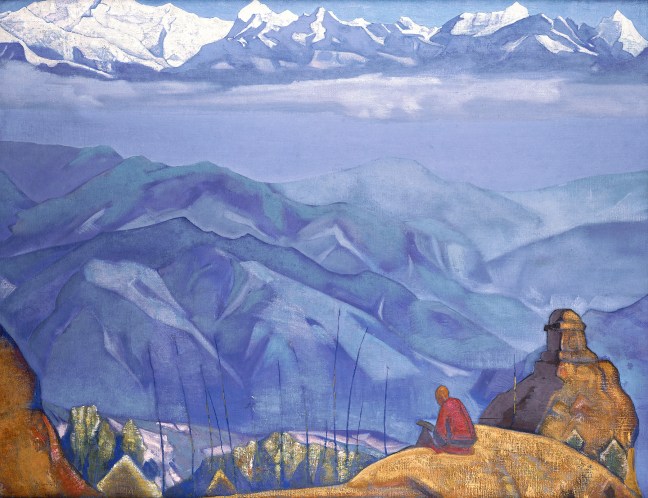
‘Book of Wisdom’ – Nicholas Roerich, 1924 – WikiArt

It is naive to imagine that there is a boundary or separation between consciousness and the world we are conscious of. It would be extraordinary to find that boundary, where our consciousness ends and where the outside world begins. We have an apparent and necessary boundary between body-mind and world, for our convenience, for practical purposes, and have left it there as an unquestionable fact. And everybody has complied, including scientists, that this separation must exist, that consciousness is a competence of the body, that it cannot be challenged, that it would be madness, beyond reason to do so. But there is an impossibility here. For this boundary can never be found at the deepest level, or even conceptualised. It is inexistant. Something like a pure invention. But this illusion of a separation was broken, seen through long ago, in the world of mind, of which our spiritual traditions are experts. Sages have seen long ago that there was here, between consciousness and the objective world, a seamless relationship, an undoubted oneness, no boundary, no separation, not even an unlikeness. It was all one with nothing besides it. The world is wholly contained in Mind, as Mind, and Mind or consciousness is all we are, all there is — our fundament.

So we have invented the reality of a world out of the reality of consciousness. After all, it is a beautiful find, a gorgeous dream, that we have a world, and that this world was shaped, sculpted by our five senses for as long as our senses have existed, and for as long as our bodies have been made the inevitable side effects of the appearance of a world. Everything — world, body, mind, senses — is an appearance in a more fundamental, non-objective reality. So nothing new, or other, or different was ever introduced in our reality. Reality is all there is. Consciousness is our playground, our only field or ground, and it is hosting everything in and as itself, including our apparent self. This is how we have a father and a son. A reality, and a temporary, individual, apparently located point of view on that reality. But between father and son, between reality and ourself, there is only one seamless consciousness. God has made sure that all things and beings find a habitation within him — or her. And then, ‘within’ was too taken away, for how would you have a within and a without when there is only the One?

So we have to meditate on the appearance of this world. On what is hiding behind it. On what it teaches us on our nature, on our reality, on our humanness. By the way, being human is by no means derogatory. In its most ancient Sanskrit root, the word for ‘human’ means: “The being whose essence is the capacity for self-remembrance of its divine nature.” So this knowledge of the reality of the world is a sacred knowledge. For with that knowledge firmly held, you can now enjoy personhood without the burden of separation, without the suffering that is its natural outcome. So we don’t have to be spiritual anymore. We have acquired our personhood, our humanness. Our nature has been realised, uncovered, in its primal, intended truth, and it is once and for all. Now we can enjoy a world for the first time. Now we can be lovers. Watchers. Listeners. Devoid of the superfluous. Free of our cumbersome, limiting beliefs. Recognising and accepting God’s will as our own. 

.

~~~

Text by Alain Joly

Painting by Nicholas Roerich (1874-1947)

~~~

.

Website:
Nicholas Roerich (Wikipedia)

Suggestion:
– Other ‘Reveries’ from the blog…

.

The Birth of Personhood

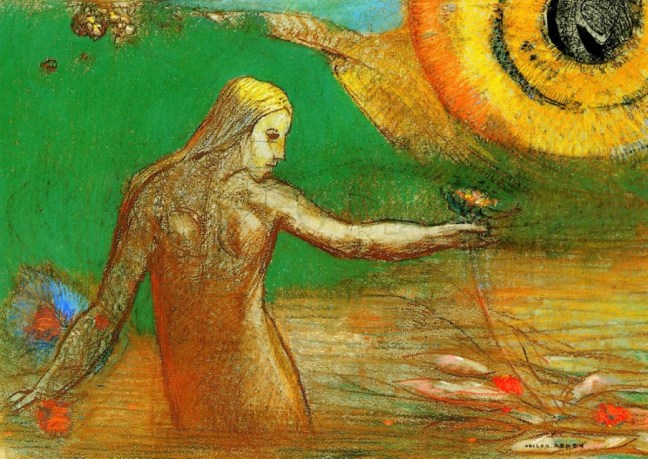
‘Flower of Blood’ – Odilon Redon, 1895 – WikiArt

It is consciousness — not body, not thoughts — that gives us the impression that we are a person with a continuity. There is absolutely no chance that a bundle of thoughts, feelings, and bodily sensations, could give us that impression. We borrow our personhood to consciousness, to the fact of being aware — to this light that creates us in the darkness that are otherwise thoughts, feelings, body. Our sense of continuity belongs to consciousness, to presence — that portion of ourself that is empty, unchanging, not objective, but full to the brim with itself. Our thoughts are but isolated events that are changing over the course of time, and so are our feelings and bodily sensations. The content of our mind is like a passing, unpredictable weather. So continuity in that area is absurd. Our essential self is to be found in and as being. What makes us is in that which is unmade. That impersonal part of ourself is what paradoxically gives us the chance of being a person. We are therefore nothing but empty, undivided being playing ‘being a person seemingly characterised by body and thoughts’. We have got it all upside down: Our person is not prior to consciousness. Consciousness is prior to our person, and the sine qua non of our existence or appearance.

Our thoughts are far away from each other, inconsistent, contradictory, confused, hesitant. They are not the voice of our self, are incapable of forming an identity of any kind. Our identity is to be found somewhere else, in something that we cannot get hold of, or limit, or name. The only thing that could link the different events of thoughts, feelings, sufferings, bodily sensations, and perceptions — all that for us constitute our self, a person with a name and form — is the presence of consciousness. We owe the impression that we are something solid, a real person, to emptiness, silence, stillness. So our person is actually non-existent, or rather has its existence in that which stands unseen between the happenings or events that we think make us. So our story, our thoughts, our body, become evanescent, losing their reality, disappearing within the experience of our massive sense of being — its coming to our attention. Being is seen to be the nature of ourself, which we had imagined in passing, isolated, impermanent, objective events and qualities. And believe me, that makes for a beautiful, gorgeous person — the one we have always wanted to be! A person is infinity being born.

The fact that there is a certain coherence in being a body-mind, and that we are able to live a life, is nothing but the expression of a play, a ‘lila’ as the Hindus are saying. We are nothing but a character in the hands of an actor. A body-mind is the little necessary to carry our wider identity to its term. In fact, all that we seemingly are — a person with an apparent life — is just the vehicle for a bigger quest. We are pretending a body-mind, so that we can realise our divine being. We are carrying infinity on our back, on the back of the finite, giving it the seeming, temporary life of an entity progressing in time and space. But this story, this appearance of a life, is but an excuse, something marginal that serves a wider purpose. We are meant to carry God on our shoulders for a while. At first unknowingly. Until we know God knowingly. Until God has acquired enough substance, and has sufficiently widened Its being in our life. Until God can in return carry us on Its own shoulders. And move us. And swallow us. Then, we find the security and courage to surrender ourself in God’s solid being and be like God Itself. We transfer our being in and as God’s being. And die there.

.

~~~

Text by Alain Joly

Painting by Odilon Redon (1840-1916)

~~~

.

Website:
Odilon Redon (Wikipedia)

Suggestion:
Other ‘Ways of Being’ from the blog…

.
One Sublime Being

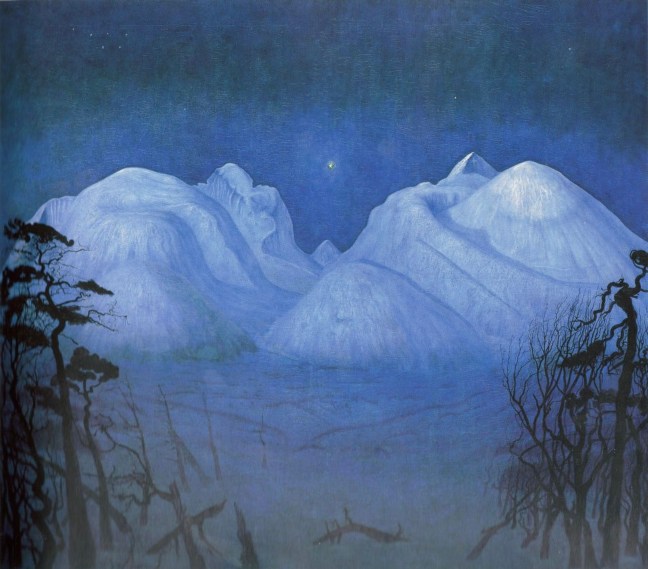
‘Winter Night in Rondane’ – Harald Sohlberg, 1913 – WikiArt

The body-mind is not an apparatus that stands on its own. It is an instrument of awareness. It is supposed to bear and implement the innate qualities of its owner as pure, unlimited being. This is why it has pain and suffering: When all such qualities have failed to be transmitted. When awareness is being short-circuited. Suffering is the complaint of God that is inbuilt in the body-mind system. It is God’s intelligence revealing itself to ourself when we have become blind to our true nature. So we have to align ourself to the depth contained in the knowing of our being, to be ourself that vastness, and allow it to shine in our experience. This is the golden avenue to peace: to be ourself an expression of the divine being that is lending itself to our constitution, lending its body to the body of our bones, blood, and skin, and lending itself as a container for our thoughts, sensations, and perceptions.

We never had a solid body with a life of its own. A dying body is not just a body that fails to sustain itself. It is consciousness calling itself back to itself, and in that process making the body-mind instrument ever more soft and porous, leaving it ever more shining, ever more acquiring the qualities of its essence as pure being. It is also a mind that is made less ambitious, losing its carapace of wanting, needing, seeking, expecting — the suffering that it all implies. A mind that is slowly giving itself in, to return to where it never left, and espouse its natural receptacle as pure awareness. This is how death comes to be so readily accepted. In the course of this transition. In the gift that death is in last analysis. For your body is not your body. It is God’s being in disguise. As for your mind, it is but God’s infinite mind borrowed. So you never truly lose your body. You never truly lose your self. And you are not confined to your body-mind in this life. You just come to realise the presence of another truer, finer body. A body that extends itself to the width and length of the world. And you notice that your mind is not restrained to the perimeter of your skull, but hosts unbridled, measureless, the world that is your body, with its infinity of variables. This is how body, mind, world, God, life, death are discovered to be one sublime being, bound together by the vital fluid of love.

.

~~~

Text by Alain Joly

Painting by Harald Sohlberg (1869-1935)

~~~

.

Website:
Harald Sohlberg (Wikipedia)

Suggestion:
Other ‘Ways of Being’ from the blog…

.

Isn’t Life a Simple Thing?

We as an apparent body and mind are nothing but the conditions met for the apparition of a world and all the resulting experiences that take place within it. We are simply housing the thoughts, feelings, and sense perceptions necessary to enact experience, and give it a shine of reality. But the essential of what we are is neither in thoughts, nor in feelings, nor in sense perceptions. The essential of a mind is made of consciousness. Awareness is its structure and its backbone, without which there would be nothing left. If it wasn’t for its awaring quality, our mind would be no mind. Our thoughts would crumble and disappear to never reappear. Our feelings and sensations would suddenly blacken and decay in an instant, to be never formed again. And the world would be swallowed back into infinity, if it wasn’t for the consciousness that gave it its essence and knowability. Look as you may, you won’t find a mind of your own anywhere. At best, just a few scattered thoughts, and the momentary and illusory appearance of a self.

Observe carefully. A few thoughts can never make a mind; and neither could some random feelings. You couldn’t own the necessary self that you need to function in a world, without some inseparable and indispensable measure of knowing. So it is all about knowing. It is all about being conscious. Awareness holds it all together — your body; your thoughts and feelings; your world as sense perceptions. All of these come into existence at the only condition that an ‘awareness’ is present. If awareness goes, you go. If consciousness goes, everything with you go. The world goes. No bodies viable. No flower fields. No Milky Way. Everything falling apart. Universe shut black. Just a mess! That’s the power of consciousness! Far from being a mere function of the body, awareness is what holds the body and the world together. It is the essence of everything. It is the indispensable matrix. It is the ocean in which the waves and currents of thoughts, sensations, and world are dancing. And it has no home where to rest but itself. In fact, it is itself a resting place for all apparent minds, bodies, things, selves that make up a world. Consciousness gives existence with its being, allows relationship with its knowing faculty, and brings the consolidation of happiness with its loving nature. Then it returns into itself and stays there, in utter peace and completeness — replete with itself. And when you have seen it all as it is, and yourself as you are — indivisible being — then might come simply a swell of awe. God, isn’t life a simple thing?

.

~~~

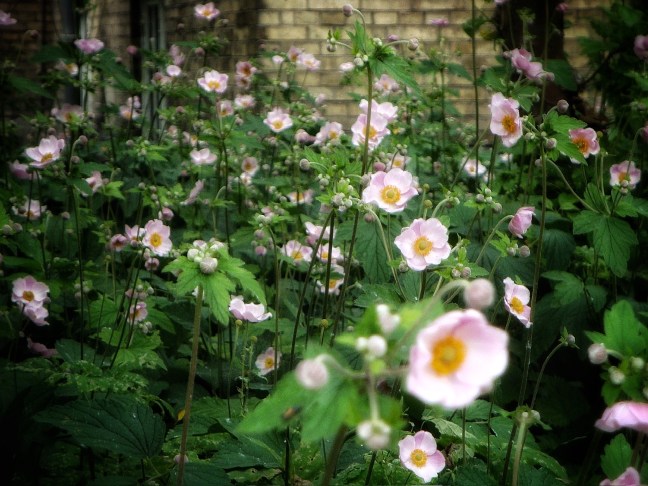
Text and photo by Alain Joly

~~~

.

Suggestion:
Other ‘Ways of Being’ from the blog…

.
A Loss and a Gain

‘The Voyage of Life: Old Age’ – Thomas Cole, 1842 – WikiArt

Well, at some point in our lives, we may start to make a rapid calculation. It may dawn on us that if we had counted on this body and mind to represent us right through the end of life, well… let’s be blunt on this: that’s certainly not our best investment. Old age will make it clear that, after a certain time, if we wait long enough, everything begins to go wrong with our bodies — and so with our minds. We-our body are losing it. New pains arise. Strength diminishes. Memory capacity fades. And disease is lurking. There are threats accumulating, to say the least. We have to come to terms with this plain fact of existence: we will never go back to where we were. We cannot keep holding on to our body, continue having faith in it. This constant hoping for a better body, or a healthier mind, has to end, and this is now. In a way, it really is something to laugh about — a sort of cosmic joke. How could we have been so naïve? This simple and inescapable fact shows — if we needed that kind of confirmation — that this body and mind is not the place for a healthy sense of being. We need to find a way out of this faulty understanding.

We find health in our innermost being. That is the answer. And the body is not this being. It doesn’t represent it. It is not its temple. The body exists but it is not being. Only being has the right and capacity to be. The body is at best a distant vassal. A tool. It is not the home of our being, but rather, it finds its home in being. It rests there. It can borrow its qualities. It can make Being its beloved teacher, if it is wise and humble enough to espouse Being’s extraordinary traits. Then the body and its companion as mind might feel enlarged. They might find their true essence as infinity and eternity. They might acquire a soft and gentle making — less heaviness. And the body-mind will be lit with a strange transparency. It will slowly give up its hard matter-like making in favour of a more airy essence. It might surrender itself slowly while still being alive. Then the natural flaws of its ending will have very little meaning — not something to be afraid of. For its death has already been achieved in love — its true essence. Then its apparent shortcomings and loss will be found to be the supreme gain of life itself. We enter a new kingdom, where death can never be death. It is simply the extinction of everything that wasn’t truly ours in the first place. It is a gentle clarification, and the revelation of our essence. “You may die, my dear body, you may fail and disappear, with your companion-mind, but I will meet you on the burning ground and see you rise again as ‘I’”. This is the meaning of old age and death. This is the gift of our apparent failures. To be raised and revealed as essence. See… we won’t lose it.

.

~~~

Text by Alain Joly

Painting by Thomas Cole (1801-1848)

~~~

.

Website:
Thomas Cole (Wikipedia)

.

Other ‘Ways of Being’ from the blog…

.