The Craving

Why do you keep falling, my heart
To all that impart an immediate pleasure
Truth is not an easy catch that can be met
In the petty, neither one that you can grab
In the temporal and all its passing hues
There is more to it than mock or parody

You have to only stay where you are, to
Not take that first step ahead, allured by
The fire of thoughts, elated by feelings
Be only so present so as to sight
A calm within a space, a space within a calm
That nothing can stir or move or shake

And you shall stay there, not concerned
By all that in you shout and scream
By all these thieves that claim your fall
And beg in the usual, the false order restored
A peace so cheap as to be no peace at all
You know what an imitation of truth is

This is an endeavour of unbounded courage
You need some heart to inhabit your heart
You’ll be surrounded by liars and impostors
All these preachers of facile commands
They too dwell where you truly dwell
They go only by effort or indulgence

Presence is a magnetic field that attracts
Always only itself. No need for exertion
No need to launch a campaign for truth
Desire is their last treacherous injunction
So repulsive when it comes to being home
You are already where you crave to be

.

~~~

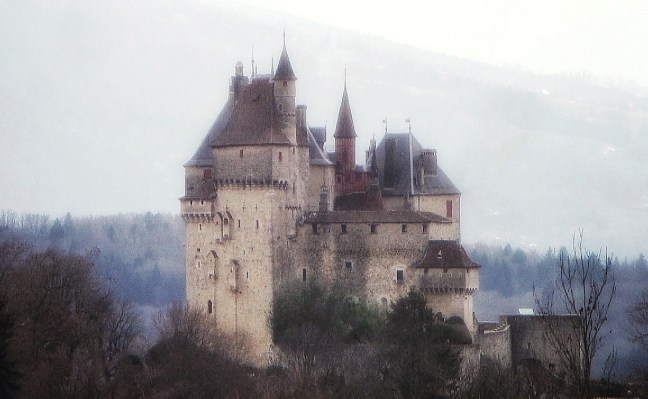
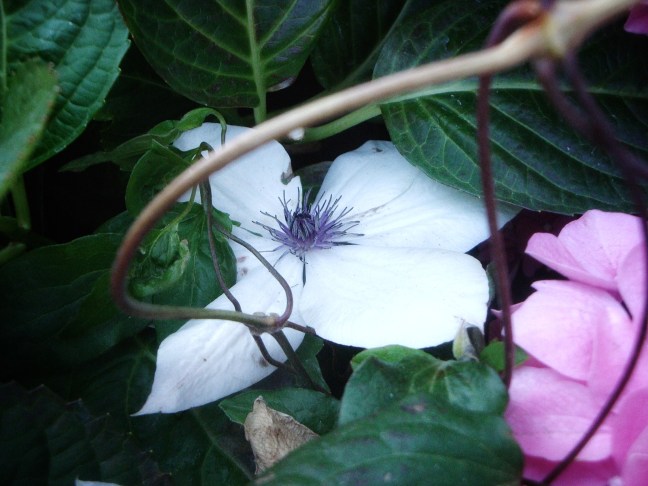
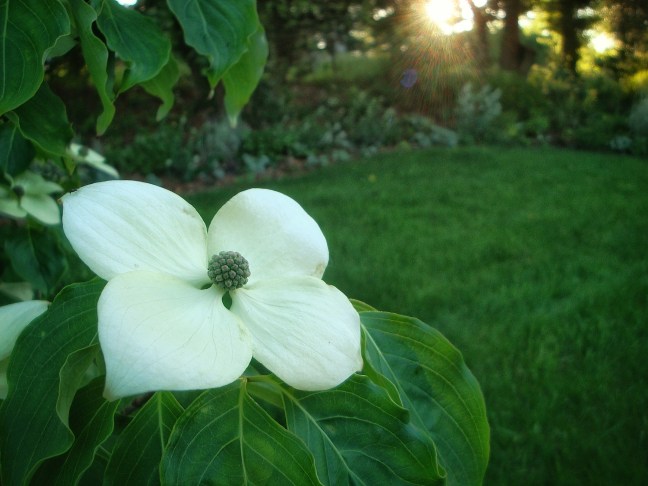
Text and photo by Alain Joly

~~~

.

Suggestion:
Voices from Silence (other poems from the blog)

.

The Angel of Death

‘Stranger Things Graffiti’ – Paul Sableman (Jher Seno & the Arty Deeds) – Wikimedia

.

A myth is a mask of God, a metaphor
for what lies behind the visible world.”
~ Joseph Campbell (‘The Power of Myth’)

.

There is an astounding profundity in popular culture. It is just for us to see when it pops up, when it arises above the sea of confusion that our life is for the most part. What is designed to be just light entertainment, what appears to have no depth or consistence other than being an easy escape out of ourself, can hide the brightest of gems if we can elevate ourself to its hidden meaning. I stumbled across one such meaningful gem recently.

Running Up That Hill’ is a song created by pop singer Kate Bush in the eighties. It recently got a second life and triumph by appearing in one scene of the famous sci-fi thriller series ‘Stranger Things’. In this particular show, there is a hideous monster that roams in an imaginary city, and feeds on the minds of teens deeply affected and traumatised by their past, luring them into its parallel and ultimately illusory reality. In that particular scene, the girl is trapped in some dark chamber of her mind. The ugly beast keeps her prisoner there — a cave like place where she is about to be engulfed in the monster’s hideous mind. She manages to escape the grip and run towards an opening in the distance where is her true self and salvation. Pieces of rocks are falling all around her to stop her course, but she keeps running one-pointedly ahead while hearing Kate Bush’s song ‘Running Up That Hill’. The reason for her escape is to be found with her friends playing this song she deeply loves, and creating in her that powerful call and incentive.

Why does a particular blend of a scene and a song suddenly hit a target, move people beyond what could be possibly expected? Just one glance in the comments of that particular scene on YouTube makes it clear: “Best scene of the series”, “This scene made me want to live”, “Cathartic”, “A metaphor for what’s battling your mind”. Why does anything hit us and move us to feel in ourself a feeling of being alive? Tears may come, a feeling of thankfulness, maybe even some sense of profound happiness. What is tilting in our minds in these ineffable moments is the recalling of our life’s most essential meaning and purpose, and the remembering of a place in ourself that we have neglected. This place is the forgotten but obvious target for all our thirsty mind-arrows. It is the open space of our deepest being that we keep missing at every moment of our lives, precisely because of its total intimacy and openness. How do we manage to miss it? Because we focus on the periphery of objective experience. We are enclosed in a dark chamber of our own making that lures us into itself, and makes us fragile, hopeful dreamers with fearful minds, forever caught in the prospect of impending death.

[…]

See how popular culture is infused with non-dual reminiscences… (READ MORE…)

.

The Most Important Thing

That might be the most important thing of all. Not the meditations that leave you in a state of gratitude and wonder. Not the repeated understandings, no matter how deep and essential they are. Not the feelings of awe in front of that experience of oneness — the disappearance of yourself, and the appearance of your true, revealed, precious self. “I got it at last” were you thinking… But no. That would have been a bit too easy. None of these might do it in the final end. For these extraordinary revelations will eventually have to die down. For these experiences will have to end of their natural end. For these lack the last little remaining kick. There always seems to be another last ‘top of the mountain’. Another frontier. Another clarification. Another hope. Another deception. Another naïve expectation. And another waving hand and unwanted reminder from your sense of being a separate entity. “Hey, I’m still alive!” And back are you on your meditation cushion for another sprout of failing expectation.

That might be the most important thing of all. Not to leave a way out for yourself to escape and hide in a little corner. To grab yet another last little pleasure. To keep yet another wee sense of pride. To have yet a negligible remaining sense of being ‘me’ and enjoy the show from a distance. For these little remaining indulgences, no matter how small and inconsequential they may appear to be, will give rise once again to a fully grown sense of being a person. And this ‘person’ still has on a leash the dark beast of suffering that seems to come back with ever more strength and power. We might finally be eaten by it and be left here, a panting failure. We might never make it… The beast is barking now. Growling in the background. Waking itself up. Hungering for more and better with sharp scintillating teeth.

That might be the most important thing of all. Simply to give yourself up to just being. To not think you’re going to participate to your own banquet. You cannot be a guest of honour when you are yourself the one to be devoured. You just have to give it all up. Every thing of you. Every remaining bits or crumbs on the table of your apparent self. And it will have to be a pleasant offering. For it will never be forced on you. You are invited to die willingly. Or more precisely, to die understandably. To let go of that pestering little thought of yourself. That old haunting belief. That erroneous identity. Knowing that it’s your only chance. The last little thing left to do. That last remaining kick. The most important thing of all. So do it… That’s how you have a really joyful banquet.

.

You can’t both drink the cup
of the Lord and the cup of demons.
You can’t both partake of the table
of the Lord and of the table of demons
.”
~ 1 Corinthians 10:21 (The Bible)

.

~~~

Text and photo by Alain Joly

~~~

.

Website:
BibleGateway

.
Other ‘Ways of Being’ from the blog…

.

An Invitation from Silence

‘The Philosopher. Silence’ – Nicholas Roerich, 1940 – WikiArt

.

Of the unknowable only silence talks.”
~ Nisargadatta Maharaj

.

Silence is always called upon us. Once we have stopped engaging with our endless thoughts, once we have released the rage of our permanent search towards happiness, once the dance of our daily relentless activities has died down, then silence is here always present. Silence is here to re-collect us into itself. It is a never failing embrace, always available, always ready to mother us, always pregnant in and behind every one of our failures or pains, of our battles with ourself and with the world.

In a way, silence could be said to be the mother of a symphony of sounds. Silence is a sound enhancer, and by extension, a revealer of objectivity. But notice that we stop hearing anything when the space of silence is filled with an overcrowding of sounds. Any sound is then only participating in the general cacophony. This is the same with awareness. If our mind — this presence that we are — is filled to the brim with objective experiences, so as to seem to become itself a big object, it then becomes impossible for this mind to find any space within itself to experience objects as objects, and to notice that in which these are appearing. The space of awareness goes unnoticed with the pregnancy of objects, just as silence goes unnoticed with the cover of sounds.

[…]

A text that shows how silence is revealed as our very own being… (READ MORE…)

.

The Coronation

I want to be all alone with you.
Who cares of these hundreds
relentless thoughts. I’ll let them
be and live their own thinking-life.
I’m not concerned with them.
They’re none of my business.
Have a good journey folks!
I’ll just stay here alone
with my silent friend.

I want to be all alone with you.
I have nothing to do with these
endless stories and beliefs.
All these far-fetched ideas
that keep giving birth to
that constant flow of suffering.
Waves after waves of feelings.
Don’t involve me. I want to be
in unaccompanied solitude.

I want to be all alone with you.
I won’t busy myself with these
ten thousand things. Not this time.
They have helped me well, with
pleasures and necessities.
To fight my fears off and
seek a hidden peace.
But god they’re clumsy! So
please, leave me alone for now.

I want to be all alone with you.
And when I’ll feel your presence
in me, so as to be just only you,
then I’ll return to all and everything;
To the feelings and the spicy;
To the world and its troubled affairs.
I shall welcome the weird and the inept,
and the thinking rendered innocuous.
I’ll make them my loyal attendants
And I’ll crown them with glory.

.

~~~

Text and photo by Alain Joly

~~~

.

Suggestion:
Voices from Silence (other poems from the blog)

.

A Loss and a Gain

‘The Voyage of Life: Old Age’ – Thomas Cole, 1842 – WikiArt

Well, at some point in our lives, we may start to make a rapid calculation. It may dawn on us that if we had counted on this body and mind to represent us right through the end of life, well… let’s be blunt on this: that’s certainly not our best investment. Old age will make it clear that, after a certain time, if we wait long enough, everything begins to go wrong with our bodies — and so with our minds. We-our body are losing it. New pains arise. Strength diminishes. Memory capacity fades. And disease is lurking. There are threats accumulating, to say the least. We have to come to terms with this plain fact of existence: we will never go back to where we were. We cannot keep holding on to our body, continue having faith in it. This constant hoping for a better body, or a healthier mind, has to end, and this is now. In a way, it really is something to laugh about — a sort of cosmic joke. How could we have been so naïve? This simple and inescapable fact shows — if we needed that kind of confirmation — that this body and mind is not the place for a healthy sense of being. We need to find a way out of this faulty understanding.

We find health in our innermost being. That is the answer. And the body is not this being. It doesn’t represent it. It is not its temple. The body exists but it is not being. Only being has the right and capacity to be. The body is at best a distant vassal. A tool. It is not the home of our being, but rather, it finds its home in being. It rests there. It can borrow its qualities. It can make Being its beloved teacher, if it is wise and humble enough to espouse Being’s extraordinary traits. Then the body and its companion as mind might feel enlarged. They might find their true essence as infinity and eternity. They might acquire a soft and gentle making — less heaviness. And the body-mind will be lit with a strange transparency. It will slowly give up its hard matter-like making in favour of a more airy essence. It might surrender itself slowly while still being alive. Then the natural flaws of its ending will have very little meaning — not something to be afraid of. For its death has already been achieved in love — its true essence. Then its apparent shortcomings and loss will be found to be the supreme gain of life itself. We enter a new kingdom, where death can never be death. It is simply the extinction of everything that wasn’t truly ours in the first place. It is a gentle clarification, and the revelation of our essence. “You may die, my dear body, you may fail and disappear, with your companion-mind, but I will meet you on the burning ground and see you rise again as ‘I’”. This is the meaning of old age and death. This is the gift of our apparent failures. To be raised and revealed as essence. See… we won’t lose it.

.

~~~

Text by Alain Joly

Painting by Thomas Cole (1801-1848)

~~~

.

Website:
Thomas Cole (Wikipedia)

.

Other ‘Ways of Being’ from the blog…

.

The Way of Love

‘Madonna in Gloria’ (part) – Antoniazzo Romano – WikiArt

One of the oldest and most beautiful poem about love is found in the New Testament. This is a very human and touching piece, for both its modernity and universality. It was co-written 2000 years ago by Sosthenes and Paul. Paul, born Saul of Tarsus (5 – 64/65 AD), was one of Jesus’ apostles, who disseminated his teachings and founded some of the first Christian communities in Asia Minor and Europe. The poem is excerpted from the book ‘1 Corinthians 13’, and is presented here in the ‘World English Bible’ translation. This soaring piece presents all the qualities found in love. Some of its verses became famous over the years. The quote “Through a glass darkly”, (not appearing in this translation) inspired the title of a film by Ingmar Bergman and many other artworks in fields as diverse as poetry, plays, novels, songs, essays or television series. Many other verses of the poems were also quoted in similar works. Behind its apparent simplicity, I find the poem to have a profound meaning that confers it the quality of a prayer. I hope you will enjoy

.

If I speak with the languages of men and of angels,
but don’t have love, I have become
sounding brass, or a clanging cymbal.

If I have the gift of prophecy, and know
all mysteries and all knowledge;
and if I have all faith, so as to remove mountains,
but don’t have love, I am nothing.

If I dole out all my goods to feed the poor,
and if I give my body to be burned,
but don’t have love, it profits me nothing.

Love is patient and is kind; love doesn’t envy.
Love doesn’t brag, is not proud,
doesn’t behave itself inappropriately,
doesn’t seek its own way, is not provoked,
takes no account of evil; doesn’t rejoice in
unrighteousness, but rejoices with the truth;
bears all things, believes all things,
hopes all things, endures all things.
Love never fails.

But where there are prophecies,
they will be done away with.
Where there are various languages,
they will cease.
Where there is knowledge,
it will be done away with.

For we know in part, and we prophesy in part;
but when that which is complete has come,
then that which is partial will be done away with.

When I was a child, I spoke as a child,
I felt as a child, I thought as a child.
Now that I have become an adult,
I have put away childish things.

For now we see in a mirror, dimly, [through a glass darkly]
but then face to face.
Now I know in part,
but then I will know fully,
even as I was also fully known.

But now faith, hope,
and love remain — these three.
The greatest of these is love.

~ 1 Corinthians 13:1-13 (World English Bible)

.

~~~

Poem by Sosthenes and Paul the Apostle (1st century AD)

Painting by Antoniazzo Romano (1430-1510)

~~~

.

Websites:
1 Corinthians 13 (Wikipedia)
Paul the Apostle (Wikipedia)
Bible Gateway
Antoniazzo Romano (Wikipedia)

.