Of Dimitry’s Prayer

‘A Quiet Monastery’ – Isaac Levitan, 1890 – Wikimedia

.

Open, O doors and bolts of my heart,
that Christ the King of Glory may enter!
~ Dimitry of Rostov

.

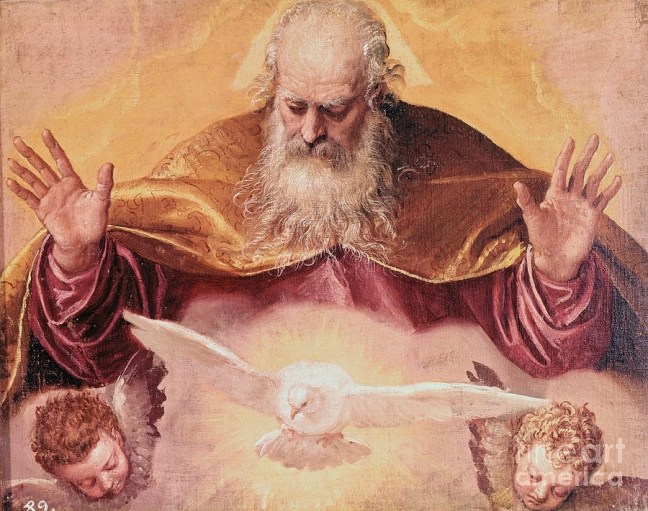
Prayer is an invitation for what is already here to show itself up. It is not that you already know who you are, and that you-the person are begging for a supreme entity, or for an other, to come and soothe you, for an external, benevolent providence to shower you with its benefits. Remember that there is no other entity than the entity of your self, no other providence than the providence of recognising who you are. Nothing, in matters of peace and happiness, could ever enter into you that is not already there. So don’t make that mistake over and over again: to wait for someone knocking at your door, to hope for something to fulfil you, to expect a new element to enter your life. The benefit of life is not with something you receive, but in what you recognise yourself to be. So prayer is prior. It is not in reaching but in realising, not in expecting but in recognising, not in receiving but in noticing, and not in having or possessing, but in being.

So always pray as if you were utterly alone. Pray as if you couldn’t ask anything, anyone, any favour or event, to give you something that is not already there in you, as you, expressed as your very own being. Notice that nothing of worth could ever enter your house that is not already present, already eating at your table, already thinking the thoughts you think, already dreaming the dreams you dream. This is how Dimitry’s prayer ought to be uttered.

[…]

More reflections on a prayer by Dimitry of Rostov… (READ MORE…)

.

A Trail of Glory

‘The River of Light’ – Frederic Edwin Church, 1877 – WikiArt

If you happen to feel your being one day, don’t let it go out of sight. Follow it everywhere it is. Let it be your only guide. Be gently intoxicated by it, by yourself, by who you are, truly, when you have relinquished this obsession of being a body, and a mind. This is your one and only duty, to stay there, with being, to abide in it, and let yourself be moved by its unmoving current. Don’t go off at a tangent. Don’t take a single step, unless you have with you, as you, this being that you are, and that you could crush at any time, with the single thought that you have your own, separate being. Remember it to be your ultimate identity, the widest circle of your self, without any border, limitless, unfettered by any condition whatsoever.

Feel it in you, as being you, when you go to apparent places. Being tends to stay at home and let your body do the moving. For being never goes anywhere — it is not the travelling type. This is how you can simply go to buy some bread in your street and live a captivating adventure, or explore the farthermost recesses of the earth while feeling quietly at home. Feel that you as being are housing the world, that being is the landscape in which your life is taking place. So be only concerned with the landscape and life will then flow of its own accord. Don’t start believing that you have a life of your own. That’s only the prerogative of the suffering self. No life can be lived happily with an architecture or a design outside being.

And remember that being is a love affair. A renouncing of your own limited self, for a marriage with the beloved truth of your being. A free, princely, bounteous bowing to the infinite. So don’t start making an effort to be, for any effort is an attempt from the part of a belief to reassess its position as a distant, separate, other being. That’s how your nature becomes unseen, when you have replaced it with your own fake one, with your own invented self. For being never hides, if you don’t let it disappear under the weight of your seeking it, of your being somebody that is lacking. So don’t let your being escape you. Don’t lose its trail of joy and glory. Don’t be the one fleeing, running away, desiring to be yourself, by yourself, and then seeking to bring yourself back to the happiness that you have lost, in so many, so many immoderate, superfluous, inappropriate ways. Seek your bliss in being — where it only lies.

.

~~~

Text by Alain Joly

Painting by Frederic Edwin Church (1826-1900)

~~~

.

Website:
Frederic Edwin Church (Wikipedia)

Suggestion:
Other ‘Ways of Being’ from the blog…

.

A Holy Formula

‘Woman in the Wilderness’ – Alphonse Mucha, 1923 – Wikimedia

.

Consciousness is an internal relationship to the whole.”
~ David Bohm

.

You cannot suffer when the world in which you live is discovered to be you. That’s mathematical. A formula that will work magic in your life. For you don’t live separated from everything else. You are not limited to your body, and the world is not something that is distinct from you, at a distance from you. You discover that the jump was made long ago, that you have been the totality already from the beginning of ages, eternally one with it, and that there never was an inch that separated you from the world you live in. That’s how you are complete, by knowing no separation, by entertaining no difference, and therefore having no preference. So you cannot be lacking anything, and suffering is always only the lacking of something, which is born of separation. So stay there, in your inseparable essence, in your world of completeness. Notice that this is what you are, or rather what there is, when you stop fantasising yourself being somebody. You never had an existence of your own. You are the flowering of something deeper. If you ignore or overlook this simple truth, well… then the trouble begins, all the travail of life, and the never ending seeking for fulfilment. This never was about you. Life is bigger, wider than that, and you are here only to honour that and to live by its gorgeous rules.

Then you enter into sacredness. You leave the limitations of being somebody — a projection, an idea that thought has sculpted over time — for a merging with infinity, with who you truly are. This is what sacredness is: an entering into your true self. A visiting of the truth of your being. The anointing of your self with its reality. This entering is a sanction from truth. It is the death of an old idea which you have entertained, for a ride into unknowing. It is a ceremony in which you are being elevated to a reality that you have been blind to. You are being sanctified, or made true. You were already that, already living as that reality, already tasting of that firmament, but were distracted. You were drawn to be something, insisted in being exclusively yourself, by yourself, so you have ignored it. You missed the chance to know yourself truly. You worked too hard to be what you are not. You lacked passivity. Not that you don’t have to do anything to come to this understanding. But rather, this understanding is nothing you do. It is here in you, as you, without your doing anything about it. It doesn’t need your participation, or rather it needs your non-participation, your staying away, your keeping quiet. Your abandonment. The hardest thing of all.

Then you enter into holiness. You taste of your true home, which happens to be the home of god. You are made holy, which means whole, uninjured, healthy. You realise where you are, what you are, the stone you are made of. You notice your true body — the consciousness of everything. You connect with a reality that could never be transgressed or violated. A reality which you could only fall in love with, for it is your beloved self, which you have lost sight of, and are now reunited with, consecrated in, and which you would never want to leave, or not live by. You are made of the same golden dust that the stars are made of. I don’t mean just your body, but what you are at the core, the essence of your self, what you happen to be when you say simply ’I am’. You are made into “an internal relationship to the whole”, as David Bohm expressed so beautifully. And you will struggle to see the world as a collection of different parts, or to see yourself as one such part amongst many others. The One will come to be your only experience. But you will be defeated again and again. You will come to feel a part again. You will be seduced to be somebody time and again. You will want to feel separated again, to win another last adventure or advantage for yourself. You know: your little devil wanting to be the likes of god. But keep going. Keep going. Until one day, it may dawn on you: you are no more.

.

~~~

Text by Alain Joly

Quote by David Bohm (1917-1992)

Painting by Alphonse Mucha (1860-1939)

~~~

.

Websites:
David Bohm (Wikipedia)
Alphonse Mucha (Wikipedia)

Suggestions:
– Other ‘Reveries’ from the blog…
– A page from the blog dedicated to David Bohm: ‘Insights into Wholeness’…

.

A Light to Yourself

‘The Sun’ – Edvard Munch, 1911-16 – WikiArt

There will come a time when words will slow you down. When you will want to explore yourself on your own, without the help of a book or a teacher, free from explanation or guidance. You will want to follow your own trajectory, to be a grownup, and experience your beloved, impersonal, undivided self by yourself and through yourself. You will want, as Krishnamurti said, to “be a light to yourself“. You will find your own security there, in this light, at the source of your transparency, where you will find no division from where to be insecure. You will find your happiness bubbling from your infinite being, where no self can be located, and therefore no suffering. And you will be under the authority of your own being, that will show you the way, through a door eternally open and inviting. You will be on an eternal visit of yourself. And you will meditate, not to reach who you are, not to get there, but to rejoice in it, and give your whole attention to your beloved — though you already have her, have him, all day, on all occasions, near you, close, so very close to you. And you will feel her love as being so fully yours, that you will need no incentive, no set hours, to be being her own being. And you will see around you, and within you, so much beauty, that you will not have to look for it, other than by being with him, and within him. And you will be in need of no thought, of no TV show, to distract yourself from yourself, for how would you want to be distracted from being so wholly in love with the love of your life? So books will have become a bore to get you there, but you’d still read them as you read poetry. And a teacher will be of no use to you, but you’d still be eager for the company of a friend. And you’d go about your life with confidence, because you’re not alone to deal with it. Rather, your life will have become your being, and your being, your life. And at the same time, you will be alone, self-sufficient, in no need of anything, of anyone, to be fully yourself, to be happy. Therefore, you’d give yourself to all, to everything, you’d be a sharer of being, and a passionate lover of beings, and of things. Yes. That’s it. You’d be a light to yourself. A light to yourself.

.

~~~

Text by Alain Joly

Painting by Edvard Munch (1863-1944)

~~~

.

Websites:
Edvard Munch (Wikipedia)
J. Krishnamurti

Suggestion:
Other ‘Ways of Being’ from the blog…

.

The Nectar and the Mouse

‘A Mouse as a Monk’ – Shibata Zeshin – WikiArt

We ought to love our being. That’s what animals do. The ones “that cut the airy way”, and feel “an immense world of delight”, as the poet William Blake wrote. The ones that sit on the window sill, in a pool of light, with eyes clinched in full appreciation of it all. The ones in the meadows, chewing and ruminating away their abundance of presence. Animals have being as their intrinsic companion. They live there, in being, as being, that’s how they have their life in such perfect order. That’s how they are alert, awake, aware, and know patience, diligence, scrutiny, care. They draw their intelligence from their sweet, sublime being, and their fierceness too — their courage, their laws, and their absolute well-being. We humans haven’t been doing so well. We have deviated. We have taken it all so personally. Maybe there is some lesson here to learn. A little wisdom from our friends.

Should we be in any need of a little guru here, I think I dug up the best of all. I didn’t find Its Highness amongst the large and the spectacular, but in the teeming world of our cereal fields, hopping around in the vegetation, feeding on seeds and on nectars. The harvest mouse is a four grams precipitation of the highest wisdom, wrapped in a brown and reddish fur coat, and equipped with a highly prehensile tail for the climb to heavenly heights. This mouse performs a unique sadhana. At the ripest of time, it climbs the stem of a chosen flower, and cuddles itself up in the cup of its petals to have a feast of the most delicious pollen. It stays there, inebriated by the scent and taste of it all. And it so happens that it sweetly falls asleep there. That’s it. This is Its Highness’ special sermon for you. This practice will act on you as a metaphor of the most sacred spiritual endeavour, of the highest understanding. It is saying, or rather showing, that you have to fall asleep to your self, or to sleep your regular self off. To so cuddle in your being as to realise yourself as being only being. To so impregnate yourself with the perfume of being as to be made of its very fragrance. And to so crawl into its blossom and bliss as to be yourself consumed by them both, and revealed as the flower of being itself, as the blooming of happiness.

Its Highness, if it could talk, would say something like this: You have to so totally and one pointedly devote yourself to your being as to feel to be made of it, with devotion fading and appearing as only a residual part of your sense of being a separate self, a somebody other than pure, essential being. You have to love being only being, so that love is no more a bridge between yourself and being, but the very nature of being — of who you are. You will feel the world and experience to be the very scented petals of being. And the stem of your bodily existence will draw its unabated strength and pliability from the rich soil of your selfless self — from its inseparable essence. You will feel yourself to be like a furious, furry ball of being. And experience will appear to you as a sweet, loving cuddle with your own nature. And your life will be made into nothing but a swift disappearance into God’s eternal embrace. That’s how you happy-sleep and wake up to your own nectar of beingness. When you harvest it all. As a mouse simply does.

.

~~~

Text by Alain Joly

Painting by Shibata Zeshin (1807-1891)

~~~

.

Websites:
Shibata Zeshin (Wikipedia)
William Blake (Wikipedia)

Suggestion:
– Other posts from ‘Eternity with a Smile’ in the blog…

.

Perfect Days

’Perfect Days’ – by Wim Wenders (with Koji Yakusho)

.

All my films deal with how to live.”
~ Wim Wenders

.

Why do we watch a movie or enjoy any piece of art but for the joy, happiness, or relief we derive from such activity? Well, sometimes we use a movie not so much to feel, but rather to stop feeling. We want to be alleviated from our sense of boredom, or be distracted from our constant worry, or have the lowest ambition to be rewarded with pleasure, plain simple pleasure which, if not delivered, will make us move on to something else. Film as an art form is ambiguous, for it has in itself an entertaining power which makes it the prey to our most suspect desires. Well, Wim Wenders, in this movie, wasn’t going to give way to that ubiquitous trap and fall. With ‘Perfect Days’, he made a movie in which there is no desire to be had, which offers no suspense, no excitement, no resolution of any kind, but from which you would never want to move away. A movie that describes the quiet, plain, orderly living of a man whose job is to clean public toilets in Tokyo.

Hirayama lives each and everyday as if it was a perfect day. For him, there is no possibility of failure in life. And he makes sure that boredom is an impossibility. So he cares. Hirayama cares about everything he does, and seems to be profoundly related to his modest home, to his morning toilet, and to the watering of his plants. He does what he has to do, with no judgment or resistance. He doesn’t mind. He feels his inner freedom. He has everything he needs, so he smiles at life and life smiles back at him. He breathes when he steps outside and looks at the sky as for the first time, the wonder of it all. Then he buys himself a can of coffee from a local vending machine, opens his van, sits, drinks a sip, chooses a song from a bunch of cassette tapes, lights the engine, drives, and listens to ‘The House of the Rising Sun’ by The Animals. For that’s where he is now, in the house of the rising sun, going to his work through the sprawling suburbs of Tokyo’s morning, undisturbed, confident, present.

[…]

A reflection on the film ‘Perfect Days’ by Wim Wenders… (READ MORE…)

.

The Adventure of Thought

‘Head with Flowers’ (part) – Odilon Redon, 1907 – WikiArt

Thoughts are a strange thing. For they seem to be both indelibly ours and strangers passing in our sky. We have an ambivalent relationship to them. Sometimes they are part of us like a lover can be, so intricately woven to our being that they seem to have been sculpted out of our very essence. On other occasions, we see them from afar, unwanted, a despicable thing that we judge unworthy — thieves that have come to set us on a wrong course, rendering us unrecognisable to ourself. We have a love-hate relationship to our thoughts. We love the ones we judge to be good and worship them, befriend them, glorify them, and hate the ones that come to upset us, the bad ones that we refuse to endorse, or have a responsibility for. The ones that we leave scared and alone, ready to multiply and threaten our very being. They are like the obeying soldiers of our wounded self, the dark agents of our fears and of our rancour.

Thoughts end up being prey to our likes and dislikes, treated like objects are, judged as being often disloyal, incompetent, insufficient. We seem to be separated from them, to have little to do with them. But thoughts have been supremely important to us. In a way, they have created us, through our identifying with them. They have formed the limits of our self as a separate entity. In fact, thoughts are thinking us. We are the prey to their conditioned making, and are at the mercy of their limited expression. So we are most of the time reduced to being ourself a thought, a thought thinking itself out, and believing that it is representing nothing less but what we are at the core. Yet we are truly far from the mark. Thoughts have deluded us, have drifted from their being a simple tool to stealing our very identity by faking the appearance of a self separated from its thoughts, when that self is in fact just a magnified, engrossed, elaborated thought that bears no resemblance to what we truly are. Thoughts thrive on confusion, they flourish and fatten on the prosperous soil of ignorance.

But try to go beyond thoughts, to pass them by, to ignore them as being unimportant and move on, deeper, towards the very centre of your self. Notice the sense of being that is here before them, and that hosts them in last analysis. Touch the silence behind thought. Embrace who you are before you associate with things. Go to the place where no identification is possible, where you are free from conceptualisation, where thoughts have become unrelated to yourself, lost entities that have no relationship whatsoever to your truest being. You will begin to disconnect thoughts from yourself, to render them innocuous, and stop looking to them for your security or identity. You will discover a way of living where thoughts are scarce and rarify. You will have no room for thoughts. You will have disencumbered yourself, and will stop being blind to what is. For you will notice that your being extends to all possible things, and all times and places. It is a presence so unified that thoughts are being gradually expelled from your deepest being by losing their unifying justification. They become redundant to your self. They become what they should never have ceased being: a wonderful tool at the service of unity, a practical thing that is but the expression of the one. You will have stripped them of their being an impostor. That’s how you stop being a thought. Because you don’t need one to be yourself.

.

~~~

Text by Alain Joly

Painting by Odilon Redon (1840-1916)

~~~

.

Website:
Odilon Redon (Wikipedia)

Suggestion:
– Other ‘Reveries’ from the blog…

.