The Religious Life

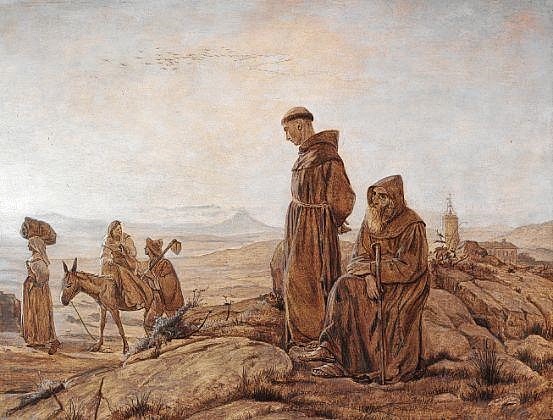
Two monks’ – Carl Bloch, 1861 – WikiArt

Spirituality is an exaggeration. We need to exaggerate our commitment to truth, and be ‘spiritual’ for a time. We need to take on this role. Being is to be favoured at the expense of experience. This is the way to re-establish a lost truth, to re-assert what we truly are against what we have conditioned ourself to be, by force of habit. It takes a lot to fight an addiction, to forget a well-rehearsed habit, to extricate ourself from our deeply imbedded identifications with our body and mind. What’s running in our head has a persuasive power, and perceptions have a way to project everything perceived as being out there, into what we commonly conceptualise as a world separate from ourself. So spirituality is a sort of rehab. We go to the church or the temple only because of our failure in making a cathedral of our experience. We attend the mass in reason of our not being grateful for the given bread of our life. And we meditate for lack of noticing that the meditator is a superimposition on our simple experience of being. We’re overdoing it, but it’s for the good cause. We need a magnifying glass to notice what is hidden in the cacophony of experience.

But spirituality is not a way of life. it is a temporary overemphasis, a dramatisation. We were never meant to be spiritual, or a believer in a religion. Religion is a teaching, a suggestion to realign ourself with truth rather than with an acquired belief. It is the temporary treatment for our suffering. It is the gentle scolding of a parent when we have made a mistake. It is benevolence — an encouragement towards a happier living. It is a bond and a reverence towards the simple reality of our being. So spirituality is an effort towards effortlessness. It is an attempt to recognise the given in ourself, amongst all the things that we have acquired and wrongly identified with. We have to dig out our true nature as pure, undivided, peaceful being, and have to be for a while a zealot for this, an ultra, a devotee of being, and to leave experience alone, to restrict our commitment with the world of things. It is a descent into spirit, before spirit pervades the totality of experience.

So all the paraphernalia of religion, all the words and practices of spirituality, and the endless commenting on the commenting, are only a means to acquire what we already have and already are, although unknowingly. Practice is to just be, and be happy. Prayer is to live a life that has meaning and clarity. Meditation is to have a vision of what we are, and with that vision, to love and share our deepest nature with others and with the world. It is to restore reality, in order to give ourself back to it. Because we cannot understand, feel, love, and just be, we have elaborated rituals, prayers, teachings. Spirituality is not the truth, only the means to access it, as devotion to a deity is but the path towards true, unconditional love. So we might want to push our practice. We might have to snob experience for a while, to leave it in the marge, in order to concentrate on our being only being. And we might want to stay there, in being — a yogi of presence. We don’t want to be an occasional visitor. We long to be a resident, to have being as our eternal companion. To feel that we are that naturally, and effortlessly. We want to drop all affectation. Effort is only a temporary device, to defeat a bias acquired over life times, and instilled by a whole society. We want to be free of ourself, and to quit being a believer, or a practitioner.

Then life becomes a temple, whether we are in the busy heart of a city, or in a monastery, whether we live the active life of a working hero, or the silent one of a dedicated monk. There will be a day when our life will take place in the clarity of being. When our daily activities will receive the flow of a constant radiance of meaning and beauty. When love will be the very canvas of all our relationships. When our duties and chores will be clothed with a flavour of sacredness. On that day, this tragic and magnificent exaggeration that spirituality is, will be replaced by a life that is discovered to be unaffected, spontaneous, uninhibited, relaxed, and genuine. Maybe this truly is the religious life.

.

~~~

Text by Alain Joly

Painting by Carl Bloch (1834-1890)

~~~

.

Website:
Carl Bloch (Wikipedia)

Suggestion:
– Other ‘Reveries’ from the blog…

.
The Ending of Time

Don’t wait for the right time, make this time right.” I read this quote lately, attributed to Neem Karoli Baba. Let’s meditate on it. For no uttering of a master is ever innocuous and randomly said. It comes from a deep source that is ever overflowing. If you do catch what it means, if you chew what these words contain of wisdom and truth, you will see how the now of time blends into the now of being. For there is no now of time. The now of time is a well-rehearsed illusion. Its only reality is practical, for the right functioning of the body in the field of experience. But there is one other reality that is here now, and this is the reality of yourself, of who you are truly in and as the eternal now of your being. In this newly discovered reality, you will notice that there is no possibility of waiting for the right time. The right time for an understanding is a handy projection to give you the hope that you need, and spare you an immediate death, a confrontation with your true self. Your hidden assumption behind the so-called ‘right time’ is: ‘You should better postpone. You should better wait. There is a sometime that will come right one day in the future. So keep at it. Keep meditating, keep practising. The fruit will come eventually. You will come to deserve it. But not here, not now. It is for another now — a future now.’ But let’s be cautious here. For the right time will never come. Of that I can assure you. It can’t. This time is not there. It has no reality. It is an escape. A postponing for your own sake. Cleverness at work. There is no waiting with truth. This timeless now that your being is made of, is the only time there is and will ever be. Assert this truth. Lean towards it. See that understanding already shines in and as your own being. Spare yourself the waiting. The ‘right time’ is a spiritual myth.

Make this time right. Make it the ever flowing home of your being. Feel that you are now, the now you seek in the future, and this now can never leave you. This now will never pass, and never come to be. This now has grown to infinite proportion. It envelops you. It cannot be pushed to another now, for now is always one. It has no duration. Feel that you are yourself this ‘right time’ which you want to postpone and find in the future. Sink into it. Make it disappear as time, and reveal its true identity as being. That’s how you make this time right: by being the being that you are. By living your truth. By sensing that what you are is not an object in time and space, but is the very container in which time and space can spread their limbs. Time is what thought has superimposed on the reality of being. If you stay at the level of time, it means that you are still living in your thoughts, and are lured by their promises. To make this time right is to go beyond thought. It is to pierce time through — which is yourself as thought — and discover that beyond time is a nature that is timeless. Beyond the idea of your being a separate, time-bound entity, is a presence that is always here, always now, and therefore always true and right. This presence doesn’t need a now to come into being. This presence is what you are, untouched by time or place, ignorant of even the possibility of ignorance, and devoid of any idea of lack or seeking. You will never again wait or expect to be anything other than what you are now, for being is your true and unavoidable, indissociable nature. From now on, this time of now will forever be the right one, for the simple reason that it bears within itself the ending of time, and the revealing of the unborn. In fact, the ultimate virtue of time is in the eternity that it hides.

.

~~~

Text and photo by Alain Joly

Quote by Neem Karoli Baba (1900-1973)

~~~

.

Website:
Neem Karoli Baba (Wikipedia)

Suggestion:
Other ‘Ways of Being’ from the blog…

.

The End of Self-Improvement

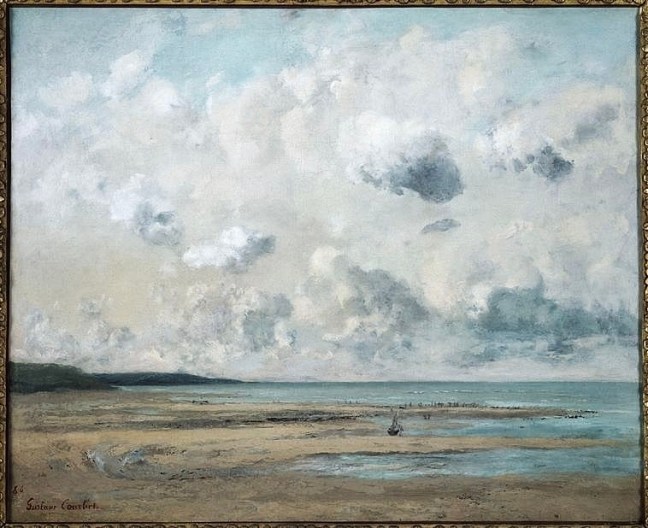
‘Shores of Normandy’ – Gustave Courbet, 1866 – WikiArt

.

To know that your Self has not changed,
this illustration itself is enough.”
~ Ramana Maharshi

.

There is no ameliorating emptiness, developing the unborn, aggrandising what is, and expecting the timeless to be anything more or different than what it is. Being leaves no room for improvement because it is not a thing, it is not a result, a something that has a cause. How do you improve the non-objective? How does the infinite progress? How do you make better a self that is absent as self — as something different or separate from experience? So self-improvement is a misunderstanding and a form of violence. It is an imposition, a belief that we squeeze to fit our idea of reality, an objection to the innate perfection of what is. It is mind-made, a product, a progeny of conditioning. It is designed for the continuation of our belief in being a self or entity that can be objectively defined. And remember this: every object, every ‘thing presented to the mind’ — as Latin word ‘objectum’ stands for — is in fact nothing but something thrown in the way of your knowing who you are. This is the meaning of Latin ‘obicere’ — ‘ob-‘: ‘in the way of’ and ‘jacere’: ‘to throw’. The self that you believe yourself to be, and that you strive to improve, is your hindrance. It is what makes you blind to your true nature.

To improve on a self is to make it continue, it is to give it credit, to give it the existence it never had. After all, we all want to feel real, to see that we can act, and have a power on our self. So we have the desire to consolidate and sculpt our being through rendering it an object that we can manipulate. We want to make a profit of our self, and see a return on our investment. In fact, to improve myself is nothing but a form of merchandising. It is a trade and a transaction. It is retail management, the ‘cutting off’ of our self with the aim of maximising profits. But don’t ever forget that if you are able to improve yourself, you can therefore also make it deteriorate, worsen, decline, decay. So what then?… is self-improvement decay, error, illusion? Is it ourself going astray, being mislaid? Are we really so sure that our being could ever decay? That awareness is a so fragile thing?

[…]

On how there is no improving our self and being… (READ MORE…)

.

The Story of It All

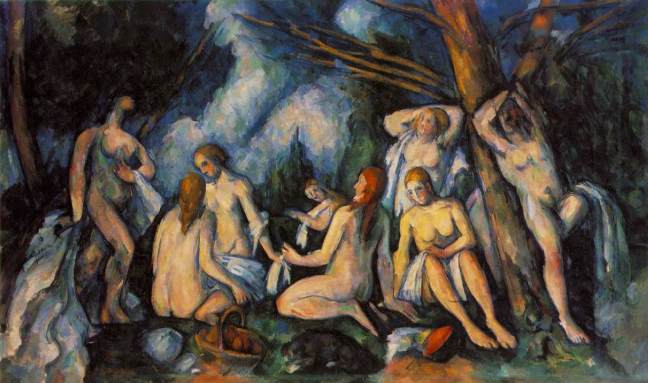
‘Large Bathers’ – Paul Cézanne, 1905 – WikiArt

There is a hidden presence everywhere we go, that hides within our experience. It is concealed within its own shining, and is the reason for our seeing and experiencing anything. It seems to be woven into our very being, to have married its being to our being. Would we want to separate ourself from it, that we wouldn’t know where to go. In fact, there is no way outside ourself. We have it all here as we are. Our life is unfolding within that which is ‘myself’. We are the garden of our self, of all our human endeavour, of our quest and of our finding, of our lack and of our glory. All that we live for, when reduced to its core target, is to be relieved from our chronic sense of not having enough. We feel there is a thing here to be found, without knowing what it is. So we become blind to ourself, and are consequently driven into the world, seeking there in the distance of time or place, what is already here in and as our very self. We are our own hidden remedy, our secret paradise. We have shrouded the infinite within ourself, and are erring within our own misconception.

In fact, we have been misled by our having a body, imagining us inside it rather than it inside us. We have belittled ourself, have lost faith, squeezing ourself into a thought that we have aggrandised to being an entity. We are a trick of the mind — nothing more — and have lived caught within our own creation, struggling inside our own mistake, wrestling with a world that we have stripped of its essence. We have divided our experience into separate objects, and have reduced ourself to being one such object. Now we are striving to unravel our own mistake, to defeat our foolish, unfortunate belief — hence our suffering and our struggling. Our life has been made into a scream for peace and justice, and the silence of simply being has retired within us, into the hiding place where we have pushed it. We have shied away from our truthful nature, and wandered off from simply being naked being. We have clothed our emptiness with the garment of a self delineated by thought and identification. We have limited the infinite to our convenience, and squeezed eternity into the burden of time.

But there is a dawn here just as we are. There is a light ready to overcome our night. For we never got lost far from our home, never took our stand away from our own being. So our journey is always only the shortest step from ourself to ourself. We have to return where we never left. We have to get acquainted with ourself, with who we truly are, and get accustomed to our being — much wider than we ever noticed. We have a sky at our disposal when we have dismissed the thousands fascinations and identifications with everything that is at a distance from ourself, and is the prey to our mind and our senses. There, curled within and prolonged without, treated so far with contempt, is our own indomitable self. There, trampled by a belief about ourself that we have imposed on everything, is a magnificence. There, is the being of our being, what we-the-seeker have sought everywhere except in its own place of living, which is ourself. We have missed it because it was the last thing investigated, the last stone lifted, for being too close and intimate. Who could have thought that the sought was the seeker?

Now we only have to be that ground of being alone, at the exception of all that is moving and changing in it, and that isn’t us, not truly us. We only have to sink beneath the moving sea of our multiple, insatiable experiences, and let ourself reach that part of ourself that cannot be known or possessed, and is yet our undeniable self and identity. Here we discover that our being is the being of everyone and everything, and that we are bound to this totality by love. Here every single thing in our experience is unraveling itself back to its essence, taking its right place within it — and that essence is found to be our essence. And god’s being too finds its right place and meaning in and as ourself — and we too have our place in god. And our so precious peace is now teeming as our own being, and justice is found right under every step we are taking. Now we have silence as our very best companion, and our seeking — which was our suffering — has been buried under it. Now we are right where we were supposed to be when the world became a world, and the son of god became a woman or a man. And now…

Now let me rest and live and walk the world as I am, alone and one, and all in I.


~~~

Text by Alain Joly

Painting by Paul Cezanne (1839-1906)

~~~

.

Website:
Paul Cezanne (Wikipedia)

Suggestion:
– Other ‘Reveries’ from the blog…

.
A Treasure of Understanding

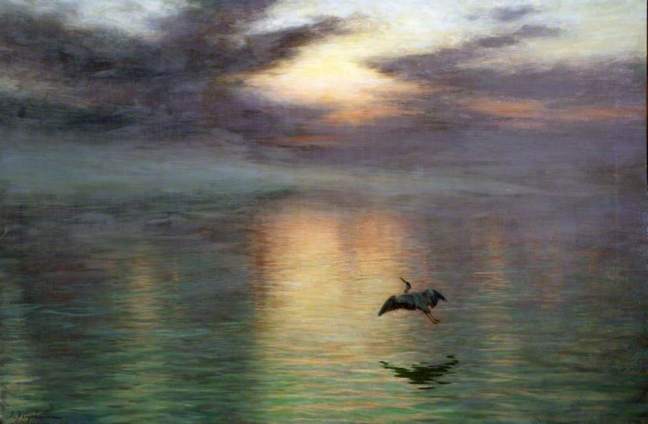
‘Dawn’ – Joseph Farquharson, 1903 – WikiArt

There is no such a thing as conceptual understanding in matters of spirituality. As soon as we form an idea, a concept, an image, a projection about ourself, we are still where we have always been: in our mind, in the known, in grounds we have already trodden a thousand times. These grounds are the grounds of our misunderstanding, where beliefs have already shaped and conditioned the idea we have about ourself. An idea that we rehearse and consolidate with every thought or act springing out of the field of our conceptual world. No understanding can ever come from this barren field. For one good, essential reason, which is that our understanding comes from only being. Being is the field of our understanding. Being is understanding itself. And the mind — with the ego which it gives rise to — is the only thing that is hindering our coming in contact with being in its purest form. That’s why concepts and ideas can never be understanding itself. They hide our clarity. In fact, they trample it.

So, should you ever want to come in contact with the pristine vibe contained in understanding, then a little digging is a necessary prerequisite. Don’t stay in your mind, take a new breath, be an explorer. You may use the tool of mind as you use a spear to dig a treasure. But please don’t take the spear for the treasure. This treasure is the treasure of being that stands unseen below the surface of your wrestling with concepts and ideas. Don’t let being be undermined by the description or explanation of the method. A beautiful image of truth will never be truth itself. It won’t hold the true taste of it. You won’t get its exquisite perfume, unless you see what stands under your mind and your ego. Understand your being by being only being. Throw the spear out. Finish the digging with your bare hands if required. Be yourself your treasure.

You come to an understanding when you stand under everything that is appearing or forming in your experience. Being is what stands under. It is the one thing that doesn’t change, that can never die or dis-appear, and out of which everything objective or knowable come into existence, and is under the scrutiny of your senses. But objective experience can never lead you to any understanding. Not out of its own will. You have to coerce yourself, make your own acquired, conceptual idea of reality recede and reveal its illusory, invented nature. You have to make what was, what will be, what should be, and what seems to be, into what is. That’s where understanding lives, in what is, in the here and now of your essential being. Understanding is implicit to being, and being explicit in understanding. Feel your being in its purest form, and see that you are yourself the understanding that you have craved to achieve through your mind.

So being stands under your apparent self which, in its light, is discovered to be non-existent, or rather only existent as being. That being is your true support, deserving all your praises. Actually, it is the support of everything, the great pervader — that’s why some have called it the creator. Not that it creates while being outside of its creation, but rather it is the substantial essence of everything — what makes a world possible and viable. So to understand yourself is to touch this essence through your being it, and to praise that part of yourself which you can never not be with, and which comes with a special flavour of well-being. That’s how you feel your true nature, through that subtle yet indestructible joy of simply being, which your never satisfied body-mind-self could never give you other than fleetingly. Understanding as being comprehends everything. It holds and embraces all life in the fullness of its presence. So to understand is to rest in your natural being, which requires no commenting or even understanding. You are, and this is that.

.

~~~

Text by Alain Joly

Painting by Joseph Farquharson (1846-1935)

~~~

.

Website:
Joseph Farquharson (Wikipedia)

Suggestion:
– Other ‘Reveries’ from the blog…

.
Huang Po

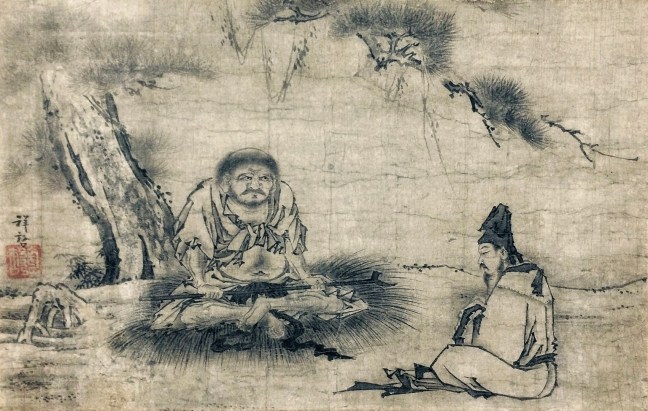
’Zen Encounter (Niaoke Daolin and Bai Juyi)’ – Kenko Shokei, 16th AD – Wikimedia

.

This Dharma is Mind, beyond which there is no Dharma;
and this Mind is the Dharma, beyond which there is no mind.”
~ Huang Po (Ch.7)

.

Every religion has its mystical counterpart, where beliefs, rituals, and book studies are replaced by self-investigation, direct experience, and understanding. Buddhism is no exception. Out of the nimbus of Buddha’s awakening came a single practice called by the simple word ‘chán’, which means ‘meditation’ (‘dhyāna’ in Sanskrit). Bound by the rigorous practice of watching their mind and recognising its true nature — which is called Buddha-Nature in Buddhism — a whole dynasty of influential Patriarchs and Masters have transmitted this tradition known as Zen in the West. Huang Po was one such eminent Chinese Master. His concise work called ‘On the Transmission of Mind’ is one of the world’s major expositions of truth. Recorded by the scholar of the time P’ei Hsiu, this collection of Huang Po’s sayings and sermons opens with this simple, illuminating phrase:

.
All the Buddhas and all sentient beings
are nothing but the One Mind,
beside which nothing exists.”
~ Huang Po (Ch.1)

.
In this book, Huang Po wants to make very clear and very simple, that all understanding, all mystery, all the content of Zen practice, is to be found here, in ourself, as ourself, as our Mind, and that this Mind of ours, of all of us, is the Buddha. In other words, what we take to be our everyday little, separate, private self is, when investigated, nothing but the one supreme being that we share with all other beings. This understanding is what Huang Po calls the Way. This is the only recognition that we need:

.
To awaken suddenly to the fact
that your own Mind is the Buddha,
that there is nothing to be attained
or a single action to be performed –
this is the Supreme Way.”
~ Huang Po (Ch.13)

[…]

Read more about the teaching of Chinese Zen master Huang Po… (READ MORE…)

.

Pathways

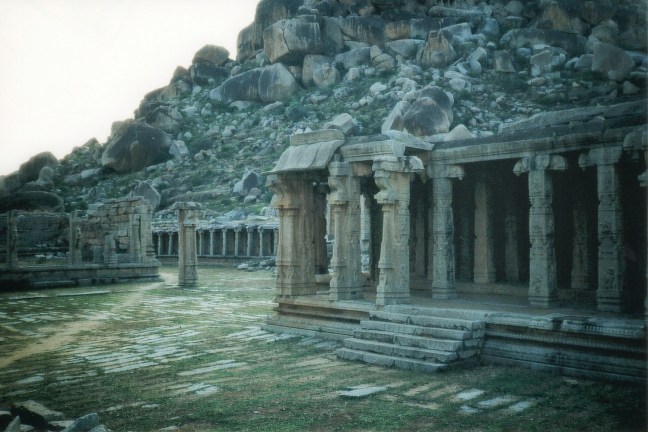
‘Court in the Alhambra’ – Edwin Lord Weeks, 1876 – WikiArt

The spiritual endeavour is really such good fun. You may happen to experience some suffering in your life and feel entangled — with thoughts rushing into your mind and problems seizing the entirety of yourself. The web of experience is overwhelming you and you can find no space to breathe within. You may then have to have a little conversation with yourself. You may have to disentangle yourself from your stubborn identification with thoughts and with the overcrowding objects born of the senses. That’s when you may present yourself with a simple question like: “What is this part in myself that is aware of my experience?” And so are you now taken amongst the scents of 8th century India, treading its immemorial dust with Shankara, debating with the great Vedantic master. He will show you how to move inwards right at the core of that aware presence in yourself. You will be taken with him to the core of this investigation, which is but the separation of the multiple objects of experience from the one aware, pervading presence of consciousness that is your true identity. That’s when Shankara leaves you with this one infaillible recipe:

.
I bow down to that all-knowing One
which is pure Consciousness, all-pervading, all,
residing in the hearts of all beings
and beyond all objects of knowledge.”
~ Shankara (Upadesasahasri, 1:1)

.
You may then find yourself sitting in your kitchen, cutting vegetables, with your thoughts suddenly wandering in the 17th century Paris, surrounded by the walls of a Carmelite monastery’s kitchen, chatting along with Brother Lawrence. He might tell you with his big generous smile: you know brother, “nothing is easier than to repeat often in the day these little internal adorations.” That’s when you understand that this investigation can be made into a joyful, often repeated practice, where you go and meet yourself within, have a little chat with this hidden presence, spontaneously, as you gaze into the eyes of a friend. Amongst the frantic sound of knives hitting the wooden board and the fumes of the next meal simmering on the stove, you meet Brother Lawrence’s glance offering you this last precious advice:

.
I renounced, for the love of Him,
everything that was not He;
and I began to live as if there was none
but He and I in the world.”
~ Brother Lawrence

[…]

Continue this journey into the investigation of your true nature… (READ MORE…)

.