The Intimacy of Experience

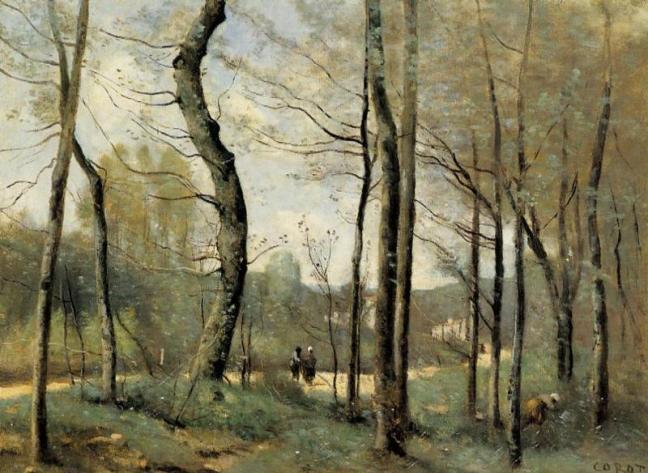
‘First Leaves, near Nantes’ – Camille Corot, 1855 – WikiArt

.
I will tell you where to be
. Be where every experience feels an equally good experience. Don’t be attached to judgment and comparison. These are the mind’s favorite tools and activities. The mind tricks you to believe that experience is an uneven ground. That according to the content of your experience, you will be gifted with either happiness or suffering, peace or conflict, harmony or disorder. So the experience you are having becomes extraordinarily important. We become dependent on what happens to us, and come to dread it. So we retire into the secure place of our habitual self, with its cortège of worry, control, expectation, and manipulation.

There is a place in us where you don’t find experience to be such a determining factor. Where you will not let experience determine you, fix you, limit you. You won’t be shaped by its content. You won’t be made into something, someone, with qualities and flaws, to be judged, evaluated, compared with — the likeness of experience — in fact, just another object. The mind is a manufacturer of objects, entities, persons, fixing the insubstantial nature of your being into a self to be moulded and made either happy or miserable. To be made happy by an experience is to be cheated on by it: we are being manipulated, and made to believe an illusion. To let experience make us miserable is sheer deceitfulness, it is us being easily dazzled by the treachery and artifice of objects.

[…]

Continue this exploration of the nature of experience… (READ MORE…)

.

An Abundance of Spirit

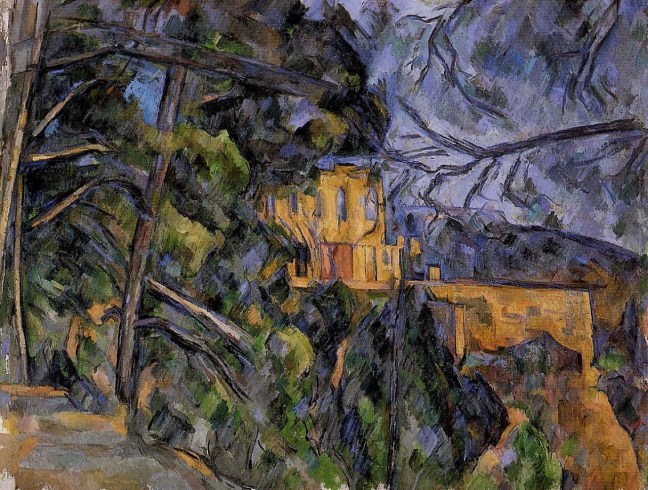
‘Chateau Noir’ – Paul Cezanne, 1904 – WikiArt

We always go too far, too quick. We jump to the objective display of reality, and in doing so leave our reality behind. It is a strange phenomenon, this forgetting, this negligence, this hurry. In fact, we pass ourself by, and rush towards what we think matters the most, what we believe to be real. This is how we have made this life difficult, an impossible thing to comprehend, and a hardship: in this forgetting, in this passing by. Our suffering is the product of a simple, single act of absent-mindedness. We have put ourself into oblivion by having made the facile postulation that reality is in the objective, in what we can see, hear, touch with our senses. And then have clung to it, to the point of losing our mind inside it, and losing ourself with it. What an absurd thing to have done.

We ought to be slow and still, if we are to meet our nature. We need to be attentive, if we are to notice our being. Not the one-pointed kind of attention, that we are already so well-acquainted with, but the sluggish one. The lazy one, that doesn’t want to go out and stumble into the world. That doesn’t feel like wrestling with thoughts. That cannot be bothered with the threat or seduction contained in the last surge of a sensation or a feeling. I can assure you that there is already a lot to see, hear, feel, on our way to the vast, far-ranging world that our senses provide. So let us not have time or space on our schedule. Let us forget the agenda that our person has and wants to fulfil. Let us not form any concept, idea, or projection, and delve into what is here before every appearance.

We may see, in slowing down, that there is here a presence that stands still, transparent, and aware. We may hear the sound of a silence that stays unaffected by the clamour of existence. We may feel the world to be but the thousand colours of our sumptuous being. We may notice the pregnancy of spirit in what is seen, heard, felt, and realise this pregnancy to be our very own nature felt, heard, seen. This abundance of spirit in our life is but the disappearance of the entity that sees, hears, feels the world, and the surging of the One as our own and only reality or world. Then we won’t pass truth by anymore. Our own nature will be unmistakable, unmissable. It will meet us in the face at the first surge of an object seen, heard, felt. We won’t miss it because it is all there is. Because there is here the absence of a self living in separation, and the absence of a world as world. This absence is our presence, our nature, our self, our world, and there ends our suffering.

.

~~~

Text by Alain Joly

Painting by Paul Cézanne (1839-1906)

~~~

.

Website:
Paul Cézanne (Wikipedia)

Suggestion:
Other ‘Ways of Being’ from the blog…

.

’katholikos’

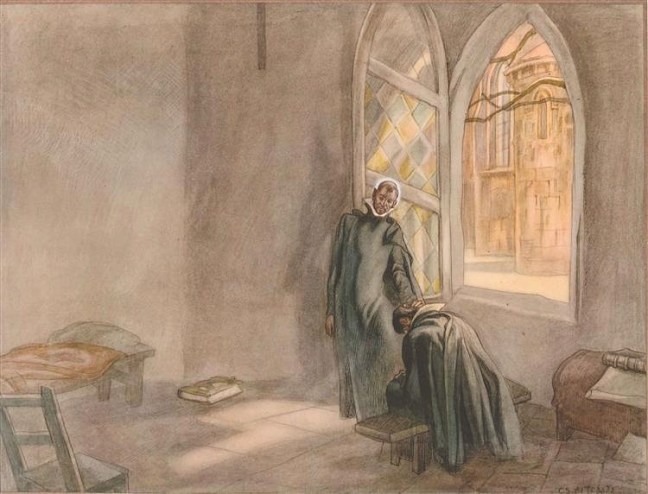
‘The Life of St. Ignatius Loyola. Plate 4.‘ – Carlos Saenz de Tejada – WikiArt

You’ve got to respect the whole. That’s how you live the good life, in having reverence for the totality of your experience. Not just for the superfluous, all that is being the foam of life, that exists and appears, that you can see, hear, touch. You will never make a totality from the world of objects, from thoughts and perceptions. These are but occasional appearances, superficies. They are above you as it were, dancing upon you, at the periphery of who you are, but are not the reality covering your experience — its most profound constituent. You’ve got to go beyond the mundane and the obvious. For we keep leaving something out of experience. We don’t take the whole thing. We are choosy, only care for objects, don’t integrate our ‘within’ — where the reality of our being is. Notice that there is a world here, that is encompassing our world — a presence pervading our reality, taking everything in.

Actually, this is what the word ‘catholic’ is about. In Greek, ‘katholikos’ means: ‘pertaining to the whole’. We have to pay due respect to the whole, to the totality. We must look back at what we truly are, and find there the expression of the whole. I am not sure that Ignatius of Antioch had this in mind, when he first coined the term ‘catholic’ in the early 2nd century AD. He probably meant that the new belief, the new credence, was to be the universal truth, meant for everyone, adopted by all. But there was no need for adoption — the baby was already in the womb. There were no beliefs to be had, no hopes to project and entertain, no happiness to seek outside of our common day experience as being. He didn’t see that in this very word was the answer to all religions, to every quest for the divine peace; that what we were looking for was already here, close, so close to our very experience; and that there was no need to form a belief about it, or a new credence.

To accord with the whole is to be reconciled with our true nature — the reality of our being. It is to be ‘of one mind’, which is what reconciliation means, and to be brought together under the vault of one reality. This is achieved by turning towards the One, which is our true and only constituent. Universality wasn’t meant to be achieved in multiplicity. Universality is the quality of oneness noticed. The totality is in every place you happen to be. There is no totality of which you wouldn’t be the vessel. For the whole is not a geography, not a place to be in. It is the embrace of being. There is a totality in and as the being which you are now, here. You are not inside a totality. The totality is inside you. But mind you, this most venerated Christian Patriarch Ignatius of Antioch did say something of the highest order, when he brought up the word. He said that “wherever Jesus Christ is, there is the Catholic Church.” Yes. Yes indeed. Wherever we as our deepest being are, whenever we as our most profound nature-consciousness are, there is the expression of the whole, of oneness — the totality which is the very nature of the Lord’s House, and which is our nature and our house too.

.

~~~

Text by Alain Joly

Quote by Ignatius of Antioch (died c. 108/140)

Painting by Carlos Saenz de Tejada (1897-1958)

~~~

.

Websites:
Ignatius of Antioch (Wikipedia)
Carlos Saenz de Tejada (Wikipedia)

Suggestion:
Other ‘Ways of Being’ from the blog…

.

Vedantic Logic

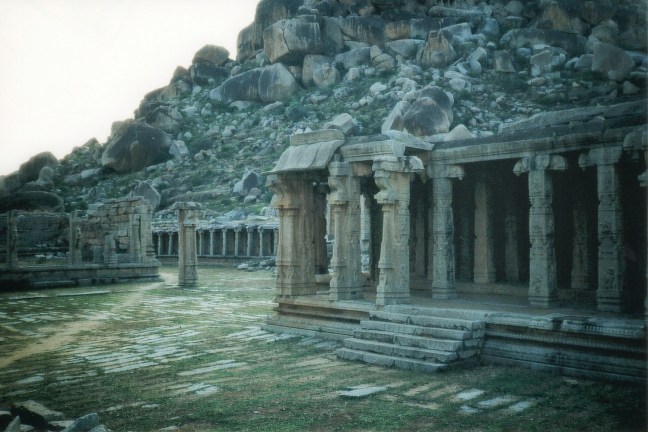
Hampi Vijayanagara, Karnataka – India

We are always too late with our identity. We come after. We experience something within, a sensation, an unease, a thought, and then say: I am that. We start from what happens, from experience, out of which we draw some identity. We are lazy. We identify with what comes. We experience our body, and draw the conclusion that this body is what we are at the deepest level. And then we live from there, from this conclusion, from this belief, this concept of ‘me-my-body’ — which we refer to as ‘I’. Our chance has passed. We have drawn comfort in that conclusion, but have invited its many companions of voyage too, which are suffering, fear, lack, and the likes. We have given ourself to the wind of arbitrary experiences. We depend on everything that passes uninvited. No wonder we suffer, finding there no stability, and no peace. We are at the mercy of what comes. So we are desperately trying to shape what comes, in order to shape our identity, and derive from it some elements of happiness. Hence our constant striving, seeking, debating with life, struggling with what we are, and with what the world brings.

We think that all the responsibility falls on us, that we are the designers of our identity. We are little ghosts exhorting themselves to happiness. And every time we fail and fall from this imaginary pedestal, we head for another direction, another hope, another expectation, and so goes our life — dependent and miserable. Until we finally listen. Until we see that there is an identity before any experience of body and mind. It isn’t that difficult to see and understand. This is only logic. This is, as Swami Dayananda Saraswati used to say, Vedantic logic: “Vedantic logic and worldly logic are diagonally opposite. Worldly logic is: ‘I experience sorrow; therefore I’m sorrowful’. Whereas vedantic logic is: ‘I experience sorrow; therefore I’m not sorrowful’.” So we have to go further back, and it takes some courage. For we are so gullible. We don’t have any true, reasonable stand. Yet, the way we speak betrays our intuition that we are not fully identified with our body and mind. After all, we constantly comment on them. We are not fully implicated. We put ourself at a distance from our own identities, but don’t go far enough. We stay somewhere along the way, as a self separate from it all. We don’t finish the journey. We don’t look well enough. We presuppose we are something, a somebody, a person, and leave ourself there, close, so very close from a higher, nobler truth.

Cannot there be an experience where ‘I’ is really, truly ‘I’? Where ‘I’ cannot be projected or conceptualised? Where it is not belittled, depreciated? Where it cannot be coloured, biased, conditioned? Where it is here in ourself, as ourself, like a pure, unalloyed, super subjective identity which is like a tower in our life, knowing everything that comes without having to be anything, without drawing an identity from it? And experiencing every single object of body-mind-world while staying itself unaffected, unaltered, and whole? After all, when we say ’I am depressed’, what we really say is that ’I’ is ‘depressed’. ‘Depressed’ has become my new identity. So ‘I’ is being repressed, suppressed for a while, replaced by ‘depressed’. But the good news is that if there is an ‘I’ that can be depressed, this same ‘I’ is here standing before the state of being depressed. There is a being before being depressed. We have let ourself being coloured, forgetting that we are in fact that which is here to be coloured. We have lent ourself to the first coming visitor. But the Vedantic logic is here to remind us that when depression is on us, or affects us, it only hides our true identity for a while. It conceals us but doesn’t change us. We stay what we are — a being untouched — depression being only what clouds us for a time. There is something here under cover, a reality, a presence, an aware being that is only being itself. This being can never be touched by depression or sorrow. What is touched by sorrow is a belief, an idea, a projection of ourself as an entity that can be affected by the passing weathers of life. Meanwhile, this pure, innocent being that we are, and that is our one only identity, stays on, living its life of being only being, while a non-existing self is playing depressed and being melodramatic.

.

~~~

Text and photo by Alain Joly

Quote by Swami Dayananda Saraswati (1930-2015)

~~~

.

Website:
Dayananda Saraswati (Wikipedia)

Suggestion:
– Other ‘Reveries’ from the blog…

.

The Religious Life

Two monks’ – Carl Bloch, 1861 – WikiArt

Spirituality is an exaggeration. We need to exaggerate our commitment to truth, and be ‘spiritual’ for a time. We need to take on this role. Being is to be favoured at the expense of experience. This is the way to re-establish a lost truth, to re-assert what we truly are against what we have conditioned ourself to be, by force of habit. It takes a lot to fight an addiction, to forget a well-rehearsed habit, to extricate ourself from our deeply imbedded identifications with our body and mind. What’s running in our head has a persuasive power, and perceptions have a way to project everything perceived as being out there, into what we commonly conceptualise as a world separate from ourself. So spirituality is a sort of rehab. We go to the church or the temple only because of our failure in making a cathedral of our experience. We attend the mass in reason of our not being grateful for the given bread of our life. And we meditate for lack of noticing that the meditator is a superimposition on our simple experience of being. We’re overdoing it, but it’s for the good cause. We need a magnifying glass to notice what is hidden in the cacophony of experience.

But spirituality is not a way of life. it is a temporary overemphasis, a dramatisation. We were never meant to be spiritual, or a believer in a religion. Religion is a teaching, a suggestion to realign ourself with truth rather than with an acquired belief. It is the temporary treatment for our suffering. It is the gentle scolding of a parent when we have made a mistake. It is benevolence — an encouragement towards a happier living. It is a bond and a reverence towards the simple reality of our being. So spirituality is an effort towards effortlessness. It is an attempt to recognise the given in ourself, amongst all the things that we have acquired and wrongly identified with. We have to dig out our true nature as pure, undivided, peaceful being, and have to be for a while a zealot for this, an ultra, a devotee of being, and to leave experience alone, to restrict our commitment with the world of things. It is a descent into spirit, before spirit pervades the totality of experience.

So all the paraphernalia of religion, all the words and practices of spirituality, and the endless commenting on the commenting, are only a means to acquire what we already have and already are, although unknowingly. Practice is to just be, and be happy. Prayer is to live a life that has meaning and clarity. Meditation is to have a vision of what we are, and with that vision, to love and share our deepest nature with others and with the world. It is to restore reality, in order to give ourself back to it. Because we cannot understand, feel, love, and just be, we have elaborated rituals, prayers, teachings. Spirituality is not the truth, only the means to access it, as devotion to a deity is but the path towards true, unconditional love. So we might want to push our practice. We might have to snob experience for a while, to leave it in the marge, in order to concentrate on our being only being. And we might want to stay there, in being — a yogi of presence. We don’t want to be an occasional visitor. We long to be a resident, to have being as our eternal companion. To feel that we are that naturally, and effortlessly. We want to drop all affectation. Effort is only a temporary device, to defeat a bias acquired over life times, and instilled by a whole society. We want to be free of ourself, and to quit being a believer, or a practitioner.

Then life becomes a temple, whether we are in the busy heart of a city, or in a monastery, whether we live the active life of a working hero, or the silent one of a dedicated monk. There will be a day when our life will take place in the clarity of being. When our daily activities will receive the flow of a constant radiance of meaning and beauty. When love will be the very canvas of all our relationships. When our duties and chores will be clothed with a flavour of sacredness. On that day, this tragic and magnificent exaggeration that spirituality is, will be replaced by a life that is discovered to be unaffected, spontaneous, uninhibited, relaxed, and genuine. Maybe this truly is the religious life.

.

~~~

Text by Alain Joly

Painting by Carl Bloch (1834-1890)

~~~

.

Website:
Carl Bloch (Wikipedia)

Suggestion:
– Other ‘Reveries’ from the blog…

.
The Ending of Time

Don’t wait for the right time, make this time right.” I read this quote lately, attributed to Neem Karoli Baba. Let’s meditate on it. For no uttering of a master is ever innocuous and randomly said. It comes from a deep source that is ever overflowing. If you do catch what it means, if you chew what these words contain of wisdom and truth, you will see how the now of time blends into the now of being. For there is no now of time. The now of time is a well-rehearsed illusion. Its only reality is practical, for the right functioning of the body in the field of experience. But there is one other reality that is here now, and this is the reality of yourself, of who you are truly in and as the eternal now of your being. In this newly discovered reality, you will notice that there is no possibility of waiting for the right time. The right time for an understanding is a handy projection to give you the hope that you need, and spare you an immediate death, a confrontation with your true self. Your hidden assumption behind the so-called ‘right time’ is: ‘You should better postpone. You should better wait. There is a sometime that will come right one day in the future. So keep at it. Keep meditating, keep practising. The fruit will come eventually. You will come to deserve it. But not here, not now. It is for another now — a future now.’ But let’s be cautious here. For the right time will never come. Of that I can assure you. It can’t. This time is not there. It has no reality. It is an escape. A postponing for your own sake. Cleverness at work. There is no waiting with truth. This timeless now that your being is made of, is the only time there is and will ever be. Assert this truth. Lean towards it. See that understanding already shines in and as your own being. Spare yourself the waiting. The ‘right time’ is a spiritual myth.

Make this time right. Make it the ever flowing home of your being. Feel that you are now, the now you seek in the future, and this now can never leave you. This now will never pass, and never come to be. This now has grown to infinite proportion. It envelops you. It cannot be pushed to another now, for now is always one. It has no duration. Feel that you are yourself this ‘right time’ which you want to postpone and find in the future. Sink into it. Make it disappear as time, and reveal its true identity as being. That’s how you make this time right: by being the being that you are. By living your truth. By sensing that what you are is not an object in time and space, but is the very container in which time and space can spread their limbs. Time is what thought has superimposed on the reality of being. If you stay at the level of time, it means that you are still living in your thoughts, and are lured by their promises. To make this time right is to go beyond thought. It is to pierce time through — which is yourself as thought — and discover that beyond time is a nature that is timeless. Beyond the idea of your being a separate, time-bound entity, is a presence that is always here, always now, and therefore always true and right. This presence doesn’t need a now to come into being. This presence is what you are, untouched by time or place, ignorant of even the possibility of ignorance, and devoid of any idea of lack or seeking. You will never again wait or expect to be anything other than what you are now, for being is your true and unavoidable, indissociable nature. From now on, this time of now will forever be the right one, for the simple reason that it bears within itself the ending of time, and the revealing of the unborn. In fact, the ultimate virtue of time is in the eternity that it hides.

.

~~~

Text and photo by Alain Joly

Quote by Neem Karoli Baba (1900-1973)

~~~

.

Website:
Neem Karoli Baba (Wikipedia)

Suggestion:
Other ‘Ways of Being’ from the blog…

.

The End of Self-Improvement

‘Shores of Normandy’ – Gustave Courbet, 1866 – WikiArt

.

To know that your Self has not changed,
this illustration itself is enough.”
~ Ramana Maharshi

.

There is no ameliorating emptiness, developing the unborn, aggrandising what is, and expecting the timeless to be anything more or different than what it is. Being leaves no room for improvement because it is not a thing, it is not a result, a something that has a cause. How do you improve the non-objective? How does the infinite progress? How do you make better a self that is absent as self — as something different or separate from experience? So self-improvement is a misunderstanding and a form of violence. It is an imposition, a belief that we squeeze to fit our idea of reality, an objection to the innate perfection of what is. It is mind-made, a product, a progeny of conditioning. It is designed for the continuation of our belief in being a self or entity that can be objectively defined. And remember this: every object, every ‘thing presented to the mind’ — as Latin word ‘objectum’ stands for — is in fact nothing but something thrown in the way of your knowing who you are. This is the meaning of Latin ‘obicere’ — ‘ob-‘: ‘in the way of’ and ‘jacere’: ‘to throw’. The self that you believe yourself to be, and that you strive to improve, is your hindrance. It is what makes you blind to your true nature.

To improve on a self is to make it continue, it is to give it credit, to give it the existence it never had. After all, we all want to feel real, to see that we can act, and have a power on our self. So we have the desire to consolidate and sculpt our being through rendering it an object that we can manipulate. We want to make a profit of our self, and see a return on our investment. In fact, to improve myself is nothing but a form of merchandising. It is a trade and a transaction. It is retail management, the ‘cutting off’ of our self with the aim of maximising profits. But don’t ever forget that if you are able to improve yourself, you can therefore also make it deteriorate, worsen, decline, decay. So what then?… is self-improvement decay, error, illusion? Is it ourself going astray, being mislaid? Are we really so sure that our being could ever decay? That awareness is a so fragile thing?

[…]

On how there is no improving our self and being… (READ MORE…)

.