The Word ‘God’

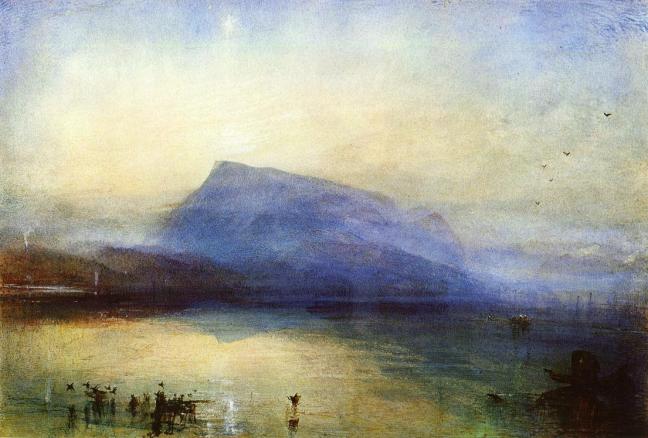
‘Italienische Landschaft’ – Pierre-Henri de Valenciennes – WikiArt

Long before any idea of a God, before any belief or possibility of a deity, of a divine command, God is already here, hiding within yourself. Or rather you yourself have just come hiding God. It means, don’t make God into an idea, a form, a projection born of your fears, of your eagerness for peace or relief. God is not ahead of you, or before you, or above you. God is not an entity, or anything that would not be your own.

God wouldn’t be God if it were an idea, a conceptual form far away from your self. For God is not something abstract, vague, distant. God is resplendent. God is shining. Not in a far away, unreachable place. God is brightly here, just as you are. You are, because of God. Because God is, you are. God is the very essence and quality of your being.

There is nothing above or beyond your being. It seems that there is, because you have limited your being by giving it a qualification. You have found it better to clothe your being with something. Then God goes hiding. Or you yourself are hiding your own divine self or essence, the possibility of your being only being. For there — in being — is the key to god.

In that being, God is. God is doing your being. That’s the extent of the presence of God in your life. In that, there is not even the possibility of a belief in God. In that, you feel God’s presence every time you feel your own presence, which makes God very present indeed in your life. In that, a belief in God would in fact trample God. It would make it an entity. A distant thing. A poor meaning. Not God at all.

Who do you think is ‘doing’ your being right here, right now? Think of that for a while. What is this being that I am? What is this I am that I am? Answer that in verity, through your actual experience, and God won’t be a secret to you anymore. God will cease being distant. You will be yourself made of the presence of God. No belief in God could ever match that.

But remember that once God’s being is recognised to be your being, then you won’t find room anymore to have your own personal being. Your own being will be lost to God. Now there is only God, which actually means there is no God at all. The idea of God is for when you have distanced yourself from God, when you don’t know yourself — that you are God’s being. In recognising yourself as God’s being, you will have lost both your being, and the idea of a God. It is a form of death.

So think twice before you say that you want to know God, or to know yourself. For this knowledge will leave you with being only. There won’t be a you. And there won’t be a God. There will be the purity of being, which is the everlasting life in death, which is to live as the One. You will lose your apparent doership, the control that you think you have, every objective identity that you believe makes you.

But in that loss is the finding of yourself, of who you are. In that loss is the end of your suffering, and the discovery of your nature as peace. This finding of your essence is the meaning behind the word ‘God’. In finding God, you will have rid of God, and of yourself. What is left is more than any word can tell. More than the word ‘God’ could ever convey. There would be no word at all. Except you. You would be the living word for ‘God’. 

.

~~~

Text by Alain Joly

Painting by Pierre-Henri de Valenciennes (1750-1819)

~~~

.

Website:
Pierre-Henri de Valenciennes (Wikipedia)

Suggestion:
– Other ‘Reveries’ from the blog…

.
Not A Thing

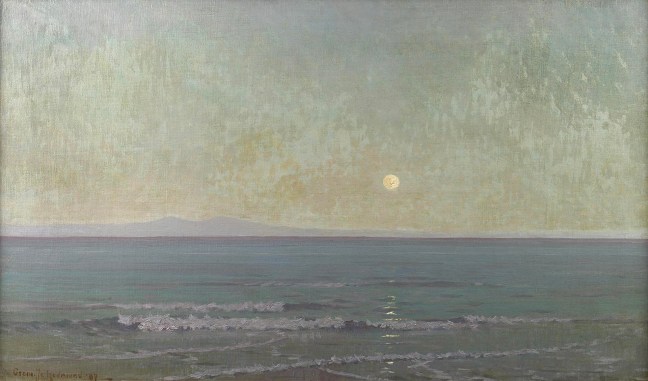
‘Seascape’ – Théodore Rousseau, 1831 – WikiArt

Although we feel to be inside the world, there is an identity in us that is not of the world. Rather the world is in that identity. The world — everything — has been made the likeness of ourself, should ourself be seen not as a thing, but as that which could never be made into a form of any kind. That’s how and when you know who you are, when you are not a thing, not an entity, not anything that can be named or qualified. There is not a thing here that you can be. We have inherited this habit, this insistence in being something. So we have pinpointed ourself and have given it a substance of its own. In this trying to be something, we have been rendered suffering adults, drenched in belief and habit, in fear and hope, addicted to security. We have lost our childhood, what is here before every qualification, and that we only worship remotely, as something precious and lost — our innocence, the playfulness contained in living, the not knowing, the absence of urge, the sense of awe, the leisure contained in plainly and simply being.

So be like a child, who has it all. Be like before every incarnation that you have been forced to identify with, in order to fit in, to feel aggrandised. Our urge to be something has deprived us from our being sufficient, fulfilled in and as our own being. By adding to being, we have lost what gave us our true essence, our identity, our security. It all came from that acquired, mindlessly rehearsed, and deeply ingrained belief that we are not enough, that we are separate, that we have to achieve, progress, be competent. There is no joy in fitting, in being proper. There is no competence involved in being who you are. Any child knows it. Babies are masters in knowing being. We’re just the bragging ones, the ones who have made life a travail, an ordeal, for silly reasons of being something. We spend all our precious time in alleviating the suffering and inadequacy we have ourself created.

There is no suffering in being. We should have left it there, when we were only being, contented in our own presence, before the thought arose that there had to be more and better than just being. The thought of it has made a mess. Now we are in the world rather than the world is inside us. Now we are something or someone, rather that being nothing that can be named, objectified, personalised, belittled or limited. Now we have created travail and conflict rather than staying quietly in the joy and peace contained in being only being. Now we are isolated beings rather than all gathered in our one shared being. Now we are many, divided, scattered, broken up, instead of being one before oneness itself, which is like being the one child of God’s undivided, unbroken, one being. This not being something is not a posture of the mind. It is the noticing of our true nature, of what is here in and as ourself that could never be made something. Our sense of being imperfect, isolated beings is born of a simple lack of attention. We have not seen the obvious. That we are the unborn, the infinite, the ‘not a thing’, and that as that, we hold in one single embrace everything that can be named and exists in time and place, everything that can be given a birth and a death, and that is now like the One inside the One. 

.

~~~

Text by Alain Joly

Painting by Théodore Rousseau (1812-1867)

~~~

.

Website:
Théodore Rousseau (Wikipedia)

Suggestion:
Other ‘Ways of Being’ from the blog…

.

Harp of the Spirit

Fresco of Ephrem the Syrian, 14th AD (part) – Protaton Church,  Mt Athos – Wikimedia

.

If you go for its gems, you will find the Christian tradition to be unbelievably rich of the highest wisdom. The work of Ephrem the Syrian is one such gem. He was a prominent Christian theologian and hymnographer born in 303 AD, expressing himself in the Classical Syriac language of early Christianity, in the eastern part of modern-day Turkey. But he was also known for his outstanding poetry, which he used as a vehicle for theologian purposes. Over four hundred of his hymns have come down to us, and many more got lost along the way, that have earned him the title of ‘Harp of the Holy Spirit’. It is said that his poetic descriptions of the Last Judgment influenced Dante Alighieri in some sections of the Divine Comedy. There is no doubt that he had a passion to put his long years of studying and reading into the fire of experience, as can be felt in this eloquent verse:

.
On a certain day a pearl did I take up, my brethren;
I saw in it mysteries pertaining to the Kingdom;
Semblances and types of the Majesty;
It became a fountain, and I drank out of it mysteries of the Son
.”
~ The Pearl, Seven Hymns on the Faith (1:1)

.
Ephrem the Syrian is said to have been baptised as a young man, and to have been a deacon, with a more limited liturgical role than a priest, and a duty centred on service. He had a great knowledge of the Scriptures and was devoted to his mission as a teacher. He made theology accessible through his poetry, and is recognised as one of the first to introduce songs into the Church’s public worship. He was eager to transmit his passion and devotion in whatever way was possible to him.

.
In its brightness I beheld the Bright One Who cannot be clouded,
And in its pureness a great mystery,
Even the Body of Our Lord which is well-refined:
In its undivideness I saw the Truth
Which is undivided.”
~ The Pearl, Seven Hymns on the Faith (1:1)

.
There is no doubt that he was an influential man, being honoured with titles like the ‘Sun of the Syrians’, or the ‘Column of the Church’. He lived a simple, ascetic life, embracing the ideals of poverty and celibacy. During the last decade of his life, he moved to Edessa, and stayed there in a small cave overlooking the city, devoting his time to his writings. In Hymns on Faith (VIII.9), he stressed that “the intellect was not intended to pry into hidden things”, emphasising the fact that our deepest identity as being cannot be understood conceptually, through the mind, but is a living, subjective reality. In his Hymns on Paradise, he described this with these exquisite words:

.

Your nature is far too weak
to be able
to attain to its greatness,
and its beauties are much diminished
by being depicted in the pale colors
with which you are familiar.”
~ Hymn on Paradise, XI:7

[…]

Discover the hymns of ancient theologian Ephrem the Syrian… (READ MORE…)

.

An Impeccable Death

‘The Death of Buddha’ – Odilon Redon, circa 1899 – Wikimedia

It is striking to think that the day when we die is always today. It is not happening tomorrow, will not take place in the future. Death is for now. This is where and when it takes place. In the present. In presence. The death of the body, its ending, may take place in the future, but is not death. It doesn’t have the implications, the magnitude of it. The death of the body is like a wave that ceases to undulate, to imagine its difference, its conflicting attributes, and finally breaks before we notice that it is not what we are, that there is here, before it, as our very making and identity, an ocean of peace. This ocean is what death is — before we imagine to be a self that thinks itself separate.

We have been moulded in and as a presence that was never born and could never die. This inability to exist or appear as something distinct, or different, is real death. This incapacity to cease or find an ending at our being, is true ending. It is a place where we can never go. This place of being has no objectivity. It is nothing that we can be or project ourself to be. It is pure being, done, final, already perfected, unattached, a free fall. It is a death so complete that it has no object. It is not the death of something, of an object, of an entity — for such death is not truly death. It is the realisation that we are not what we have believed ourself to be. That there is not here an entity, a self that could be dying, that has an existence of its own. That realisation, and above all what is left here to be and live by, truly is death. And in that death is contained, concentrated, achingly shining, the whole of life.

So death is now. It is happening now without our noticing. It is achieved — our death, the one that we fear, that we have pushed away, that we don’t want to envisage, envision, is done, gone through already. It’s a matter of noticing what is — that we are not here, that nothing was born, that it would be curious to die, that what we are has no other attributes than being. How would you put to death something that is without attributes or qualities? How would you end something that was never born? Moreover, no appearance, or thing, or body, could ever die without it being the expression or the modulation of something untouched by death. That something exists deathless is the sine qua non for the existence of death itself. That’s why life itself thrives through the exercice of death. What is deathless is our being. It is being — that which we all share in, which we call eternity, or the infinite, for it is one, and being one, it cannot be measured, qualified, or put to death. That’s how we are immortal — through only being, which we share as the experience of love. Death is when we cannot die anymore. It is obliterating objectivity — therefore our existence as an entity. An impeccable death comes at this price.

.

~~~

Text by Alain Joly

Painting by Odilon Redon (1840-1916)

~~~

.

Website:
Odilon Redon (Wikipedia)

Suggestion:
Other ‘Ways of Being’ from the blog…

.

Boundary

‘Book of Wisdom’ – Nicholas Roerich, 1924 – WikiArt

It is naive to imagine that there is a boundary or separation between consciousness and the world we are conscious of. It would be extraordinary to find that boundary, where our consciousness ends and where the outside world begins. We have an apparent and necessary boundary between body-mind and world, for our convenience, for practical purposes, and have left it there as an unquestionable fact. And everybody has complied, including scientists, that this separation must exist, that consciousness is a competence of the body, that it cannot be challenged, that it would be madness, beyond reason to do so. But there is an impossibility here. For this boundary can never be found at the deepest level, or even conceptualised. It is inexistant. Something like a pure invention. But this illusion of a separation was broken, seen through long ago, in the world of mind, of which our spiritual traditions are experts. Sages have seen long ago that there was here, between consciousness and the objective world, a seamless relationship, an undoubted oneness, no boundary, no separation, not even an unlikeness. It was all one with nothing besides it. The world is wholly contained in Mind, as Mind, and Mind or consciousness is all we are, all there is — our fundament.

So we have invented the reality of a world out of the reality of consciousness. After all, it is a beautiful find, a gorgeous dream, that we have a world, and that this world was shaped, sculpted by our five senses for as long as our senses have existed, and for as long as our bodies have been made the inevitable side effects of the appearance of a world. Everything — world, body, mind, senses — is an appearance in a more fundamental, non-objective reality. So nothing new, or other, or different was ever introduced in our reality. Reality is all there is. Consciousness is our playground, our only field or ground, and it is hosting everything in and as itself, including our apparent self. This is how we have a father and a son. A reality, and a temporary, individual, apparently located point of view on that reality. But between father and son, between reality and ourself, there is only one seamless consciousness. God has made sure that all things and beings find a habitation within him — or her. And then, ‘within’ was too taken away, for how would you have a within and a without when there is only the One?

So we have to meditate on the appearance of this world. On what is hiding behind it. On what it teaches us on our nature, on our reality, on our humanness. By the way, being human is by no means derogatory. In its most ancient Sanskrit root, the word for ‘human’ means: “The being whose essence is the capacity for self-remembrance of its divine nature.” So this knowledge of the reality of the world is a sacred knowledge. For with that knowledge firmly held, you can now enjoy personhood without the burden of separation, without the suffering that is its natural outcome. So we don’t have to be spiritual anymore. We have acquired our personhood, our humanness. Our nature has been realised, uncovered, in its primal, intended truth, and it is once and for all. Now we can enjoy a world for the first time. Now we can be lovers. Watchers. Listeners. Devoid of the superfluous. Free of our cumbersome, limiting beliefs. Recognising and accepting God’s will as our own. 

.

~~~

Text by Alain Joly

Painting by Nicholas Roerich (1874-1947)

~~~

.

Website:
Nicholas Roerich (Wikipedia)

Suggestion:
– Other ‘Reveries’ from the blog…

.
Lightness On End

Angel of Light’ – Salvador Dali, 1960 – WikiArt

I can be me forever
There is no limit to being myself
I don’t have a home in a body
In the limitations contained
In a mind.

I don’t want to refer to anything
In order to describe myself, I can describe
My body, my thoughts or my actions
My hopes and my desires
But not myself.

Myself is for the infinite
I am not to be squeezed by words
Not to be qualified or situated
I won’t appear in the world
Of appearances.

Rather all things find a home
In my infinite embrace
So I am a universal home
I am a shelter for everything
That is finite.

I am not to be divided, I cannot be
disunited, driven apart, isolated,
Alienated — my fate is to be whole
My destiny is to have peace
As my horizon.

I cannot be suffering
For suffering knows boundaries
Is born of the finite; I know only
An expanse without end — definition
Of happiness.

How could one-you-I
Bear the infinite
Or find it has a weight
The infinite is for being,
It is for lightness on end. 

.

~~~

Text by Alain Joly

Painting by Salvador Dalí (1904-1989)

~~~

.

Website:
Salvador Dalí (Wikipedia)

Suggestion:
Voices from Silence (other poems from the blog)

.

A Universal Cure

‘Creation of the World XIII’ (part) – Mikalojus Konstantinas Ciurlionis, 1906 – WikiArt

The part that we’re playing is not small. We are not living in a corner, limited by the skin of our bodies, and the world is not limited to the time and space in which it seems to unfold and have its conflicts and sufferings. The world has a foot in the infinite. In fact not just a foot, it is bathed in infinity, in eternity, and so are we, we who have been made small and suffering entities by our limiting beliefs and prejudices. We are ruling the world with our thoughts and then blame ourself for it. For the results are of course as limited as our thoughts can be. We have made the world the hostage of our limitations, and its hostility is in fact our own, that we have projected unto it. We believe and think we can only play small and limited, but in fact, we haven’t quite seen ourself as we are, and from this blindness comes the entirety of the world’s agony, and ours too.

Fortunately, ours and the world’s true essence comes spilling over in every possible way through the manifestation of beauty, and through the many expressions of love or peace. That’s what makes it so attractive in spite of all, and that’s where we should be way more curious than we are. Beauty, love, intelligence, peace, are not created by the random structure of a body and the passing thoughts in our mind. This is not where they are manufactured. They are born of infinity and wholeness. They are the expressions of the One, which we can never own. We are in fact rather owned by them, embraced by the infinity that is their reality. We must surrender to this god given identity. We don’t have to play small. Would we think of god playing small? So why would we of ourself, who are like the arm and willpower of God in God’s dream? So we don’t have to play small in this world. We ought to play our given, sacred part. We ought to be what we are and recognise ourself and the world as a whole, indivisible being. A being that is nothing but our own, that is experienced here and now every time we say ‘I Am’, and that we are fortunate enough to share in.

Act on the world from within. Mould it from there, from the source of yourself and of the world, from the ground of being that you feel as your own being, and that is the common ground of all beings and all things. This ground has the best ability. Religions haven’t called it Paradise or Eden for nothing. There is always a truth behind every misunderstood word. This ground of being is where you can play big, from within, from the interior of everything and everyone. You don’t have to create a new reality. It’s already there within and without, for the taking and for the looking. This reality is already here, already yours. There is love and harmony woven in the fabric of life, just here and now in and as our given experience. Our efforts to heal ourself and the world are veiling this reality, and so are our limited thoughts, which carry the false reality of there being persons and separation instead of the reality of one being and the peace contained in the infinite. Our own unlimited being is the ground where we can play big, for it is as large as God’s being if we are willing to notice its real, undefeatable nature. In fact, being is a universal cure, and it’s always at hand.

.

~~~

Text by Alain Joly

Painting by Mikalojus Konstantinas Ciurlionis (1875-1911)

~~~

.

Website:
Mikalojus Konstantinas Ciurlionis (Wikipedia)

Suggestion:
Other ‘Ways of Being’ from the blog…

.