The Impossible Deed

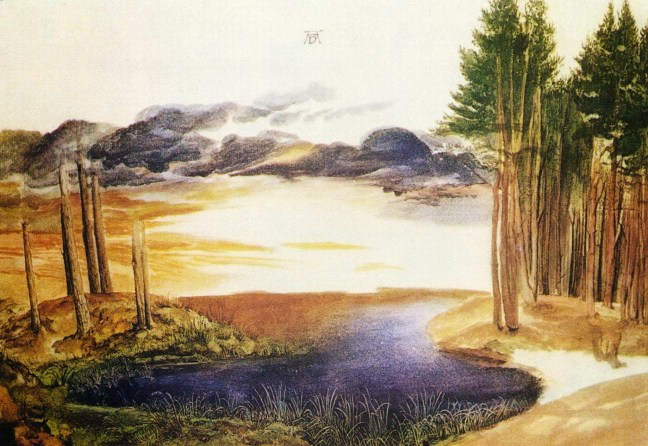
‘Pond in the wood’ – Albrecht Durer, 1496 – WikiArt


We are used to knowing
. We have been trained in it, brainwashed with it, and drained by it. Knowing has been privileged at the expense of being. So we have become expert knowers, professional doers, but at being, we are infants, clumsy, penniless. We are without a self worth the name. We are homeless without knowing it. We are without a solid ground — a trembling, uncertain little thing living in the wilderness of objects, battling in the haziness of beliefs, having no place to truly be, to truly rest. We are a wanderer of ignorance, a nescient soul lacking the elementary knowledge of its own being.

But OK, I will give us that. I understand this urge to know. Knowing gives us a bright, shiny sense of self. A fantastic ego. It is rewarding. Being gives nothing, is completely unproductive. At least, so we think. But this knowing of our being is not any kind of knowledge. The will to know the ‘I’ is a sacred will, a holy endeavour. If we want to know ourself, we will come to know it. This is a desire that cannot be left unfulfilled. This knowledge cannot resist any serious enquiry. It will give in sooner than we think. But it is a hard one to desire. The difficulty resides in wanting to know. We shy away from that desire. There is something there we’d rather stay away from. We would rather know beforehand what we have to know, and remain on shallow land. We don’t want to rock the boat of our being. After all, this is where we stand. We don’t want to be swept away from our cherished ideas and beliefs, and be deprived of the security we have so dearly earned. We would rather stay a seeker of the known.

But try it now — to know yourself. And do it with your mind, with your usual knowing faculty. Go there, at the heart of your self. Decide it. Make it your goal: to know who or what you are. It doesn’t matter where you begin. But go not to the periphery, to that which you can know as an object. Go to the heart of your self, to that thing which you have called ‘I’ all your life. What is this ‘I’ that you are being all the time? This ‘I’ is never visited. But now is the day. Go there. Find out what it is. See that you will meet there like an impassable, impenetrable wall. You will find closed doors. All your knowing, your ego, your accumulations: this has made a blocking stone. This has barred the entry, has prevented all true seeing, all knowing worthy of the name. Feel that you cannot go there with your mind. But this impossibility is gold. So keep at it. Keep pushing. Don’t be shy. Use both shoulders if needed. Give it all the strength you have. It will recede. I promise you. Everything can be known. This is no exception.

Notice that what you come against is yourself. This impossibility of knowing the ‘I’ lies in your belief in being an entity. The knower is the obstacle, the impassable wall that bars the way. To know yourself is an impossible deed. You can never know who you are, because who you are is only contained in ‘you are’ — in the feeling of ‘I am’, of being. We are so unaware of our being. Being has been forgotten, relegated in the background, replaced by a knower, a doer, a busy self that insists on knowing who he or she is. But to know ourself, the knower has to first realise itself as being. To know is to be, and to be knowingly. This knowledge dips its reality in being. There is no knowing ourself without being first. Knowing here is only achieved through being, which is the knowing of ‘I’ without a knower. The will to know dissolves into being, which is the only knower there is and will ever be.

This knowledge is found in and as the being of the one who wants to know. You can only know who you are by being it, or rather by simply and only being. In that field of self-knowledge, being is knowing. Being is the knowing done without a knower, and therefore without an object known. It is a pure, unalloyed knowing. Everything you ever wanted to know, to be, attain, achieve, all the content of every sacred book, all happiness, all longings, is found in being, in that which you already are. Your amness is the gate code cracked. You will find who you are on the other side of knowing, which is being. And it is delivered with peace, which is the nature of being. This knowledge is the only knowledge that doesn’t take place in duality. It is achieved in the oneness implied in plainly being. So this impossible deed has now been transformed as the infinite being that we were all along, but had veiled through our insistence in being a knower of the known. We don’t know who we are with our knowing faculty. Ourself is the only thing we cannot know as an object. We know our identity through the fact of simply being. There is no other knowing than being. Being is what we are, without a single ripple of a knower knowing. Know that and you will be reborn as the unborn.

.

~~~

Text by Alain Joly

Painting by Albrecht Dürer (1471-1528)

~~~

.

Website:
Albrecht Dürer (Wikipedia)

Suggestion:
– Other ‘Reveries’ from the blog…

.
The Ultimate

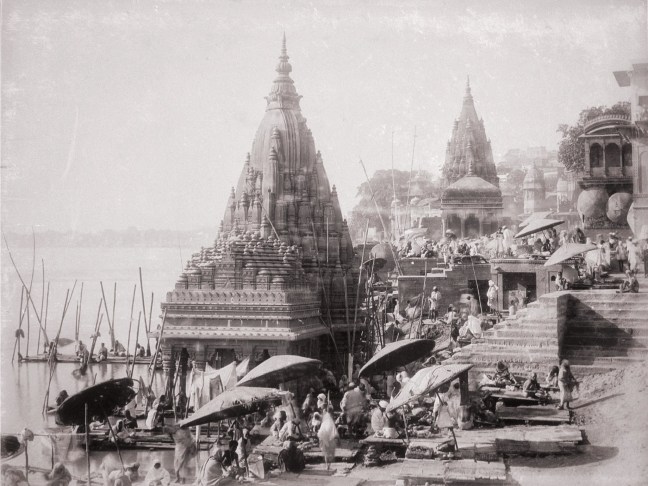
‘Benares, Temple of Tarhishwara or Well of Manikarankia – Samuel Bourne, 1860 – Wikimedia

The thing in ourself that has the capacity to know anything is itself not a thing. We can only exist in relation to things, but only the state of no-thing can we ever truly be. The illusion that we are something separate, a self — whatever we are — is due to the knowing of an object. When no such objective knowing is being activated, then there is no necessity to be anything. There is no purpose in being a self. The being that we appear to be is realised as void. And without a self to know them, things have no support for their reality. Within that perspective, all things dis-appear, are swallowed back into no-thingness, into where they have never ceased to be. This ultimate realisation is in fact not a realisation. It is the ultimate truth contained in simply being, when all duality has been nipped in the bud, unable to show any reality as such, lost in a being so subjective that nothing can be there which could be formed and recognised as ‘other’. This is the end of form. It is the state of no-thing that cannot be spoken of. It can only be approached, envisaged, but never lived as an objective experience, or from the position of an experiencer. It is the timeless, objectless point where the moth dis-appears into the flame of being. Its identity as ‘moth’ has been dis-qualified from itself to never be formed again. Now engulfed into the very no-thing that we are when all objectivity has dis-appeared, we are left with being, our pure essence, where no form could ever be formed. This is in fact, paradoxically, how a world, a thought, anything, can seem to appear — through the intercession of formlessness. This place is where we can never go. This thing is what we can never be. World, thought, self, death, bondage, liberation, are only the gaming of god, or infinite being, with no reality of their own. Only at the point of un-being, of coming to an end, can we ever be true, ultimate being. This is what ‘ultimate’ in fact means: ‘to come to an end’. To cease being anything is the ultimate truth of life. What is left is pure, essential, unqualified, infinite being, where no self or world could ever come to be. This, truly, is the ultimate. That ultimate, because of its purity, can bear in itself the illusion of being coloured or stained; because of its essentiality, can be divided in an endless chain of cause and effect; because of its unqualified nature, can adopt any form or quality; in reason of its unknowability, can be known through a multiplicity of names; and because of its infinite nature, can be seemingly separated as a multitude. And it does this without ever ceasing to be the ultimate. Now, know in all occasions that you are not a suffering self lost in the multitude, with a name, a form, and qualities — an entity living in a world, endlessly caught in multiple, arbitrary causes and effects. Know only being as your ultimate, uncreated self. There only is the abode of peace.

.

~~~

Text by Alain Joly

Photograph by Samuel Bourne (1834-1912)

~~~

.

Website:
Samuel Bourne (Wikipedia)

Suggestion:
Other ‘Ways of Being’ from the blog…

.

The End of Self-Improvement

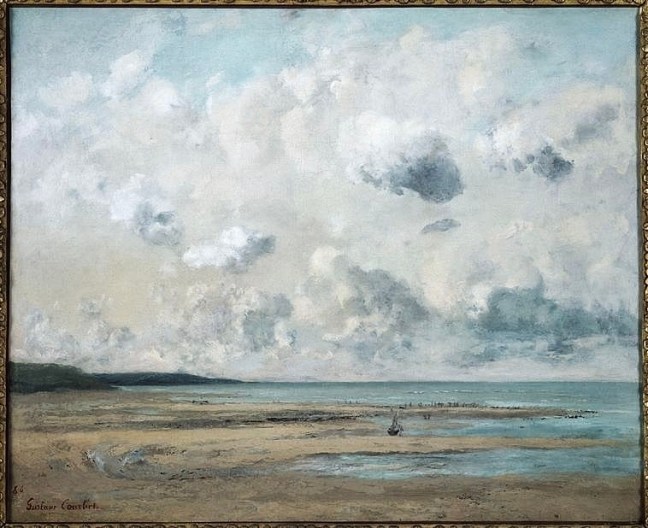
‘Shores of Normandy’ – Gustave Courbet, 1866 – WikiArt

.

To know that your Self has not changed,
this illustration itself is enough.”
~ Ramana Maharshi

.

There is no ameliorating emptiness, developing the unborn, aggrandising what is, and expecting the timeless to be anything more or different than what it is. Being leaves no room for improvement because it is not a thing, it is not a result, a something that has a cause. How do you improve the non-objective? How does the infinite progress? How do you make better a self that is absent as self — as something different or separate from experience? So self-improvement is a misunderstanding and a form of violence. It is an imposition, a belief that we squeeze to fit our idea of reality, an objection to the innate perfection of what is. It is mind-made, a product, a progeny of conditioning. It is designed for the continuation of our belief in being a self or entity that can be objectively defined. And remember this: every object, every ‘thing presented to the mind’ — as Latin word ‘objectum’ stands for — is in fact nothing but something thrown in the way of your knowing who you are. This is the meaning of Latin ‘obicere’ — ‘ob-‘: ‘in the way of’ and ‘jacere’: ‘to throw’. The self that you believe yourself to be, and that you strive to improve, is your hindrance. It is what makes you blind to your true nature.

To improve on a self is to make it continue, it is to give it credit, to give it the existence it never had. After all, we all want to feel real, to see that we can act, and have a power on our self. So we have the desire to consolidate and sculpt our being through rendering it an object that we can manipulate. We want to make a profit of our self, and see a return on our investment. In fact, to improve myself is nothing but a form of merchandising. It is a trade and a transaction. It is retail management, the ‘cutting off’ of our self with the aim of maximising profits. But don’t ever forget that if you are able to improve yourself, you can therefore also make it deteriorate, worsen, decline, decay. So what then?… is self-improvement decay, error, illusion? Is it ourself going astray, being mislaid? Are we really so sure that our being could ever decay? That awareness is a so fragile thing?

[…]

On how there is no improving our self and being… (READ MORE…)

.

The Reluctant Messiah

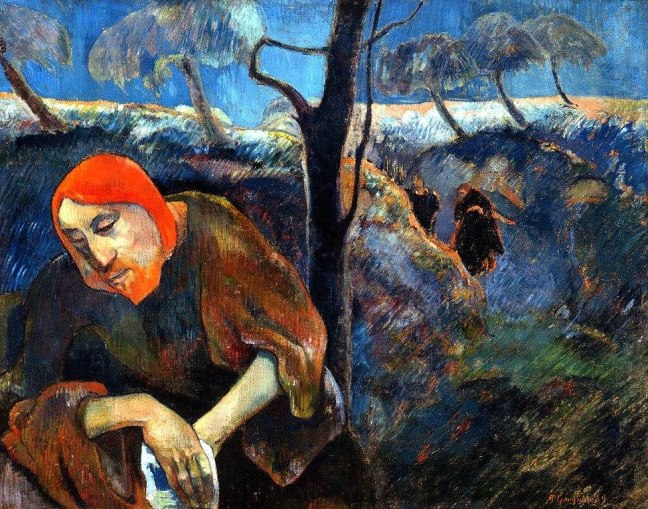
‘Christ on the Mount of Olives’ – Paul Gauguin, 1889 – Wikimedia

.

Father, if thou be willing, remove this cup from me:
nevertheless not my will, but thine, be done.”
~ Luke, 22:42

.

Maybe it is more serious than you think. Maybe the line has been crossed without your noticing. Maybe there is no return to being what you imagined to be: A self, a person, self-contained in a body, armed with all the thoughts needed to represent you. Maybe there is no memory left of this old belief, and that you have to let it all go, all the kaleidoscope of separation, all the daunting suffering, all the interplay and thrill contained in being just one piece in the puzzle of life. Now all pieces have been joined to fade into one single presence with no pieces in it, a presence that you have espoused, that you have recognised to be your home — inherited and inhabited since before the dawn of time. Now you may have to move in with fear and reverence, for living in that new identity has consequences. It might transform you beyond your recognising, and in more drastic ways than you had expected.

It might shatter your dearest hopes and expectations, that were here in your heart, entertained to the point of cultivation. It might give you what you have sought all along, and stop dead every single desire for an ‘other’ to satisfy and fulfil you. It might demolish a dream, and disintegrate the map of yourself, that described who you were in such lively, never-ending details. It might silence you, when you so much enjoyed the delightful babbling of your anxious mind. And I won’t mention all your intimately held treasures of belief, all your ideas and opinions, that have put together that carefully built image of yourself: how they might be dampened, damaged, discarded for being found redundant.

[…]

Read more about how our resistance can be made into surrender… (READ MORE…)

.

God Unveiled

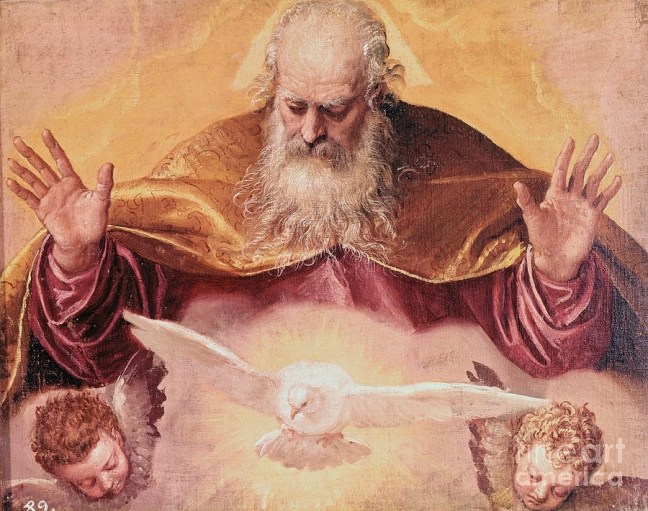
‘Illustrated Depiction of God with Holy Bettmann’ – Tintoretto, 16th AD – WikiArt

.
For many of us, god is nothing more
than the idea or belief we have inherited of such a being, an idea that is conditioned by religion as the lazy representation of an omniscient, omnipotent entity that is both our creator and protector — in the popular Christian imagery an old bearded figure who lives far and away from us, in a lofty, elevated place for a good view on its creation and creatures. The existence of such a god is almost only a matter of belief or faith, and the relationship we have with it one of reward and punishment, devotion, fear, prayer, praise, but rarely of understanding and exactitude. It seems that we better have god in a hazy place, feel more at ease with not knowing too much about the wisdom that may hide behind that term. So our ignorance is a calculated one, a refusal to rock the boat, and a patting of our carefully assembled opinions from which we derive our sacrosanct identity and security. But let’s tackle god here. Let’s undress the myth and have a thorough eye-contact with the divine. Let’s dare some experiential understanding. Let’s have god out of its hiding place.

Maybe god was never defined because it is the one thing in life that is indefinable. Everything objective that we can know, see, hear, touch, smell, taste — qualities and all — can be described with words and given a name. We have our life surrounded by objects. The objective has filled our experience to the brim, and we are being choked in it — with no breathing possible, and no space allotted to the unknown. God is one such unknown. But how could we describe something that we cannot know as an object? So to god we can only give a generic, provisional name. Because god cannot be pointed at and recognised as an object or entity. God is not an easy catch. The divine defies our understanding, and this defiance is at the core of our misinterpretation of god. So if you want to know god, you have to look for it in your life, and turn every stone and pebble that crowd your experience. So start by removing everything in existence that you can know, see, hear, touch, smell, taste — qualities and all — that have an objective quality and can be given a proper name. You know: everything that you can show to another fellow, and that he too can see, hear, know, understand, and comprehend, just like you. Take it all away, and then see what remains behind.

[…]

An explanation of the nature and reality of God’s being… (READ MORE…)

.

An Explanation of Reality

You may not be interested in these matters. You may be an atheist, a non-believer. You may have an aversion towards all things spiritual. It doesn’t matter. You will get it all the same, that the world, the universe, everything — including yourself — are not there. Nothing is really there. Not in the way you had imagined. This is not like everybody has been telling you. Not at all. And you will see it with your logic, with your scepticism — a golden value by the way —, with your Cartesian, rational, solid mind. I will explain. You just have to listen carefully. There is no world, and I will expose to you how it is so. I will demonstrate it to you.

You may think there are billions of other people, countless other versions of suffering, a multitude of experiences, a world teeming with crowds and achievements, and all manner of things, from the most sublime to the most appalling. And there are indeed multiple points of views. But all of the world’s sufferings will always ever be experienced as yourself. It will be for whoever you may be now, and be experienced in whatever experience you may be experiencing now. The whole world is always only a first person experience of the world — in whoever you happen to be at this moment. When another person experiences suffering, it will then be this person’s only reality, and so on. So you will always ever be yourself. There are no ways to be another than yourself, to have another experience that your own experience of being yourself — which you experience right now. So the totality of humanity is contained in that one subjective experience of being. It is all there — in being. The billions of subjectivities, the myriad of experiences, the unspeakable suffering, the expansion and the veiling, the gruesome and the awe, the glory and sacredness of truth, and the compelling ignorance. Every experience of every possible being in this world is in essence made of that one experience of pure, ethereal being. And suffering is when you don’t know that.

[…]

An explanation on how the reality of everything is only being… (READ MORE…)

.

Let’s be very Clear!

What a pity! That truly is a pity isn’t it, that the Divine isn’t an object? Consider for a moment: if God’s nature was objective, a thing to be acquired, we’d all be running after it with eagerness. Nothing could stop us from getting it. The path to it would be clear, easy, rehearsed a thousand times, with unmistakable steps. We would all be happy — the shy, lazy ones only in a small measure, but clearly so; and the greedy ones probably piling chunks after chunks of happiness at home, for the bad, chilly days. No doubt that after a while, happiness would be placed in the market place, to be simply bought — a democratic God, available to all. Only, God would then become so pricy, that only the rich amongst us could afford it. The poorest would have to stay unhappy, miserable. After some time, the rich ones would no doubt find God boring, to be replaced by another more exotic good. And happiness would be set aside, discarded as a thing of a time past. Dreadful prospect, isn’t it?

But thank God, the Divine wasn’t made into an object! So none of this could ever have happened. Not to God! To anything else yes, but not to god, not to happiness! The price for God had been set, right from the beginning, as an inestimable one. And the way to acquire true happiness was made into such a subtle, noble pursuit, that no money could ever be of any use for it. We may try, as we did for centuries, to make God’s being into another subtle object, something convenient, setting methods, churches, temples, ashrams, where it could be practised, and happiness made into a precious ornement to be obtained. But none of that was found to be effective, in final analysis. Only a few rare, lofty, unmatchable seekers were able to find God where it truly lived, and make themselves so available to it as to become of it themselves. These rare beings have found there a joy so ineffable as to appear unreachable, and God was downgraded to a celestial being or an exotic state, to be idealised and worshipped. That’s not yet an ideal situation, is it?

So let’s start again and be very clear from the beginning! God has never been, will never be, and could never be found as any kind of object. It is not something to be attained, and its presence is not at a distance from us. The difficulty in recognising its presence lies in God’s utter subjectivity, and in the abundance of it in ourself. So don’t move from where you already are. This place of yourself is the only suitable enough spot for happiness to thrive, and a precious enough container for God’s humble, sublime home. And don’t wait for another time than this present time of now. God is only accessible here and now. You will find it nowhere else. Stay there. In yourself. As yourself. But go to the very heart of it, at the core of what you are and always have been. Who you already are is the secret cabinet where God dwells, and has dwelled all this time, without your noticing.

Now I’ll tell you a secret. Ask yourself the question: What is the only portion of my present experience that is exempt of objects, of things known? Find this place in yourself where you cannot be any thing, where you cannot be located, where you cannot even be named, where you are made no existence at all, where you cannot know anything but your own present being, where you and the whole world can be embraced in one subtle presence that cannot be found but is paradoxically all there is, all that you were, and all you will ever be. Feel this presence in yourself, as yourself. See that you have been in God’s home all along. Gently notice its glory being slowly revealed. Delve in it, and as it, patiently. This is what God’s being feels like — that subtlest presence that you are in fact referring to when saying ‘I’. There! Do you feel it? Rest and live only as that.

.

~~~

Text and photo by Alain Joly

~~~

.

Suggestion:
Other ‘Ways of Being’ from the blog…

.