Offerings of Praise

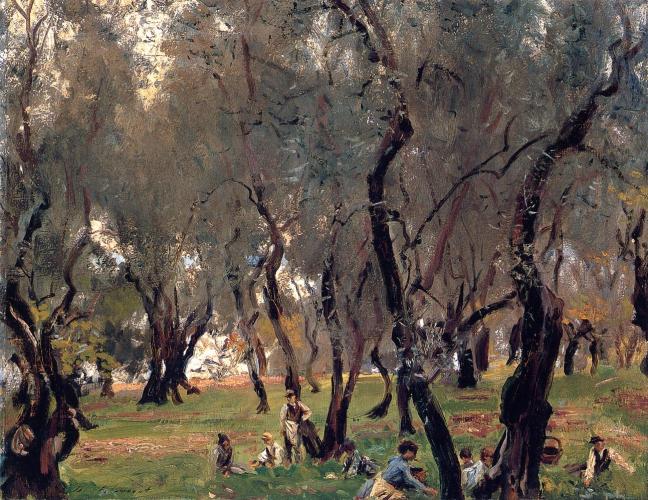
‘The Olive Grove’ – John Singer Sargent, 1908 – WikiArt

I don’t know if you have ever been in a gathering of truth seekers. Men and women willing to learn the truth of their being. Rendered humble enough to go through this discipleship. Battling to overcome their suffering. Journeying through the opening of their heart. Relinquishing their endless identities. Embracing infinity and friendship. If you haven’t, then I’ll leave this blessed and prominent ancient Christian theologian Ephrem the Syrian speak for it. Describe it in its own poetical terms. Tell you what it is like. Literally. And if you have, well then you have.
.

Who has ever beheld gatherings of people
whose sustenance is the giving of praise?
Their raiment is light,
their countenance full of radiance;
as they ruminate
on the abundance of His gift
there burst forth from their mouths
springs of wisdom;
tranquility reigns over their thought,
truth over their knowledge,
reverence over their enquiry,
and love over their offering of praise
.”

~ Ephrem the Syrian (Hymns on Paradise, IX:28)

.

~~~

Quote by Ephrem the Syrian (c.306-373)

Painting by John Singer Sargent (1856-1925)

Additional text by Alain Joly

~~~

.

Bibliography:
– ‘Hymns On Paradise’ – St. Ephrem the Syrian (trans. Sebastian Brock) – (St Vladimir’s Seminary Press)

Websites:
Ephrem the Syrian (Wikipedia)
John Singer Sargent (Wikipedia)

Suggestion:
Beauty in Essence (other pointers from the blog)

.

Anatomy of a Desire

You must not desire the truth. You must let the truth desire you. For truth has the greatest desire, the most efficient one, to which yours is but a pale copy. It is the desire to be itself alone, unaccompanied, unsoiled. In the fulfilment of that desire, truth will swallow you, will undress you and render you transparent, nonexistent, naked. You’d be inspired to let go, to give in, to trust that desire which is so greater than yours. For your desires are small, inadequate, vile, selfish. They won’t get you where you truly want to be. They will miss the mark. Every time.

So don’t desire truth. Don’t make it like something you can possess. Truth is in fact already possessing you, the only one in command. So undress your being of the superfluous. The superfluous is all the beliefs attached to yourself, that makes you a self that feels separate, an entity in a body, delineated by its thoughts and feelings, that looks up to experience, and betrays its profound suffering through its constant desire for fulfilment.

Notice that your desire has no true owner. The one that desires is not really there. It is but an idea, a desperate attempt to feel that you are complete. But you won’t feel complete by means of desiring, for desire is already the sign of your incompleteness. The problem with being a desirer is that it places you ahead of your natural identity as being. It is a position of ignorance with a plan and a hope. The desirer is a made-up entity whose unacknowledged goal is to consolidate itself. So don’t make truth like a projected goal to be achieved. The desired object of enlightenment, or realisation, was never intended. It was in fact all for the desirer, to strengthen your false identity as a self, to adorn the temple of separation, to attach yourself to another idea. Liberation is not in desiring to be liberated.

[…]

Continue this exploration of desire in matters of truth… (READ MORE…)

.

The Fragrance of Life

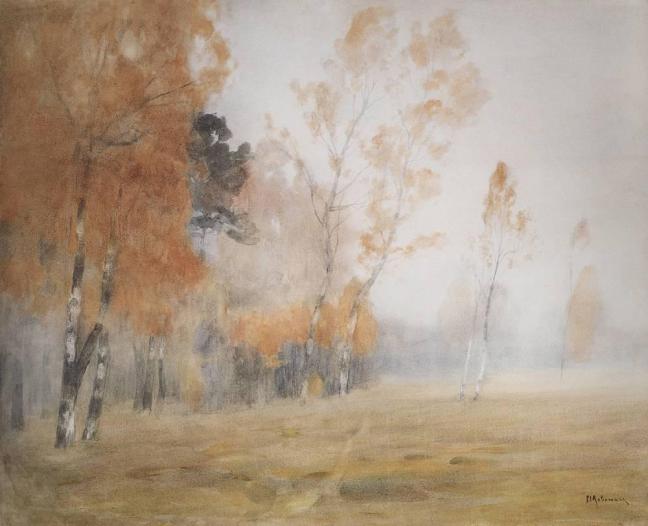
‘Mist. Autumn.’ – Isaac Levitan, 1899 – WikiArt

There is a time in our life experience, when we come to understand what this complex arrangement of thinking, seeing, hearing, touching, tasting, smelling is all about. The source of it all. What it comes down to be, in essence, in feeling — the simplicity of it. It all starts there, from feeling. When we have the feeling, life flows with an intrinsic harmony. When we have the love, sentiments and actions take their right place. Every experience draws its best colours from this primordial feeling of being. It all flows down from that storm of aliveness which is our true nature.

The moment of understanding is when the teaching, the path, the ‘how’, the description, the words, reveal their redundancy and are stopped in their course. When the doing recedes and leaves its place to simply and naturally being. When we cease being a person and recognise our nature as the infinite nature of everything. The words are not here to teach us a new skill, or even develop it. They only come to provoke. They form to enjoin us to look and notice what is already here, fully alive and vibrant — the final word behind our being human.

At the time of creation, a composer is singing or playing his music first in his mind, and then writes it down. Our understanding proceeds on the same line. Truth comes first. It is played, tasted, lived in and as our own being, and the teaching, the words come to only confirm it, to give it the solemn acquiescence of wisdom, or provide the map of the land before us, of which we now espouse the very ground. It is all a question of feeling. Truth is truth-feeling, visiting the land, smelling its atmosphere, merging with its fuming ground, where we are given the grace to taste of the unity of being.

Truth is that which is here before the passing events, below the ups and downs of existence, encompassing everything that forms at the periphery of ourself. Truth is the beauty that our eye or ear seem to catch, but which is in fact within our soul, in our inside, our essence, our being. Truth is only about feeling being, then, and only then, are we gifted with thinking, seeing, hearing, touching, tasting, smelling — all the world that forms and makes our experience, and is like the flower of our essence. In the accomplishment of truth, we embellish the world with our being.

The feeling of being is the crowning point of our experience. It is lacking when there is the illusion of our being a self contained within the limits of our body-mind. It escapes us when we exclude the world and take it to be outside our own person. But being is hiding in plain sight. In fact, experience itself, in its totality, is but the feeling of being. There is no experience without first feeling being. The feeling of being is our foremost experience. Yet in a tragic and absurd way, experience itself has been the one concealing that. All it contains of beliefs, identifications, and imaginations, is preventing our being to be felt, and the fragrance of life to be enjoyed. We have hidden this simple fact from our own self: that we may be nothing more than the feeling of being. All else is only added to make a good story. 

.

~~~

Text by Alain Joly

Painting by Isaac Levitan (1860-1900)

~~~

.

Website:
Isaac Levitan (Wikipedia)

Suggestion:
Other ‘Ways of Being’ from the blog…

.

The Intimacy of Experience

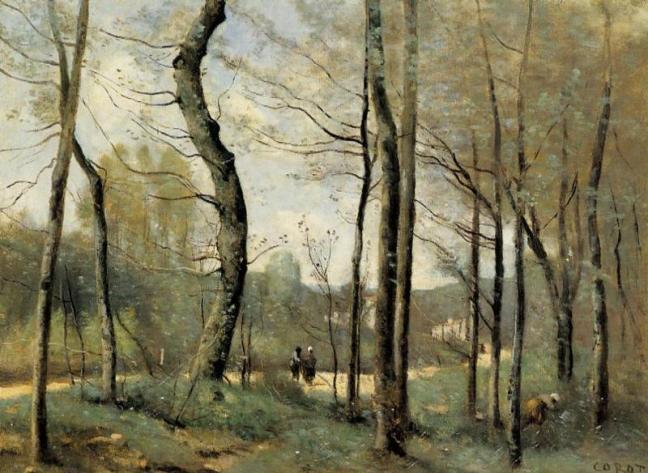
‘First Leaves, near Nantes’ – Camille Corot, 1855 – WikiArt

.
I will tell you where to be
. Be where every experience feels an equally good experience. Don’t be attached to judgment and comparison. These are the mind’s favorite tools and activities. The mind tricks you to believe that experience is an uneven ground. That according to the content of your experience, you will be gifted with either happiness or suffering, peace or conflict, harmony or disorder. So the experience you are having becomes extraordinarily important. We become dependent on what happens to us, and come to dread it. So we retire into the secure place of our habitual self, with its cortège of worry, control, expectation, and manipulation.

There is a place in us where you don’t find experience to be such a determining factor. Where you will not let experience determine you, fix you, limit you. You won’t be shaped by its content. You won’t be made into something, someone, with qualities and flaws, to be judged, evaluated, compared with — the likeness of experience — in fact, just another object. The mind is a manufacturer of objects, entities, persons, fixing the insubstantial nature of your being into a self to be moulded and made either happy or miserable. To be made happy by an experience is to be cheated on by it: we are being manipulated, and made to believe an illusion. To let experience make us miserable is sheer deceitfulness, it is us being easily dazzled by the treachery and artifice of objects.

[…]

Continue this exploration of the nature of experience… (READ MORE…)

.

Spiritual Wine

‘Lovers under the moon’ – Serge Sudeikin, 1910 – WikiArt

The word ‘spiritual’ is quite a nebulous one. It is used indiscriminately, carelessly, for a bewildering array of wildly different practices or beliefs. Krishnamurti didn’t like the word, which he found ‘ugly’, ‘romantic’, ‘unpleasant’, and used it cautiously. So maybe the time has come to clean the word, to give it some of its forgotten brilliance, and dig out its original meaning and raison d’être. I would start with the suggestion that the word ‘spiritual’ simply wants to point something at us: that the world, the whole of it, our experience, everything, is in fact made of ‘spirit’. Spirit is all there is, the only thing in presence. And believe me, this is a timely pointer, for most of us believe the world to be a hard reality, made of something solid, composed of a variety of different objects — our body-mind being considered one such object. So the word has the virtue of reminding us of our true nature, of the nature of everything as spirit, or consciousness.

But it is only a provisional word, one for our time of misunderstanding. There will come a time when the suggestion that experience is made of spirit will be a matter of fact, something integrated, not to be thought about anymore. The word will then become redundant, to be replaced by another word of a higher intensity and meaning. Or maybe there won’t be any need for a word to describe reality. Reality will have been understood, digested, lived as the fact of simply being. Spirituality will have become useless. There will be no need of spirituality, no need even of the word ‘happiness’, or ‘peace’. Once you are wholly, and only spirit, which is peace, which is happiness, what need is there to mention it? There will be no seeking either. After all, what you are, you are. Identity will have been achieved. No suffering around. Seeking obsolete. Out of date. To be disposed of. What will remain is a splendour, indescribable, filling the world of experience to the brim with its essence.

Also, spirit means ‘breath’. It is the breath of life, a thing invisible, transparent, quietly sitting in the background, and yet essential and life-giving. It is what is playing us, giving us an identity and a sweetness of living. For spirit is like the air we breathe. It is still, silent, empty, yet a breath that can blow our mind and make us like an inextinguishable fire. It is the breath of god that we have left unnoticed time after time, but whose presence is holding us in its firm embrace. It is a breath of devastating effects, laying us waste, destroying all traces of suffering and separation, blowing our self away, not by slaying it but by showing this self to be just the air within the divine breath of god. You had thought yourself a hard, solid, but fragile entity, and are now shown to be empty yet as indestructible as is a fire in the wind. That’s what being spiritual, or spirit-like, truly means.

Spirit also means character, and courage. It doesn’t pretend, and rejects a lukewarm understanding. It is uncompromising and free. It is not afraid, not conditioned by the hazards of life. It stays firm, alone, whole, undisturbed. Spirit is eternally high, but mingles with the lowly too, for it is humble by nature. And it has clarity as its best asset, for it is blessed with the purity contained in knowing without being itself a knower. This knowing is undivided, self-contained, total, applying to all and everything. This is what makes it holy, a spirit which cannot be taken apart, and which contains universes beyond universes. It has a religious quality, a sanctity that is beyond what humans have called sacred. The wholeness of spirit cannot be broken, dampened, violated, injured, or even changed. Its holiness lies in the fact that it is one without any division or addition.

And spirit is music too. It has a sound to it, and it is our duty to play it, or rather being played by it — the musician being god, or spirit itself. Our being is found to be the breath of god, the movement of consciousness singing our life on the reed of our apparent self. As that, we may become the vessel of a life whose notes have risen above the ten thousand things of existence, to be taken by various harmonies of silence, peace, love — all carried by a quiet but devastating breeze of inner joy, like a hum. We are like God’s music, and our experience is bathing inside it, and being made melody. This is what spirituality is, and what a life lived in and as spirit sounds like.

‘Tis the fire of Love that is in the reed, ‘tis the fervour of Love that is in the wine”, Rumi once wrote in the Masnavi. So spirit is a delightful beverage too. It is what gives us this gentle drunkenness which is the state of our self when it recognises itself to be but God’s being. In Spirit, we are intoxicated by the ‘Love that is in the wine’. For this nectar, we are willing to pay the price of surrender at the tavern.

.

~~~

Text by Alain Joly

Painting by Serge Sudeikin (1882-1946)

~~~

.

Website:
Serge Sudeikin (Wikipedia)

Suggestion:
– Other ‘Reveries’ from the blog…

.
Creep

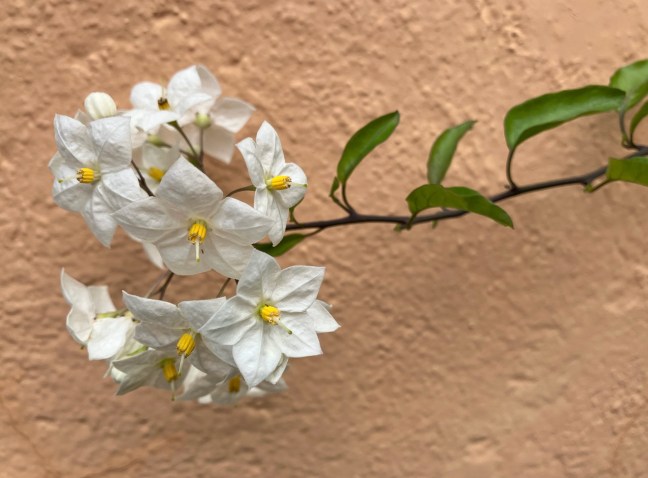
‘Radiohead @ TD Garden (Boston, MA)’ – by Kenny Sun – Wikimedia

I wonder if you have ever seen the face of love, what loving indifference is? I have some days ago, while watching a concert by Radiohead on the internet. It was during the band’s most celebrated hit, called ‘Creep’. This song is the stage of an unrequited love. But I suggest it goes further than that. It is the story of a rage, of not being enough. We all have lived through expectations that were turned down. We all have made efforts that didn’t pay off. We all want to feel special, to belong, to be at peace. We abhor being behind ourself, faking our contentment and control. So we all have known this feeling of being a ‘creep’, or at least of not being good enough. That’s why we live so hectically, constantly looking for better and more, wanting to feel complete, enough at last. Maybe that’s why the song happened to be such a hit, beyond its obvious musical qualities: it is like an echo of the secret battle we are engaged in, of our quiet desperation, and of our repeated attempt to put an end to our suffering.

I was watching the song being played, the singer yelling its rage amongst the gnashing saturated blasts coming from Jonny Greenwood’s guitar, lights illuminating the stage like a flash of lightning would. Then it surprised me. For just a few seconds, the camera caught in the public a young woman whose attitude was quiet, mildly concerned, but deeply tuned to herself. Everybody around her was involved, shouting, dancing, taking their share, drawing their identity and happiness from the vibes of the music. But she was not. Didn’t need to. Her need was to be quiet. Peace was her home. Beauty was where she was, and where she had landed on. She was tasting her being. She was taking it all in, but with a peaceful, loving indifference. For her, separation had been slain, and she had become a silent watcher, a taster of being, a madonna.

There was no need for her to dance and shout the lyrics of her favourite Radiohead song, for she dwelled in silence. It was all taking place somewhere else, in a placeless place where time was nowhere to been seen or experienced. All our objects of adoration are never the point, are never the goal. They are the means to feel and taste in ourself this most profound sense of peaceful being that is always here, always now with us, and that we miss in reason of our obsessive attachment to objects, with their derived outcomes and rewards. When the love or enthusiasm for an object — a song, a piece of art, a football match — is brought to its paroxysm, we merge with it, and in this merging forget our own person. This forgetting is the stage set for a meeting with ourself, for an encounter with our own silent being. We feel what we could call, a paradoxical serenity. So the pleasure of the senses is never the object of our desire, and never what our seeking is about. We are after something more elusive, the harder catch that is our own being. We long for this profound sense of peace and security that lives there as our identity. This serenity is not dependent on circumstances, but lies naturally in and as our most intimate being. This pure being is our true identity, and is in fact what we are really seeking behind all our pleasure oriented pursuits. Pleasure can never be a match to being. Pleasure is but the child of separation, while being is the realisation of our deepest identity as love, and its expression as oneness.

Love takes over experience. Love dominates experience, it brings it down to its knees, reveals what it is made of. Experience appears to be of secondary importance, not because it is not important, but because its importance lies in the light that shines on it and gives it its reality and meaning. We cease to be personally involved. We are just present, and this presence is our most precious and efficient involvement. We are indifferent not because we do not care, but in reason of the preeminence of love in our heart, with its acute, unfocused awareness. Love responds to the whole. There is no personal self present, that feels separate and insecure, fearing and seeking. That one is absent, leaving all the place to the quality of simply being, with no preferences in it, but with a total, impersonal, peaceful engagement. This peace is the most profound signature or identity contained in every experience that we go through. To recognise the nature of ourself as peaceful being, is to recognise the nature of experience as that one same peaceful being. We will never have to complain: ‘I wish I was special’. Never have to say: ‘I don’t belong here’. In love, there is no being a creep.

.

~~~

Text by Alain Joly

Photo by Kenny Sun (Wikimedia)

~~~

.

Website:
Creep (Radiohead Song) (Wikipedia)

Suggestion:
Other ‘Ways of Being’ from the blog…

.

Entangled Life

There’s been a trend here for millennia. I would call it the trend of entanglement. Or maybe it is rather a habit, a belief, an erroneous view that we are bound, attached, entangled to our life, to its situations and circumstances. We are enmeshed in our thoughts, worries, conditionings, capacities, habits, patterns of living from which we get no release. Thankfully our sleep comes timely everyday to deliver us from the demon of entanglement. Yet we have to bow to the evidence that our perpetual seeking is nothing but our repeated attempts at freeing ourself from the prison of entanglement. We have tied ourself to its relentless effects, and are suffering consequently. We have failed to see that our entanglement is born out of our belief in being separated from the life we are in. We most of the time feel alone, detached, broken up, disconnected from our surroundings which as a result challenge us, and against which we have to fight, or from which we must repeatedly flee into further separation. That’s the life we live in for the most part. That’s what we have. An entangled life.

Now, the reason we feel so overcome and ruled by our circumstances — and often defeated by them — is that we take our many entanglements for a reality. Through our being a person, we have made everything that is ‘other’ a possible threat or cure, and live therefore in constant insecurity — hence our compulsive seeking or avoiding. But we haven’t gone far enough, to find out that there is a supreme, sacred entanglement, which ties us to our self in an irrevocable way. This entanglement with our being is devoid of all previous entanglements. It ties us in an embrace so total that our person feels merged with the being it is made of, and discovers itself to be not there, or rather to be only one, undivided being with no need or possibility to be tied to anything but itself. That’s how the feeling of being entangled is vanquished: by a more radical, ultimate, terminal form of entanglement. An entanglement with no entanglement in it, for it has disentangled itself from all objectivity or otherness, and be made into a subjectivity so absolute that it has only itself as a possible other — which means no otherness at all. This absence of otherness is the surfacing of a life that we discover to be devoid of inner suffering or conflict. It is a life of freedom, untied, disentangled, and therefore spacious, peaceful, and bound only to its essence, which is love.

.

~~~

Text and photo by Alain Joly

~~~

.

Suggestion:
Other ‘Ways of Being’ from the blog…

.