The Sober Life

.
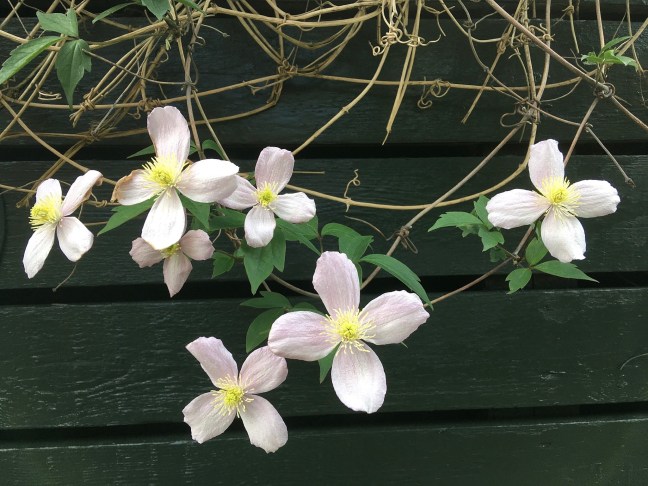
To be sober means not to let the heart cling to anything except God.
Cleaving to other things makes the soul drunk,
and it begins to do quite unaccountable things
.”
.
~ Theophan the Recluse

.

~~~

Quote by Theophan the Recluse (1815-1894)

Photo by Alain Joly

~~~

.

Bibliography:
– ‘The Art of Prayer: an orthodox anthology’ – Compiled by Igumen Chariton of Valamo (Trans. by E. Kadloubovsky and E. M. Palmer) – (Faber & Faber)

Website:
– Theophan the Recluse (Wikipedia)

Suggestions:
Beauty in Essence (other pointers from the blog)

.

Treasures of Grace

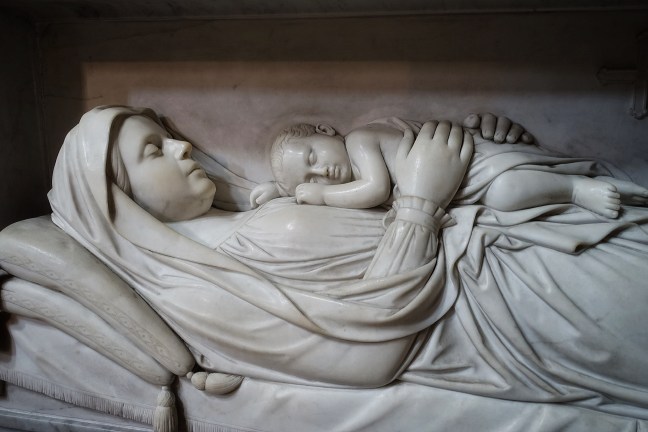
In Basilica di Santa Maria del Popolo, Rome

.“The heart is but a small vessel;
and yet dragons and lions are there,
and there likewise are poisonous creatures
and all the treasures of wickedness;
rough, uneven paths are there, and gaping chasms.

There also is God, there are the angels,
there life and the Kingdom,
there light and the apostles,
the heavenly cities and the treasures of grace:
all things are there.”

~ Macarius of Egypt (Homilies 43:7)

.

~~~

Quote by Macarius of Egypt (c. 300-391)

Photo by Alain Joly

~~~

.

Bibliography:
– ‘Fifty Spiritual Homilies of Saint Macarius the Egyptian’ – by Macarius of Egypt – (Aeterna Press)

Website:
Macarius of Egypt (Wikipedia)

Suggestions:
Sayings of the Church Fathers
Beauty in Essence (other pointers from the blog)

.

A Plea Answered

For those of us who complain that god never answers their plea, let me tell you something. God is more subtle than that. He never was an entity, with a voice that could speak. She never even was a kind of object, however subtle, that could soothe at the level you are expecting, through the granting of a favour, the offering of a reward. Neither could god curse you with punishment. He doesn’t take sides. She never takes umbrage. God grants only one thing: Its glorious, infinite, loving presence. The lack of answer, the absence of favour, the withdrawing of reward, the malediction of punishment… it’s all on your side. Because you have blinded yourself to its eternal smile at you. Because you have covered your ears lest you might hear its constant whisper at you. For you were too busy thinking, pleading, complaining, expecting, reaching for an outside object or presence, that could give you, forgive you. For you were too engrossed in overwhelming feelings, worries, disputes, about yourself and others, and had definite certitudes about so many things, and such endlessly running opinions and preferences. In other words, you have isolated yourself, separated yourself, crippled yourself, and as a result made god silent and powerless — an empty void where it isn’t.

But god is never silent, if you turn towards where it lives. Its subtle presence at the core of your being is speaking endlessly, calling you with all the patience required. And that presence is never powerless, for it holds you eternally in its sweet embrace, as you can notice if you look at your own being with the same passion. And please don’t forget that your suffering is god’s answer to you. It is her calling disguised, what you had expected all along, the present that you didn’t bother to wrap with golden ribbons. And god also made you a favour. He came to live right at the heart of your being, so that you could never be at a distance from him; so that you could feel him as your own, ever-present self. And by the way, god wasn’t holding back anything. She is generous, offering you the constant reward of peace and happiness. Only you have to feel it in your heart, and not rush out for an auspicious circumstance or a desired object. And if you have ever felt the pang of a curse, understand that this indeed was of your own making. For you have cut yourself from god’s divine hold, and in doing so have lessened the abundance of its bounties. You have made yourself a lone traveller. You have shut your heart from the fountain of love that is steadily flowing as your own, ever-present, precious being, which is god’s being too. God has no power to curse, but you sure have, until you get the courage to open yourself to the infinite presence that sits in and as your self. That simple feeling of being, that all powerful god eternally crowing your self, will block all possible entry for a curse, and keep you safe.

And now for one last, precious recommendation: To live with the presence of god in your heart not only will protect you from your own talent at cursing yourself, but will open wide the doors of perception for the flooding of beauty. It will make your life a torrent of peace. For god will shower on you gifts after gifts of its benevolent presence. And he will grant you all possible rewards, all answers, all favours, clearing your path towards the blessing of immortal life, of unconditional love and objectless happiness. God was never disingenuous. She never was the void or absence that you took her to be. He/she is a presence so full that you could be his or hers for life eternal. Some have called it the Kingdom of Heaven, some Nirvana. And what blessing and surprise it is to find it right here, right now, as your very own self, veiled only by the plea of not having it, of wanting it, hoping for it, looking for it. Remember: you are not a self in your own right. Your self is nothing but god’s presence espousing you. For you share the same being, as the being of everything and everyone. But I won’t say more. Now you have your answer.

.

~~~

Text and photo by Alain Joly

~~~

.

Other ‘Ways of Being’ from the blog…

.

The Golden Speaker

‘Saints John of Damascus and Cosmas’ – Menologion of Basil II, 11th AD – Wikimedia

.

The knowledge of the existence of God is implanted in us by nature.”
~ John of Damascus

.

In spiritual matters, it is always a pleasure and a thrill to find a new gem, to mingle with a different formulation, to venture for a while with an old, unexpected description of the perennial understanding; in more simple terms, to stumble on a new exponent of the eternal truth. John of Damascus is one such talented teller, to the point of having been named, in his own remote time, the ‘golden speaker’, or literally — and even more poetically — ‘streaming with gold’ (from the Greek ‘Chrysorroas’). John of Damascus was born in 675-676 AD to a prominent and wealthy Arab-Christian Damascene family. He is known to have composed many hymns and canons that are still sung today, and has written treatises, teachings, and other works, amongst which a highly influential synthesis of Christian philosophy called ‘The Fountain of Wisdom’.

Although raised in a rich and influential family, John became so dissatisfied that he relinquished all his possessions at around the age of 40, becoming a priest and a monk in a monastery near Jerusalem, where he spent the rest of his life studying, writing, and composing. The excerpts presented here are borrowed from the last volume of John’s work ‘The Fountain of Wisdom’, translated by S. D. F. Salmond, called ‘An Exact Exposition of the Orthodox Faith’. In Book I, Chapter 1, John shows in a few eloquent quotes, that God is not to be apprehended in objects. It is empty and unreachable by thought or the mind. However, God is not knowable outside of, or away from ourself, but only in and as our very own self. In consequence, the nature of God as awareness is self-sufficient, and doesn’t need to find peace and happiness outside itself, in the objects of experience, which would rob God — and ourself — of Its/our divine nature…

No one hath seen God at any time. […]
The Deity, therefore, is ineffable and incomprehensible
.”

God, however, did not leave us in absolute ignorance.
For the knowledge of God’s existence has been implanted by Him in all by nature
.”

No one knoweth the Father, save the Son, nor the Son, save the Father. […]
[no one] has ever known God, save he to whom He revealed Himself
.”

The Divine nature […] is both passionless and only good.”

[…]

Discover the life and insightful writings of John of Damascus… (READ MORE…)

.

The Dark Night

‘Night’ – Ivan Marchuk, 1981 – WikiArt

.

Being human is a complicated gig.
So give that ol’ dark night of the soul a hug.
Howl the eternal yes!

~ Friedrich Nietzsche

.

There is a poem that fed the imagination of many prestigious writers and philosophers like T. S. Eliot, Simone Weil, or Thomas Merton. Many a spiritual seeker has found in it a guiding lamp for the harsh ascent towards divine union. Its name: the ‘Dark Night of the Soul’, a short poem written by the 16th-century Spanish mystic and poet John of the Cross. It refers to the unknowable nature of both the goal and the path, and how such darkness would allow us to merge with the presence of god in ourself. As John of the Cross wrote: “In the dark night of the soul, bright flows the river of God.” I am presenting here the translation by Edgar Allison Peers. Following the poem is a short text that I wrote, words that the poem has evoked in me, the inspiration that it invoked…

.

On a dark night,
Kindled in love with yearnings — oh, happy chance! —
I went forth without being observed,
My house being now at rest.

[…]

.

Read this famous poem by John of the Cross and a few more words… (READ MORE…)

.

The Substance of God

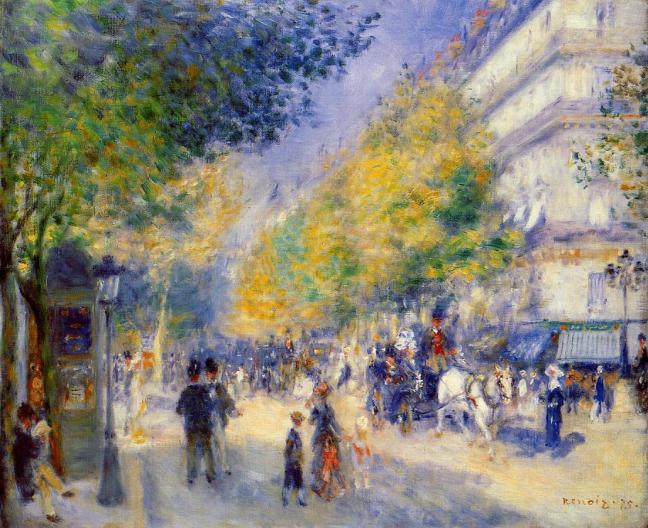
‘Neubrandenburg’ – Caspar David Friedrich, 1816 – WikiArt

How can we account for the beauty of the world? Because in spite of everything that is happening within and without, and afflicts us, leaves us distressed, the world bears at its core an intrinsic perfection. It’s not difficult to see. You only have to stand back, to release the grip, be less involved. To look afresh at the blue sky above your head. To see that a blue sky is an extraordinary thing. As is a tree, and the song of the wind in its foliage. As is a cloud, and the sudden tapping of the millions of drops that come to wet the land. As is any human endeavour, and the skill it takes to play a symphony from Beethoven. As is a chair, a blanket, a paper bin, anything that exists. Existence is a baffling thing. It is the core of the matter — that anything exists — and to understand it is to crack the nature of reality. What is the secret hidden behind any appearance? How can a form acquire beauty, a movement express harmony, a shape provoke love? And more interesting even, how is beauty made ugliness, harmony turned into disorder, love transformed into enmity, perfection changed into chaos? What are the workings behind it all?

[…]

A meditation on the beauty and substance of the world… (READ MORE…)

.

The Names of God

‘Signs of Christ’ – Nicholas Roerich, 1924 – WikiArt

.

The knowing of ‘I am’
is the apparition of God’s being
in our human experience.
It is the being of all beings,
the self of all selves
.”
~ Rupert Spira

.

יהוה               الله               ईश्वर

ब्रह्म               رحمن

אֱלֹהִים

.

There is something that is very hard to understand about God. A survey of the names that have been given to god makes it unequivocally clear, but we keep missing the target: ‘Being’, ‘Mighty Being’, ‘I Am’, and so many others, refer to the fundamental equation of god with ‘being’, with our very everyday experience of plain, simple, pure being. And yet, we keep projecting the presence of god in an hypothetical outside, another ‘being’ that our very ‘being’. So it seems that a study of the different names of god will help focusing on the fundamental nature of god’s being, this mighty Being whose being rests unseen, unnoticed in our own being.

Etymologically, the word ‘god’ (Proto-Germanic ‘gudan’) finds its root meaning in the ancient ritual of sacrifice, as in ‘libation’, or ‘to pour’, or in the Sanskrit ‘hutá’, meaning ‘having been sacrificed’. So god is ‘the one to whom sacrifices are made’, which extends to the sense of calling, invoking. To whom or what do I give the primary attention in myself? Do I indulge in, or fall to any objective appearance as thoughts, sensations, perceptions? Or do I sacrifice these appearances and find rest in the stillness of the one that is aware of these, which is pure being? To whom does my pouring, my libation go?

[…]

See how the many names of god relate to the sense of ‘being’… (READ MORE…)

.