The Will of God

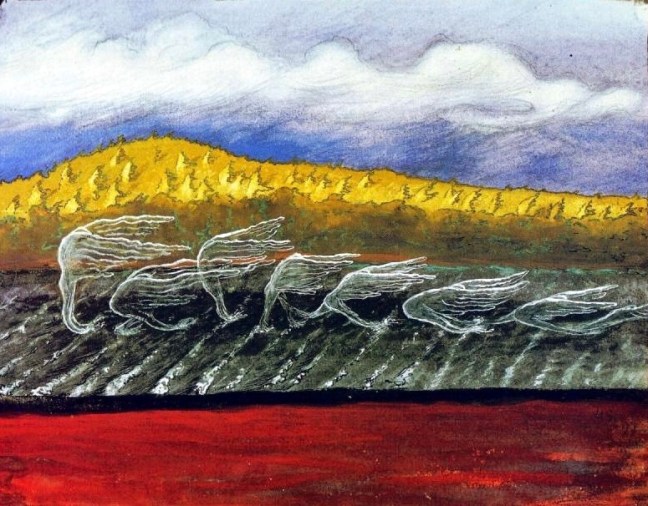
‘The Wind Blows’ – Hugo Simberg, 1897 – WikiArt

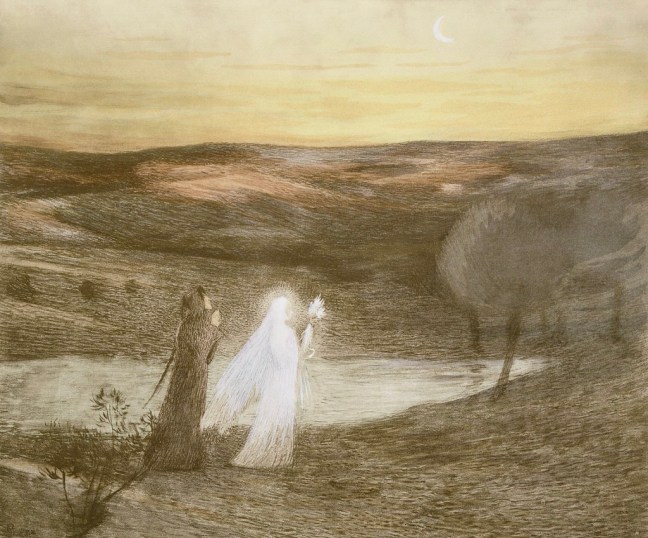
God’s will is what is happening now. Not as a body or an entity, not as a form or any kind of event. The reason is: form has already happened. Every object comes from the past. It has traversed at least a length of time to land in the field of awareness. Like a thought has. A thought is never now. It is the termination of something that took place a moment ago. It is an achieved result. But there is something in our experience that doesn’t come from the past, that hasn’t travelled any distance to be here, and that hasn’t moved through time to be now. So if you want to know what is God’s will, find the only thing in your life that is not a thing, that hasn’t yet taken form, and therefore needs neither space nor time to be. Find that which cannot be found, that which is formless, that which hasn’t travailed. For God’s will doesn’t come second, it cannot be a result, for such a thing would need a cause for itself to be. No. God’s will is first. As a ‘first’, it is in capacity to initiate, to create. But what is created is never itself God’s will, for it is already formed, with a life of its own. It is corruptible as form. So go to the essence, the origin. Find the incorruptible in yourself — that one uncreated thing — and take that only to be the will of God.

So we are in our essence uncreated. This is our identity, to be without form, forever here, forever now, eternally landed, therefore without a will of our own. For what would a separate will be but a thing already formed, an effect with already a cause; and therefore not the causeless, therefore not God’s will. So if we want our life to follow a divine trajectory, we have to give our utmost attention to who we are. That will condition the rest of our existence. That matters the most: that little name we give to ourself, that little identity. Start with the truth of who you are, and be only concerned with the tail of that star. Make yourself bright with it — that’s how to follow God’s will. Be that one that is in no capacity to be a follower. Stand as and for the truth of being and be concerned with nothing else but that. That is the only possible will you can afford. Any other kind of will is not your own, although it may appear to be. So don’t expect to have a will, for a will is but an appearance that has formed in yourself. Go to yourself first. Go for that part of yourself that has no will but God’s will. You will find there a will that encompasses all other wills — for what is a will but the will to be happy, rested, fulfilled? Only at the condition of being without a will of your own can you embrace the one will of your true identity as being. Being is in fact its own will, for it has as its DNA the purpose of all wills, which is the peace of living. From that peace firmly set in your heart, any will is the will of God.

.

~~~

Text by Alain Joly

Painting by Hugo Simberg (1873-1917)

~~~

.

Website:
Hugo Simberg (Wikipedia)

Suggestion:
Other ‘Ways of Being’ from the blog…

.
On Passing Away

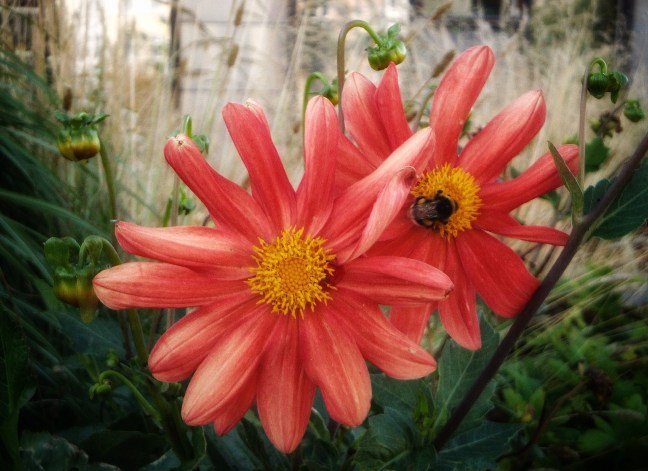
We think that most of our life is taking place in the field of body, thoughts, feelings, and sense perceptions — all of these making a self and a world, and the myriads of experiences that come as a result. This is what our life seems to be for the most part. But look again. Because in fact, no. It is not like this. That’s where the misunderstanding lies. Most of our human experience — not to say the whole of it — is spent in being. In emptiness. In vastness. Of course there is a body here that can be sensed. And feelings can be felt. And objects perceived. And thoughts are occurring all the time. And with them a sense of a separate self has been born. And all this joyous team seems to have acquired reality, and has in consequence been cursed with a measure of drama and suffering. But much was missed along the way. For in fact, none of these really took the place we imagined. None of it is taking any place, any space, or occupying any length of time. For the whole space of experience is already occupied by our sense of being. Life in its totality is made of one indivisible reality that fills our experience to the brim. This reality as being precedes experience — experience being nothing but being manifesting itself within itself.

So this is an announcement for the deceased self that we have been engrossed in all this time. Body, thoughts, feelings, senses, will continue their existence, but will lose their identity as a self. Custody will be returned to whom it always and forever belonged: pure, unlimited being. In its quality of the only inheritor of the feeling of being, ‘I’ or consciousness is now made the one true identity for all selves, and the only essence or ‘is-ness’ for all objects of experience. For we are in fact eternity, which our presence as a time-bound self has veiled. We are in truth the infinity of being, which our insistance in being a separate being has limited. And we are in reality peace itself, which our relentless seeking for happiness has sent in the hidden. There never was a self, and there never was a world. Not in the way we have imagined it. Not with the reality we have conferred to them. Being has drowned them long ago; and has given them the only reality to which they are entitled to belong. That’s how anyone, and anything, and any experience can be made to rest in peace: In giving in to being. In passing away.

.

~~~

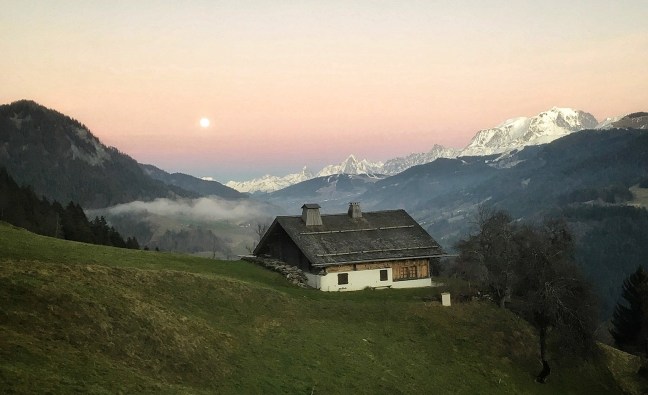
Text and photo by Alain Joly

~~~

.

Suggestion:
Other ‘Ways of Being’ from the blog…

.
Isn’t Life a Simple Thing?

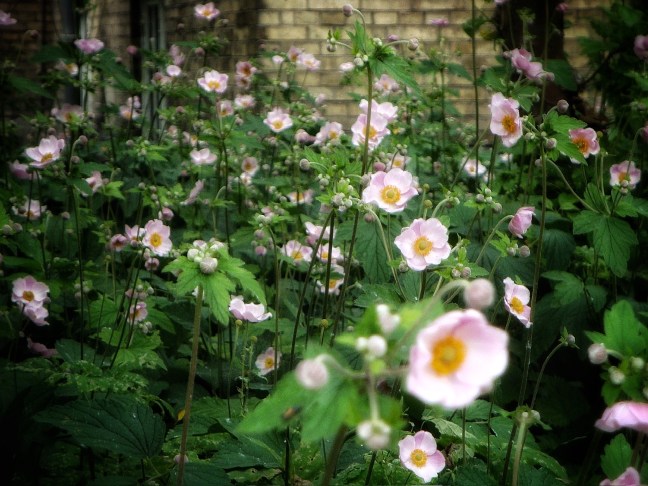
We as an apparent body and mind are nothing but the conditions met for the apparition of a world and all the resulting experiences that take place within it. We are simply housing the thoughts, feelings, and sense perceptions necessary to enact experience, and give it a shine of reality. But the essential of what we are is neither in thoughts, nor in feelings, nor in sense perceptions. The essential of a mind is made of consciousness. Awareness is its structure and its backbone, without which there would be nothing left. If it wasn’t for its awaring quality, our mind would be no mind. Our thoughts would crumble and disappear to never reappear. Our feelings and sensations would suddenly blacken and decay in an instant, to be never formed again. And the world would be swallowed back into infinity, if it wasn’t for the consciousness that gave it its essence and knowability. Look as you may, you won’t find a mind of your own anywhere. At best, just a few scattered thoughts, and the momentary and illusory appearance of a self.

Observe carefully. A few thoughts can never make a mind; and neither could some random feelings. You couldn’t own the necessary self that you need to function in a world, without some inseparable and indispensable measure of knowing. So it is all about knowing. It is all about being conscious. Awareness holds it all together — your body; your thoughts and feelings; your world as sense perceptions. All of these come into existence at the only condition that an ‘awareness’ is present. If awareness goes, you go. If consciousness goes, everything with you go. The world goes. No bodies viable. No flower fields. No Milky Way. Everything falling apart. Universe shut black. Just a mess! That’s the power of consciousness! Far from being a mere function of the body, awareness is what holds the body and the world together. It is the essence of everything. It is the indispensable matrix. It is the ocean in which the waves and currents of thoughts, sensations, and world are dancing. And it has no home where to rest but itself. In fact, it is itself a resting place for all apparent minds, bodies, things, selves that make up a world. Consciousness gives existence with its being, allows relationship with its knowing faculty, and brings the consolidation of happiness with its loving nature. Then it returns into itself and stays there, in utter peace and completeness — replete with itself. And when you have seen it all as it is, and yourself as you are — indivisible being — then might come simply a swell of awe. God, isn’t life a simple thing?

.

~~~

Text and photo by Alain Joly

~~~

.

Suggestion:
Other ‘Ways of Being’ from the blog…

.
peace (noun)

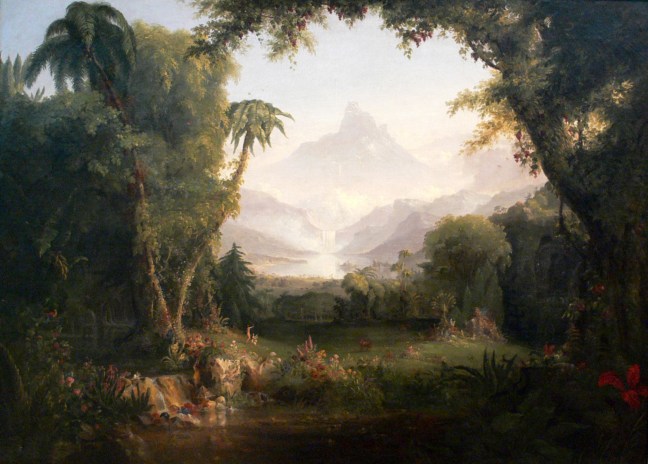
‘The Garden of Eden’ – Thomas Cole, 1828 – WikiArt

It is always revealing to reflect upon a certain word in the context of spirituality, and see how it came to appear and be chosen. Why this one and not another word. There are many synonyms to the word ‘peace’, amongst which tranquillity, calmness, or quietness, which all seem better suitable to an entity or an object than peace. Peace is profound. It stands on its own. Just its pronouncing deepens you, fills you with its referent. ‘Peace’. The word takes you somewhere else, makes you leave your habitual field of suffering, desiring, projecting, coping, aiming, all that renders life a battlefield. ‘Peace’. Peace is a mantra in itself. A prayer. An occasion to go within. It has the automaticity of something fundamental, inescapable, and the simplicity of something that everybody knows or has experienced.

The word ‘peace’ comes from the mid-12th century root ‘pes’, meaning ‘freedom from civil disorder’ or ‘absence of war’. Likewise, in the dictionary, the first meaning for peace is stated as ‘freedom from disturbance’. Peace is always negative. It is here when something else has receded or died down. It is revealed through an absence. After all, in common parlance, the word ‘peace’ has always been used to refer to the state of things that exists in the absence of conflict or disorder. The word was almost invented to refer to this moment when a war ends and one can return to the state of affairs that existed before the conflict started. It is never a new state or occurrence. It is what is usually here in the background and is disrupted by the incursion of movement, conflict, war, thought. The tiniest thing, as long as you believe it to be you, will disrupt your peace. Peace is a return. A recognition of something known but forgotten for a time, or rather eclipsed by the incursion of time. Peace is something that is always here in the background, waiting patiently for your return. Our mind as ego is the disruptive factor, the war in which we have decided to engage, and found ourselves caught and lost. Make it end and peace will come automatically. It is not a new state invented, but the pre-existing state of your deepest self as being, which only a quietening of your wrestling with the objective world will make apparent. Peace is the very foundation of your self. It is the cornerstone of the edifice of life, as is easily seen in nature, which seems to have peace as its very fabric.

[…]

An exploration of the meanings behind the word ‘peace’… (READ MORE…)

.

The Glory of ‘I Am’

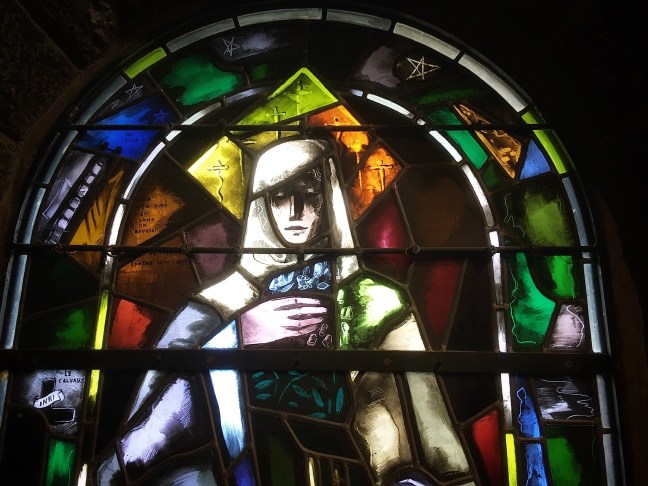
Stained glass by Adeline Hébert-Stevens in Church of Passy, France

First, you have to dig. You have to dig beneath every thing that qualifies you. You have to find that pure ‘I am’ hidden under all that this ‘I am’ is or can be. You have to find the raw substance of that which you are referring to when you say simply ‘I am’. What is this pure, unqualified ‘I am’? Over the years, piles over piles of experiences, beliefs, conditioning, have acquired substance and have overwhelmed this simple experience of ‘I am’. This substance has mutated into an apparent self, and ‘I am’ has been buried under it, and made into a collection of ‘I am this’, ‘and this’, ‘and this’, ‘and also this’. So that we can never ever truthfully feel ‘I am’ anymore. It is gone. ‘I am’ is gone with the wind of endless qualifications.

So we have now to resurrect that ‘I am’. To un-qualify it. To strip it bare of its qualities, of its acquired competences and idiosyncrasies. We have to purify the wine of our self, distil it to its essence. An essence that was never lost but only diluted, made secondary and unimportant, when it is in fact the only thing there is. This essence is simply the realisation of an emptiness that is the core of our being, that we never had the guts to look at, or enquire into, but which a simple question and a good-will to find out, could simply reveal with a dumbfounding ease and precision.

[…]

A celebration of the purity of being, before it becomes qualified… (READ MORE…)

.

At Heaven’s Gate

‘Dante rencontre Béatrix’ – Henri-Jean Guillaume Martin, 1898 – Wikimedia

There is a guard posted at the entrance of the Kingdom of Heaven. Mind you it’s a gentle guard, open, benevolent, understanding, but she has her ways. Not everybody can enter. You need to fulfil some precise requirements. She has seen it all — people wanting to enter with all their heavy luggage. Trunks after trunks of thoughts, beliefs, hopes, memories, loaded with cumbersome feelings. People have such unreasonable faith! That’s when she smiles gently:
— Well, you need to empty yourself… It’s not the way to qualify for happiness. Besides I guess that with such a heavy load on your back, you must be coming with your share of suffering. Suffering is not wanted here. It’s a no go. You cannot enter with it. Sharpen your vision first.
— But… are you some kind of select, private club? Can I not come as I am? With all my sore feelings and my crap?
— Mmm, technically you can, but you must first present us with a correct identity. We need to know who you are — without your feelings and your crap, as you said. Without your sorrow and self-pity, without your dreams and hopes, all your fears and concerns, your prayers and righteousness. Without all the things that situate you and render you like a self which you never were. You need to know who you are before all that you think define you. Did you ever look at it?

[…]

A playful interaction and dialogue recorded at Heaven’s Gate… (READ MORE…)

.

The Essence of Life

We hardly ever listen to the sound of a dog’s bark,
or to the cry of a child or the laughter of a man as he passes by.
We separate ourselves from everything, and then
from this isolation look and listen to all things.
It is this separation which is so destructive,
for in that lies all conflict and confusion.
If you listened to the sound of those bells
with complete silence, you would be riding on it —
or, rather, the sound would carry you
across the valley and over the hill.
[…]
Meditation is not a separate thing from life;
it is the very essence of life,
the very essence of daily living.

~ J. Krishnamurti (‘The Only Revolution’)

.

~~~

Quote by J. Krishnamurti (1895-1986)

Photo by Alain Joly

~~~

.

Bibliography :
– ‘Krishnamurti’s Notebook’ – by J. Krishnamurti – (Krishnamurti Publications of America, US)

Website:
J. Krishnamurti

Suggestions:
Beauty in Essence (other pointers from the blog)
A Day at Brockwood Park (Homage to J. Krishnamurti)

.