Lectio Divina

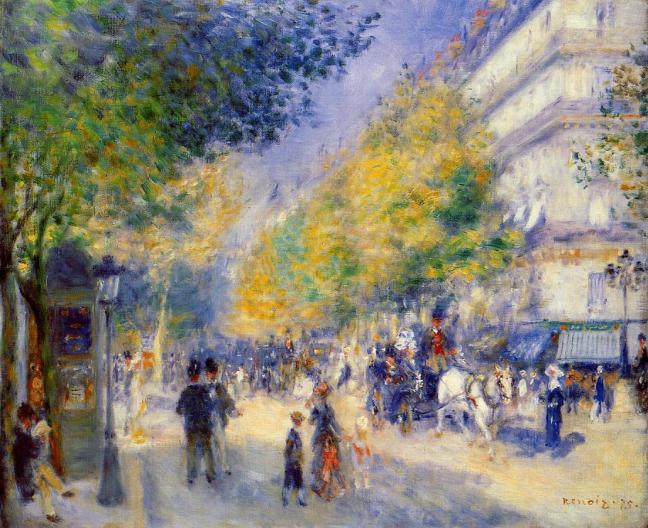
‘The Great Boulevards’ – Pierre-Auguste Renoir, 1875 – WikiArt

I have been feasting on some words recently. I was sitting leisurely on a cafe’s terrace, watching life coming and going, browsing through my phone with some ideas in mind. And there it came, and took me by surprise, like a koan suddenly unveiled, a pathway revealed without my knowing. There it came, taking the form of one single, simple phrase that seemed innocuous, by Saint Augustine:

Is any man skilful enough to have fashioned himself?
~ Augustine of Hippo

And that emptied my mind. It made me sink into no content, aware of all that is now; my self suddenly made a container for life. We all feel that we are so smart and powerful, or so stupid and powerless. That we have made ourselves what we are, and feel in consequence the pride or shame of it. That we have destroyed, or elevated ourselves. That we are responsible for our happiness, our success, our failure. That we have moulded our thoughts and actions, wilfully designed them. That our beliefs are believed. Our thoughts thought. Our words uttered by a ‘somebody’ here, inside the skull. But these are all beliefs, and beliefs are flawed from the start. Beliefs need a believer to believe them, and look as you may, you will never find such one behind your deeds. For the simple reason that there is no self behind our selfing. We have therefore never been in charge, never been truly responsible for collecting what we have collected, for misusing what we have misused, and for making the mistakes that we have made. Except in hindsight, in thoughts and beliefs, in cascades of randomly built illusions and memories in which we are caught and made blind. And these are what we have busied ourselves managing and arranging into a sensible self. And that self has gotten in the way of our living harmoniously.

[…]

The ‘Lectio Divina’ of a quote by Augustine of Hippo… (READ MORE…)

.

peace (noun)

‘The Garden of Eden’ – Thomas Cole, 1828 – WikiArt

It is always revealing to reflect upon a certain word in the context of spirituality, and see how it came to appear and be chosen. Why this one and not another word. There are many synonyms to the word ‘peace’, amongst which tranquillity, calmness, or quietness, which all seem better suitable to an entity or an object than peace. Peace is profound. It stands on its own. Just its pronouncing deepens you, fills you with its referent. ‘Peace’. The word takes you somewhere else, makes you leave your habitual field of suffering, desiring, projecting, coping, aiming, all that renders life a battlefield. ‘Peace’. Peace is a mantra in itself. A prayer. An occasion to go within. It has the automaticity of something fundamental, inescapable, and the simplicity of something that everybody knows or has experienced.

The word ‘peace’ comes from the mid-12th century root ‘pes’, meaning ‘freedom from civil disorder’ or ‘absence of war’. Likewise, in the dictionary, the first meaning for peace is stated as ‘freedom from disturbance’. Peace is always negative. It is here when something else has receded or died down. It is revealed through an absence. After all, in common parlance, the word ‘peace’ has always been used to refer to the state of things that exists in the absence of conflict or disorder. The word was almost invented to refer to this moment when a war ends and one can return to the state of affairs that existed before the conflict started. It is never a new state or occurrence. It is what is usually here in the background and is disrupted by the incursion of movement, conflict, war, thought. The tiniest thing, as long as you believe it to be you, will disrupt your peace. Peace is a return. A recognition of something known but forgotten for a time, or rather eclipsed by the incursion of time. Peace is something that is always here in the background, waiting patiently for your return. Our mind as ego is the disruptive factor, the war in which we have decided to engage, and found ourselves caught and lost. Make it end and peace will come automatically. It is not a new state invented, but the pre-existing state of your deepest self as being, which only a quietening of your wrestling with the objective world will make apparent. Peace is the very foundation of your self. It is the cornerstone of the edifice of life, as is easily seen in nature, which seems to have peace as its very fabric.

[…]

An exploration of the meanings behind the word ‘peace’… (READ MORE…)

.

Tainted Self

Sometime, presence is eluding you. It hides, and you are left with nothing but your old tainted self. These are the sad days. When thoughts have invaded your being and replaced it with ideas and concepts about your self. When feelings have plagued that gorgeous presence which is you, and have contaminated it with worries and rage. When you are caught and find yourself being something and someone, some kind of hard entity that you cannot forget and shake off yourself. That’s when your beautiful, empty being is tiptoeing where it never left and waiting for better days. That’s when you cannot help yourself seeing a world in front of you. That’s when objects have filled your world and animate it with all the inbuilt suffering they imply. Oneness has been choked by them, and has retreated. It won’t fight its way back. It won’t raise a finger for itself. After all, does the sun need to fight for its own light? Is the sun the least bothered when a layer of clouds has formed? No. The sun will continue doing what a sun does. It will illuminate the clouds, sculpting their gorgeous forms, painting them in all shades of whites. The sun illuminates as surely as awareness makes your thoughts and feelings knowable. That’s how you can judge yourself to be anything. An old, tainted, worrisome, raging, hard, stubborn self. That’s how you can know that. Because of your presence. Because of its knowing, illuminating talent. That’s it. That’s what you are. That obvious, inescapable luminosity that is the only thing in presence. The only you in presence. The only presence. And in no time will you then have a clear sky. With no clouds around. No tainted self. And worries blown up. Rage pacified. That’s when the thoughts about yourself are tiptoeing in the empty space where they have come to form themselves. That’s when your feelings are being chased by the wind of knowing, melted by the warm and pure air of being, where you are discovered to be no self. And that’s how you make the thousands objects of your world retreat into oneness. And you are left alone. Here. Now. Sweet and whole. A presence never tainted. Never eluded.

.

~~~

Text and photo by Alain Joly

~~~

.

Suggestion:
Other ‘Ways of Being’ from the blog…

.
A Course in Abandonment

‘Meadow at Bezons’ – Claude Monet, 1874 – WikiArt

.

You only have to receive everything and let it happen.
Everything is directing you, straightening you out, carrying you.
Everything is a banner, a litter, a comfortable vehicle.
Everything is God’s hand; everything is God’s earth, air and water
.”
~ ‘Abandonment to Divine Providence’ (Muggeridge)

.

Truth is its own advocate. No matter where or when or in what obscure circumstances an expression of truth has been composed, it will find its way out into the light. This is what happened to a small book allegedly written by the French Jesuit priest Jean-Pierre de Caussade (1675-1751). Written in the first half of the eighteenth century, it remained unpublished until 1861, before being praised for its quality and lyricism, and appeared in multiple editions over time. It is known by the title ‘Abandonment to Divine Providence’. Jean-Pierre de Caussade was the author of many letters of spiritual instruction, and some of them appear in his book along with a treatise in self-abandonment. This latter text particularly ignited attention and was in style and quality so far removed from the other ‘letters’ that it became apparent that the author could not have written it.

[…]

Discover this eighteenth century treatise on abandonment… (READ MORE…)

.

The Glorious Reality

Do nothing that may be unworthy of the
glorious reality within your heart and you
shall be happy and remain happy.”

~ Nisargadatta Maharaj

.

~

Quote by Nisargadatta Maharaj (1897-1981)

Photo by Alain Joly

~

.

Bibliography:
– ‘I Am That’ – by Sri Nisargadatta Maharaj – (Chetana Pvt.Ltd)

Website:
Nisargadatta Maharaj (Wikipedia)

Suggestions:
Beauty in Essence (other pointers from the blog)
Khetwadi Lane (Homage to Nisargadatta Maharaj)

.

The Ardent Disciple

We are strolling down a lane of a thousand gorgeous temples. Only we need to see it, to give ourself the gift of sightseeing. We need to open our life to this reality. But first, we must release this tension present in believing to be a self, and honour this temple of pure being that we are when all our beliefs and identifications have been met and dismantled. Then open your eyes. You are living in a beautiful, never yet visited land. Every fellow human being met, is a temple of consciousness. Every animal encountered, a temple of presence. Every living being that crosses our eyes, our ears, our touch, a temple of awareness, a reflection of our being. We are touring in a world of our self. Never in a distant, exotic land. Always in the comfort of our home as being. Forever linked to and as our deepest presence. We are visitors of presence, being both the presence that visits — as our self, and the presence that is visited — as apparent others.

Down this lane of presence, you will meet countless other temples. Every tree that stands majestic in your gaze, every flower that attracts you with its net of beauty, every fallen leaf on your path, every drop of rain landing on your skin, all temples of your own, scrumptious being. And every object surrounding you, a temple of isness. The clothes you are wearing are existing things. So is the watch at your wrist. Or the chair you are sitting on, or a pen, or a musical sound — the thousand fellow objects of your life. All sharing this same quality of presence, of isness. All temples that reflect the inner beauty or quality of your self, that can be met at every step. See them. Hear them. Touch them. Feel them as your own. Sense their making as your own. Honour them every time you can. They will tell you the story of your self. They are like sculptures of being in the temple of your life.

Don’t forget that every traveller or companion of life, is an altar of friendship, a temple for love. And every object distant or at hand, a recipient for beauty. And every felt presence, an echo of peace, and an occasion for happiness. All are hymns of the divine. All praises to god. But don’t stop here, for there is more to pray, or meditate on; more invitations to honour; more temples to enter; ever more heart openings to experience. Life is a dynamic thing. Bow to everything that shows up. Do not bypass the fact that behind every glance of most human beings you meet, and of many animals too, is also a temple with a cross of suffering. Be sensitive to it. That’s how you will come to exercise your compassion. And notice that within any word uttered by any conscious self, or behind any cry of a distant animal, is a sermon to learn from, by a priest in being. Listen to it carefully. That’s how you will come to exercise your humbleness, or your understanding. And in many actions or behaviours of many of your living friends battling through existence, you will be offered a lesson in equanimity, in courage. Be aware of it. Take it as the expression of your own living self, and an occasion for you to face your unmet challenges. These are the many temples placed at every step of your everyday life. A lane of temples to rest both your broken soul or your radiant being. Enjoy the sight. Be the ardent disciple of it all.

.

~~~

Text and photo by Alain Joly

~~~

.

Suggestion:
– Other ‘Reveries’ from the blog…

.

The Doorway to Emptiness

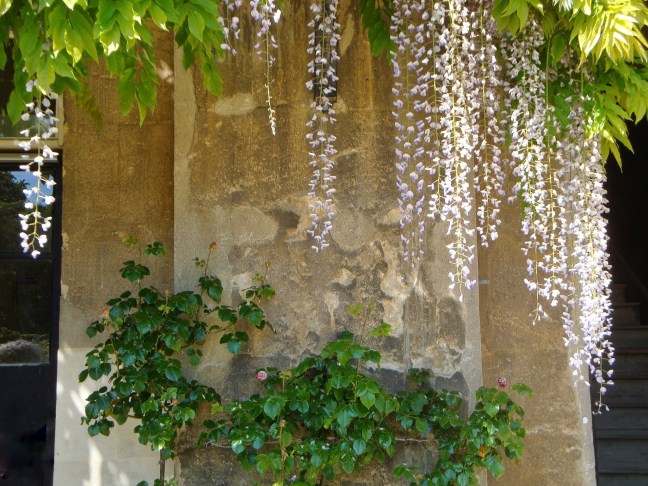
Church of Saint-Pierre-de-Curtille – France

An inquiry into what we are, and what there is, really boils down to finding out what emptiness is. It boils down to nothing. It boils down to the realisation that we’re not in the picture. We’re nowhere to be found. We are in reality an absence. This is the truth. What truly is is an isn’t. For the simple reason that no-thing owns its own ‘isness’, and no-body owns its own ‘amness’. So this ‘isn’t’ or ‘am not’ gives way to the only thing that can ever be. A reality that is the true and only one reality in presence. Nothing else but this, is. This reality or absence is supreme presence, supreme being. And this absence can only be known by being of it, which means being yourself as empty as this emptiness is. For true being is always about noticing first that ‘I am not’. You can only apprehend the truth of emptiness by being yourself empty of anything that exists in separation. That’s how you can be naked being, by being yourself stripped of anything that can be without nakedness. You have to give yourself away. That’s the only way to truly be. Every form of objective existence is only the product of a belief, of a thought, an image that you have invented to reify yourself. That’s how you become a mere thing separate from other things. And that’s how you become a fearful, suffering, lacking entity or self. By being something. A ‘something’ that can never be enough, never be whole. For ‘something’ is the signature of separation, and is a form of death.

Wholeness, and therefore peace, can only be found in emptiness, no-thingness, non-separate-beingness. In a way, only non-being can you ever truly be. Only the ungraspable can you ever truly grasp. Because you are naturally and fundamentally of it. Your deepest self is made of that empty being. Otherwise you remain a stranger, a thing existing alongside many other things. If you want to know what life is, if you want to be of it, an intrinsic part of it, and feel the aliveness contained within it as your own, you have to become as life itself: undefinable, ungraspable, non-existing, non-objectifiable, empty. That’s the doorway. Life’s secret is to be found in its very substance, its very making as pure, empty being. Everything that come to exist or appear ceases being alive. It separates from life and becomes something doomed to disappearance, and to death. But the essence of your utmost being is found in eternity, in no-thingness. This is ultimate death. A death that is so profound, so effective, that it cannot be found in disappearing, but in truly being. Ultimately, death is the signature of being. That’s where life hides itself — in death. In formlessness. Emptiness. Nothingness. That’s where you will find it. But let yourself be the least little thing, the tiniest appearance, the remotest person, and pure being will remain to you a thing unknown. No thing or person have a reality of their own. Forget that idea. Absence is the only door or access to your true nature, to the knowing of your self. Absence is the very home and address of being. And your absence is your knocking at its door. Then you might find out: the door was never there. It was emptiness, nothingness all along. That’s how a world can be given birth to. On account of this emptiness. And this emptiness is you at your fullest.

.

~~~

Text and photo by Alain Joly

~~~

.

Other ‘Ways of Being’ from the blog…

.