A Universal Cure

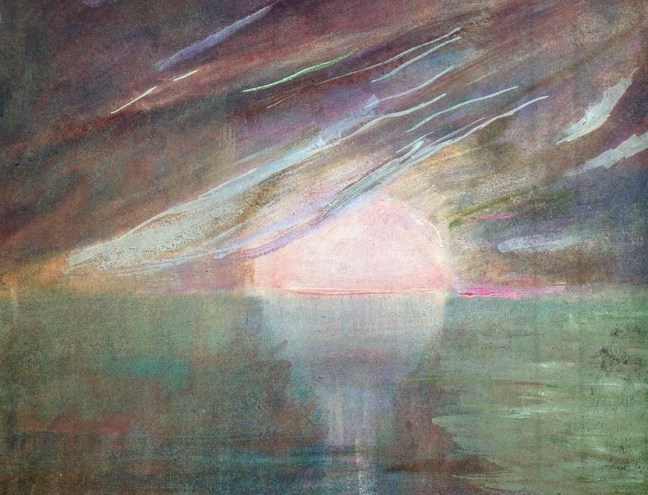
‘Creation of the World XIII’ (part) – Mikalojus Konstantinas Ciurlionis, 1906 – WikiArt

The part that we’re playing is not small. We are not living in a corner, limited by the skin of our bodies, and the world is not limited to the time and space in which it seems to unfold and have its conflicts and sufferings. The world has a foot in the infinite. In fact not just a foot, it is bathed in infinity, in eternity, and so are we, we who have been made small and suffering entities by our limiting beliefs and prejudices. We are ruling the world with our thoughts and then blame ourself for it. For the results are of course as limited as our thoughts can be. We have made the world the hostage of our limitations, and its hostility is in fact our own, that we have projected unto it. We believe and think we can only play small and limited, but in fact, we haven’t quite seen ourself as we are, and from this blindness comes the entirety of the world’s agony, and ours too.

Fortunately, ours and the world’s true essence comes spilling over in every possible way through the manifestation of beauty, and through the many expressions of love or peace. That’s what makes it so attractive in spite of all, and that’s where we should be way more curious than we are. Beauty, love, intelligence, peace, are not created by the random structure of a body and the passing thoughts in our mind. This is not where they are manufactured. They are born of infinity and wholeness. They are the expressions of the One, which we can never own. We are in fact rather owned by them, embraced by the infinity that is their reality. We must surrender to this god given identity. We don’t have to play small. Would we think of god playing small? So why would we of ourself, who are like the arm and willpower of God in God’s dream? So we don’t have to play small in this world. We ought to play our given, sacred part. We ought to be what we are and recognise ourself and the world as a whole, indivisible being. A being that is nothing but our own, that is experienced here and now every time we say ‘I Am’, and that we are fortunate enough to share in.

Act on the world from within. Mould it from there, from the source of yourself and of the world, from the ground of being that you feel as your own being, and that is the common ground of all beings and all things. This ground has the best ability. Religions haven’t called it Paradise or Eden for nothing. There is always a truth behind every misunderstood word. This ground of being is where you can play big, from within, from the interior of everything and everyone. You don’t have to create a new reality. It’s already there within and without, for the taking and for the looking. This reality is already here, already yours. There is love and harmony woven in the fabric of life, just here and now in and as our given experience. Our efforts to heal ourself and the world are veiling this reality, and so are our limited thoughts, which carry the false reality of there being persons and separation instead of the reality of one being and the peace contained in the infinite. Our own unlimited being is the ground where we can play big, for it is as large as God’s being if we are willing to notice its real, undefeatable nature. In fact, being is a universal cure, and it’s always at hand.

.

~~~

Text by Alain Joly

Painting by Mikalojus Konstantinas Ciurlionis (1875-1911)

~~~

.

Website:
Mikalojus Konstantinas Ciurlionis (Wikipedia)

Suggestion:
Other ‘Ways of Being’ from the blog…

.
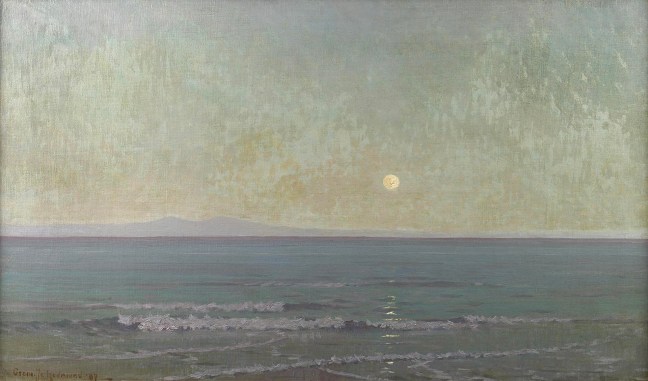
Intimacy

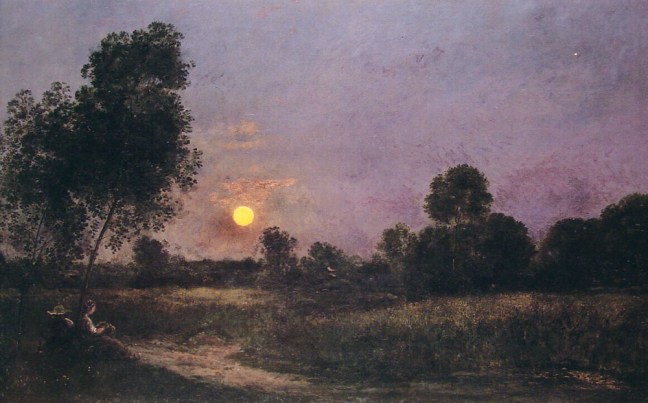
‘Untitled’ – Charles-Francois Daubigny – WikiArt

Spirituality is about intimacy. Nothing else. That is all you will feel, when you go to the right place, when your most tender being comes towering in your life: intimacy. Intimacy with everyone and everything. When you are not content about being a person, about only living the life of body and senses, about all things objective that can be seen, heard, felt, then is left something that you could never comprehend. Then comes that innermost part of yourself which is now found to impress and impregnate both you and your experience. Then comes something measureless. This was already your most familiar experience, although you have made it a stranger in your life, for engaging only with the shallow, with the surface, the easy, the habitual, the measurable. These will never take you to intimacy but to separation, remoteness, distance, and finally discord. So go to what is not only passing, but to what is inmost, intrinsic, that cannot be discarded and dispensed with. Your world will open to something precious beyond understanding, which is the intimacy contained in experience as a whole, when it is not dampened by your insistence in being something separate from experience.

Intimacy feels like being with a close friend, when nothing needs to be said other than simply to live, enjoy, and taste presence. Intimacy is to make yourself and experience as precious as a lover. In that process, it melts you down, so that you are nowhere to be found. This absence of yourself is love, which is your freedom, and the thriving of this presence which you are and have always been without your noticing. It will bring everybody and everything — the whole world — close to your self. So close that you won’t see a difference between your experience and your own self. You will be revealed as one boundless presence — the undefeatable essence of your being, before the thousands things of experience come to soil it, dampen it. You will be in love, inside love, for intimacy is just another word for it. Intimacy is about shared being. It may seem personal, but it is not. What makes it seem personal is that we involve the body-mind, that we think binds it. In fact, intimacy has nothing to do with the body and the mind. It is a warmth without limit or end.

In its purest form, being sends us in a place of immediate intimacy with everyone and everything, a sense of togetherness, of belonging that cannot be helped. Intimacy is a gathering in and as being, whether we are two people, or ten, or a hundred. We feel an absence of plurality, or otherness. It can be informed in a split of a second, deploying itself from a place unknown and unknowable. Its appearance is free, unconditioned by time. Its disappearance is impossible, only apparent or believed. It comes from a place which has neither a beginning nor an end, and is not bound to the limitations of space. It reveals itself as something fundamental to our living this life, but which we have failed to notice was here. It is the highest degree of your essence. Being intimate is the last place in yourself you will ever visit. There is no beyond it. It will come as your last day, your final breath, for there is no living as a separate entity, as a private being, once you have drunken at its source, and suffered its irrevocable implications. To be intimate is to die to yourself, and disappear in the radiance of only and simply being.

.

~~~

Text by Alain Joly

Painting by Charles-François Daubigny (1817-1878)

~~~

.

Website:
Charles-François Daubigny (Wikipedia)

Suggestion:
– Other ‘Reveries’ from the blog…

.

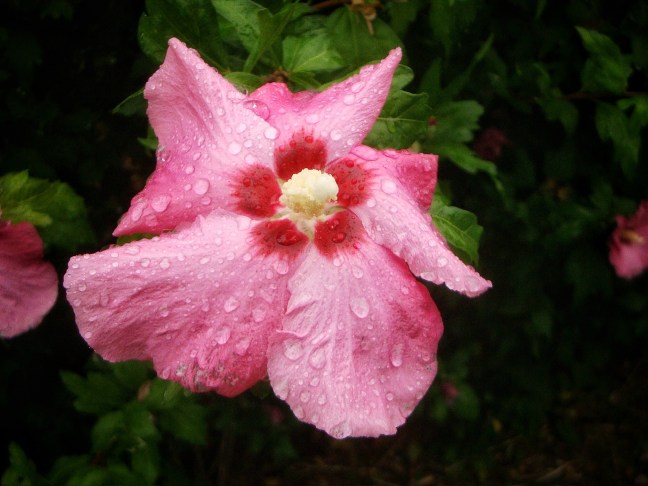
God’s Flower Bed

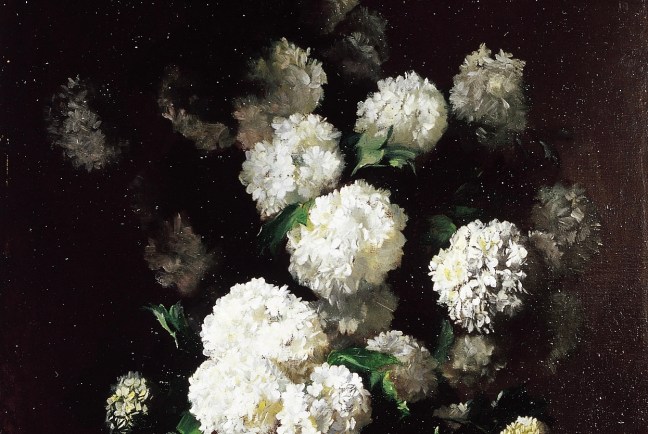
‘Fleur’ – Jean Benner, 1860 – WikiArt

.
The difficulty in the spiritual endeavour
is that we have to question the unquestionable. We have to doubt the obvious. We have to turn the stones that we have carefully placed here to pave the road. One such indisputable truth is that we choose our thoughts. That the decisions or actions we are taking, the thoughts or attitudes we are having, are the products of a controller, of a self that has them, chooses them. But is it so? Have we even tried to question it? Have we ever looked if there truly was a self here in capacity to choose? What if there wasn’t? What if this self, this ‘I’ that we seem to be, only drew its existence from our imagination? What if our own self was just another thought? If this entity that we love to pamper and strengthen was not there, not at all? If we have played a game with ourself? If there is here no person outside our indulgence in having the thought of one?

Many of our conflicts and problems in life come precisely from the belief that we are the chooser of our thoughts, that there is an ‘I’, a person here that runs the show when there is not. That’s the mistake, the original sin, to think of ourself as a doer, a thinker, a separate entity that has control, that manufactures happiness, freedom, and is responsible for our experience such as it is. We want to carry the load of our DNA, of our body, thoughts, habits, suffering, or even happiness, and not let them go. We want to be grandiose. The truth is: there is no personal ’I’ that can act on our thoughts or decision-making. These are better left alone, and informed by the only ‘I’ there is, that finds its true essence in the infinity of being, which is selfless. With this understanding or realising, we would come to treat what we have as a jewel of the most precious kind — beyond control but lovingly tailored for us by the universe and its supreme intelligence.

[…]

An enquiry on our ability to choose our thoughts or not… (READ MORE…)

.

‘I Am with You Always’

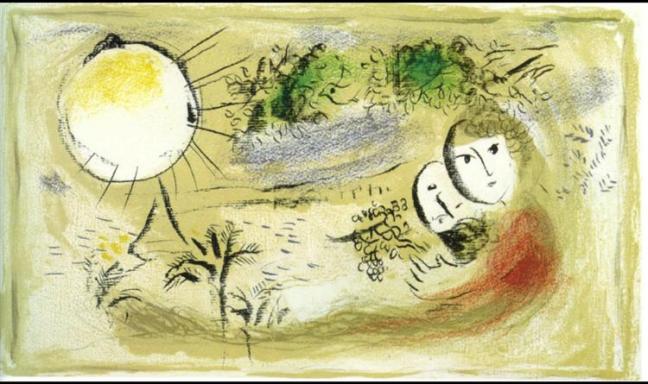
‘The rest’ – Marc Chagall, 1968 – WikiArt

There is no ambiguity with God. This has been said in a thousand different ways, in every corner of every page of the Bible for example, that God is with us, that there is in us, as us, a presence hidden in plain sight, that won’t let go of us ever. That it is the very making of ourself, our sublime identity — what we live our life with and could never depart from. We couldn’t doubt it in the least, for with just the right kind of looking, and with no effort whatsoever, we could see it, feel it, sense it, that we are that, and not truly our body or mind, let alone our thoughts, our story, our problems, our suffering. “I am with you always, to the end of the age”, that’s from ‘Matthew 28:20’. So there is no worry to be had. We are not alone. That’s just an impression, an invention, that we are separate, insecure, fragile. In fact, we couldn’t be without it. In ‘Zephaniah 3:17’, they say “The Lord your God is in your midst”. That’s what they mean, that our mind finds its ground in this very presence, in this being of ours that is in fact borrowed from God’s being. In ‘1 Corinthians 3:16’, they are even more specific, clearer on that subject, “God’s Spirit dwells in you”. It couldn’t be plainer and clearer. Why don’t we listen?

And we profit from an inbuilt, intrinsic protection in our life. After all, haven’t we gone through illnesses and floods, through a thousand aches, and is not death itself called eternal rest? Haven’t we lived in the constant grip of desire and worry, hassled by a quiet, ever going despair? And yet, are we not beautiful now as we are, after having gone through all this? Are we not pristine beings, untouched by it all, made of this unsurpassable, never changing awareness of being? In ‘Isaiah 41:10’, God is reported to have said: “I will strengthen you, I will help you, I will uphold you with my righteous right hand.” And in ‘Zephaniah 3:17’, it is written that God is the “mighty one who will save”. They wouldn’t say that if they don’t mean it. But we won’t be saved in an hypothetical future, at the time of death. We are being saved now, kept virgin of every objective experience, if we are willing to look. Furthermore, there is an inner peace that has landed in and as our very being since time immemorial. This inner peace expresses itself as joy or love, which we have experienced even amongst our ignorance. Isn’t life worth living for these fleeting moments of joy? And isn’t love our most precious, cherished, sought after experience, that seems to be a miracle beyond understanding? In ‘Zephaniah 3:17’, they say, clothed in the most exquisite poetry: “He will rejoice over you with gladness; he will quiet you by his love; he will exult over you with loud singing.”

So, as is advised in ‘1 Chronicles 16:11’, “Seek the Lord and his strength; seek his presence continually!” Which means we ought to stay with that part of ourself that lies peacefully below the hustle and bustle of existence, before everything that can be pointed at and named, and that is therefore not truly ourself. But God is not happy with only being our being, with filling us with its own infinite being. This presence is also made of the gorgeous fabric of love. This is where love finds its reality, in the innocence of our being, in awareness. So if we love, this love is not our own. We have not manufactured it, let alone directed it. “We love because he first loved us”, it is said in ‘1 John 4:19’. This is what our being feels like, when it is kept pure, unsoiled by our attachment to experience. Love is what we feel when we have relinquished everything in ourself that is mistakingly taken to be us, but is not. In ‘1 John 4:19’, we are being reminded of this eternal truth, that “God is love, and whoever abides in love abides in God, and God abides in him.” And this love, this being of God, is not something that can be had. It lives and breathes only through our being it. The world of things, of objectivity, cannot apprehend it, “cannot receive, because it neither sees him nor knows him”, as is said in ‘John 14:17’. So we are it, not have it, not know it. As long as we believe to be an entity, a something, a someone, we have separated ourself from our reality as God or consciousness. Yet everything, everyone, is eternally made of this being, which is God’s being, and finds its identity and essence as that. After all, didn’t God make that very clear, when saying in ‘Jeremiah 23:24’, “Do I not fill heaven and earth?” To which God could have added: I am all beings and all things, their secret identity, their essence which is only spirit. As I have said and proved a zillion times: ‘I am with you always’.

.

~~~

Quotes taken from the Bible

Text by Alain Joly

Painting by Marc Chagall (1887-1985)

~~~

.

Website:
Marc Chagall (Wikipedia)

Suggestion:
– Other ‘Shreds of Infinity’ from the blog…

.

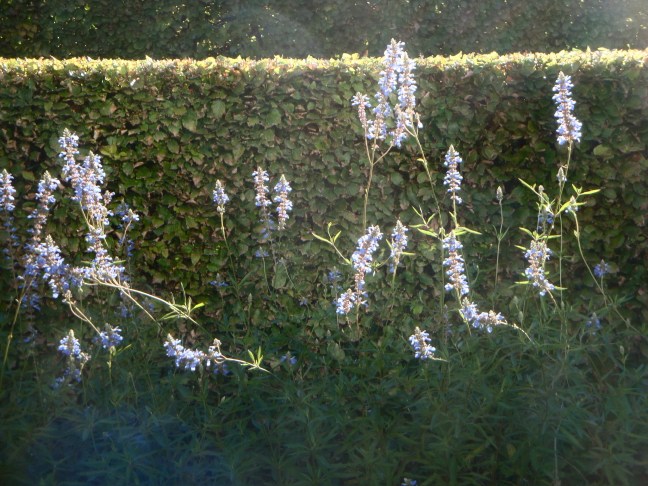
Daily Calling

It is easy to look, easier than we think. Yes we have seen temples and churches by the thousands, endless acts of devotions, and pilgrims whose faith seems indestructible. Yes we have marvelled at yogis whose ability and constancy is a subject of awe, at monks whose dedication and celibacy seem unattainable. It may have dawned on us that this path is too rigorous, that spirituality in only for the chosen few, for the dedicated ones, whose lives are set on a perfect course for it. So we have renounced to go there, finding excuses — that we don’t have what it takes, that God has for us no calling, that I wouldn’t have half of the rigour that a serious spiritual path requires. So we have stayed where we are, repairing here and there a few cumbersome habits, loving our loved ones, sharing our usual skills with the world, battling with our thoughts, dealing with our sorrows. We didn’t dare, didn’t quite believe that the spiritual endeavour was our path, or the path of the majority of us. We stayed put. We gave up without even the beginning of an understanding.

But spirituality is not what we think. It is not a path of renunciation or remoteness. It is not about belief, opinion, or even conviction. It is about reality. It is about looking what there truly is, here and now. What our experience is made of. What there is behind the gloss of experience. That’s how we are spiritual, by looking for that part of ourself that is not a thought, not a sensation or a feeling, not the body that we have come to be identified with. That’s how we are religious, by finding this deeper identity of ourself that is wholly and naturally related to others and to everything. By recognising that ungraspable, unfathomable, deeper being that is our eternal home, which we have lost sight of in the tempestuous world of our many experiences, a world that has so far attracted the totality of our attention without our objecting. We have simply missed, maybe indulgently, that spirituality is about knowing who we are, no more than that. Spirituality is not about practice or achievement, for its only aim lies in recognising what is eternally here as the very fabric of our self. It is not about age, for age will never affect what we are in the depth of our being. It is not about health, for there is a place in ourself that is forever stamped with wholeness, which is another name for perfect health.

So we don’t need to go to churches or temples, for where we are is our church if we know how to make it so, and inhabit it, not with our worries and projections, but with who we are as our deepest being. And remember that the world makes for a marvellous temple, when we connect to it with our deeper self, and bathe it with the peace of our own being. We will be in touch with our spiritual being every time we experience love in our life. That’s why people have pets, so that they can stay in touch with their heart. That’s why we so dearly seek the intimacy of relationship in our life, so we can lose the distance that our minds have imposed on us. That’s why we love fulfilling our desires, for we know that we find there, in this fulfilling, a taste of our own loving, untouched, unconditioned being.

So there is a mass or a puja going on in every corner of every experience that we may have. There are hallelujahs that can rise any time, anywhere, anyhow, if we are willing to pause and look at what our present experience is made of. And know that we will never be asked to believe, or corrupt any part of our gorgeous being, for we have a duty to be faithful to our self as it is. The only practice or prayer we will ever have to perform is to recognise and be aware of the nature of our being. This true and only identity or nature is lying just behind every temporary appearances and objects that can be formed, named, and pointed to in experience. Know that the formless is our most intimate companion, for it doesn’t live in time or place or objects, but in and as the very ground that is our one and only identity and being. This connection to that deepest, most intimate being in our everyday life, is in itself the most religious endeavour there is, where spirit is discovered to be the only thing in presence, and the home where we find our joy, and our undefeatable reality.

.

~~~

Text and photo by Alain Joly

~~~

.

Suggestion:
– Other ‘Reveries’ from the blog…

.

Holy Ground

We have no being of our own. We have built our existence as a person, as a body, as a bouquet of perceiving faculties, on a ground that is not our ground. We are borrowers, incomplete entities, which is the reason for our restlessness, for our many lacks, and for our sense of insufficiency. Wholeness and plenitude are attributes of the ground or essence. This essence is hidden because we are overlooking it. We, on our choice, have displaced our attention to what we mistakenly take to be ourself: our thoughts, feelings, sensations and perceptions — all that makes a narrative, that gives us an appearance, a consistency, an existence. But one such existence is a fraud. It is not what we essentially are. We have displaced our self, our identity, from the ground to the landscape, from the essence to the superfluous appearances that owe their existence to that universal, infinite being or ground.

But an appearance can never make us. A thought doesn’t make an identity. An idea, an image, a body, are not what we are in essence. But they all have a common ground, hence our confusion in our perceived identity. This common ground is our deepest sense of being, the consciousness that is found at the root of ourself. If only we were aware that what is seeing, thinking, perceiving in us, is actually the ground, not ourself; that what is experiencing, what is aware in our everyday life, is in fact this supreme, infinite ground, then we would acquire a very different idea or perception about ourself, another responsibility, another awe, another reverence for our reality. Our reality would be discovered to be the ground of all beings, called ‘god’ in the spiritual literature. God is not a word for a thing or a person, but for a living experience, a taste, the feeling of being that has its reality here and now. It is not distant, not dependent on a belief. It is a hard reality, accessible in all experience. It is our true nature, what we are, and what we know we are, without a shadow of doubt.

God is not a guess, a maybe, a question. God is a certainty, an evidence, and the answer to our suffering. It is our very conscious sense of being, the very thing which in us makes for the feeling ‘I’, for what I am in truth and in depth. It is our one and only reality. If we do live from that essential ‘I’, then we live from inside the holiest of temples. We cease living and acting from a private, separate sense of an individual self. Behind the veil of our mist, of our everyday fascination for mind, body, appearance, existence, is a presence that is revealed when we let go of ourself. It bears in its DNA the savour of holiness, and of a quiet, unbreakable happiness. Holiness is not an attribute of things, places or people for which we may have reverence. Sacredness doesn’t belong to the landscape, or the object. It is rather the natural expression of our true self, of ‘I’. It is in abiding in our true nature or essence that we feel a deep reverence for everyone and everything. What is sacred is our intimate, infinite being, and this being draws its holiness from its one pristine, untarnished, infinite nature. Wholeness makes for holiness. Holiness belongs to the ground, and the ground has it in its nature to shower benevolence to all hosted appearances. This is how we have, shining in our experience, the qualities of peace, love, beauty. They are all offsprings of the holy ground, which is ourself.

.

~~~

Text and photo by Alain Joly

~~~

.

Suggestion:
Other ‘Ways of Being’ from the blog…

.
Humanness

‘The Human Mountain: Towards the Light’ – Edvard Munch, 1927-29 – Wikimedia

There is no human being. This is quite extraordinary to think of it, and even positively mind-blowing. But turn it around as much as you may, the true self of man is not where a body is. It doesn’t take shelter there. A body, or even a mind for that matter, is way too small and inappropriate to house your beautiful being. There is no room there. For how could the infinite enter something that is finite, limited, prone to decay and death? How could something that knows no beginning and no end, be contained in a passing thought, in a mind which is changing, developing, forgetting, believing, cheating and being cheated? In being, you won’t find the beginning of a change, won’t find even the possibility of death. In being, there is no forgetting who you are. Only a mind can forget its own nature, not because there is something there that can forget, but because thoughts, feelings, perceptions, when they are believed to be yourself, are hindering your true nature, rendering it as if absent. What is left is only a cheating thought that believes itself to be real as self, when it is not.

There is nothing depressing in not being a human being, and nothing demeaning. Being is such a malleable thing that we still retain the illusion of being a human being, a person, as we do now, but with the difference that this illusion won’t hide the reality that is behind it, and that is our true identity. Losing our identity as a person doesn’t mean that we won’t feel compassion for another, or love for our beloved, for love is not contained in being a self separate from an other. Love doesn’t need to be directed. We are not doing love, let alone giving it. Love is the expression or signature contained in our simply being. It is the feeling of being that irradiates in every directions, and that is shared as that which we are here and now. And don’t think either that you will lose your ambition, but it will be reoriented to be not your ambition, but the very contagion of being in every aspect of your life and world. And don’t think that you will miss out on happiness, for happiness was never yours, never your expression, never contained in achieving or obtaining a thing that thought has said you desire. Happiness is the very feeling of being, that we cannot contain or limit, but which splashes over to colour life with a golden hue of oneness.

So there is only being taking momentarily the clothes of a human being. But being itself has no qualifications, no colours which would render it a definable entity. The colours and the qualifications are not pertaining to being. They are the property of everything that appears in being, but is not being. They are in body, thoughts, sensations, perceptions, in all the existing things that come and go, dancing to make the form of a world, of what we call a human, a dog, a mountain, or the parking lot in which we park our car. To be being won’t diminish our feeling of being a person. It will enrich it, for being is the essence of a person. Being is the essential of our experience as a human being, only we don’t see that, don’t know that. Our focusing on the belief to be an objective entity that thinks, feels, and perceives has made us blind to our reality. So let’s remind ourself that there are no limited human beings, but only one unlimited being. This knowing and feeling of being only one unlimited being is a source of constant awe in life. And this vision is what gives its true colour and reality to our imaginary humanness.

.

~~~

Text by Alain Joly

Painting by Edvard Munch (1863-1944)

~~~

.

Website:
Edvard Munch (Wikipedia)

Suggestion:
Other ‘Ways of Being’ from the blog…

,