A Light to Yourself

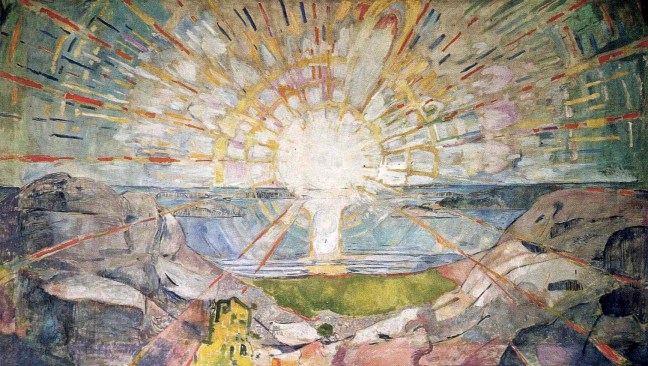
‘The Sun’ – Edvard Munch, 1911-16 – WikiArt

There will come a time when words will slow you down. When you will want to explore yourself on your own, without the help of a book or a teacher, free from explanation or guidance. You will want to follow your own trajectory, to be a grownup, and experience your beloved, impersonal, undivided self by yourself and through yourself. You will want, as Krishnamurti said, to “be a light to yourself“. You will find your own security there, in this light, at the source of your transparency, where you will find no division from where to be insecure. You will find your happiness bubbling from your infinite being, where no self can be located, and therefore no suffering. And you will be under the authority of your own being, that will show you the way, through a door eternally open and inviting. You will be on an eternal visit of yourself. And you will meditate, not to reach who you are, not to get there, but to rejoice in it, and give your whole attention to your beloved — though you already have her, have him, all day, on all occasions, near you, close, so very close to you. And you will feel her love as being so fully yours, that you will need no incentive, no set hours, to be being her own being. And you will see around you, and within you, so much beauty, that you will not have to look for it, other than by being with him, and within him. And you will be in need of no thought, of no TV show, to distract yourself from yourself, for how would you want to be distracted from being so wholly in love with the love of your life? So books will have become a bore to get you there, but you’d still read them as you read poetry. And a teacher will be of no use to you, but you’d still be eager for the company of a friend. And you’d go about your life with confidence, because you’re not alone to deal with it. Rather, your life will have become your being, and your being, your life. And at the same time, you will be alone, self-sufficient, in no need of anything, of anyone, to be fully yourself, to be happy. Therefore, you’d give yourself to all, to everything, you’d be a sharer of being, and a passionate lover of beings, and of things. Yes. That’s it. You’d be a light to yourself. A light to yourself.

.

~~~

Text by Alain Joly

Painting by Edvard Munch (1863-1944)

~~~

.

Websites:
– Edvard Munch (Wikipedia)
– J. Krishnamurti

Suggestion:
Other ‘Ways of Being’ from the blog…

.
Perfect Days

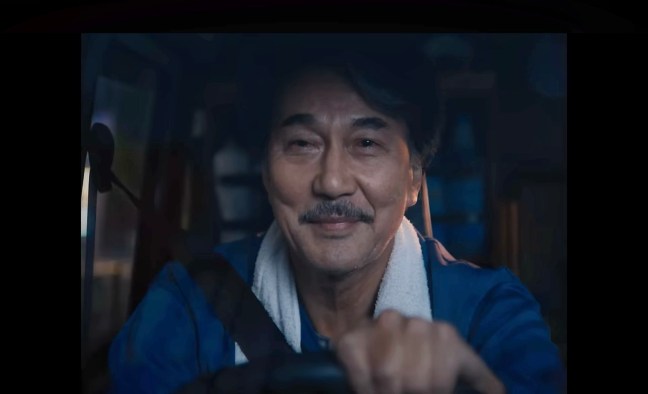
’Perfect Days’ – by Wim Wenders (with Koji Yakusho)

.

“All my films deal with how to live.”
~ Wim Wenders

.

Why do we watch a movie or enjoy any piece of art but for the joy, happiness, or relief we derive from such activity? Well, sometimes we use a movie not so much to feel, but rather to stop feeling. We want to be alleviated from our sense of boredom, or be distracted from our constant worry, or have the lowest ambition to be rewarded with pleasure, plain simple pleasure which, if not delivered, will make us move on to something else. Film as an art form is ambiguous, for it has in itself an entertaining power which makes it the prey to our most suspect desires. Well, Wim Wenders, in this movie, wasn’t going to give way to that ubiquitous trap and fall. With ‘Perfect Days’, he made a movie in which there is no desire to be had, which offers no suspense, no excitement, no resolution of any kind, but from which you would never want to move away. A movie that describes the quiet, plain, orderly living of a man whose job is to clean public toilets in Tokyo.

Hirayama lives each and everyday as if it was a perfect day. For him, there is no possibility of failure in life. And he makes sure that boredom is an impossibility. So he cares. Hirayama cares about everything he does, and seems to be profoundly related to his modest home, to his morning toilet, and to the watering of his plants. He does what he has to do, with no judgment or resistance. He doesn’t mind. He feels his inner freedom. He has everything he needs, so he smiles at life and life smiles back at him. He breathes when he steps outside and looks at the sky as for the first time, the wonder of it all. Then he buys himself a can of coffee from a local vending machine, opens his van, sits, drinks a sip, chooses a song from a bunch of cassette tapes, lights the engine, drives, and listens to ‘The House of the Rising Sun’ by The Animals. For that’s where he is now, in the house of the rising sun, going to his work through the sprawling suburbs of Tokyo’s morning, undisturbed, confident, present.

[…]

A reflection on the film ‘Perfect Days’ by Wim Wenders… (READ MORE…)

.

The Fall

‘Storm Clouds Sunset’ – J.M.W. Turner, 1825 – WikiArt

What a strange thing to have believed that we are not enough just as we are. That we need to be something other than this very sweet being or presence that makes us whole in a superb manner. Well, there must have been a belief that got in the way, that separated us from this plain and natural contemplation of our self. We must have come across a division, must have lost the thread, fallen down somehow, sometime, from this inner, blatant clarity. Where did the fall take place? How did we come to lose that which makes our very being, and can therefore never be lost, unless we were to disappear into oblivion? Was it just a simple belief, a little thought that did that? That made us think that we had to start from scratch, from a position of being flawed, insufficient, and that we had to do it all ourself: to succeed or fail, achieve even our happiness or our miserableness? That there was no given in being ourself? That we were small, incompetent in just living contented and blessed?

In fact, we have spoiled the game. We started with the wrong move. We have introduced a defect, a grain of sand that jammed the whole machine. That is: we have made ‘I am’ into ‘I am this’, have blemished being by objectifying it, have introduced a new entity where there was no need for one. I suppose we just wanted to do well, to bring our own contribution, presupposing that something was lacking when all was already perfectly whole and harmonious. So the first thing now is to stay away, to not indulge in being anything, to stop characterising our self when it is already fully characterised by itself, full to the brim with its own being, in no capacity of being more or better than what it is. How would you embellish splendour? How would you add anything to the sublime? Try it and it is but a fall from heaven to hell, from the inherent happiness contained in being complete to the suffering induced by separation and lack. So stop thinking that you can bring anything to yourself. Leave your ambition to be perfected, arranged, aggrandised. Notice that the simple fact of being cannot be improved on. You will never do better than God. Leave your self as pristine as you found it when you first breathed into its transparency.

.

~~~

Text by Alain Joly

Painting by J. M. W. Turner (1775-1851)

~~~

.

Website:
– J. M. W. Turner (Wikipedia)

Suggestion:
Other ‘Ways of Being’ from the blog…

.

A Simple World

Keep it simple. Don’t even give in to spirituality. Don’t run after dreams of enlightenment, or new states of consciousness. Don’t go there at all. Keep it utterly simple. Simplicity will give you everything you need for this endeavour. For this is not about religion or spirituality. This is about you. Only you, with no other considerations. So cease conceptualising, being attached to words and ideas. Leave all the big words behind you — awareness, consciousness, meditation. They won’t help you. And please, leave God out of this. Stay only with yourself — that which you are. This will do. This will be enough — being yourself. Simply. Plainly. Leave all your thoughts behind, all that you have gathered about yourself, your beliefs, your hopes, your old identifications. Leave them alone. Be unconcerned. You need one thing only: this simple sense of being yourself — this recognising yourself as being only being. This alone is the most majestic, omniscient, exotic, pedagogical teacher you will ever have. So keep to yourself. Feel the presence that is giving birth to yourself. That first thing that springs out of you. The first brick. That’s simple enough to do.

Don’t leave yourself ever. For they will all try to seduce you — your thoughts, the feelings attached to them, your perceptions in CinemaScope, and these never ending stories about yourself. They will make you take distance, run away into imagination. Don’t let them fabricate you, determine you. Stay simple. Be only with that part of yourself that cannot be twisted, impaired, injured. Be with your unmoving self. It is never going to be more complicated than that. Truth is the simplest affair you will ever come across. You are that which allows for the simple feeling of being. There is no need to add anything to that feeling. Not even a single thought is necessary. You are being yourself before you sit, or stand, or eat, or think. Being yourself requires nothing of you. It is the simplest thing you will ever do. It is baby-level spirituality. So don’t be grandiose. Simply find yourself and stay there. And you won’t find yourself in the many. Simplicity refers to something ‘made of one constituent’, ‘one-fold’ — that’s the etymology of it. You are made of one block. One being. Everything that appears twofold is not yourself. It is duplicity — deceitfulness. And don’t even say that this is about being happy. That will only make you seek happiness. Only look to be yourself. There is nothing to seek in being yourself. Be overly simple. That will make you contented and contained. Gathered in the one single self or reality there is. Therefore unlimited and unbridled. Therefore loving. And the world — phew! How simple it has become!

.

~~~

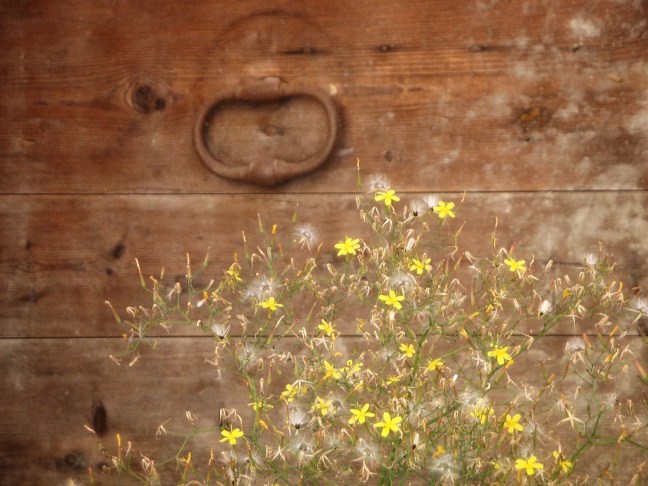
Text and photo by Alain Joly

~~~

.

Suggestion:
Other ‘Ways of Being’ from the blog…

.

The Impeded Buddhas

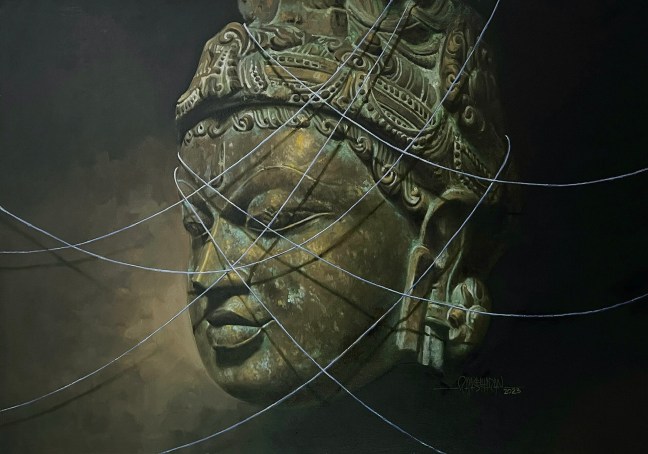
‘Holy Thread’ – by Rajasekharan Parameswaran – Wikimedia

This is what we want against all odds. No matter what. All of us. We want that love, that piece of eternity, although we may not voice it that way. Yet everything tells us that we will never get it. We can’t have it. It is not something to be had, and we know it. We have experienced its elusiveness a thousand times. But that knowledge doesn’t appease our seeking. This indefatigable quest is ingrained in our system. Something deep inside us is missing, is not quite completed. There is an insufficiency, a suffering that sets us on this path of longing. And this seeking has become such an intimate part of our lives, and has taken so many banal, inconspicuous forms, that it is not often noticed or recognised as such. But the fact is: all that we are truly looking for in our life is this deep, abiding peace, which ultimately comes from love. This is our path. Our journey. To get to that point where we don’t have to suffer and strive.

The problem comes with defining our search precisely. We are being too vague about it. Most of the time, it is not taken seriously. So we stroll about, taking divergent, contradictory roads. We are only interested in bits and pieces. A little happiness here and there will do. Our quest remains a fearful one, and mostly consists in avoiding difficulties, in being attached to what we have, and in acquiring little pleasures. But all we do through this, is to battle with happiness. In fact, the whole of our life is made of that, of this frustrated happiness, this thwarted love. Everything we do — including our most unkind, insensitive, foolish, ignorant actions — we do out of our deep, inner desire for happiness. In a way, we are all spiritual seekers. We are all engaged in the same frantic battle to be happy, at peace, rested, unafraid. We are all brothers and sisters in arms. We may do it in the most clumsy, mindless way, and be punished for it. Or we may be gifted with a thirsty, pointed mind, and all the tools necessary to meditate and recognise our true nature. So this seeking is not for a few elected, but extends to humanity’s tireless striving for betterment.

In fact, we are all — without our realising — accomplished Buddhas, beings of light. But we have chosen to identify with our shortcomings, our failures, our reactive patterns, our sorrows, all the inner waste that life produces along the way. Their objective nature makes them easier to associate with. Unfortunately, by doing so, we have troubled our innate clarity, have limited our infinite nature, and have soiled our innocence. We have become ignorant of who we are. We have confused our luminous, peaceful being with a few passing, trifling occurrences. We have all made the same mistake. Our self is the story of a disillusionment, of a shrouded delight to just be. We are all impeded Buddhas. Paradoxically, our nature as peace and happiness, because of its being veiled by our prejudiced sense of self, is the reason for our feeling incomplete, inadequate, and is in consequence the cause of our suffering. So most of our seeking is a direct product of our natural predisposition towards peace and happiness. Our disentangling from this false, unfortunate association may take us on various roads of varying difficulty and intensity. But the truth behind it all is that everyone — everyone — we meet on our journey is our equal partner in this most sacred quest. This recognition would go a long way in establishing some measure of love in our wounded world.

.

~~~

Text by Alain Joly

Painting by Rajasekharan Parameswaran (born 1964)

~~~

.

Website:
– Rajasekharan Parameswaran (Wikipedia)

Suggestion:
– Other ‘Reveries’ from the blog…

.

The Flame without Smoke

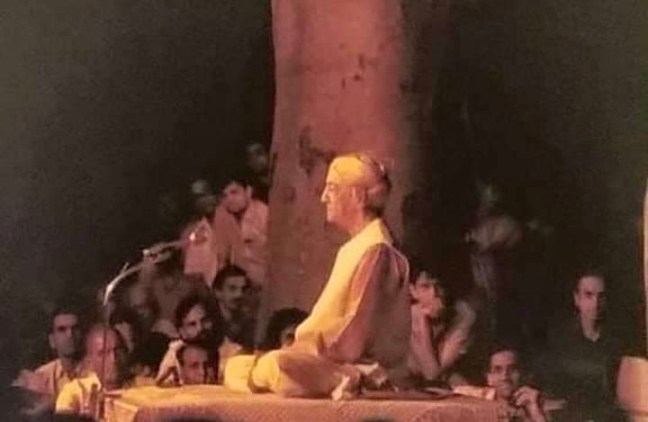
©️ Krishnamurti Foundation India

.

“Love is the only flame without smoke.”
~ J. Krishnamurti

.

The flame and the smoke is an analogy Krishnamurti referred to sometimes. For him, the flame is this burning centre of being that “can never be expressed with words”, that “is beyond the clutches of time”, and that is often expressed as love. The smoke is of the mind. It is “the smoke of envy, of holding, of missing, of recalling the past, of longing for tomorrow, of sorrow and worry; and this effectively smothers the flame.” The smoke is often what we take to be the flame but is not. It is all that is passing, all the thoughts, feelings, perceptions — the smoke that we have gathered to form experience, and that we take to be ourself, our centre of being. This wilful, separate, time bound, suffering self has appropriated the feeling of being when it is in fact the very smoke that is veiling our true nature. Being only is that flame without smoke. It is our true identity and “the source of all happiness”.

I have gathered, over the years, on social medias, many of the most striking quotes by Krishnamurti, that popped up on my screen. These, I found, acted on me like little koans, that had the power to pierce the smoke of the mind, and reveal the subtlest truths. They are like candies which, when chewed upon carefully, reveal the flame of what we truly are. They are short and easy, but need to be taken seriously. They can crack open our resistance, and show us that flame without smoke. I share them here with you…

~~~

“Do not pursue what should be,
but understand what is.”
~ J. Krishnamurti

~

“Love is not at the end of time.
It is now, or it isn’t.
And hell is when it is not
…”
~ J. Krishnamurti

~

“Thought is never free because it is based on knowledge,
and knowledge is always limited.”
~ J. Krishnamurti

~

“It is essential to understand the seeker,
before you try to find out what it is he is seeking
.”
~ J. Krishnamurti

~

“The ego is a ring of defence around nothing.”
~ J. Krishnamurti

[…]

Discover more of this selection of quotes by Jiddu Krishnamurti… (READ MORE…)

.

Unto the Ages of Ages

If people only knew. That they are so close. So close to living with the most profound peace in their heart. So close. So close to having a panoramic understanding of what it is to be who we are. So close to knowing the reason behind the word ‘God’. What it means. What it is, here, now, in this human life. If only they knew. If only we knew. How there is a joy that stands hidden just behind our everyday suffering. A joy, quiet and indestructible, that is present now, at the time of our indomitable sorrow. A joy that permeates our most stubborn feelings of despair. If only they knew. That silence is the very temple of their being, where the most sublime healing can take place. A silence where we can let everything go, to be the pristine self that we have always been. At last. Ah! If only they knew.

If only people knew. That life has an inherent, unnoticed simplicity. That the world that stands in front of them, is not quite the world they had in mind. If only we knew. That we own the beauty we see, we hear. That we hold the world, right here, close, so close to our being. That we were never parted from it. That it is our expression, and that we make it just the way we are. If only we had noticed. That love is not another feeling. Not something we choose to give or to hold back. That there is a love, so wide, so close, so natural. A love we cannot help. A love that is the structure of our self. Its profound nature. Ah! If only they knew. We. Us all. How it could change the dice. How it could make love our shared temple. To live in. Now. Here. If only we knew. How close it stands from us. If only. Ah!

And yet we know. Don’t we? We all know. We know that what we get is not the real deal. That this life is not quite the life we were meant to live. This is why we have hopes, dreams, expectations, projections. This is why we place love, friendship, happiness, beauty at the top of our list. We have that hint, that intuition. We know that the promise is here. That it stands close. So close. Ready to wash our eyes. Ready to speak its word to our ear. A word that we haven’t yet deciphered. Haven’t yet pronounced. That will bridge what we know with what we don’t know yet. And this word is ourself. What we are. A logos in our sky. That needs to be uttered once. Just once. A crossing of our bridge. To finally know what we knew. What we forgot. That which is eternally ours. Unto the ages of ages.

.

~~~

Text and photo by Alain Joly

~~~

.

Suggestion:
– Other ‘Reveries’ from the blog…

.