Overflowing Questions

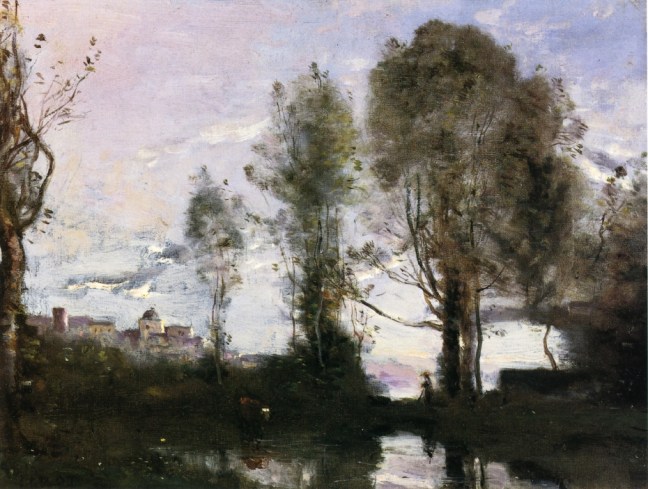
‘Edge of a Lake (Souvenir of Italy)’ – Camille Corot, c.1855-60 – WikiArt

Wouldn’t you like to have a knowledge which cannot be surpassed, which amounts to everything? That has in its core the truth of living, the philosopher’s stone from which everything springs, and to which all appearances owe their existence to? Actually, don’t you already long for it, and have done so for as long as you can remember? Is it not what you secretly hope for in your life? To have this knowledge, this direct access to the peace of your being? To have it here at hand, like a secret bond which you can find under and within every difficult situation, every outrage, every burst of suffering? And wouldn’t you love to harvest what this intimate knowledge contains? Its most reliable sense of joy, of contentment, and see yourself plentiful, complete, enough, in an absence of need? Wouldn’t that be great? To uncover it, and let it find its natural place in you, and as you, easily, without your doing very much about it? Wouldn’t that be great? Would anything be more valuable to you? Would that not be worth a life? Any life?

And what if you were told that you are not this bunch of objects which you have believed yourself to be — these endless qualifications, and the myriad of thoughts and feelings to which you have tied yourself with? Wouldn’t that give you freedom, a sense of release? To be unattached, not bound to your body-mind, at least not in a fundamental way? Wouldn’t that be healing, to be not the body but what holds it in its embrace? Wouldn’t that be soothing, to be not the mind but that which lends it the space to wander about? What is to you more elating and convincing than finding yourself naturally, effortlessly, in a place of health and vigour? The body’s ailments? The mind’s silly wanderings? Well, what if they were not really yours? Wouldn’t you like to find out, what would be their fate when left alone? What could be their trajectory when you rest peaceful in your own healthy, infinite body of awareness? Wouldn’t that be great to make this discovery? To have the final answer behind all that has been troubling you for so long?

And what if you were to uncover some even bigger findings? That behind your long, busy, eventful, suffering life, there has been a stillness, a silence which couldn’t be stirred or broken? And that nothing truly ever happened in your life? That it has been just a passing dream? What would be the implications of that ? And what if you were to find out that the world is just only clothed by the awareness of it? That it is not there in the way you had imagined so far? And that behind it all was also dawning the certainty, the knowing of your immortal, undefeatable nature? Wouldn’t that be wonderful? To see, feel, touch the truth of it with your hands, that death is a myth? That it is not there? Not in the least? Wouldn’t that be extraordinary? That things do die but not you? That body does become ashes but not you — not that which you truly are? That mind withers away but not you — not your primal being which you have to concede is eternal, is infinite? Wouldn’t that take your breath away? Wouldn’t that blow your mind?

.

~~~

Text by Alain Joly

Painting by Camille Corot (1796-1875)

~~~

.

Website:
Jean-Baptiste-Camille Corot (Wikipedia)

Suggestion:
– Other ‘Reveries’ from the blog…

.
A Chronicle of Thought

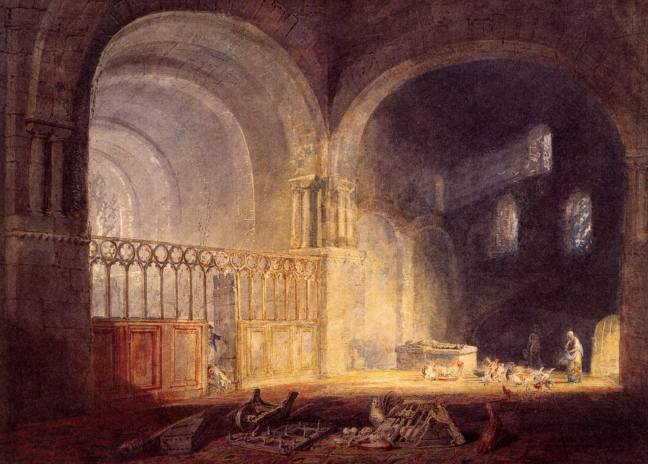
‘Transept of Ewenny Priory, Glamorganshire’ – J.M.W. Turner, 1797 – WikiArt

Most of our thinking is so much unnecessary work. Consider all the worries we had, that have been fuelled by thought, and have now evaporated into thin air. Think of all our expectations and dreams that were never fulfilled, replaced by just being what we are now. There’s been so much energy wasted in these internal fights with reality. So much presence that we have missed or hidden for being tied up with these endless rounds of endless thoughts. Thinking can be a damaging factor in our being aware of our utmost reality. And we most often don’t need to have thoughts to actually be caught in their net. Thoughts are good at delegating. They will sooner than we think be replaced by chronic tensions, nasty feelings, diffuse depression, and the uneasiness of being a self. All the troubles contained in being a person — the endless suffering that goes with it, and the seeking that never seems to stop. In fact, we have been sculpted by our thoughts. We owe thoughts all that we have seemingly become. It really gives me shivers to think about it.

Our thoughts are both the cause and result of the idea of ourself they have imposed on us over time. We have been a follower of thoughts. We have been conditioned by them. They have us in their spell, and we could spend a lifetime without confronting them, without going right to the bottom of their essence. Have you ever met a thought face to face? Do it now. Ask your next unnecessary thought that simple question: ‘Why are you here?’, and see its reaction. See how it will shy away and retreat. Thoughts are not courageous beings. They thrive out of our carelessness. They love our being inattentive. It goes the same way with the self they have made us into. If it is left to act alone, that self will never leave you out of its own will. It will keep hiding your most truthful identity. It will continue feeding you with its thoughtfully rehearsed beliefs and illusions. You will keep being an entity. You won’t see the infinite that your being is made of. Silence and eternity will keep evading you. They too are shy — they don’t like when that boastful self is around.

Thoughts are silent workers, and pernicious ones. We think we have them when they in fact have us. The problem is not so much in their being there, but in what they have left in their trail for us to believe in. That’s why we call them ‘thought’ — a past participle. Thoughts are known when they have already been thought. They are agents from the past, that are here for a mission. They have created an entity that is in turn thinking them with the view of keeping itself strong and alive. So we are caught and doomed, aren’t we? Well… maybe not. Maybe thoughts too have their weaknesses, and I’ll tell you one. Pierce your thoughts through to get to their ground of being. Your freedom from thoughts is in your looking beyond them. And your freedom from being a self is in giving attention to what beholds that self, to what gives it the light necessary for its appearance, and for the knowing of your thoughts. Everything that you can know is lit by a knowing faculty. Be engrossed by that light, be only that one, for there is no thinker behind any of your thoughts, and no knower behind any of your ‘knowns’. Espouse the being in you that is responsible for being aware of everything — thoughts, objects, experiences, the feeling of being a self separate from the world. Just stay present in, as, and to this deepest, most intimate presence — the one which you cannot know, or even be as an object, and which will deliver you from being a self. In that deliverance is contained the severing of all the thoughts that are like the bricks and walls of your illusory self. You will hear the sound of the rubbles crashing at your feet. This sound is the sound that freedom makes. Silence comes afterwards — and this silence is you, who you are before the coming of any thought, truthful or not. But really, nothing is new here — after all, Paul the Apostle said it all long ago in far more succinct terms:

Whenever anyone turns to the Lord, the veil is taken away.
Now the Lord is the Spirit, and where the Spirit of the Lord is, there is freedom.
And we all, who with unveiled faces contemplate the Lord’s glory,
are being transformed into his image with ever-increasing glory.”
~ 2 Corinthians, 3:16-18

.

~~~

Text by Alain Joly

Quote by Paul the Apostle (5-64/65 AD)

Painting by J.M.W. Turner (1775-1851)

~~~

.

Websites:
Paul the Apostle (Wikipedia)
J.M.W. Turner (Wikipedia)

Suggestion:
– Other ‘Reveries’ from the blog…

.
Entangled Life

There’s been a trend here for millennia. I would call it the trend of entanglement. Or maybe it is rather a habit, a belief, an erroneous view that we are bound, attached, entangled to our life, to its situations and circumstances. We are enmeshed in our thoughts, worries, conditionings, capacities, habits, patterns of living from which we get no release. Thankfully our sleep comes timely everyday to deliver us from the demon of entanglement. Yet we have to bow to the evidence that our perpetual seeking is nothing but our repeated attempts at freeing ourself from the prison of entanglement. We have tied ourself to its relentless effects, and are suffering consequently. We have failed to see that our entanglement is born out of our belief in being separated from the life we are in. We most of the time feel alone, detached, broken up, disconnected from our surroundings which as a result challenge us, and against which we have to fight, or from which we must repeatedly flee into further separation. That’s the life we live in for the most part. That’s what we have. An entangled life.

Now, the reason we feel so overcome and ruled by our circumstances — and often defeated by them — is that we take our many entanglements for a reality. Through our being a person, we have made everything that is ‘other’ a possible threat or cure, and live therefore in constant insecurity — hence our compulsive seeking or avoiding. But we haven’t gone far enough, to find out that there is a supreme, sacred entanglement, which ties us to our self in an irrevocable way. This entanglement with our being is devoid of all previous entanglements. It ties us in an embrace so total that our person feels merged with the being it is made of, and discovers itself to be not there, or rather to be only one, undivided being with no need or possibility to be tied to anything but itself. That’s how the feeling of being entangled is vanquished: by a more radical, ultimate, terminal form of entanglement. An entanglement with no entanglement in it, for it has disentangled itself from all objectivity or otherness, and be made into a subjectivity so absolute that it has only itself as a possible other — which means no otherness at all. This absence of otherness is the surfacing of a life that we discover to be devoid of inner suffering or conflict. It is a life of freedom, untied, disentangled, and therefore spacious, peaceful, and bound only to its essence, which is love.

.

~~~

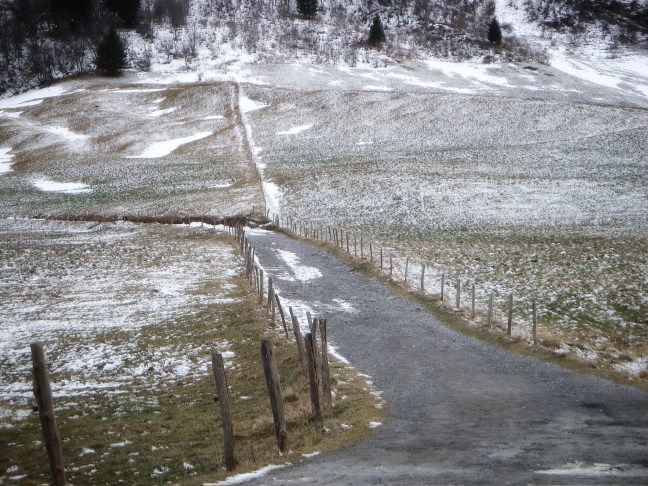
Text and photo by Alain Joly

~~~

.

Suggestion:
Other ‘Ways of Being’ from the blog…

.

The Contemplative Mind

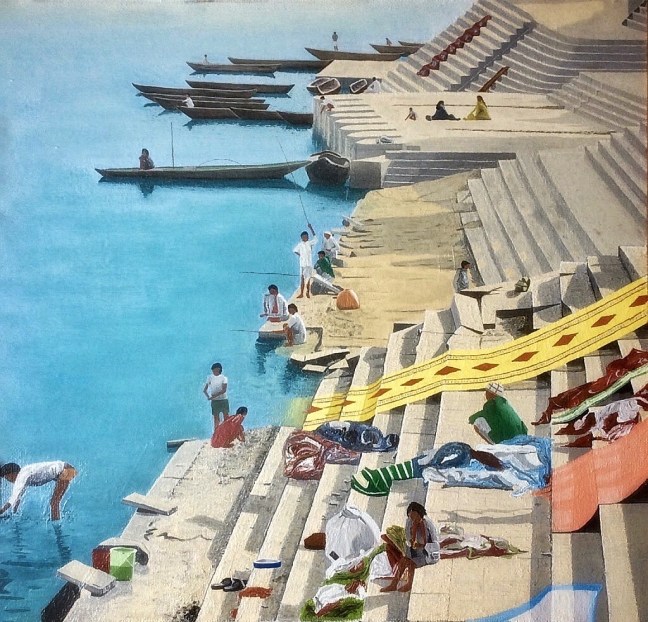
Contemplation is a place of leisure and space. It is, as its etymology conveys, a ‘place for observation’. It has space within itself. It is a temple, which in Latin means an ‘open and consecrated space’. It is a sacred spot. A place where you find yourself meditating without having initiated it. It means that you — your Self — are on an equal footing with the objects of experience. You have not been absorbed, or engulfed by them. You are rather with them, hosting them all, embracing them in your emptiness. You see life from the standpoint of your temple of being. This is the position where from things acquire beauty and meaning. This is how you contemplate — by looking at everything from within the position of your Self. This is like being at the beach. The beach is a threshold, as are the front stairs that lead to the Ganges in Benares. This is when or where the city life is left behind and we come to be on vacation, on a holy-day — which is always a holy ground — to have leisure, freedom. To meet a certain form of death. To face the emptiness of the sea, the river, and the sky in front of us. We know intimately, or have the intuition of this place in ourself — this threshold, this passage from a dull and empty sense of acquired fullness, to the fullness of emptiness which is nothing but our natural, god-given state and being. This is the temple from which objective experience ought to be contemplated. This is where the contemplator is felt to be the contemplated. Contemplation then becomes a prayer. And such a prayer asks for nothing but the fact of being. This is the place of convalescence, where you come to heal from the world, from yourself. This is where you come to paint, to produce a new world out of your Self. This is where you get healed by this new vision, where your life finds a reorganisation, a new standpoint, a new temple where you can breathe at last and be content. Contemplation is completion. Sitting in an empty boat, or amongst dirty laundry, and be taken far out of yourself into your newly discovered sense of Self. This is a cleansing process, both of yourself and of the world. This is the contemplative mind.

.

~~~

Painting and text by Alain Joly

~~~

.

The painting was made from an original black & white photograph by Bjørn Weinreich.

Bibliography:
– ‘Benares, A Sacred City in North India’ – by Bjørn Weinreich and Ulla Mørch – (Denmark, 1983)

.

Other ‘Ways of Being‘ from the blog…

.

The Guard and the Prison Breaker

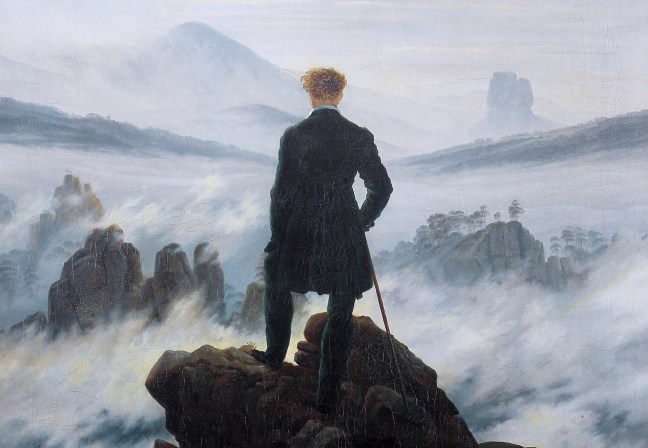
‘The Wanderer Above the Sea of Fog’ (part) – Caspar David Friedrich, 1818 – WikiArt

.

Without freedom there is no self-knowing 
and without self-knowing there is no meditation
.”
~ J. Krishnamurti 

.

Few sensations are as boisterously exhilarating as freedom is. Freedom is something that we all love to feel. To be freed! Freed from all weights and limitations. Freed from everything that bullies us and pins us down. But most of the time, this feeling is experienced from the vantage point of the little thought in our head that thinks it runs the show. This entity thinks that its freedom comes from being separate, and from its capacity to do what it wants. This is what being free means to most people. But is this really what freedom is, where freedom lies? In expressing all that comes from the lack and desperation of a limited, vindicative little self? If that is so, then this freedom takes us nowhere but in the already known boundaries of our self. How could that account for the power and magnitude of this feeling? Freedom cannot be so small and contrived. What is it then? Where is true freedom to be found? 

Freedom can never be fully felt within the conglomerate of our thoughts, feelings and perceptions, between the four walls of our prison cell. We may feel some occasional bursts of pleasure but this is not the real deal. If you search for freedom through that portion of yourself that is fleeting, fragile, untrue, you will by definition prevent the advent of any meaningful freedom. You will have limited freedom, something to be achieved, something to be added that becomes just another object, another aim in view. And don’t forget that this limited freedom can never be achieved anyway, for we in truth can never do what we want. And of what advantage would it be to follow the clumsy, limited, fanciful ideas of a mind that stands on false premises. Because of this impossible claim, we feel bitter, sad, violent, jealous, regretful. Let’s move away from such dangerous idea. 

[…]

An inquiry into the question of freedom… (READ MORE…)

.

A Thing of Beauty

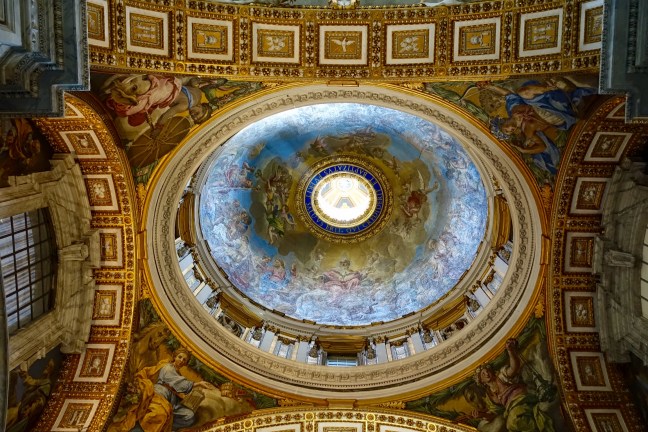
‘Saint Peter’s Basilica’ – Rome (Vatican)

Isn’t the world the most extraordinary place? I’ll explain. Take a tree. A single tree, with its roots spreading and fiddling deep into the soil. And its erected trunk that divides itself into branches, and a thousand twigs, and a whole foliage of leaves. The shadow it gives. The home that it is for birds and little animals. And the shelter. And a thing of beauty. To be admired, listened to, touched, felt. The roughness of its bark under your fingers. And the presence. There are millions — most certainly trillions — of such trees that spread over the world to form groves and vast forests. Extending their sheltering embrace to countless beings. And to you too, today. A tree! The strangest thing there is. To look at one is to be taken into a well of wonder. Feel that amazement. See where it takes you. You will be surprised.

[…]

A reflection and meditation on the beautiful world that we are… (READ MORE…)

.

The Kiss

“Think ‘I am suffering’, and you are suffering.
Replace the thought ‘I am suffering’
with the thought ‘I am free, I am Freedom, 
I am Consciousness, I am not the body’.
Do not kiss your ego by saying ‘I am suffering’,
rather kiss yourself by saying ‘I am Free’.”

~ Papaji


~~~

Quote by H. W. L. Poonja (1910-1997)

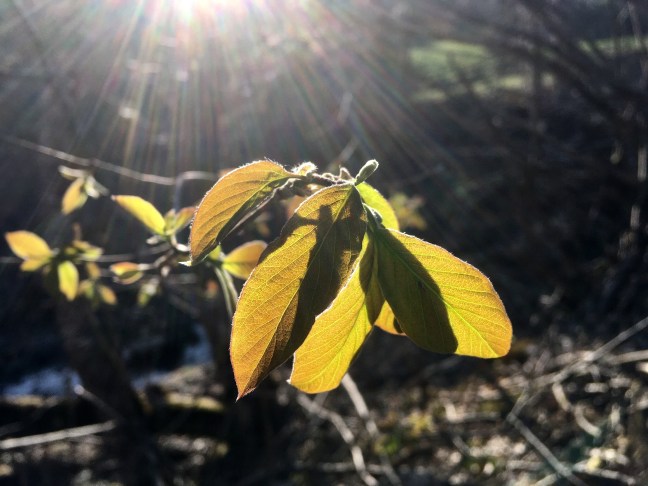
Photo by Alain Joly

~~~


Bibliography:
– ‘The Truth Is’ – by H. W. L. Poonja – (Red Wheel/Weiser)

Website:
H. W. L. Poonja (Wikipedia)


Other quotes from the category Beauty in Essence