An Impeccable Death

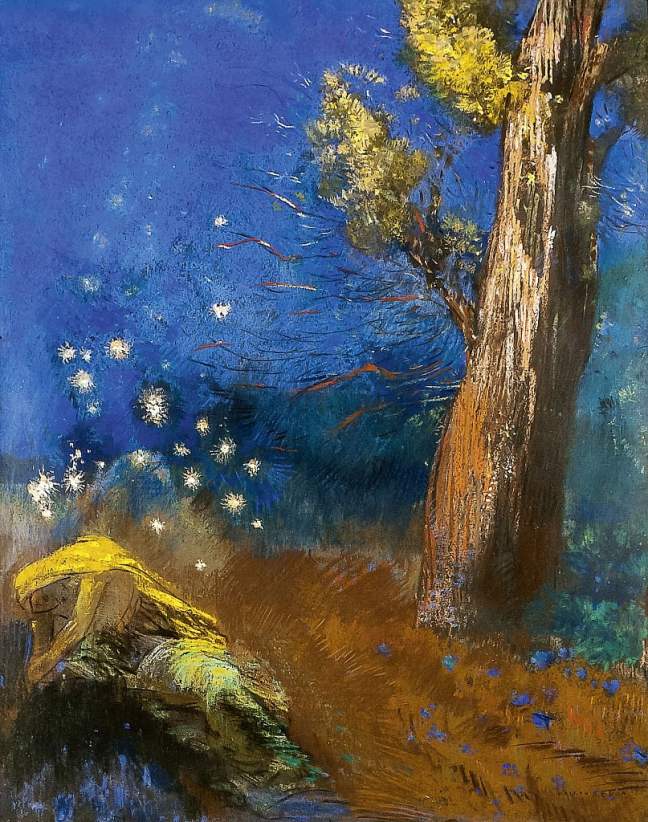
‘The Death of Buddha’ – Odilon Redon, circa 1899 – Wikimedia

It is striking to think that the day when we die is always today. It is not happening tomorrow, will not take place in the future. Death is for now. This is where and when it takes place. In the present. In presence. The death of the body, its ending, may take place in the future, but is not death. It doesn’t have the implications, the magnitude of it. The death of the body is like a wave that ceases to undulate, to imagine its difference, its conflicting attributes, and finally breaks before we notice that it is not what we are, that there is here, before it, as our very making and identity, an ocean of peace. This ocean is what death is — before we imagine to be a self that thinks itself separate.

We have been moulded in and as a presence that was never born and could never die. This inability to exist or appear as something distinct, or different, is real death. This incapacity to cease or find an ending at our being, is true ending. It is a place where we can never go. This place of being has no objectivity. It is nothing that we can be or project ourself to be. It is pure being, done, final, already perfected, unattached, a free fall. It is a death so complete that it has no object. It is not the death of something, of an object, of an entity — for such death is not truly death. It is the realisation that we are not what we have believed ourself to be. That there is not here an entity, a self that could be dying, that has an existence of its own. That realisation, and above all what is left here to be and live by, truly is death. And in that death is contained, concentrated, achingly shining, the whole of life.

So death is now. It is happening now without our noticing. It is achieved — our death, the one that we fear, that we have pushed away, that we don’t want to envisage, envision, is done, gone through already. It’s a matter of noticing what is — that we are not here, that nothing was born, that it would be curious to die, that what we are has no other attributes than being. How would you put to death something that is without attributes or qualities? How would you end something that was never born? Moreover, no appearance, or thing, or body, could ever die without it being the expression or the modulation of something untouched by death. That something exists deathless is the sine qua non for the existence of death itself. That’s why life itself thrives through the exercice of death. What is deathless is our being. It is being — that which we all share in, which we call eternity, or the infinite, for it is one, and being one, it cannot be measured, qualified, or put to death. That’s how we are immortal — through only being, which we share as the experience of love. Death is when we cannot die anymore. It is obliterating objectivity — therefore our existence as an entity. An impeccable death comes at this price.

.

~~~

Text by Alain Joly

Painting by Odilon Redon (1840-1916)

~~~

.

Website:
Odilon Redon (Wikipedia)

Suggestion:
Other ‘Ways of Being’ from the blog…

.

Demons and Angels

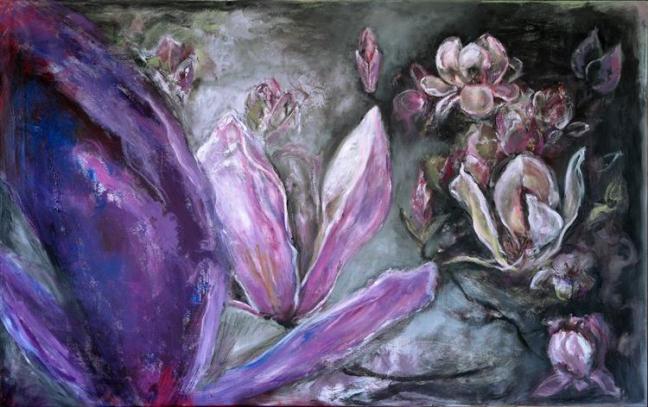
‘Magnolias’ – Carmen Delaco, 2022 – WikiArt

We are only ever made of thoughts. Sometime, thoughts come elaborate, with clearly defined words, perfect punctuation, following their due purpose. And sometime not. Sometime, they come as lightnings, striking us with a belief, an old stale repetitive assumption. Sometime, they linger unsaid, not pronounced, sneaking in but making untold damages. Sometime they don’t even need to be expressed. They have taken us over, have made a puppet of our life, tearing it apart in every mindless direction. All these thoughts are like little devils, unseen demons, unnoticed burglars stealing our identity. We have been brought to our knees, at the mercy of every one of their injunctions. We have been made just a collection of them, and nothing but an assumption. An idea of ourself. A self literally made up by the constant assault of thoughts, and by our believing them — belief being yet another thought.

Look in every direction you may. Notice here the coming of a hope, of a longing that takes form, but is yet just a thought. And when a worry comes, that this longing may never be fulfilled, it is just another thought that comes dancing with it. Attend to your expectations, to how you now imagine a future event. See how this evocation of the future comes as just another thought in your mind, for there is only ever thinking about the future. The future doesn’t exist, is always only imagined by a random thought. A regret, a desire, a fear, any bout of suffering or satisfaction, any feeling, comes wrapped in and as a thought. Thoughts are everywhere in our world. Even our body, our action, our world, are coloured and shaped by a thought or an image that condition their being perceived. A habit is a thought that took root and grew confident, unchecked, and many of our conditionings were once thoughts that have formed to become the established norm. As long as there is a thought somewhere in the system, that comes to define us, to give us a stand, an identity, that identifies with the body, that separates from the world, that gives a fleeting joy, or a tenacious pain, then we are not alone. We are not independent. We are not being our own identity. We have given it all up to thoughts, and have lost our being in them.

So go behind it all. Go before everything that appears for a while and recedes. Go before every worry, every hope, every mindless desire, behind every dull satisfaction that lingers lazily, every fear that strikes and leaves its trail inside you. Go to the place in you before every thought. Visit that portion of yourself where thoughts are of no consequence, where they are made trivial, ridiculous in their powerlessness. Go where distance is not, for thought as time has created the gap between yourself and your true nature, a gap where hides every shades of conflict and suffering in yourself — which are again thoughts. And go where you discover yourself to be unbreakable, unsoilable, eternal, for death too is another of your endless thoughts, maybe the most perverse one, but one that doesn’t stand being seriously investigated. Notice that thought is always some kind of thing, and that there is one place in yourself that a thing, that a thought, will never touch, or affect, or change: it is that portion of emptiness in yourself, which is only full of itself, and is therefore inaccessible to a thought — any thought. That placeless place is your peaceful being, your identity, who you truly are. To stand as that will freeze dead all the many thoughts whose only function was to give you support or approval, identity or escape, or contentment. These are burglar- or demon-thoughts, that come to lie to you, and try to impose their views on everything and on yourself. But a thought that is starting its journey from that virgin place of being is but a devotee and an angel, respecting your true identity and carrying in its wings the offering of your being, which is love. It is but a servant of the higher intelligence of truth. In general, demons are many, and angels are but a few.

.

~~~

Text by Alain Joly

Painting by Carmen Delaco (born 1976)

~~~

.

Website:
Carmen Delaco (WikiArt)

Suggestion:
– Other ‘Reveries’ from the blog…

.
Overflowing Questions

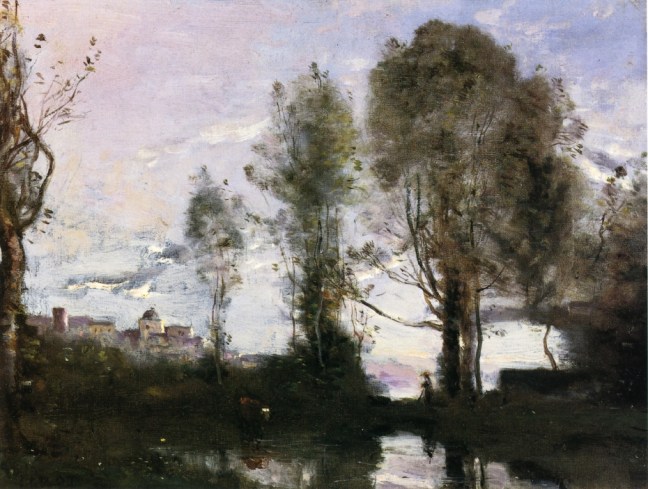
‘Edge of a Lake (Souvenir of Italy)’ – Camille Corot, c.1855-60 – WikiArt

Wouldn’t you like to have a knowledge which cannot be surpassed, which amounts to everything? That has in its core the truth of living, the philosopher’s stone from which everything springs, and to which all appearances owe their existence to? Actually, don’t you already long for it, and have done so for as long as you can remember? Is it not what you secretly hope for in your life? To have this knowledge, this direct access to the peace of your being? To have it here at hand, like a secret bond which you can find under and within every difficult situation, every outrage, every burst of suffering? And wouldn’t you love to harvest what this intimate knowledge contains? Its most reliable sense of joy, of contentment, and see yourself plentiful, complete, enough, in an absence of need? Wouldn’t that be great? To uncover it, and let it find its natural place in you, and as you, easily, without your doing very much about it? Wouldn’t that be great? Would anything be more valuable to you? Would that not be worth a life? Any life?

And what if you were told that you are not this bunch of objects which you have believed yourself to be — these endless qualifications, and the myriad of thoughts and feelings to which you have tied yourself with? Wouldn’t that give you freedom, a sense of release? To be unattached, not bound to your body-mind, at least not in a fundamental way? Wouldn’t that be healing, to be not the body but what holds it in its embrace? Wouldn’t that be soothing, to be not the mind but that which lends it the space to wander about? What is to you more elating and convincing than finding yourself naturally, effortlessly, in a place of health and vigour? The body’s ailments? The mind’s silly wanderings? Well, what if they were not really yours? Wouldn’t you like to find out, what would be their fate when left alone? What could be their trajectory when you rest peaceful in your own healthy, infinite body of awareness? Wouldn’t that be great to make this discovery? To have the final answer behind all that has been troubling you for so long?

And what if you were to uncover some even bigger findings? That behind your long, busy, eventful, suffering life, there has been a stillness, a silence which couldn’t be stirred or broken? And that nothing truly ever happened in your life? That it has been just a passing dream? What would be the implications of that ? And what if you were to find out that the world is just only clothed by the awareness of it? That it is not there in the way you had imagined so far? And that behind it all was also dawning the certainty, the knowing of your immortal, undefeatable nature? Wouldn’t that be wonderful? To see, feel, touch the truth of it with your hands, that death is a myth? That it is not there? Not in the least? Wouldn’t that be extraordinary? That things do die but not you? That body does become ashes but not you — not that which you truly are? That mind withers away but not you — not your primal being which you have to concede is eternal, is infinite? Wouldn’t that take your breath away? Wouldn’t that blow your mind?

.

~~~

Text by Alain Joly

Painting by Camille Corot (1796-1875)

~~~

.

Website:
Jean-Baptiste-Camille Corot (Wikipedia)

Suggestion:
– Other ‘Reveries’ from the blog…

.
One Sublime Being

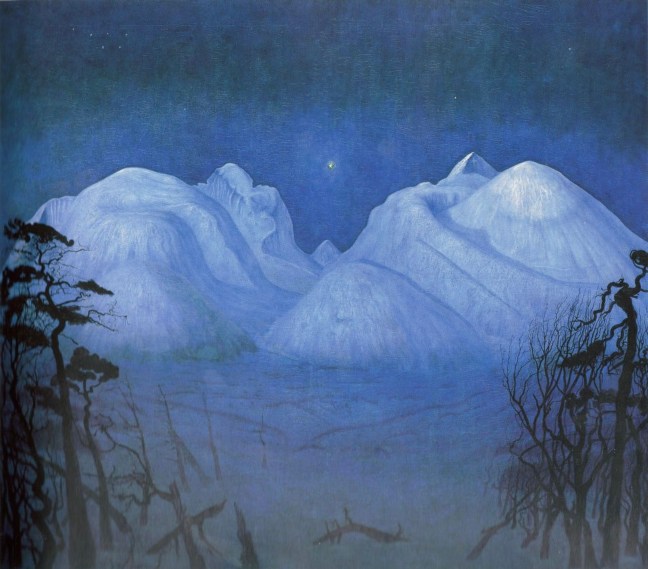
‘Winter Night in Rondane’ – Harald Sohlberg, 1913 – WikiArt

The body-mind is not an apparatus that stands on its own. It is an instrument of awareness. It is supposed to bear and implement the innate qualities of its owner as pure, unlimited being. This is why it has pain and suffering: When all such qualities have failed to be transmitted. When awareness is being short-circuited. Suffering is the complaint of God that is inbuilt in the body-mind system. It is God’s intelligence revealing itself to ourself when we have become blind to our true nature. So we have to align ourself to the depth contained in the knowing of our being, to be ourself that vastness, and allow it to shine in our experience. This is the golden avenue to peace: to be ourself an expression of the divine being that is lending itself to our constitution, lending its body to the body of our bones, blood, and skin, and lending itself as a container for our thoughts, sensations, and perceptions.

We never had a solid body with a life of its own. A dying body is not just a body that fails to sustain itself. It is consciousness calling itself back to itself, and in that process making the body-mind instrument ever more soft and porous, leaving it ever more shining, ever more acquiring the qualities of its essence as pure being. It is also a mind that is made less ambitious, losing its carapace of wanting, needing, seeking, expecting — the suffering that it all implies. A mind that is slowly giving itself in, to return to where it never left, and espouse its natural receptacle as pure awareness. This is how death comes to be so readily accepted. In the course of this transition. In the gift that death is in last analysis. For your body is not your body. It is God’s being in disguise. As for your mind, it is but God’s infinite mind borrowed. So you never truly lose your body. You never truly lose your self. And you are not confined to your body-mind in this life. You just come to realise the presence of another truer, finer body. A body that extends itself to the width and length of the world. And you notice that your mind is not restrained to the perimeter of your skull, but hosts unbridled, measureless, the world that is your body, with its infinity of variables. This is how body, mind, world, God, life, death are discovered to be one sublime being, bound together by the vital fluid of love.

.

~~~

Text by Alain Joly

Painting by Harald Sohlberg (1869-1935)

~~~

.

Website:
Harald Sohlberg (Wikipedia)

Suggestion:
Other ‘Ways of Being’ from the blog…

.

The Doorway to Emptiness

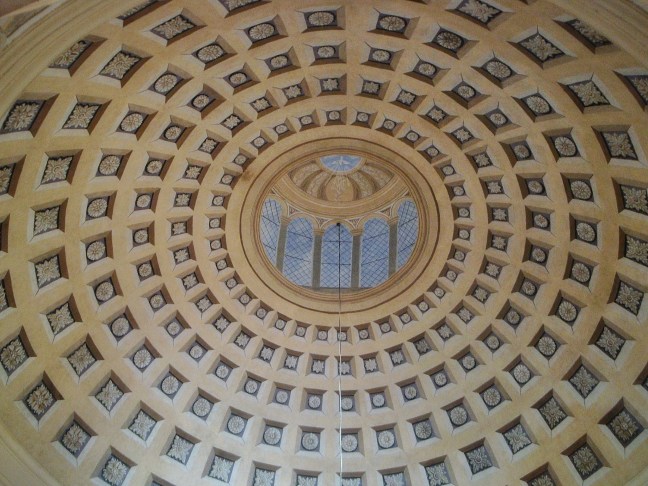
Church of Saint-Pierre-de-Curtille – France

An inquiry into what we are, and what there is, really boils down to finding out what emptiness is. It boils down to nothing. It boils down to the realisation that we’re not in the picture. We’re nowhere to be found. We are in reality an absence. This is the truth. What truly is is an isn’t. For the simple reason that no-thing owns its own ‘isness’, and no-body owns its own ‘amness’. So this ‘isn’t’ or ‘am not’ gives way to the only thing that can ever be. A reality that is the true and only one reality in presence. Nothing else but this, is. This reality or absence is supreme presence, supreme being. And this absence can only be known by being of it, which means being yourself as empty as this emptiness is. For true being is always about noticing first that ‘I am not’. You can only apprehend the truth of emptiness by being yourself empty of anything that exists in separation. That’s how you can be naked being, by being yourself stripped of anything that can be without nakedness. You have to give yourself away. That’s the only way to truly be. Every form of objective existence is only the product of a belief, of a thought, an image that you have invented to reify yourself. That’s how you become a mere thing separate from other things. And that’s how you become a fearful, suffering, lacking entity or self. By being something. A ‘something’ that can never be enough, never be whole. For ‘something’ is the signature of separation, and is a form of death.

Wholeness, and therefore peace, can only be found in emptiness, no-thingness, non-separate-beingness. In a way, only non-being can you ever truly be. Only the ungraspable can you ever truly grasp. Because you are naturally and fundamentally of it. Your deepest self is made of that empty being. Otherwise you remain a stranger, a thing existing alongside many other things. If you want to know what life is, if you want to be of it, an intrinsic part of it, and feel the aliveness contained within it as your own, you have to become as life itself: undefinable, ungraspable, non-existing, non-objectifiable, empty. That’s the doorway. Life’s secret is to be found in its very substance, its very making as pure, empty being. Everything that come to exist or appear ceases being alive. It separates from life and becomes something doomed to disappearance, and to death. But the essence of your utmost being is found in eternity, in no-thingness. This is ultimate death. A death that is so profound, so effective, that it cannot be found in disappearing, but in truly being. Ultimately, death is the signature of being. That’s where life hides itself — in death. In formlessness. Emptiness. Nothingness. That’s where you will find it. But let yourself be the least little thing, the tiniest appearance, the remotest person, and pure being will remain to you a thing unknown. No thing or person have a reality of their own. Forget that idea. Absence is the only door or access to your true nature, to the knowing of your self. Absence is the very home and address of being. And your absence is your knocking at its door. Then you might find out: the door was never there. It was emptiness, nothingness all along. That’s how a world can be given birth to. On account of this emptiness. And this emptiness is you at your fullest.

.

~~~

Text and photo by Alain Joly

~~~

.

Other ‘Ways of Being’ from the blog…

.

‘Consummatum Est’

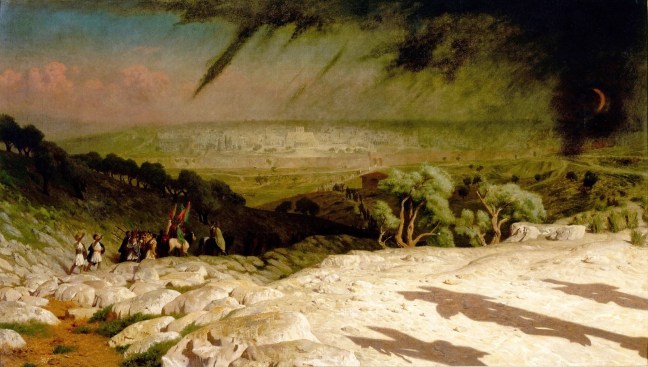
‘Consummatum Est’ – Jean-Léon Gérôme, 1867 – Wikimedia

I happened to visit a church recently, and was intrigued by one single sentence placed just under the main crucifix, which read in French as: “Tout est consommé”. I had never heard this particular formulation before. These words appear in the Gospel of John (19:30), and have been translated into “It is finished” in modern English. These are the very last words uttered by Jesus on the cross before he relinquished his bodily existence, and was resurrected as pure being. In Latin, it runs as “Consummatum Est’.

Consummatum Est

All is consummated, which means all is finished, accomplished, brought to completion. It means we are wholly with the ‘highest’, nothing is left that lingers in separation. All that is other than god, other than the very presence or being that we are, has been consummated, put into the fire of consciousness, eaten, devoured, transformed into its very essence. The truth of it has been exposed, and the objects — all that seems to have its proper existence — have been revealed to be of one single essence. The ten thousand things have been digested, transformed into the truth of their being. They have been revealed as the One. The illusion of multiple existence has been seen for what it is: one being giving no room for an other. Anything that stood as separate or ‘other’, has been consummated into the fire of emptiness. Not a barren emptiness, but a living one, a fertile emptiness, teeming with possibilities, with creativity. Everything that was objective has been devoured into supreme subjectivity, which is nothing but the feeling of being, in which all existing things have found their home, have dissolved their separate identities, have bargained their many names for the Nameless. The many have been revealed as being one. Therefore whole, complete, in need of no ‘other’, or ‘better’, or ‘more’. The many shadows of obscurity or illusion have returned into the light of their essential being. They have disappeared, have relinquished their illusory separateness, incompleteness, or ignorance to return into the truth of their ultimate being as oneness, fullness, or understanding. The shadow of existence always shows up as many. But the pure light of being is revealed as one. This is an end, a finish line, because there is no more to be revealed, no more to be added, understood, analysed, enquired. This is a natural completion, a form of creative death, which means the realisation of the very nature of death as the living aliveness of pure being. It is whole, therefore unattached, innocent, incapable of being sullied or diminished, immune to death, and open to the infinite. Finally, you come to the understanding that this consumption is the sublime alchemical process, the transfiguration through which suffering is metamorphosed into peace, separation into oneness, and death into eternal life. This is the realisation, awakening, or resurrection of our true essence that was buried under, or veiled by, our illusory sense of self and the constant toil of life in the forms of suffering and death. In other words, you have been crucified on the altar of ultimate being. ‘Consummatum Est’.

.

~~~

Text by Alain Joly

Painting by Jean-Léon Gérôme (1824-1904)

~~~

.

Websites:
Jean-Léon Gérôme (Wikipedia)
‘Consummatum Est’ – Painting (Wikipedia)

Suggestion:
Other ‘Ways of Being’ from the blog…

.

The Gospel According to St. Matthew

‘The Gospel According to St. Matthew’ – by Pier Paolo Pasolini – (With Enrique Irazoqui)

.

The motivation that unites all of my films
is to give back to reality
its original sacred significance
.”
~ Pier Paolo Pasolini

.

The famous Italian film director Pier Paolo Pasolini made this beautiful statement about his art: “When I make a film, I shift into a state of fascination with an object, a thing, a fact, a look, a landscape, as though it were an engine where the holy is about to explode.” This can be immediately felt as we stroll amongst the first scenes of his 1964 movie ‘The Gospel According to St. Matthew’. We are met with an angelic Mary looking at a bewildered Joseph leaving home after the discovery of her pregnancy. Silence prevails and only a concert of bird’s songs can be heard. Joseph wanders in solitude in a landscape that is desolate yet teeming with presence and energy. He comes to the edge of a town and kneels against a nearby stretch of land where a bunch of children are playing, giving like a lullaby of innocence to Joseph who closes his eyes and abandons himself to the moment. This is the chosen time when an androgynous angel appears and gives him the revelation of the divine nature of Mary’s pregnancy.

[…]

Discover the magnificent film by Pasolini on the Gospel of Matthew… (READ MORE…)

.