Creep

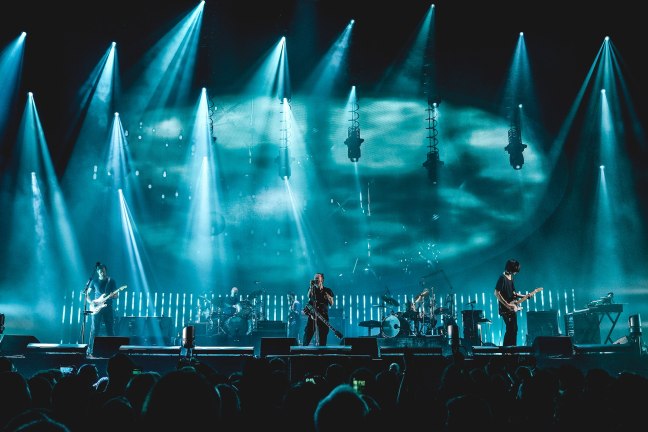
‘Radiohead @ TD Garden (Boston, MA)’ – by Kenny Sun – Wikimedia

I wonder if you have ever seen the face of love, what loving indifference is? I have some days ago, while watching a concert by Radiohead on the internet. It was during the band’s most celebrated hit, called ‘Creep’. This song is the stage of an unrequited love. But I suggest it goes further than that. It is the story of a rage, of not being enough. We all have lived through expectations that were turned down. We all have made efforts that didn’t pay off. We all want to feel special, to belong, to be at peace. We abhor being behind ourself, faking our contentment and control. So we all have known this feeling of being a ‘creep’, or at least of not being good enough. That’s why we live so hectically, constantly looking for better and more, wanting to feel complete, enough at last. Maybe that’s why the song happened to be such a hit, beyond its obvious musical qualities: it is like an echo of the secret battle we are engaged in, of our quiet desperation, and of our repeated attempt to put an end to our suffering.

I was watching the song being played, the singer yelling its rage amongst the gnashing saturated blasts coming from Jonny Greenwood’s guitar, lights illuminating the stage like a flash of lightning would. Then it surprised me. For just a few seconds, the camera caught in the public a young woman whose attitude was quiet, mildly concerned, but deeply tuned to herself. Everybody around her was involved, shouting, dancing, taking their share, drawing their identity and happiness from the vibes of the music. But she was not. Didn’t need to. Her need was to be quiet. Peace was her home. Beauty was where she was, and where she had landed on. She was tasting her being. She was taking it all in, but with a peaceful, loving indifference. For her, separation had been slain, and she had become a silent watcher, a taster of being, a madonna.

There was no need for her to dance and shout the lyrics of her favourite Radiohead song, for she dwelled in silence. It was all taking place somewhere else, in a placeless place where time was nowhere to been seen or experienced. All our objects of adoration are never the point, are never the goal. They are the means to feel and taste in ourself this most profound sense of peaceful being that is always here, always now with us, and that we miss in reason of our obsessive attachment to objects, with their derived outcomes and rewards. When the love or enthusiasm for an object — a song, a piece of art, a football match — is brought to its paroxysm, we merge with it, and in this merging forget our own person. This forgetting is the stage set for a meeting with ourself, for an encounter with our own silent being. We feel what we could call, a paradoxical serenity. So the pleasure of the senses is never the object of our desire, and never what our seeking is about. We are after something more elusive, the harder catch that is our own being. We long for this profound sense of peace and security that lives there as our identity. This serenity is not dependent on circumstances, but lies naturally in and as our most intimate being. This pure being is our true identity, and is in fact what we are really seeking behind all our pleasure oriented pursuits. Pleasure can never be a match to being. Pleasure is but the child of separation, while being is the realisation of our deepest identity as love, and its expression as oneness.

Love takes over experience. Love dominates experience, it brings it down to its knees, reveals what it is made of. Experience appears to be of secondary importance, not because it is not important, but because its importance lies in the light that shines on it and gives it its reality and meaning. We cease to be personally involved. We are just present, and this presence is our most precious and efficient involvement. We are indifferent not because we do not care, but in reason of the preeminence of love in our heart, with its acute, unfocused awareness. Love responds to the whole. There is no personal self present, that feels separate and insecure, fearing and seeking. That one is absent, leaving all the place to the quality of simply being, with no preferences in it, but with a total, impersonal, peaceful engagement. This peace is the most profound signature or identity contained in every experience that we go through. To recognise the nature of ourself as peaceful being, is to recognise the nature of experience as that one same peaceful being. We will never have to complain: ‘I wish I was special’. Never have to say: ‘I don’t belong here’. In love, there is no being a creep.

.

~~~

Text by Alain Joly

Photo by Kenny Sun (Wikimedia)

~~~

.

Website:
Creep (Radiohead Song) (Wikipedia)

Suggestion:
Other ‘Ways of Being’ from the blog…

.
The End of Self-Improvement

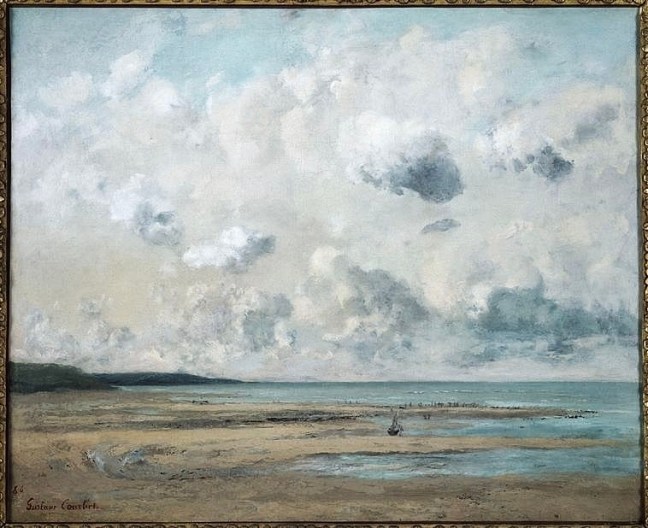
‘Shores of Normandy’ – Gustave Courbet, 1866 – WikiArt

.

To know that your Self has not changed,
this illustration itself is enough.”
~ Ramana Maharshi

.

There is no ameliorating emptiness, developing the unborn, aggrandising what is, and expecting the timeless to be anything more or different than what it is. Being leaves no room for improvement because it is not a thing, it is not a result, a something that has a cause. How do you improve the non-objective? How does the infinite progress? How do you make better a self that is absent as self — as something different or separate from experience? So self-improvement is a misunderstanding and a form of violence. It is an imposition, a belief that we squeeze to fit our idea of reality, an objection to the innate perfection of what is. It is mind-made, a product, a progeny of conditioning. It is designed for the continuation of our belief in being a self or entity that can be objectively defined. And remember this: every object, every ‘thing presented to the mind’ — as Latin word ‘objectum’ stands for — is in fact nothing but something thrown in the way of your knowing who you are. This is the meaning of Latin ‘obicere’ — ‘ob-‘: ‘in the way of’ and ‘jacere’: ‘to throw’. The self that you believe yourself to be, and that you strive to improve, is your hindrance. It is what makes you blind to your true nature.

To improve on a self is to make it continue, it is to give it credit, to give it the existence it never had. After all, we all want to feel real, to see that we can act, and have a power on our self. So we have the desire to consolidate and sculpt our being through rendering it an object that we can manipulate. We want to make a profit of our self, and see a return on our investment. In fact, to improve myself is nothing but a form of merchandising. It is a trade and a transaction. It is retail management, the ‘cutting off’ of our self with the aim of maximising profits. But don’t ever forget that if you are able to improve yourself, you can therefore also make it deteriorate, worsen, decline, decay. So what then?… is self-improvement decay, error, illusion? Is it ourself going astray, being mislaid? Are we really so sure that our being could ever decay? That awareness is a so fragile thing?

[…]

On how there is no improving our self and being… (READ MORE…)

.

A False Impression

There is an impression that I am the one who knows, or is aware. But this is a false impression and an unfortunate one. In fact, we as a body-mind don’t know anything, for the good reason that there is no one here that is in charge of the knowing. We don’t have this ability. It is not for us to know anything. Knowing doesn’t belong to an individual, separate self. We owe our knowing to something that knows us first, and lends us that potential. That really gives a totally different perspective to our existence, and grants us a gorgeous humbleness: Knowing is without a knower. The knower is but a set of thoughts that we have superimposed on awareness. It is entirely made up. It is of our invention, to give us a wee importance — after all, we all want a little attention. Knowing is in the nature of being. And being is the nature of everything. Knowing is all there is. It is the light of our world, indissociable from our experience. We as selves are just shadows. Everything is dancing and taking place without our being in any way party to it. At best, we are just a colouring, a point of view, an avatar governed by some divine rules which we have perilously chosen to ignore. This is our feebleness: wanting to own and appropriate, being more than what we already are. But in doing so, we have in fact belittled ourself. We have made ourself separate from the life we live in. We have created a self where there is none. We have awakened the devil of suffering in us.

So leave the knowing in some more skilful hands. It will spare you a lot of trouble and misunderstanding. You won’t have to be a person — all the heaviness contained in it. You won’t have to be a self that knows, but knowing will appear to be your one and only self — the entirety of your being. This pure and sublime knowing will give a measure of beauty and happiness in your life. It will encompass everything. It will widen your perspective and make you profoundly secure. You will know your being with precision and clarity, and live both in remoteness and intimacy — remoteness for a serene view on your experience, and intimacy for the delight contained in oneness. And love will be your everyday companion, the deepest essence of your being. And you will be clothed in understanding, which you believed could be achieved through your being a knower. Not at all. Understanding comes when you cease being a self, a knower, when you let go of all identities and egoistic purposes. Then it comes: the understanding — the knowing that knowing is all there is, and that you don’t need to be any more than that. So learn to keep at bay all private, egoistic desires to be anything other than this impersonal, undivided presence of yourself, that has the capacity of being and knowing. You have no need to be a knower, or a doer of anything in your life. Let the show run by itself. Only give it your golden, loving indifference. That’s the most glorious thing you can do in this life. You will be showered by the benefits of it.

.

~~~

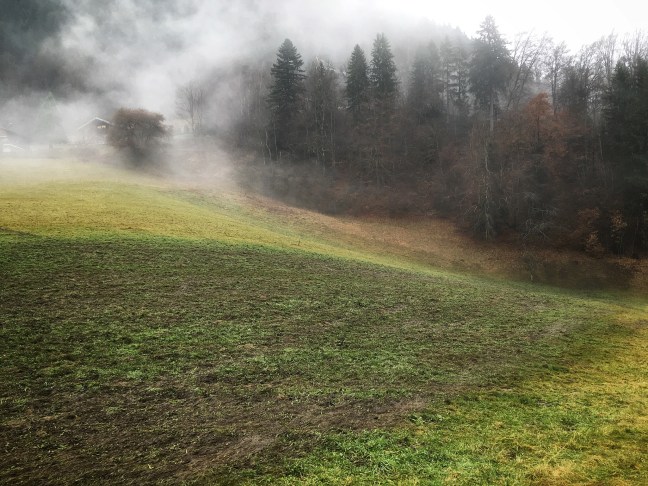
Text and photo by Alain Joly

~~~

.

Read this essay from the blog ‘The Impossibility of Knowing’…

Suggestion:
Other ‘Ways of Being’ from the blog…

.
Pathways

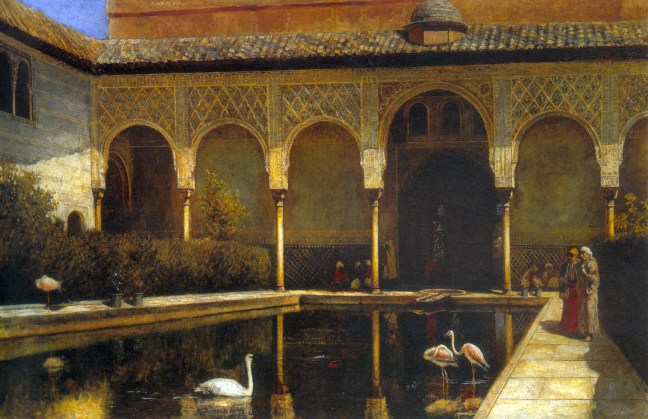
‘Court in the Alhambra’ – Edwin Lord Weeks, 1876 – WikiArt

The spiritual endeavour is really such good fun. You may happen to experience some suffering in your life and feel entangled — with thoughts rushing into your mind and problems seizing the entirety of yourself. The web of experience is overwhelming you and you can find no space to breathe within. You may then have to have a little conversation with yourself. You may have to disentangle yourself from your stubborn identification with thoughts and with the overcrowding objects born of the senses. That’s when you may present yourself with a simple question like: “What is this part in myself that is aware of my experience?” And so are you now taken amongst the scents of 8th century India, treading its immemorial dust with Shankara, debating with the great Vedantic master. He will show you how to move inwards right at the core of that aware presence in yourself. You will be taken with him to the core of this investigation, which is but the separation of the multiple objects of experience from the one aware, pervading presence of consciousness that is your true identity. That’s when Shankara leaves you with this one infaillible recipe:

.
I bow down to that all-knowing One
which is pure Consciousness, all-pervading, all,
residing in the hearts of all beings
and beyond all objects of knowledge.”
~ Shankara (Upadesasahasri, 1:1)

.
You may then find yourself sitting in your kitchen, cutting vegetables, with your thoughts suddenly wandering in the 17th century Paris, surrounded by the walls of a Carmelite monastery’s kitchen, chatting along with Brother Lawrence. He might tell you with his big generous smile: you know brother, “nothing is easier than to repeat often in the day these little internal adorations.” That’s when you understand that this investigation can be made into a joyful, often repeated practice, where you go and meet yourself within, have a little chat with this hidden presence, spontaneously, as you gaze into the eyes of a friend. Amongst the frantic sound of knives hitting the wooden board and the fumes of the next meal simmering on the stove, you meet Brother Lawrence’s glance offering you this last precious advice:

.
I renounced, for the love of Him,
everything that was not He;
and I began to live as if there was none
but He and I in the world.”
~ Brother Lawrence

[…]

Continue this journey into the investigation of your true nature… (READ MORE…)

.

God Unveiled

‘Illustrated Depiction of God with Holy Bettmann’ – Tintoretto, 16th AD – WikiArt

.
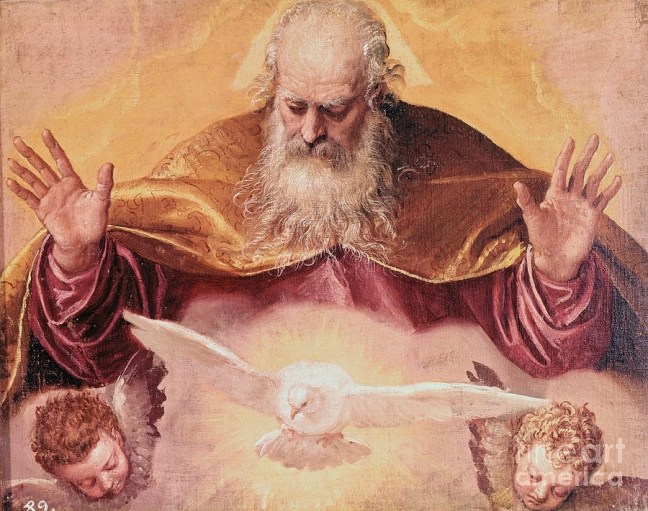
For many of us, god is nothing more
than the idea or belief we have inherited of such a being, an idea that is conditioned by religion as the lazy representation of an omniscient, omnipotent entity that is both our creator and protector — in the popular Christian imagery an old bearded figure who lives far and away from us, in a lofty, elevated place for a good view on its creation and creatures. The existence of such a god is almost only a matter of belief or faith, and the relationship we have with it one of reward and punishment, devotion, fear, prayer, praise, but rarely of understanding and exactitude. It seems that we better have god in a hazy place, feel more at ease with not knowing too much about the wisdom that may hide behind that term. So our ignorance is a calculated one, a refusal to rock the boat, and a patting of our carefully assembled opinions from which we derive our sacrosanct identity and security. But let’s tackle god here. Let’s undress the myth and have a thorough eye-contact with the divine. Let’s dare some experiential understanding. Let’s have god out of its hiding place.

Maybe god was never defined because it is the one thing in life that is indefinable. Everything objective that we can know, see, hear, touch, smell, taste — qualities and all — can be described with words and given a name. We have our life surrounded by objects. The objective has filled our experience to the brim, and we are being choked in it — with no breathing possible, and no space allotted to the unknown. God is one such unknown. But how could we describe something that we cannot know as an object? So to god we can only give a generic, provisional name. Because god cannot be pointed at and recognised as an object or entity. God is not an easy catch. The divine defies our understanding, and this defiance is at the core of our misinterpretation of god. So if you want to know god, you have to look for it in your life, and turn every stone and pebble that crowd your experience. So start by removing everything in existence that you can know, see, hear, touch, smell, taste — qualities and all — that have an objective quality and can be given a proper name. You know: everything that you can show to another fellow, and that he too can see, hear, know, understand, and comprehend, just like you. Take it all away, and then see what remains behind.

[…]

An explanation of the nature and reality of God’s being… (READ MORE…)

.

A Gorgeous Feeling

Have you ever tried being yourself? Being me is the most valuable experience one can have. But most of the time, we are not being ourself, we don’t know what it feels to simply be me. We are being anything but me. We are being our thoughts that haven’t asked for this, that were just passing by, and never solicited our identifying with them in such unreasonable proportions. We are being our so-called material body that limits us all the time, even more so when growing older. We are being our identifications, our justifications, our longings and stubborn desires, our most hideous feelings, but never do we simply stop and remain with the gentle expression contained in simply being me and nothing else. We are being our attachments to fear, worry, hope, security, avoidance. We love them and forget ourself in them. And we are being our beliefs, all kinds of them — endless expressions of them — especially the ones which tell us that we are separate from everyone and everything around us. These are the worst ones, rendering us sad, lonely, insecure, suffering from not simply and courageously being ourself. ‘Being me’ is being crushed under the weight of it all.

The feeling of being myself doesn’t come from our various experiences, qualities, memories. These may be feeding our conceptual idea of ourself, yet our formidable inner state of corruption makes us believe that we are them, that this is what ‘being me’ is: to be caught in a forest of objective experiences, to be coloured by their endless expressions, and to be filled by the dark shades contained in them. But the feeling of being me is not located there. It is not coming from any particular. On the contrary, it derives its gorgeousness from its being whole, unstained, unqualified, unconditioned. We owe this feeling of ‘I am myself’ to the pure, simple, hidden reality of awareness. ‘Being me’ is like a sumptuous light that is intimately connected to our deepest reality, and is teeming with beauty and simplicity. Let’s imagine a life where I would be me all the time, with clarity. The feeling of it all. Being me. Being me being all there is. Being me being not anything in particular. Being me being the essence of life — its most intimate and gorgeous component — common to all beings and all things. Being me is the purest expression of ourself, the jewel contained in every possible experience, but which is felt only when being independent from every such experiences, while containing them all. All beings ought to be feeling that very quintessential feeling of ‘being me’, that gorgeous self which was prepared for us all, and which we have longed for again, and again, and again. In fact, it is as simple as this: finally being me — who I am — and that is that.

.

~~~

Text and photo by Alain Joly

~~~

.

Suggestion:
Other ‘Ways of Being’ from the blog…

.
Being’s Glorious Life

There is no being inside you. Being is a presence that knows no inside and no outside, unless the inside is outside, and the outside inside. What a strange thing to have believed that there is a space inside us that could accommodate being. It would make ‘being’ just a wee sensation, maybe located in our chest, side by side with the pressure experienced at the moment of anxiety, or any other kind of sensation. We would have being like a thing that we possess in our body, a feeling that belongs to ‘me’, that would be one just for me, cherished as being me and only me, and to which I would attach all the things that I believe belong to me — like my qualities, my thoughts, my experiences and failures, and that sticky, stubborn feeling of suffering. And that’s how being gets lost: because of these many other grandiose feelings and sensations in ourself, that bring much excitement, when being is so discreet, so unassuming, doesn’t want to show off, and gets forgotten. Really—we think—there is not much to it.

But being has resources. For being is not only being. It is not just that I am. I also feel that, know that — that I am. Being has the capacity to know, to be aware. So it extends itself to all things. It has no frontiers, doesn’t like to be located, doesn’t fancy being imprisoned inside something, anything, be it a body. Being is adventurous. It likes to go for an outing, and experience its intimacy with all things that can be seen, touched, heard, and multiplied to constitute a world. So being creates the world by being aware of it. Being is the architect of everything, for without its patient knowing and nourishing, nothing would be in capacity to exist. I don’t like to say so, for you won’t fancy that, but you are superfluous to being — I mean you as your body, your thoughts, qualities, excitements, failures, sufferings, all the mountain you have accumulated, all that: just a small, secondary, inessential, barely noticeable expression of being. Being has stolen the show long ago, and you haven’t yet noticed it: That your body is just an interface between being and being. That what seems to be inside you is in fact just as much outside you. That what seems to be outside you is in fact just as much inside you. That your wee sense of being is all there is, and all that you are, of all infinity and of all eternity. That being’s glorious life is what love is, and where it lives. That being is one for all. And that there is no else or besides it.

.

~~~

Text and photo by Alain Joly

~~~

.

Suggestion:
Other ‘Ways of Being’ from the blog…

.