Meditation Time

Okay. Now find a good place for yourself and sit down comfortably. Close your eyes. You are about to engage in your daily meditation. But don’t meditate today. For meditation was never meant to be an activity that a self performs. It never was for the person. Meditation is a space of supreme humility in which you notice your own redundancy as a self. It is the natural and unequivocal place of being in which no meditator is necessary, or even wanted. Your presence as a self will prevent it. It will sabotage your meditation. And this beautiful, selfless presence that you are will retreat in the background, unable to truly flower, crushed by the pretence contained in your wilful act of meditating. There is nothing to attain in this moment. Nothing to achieve. So forget about being a meditator.

Don’t meditate today. Why should you? Let your own presence reveal itself to you. Let it gently notice itself, rather than you striving to notice it. You are already a master of presence, so why should you be meditating? Be contented with only being as you are. That will suffice. See that the meditator in you has now shrunk to the size of a little voice erring purposelessly in the infinite space of your presence. Feel that you are but a dead, brittle leaf falling to the ground of your true being, pushed by the winds of understanding, attracted by the inescapable laws of truth. Notice that your meditation has no need for a meditator. See that your natural self as being doesn’t even comprehend the necessity of meditation. To meditate literally means to ‘contemplate’, ‘measure’, ‘assess’ [what is already here]. This is the ultimate meaning hidden behind that word.

So don’t meditate today. Why should you? Who told you so? Be the one that is beyond the possibility of meditation. Be seated in your unreserved, natural self, where you are already bathing under the sun of your own being. And should you feel an emotion, be reminded that it is but a brisk shower of rain falling in the wide expanse of your nature. And should you feel the limits of your body and sense perceptions, be reminded that they are but a wild and beautiful land appearing in your infinite self, that awaits your ploughing, and seeks your nurturing. Meditation is that space of being which you are of all eternity. It will never leave you, nor can it do so. This ultimate, eternal being is the warm bath of your self, already achieved, and in no need to be practiced. And the meditator has been irrevocably absorbed in it, diluted in this small death.

.

~~~

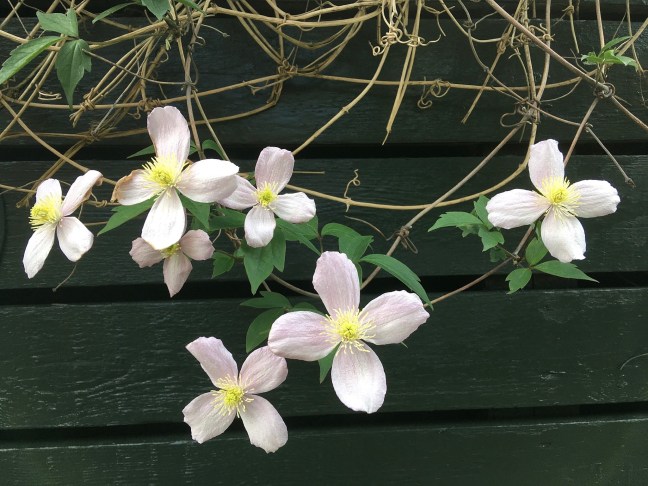
Text and photo by Alain Joly

~~~

.

Suggestion:
– Other ‘Reveries’ from the blog…

.
The Perpetual Retreat

I don’t know if you have ever been to a deep, meaningful spiritual retreat. And have found it ending, feeling yourself thrown out, returned into the common world of strife and wilderness, the cacophony of it all, trains, airports, and finally the habitual streets of your life. That moment is when you have to be a little watchful. For nothing has ended really. The peace experienced in your retreating into the heart of your true self is your real deal. And these peaceful days were placed here to remind it to you, to bring back this good old memory to yourself. So don’t crush it right away on the pretence that you are now back to your pseudo life of normality, where it is expected that you will be assailed by visions of separation, and returned to your good old suffering self. Please don’t do that. Know better. No retreat has ever ended except in your own imagination. You are now an attendee placed at day one of another beautiful and challenging retreat that starts afresh, loaded with promises, and ready to invite you in its grip. That grip is the feeling of being in yourself, which you can retreat to at any time, in any place, and anyhow. This is the ticket for entering your perpetual retreat. The longest and cheapest retreat you have ever been invited to. And you are being the glorious participant of it. That lucky one. — And there is more to it. You will be upgraded. You will become your own teacher, the teacher of your never ending retreat, always available, in all circumstances. For your sweet being hasn’t suddenly retreated at the end of the week. It is here. It is now. Continually present. Faithful to all dimensions of life, including the most apparently unconducive ones. He will guide you all along, if you’re willing to listen to her, and receive its presence at the heart of your self. Being is your infatigable teacher. Being is the new place for your retreat. It is the time for its sacred attendance. And it is placed at the perpetual height of your self. Keep going there. Make your life into a perpetual retreat, where you are at once the teacher, the participant, and the staff of that beautiful event that your life is, and in the exquisite venue that the world is.

.

~~~

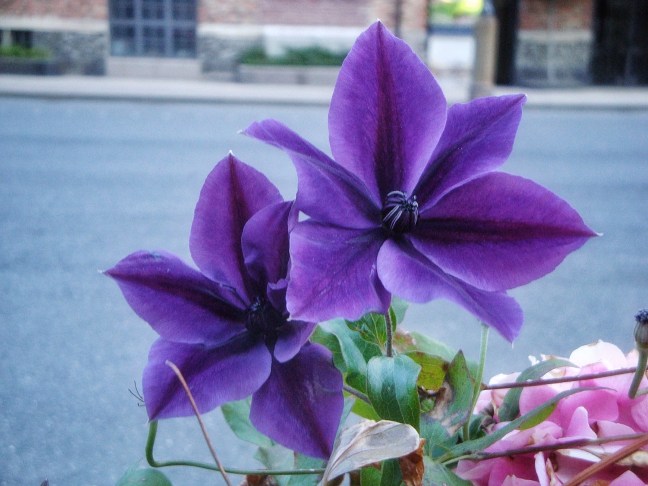
Text and photo by Alain Joly

~~~

.

Suggestion:
– Other ‘Ways of Being’ from the blog…

.

The Beatitudes

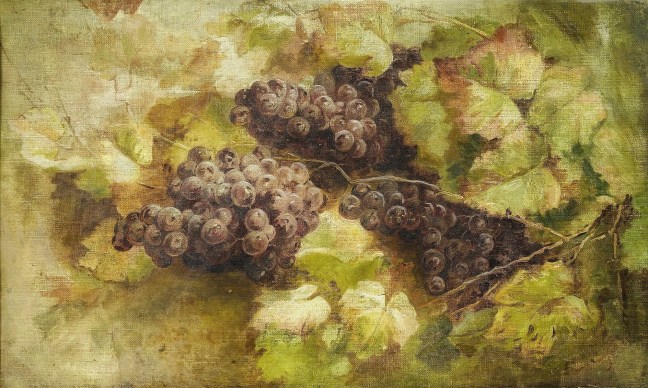
‘Still Life with grapes’ – Giovanni Segantini, 1899 – Wikimedia

.

The Beatitudes is the name given to eight blessings that Jesus pronounced at the beginning of his ‘Sermon to the Mount’ in the Gospel of Matthew (5:3-10). Each of these blessings begins with the Latin word ‘beātī’ (from ‘beātus’ meaning ‘happy’, ‘wealthy’), translated here as ‘blessed’. They are short and bold little sayings that I have come across lately, eight ways to be blessed, eight blessings on the path to our true being, each the recipient of some profound meaning which I have endeavoured to develop here. I hope you enjoy the reading…

Seeing the multitudes, he went up onto the mountain. When he had sat down, his disciples came to him. He opened his mouth and taught them, saying,
~ Matthew, 5:1-2 (World English Bible)

.

Blessed are the poor in spirit,
for theirs is the kingdom of heaven
.”
~ Matthew, 5:3

You’ve got to be empty. Not to indulge in your thoughts, feelings, and experiences, making them the owners of your kingdom. You’ve got to be empty. To not be seduced by every passing colours. To stop being a possessor, forever looking for what could enrich you. You’ve got to be empty. To not be involved, endlessly busying yourself with everything you have gathered to exist, looking in them for an identity. You’ve got to be empty, to stay away, to keep alone. To be the one disinterested, self-sufficient, which means finding peace in the essential of what you are. That essential is ‘being’. Simply being, devoid of anything that this being could be, or have, or think, or feel. Then this being will enrich you in its austerity, it will clothe you in nakedness, it will fill you in emptiness. Being is all you will ever own, for the simple reason that it is all you are. Nothing else is but being. This is the only asceticism worth living. Be blessed with that inner poverty.

[…]

My reading on Jesus’ eight blessings from the Beatitudes… (READ MORE…)

.

The Sober Life

.
To be sober means not to let the heart cling to anything except God.
Cleaving to other things makes the soul drunk,
and it begins to do quite unaccountable things
.”
.
~ Theophan the Recluse

.

~~~

Quote by Theophan the Recluse (1815-1894)

Photo by Alain Joly

~~~

.

Bibliography:
– ‘The Art of Prayer: an orthodox anthology’ – Compiled by Igumen Chariton of Valamo (Trans. by E. Kadloubovsky and E. M. Palmer) – (Faber & Faber)

Website:
– Theophan the Recluse (Wikipedia)

Suggestions:
Beauty in Essence (other pointers from the blog)

.

The Poetic Genius

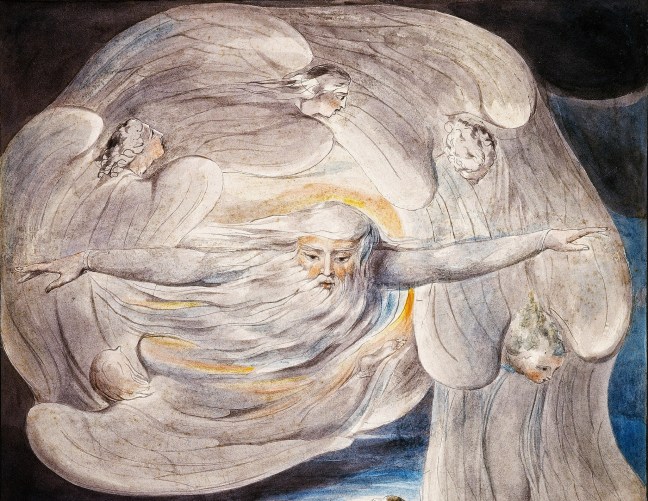
Job Confessing His Presumption to God’ (detail) – William Blake, 1803 – Wikimedia

.

I must Create a System, or be enslav’d by another Man’s;
I will not Reason and Compare: my business is to Create
.”
~ William Blake (‘Jerusalem’)

.

Artists, through their sensitivity to perception, their pointed quest towards beauty and harmony, are natural candidates for delving into the depth of reality and understanding their true nature. Many poets, painters, musicians, have been able to explore their being in ways that are traditionally the privilege of mystics. Indeed, they wrestle with eternity, and strive to find a way to convey it. William Blake was one such wrestler. He was a poet, painter and printer born in London in 1757. Although not recognised during his life, his art is bursting with creativity, intelligence, and vision. His profuse work, soaked with spiritual explorations, symbolic and personal mythologies, is not to be easily classified. Of William Blake, the 19th-century scholar William Michael Rossetti wrote that he was “a man not forestalled by predecessors, nor to be classed with contemporaries, nor to be replaced by known or readily surmisable successors“. Besides, his poetry is infused with pearls of the most profound non-dual understanding, which I invite you to explore here.

In his childhood, William Blake was fascinated by the work of great masters such as Raphael, Michelangelo, and Albrecht Dürer. He was educated at home, was given drawing lessons, and began writing poetry at an early age. Profoundly influenced by the Bible and Christianity, he was all his life gifted with visions and insights, from which he drew guidance and inspiration for his poetry and paintings. He was nevertheless not a follower, and developed his own vision and understanding. He was very critical of narrow-minded religiosity, or what he named the “general truth” or “general beauty“, writing uncompromisingly that: “To generalize is to be an idiot; To particularize is the alone distinction of merit“. William Blake wrote these enlightening verses about his religious endeavour and passion:

.
Trembling I sit day and night, my friends are astonish’d at me.
Yet they forgive my wanderings, I rest not from my great task!
To open the Eternal Worlds, to open the immortal Eyes
Of Man inwards into the Worlds of Thought: into Eternity
Ever expanding in the Bosom of God. the Human Imagination.”
~ ‘Jerusalem’ (Ch. 1, plate 5)

.
When will the Resurrection come, to deliver the sleeping body
From corruptibility? O when, Lord Jesus, wilt thou come?
Tarry no longer; for my soul lies at the gates of death:
I will arise and look forth for the morning of the grave:
I will go down to the sepulchre and see if morning breaks.
I will go down to self-annihilation and eternal death
Lest the Last Judgment come and find me unannihilate
And I be seized and given into the hands of my own selfhood.”
~ ‘Milton’ (Book the First)

[…]

An exploration of William Blake’s non-dual pearls and poetry… (READ MORE…)

.

The Little Bud

Could there be a bigger relief than to realise, after a life of struggle and constant pursuit of fulfilment, that everything in our experience is already perfectly still and at rest, and already fulfilled? That we have it all as our birthright? That there is no need to run after ourself, to make everything up, to win our peace through our many efforts and achievements? That there is no need to believe and hope, to project and attain. No need to make life into a war, everlastingly caught between desperation and elusiveness, between all our ‘not quite’, ‘not yet’, and other ‘almost’ or ‘not really’. We put everything at a distance, therefore making happiness into an object, and pursuing it as something to attain or achieve; something dependent on how smart we are, or hard-working, or focused, or lucky, or god knows what. This is to make peace and happiness into something puerile and vulgar, some kind of expensive item to be bought in the marketplace.

Should we not get it right once and for all? Should we not have a definite and thorough look at ourself, and have it all crystal clear? There is no self, inside this body and mind of ours, that is placed at a distance from the objects of experience, and that can use them for its own fulfilment. To believe that there is such a self is what makes life into a battlefield, what renders us small and lacking, suffering our way through existence. We have invented this self. We have fabricated it with all the leftovers of the thousand things and events of experience. We have made ourself into an inextricable bundle which we can never fully know and get hold of. For the simple reason that it is not there. And yet, unfortunately so, this apparent self is our veil. This invented self is our loss. It is what makes us blind to the real life, transforming peace and happiness into objects that this self must attain and never can. How could it in a million years? This self has no reality!

The problem is: we have fabricated, given flesh to something — a self — that is inexistant, and by doing so have made our true and only self and reality into something that appears to be absent, fleeting, elusive. This fabricated self veils a presence that is immediate and intimate. A presence that doesn’t need to be projected. A self that doesn’t need to be arranged or perfected. This self is in fact that thing which we are taking to be just an instrument or function — a consciousness for our invented self — when it is in fact that very perfected self which we are desperately trying to attain. Our fascination for the world of objects has transformed a magnificent and fully grown flower into a little, hidden bud that we have seen and ignored a thousand times. This fully grown self is already what we are unknowingly, and its hidden presence grants like an intuition or memory to the illusory ’me’ which we are desperately trying to perfect. This self owns also, entwined in and as its very nature, the peace and happiness which we are looking for, already achieved and at hand, therefore never lacking, and never in need to be pursued.

Another thing is: there is singleness in our experience. Don’t look at the many, but contemplate the one as being their unique reality. See this reality as pervading everything to the point of being the very fabric of experience. See this reality as being your dearest self. And see this self as being the self or essence of all seemingly other apparent selves and things. This is how we vanquish conflict and suffering. This is how we annihilate struggle and effort. This is how separation is seen through. This is how we make our world a world of peace and harmony, whatever the forms the present dance may temporarily acquire. For you have seen yourself and the world as they are: pure, unbreakable peace. This is why some have called this presence God, on account of its grand, pervasive, loving, and all-encompassing nature or quality, and because it is forever here, forever now, therefore infinite and eternal. Our self and world have been discovered to be god’s being. The little, lost, suffering bud has been discovered to be flower. Its beauty and power therefore self-explanatory.

.

~~~

Text and photo by Alain Joly

~~~

.

Other ‘Reveries’ from the blog…

.
The Ultimate Absolution

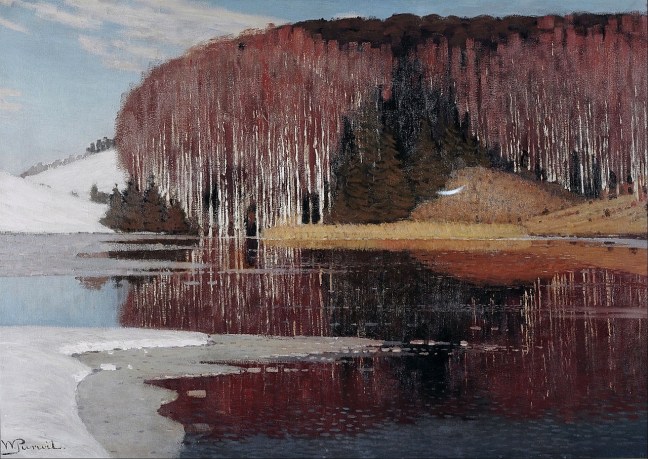
‘Spring Waters’ – Vilhelms Purvitis, 1910 – WikiArt

Isn’t it wonderful to discover that you cannot be destroyed? No matter the magnitude of your heartbreaks. No matter the betrayals and the dishonesties — all that is unforgivable in others or in yourself. No matter the untold suffering inflicted to your body or to your self. Isn’t it a blessing to notice that you cannot be broken no matter what? You can believe to be broken, sullied, doomed and punished for your sins. But in reality you are not and cannot be. You are as beautiful as you ever wished to be. Worse even. No quantity of imagination, no originality of a mind will ever prepare you to comprehend the pure and unsullied nature of your self, which equals to nothing but the beauty of your heart.

The only thing that can ever be hurt or sullied is a thought or a belief. You will be hurt in proportion to the extent of your identifications. The greater your illusion, and the sharper will be the pain when it is challenged, or diminished, or trampled. A belief is a living thing. It is not just a dead abstraction that can be easily ignored or overcome. A belief is as alive and sensitive as a self can be. We are made of that belief, we have clothed ourself with it and have become vulnerable to all that can undermine it. That’s how you become a sufferer. That’s how you can imagine to be sullied, diminished, destroyed. It is all contained in one single belief about yourself. And it can be released in one single act of contemplation: Seeing yourself as you are, and not as you imagine yourself to be.

[…]

An exploration into the true nature of forgiveness… (READ MORE…)

.