‘Who Am I?’

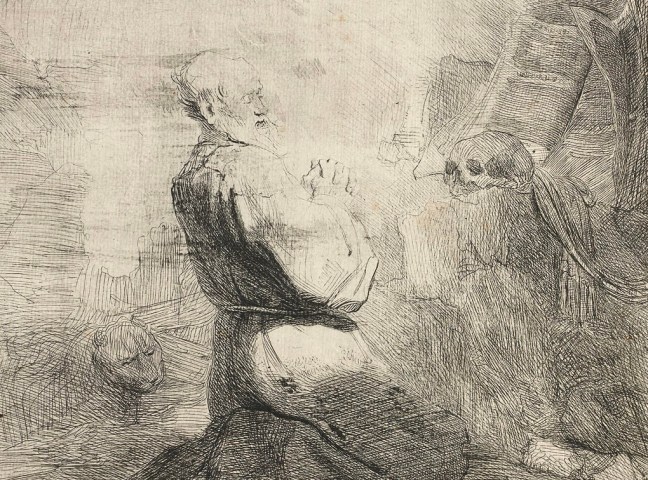
‘St. Jerome kneeling’ (detail) – Rembrandt, 1630 – WikiArt

The question of who I am is a big question. It is not being asked very often though. At least not in the way it should. We do as if. As if we all knew who we are. As if it wasn’t worth asking. As if it was a waste of time to do so. When we do ask about who we are, it is to fill ourself with objects, qualities, identities. We are gathering informations about our body, our emotions, skills, idiosyncrasies, tendencies, but not about ourself. We live as if on a racing track, never actually stopping the course of our acquired, rehearsed, believed identities. We never watch, inquire as if for the first time, as if we didn’t know. We are bragging. We don’t want to be humble, and learn about something that appears to be so simple, and goes — so we believe — without saying. But the truth is: it scares us. We are afraid to know. We have picked up, from the beginning of times, that this question is a question of immense implications. It is a deadly question. One that changes you, finishes you, shakes your very ground.

It is a question for a sacred remembering, to just notice what we already are, what is already here, but that we have been too distracted to see. It is a question to prevent us from going out all the time, from escaping ourself, to help us return to where we have always been — in the home of our inner being. It is a question for which we have to let go of our bodily refuge. A question for which we have to lose the self that has been our anchor so far. It is a question for the mind, although its answer is to be found outside every consideration of mind, thought, image, memory. It is a free fall that pushes us to look beyond our limitations, and gives us the gift of our limitlessness. It is a question with no end, not because there is no answer to it, but because the answer is a living answer, whose reality can never come to an end. It is an impossible question, for even before we have the occasion to utter it, we find it already answered through the act of our simply being.

The living answer to the question ‘Who am I?’, is ‘I Am’, which contains its own undefeatable, eternal, inescapable reality. ‘I Am’ is before the question ‘Who am I?’. ‘I Am’ is the living answer which swallows every single question on our identity. It takes us into itself, and shows our identity to be only being, a being so pure that nothing can be added to it. It is the only sacred knowledge there is, which all the words and rites of every religion have sought to deliver as the name ‘God’. A knowledge that they have failed to pass on with accuracy for going too far, and postulate outside of ourself the reality that is in fact our very own self, hiding in plain sight in and as our own aware being. So ‘Who am I?’ is a prayer that is clearing the path, recalling God in ourself in the form of ‘I Am’.

It is a question that opens the door for the peace that we have been looking for in every possible direction, except in the direction of our innermost self alone. It is a question that we ask with expectation and inquiry, and answer with the peace and joy that we find already here, beyond any expectation or understanding. It is an implicit question that we cannot help asking in the secrecy of our mind, but that we fail to form explicitly, expecting the answer to be outside our own being. It is an absolute question, that needs no other answer than going to the very aware being that initiated it, because of  its longing to be freed from everything that seems to limit it and veil it. It is our returning to what we have never ceased to be, but are failing to see for reason of looking in a thousand directions outside ourself. ‘Who am I?’ is a question that takes you to ‘I Am’, which is the only accurate description there is of our true identity. 

.

~~~

Text by Alain Joly

Painting by Rembrandt (1606-1669)

~~~

.

Website:
Rembrandt (Wikipedia)

Suggestion:
Other ‘Ways of Being’ from the blog…

.
Effortless Being

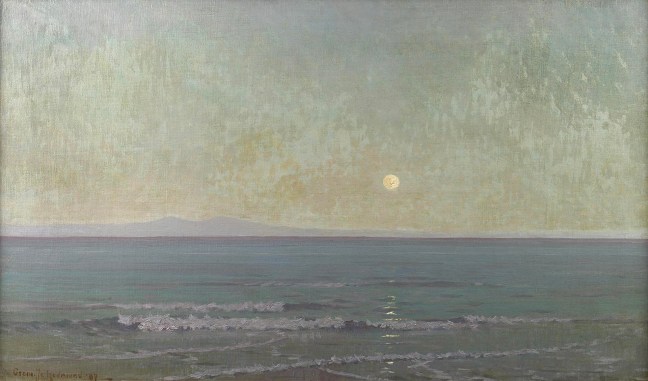
‘Quiet Moonlight (beyond Catalina Island)’ – Granville Redmond, 1907 – WikiArt

Be effortless. That’s the clue you need if you want to meet yourself. Because yourself is for ever here, a natural presence, a stillness in the background, that is your silent being. If you look, you will see it, feel it — who you are, the nature of yourself. So don’t assume too quickly that you know who you are. That who you are is in your body, in your thoughts, in being someone, an entity. Don’t believe that what you are is tied to and dependent on your body-mind, and that you find your true expression in being a person, preferably a successful one, that can be improved, and is subject to death. These are beliefs, concepts that you have learned but never took the time to verify. Don’t accept the subtle tension that is implied in being someone. Go for that part of yourself that is here without effort, that never moves or changes, that is beyond the apparent boundaries of birth and death.

Don’t even try to be spiritual, for the effort you will apply to bring that identity in, will ruin everything. Be exactly as you are, when you are not anything that can be pointed at. Learn to go beyond everything that you are not, so that you can land on the true ground of your effortless being. That may require just a little bit of effort, a redirecting, a gentle looking, the release contained in a moment of relaxation. That is enough. Don’t go for a strain, an ambition, a glory of any kind. These go too far, will take you to a self, a fake identity that will stand in the way of your innate nature. You are already yourself. Nothing new or other than what you already are is needed. Spirituality is a gentle reminder. It is for you to remember that you are almost as nothing, a breath within a breath, a spirit that you will never in a thousand years be able to own. Spirituality is only about being — being effortlessly. This is your natural, unavoidable skill — what you could never not be.

To make an effort is to pull yourself out of your natural being. It is also the veiling of yourself, for any movement that takes you away from your true nature, will own an identity that is acquired, not innate, and that will close the door in the face of your awareness of being. This little bit of effort is you trying to be a person — what you are not — and refusing to be who you are. Through the absence of effort, you will be introduced to yourself, to your true nature. There is a vast expanse there — in fact infinite — that is the very ground of your being. There is a life there, in yourself, as yourself, that some have called bliss or paradise. Not because it is giving you a new place to be, but in reason of the lack of effort or tension there is in being yourself. In effort is contained suffering, fear, lack, hope, conflict, separation, everything that makes your life a burden. To be yourself without effort is the meaning behind the word ‘bliss’. It is the sweetest fall you will ever experience — to be yourself in this free, unconstrained, unforced way. To be without strain, even of the most subtle kind. The blissful is in the absence of effort. In being carefree. Not that you don’t care. But you have your care — which is love — lodged in naturally being, and don’t need any kind of effort for it.

.

~~~

Text by Alain Joly

Painting by Granville Redmond (1871-1935)

~~~

.

Website:
Granville Redmond (Wikipedia)

Suggestion:
Other ‘Ways of Being’ from the blog…

.
A Virtue of Old

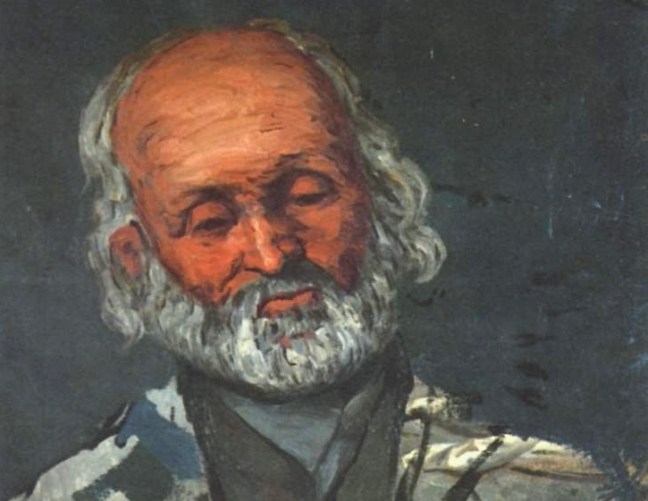
‘Portrait of an old man’ – Paul Cézanne, 1868 – WikiArt

Od age and ailments have an astonishing virtue. They teach us that our body and our mind have a weak reality, that they soften, do not last, crumble. They are like everything else. Their reality is passing, illusory, and ours is not what we have taken it to be. For we notice that as our body weakens, falls apart, we do not with it. We stay as strong as ever. We shine as something else. Not a body. Not a mind. Not an apparent self. But spirit. Our spirit strengthens. Our presence widens — if we care to look at all, to be aware, to not attach ourself to a dying object, to a withering skill. If we stay as our solid being, as that which we haven’t been attentive to so far, for reason of an irrational and obstinate fascination for our body-mind-experience, and our puny self.

So when these, that didn’t have a true reality, go; when these, that didn’t stand the mark of eternity, wither; then our fascination shifts for that which cannot go, wither, or crumble. For what stays massively behind. This reality of ourself hits us in the face — what we are, what we were even when we weren’t looking, weren’t interested, had our life within the limitations of our body-mind. Then it comes soothing us, telling us of our nature, of our grandeur. Then, what falls apart is not just our body or our skills, but also our beliefs about our mistaken reality. Our error as to what our nature is. Now we have a conversation with the infinite, and a rising love affair with the eternal. Now we have a compassion for what we believed ourself to be — body, mind, self, skill, experience — and that now have the humility to show their frail existence. Now we stop minding so much about them, and we find the peace that it is to do so.

So where do we choose to go when we cannot go anywhere, when places become fewer, when time stops being a promise, when circumstances lessen? Where is this place that our body cannot take us to, and that comprehends all that we as a body were chasing relentlessly? What is it that our thoughts cannot give us, and that we now find is here behind and before every thought, every belief, hope, or fantasy? There is a sumptuous gift behind every body or mind that loses grip on the objective world. There is a treasure in the quiet home of our self, when we are asked to stop seeking our happy self in a thousand places, practices, or experiences.

There comes a time when we cannot chase our preferences anymore. When we have to leave behind our dearest experiences. When we have no more time to become, attain, grasp that which we want to grasp, attain, become. But there is offered a time for letting go, for a sweet abandon, for uncovering that which in us can never wither, weaken, age, crumble, suffer any kind of ailment. There is a place which holds the whole world in its loving heart, and this place of love is ourself when we have renounced to find it within time, place, or circumstance. There is a virtue in not expecting from body, mind, world, experience, what they can never give us. There is a virtue in resting where we are, where we swallow body, mind, world in an instant, and are free in spite of circumstances.

.

~~~

Text by Alain Joly

Painting by Paul Cézanne (1839-1906)

~~~

.

Website:
Paul Cézanne (Wikipedia)

Suggestion:
Other ‘Ways of Being’ from the blog…

.
A Word of Glory

Words don’t apply to truth. What we are cannot be described. We may have a lot to say about our preferences, our thoughts, our body, our circumstances and conditionings, but we won’t be able to say anything about who we are. We may try to. We may give a thousand explanations. We may come as close as possible, by saying that we are that which is aware, that we are consciousness, being, and a thousand other expressions. But we won’t get closer to the truth of who we are. Truth is not something that can be made into a concept, or an object. It is before every concept, before every object. It is before even ourself as a body-mind, as a person. It is before every single thought that we may have about ourself. It is the living, throbbing embrace of everything.

We cannot catch truth and put it in a box, or made it into a thought. It is elusive. We won’t find it in the world, no matter how hard we may look. It is within. It is who we are. It is what there is — our very being. We cannot miss our own being, what we are made of, what there is here that we call ‘myself’, or ‘I’. If we do miss it, then we are taking ourself to be what we are not. We have given in to an idea, to a concept. We have given allegiance to everything objective, easy, to stories about ourself, but not to ourself. We have not been ourself yet. Belief doesn’t reveal our true identity. It tramples it. It hides it. Truth requires no thought, no belief, no person or entity, even no world. Truth is only about itself. And to see truth is to see ourself, to be our own self that shines with glory. There is no truth but ourself. We know truth, when we know ourself.

All the words about truth are here to point to the truth without words. For when we know ourself, the reality of who we are, there is no thinking about truth, or about god, for we live and abide where words have melted into the reality they were pointing to. We have given in to our own reality. We have died in our own living presence. We have noticed that we are that which we were looking for, and that there is no looking beyond it. We are settled. We are made real, alive, complete. The relief contained in knowing who we are at last, this falling of ourself into the place of being that we have been and are eternally — that in itself feels like a tremor of peace, joy, and freedom. This place of being is unconditional love, wordless reality, living oneness. All things and all beings find their essence in it, and lose their own, individual reality. They are as if one word — a word whose only function is being its own living, glorious reality.

.

~~~

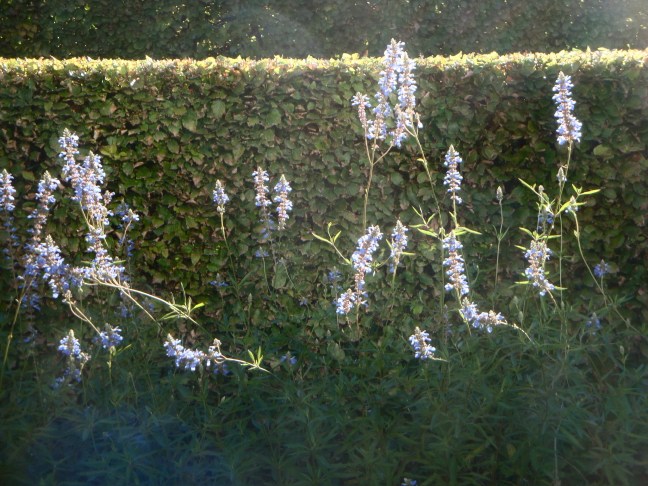
Text and photo by Alain Joly

~~~

.

Suggestion:
Other ‘Ways of Being’ from the blog…

.
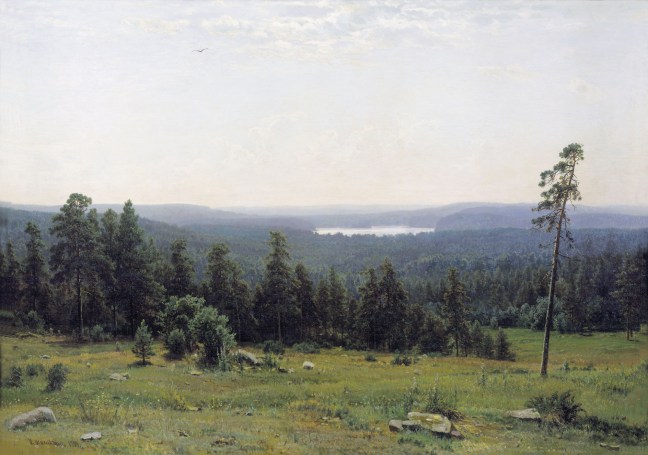
Our Sole Horizon

‘The Forest Distant Views’ – Ivan Shishkin, 1884 – WikiArt

The key in spiritual matters, is that we have to keep it very simple. We must not blow it out of proportion, exaggerate it, make a conundrum out of it. It is just a matter of looking, of breaking a little, stubborn habit. Nothing extraordinary. We keep looking away from our own being. We act as if we knew all about who we are, as if it were understood, that we are our body, that we are these thoughts that keep coming, which we judge, influence, direct according to what other thoughts say. We live in a little corner of ourself, feeling like a little king in our kingdom. We are so used to our own ways, to our concepts and explanations, to our beliefs and repetitive actions, that we have taken for granted to be just a person in a world. That’s what we were taught. That’s what we were conditioned to think. In fact, we are only followers. We play small. We are protecting our own establishment.

But we know more than that. In fact, we are all experts at being, without our realising. We are masters of freedom. We know that with just a little looking, a little asking, we could rock our lifeboat. We could make our life sensational, attractive, happy, tranquil. We have that hint in ourself, otherwise we wouldn’t be seeking, or working for happiness, improvement, progress, with such undeterred faith. We know that in spite of everything, the world has magic, and our life keeps inside it secrets of glory. That’s how we can face unspeakable suffering, trauma, violence, and the looming threat of death. Because we have in ourself the warmth and security of being, which we try to reenact in every possible and unreasonable ways, in our pleasures and our hopes, in our beliefs and our addictions.

The problem is that we have put a belief in front of what is. We have invented a self where there is only the wide expanse of being. Our whole identity is in being. We have no space to be anything else than being. Our whole life is being. Our body doesn’t even come close to being what we are, and neither does our mind. Being as consciousness takes it all, the whole of what we are, and of what everything is. Every appearance finds its essence in it, and lives in the gorgeous space it provides. We have all our senses embedded in being, and the world finds its reality in the reality of being. Consciousness has it all. It is all we will ever find. All that ever is. It may hide from our gaze, that being is our only landscape, our sole horizon, but it shows blatantly in every corner of experience, if we are willing to look.

In fact, it is so much here, so reachable, so knowable, that we are blind to it, unable to know it. That’s because we have attached ourself to another pseudo reality inside our own reality of being. We have chosen the lie of being somebody over the truth of being only being. We have chosen to be something, a body, a thought, an idea, a self, and have as a result lost, forgotten, limited the infinity of being, that is pervading our life to the point of being the only thing in presence. The truth is that we can never be something other than being. It’s a nice try to believe it, but it won’t happen, to be a suffering self, a limited body, and a mind with its own separate agenda. Everything that we think we are, we are not. We have to distance ourself from every qualification, from every belief, from every identity. We have to be naked of every addition to being in order to see our naked being, and to be in its gorgeous grip.

.

~~~

Text by Alain Joly

Painting by Ivan Shishkin (1832-1898)

~~~

..

Website:
Ivan Shishkin (Wikipedia)

Suggestion:
Other ‘Ways of Being’ from the blog…

.

Hidden Fragrance

‘Autumn’ – Andrew Wyeth – WikiArt

There is majesty in being your own gorgeous, naked self. But thoughts come and spoil it all. We are always running up and down the line of time, feeding on memories, fearing the future we imagine, leaning on our hopes and expectations, bleeding from our constant suffering, building multiple roads of escape. We never leave ourself alone, never stay with the peace that is naturally the nature of our being. We are always on the move, indulging in the landscape of our many objective experiences, getting lost in them — after all, they are so many, so attractive. They seem to hold the secret of our happiness. So we spend a lifetime shaping them to our convenience, but they are reluctant.

In fact our thoughts have become primary when they should be secondary. They have become the fabric of our life, along with our many experiences, when they should have stayed only an ornament. There is a ground that stays still and silent under our many involvements with things, perceptions, sensations. These crowd us by the thousands, but we should not be deceived. They will want us to believe that they are us — our one and only identity, but don’t listen. There is a oneness that is here taking them all in, enveloping them, lending them the quiet blanket of its peaceful, infinite making. So be careful where you put your emphasis on, what you choose to recognise yourself to be. You are not an aggregation of body and mind content. You are the quiet aware presence which holds the ten thousand things of experience in its loving bosom, and gives them a light to be seen and experienced. Put there your life emphasis, for that presence is your very lifeblood.

So be watchful of what you take yourself to be. Will you marry your identity with all things objective, or with what gives them the ground where they thrive, are born and die? Will you go with the passing or with the ever staying? Will you have a fascination for the many or for the One? Be careful to always stay where you truly are, where you were never born and could never die, where peace is like your true body — before you venture in experience — and where your silent being is seen as the home that harbours every portion of your life. This is how you stand where only the infinite is, and where place is like its humble attendant. This is how you have your days spent in eternity, and time is like its useful valet, for the sake of your daily activities. And that’s how you view your many activities and relationships as a gorgeous play, and the peace of your being as the space where they thrive and are nourished. Don’t let anybody make you think or feel otherwise: Peace is the crux and heart of your life — its sometimes hidden, sometimes revealed fragrance. 

.

~~~

Text by Alain Joly

Painting by Andrew Wyeth (1917-2009)

~~~

.

Website:
Andrew Wyeth (Wikipedia)

Suggestion:
Other ‘Ways of Being’ from the blog…

.

Not A Thing

‘Seascape’ – Théodore Rousseau, 1831 – WikiArt

Although we feel to be inside the world, there is an identity in us that is not of the world. Rather the world is in that identity. The world — everything — has been made the likeness of ourself, should ourself be seen not as a thing, but as that which could never be made into a form of any kind. That’s how and when you know who you are, when you are not a thing, not an entity, not anything that can be named or qualified. There is not a thing here that you can be. We have inherited this habit, this insistence in being something. So we have pinpointed ourself and have given it a substance of its own. In this trying to be something, we have been rendered suffering adults, drenched in belief and habit, in fear and hope, addicted to security. We have lost our childhood, what is here before every qualification, and that we only worship remotely, as something precious and lost — our innocence, the playfulness contained in living, the not knowing, the absence of urge, the sense of awe, the leisure contained in plainly and simply being.

So be like a child, who has it all. Be like before every incarnation that you have been forced to identify with, in order to fit in, to feel aggrandised. Our urge to be something has deprived us from our being sufficient, fulfilled in and as our own being. By adding to being, we have lost what gave us our true essence, our identity, our security. It all came from that acquired, mindlessly rehearsed, and deeply ingrained belief that we are not enough, that we are separate, that we have to achieve, progress, be competent. There is no joy in fitting, in being proper. There is no competence involved in being who you are. Any child knows it. Babies are masters in knowing being. We’re just the bragging ones, the ones who have made life a travail, an ordeal, for silly reasons of being something. We spend all our precious time in alleviating the suffering and inadequacy we have ourself created.

There is no suffering in being. We should have left it there, when we were only being, contented in our own presence, before the thought arose that there had to be more and better than just being. The thought of it has made a mess. Now we are in the world rather than the world is inside us. Now we are something or someone, rather that being nothing that can be named, objectified, personalised, belittled or limited. Now we have created travail and conflict rather than staying quietly in the joy and peace contained in being only being. Now we are isolated beings rather than all gathered in our one shared being. Now we are many, divided, scattered, broken up, instead of being one before oneness itself, which is like being the one child of God’s undivided, unbroken, one being. This not being something is not a posture of the mind. It is the noticing of our true nature, of what is here in and as ourself that could never be made something. Our sense of being imperfect, isolated beings is born of a simple lack of attention. We have not seen the obvious. That we are the unborn, the infinite, the ‘not a thing’, and that as that, we hold in one single embrace everything that can be named and exists in time and place, everything that can be given a birth and a death, and that is now like the One inside the One. 

.

~~~

Text by Alain Joly

Painting by Théodore Rousseau (1812-1867)

~~~

.

Website:
Théodore Rousseau (Wikipedia)

Suggestion:
Other ‘Ways of Being’ from the blog…

.