The End of Self-Improvement

‘Shores of Normandy’ – Gustave Courbet, 1866 – WikiArt

.

To know that your Self has not changed,
this illustration itself is enough.”
~ Ramana Maharshi

.

There is no ameliorating emptiness, developing the unborn, aggrandising what is, and expecting the timeless to be anything more or different than what it is. Being leaves no room for improvement because it is not a thing, it is not a result, a something that has a cause. How do you improve the non-objective? How does the infinite progress? How do you make better a self that is absent as self — as something different or separate from experience? So self-improvement is a misunderstanding and a form of violence. It is an imposition, a belief that we squeeze to fit our idea of reality, an objection to the innate perfection of what is. It is mind-made, a product, a progeny of conditioning. It is designed for the continuation of our belief in being a self or entity that can be objectively defined. And remember this: every object, every ‘thing presented to the mind’ — as Latin word ‘objectum’ stands for — is in fact nothing but something thrown in the way of your knowing who you are. This is the meaning of Latin ‘obicere’ — ‘ob-‘: ‘in the way of’ and ‘jacere’: ‘to throw’. The self that you believe yourself to be, and that you strive to improve, is your hindrance. It is what makes you blind to your true nature.

To improve on a self is to make it continue, it is to give it credit, to give it the existence it never had. After all, we all want to feel real, to see that we can act, and have a power on our self. So we have the desire to consolidate and sculpt our being through rendering it an object that we can manipulate. We want to make a profit of our self, and see a return on our investment. In fact, to improve myself is nothing but a form of merchandising. It is a trade and a transaction. It is retail management, the ‘cutting off’ of our self with the aim of maximising profits. But don’t ever forget that if you are able to improve yourself, you can therefore also make it deteriorate, worsen, decline, decay. So what then?… is self-improvement decay, error, illusion? Is it ourself going astray, being mislaid? Are we really so sure that our being could ever decay? That awareness is a so fragile thing?

[…]

On how there is no improving our self and being… (READ MORE…)

.
Pathways

‘Court in the Alhambra’ – Edwin Lord Weeks, 1876 – WikiArt

The spiritual endeavour is really such good fun. You may happen to experience some suffering in your life and feel entangled — with thoughts rushing into your mind and problems seizing the entirety of yourself. The web of experience is overwhelming you and you can find no space to breathe within. You may then have to have a little conversation with yourself. You may have to disentangle yourself from your stubborn identification with thoughts and with the overcrowding objects born of the senses. That’s when you may present yourself with a simple question like: “What is this part in myself that is aware of my experience?” And so are you now taken amongst the scents of 8th century India, treading its immemorial dust with Shankara, debating with the great Vedantic master. He will show you how to move inwards right at the core of that aware presence in yourself. You will be taken with him to the core of this investigation, which is but the separation of the multiple objects of experience from the one aware, pervading presence of consciousness that is your true identity. That’s when Shankara leaves you with this one infaillible recipe:

.
I bow down to that all-knowing One
which is pure Consciousness, all-pervading, all,
residing in the hearts of all beings
and beyond all objects of knowledge.”
~ Shankara (Upadesasahasri, 1:1)

.
You may then find yourself sitting in your kitchen, cutting vegetables, with your thoughts suddenly wandering in the 17th century Paris, surrounded by the walls of a Carmelite monastery’s kitchen, chatting along with Brother Lawrence. He might tell you with his big generous smile: you know brother, “nothing is easier than to repeat often in the day these little internal adorations.” That’s when you understand that this investigation can be made into a joyful, often repeated practice, where you go and meet yourself within, have a little chat with this hidden presence, spontaneously, as you gaze into the eyes of a friend. Amongst the frantic sound of knives hitting the wooden board and the fumes of the next meal simmering on the stove, you meet Brother Lawrence’s glance offering you this last precious advice:

.
I renounced, for the love of Him,
everything that was not He;
and I began to live as if there was none
but He and I in the world.”
~ Brother Lawrence

[…]

Continue this journey into the investigation of your true nature… (READ MORE…)

.

The Highest Language

‘Silence’ – Odilon Redon, 1911 – WikiArt

In our language, the word ‘silence’ is defined as the complete absence of sound, or the abstinence of speech. Yet silence has fascinated us beyond these elementary descriptions to evoke the unknown and the mysterious. Something in silence speaks to us, and is a presence beyond its apparent nature as absence. Spiritual teachers from all traditions have abundantly used the word for its richness of meaning and its powerful evocative dimension. So pregnant and profound is this experience of silence that the word has often been likened to awareness or the nature of god’s silent being. Among others, Ramana Maharshi has often pointed silence as being the ultimate teacher in these matters, and Krishnamurti has described it in supremely effective and graceful words just below. This page is dedicated to their many expressions of silence:

~~~

The experience of silence alone is the real and perfect knowledge.”
~ Ramana Maharshi (‘Be as You Are’)

~

Keep silence, that you may hear Him speaking
Words unutterable by tongue in speech
Keep silence, that you may hear from that Sun
Things inexpressible in books and discourses.
Keep silence, that the Spirit may speak to you
.”
~ Rumi (‘Masnavi i Ma’navi’)

~

Accept what comes from silence.
Make the best you can of it.
Of the little words that come
out of the silence, like prayers
prayed back to the one who prays,
make a poem that does not disturb
the silence from which it came
.”
~ Wendell Berry

[…]

Read these many quotes on silence by various teachers… (READ MORE…)

.

Humanity’s Healers

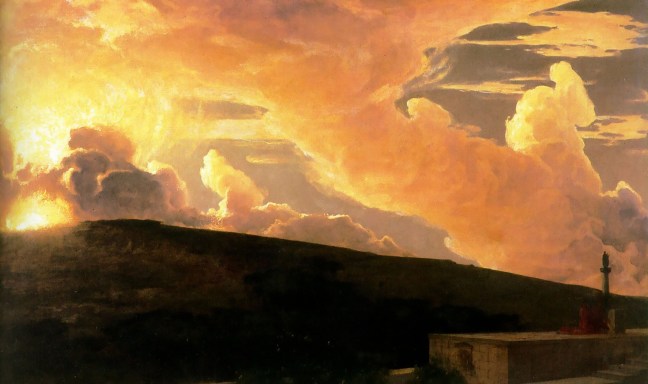
‘Clytie’ – Frederic Leighton, 1890 – WikiArt

.

The moment I realise I am humanity,
that is the greatest action
.”
~ J. Krishnamurti

.

Why has humanity left this whole field of knowing oneself — all the spiritual endeavour, the extraordinary adventure that it is — outside the conventional and widely accepted way of living? It is a difficult thing to understand, since the door to it is so wide open and evident. Of course, religions are there, and have taken an all too consuming place in the past, but yet to no real avail. For an immense majority of people, religious faith didn’t go very deep, and didn’t put much of a light on the everyday suffering of humanity other than being a widespread system of morals and rituals destined to give some rules to society, and to instil fear, consolation or respect. So why has this understanding been confined to only a few, scattered individuals? Why has it not yet become the one accepted and necessary endeavour of our lives?

[…]

An essay exploring the place of humanity in our being… (READ MORE…)

.

A Story of Lack

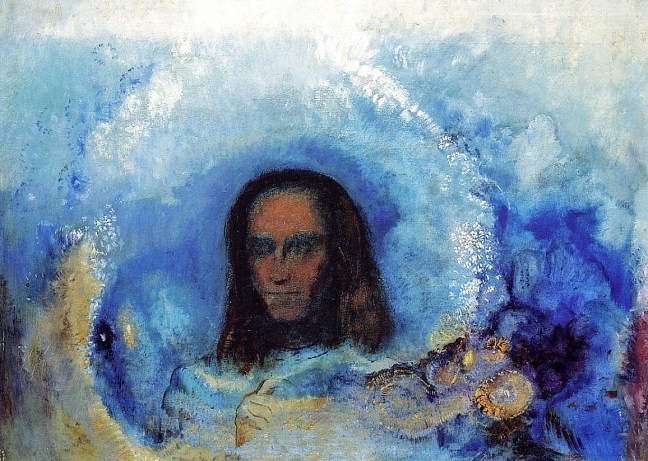
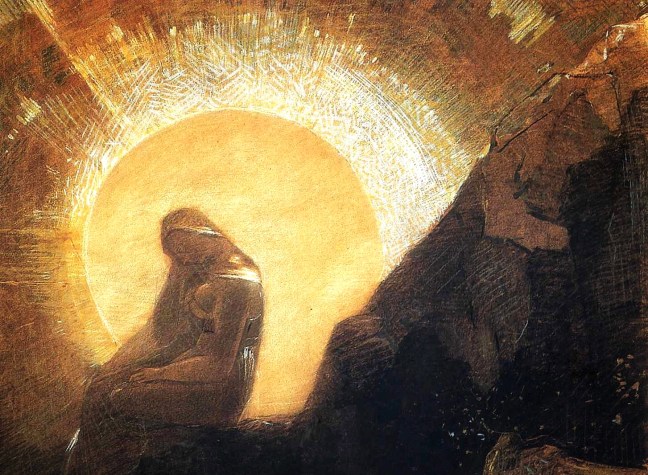
‘Melancholy’ (Part) – Odilon Redon, 1876 – WikiArt

.
When the ‘I’ is divested of the ‘I’, only ‘I’ remains.”
~ Ramana Maharshi

.
Don’t run in the other direction. Don’t take a sense of lack for a need. For this is what we do, when we sense in ourself an insufficiency, we want to fill it up, by all means necessary. We think it important to grant its wanting, its craving. But a lack is never a need. A lack is a fact that needs no repairing and no repairman. By bowing or giving allegiance to it, we submit ourself. We give up all power of understanding. We place ourself at the level of that lack. We become small. We don’t respect it. For this is not to respect it, to obey a random sense of lack. For lack comes as the supreme teacher, and our genuine bowing to it rather takes the form of listening. This is how we bow to a teacher, how we respect it, fulfil its function: by listening to it. So we listen. We stay motionless and invite its teaching. We don’t run away in the other direction.

[…]

A story about how a sense of lack can be the real teacher… (READ MORE…)

.

The Price of Immortality

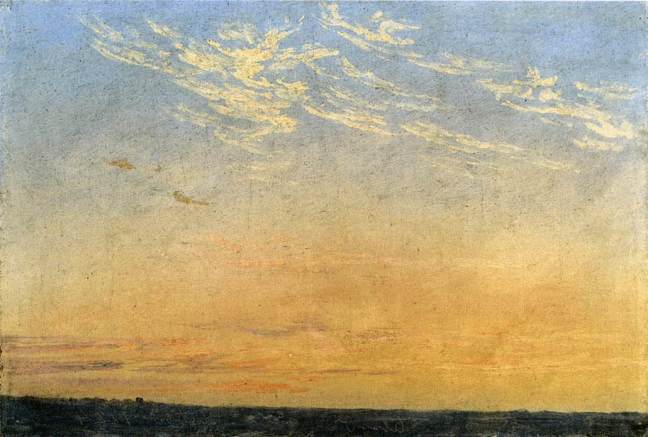
‘Evening’ – Caspar David Friedrich, 1824 – WikiArt

.

Death doth not trouble me. 
‘Tis through that door I come
Unto the place which long 
hath been my spirit’s home
.”
~ Angelus Silesius 

.

There is one thing in life that is haunting us. This is the fact of our certain death. And yet, considering that we all know that we are going to die, most people don’t actually worry that much about it. How come that people who believe that they are solely their body can stay so cool when waiting for a certain death? They should be terrified. This should come as some unbearable news. But it’s not. Even though we don’t look forward to dying, we nevertheless take the news with a remarkable composure. We don’t mind that much if you ask me. Why is that? 

Is it that we have deep down the intuition of our immortality? If I say ‘I’m going to die’, how does it feel? Am I saying the truth? Do I really know this for certain? Or am I casually repeating something that I have learned and has now become a deeply ingrained belief? But this being said, don’t let us be mistaken. Most of the time, we push death far away and numb ourself to its dreadful reality. And the fear of death is conditioning and bending our lives in the most ruthless manner. What a paradox it all is! But in that paradox lies the whole riddle of life and death, of suffering and happiness, of love and God. Death is a portal to our true nature. One that is inescapable. Who is it that is going to die? Or rather what is it? Let’s have a look at it…

[…]

An exploration of the nature and meaning of death… (READ MORE…)

..

Swami Bharatananda

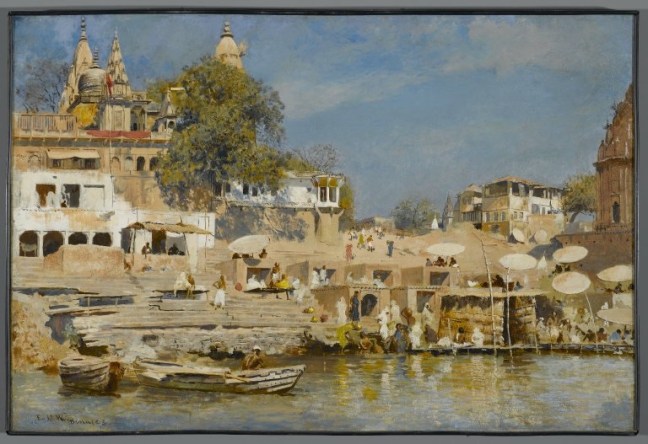
‘Temples and bathing ghat at Benares’ – Edwin Lord Weeks – wikiart

Maurice Frydman is one of most extraordinary people I’ve ever come across and virtually nothing is known about him.” said David Godman, one of the foremost and infatigable exponents of Ramana Maharshi’s life and teachings. Maurice Frydman was born a polish jew in 1894, in Warsaw. Exceptionally bright at school, he was a prolific inventor, spoke many European and Indian languages, and was an earnest and passionate seeker of truth. He has explored many traditions, including Judaism, Orthodox Christianity, and the Theosophical movement of Annie Besant. He devoured books from all possible traditions, particularly interested in all the great writings of Hinduism. Over the years, he met and was close to numerous spiritual teachers like J. krishnamurti, Ramana Maharshi, swami Ramdas, and Nisargadatta Maharaj. He wrote a book on Ramana Maharshi, ‘Maharshi’s Gospel’, and was responsible for recording and publishing the now classic ‘I Am That’ by Nisargadatta Maharaj. He lived in India during the later part of his life, becoming an Indian citizen, and was associated with Mahatma Gandhi, inventing a new implement on the famous Indian spinning wheel, the Charkha. He was given the Indian name Swami Bharatananda when he was initiated as a Hindu monk or sannyasi by Swami Ramdas. Ramana Maharshi refused him this initiation, saying that “Sannyas is taken from within; not from without”. Maurice also greatly helped to organise the Dalaï Lama’s escape to India and to find places for the Tibetan refugees, like Dharamsala. But, “there is no mention of Maurice in any of the books related to either Dalai Lama‘s escape or the smuggling in of the Buddhist manuscripts from Tibet. I have never seen a person as Self-effacing as Maurice”, wrote V. Ganesan. Maurice Frydman died in Bombay in 1976, after an accident. Nisargadatta Maharaj, who held Maurice in high esteem, and considered him as a true jnani, was by his side. Of the days spent in Ramana Maharshi’s presence, Maurice wrote: “We took a cupful when the ocean was at our feet.”

.

~~~

.

Here are two Extracts from Maurice Frydman’s poetry: 

I am at the end of the tether 
and can’t break the cord 

All my going ahead 
is a deceitful dream, 

All my thinking not true, 
all my feeling not pure, 

All my doing not right, 
all my living not clear. 

I am tied to myself 
by myself through myself, 

The knot out of reach, 
I am in your hands.

There is a Heart and a mind, 
and a body and soul 
Waiting for you. 

You will come when you choose, 
And whatever you like 
you are welcome to do.

.

* * * 

.

Heavy with the mud of many lands 
I was flowing lazily, 

Making obstacles of myself 
out of my unholy accumulations. 

Suddenly I awakened 
to the freshness of endless beauty, 

And felt the eternal environment 
of endless peace. 

My beloved I have found you, 
and yet never were we separated, 

Every drop of my being is you 
and yours is the force of my flow, 

Never are we apart 
and yet I always strive after you. 

The flow of creation will go on 
with me or without me, 

Only do not make me forget 
that I am none 

and that you only exist and create 
in ever-changing mobility. 

.

~~~

Poems by Maurice Frydman (1901-1977)

Painting by Edwin Lord Weeks (1849-1903)

~~~

.

– Maurice Frydman’s poetry is from the book:
Face to Face with Sri Ramana Maharshi’ – by Laxmi Narain – (Sri Ramana Kendram, Hyderabad)

– Read this more extensive biography of Maurice Frydman here.

Bibliography:
– ‘I Am That’ – by Sri Nisargadatta Maharaj – (Chetana Pvt.Ltd)
– ‘Maharshi’s Gospel’ – by Ramana Maharshi and Maurice Frydman – (Sri Ramanasramam)

Websites:
Maurice Frydman (Wikipedia)
Paula Marvelly, An Interview with Sri V. Ganesan
Edwin Lord Weeks (Wikipedia)

.