An Impeccable Death

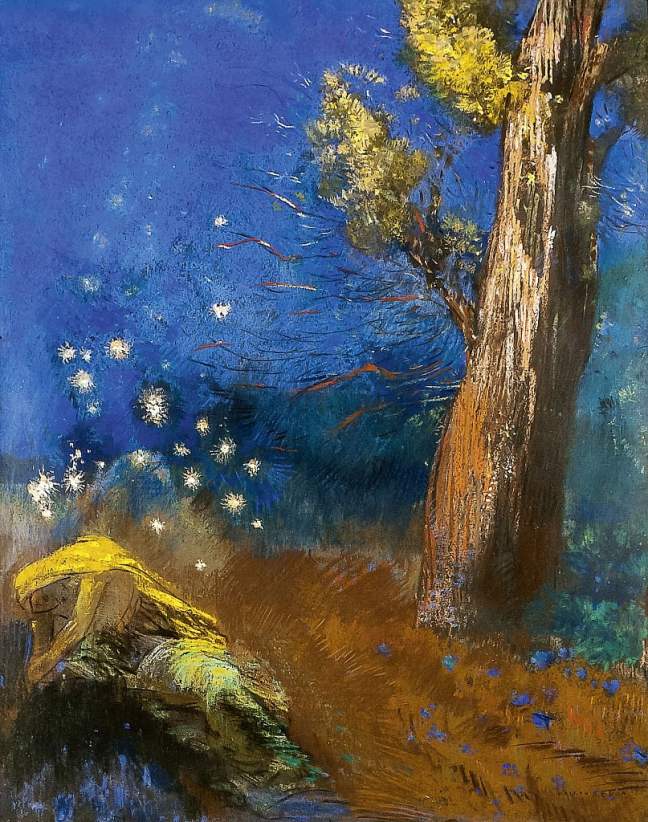
‘The Death of Buddha’ – Odilon Redon, circa 1899 – Wikimedia

It is striking to think that the day when we die is always today. It is not happening tomorrow, will not take place in the future. Death is for now. This is where and when it takes place. In the present. In presence. The death of the body, its ending, may take place in the future, but is not death. It doesn’t have the implications, the magnitude of it. The death of the body is like a wave that ceases to undulate, to imagine its difference, its conflicting attributes, and finally breaks before we notice that it is not what we are, that there is here, before it, as our very making and identity, an ocean of peace. This ocean is what death is — before we imagine to be a self that thinks itself separate.

We have been moulded in and as a presence that was never born and could never die. This inability to exist or appear as something distinct, or different, is real death. This incapacity to cease or find an ending at our being, is true ending. It is a place where we can never go. This place of being has no objectivity. It is nothing that we can be or project ourself to be. It is pure being, done, final, already perfected, unattached, a free fall. It is a death so complete that it has no object. It is not the death of something, of an object, of an entity — for such death is not truly death. It is the realisation that we are not what we have believed ourself to be. That there is not here an entity, a self that could be dying, that has an existence of its own. That realisation, and above all what is left here to be and live by, truly is death. And in that death is contained, concentrated, achingly shining, the whole of life.

So death is now. It is happening now without our noticing. It is achieved — our death, the one that we fear, that we have pushed away, that we don’t want to envisage, envision, is done, gone through already. It’s a matter of noticing what is — that we are not here, that nothing was born, that it would be curious to die, that what we are has no other attributes than being. How would you put to death something that is without attributes or qualities? How would you end something that was never born? Moreover, no appearance, or thing, or body, could ever die without it being the expression or the modulation of something untouched by death. That something exists deathless is the sine qua non for the existence of death itself. That’s why life itself thrives through the exercice of death. What is deathless is our being. It is being — that which we all share in, which we call eternity, or the infinite, for it is one, and being one, it cannot be measured, qualified, or put to death. That’s how we are immortal — through only being, which we share as the experience of love. Death is when we cannot die anymore. It is obliterating objectivity — therefore our existence as an entity. An impeccable death comes at this price.

.

~~~

Text by Alain Joly

Painting by Odilon Redon (1840-1916)

~~~

.

Website:
Odilon Redon (Wikipedia)

Suggestion:
Other ‘Ways of Being’ from the blog…

.
The Ultimate

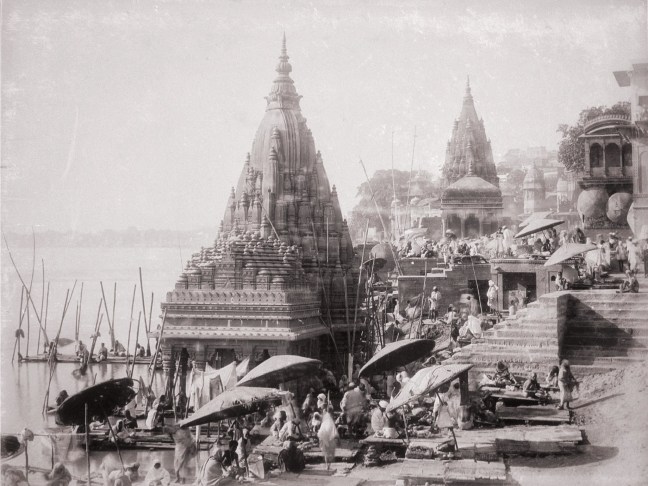
‘Benares, Temple of Tarhishwara or Well of Manikarankia – Samuel Bourne, 1860 – Wikimedia

The thing in ourself that has the capacity to know anything is itself not a thing. We can only exist in relation to things, but only the state of no-thing can we ever truly be. The illusion that we are something separate, a self — whatever we are — is due to the knowing of an object. When no such objective knowing is being activated, then there is no necessity to be anything. There is no purpose in being a self. The being that we appear to be is realised as void. And without a self to know them, things have no support for their reality. Within that perspective, all things dis-appear, are swallowed back into no-thingness, into where they have never ceased to be. This ultimate realisation is in fact not a realisation. It is the ultimate truth contained in simply being, when all duality has been nipped in the bud, unable to show any reality as such, lost in a being so subjective that nothing can be there which could be formed and recognised as ‘other’. This is the end of form. It is the state of no-thing that cannot be spoken of. It can only be approached, envisaged, but never lived as an objective experience, or from the position of an experiencer. It is the timeless, objectless point where the moth dis-appears into the flame of being. Its identity as ‘moth’ has been dis-qualified from itself to never be formed again. Now engulfed into the very no-thing that we are when all objectivity has dis-appeared, we are left with being, our pure essence, where no form could ever be formed. This is in fact, paradoxically, how a world, a thought, anything, can seem to appear — through the intercession of formlessness. This place is where we can never go. This thing is what we can never be. World, thought, self, death, bondage, liberation, are only the gaming of god, or infinite being, with no reality of their own. Only at the point of un-being, of coming to an end, can we ever be true, ultimate being. This is what ‘ultimate’ in fact means: ‘to come to an end’. To cease being anything is the ultimate truth of life. What is left is pure, essential, unqualified, infinite being, where no self or world could ever come to be. This, truly, is the ultimate. That ultimate, because of its purity, can bear in itself the illusion of being coloured or stained; because of its essentiality, can be divided in an endless chain of cause and effect; because of its unqualified nature, can adopt any form or quality; in reason of its unknowability, can be known through a multiplicity of names; and because of its infinite nature, can be seemingly separated as a multitude. And it does this without ever ceasing to be the ultimate. Now, know in all occasions that you are not a suffering self lost in the multitude, with a name, a form, and qualities — an entity living in a world, endlessly caught in multiple, arbitrary causes and effects. Know only being as your ultimate, uncreated self. There only is the abode of peace.

.

~~~

Text by Alain Joly

Photograph by Samuel Bourne (1834-1912)

~~~

.

Website:
Samuel Bourne (Wikipedia)

Suggestion:
Other ‘Ways of Being’ from the blog…

.
The Formula of Life

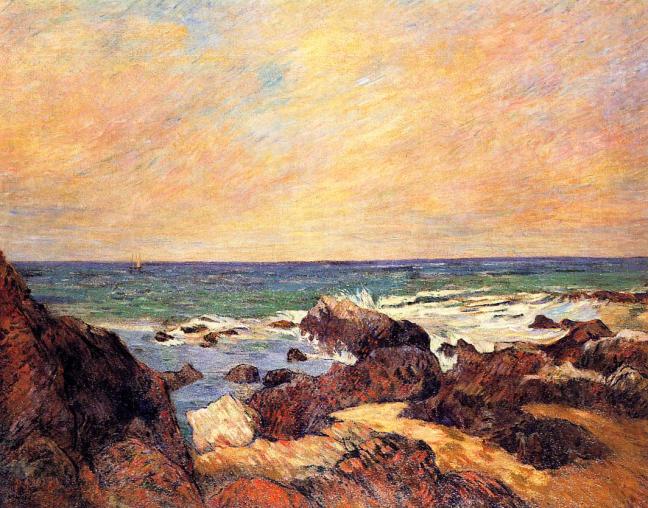
‘Rocks and sea’ – Paul Gauguin, 1886 – WikiArt

There is something mathematical about the spiritual life. You need to get the formula right, which is simply to recognise being as your one only identity. Simply being, with no addition to it. Concentrated being. If you cannot recognise yourself as that, then life will bounce back at you in endless, nasty, different ways. You will be made into somebody frail, vulnerable, suffering. Out of your failure at being who you truly are, you will draw an idea of who you are, a belief in being a separate entity, identifying yourself with your body-mind. This invented self is a diminution of your real identity. It has, inscribed in its very making, an imbalance, a lack. You will feel small, incomplete, at the mercy of beliefs and images, assailed by objects. You will be made uncertain, needy, a seeker of your lost identity. So you will then receive many of your experiences as a threat, as something that can hurt you, diminish you. That’s how fear arises, out of incompleteness, when there is a flaw in the equation of being. You are as to say behind yourself, mistaken. You have failed at just being, and are now being this and that. You have lost your anchor for a trip into objectivity. You have exchanged wholeness for separation.

Now you look everywhere frantically for something to complete you, and you find it a hundred times, in a passing object, in a success, an achievement, a bout of luck, a relationship. But these are fake friends that will fail you. For there is nothing here in the objective world that can match being. Dissatisfaction will hover over you again and again, no matter how many objective goals you may set your heart on, and attain. You will never resolve that equation. A flaw will remain, and your life formula will be left empty of meaning, unable to find its resolution. These objects that were your hope for fulfilment will finally come biting at you, for they are but the tricks that you have used as an escape from yourself. They are your being that you have let down, and split apart. They are your means to mend and repair yourself. But to project yourself in objects is to hope, expect, envy, and open the door to endless suffering. This wound is the sign of your incompleteness, the symptom of your failure at recognising your true identity. Every neglect or rejection of your true nature creates openings where experience will come and stand in front of you as something to be afraid of, or to desire. So you are never safe, never alone. It all comes back to you as a mirror of your own insufficiency.

Remember that you will attract to yourself everything that you cannot hold as your own, and understand. To be at peace in this life is a very simple matter. It lies in only one experience, which is the experience of being. Being is your universal health insurance. Being is your completeness, and therefore your well-being. If you don’t own in and as yourself your well-being, if you fail to occupy the totality of your experience — finding safety there — then you will be assailed by life. Experience will send its soldiers at you, which are but all that you cannot hold or recognise as being your own being. Hurt, confusion, fear, misunderstanding will become your usual, well-rehearsed environment, that you will accept as normal. They will become the weapons that turn against you every time you don’t fully integrate experience as the very blood and bones of infinite being. So don’t let experiences down, to live on their own, lost, clothed in separation and enmity. The enmity of experience is of your own making. You are responsible for what hits you or heals you. And you have in yourself, as yourself, the remedy for every hurt or suffering that overcome you. You have in and as your own being the ability to feel whole, complete, self-satisfied. There lies your natural competence at living. This is how you have experience always on your side, like a friend that you never fail to embrace. This is how you complete the formula of life — through clarity and brightness of being.

.

~~~

Text by Alain Joly

Painting by Paul Gauguin (1848-1903)

~~~

.

Website:
Paul Gauguin (Wikipedia)

Suggestion:
Other ‘Ways of Being’ from the blog…

.
The Frailty of Naming

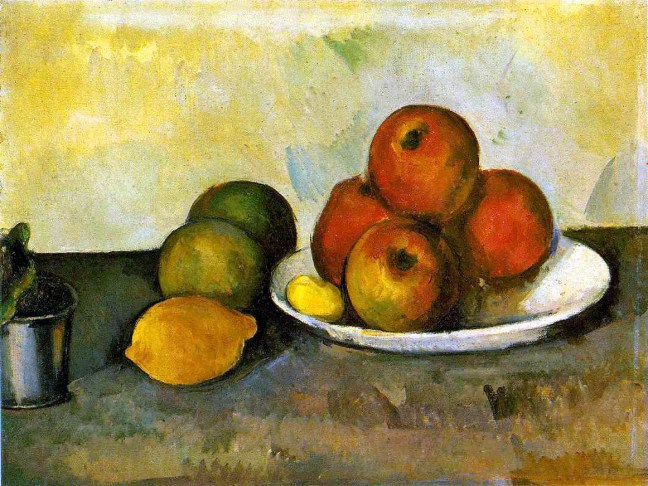
‘Still life with Apples’ – Paul Cezanne, 1890 – WikiArt

We really have made a muddle of it all, by believing that all things nameable are so in reason of their being there. It has made what is truly here — formless, absolute, undeniable being — seemingly absent in reason of its not being perceivable and nameable. Our true and essential being is unnameable because it has no objective quality. To name it is to spiritualise it, to give it a form, and finally destroy it. It is to set ourself as a being outside of it, which we are able to name, or describe. So if you have named yourself, know that you are therefore not there. You are still a shadow, a belief, a repetition, a form incompatible with the formless. And if you have qualified yourself as this or that, know that these limits, expressions, or colours you have imposed on yourself are illusions, the clothing of your reality, but not reality itself, not your nature, not the truth of your essential being, not the nameless, not that which is here and now, beyond any shadow of doubt. The named is for absence, and the nameless for presence. For how could you name presence, how could you give a qualification to something which is so here that it could never be there, so now that it could never be then, therefore never made into an object there and then, at a distance from yourself, in capacity to be named.

What is truly here, when it is recognised, ceases to be named. It is the nameless, the unnameable. The names we give to consciousness, to god, to that which is aware and constitutes us for the most part, are only provisional names, given when we are still part of the things that are named, still a person, an entity, a self. But this entity is not truly here. If we can name ourself, it is in reason of our being made into something objective through endless names and qualifications. So make yourself nameless, approach yourself so fully, investigate it so thoroughly, that you cannot name it anymore. Un-name yourself, strip it from objectivity or qualification until you are recognised as being only being. Then notice that you cease to be nameable. You are too close to yourself for that. Then the only way to name that reality of yourself is to not give it a name but to say simply ’I Am’. ‘I Am’ is the only name we can give to God’s being, and its supreme subjectivity indicates that its reality can only be felt as your own reality or being. It is the intensity of its subjective nature that prevents it from being given a name.

[…]

A reflection on what can be named and what cannot… (READ MORE…)

.