The Birth of Personhood

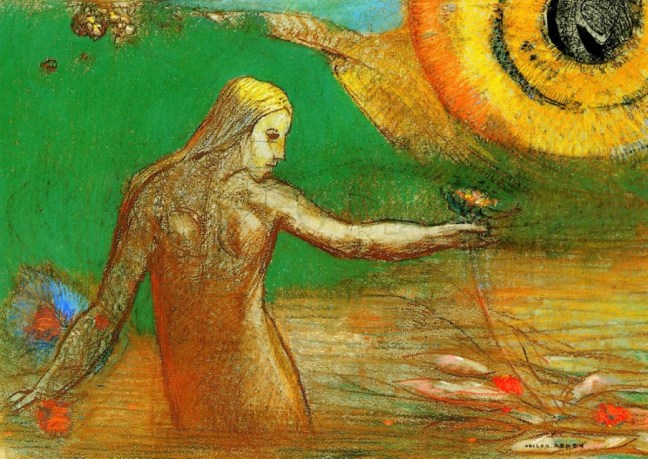
‘Flower of Blood’ – Odilon Redon, 1895 – WikiArt

It is consciousness — not body, not thoughts — that gives us the impression that we are a person with a continuity. There is absolutely no chance that a bundle of thoughts, feelings, and bodily sensations, could give us that impression. We borrow our personhood to consciousness, to the fact of being aware — to this light that creates us in the darkness that are otherwise thoughts, feelings, body. Our sense of continuity belongs to consciousness, to presence — that portion of ourself that is empty, unchanging, not objective, but full to the brim with itself. Our thoughts are but isolated events that are changing over the course of time, and so are our feelings and bodily sensations. The content of our mind is like a passing, unpredictable weather. So continuity in that area is absurd. Our essential self is to be found in and as being. What makes us is in that which is unmade. That impersonal part of ourself is what paradoxically gives us the chance of being a person. We are therefore nothing but empty, undivided being playing ‘being a person seemingly characterised by body and thoughts’. We have got it all upside down: Our person is not prior to consciousness. Consciousness is prior to our person, and the sine qua non of our existence or appearance.

Our thoughts are far away from each other, inconsistent, contradictory, confused, hesitant. They are not the voice of our self, are incapable of forming an identity of any kind. Our identity is to be found somewhere else, in something that we cannot get hold of, or limit, or name. The only thing that could link the different events of thoughts, feelings, sufferings, bodily sensations, and perceptions — all that for us constitute our self, a person with a name and form — is the presence of consciousness. We owe the impression that we are something solid, a real person, to emptiness, silence, stillness. So our person is actually non-existent, or rather has its existence in that which stands unseen between the happenings or events that we think make us. So our story, our thoughts, our body, become evanescent, losing their reality, disappearing within the experience of our massive sense of being — its coming to our attention. Being is seen to be the nature of ourself, which we had imagined in passing, isolated, impermanent, objective events and qualities. And believe me, that makes for a beautiful, gorgeous person — the one we have always wanted to be! A person is infinity being born.

The fact that there is a certain coherence in being a body-mind, and that we are able to live a life, is nothing but the expression of a play, a ‘lila’ as the Hindus are saying. We are nothing but a character in the hands of an actor. A body-mind is the little necessary to carry our wider identity to its term. In fact, all that we seemingly are — a person with an apparent life — is just the vehicle for a bigger quest. We are pretending a body-mind, so that we can realise our divine being. We are carrying infinity on our back, on the back of the finite, giving it the seeming, temporary life of an entity progressing in time and space. But this story, this appearance of a life, is but an excuse, something marginal that serves a wider purpose. We are meant to carry God on our shoulders for a while. At first unknowingly. Until we know God knowingly. Until God has acquired enough substance, and has sufficiently widened Its being in our life. Until God can in return carry us on Its own shoulders. And move us. And swallow us. Then, we find the security and courage to surrender ourself in God’s solid being and be like God Itself. We transfer our being in and as God’s being. And die there.

.

~~~

Text by Alain Joly

Painting by Odilon Redon (1840-1916)

~~~

.

Website:
Odilon Redon (Wikipedia)

Suggestion:
Other ‘Ways of Being’ from the blog…

.

The Unknowable

‘I don’t know anything about myself’. That’s where to be in life — in this position of not knowing. We are always piling up informations about ourself. We are so eager to. That’s our money. Knowledge is our currency. But see what knowledge has done to us. This constant knowing that I am this, and I am that. This knowledge hurts us, brings shame on us, or regrets, judgement, suffering, hope, belief — it fills us with what we are not. I understand that you so want to fill yourself up, that you fear being nothing. But try it. Try it once — to not know anything about yourself, which is a position of truth. You can know about anything in life, but see that you can never know yourself as an object. If you know something — anything — about yourself, this thing is in fact what you are not.

Therefore know that what you are has to be kept thoroughly empty. Believe me. Don’t fill it up ever. Yourself must be left unknown, pristine. This is from where you can fully watch and listen, from where you may invite anything and anybody in: In yourself — which is not yourself — and which you cannot know. I know, you have been told on other occasions, to know yourself. But they in fact meant: Know yourself as that which is spotless, innocent, untouchable, and absolutely unknowable. Keep it that way. Don’t crowd it with ideas or beliefs. Don’t think that you know it. You can’t. Keep yourself virgin of knowledge, and invite anything or anybody you meet along the way in that place of emptiness, in that clean spot of sacredness. That’s the place to be in, the place which you borrow from God’s being and which you can never know. This is the place of no suffering, of no shame or regrets, of no hope, and of no thing to battle with. This is what happens when you don’t know yourself: you don’t judge, you have no contempt — for you know that the other is as yourself, unknowable.

That’s the beauty of it, that I cannot know anything about myself. I remain free — free of accumulation, free of being something. Therefore open, available, fearless, which means peaceful and contented. But it is not something you should do or stop doing. Just notice it, that you yourself is the only thing in the picture which you cannot know, that you yourself is the unknowable element of your living experience, the one thing that you cannot touch in any way. Anything that you may do about yourself will be a corrupting factor. For what you are doesn’t need to be changed or improved. In fact you cannot, so you might as well not start in the first place. Stay away. Keep your deepest self or being as that unknowable portion of yourself. Leave it as it is: uncorrupted and incorruptible. Experience the space and freedom that you acquire as you take your stand as that deeply cherished and unknowable self. Be unknown to yourself.

.

~~~

Text by Alain Joly

Photo by Elsebet Barner

~~~

.

Suggestion:
Other ‘Ways of Being’ from the blog…

.

A Place of Leisure

There is a place in ourself where we are not, strictly speaking, meeting anything. This is what ‘emptiness’ means, that we are not bumping into anything, that we don’t encounter any resistance whatsoever. There may be objective appearances showing up, but they are not met from the position of being ourself an object, a self, a thing with properties and qualities. As long as we believe to be a self separate from the world, and identified to a set of thoughts and feelings, we are placed in a loud and busy world, a world crowded with objects, where conflict is at home and suffering is the norm, both outside and inside. But only feel to be the empty presence that your self truly is, and your world will appear as a qualitatively empty and silent being. And this silent being is ourself, our being which had been previously crowded by our identification with perceptions, muted by our thoughts, and dumbed by our feelings. So, as empty being, we are never meeting objects and conversing with them, for the only reality we ever come upon is ourself — infinite, empty being. That being is that which we eternally converse with. So we keep company with being only, not with objects and persons. This meeting, or melting, with being — with the essence — is paradoxically the only source for a true, loving, and meaningful relationship between apparent people and objects. Any meeting that takes place only at the level of people and objects is a promise for suffering and conflict.

There is one easy and direct consequence of living, or relating, as and with being. It is that our life becomes a place of leisure. We are liberated from the constraints of objects. Therefore we have a free time, a free space where we are not occupied, not busy working it all out, being puzzled, grabbed by conflict, seized by suffering. We are therefore in for leisure. We are in a position of freedom from where we can contemplate the world and ourself as we are. We are on a holiday, a holy, consecrated day when we release our chronic identification with the objective world, and find behind it relief and an intrinsic peace. This freedom from identification bears joy as its DNA because we are finally allowed to just be. And this being forever shines through experience, which is seen as secondary. And this being renders the world back to its original transparency. Furthermore, being clothes experience with a space like quality. This is a space of ability and creativity, for we are not possessed by our entanglement with experience. This is a space of free will, for we are not constrained by our limiting faculties. This is a space of easiness, for it takes us home, in the loving harbour of our true self. This place of leisure is absolute freedom — freedom from space and time, and from the contingencies of appearances. It is a place of no haste, where you are with your spacious self alone, and enjoy its interior, which is nothing but the world. You stay in the perimeter of your self wherever you may go. And there is the loving influence of infinity in whatever you may do, which means that peace is coming forth in spite of circumstances. Above all, this place of leisure is the burial ground of your self as a limited and separated entity.

.

~~~

Text and photo by Alain Joly

~~~

.

Suggestion:
– Other ‘Reveries’ from the blog…

.
The Doorway to Emptiness

Church of Saint-Pierre-de-Curtille – France

An inquiry into what we are, and what there is, really boils down to finding out what emptiness is. It boils down to nothing. It boils down to the realisation that we’re not in the picture. We’re nowhere to be found. We are in reality an absence. This is the truth. What truly is is an isn’t. For the simple reason that no-thing owns its own ‘isness’, and no-body owns its own ‘amness’. So this ‘isn’t’ or ‘am not’ gives way to the only thing that can ever be. A reality that is the true and only one reality in presence. Nothing else but this, is. This reality or absence is supreme presence, supreme being. And this absence can only be known by being of it, which means being yourself as empty as this emptiness is. For true being is always about noticing first that ‘I am not’. You can only apprehend the truth of emptiness by being yourself empty of anything that exists in separation. That’s how you can be naked being, by being yourself stripped of anything that can be without nakedness. You have to give yourself away. That’s the only way to truly be. Every form of objective existence is only the product of a belief, of a thought, an image that you have invented to reify yourself. That’s how you become a mere thing separate from other things. And that’s how you become a fearful, suffering, lacking entity or self. By being something. A ‘something’ that can never be enough, never be whole. For ‘something’ is the signature of separation, and is a form of death.

Wholeness, and therefore peace, can only be found in emptiness, no-thingness, non-separate-beingness. In a way, only non-being can you ever truly be. Only the ungraspable can you ever truly grasp. Because you are naturally and fundamentally of it. Your deepest self is made of that empty being. Otherwise you remain a stranger, a thing existing alongside many other things. If you want to know what life is, if you want to be of it, an intrinsic part of it, and feel the aliveness contained within it as your own, you have to become as life itself: undefinable, ungraspable, non-existing, non-objectifiable, empty. That’s the doorway. Life’s secret is to be found in its very substance, its very making as pure, empty being. Everything that come to exist or appear ceases being alive. It separates from life and becomes something doomed to disappearance, and to death. But the essence of your utmost being is found in eternity, in no-thingness. This is ultimate death. A death that is so profound, so effective, that it cannot be found in disappearing, but in truly being. Ultimately, death is the signature of being. That’s where life hides itself — in death. In formlessness. Emptiness. Nothingness. That’s where you will find it. But let yourself be the least little thing, the tiniest appearance, the remotest person, and pure being will remain to you a thing unknown. No thing or person have a reality of their own. Forget that idea. Absence is the only door or access to your true nature, to the knowing of your self. Absence is the very home and address of being. And your absence is your knocking at its door. Then you might find out: the door was never there. It was emptiness, nothingness all along. That’s how a world can be given birth to. On account of this emptiness. And this emptiness is you at your fullest.

.

~~~

Text and photo by Alain Joly

~~~

.

Other ‘Ways of Being’ from the blog…

.

‘Consummatum Est’

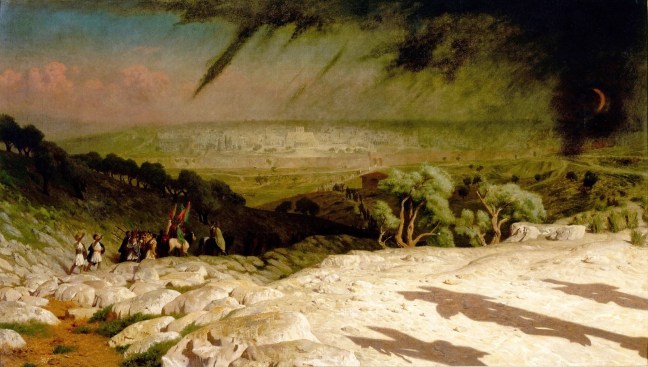
‘Consummatum Est’ – Jean-Léon Gérôme, 1867 – Wikimedia

I happened to visit a church recently, and was intrigued by one single sentence placed just under the main crucifix, which read in French as: “Tout est consommé”. I had never heard this particular formulation before. These words appear in the Gospel of John (19:30), and have been translated into “It is finished” in modern English. These are the very last words uttered by Jesus on the cross before he relinquished his bodily existence, and was resurrected as pure being. In Latin, it runs as “Consummatum Est’.

Consummatum Est

All is consummated, which means all is finished, accomplished, brought to completion. It means we are wholly with the ‘highest’, nothing is left that lingers in separation. All that is other than god, other than the very presence or being that we are, has been consummated, put into the fire of consciousness, eaten, devoured, transformed into its very essence. The truth of it has been exposed, and the objects — all that seems to have its proper existence — have been revealed to be of one single essence. The ten thousand things have been digested, transformed into the truth of their being. They have been revealed as the One. The illusion of multiple existence has been seen for what it is: one being giving no room for an other. Anything that stood as separate or ‘other’, has been consummated into the fire of emptiness. Not a barren emptiness, but a living one, a fertile emptiness, teeming with possibilities, with creativity. Everything that was objective has been devoured into supreme subjectivity, which is nothing but the feeling of being, in which all existing things have found their home, have dissolved their separate identities, have bargained their many names for the Nameless. The many have been revealed as being one. Therefore whole, complete, in need of no ‘other’, or ‘better’, or ‘more’. The many shadows of obscurity or illusion have returned into the light of their essential being. They have disappeared, have relinquished their illusory separateness, incompleteness, or ignorance to return into the truth of their ultimate being as oneness, fullness, or understanding. The shadow of existence always shows up as many. But the pure light of being is revealed as one. This is an end, a finish line, because there is no more to be revealed, no more to be added, understood, analysed, enquired. This is a natural completion, a form of creative death, which means the realisation of the very nature of death as the living aliveness of pure being. It is whole, therefore unattached, innocent, incapable of being sullied or diminished, immune to death, and open to the infinite. Finally, you come to the understanding that this consumption is the sublime alchemical process, the transfiguration through which suffering is metamorphosed into peace, separation into oneness, and death into eternal life. This is the realisation, awakening, or resurrection of our true essence that was buried under, or veiled by, our illusory sense of self and the constant toil of life in the forms of suffering and death. In other words, you have been crucified on the altar of ultimate being. ‘Consummatum Est’.

.

~~~

Text by Alain Joly

Painting by Jean-Léon Gérôme (1824-1904)

~~~

.

Websites:
Jean-Léon Gérôme (Wikipedia)
‘Consummatum Est’ – Painting (Wikipedia)

Suggestion:
Other ‘Ways of Being’ from the blog…

.

The Glory of ‘I Am’

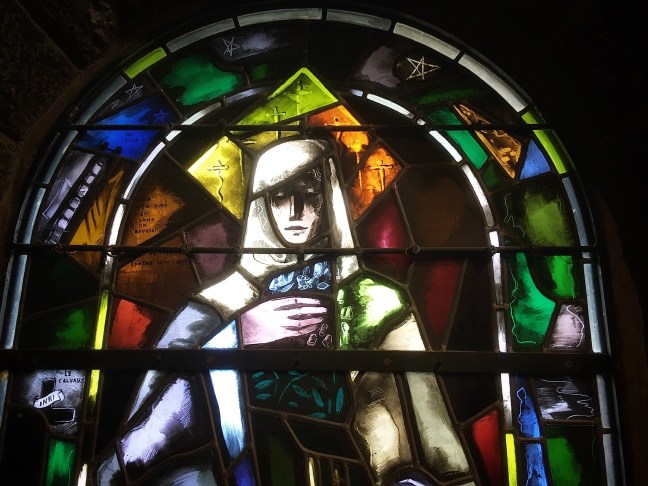
Stained glass by Adeline Hébert-Stevens in Church of Passy, France

First, you have to dig. You have to dig beneath every thing that qualifies you. You have to find that pure ‘I am’ hidden under all that this ‘I am’ is or can be. You have to find the raw substance of that which you are referring to when you say simply ‘I am’. What is this pure, unqualified ‘I am’? Over the years, piles over piles of experiences, beliefs, conditioning, have acquired substance and have overwhelmed this simple experience of ‘I am’. This substance has mutated into an apparent self, and ‘I am’ has been buried under it, and made into a collection of ‘I am this’, ‘and this’, ‘and this’, ‘and also this’. So that we can never ever truthfully feel ‘I am’ anymore. It is gone. ‘I am’ is gone with the wind of endless qualifications.

So we have now to resurrect that ‘I am’. To un-qualify it. To strip it bare of its qualities, of its acquired competences and idiosyncrasies. We have to purify the wine of our self, distil it to its essence. An essence that was never lost but only diluted, made secondary and unimportant, when it is in fact the only thing there is. This essence is simply the realisation of an emptiness that is the core of our being, that we never had the guts to look at, or enquire into, but which a simple question and a good-will to find out, could simply reveal with a dumbfounding ease and precision.

[…]

A celebration of the purity of being, before it becomes qualified… (READ MORE…)

.

The Heart Sutra

‘Buddha preaching Abhidhamma in Tavatimsa’ – Wikimedia Commons

.

प्रज्ञापारमिताहृदय

心經

བཅོམ་ལྡན་འདས་མ་ཤེས་རབ་ཀྱི་ཕ་རོལ་ཏུ་ཕྱིན་པའི་སྙིང་པོ

.

There is a text that came from the dawn of ages, whose author is unknown, but which has been widely accepted, practised, and chanted in Mahāyāna Buddhism as a condensed exposé of the teaching of Buddha. Although known and praised as the ‘Heart Sutra’, its original Sanskrit name translates as ‘The Heart of the Perfection of Wisdom’. If the Sutra’s main teaching asserts that all phenomena is ‘Śūnyatā’, a term widely translated as emptiness, its wide implications extend to many other aspects in the understanding of our true nature. Originally translated in Chinese by a 9th century Buddhist monk called Prajñā, the text exists in a shorter and longer version. I am sharing here the standard long version that provides an elegant and story-like context to the main teaching. I have also chosen to give to the many Sanskrit terms their original meaning or context. Following the Sutra is a short text that I wrote, some words that the text has evoked in me. I hope that this presentation will give justice to the profundity of this text, and that you will enjoy the reading.

~

Form is emptiness, emptiness is form.”
~ The Heart Sutra

[…]

Discover this milestone of Buddhist literature: the ‘Heart Sutra’… (READ MORE…)

.