The Practice of the Presence of God

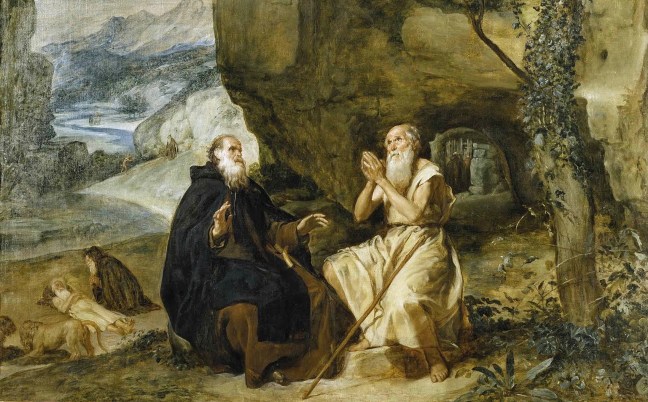
The monk at prayer’ (detail) – Edouard Manet, 1865 – WikiArt

.

A little lifting up of the heart suffices.
A little remembrance of GOD, 
one act of inward worship
.”
~ Brother Lawrence

.

From the remote time of the seventeenth century in Paris has come a voice whose freshness and intimacy struck a chord in many a spiritual seeker throughout the generations. The man behind it was a lay brother working in the kitchen of a Carmelite monastery in the French capital. He was born Nicolas Herman in 1614 in the region of Lorraine, but took the religious name of Lawrence of the Resurrection. What a miracle that the writing of this simple lay brother found its way down to us. But although a remarkable journey, it is understandable that it did so. For the words of this humble, hardworking man, all occupied to his cooking activities, show a mountain of dedication to God. His simplicity and softness, combined to an undefeatable and spontaneously joyful practice, is a deeply valuable gift passed down to us.

Sometimes I consider myself there as a stone before a carver, whereof he is to make a statue; presenting myself thus before GOD, I desire Him to form His perfect image in my soul, and make me entirely like Himself. At other times, when I apply myself to prayer, I feel all my spirit and all my soul lift itself up without any care or effort of mine, and it continues as it were suspended and firmly fixed in GOD, as in its centre and place of rest.”
~ Brother Lawrence

[…]

Rejoice in the illuminating life and practice of Brother Lawrence… (READ MORE…)

.

Our Sacred Destination

.

Our whole life ought to be being.
So far as our life is being, so far it is in God
.”
~ Meister Eckhart

.

There is none but you, O Lord! — And yet I am dispersed in a thousand identities. I’m not in your embrace but in the embrace of thoughts, feelings, in the entrancement of the senses, and the endless worries and regrets. I desire only you but do not know it yet well enough. So I’m off in a thousand directions. But why don’t I keep it simple? For all my objective moves and endless searches happen in one place only, which is inside my own self and experience. Why being so dispersed? Go for your self only. Forget about all these apparent ‘other than yourself’. Let them all die. Stay in the glorious being that rests in and as the centre of every experience that you may have, of every quest that you may be engaged in. Be still, without moves. Ignore all your impulses towards these endless, hypothetical outsides. Observe them all and see that they are made only of the still presence of your own self. It will spare you a thousand thwarted expectations. All the weariness that goes with it. And all the efforts to get yourself out of these constant little traumas. Be supremely lazy. Forget about the thousand words that stretch themselves like a forest where you get lost again and again. Cease running about. Empty your load. Have a quiet nap in the shade of your sweet self. It has the gentle coolness of the presence of peace, and the happiness contained in the simple evidence of being. It is about you: your own glorious self. Don’t think that you have to achieve something, or be one of these heroes that you have been conditioned to be by society. Be alone, empty. Let go. Rest. Only rest. How difficult is that? And don’t wait for anything there. Only enjoy the simple destination of being just yourself. You are destined for it. For the simple reason that there is in truth nothing but that. Nothing but the obvious, sacred destination of your self. It all rests there: everything you ever wanted to possess, achieve, understand, reach. All is contained in that simple point of presence which lies in and as the centre of your being. Forget about anything else but the destiny of your one and only sacred destination: Being.

.

~~~

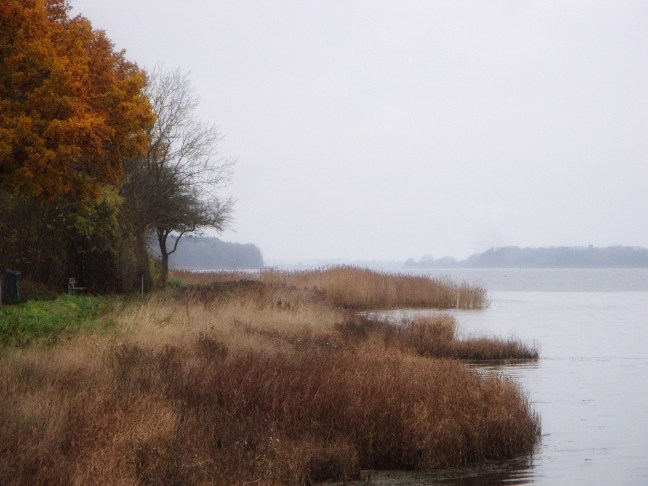
Text and photo by Alain Joly

Quote by Meister Eckhart (1260-1328)

~~~

.

Bibliography:
– ‘Meister Eckhart, Selected Writings’ – by Meister Eckhart – (Penguin Classics)
– ‘Conversations with Meister Eckhart’ – by Meister Eckhart & Simon Parke – (White Crow Books Ltd)

Website:
Meister Eckhart (Wikipedia)

.

The Ember

Photo by Michael Foley Photography on Foter.com

.

I do not know where the fire comes from
It is hidden, ready to burst
A piece of ember under the ashes

When the flame has died out
The ashes are left, 
Like a thick coat
Tenacious
Like a screed

It doesn’t let anything pass 
But the ember doesn’t die
It remains there
Hot
Waiting

We sometimes need so little
A tiny stimulation
To remove one by one the gray leaves
Glued
Welded
Undo the uncanny order
Of all these withering years

It sometimes takes very little
To revive
Timid
Intact
This little piece of fire
That contains the ardor and the madness of all flames 
Of all rebirths 
Of all cures

.

~~~

Text by Alain Joly

~~~

.

Suggestion:
Voices from Silence (other poems from the blog)

.

The Final Action

“The first step is to perceive,
perceive what you are thinking,
perceive your ambition,
perceive your anxiety,
your loneliness, your despair,
this extraordinary sense of sorrow,
perceive it, without any condemnation, justification,
without wishing it to be different.
Just to perceive it, as it is.

When you perceive it as it is,
then there is a totally different kind of action taking place,
and that action is the final action.”

~ J. Krishnamurti 

.

~~~

Quote by J. Krishnamurti (1895-1986)

Photo by Alain Joly

~~~

.

Bibliography :
– ‘Krishnamurti’s Notebook’ – by J. Krishnamurti – (Krishnamurti Publications of America, US)

Website:
J. Krishnamurti

Suggestions:
Beauty in Essence (other pointers from the blog)
A Day at Brockwood Park (Homage to J. Krishnamurti)

.

Taking the Bow

‘Bathing Buddha’ – Photo by ViaMoi on Foter.com

Here is a reminder inspired from the words of Rupert Spira. It is necessary and terribly efficient to look into these matters for ourselves. This is why I like to share here the parts of a spiritual teaching that sounds like ‘something to do’, something to experiment and verify for ourselves:

See that your experience is made of thoughts, feelings, sensations, and perceptions. Where is the ‘I’ that is orchestrating all of those? Where is this ‘I’ in the system? Take any thought that appears in you. Did you choose that thought? See if there was any entity, a chooser that decided to have that particular thought. Go slowly and observe carefully. See that there is no chooser in between each thought. The notion of a chooser is simply itself a thought appearing along many other thoughts. It’s only a thought that says ‘I was there in between each thought choosing it’. It’s the clown that wasn’t actually present but claims responsibility afterwards, and takes the bow. There is a choosing thought, but there is no chooser…’

~~~

Further exploring on the subject:

There is no entity present who could either have or not have free will. Experience is too intimate and immediate to admit of one who may stand back and orchestrate it like a conductor, willing, choosing, deciding, and so on. There is no time present for such a one to exist in. The idea of free will is an inevitable side effect of the belief in a separate entity. If we believe there is a separate entity, we will by definition, whether we know it or not, believe there is free will. If, as this apparent entity, we then believe there is no free will, then that is simply a belief that we superimpose onto our much deeper conviction that we are a separate doer, chooser, decider, and so on. Once the separate entity is seen clearly to be non-existent, the idea of free will dissolves. All that is left is the freedom of consciousness.”
~ Rupert Spira (’Interview with Paula Marvelly: Contemplating the Nature of Experience’)

~

Who is the entity that exercises will to do this or that? Please follow this carefully. If the observer is the observed what need is there for decision at all? … When there is any form of decision, depending on choice, it indicates a mind that is confused. A mind that sees very clearly has no choice, there is only action. And this lack of clarity comes into being when there is this division between the observer and the observed.”
~ J. Krishnamurti (‘Beyond Violence’ – Part IV, Chapter 1 – Brockwood Park, 3rd Public Talk)

~

When the mind returns to the heart, when the separate self is divested of its separateness and stands revealed as the only self of pure awareness, then it becomes clear that there was never a separate self to begin with. And therefore the question as to whether that separate self has choice or not is mute.” 
~ Rupert Spira

~

Freedom, I say, does not mean getting to do whatever one wishes. Nor does freedom have anything to do with so-called ‘free will’, which is a fantasy. Freedom arises with the understanding that in each moment what is, is, and cannot be different, including whatever ’myself’ sees, feels, thinks, or does. In the light of that understanding, while acceding outwardly to social conventions which require playing the role of chooser and decider, inwardly — within one’s private understanding — one may come clean and admit that the ‘myself’ who chooses is a fiction, a story I have learned to tell myself. In that admission one may find freedom — not the freedom to ‘choose’, but the freedom to be.”
~ Robert Saltzman (‘The Ten Thousand Things’)

~

In Hinduism the very idea of free will is non-existent, so there is no word for it. Will is commitment, fixation, bondage. … You must be free first. To be free in the world you must be free of the world. Otherwise your past decides for you and your future. Between what had happened and what must happen you are caught. Call it destiny or karma, but never — freedom. First return to your true being and then act from the heart of love.” 
~ Nisargadatta Maharaj (‘I Am That’)

~

Doing happens, and then you appropriate the doer-ship, but there is no doer-ship. Things happen. When you breathe, you don’t need to think that you’re a breather. When your heart beats, you don’t need to think that you’re a beater. When you’re digesting, you don’t need to think that you’re a digester. These things happen by themselves. The same way, thinking happens by itself; there is no thinker, there is only thinking. The thinker is a thought of other thoughts. So, there’s nothing to do actually means that there is no appropriation in life. Thus, you must give yourself to the fact that life is happening through you, but there is no need to pretend to be the doer. It’s not that there is nothing to do, it’s just that things happen by themselves.”
~ Eric Baret (‘There is No Doer’ in Science & Nonduality)

.

B4B1EF62-8C55-4D3A-A93C-CEF684A607CC

.

Bibliography:
– ‘Being Aware of Being Aware’, – by Rupert Spira – (Sahaja Publications)
– ‘I Am That‘ – by Sri Nisargadatta Maharaj – (Non-Duality Press)
– ‘The Ten Thousand Things’ – by Robert Saltzman – (Non-Duality Press)
– ‘Krishnamurti’s Notebook’ – by J. Krishnamurti – (Krishnamurti Publications of America, US)
– ‘Let the Moon Be Free: Conversations on Kashmiri Tantra’ – by Eric Baret (translation by Jeanric Meller) – (CreateSpace Independent Publishing Platform)

Websites:
Rupert Spira
J. Krishnamurti
Robert Saltzman
Nisargadatta Maharaj (Wikipedia)

Suggestions:
Fleeing to God (other pointers from the blog)
A Day at Brockwood Park (Homage to J. Krishnamurti)
Khetwadi Lane (Homage to Nisargadatta Maharaj)

.

The Wrath of the Lamb

Anatoly Solonitsyn (the Writer) – ‘Stalker’ by Andrei Tarkovsky

.

Keep awake, keep awake, artist, 
Do not give into sleep…
You are eternity’s hostage
And prisoner of time
.”
~ Boris Pasternak

..

The film ‘Stalker’, made in 1979 by Andrei Tarkovsky, is an absolute wonder. As usual with Tarkovsky, every shot in it is unique and intrinsically harmonious. As usual with Tarkovsky, you will have your breath taken away. And you will be bored too. And puzzled. Searching for a meaning that will elude you. For his cinema is not about entertainment, plot, revelation, or resolution. His cinema is about poetry, beauty, and the search for bringing forth art’s ultimate purpose, which is the uncovering of the core and substance of our being. With ‘Stalker’, you will feel what it is to be locked in a maze. And as usual with Tarkovsky, amidst the shallow words are the pearls. And amongst the mud and the stagnant waters is the eternal truth.

The Stalker is a simple man living with his wife and his little girl in an undetermined country. His job is to guide people who want to enter into a mysterious place called ‘the Zone’, protected by barbed wires and police forces. This is a green, lush, deserted land where stand some vestiges of settlements. Maybe this is the consequence of a fallen meteorite. We don’t know. There is a place, concealed in the Zone, where desires come true. But as one of the protagonists finds out, “it is not merely a desire but one’s most secret desire that is granted here. Here will come true that which reflects the essence of your nature. It is within you, it governs you, yet you are ignorant of it.” As a result, many people want to reach this place in the Zone called the ‘Room’, and they need guides to lead them to it. This time, the Stalker is on again for a new trip with two men called the ‘Writer’ and the ‘Professor’. 

[…]

A reflection on the qualities of Andrei Tarkovsky’s movie ‘Stalker’… (READ MORE…)

.

Churning the Ocean

‘Sagar Manthan’ – Unknown author, 1820 – Wikimedia Commons

.

We cannot be fully established in our true nature as peace and happiness without integrating all our latent tendencies, all these reflexive and self-protective habits born out of our belief in separation. These would prevent the advent of bliss. This is the meaning behind this ancient myth of India called the ‘churning of the ocean of milk’ (‘Samudra Manthan’ in Sanskrit), which is narrated in many religious texts. 

In brief, as the Gods were bored, they decided to gather with some evil beings and unite their strength to churn the ocean of milk with the help of a sacred mountain as the rod, and Shiva’s serpent king as the rope. By doing so, the snake spitted out a deadly poison — called ‘Halāhala’ or ‘kālakūṭa’, literally: ‘black mass’ or ‘time puzzle’ — which Shiva, in its compassionate heart and presence, swallowed to prevent the destruction of the world. The path was cleared for the formation of many precious, invaluable gems, including the ‘amrita’, or ‘soma’, which is God’s drink, the elixir of happiness, or consciousness’ butter. 

[…]

A playful inquiry into the meaning behind this famous Indian myth… (READ MORE…)

.