The Falling of a Feather

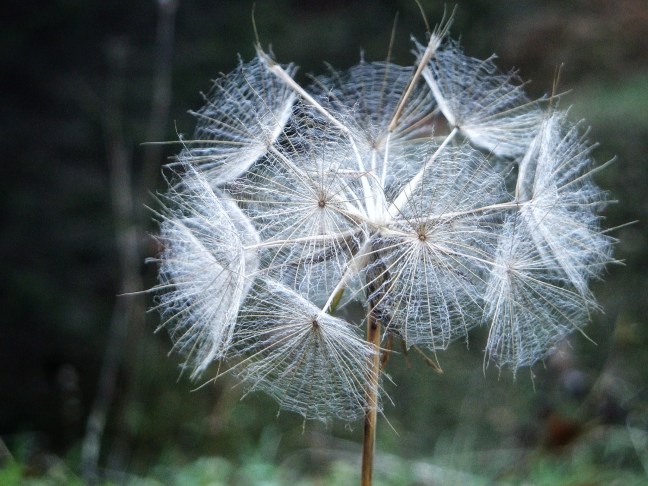
The most extraordinary thing about this understanding is that nothing needs to perish inside you in order to access your essential being. Not a supposed self that might be getting in the way of your realisation. Not some kind of entity that you painstakingly have to dismantle before you can access the truth of your being. There is nothing to dismantle. Not a single little thing. That apparent, undesirable self is made of the fully formed self that is yet to be revealed. So don’t be fooled. Don’t even be interested in that limited self that you have bought into. There is no such self. Just a few random thoughts hanging around, and being amused by the trick they have played on you. Don’t give that self even a second glance. What kind of spiritual seeker would you be, wasting your precious time and energy on a self that has not even the beginning of a reality? Don’t get involved with any single idea about yourself.

So don’t fiddle with yourself, get busy suppressing, controlling, practicing, re-ordering. No toughness is required. No crime needed here, and not a bit of violence necessary. Only the noticing that the self you imagined yourself to be is not here. Believe me, there is an awful amount of effort that you can spare yourself. The path is already all cleared. Your true nature is in plain view just as you are. See that what you are looking for is no more than the quiet and gentle falling of a feather of awareness on your experience as it presents itself. Nothing more. A non-happening. The letting go of an idea. So be vigilant. Keep your heart open. See how wide your vision is already. Get accustomed to the light of simply being. You may need time to make it your default experience. But don’t forget that non-violence always prevails with God’s grace. But could you expect any less coming from such a loving being?

[…]

Meditating on the gentleness of the recognition process… (READ MORE…)

.

Lectio Divina

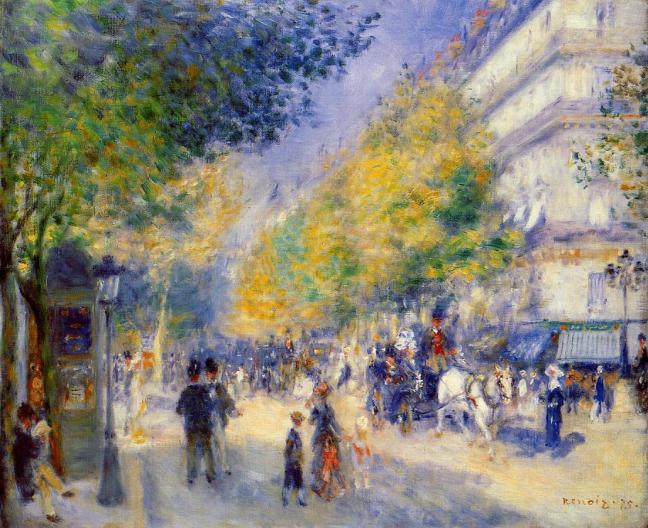
‘The Great Boulevards’ – Pierre-Auguste Renoir, 1875 – WikiArt

I have been feasting on some words recently. I was sitting leisurely on a cafe’s terrace, watching life coming and going, browsing through my phone with some ideas in mind. And there it came, and took me by surprise, like a koan suddenly unveiled, a pathway revealed without my knowing. There it came, taking the form of one single, simple phrase that seemed innocuous, by Saint Augustine:

Is any man skilful enough to have fashioned himself?
~ Augustine of Hippo

And that emptied my mind. It made me sink into no content, aware of all that is now; my self suddenly made a container for life. We all feel that we are so smart and powerful, or so stupid and powerless. That we have made ourselves what we are, and feel in consequence the pride or shame of it. That we have destroyed, or elevated ourselves. That we are responsible for our happiness, our success, our failure. That we have moulded our thoughts and actions, wilfully designed them. That our beliefs are believed. Our thoughts thought. Our words uttered by a ‘somebody’ here, inside the skull. But these are all beliefs, and beliefs are flawed from the start. Beliefs need a believer to believe them, and look as you may, you will never find such one behind your deeds. For the simple reason that there is no self behind our selfing. We have therefore never been in charge, never been truly responsible for collecting what we have collected, for misusing what we have misused, and for making the mistakes that we have made. Except in hindsight, in thoughts and beliefs, in cascades of randomly built illusions and memories in which we are caught and made blind. And these are what we have busied ourselves managing and arranging into a sensible self. And that self has gotten in the way of our living harmoniously.

[…]

The ‘Lectio Divina’ of a quote by Augustine of Hippo… (READ MORE…)

.

A Course in Abandonment

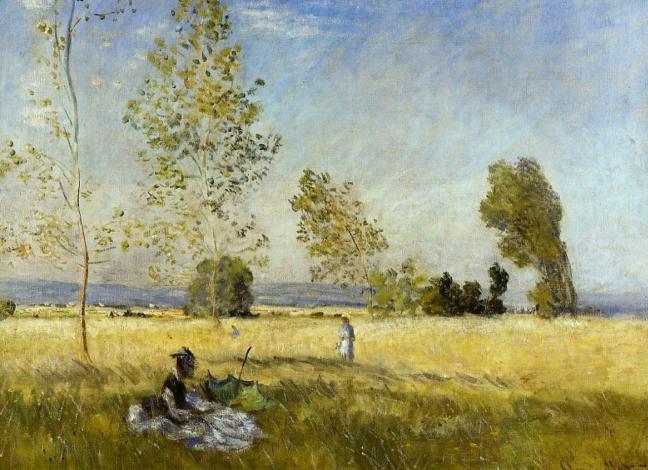
‘Meadow at Bezons’ – Claude Monet, 1874 – WikiArt

.

You only have to receive everything and let it happen.
Everything is directing you, straightening you out, carrying you.
Everything is a banner, a litter, a comfortable vehicle.
Everything is God’s hand; everything is God’s earth, air and water
.”
~ ‘Abandonment to Divine Providence’ (Muggeridge)

.

Truth is its own advocate. No matter where or when or in what obscure circumstances an expression of truth has been composed, it will find its way out into the light. This is what happened to a small book allegedly written by the French Jesuit priest Jean-Pierre de Caussade (1675-1751). Written in the first half of the eighteenth century, it remained unpublished until 1861, before being praised for its quality and lyricism, and appeared in multiple editions over time. It is known by the title ‘Abandonment to Divine Providence’. Jean-Pierre de Caussade was the author of many letters of spiritual instruction, and some of them appear in his book along with a treatise in self-abandonment. This latter text particularly ignited attention and was in style and quality so far removed from the other ‘letters’ that it became apparent that the author could not have written it.

[…]

Discover this eighteenth century treatise on abandonment… (READ MORE…)

.

Where Eternity Hides

‘Daoist immortal Han Xiangzi’ – Zhang Lu, early 16th century – Wikimedia

I think that our search for the ultimate could find some relief in giving attention to what is small, unnoticed, humble. All the things unremarkable, unassuming, that we pass in life without a glance. You know these moments when we sit down doing nothing. All these things easy, like resting, breathing, eating, sleeping, that can be achieved without our forceful participation. These moments or actions are closer to god than we may think. They live in a grey area where they flirt with the non-objective and slip out of our attention to hide in the sublime, to rest in the blissful, unattached, forgotten. Their presence is made absence, like for the space between two thoughts. But don’t let them leave you. Strive to own them. This is where eternity hides. This is why presence is so much emphasised in spiritual matters; why, in Zen practice, students are encouraged to take pride in habitual, so-called boring or unimportant activities like washing dishes, serving tea, or chopping wood. Forget all your achievements of glory. Put aside your pointed quest for the sublime. Your selfish ride towards the selfless. Go for the minute, the nanoscopic. Take interest in the small and the ordinary. Have a passion for the shallow, like the sacred lotus does.

After all, god has made beauty the most accessible thing there is. And love is so close and intimate that it has been described to be nothing but our very self or being, our natural if forgotten identity. Presence is the most unassuming thing there is, almost as to be nothing. Happiness never comes when invited or provoked, and real beauty has never been seen showing off. But don’t be deceived here. Unassuming doesn’t mean not assuming. And what appears to be nothing can be revealed as the most blatant ‘something’ there is. All spiritual endeavour really boils down to seeing the unseen, and experiencing the non-objective. Your sense of simply being is the most shy presence you will ever encounter in your life, and yet you will find nothing more attractive than its discreet and humble presence. There is glory in simply being, without going for qualities, qualifications, objects, pretence. Silence is louder than noise, and truth more clamorous than any lie can be.

All that religions and spiritual traditions ever do is to proclaim this presence that is already here amongst us, as our very being, and to point towards all that is hiding it from our gaze. Simple-minded by nature, the mind has chosen to ignore it, entrenched as it is in all things objective. It has deemed it insignificant. But the so-called insignificant is simply where the mind cannot go, which is literally everywhere except in objective experience. That leaves for quite a wide field in the unknown, in the hidden, discarded as being too unremarkable to be made a conscious thing. This misjudgment is our mistake. This is our sin. For god is hiding in the small and the insignificant, in everything unremarkable to the mind. But it is not on account of its small size or nature that this presence is unreachable to the mind, but rather that the mind, as the belief in being a separate self, has taken all the place and hides the infinite from our eyes. Just as time, as an idea born of the mind, has taken all the place and veils eternity. This is the extent of the mind’s indulgence. But its conscious retiring or humbling will reveal the sheer glory of all that was left in the hidden. And in doing so will lift the veil on the real nature of our self. God’s being revealed.

.

~~~

Text by Alain Joly

Painting by Zhang Lu (1464–1538)

~~~

.

Website:
Zhang Lu (Wikipedia)

.

Other ‘Reveries’ from the blog…

.

The Beatitudes

‘Still Life with grapes’ – Giovanni Segantini, 1899 – Wikimedia

.

The Beatitudes is the name given to eight blessings that Jesus pronounced at the beginning of his ‘Sermon to the Mount’ in the Gospel of Matthew (5:3-10). Each of these blessings begins with the Latin word ‘beātī’ (from ‘beātus’ meaning ‘happy’, ‘wealthy’), translated here as ‘blessed’. They are short and bold little sayings that I have come across lately, eight ways to be blessed, eight blessings on the path to our true being, each the recipient of some profound meaning which I have endeavoured to develop here. I hope you enjoy the reading…

Seeing the multitudes, he went up onto the mountain. When he had sat down, his disciples came to him. He opened his mouth and taught them, saying,
~ Matthew, 5:1-2 (World English Bible)

.

Blessed are the poor in spirit,
for theirs is the kingdom of heaven
.”
~ Matthew, 5:3

You’ve got to be empty. Not to indulge in your thoughts, feelings, and experiences, making them the owners of your kingdom. You’ve got to be empty. To not be seduced by every passing colours. To stop being a possessor, forever looking for what could enrich you. You’ve got to be empty. To not be involved, endlessly busying yourself with everything you have gathered to exist, looking in them for an identity. You’ve got to be empty, to stay away, to keep alone. To be the one disinterested, self-sufficient, which means finding peace in the essential of what you are. That essential is ‘being’. Simply being, devoid of anything that this being could be, or have, or think, or feel. Then this being will enrich you in its austerity, it will clothe you in nakedness, it will fill you in emptiness. Being is all you will ever own, for the simple reason that it is all you are. Nothing else is but being. This is the only asceticism worth living. Be blessed with that inner poverty.

[…]

My reading on Jesus’ eight blessings from the Beatitudes… (READ MORE…)

.

The Sober Life

.
To be sober means not to let the heart cling to anything except God.
Cleaving to other things makes the soul drunk,
and it begins to do quite unaccountable things
.”
.
~ Theophan the Recluse

.

~~~

Quote by Theophan the Recluse (1815-1894)

Photo by Alain Joly

~~~

.

Bibliography:
– ‘The Art of Prayer: an orthodox anthology’ – Compiled by Igumen Chariton of Valamo (Trans. by E. Kadloubovsky and E. M. Palmer) – (Faber & Faber)

Website:
– Theophan the Recluse (Wikipedia)

Suggestions:
Beauty in Essence (other pointers from the blog)

.

Treasures of Grace

In Basilica di Santa Maria del Popolo, Rome

.“The heart is but a small vessel;
and yet dragons and lions are there,
and there likewise are poisonous creatures
and all the treasures of wickedness;
rough, uneven paths are there, and gaping chasms.

There also is God, there are the angels,
there life and the Kingdom,
there light and the apostles,
the heavenly cities and the treasures of grace:
all things are there.”

~ Macarius of Egypt (Homilies 43:7)

.

~~~

Quote by Macarius of Egypt (c. 300-391)

Photo by Alain Joly

~~~

.

Bibliography:
– ‘Fifty Spiritual Homilies of Saint Macarius the Egyptian’ – by Macarius of Egypt – (Aeterna Press)

Website:
Macarius of Egypt (Wikipedia)

Suggestions:
Sayings of the Church Fathers
Beauty in Essence (other pointers from the blog)

.