Humanness

‘The Human Mountain: Towards the Light’ – Edvard Munch, 1927-29 – Wikimedia

There is no human being. This is quite extraordinary to think of it, and even positively mind-blowing. But turn it around as much as you may, the true self of man is not where a body is. It doesn’t take shelter there. A body, or even a mind for that matter, is way too small and inappropriate to house your beautiful being. There is no room there. For how could the infinite enter something that is finite, limited, prone to decay and death? How could something that knows no beginning and no end, be contained in a passing thought, in a mind which is changing, developing, forgetting, believing, cheating and being cheated? In being, you won’t find the beginning of a change, won’t find even the possibility of death. In being, there is no forgetting who you are. Only a mind can forget its own nature, not because there is something there that can forget, but because thoughts, feelings, perceptions, when they are believed to be yourself, are hindering your true nature, rendering it as if absent. What is left is only a cheating thought that believes itself to be real as self, when it is not.

There is nothing depressing in not being a human being, and nothing demeaning. Being is such a malleable thing that we still retain the illusion of being a human being, a person, as we do now, but with the difference that this illusion won’t hide the reality that is behind it, and that is our true identity. Losing our identity as a person doesn’t mean that we won’t feel compassion for another, or love for our beloved, for love is not contained in being a self separate from an other. Love doesn’t need to be directed. We are not doing love, let alone giving it. Love is the expression or signature contained in our simply being. It is the feeling of being that irradiates in every directions, and that is shared as that which we are here and now. And don’t think either that you will lose your ambition, but it will be reoriented to be not your ambition, but the very contagion of being in every aspect of your life and world. And don’t think that you will miss out on happiness, for happiness was never yours, never your expression, never contained in achieving or obtaining a thing that thought has said you desire. Happiness is the very feeling of being, that we cannot contain or limit, but which splashes over to colour life with a golden hue of oneness.

So there is only being taking momentarily the clothes of a human being. But being itself has no qualifications, no colours which would render it a definable entity. The colours and the qualifications are not pertaining to being. They are the property of everything that appears in being, but is not being. They are in body, thoughts, sensations, perceptions, in all the existing things that come and go, dancing to make the form of a world, of what we call a human, a dog, a mountain, or the parking lot in which we park our car. To be being won’t diminish our feeling of being a person. It will enrich it, for being is the essence of a person. Being is the essential of our experience as a human being, only we don’t see that, don’t know that. Our focusing on the belief to be an objective entity that thinks, feels, and perceives has made us blind to our reality. So let’s remind ourself that there are no limited human beings, but only one unlimited being. This knowing and feeling of being only one unlimited being is a source of constant awe in life. And this vision is what gives its true colour and reality to our imaginary humanness.

.

~~~

Text by Alain Joly

Painting by Edvard Munch (1863-1944)

~~~

.

Website:
Edvard Munch (Wikipedia)

Suggestion:
Other ‘Ways of Being’ from the blog…

,

The Fantasy of a Self

‘Moonlight’ – Winslow Homer, 1874 – WikiArt

We only ever land where we are. There is no escape from where we are. Where we are, is all there is. I mean this deepest place of ourself, from which we have never been separated, is the very thing which we have been looking for in a thousand distant places, in endless situations, in hopes and expectations, in projections, attachments, identifications. Our mind has been thirsting for this place of peace for as long as we can remember, and it has been escaping us with perfect consistency. For there is a rule attached to this place: we can’t find it outside of ourself. And the reason is: there is no place outside of ourself. Ourself — what we are here and now — contains all that we could long for. It is the home which we have left through our contant looking for it in the wrong direction. Our seeking is way too aggressive for its tender being. Our peaceful home lies in the nest that our being is, and this nest of being is where all existence finds its birth and takes its journey.

The problem with accessing our being — our peaceful home — is that we have introduced a self. We have posited a self that is separate from the peace it is looking for. And if peace is situated at a distance from ourself, therefore where we are is the place where peace is not. We have superimposed a self on our peaceful being, and in doing so have invited suffering, which is but the seeking for our lost peace or happiness. It all comes from the connivance of a few thoughts, feelings and sensations, which have set themselves up as a self. It is all part of a scheme on their part, and a gross one if you ask me. For how could something that is coming and going have a self? Something as flittering as a thought, or a sensation, could never produce a self. The self that we think we are, and that we feel is at a distance from experience, is fabricated. It is a product that we have elaborated to feel secure. But we cannot find security in a self. Security is rather the absence of a self, and the merging of ourself with experience, which is felt as oneness.

This self, without our noticing, has created untold damages, it has made life into a havoc. It has invented a within and a without, a here and there, a now and then, when there is in fact only a seamless experience. All these distinctions are of course necessary for our functioning in a world, but they are not the reality. And to ignore their reality is to transform them from a few peaceful, useful devices into brigands that have made experience either something to be feared and avoided, or desired and pursued. In other words, being a self has made experience into a dependence, a battlefield for our own imaginary benefit. But in fact, there is in reality only a now that is ever present and eternal, and a here that has no boundary, no limit, and is infinite. And there is a within that we will cease seing within, for after all thoughts and images are filtering experience to the point of making it their own creation. Thoughts are not just within. They are scattered all over the field of experience, colouring everything we see or hear. And the without will cease being without. For where could without be if not in our intimate experience. So the trees, the houses, and the dog we meet in the street are part of our very own being, for there is only one being out of which they could make an appearance. Where would another being than our being be? To posit another being than our being, or a without without, or a within within, or a there, or a then, is to be absent to our true being or nature, and to live in a world scattered about and fragmented, where reigns every bit of suffering and conflict. But to live as the One renders without within, within without, there here, then now, and our being just only one being. The rest is but a fantasy which we can either buy and suffer from, or borrow and play with.

.

~~~

Text by Alain Joly

Painting by Winslow Homer (1836-1910)

~~~

.

Website:
Winslow Homer (Wikipedia)

Suggestion:
Other ‘Ways of Being’ from the blog…

.
Our Only Landscape

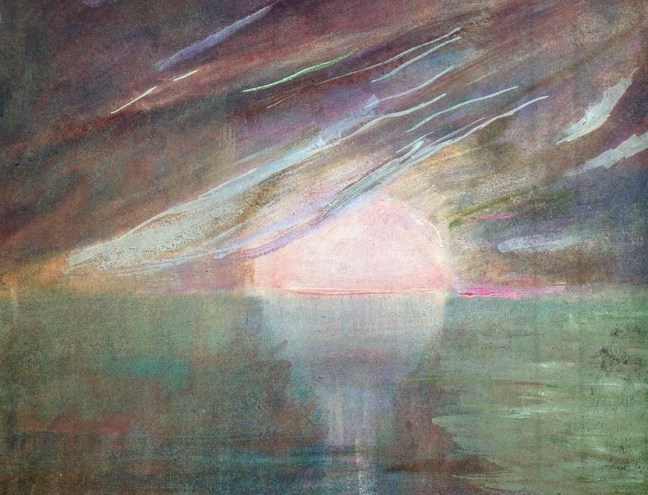
‘An Autumn Landscape with a view of Het Steen’ – Peter Paul Rubens – WikiArt

We are always wandering about, always attracted by a thousand things. Falling for every passing experience. Looking for the fleeting promise it might carry. The reason is: we are so vulnerable to happiness. We want it above all else, at all cost. We know we deserve it, that it is our due, that it is natural, in the order of things, to be happy, rested, at peace. So our mind is never still. Seeking to obtain it. Longing to have it given. Working for it relentlessly. Sometime pretending to be happy if necessary. If it is what it takes. After all, this is the game we are being asked to play. This is our fate, that we have accepted as the norm, and to which we have complied and have been a slave. We would do anything to feel alive, contented, our heart full, our mind at peace, secure, on top of things. And we feel depressed when being turned down. Lost and disheartened at every bout of despair or suffering.

But maybe it is all an unfortunate misunderstanding. Maybe we have taken a wrong turn, and were embarked in our own forgetfulness, distracted by the general consensus. Maybe there is no need to wander about. Maybe experience is of no need to us for happiness. Maybe happiness is not found in experience, not in the least. Maybe working for it creates a distance, a gap, throwing it far and away, like something never reached, never quite here. Maybe hoping for it makes us a self, an illusory entity that needs to obtain peace through the satisfaction given by objects, events, favourable circumstances, which makes us dependent and fearful. What an irony it would be, if it were just this, just this misunderstanding, and that happiness was in fact right here, already spread in and as our sense of being, offered to us with a ruban — a gift eternal for our simply being here and now. How clumsy on our part, to have looked away from ourself for that which is not only in ourself, but our very own self itself. How foolish it all was.

So, this is how it is! We are already fixed in our being, which is peace, which is joy, and have been so all along. We have missed that: that this was our belonging, our identity, to be at peace, firm, stable, fastened, secure in our simply being. And that this simply being was enough, the completion we were after, what we thought was to be earned at the very end of a deceitful string of efforts. Adding to simply being is where we made the mistake, where the wrong turn was taken. We had to stay where we were, and simply notice where we actually were, and what we in fact truly were. Being was not a little thing, undeserving of attention. Being was the completion, everything: you, happiness, peace, experience, the world, all gathered in and as the simple experience of only being. That’s how you lose all wandering, all attraction to things, exchanging them for the one only attraction worth falling for, which is yourself. You have to fall for yourself, for your being. You have to let being embrace you, and swallow you. Then, you won’t have to be anything, won’t have to look for something or someone other than yourself. For you are the fact of being, and this in itself is all the landscape you will ever need and find yourself in.

.

~~~

Text by Alain Joly

Painting by Peter Paul Rubens (1577-1640)

~~~

.

Website:
Peter Paul Rubens (Wikipedia)

Suggestion:
Other ‘Ways of Being’ from the blog…

.
The Fragrance of Life

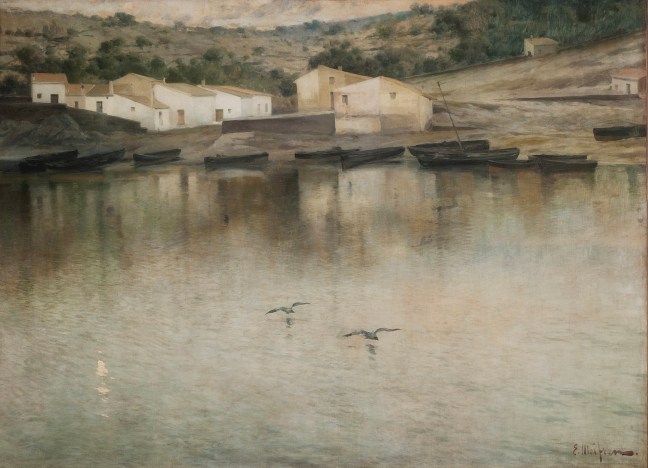
‘Mist. Autumn.’ – Isaac Levitan, 1899 – WikiArt

There is a time in our life experience, when we come to understand what this complex arrangement of thinking, seeing, hearing, touching, tasting, smelling is all about. The source of it all. What it comes down to be, in essence, in feeling — the simplicity of it. It all starts there, from feeling. When we have the feeling, life flows with an intrinsic harmony. When we have the love, sentiments and actions take their right place. Every experience draws its best colours from this primordial feeling of being. It all flows down from that storm of aliveness which is our true nature.

The moment of understanding is when the teaching, the path, the ‘how’, the description, the words, reveal their redundancy and are stopped in their course. When the doing recedes and leaves its place to simply and naturally being. When we cease being a person and recognise our nature as the infinite nature of everything. The words are not here to teach us a new skill, or even develop it. They only come to provoke. They form to enjoin us to look and notice what is already here, fully alive and vibrant — the final word behind our being human.

At the time of creation, a composer is singing or playing his music first in his mind, and then writes it down. Our understanding proceeds on the same line. Truth comes first. It is played, tasted, lived in and as our own being, and the teaching, the words come to only confirm it, to give it the solemn acquiescence of wisdom, or provide the map of the land before us, of which we now espouse the very ground. It is all a question of feeling. Truth is truth-feeling, visiting the land, smelling its atmosphere, merging with its fuming ground, where we are given the grace to taste of the unity of being.

Truth is that which is here before the passing events, below the ups and downs of existence, encompassing everything that forms at the periphery of ourself. Truth is the beauty that our eye or ear seem to catch, but which is in fact within our soul, in our inside, our essence, our being. Truth is only about feeling being, then, and only then, are we gifted with thinking, seeing, hearing, touching, tasting, smelling — all the world that forms and makes our experience, and is like the flower of our essence. In the accomplishment of truth, we embellish the world with our being.

The feeling of being is the crowning point of our experience. It is lacking when there is the illusion of our being a self contained within the limits of our body-mind. It escapes us when we exclude the world and take it to be outside our own person. But being is hiding in plain sight. In fact, experience itself, in its totality, is but the feeling of being. There is no experience without first feeling being. The feeling of being is our foremost experience. Yet in a tragic and absurd way, experience itself has been the one concealing that. All it contains of beliefs, identifications, and imaginations, is preventing our being to be felt, and the fragrance of life to be enjoyed. We have hidden this simple fact from our own self: that we may be nothing more than the feeling of being. All else is only added to make a good story. 

.

~~~

Text by Alain Joly

Painting by Isaac Levitan (1860-1900)

~~~

.

Website:
Isaac Levitan (Wikipedia)

Suggestion:
Other ‘Ways of Being’ from the blog…

.
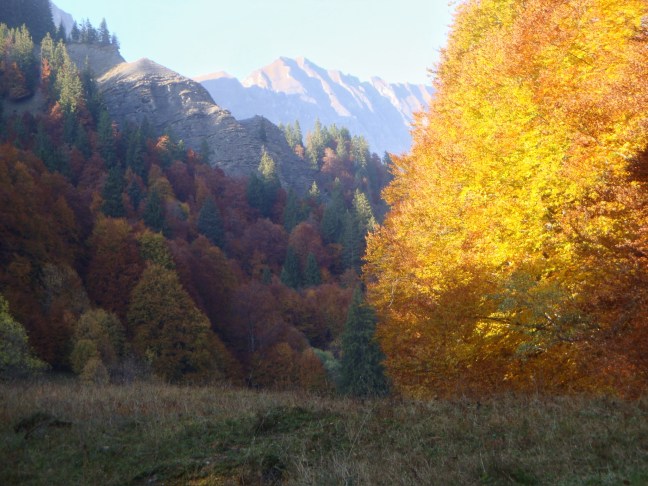
An Abundance of Spirit

‘Chateau Noir’ – Paul Cezanne, 1904 – WikiArt

We always go too far, too quick. We jump to the objective display of reality, and in doing so leave our reality behind. It is a strange phenomenon, this forgetting, this negligence, this hurry. In fact, we pass ourself by, and rush towards what we think matters the most, what we believe to be real. This is how we have made this life difficult, an impossible thing to comprehend, and a hardship: in this forgetting, in this passing by. Our suffering is the product of a simple, single act of absent-mindedness. We have put ourself into oblivion by having made the facile postulation that reality is in the objective, in what we can see, hear, touch with our senses. And then have clung to it, to the point of losing our mind inside it, and losing ourself with it. What an absurd thing to have done.

We ought to be slow and still, if we are to meet our nature. We need to be attentive, if we are to notice our being. Not the one-pointed kind of attention, that we are already so well-acquainted with, but the sluggish one. The lazy one, that doesn’t want to go out and stumble into the world. That doesn’t feel like wrestling with thoughts. That cannot be bothered with the threat or seduction contained in the last surge of a sensation or a feeling. I can assure you that there is already a lot to see, hear, feel, on our way to the vast, far-ranging world that our senses provide. So let us not have time or space on our schedule. Let us forget the agenda that our person has and wants to fulfil. Let us not form any concept, idea, or projection, and delve into what is here before every appearance.

We may see, in slowing down, that there is here a presence that stands still, transparent, and aware. We may hear the sound of a silence that stays unaffected by the clamour of existence. We may feel the world to be but the thousand colours of our sumptuous being. We may notice the pregnancy of spirit in what is seen, heard, felt, and realise this pregnancy to be our very own nature felt, heard, seen. This abundance of spirit in our life is but the disappearance of the entity that sees, hears, feels the world, and the surging of the One as our own and only reality or world. Then we won’t pass truth by anymore. Our own nature will be unmistakable, unmissable. It will meet us in the face at the first surge of an object seen, heard, felt. We won’t miss it because it is all there is. Because there is here the absence of a self living in separation, and the absence of a world as world. This absence is our presence, our nature, our self, our world, and there ends our suffering.

.

~~~

Text by Alain Joly

Painting by Paul Cézanne (1839-1906)

~~~

.

Website:
Paul Cézanne (Wikipedia)

Suggestion:
Other ‘Ways of Being’ from the blog…

.
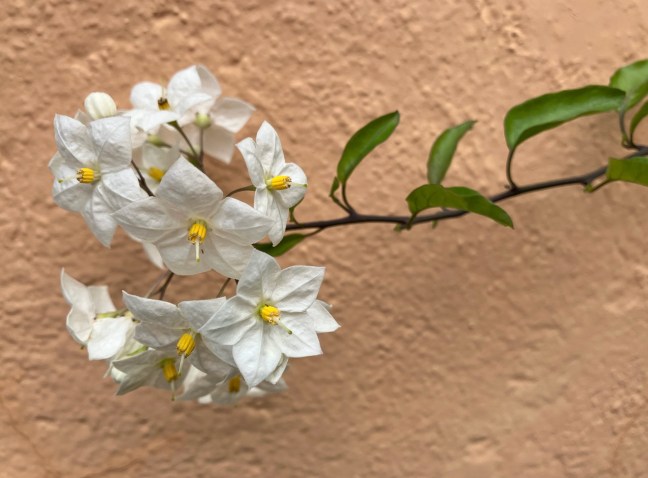
’katholikos’

‘The Life of St. Ignatius Loyola. Plate 4.‘ – Carlos Saenz de Tejada – WikiArt

You’ve got to respect the whole. That’s how you live the good life, in having reverence for the totality of your experience. Not just for the superfluous, all that is being the foam of life, that exists and appears, that you can see, hear, touch. You will never make a totality from the world of objects, from thoughts and perceptions. These are but occasional appearances, superficies. They are above you as it were, dancing upon you, at the periphery of who you are, but are not the reality covering your experience — its most profound constituent. You’ve got to go beyond the mundane and the obvious. For we keep leaving something out of experience. We don’t take the whole thing. We are choosy, only care for objects, don’t integrate our ‘within’ — where the reality of our being is. Notice that there is a world here, that is encompassing our world — a presence pervading our reality, taking everything in.

Actually, this is what the word ‘catholic’ is about. In Greek, ‘katholikos’ means: ‘pertaining to the whole’. We have to pay due respect to the whole, to the totality. We must look back at what we truly are, and find there the expression of the whole. I am not sure that Ignatius of Antioch had this in mind, when he first coined the term ‘catholic’ in the early 2nd century AD. He probably meant that the new belief, the new credence, was to be the universal truth, meant for everyone, adopted by all. But there was no need for adoption — the baby was already in the womb. There were no beliefs to be had, no hopes to project and entertain, no happiness to seek outside of our common day experience as being. He didn’t see that in this very word was the answer to all religions, to every quest for the divine peace; that what we were looking for was already here, close, so close to our very experience; and that there was no need to form a belief about it, or a new credence.

To accord with the whole is to be reconciled with our true nature — the reality of our being. It is to be ‘of one mind’, which is what reconciliation means, and to be brought together under the vault of one reality. This is achieved by turning towards the One, which is our true and only constituent. Universality wasn’t meant to be achieved in multiplicity. Universality is the quality of oneness noticed. The totality is in every place you happen to be. There is no totality of which you wouldn’t be the vessel. For the whole is not a geography, not a place to be in. It is the embrace of being. There is a totality in and as the being which you are now, here. You are not inside a totality. The totality is inside you. But mind you, this most venerated Christian Patriarch Ignatius of Antioch did say something of the highest order, when he brought up the word. He said that “wherever Jesus Christ is, there is the Catholic Church.” Yes. Yes indeed. Wherever we as our deepest being are, whenever we as our most profound nature-consciousness are, there is the expression of the whole, of oneness — the totality which is the very nature of the Lord’s House, and which is our nature and our house too.

.

~~~

Text by Alain Joly

Quote by Ignatius of Antioch (died c. 108/140)

Painting by Carlos Saenz de Tejada (1897-1958)

~~~

.

Websites:
Ignatius of Antioch (Wikipedia)
Carlos Saenz de Tejada (Wikipedia)

Suggestion:
Other ‘Ways of Being’ from the blog…

.
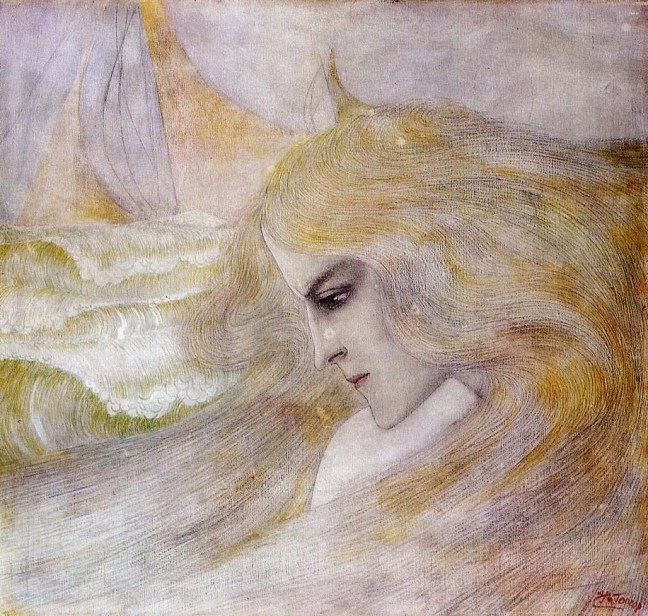
The Possibility We Are In

‘Old Sarum’ – John Constable, 1834 – WikiArt

Whatever there is is God’s presence felt. And whatever we may feel of God’s presence, is what there is here and now, including what exists and appears. It is all here for our recollecting, all here that we can be and be god like. Every experience that we may have, every sorrow and every joy, every fear or trust, every ugly or beautiful appearance, is felt and seen because of our being first. To watch anything is to be watched in return by a presence watching. We can make ourself disappear in it, and be without a self, without the self we have always known and colluded with. And we can share of that impersonal, infinite being that is not ours, but that we can be and embrace as our own. So ‘I am’ is the secret door opener within us, that will give us the world we are in. We will have an aggrandised property, or a world made of the very size of ourself, infinite, manageable, and towards which our being may shine a benevolent beam of light and peace. That I feel is a possibility.

The world will have its secret identity disclosed to us. And we too will have our secret identity revealed. Both being made one, and ourself being of it. Others will cease being others. They will join us as that shared one being. There won’t be any jealousy or comparison, but a rejoicing in and as that oneness felt. Our fate and destiny will be contained inside us, within our own being. There won’t be a time to hope for, or a place to fail in, or a self to mess up. There won’t be a fear of tomorrow, or a regret of yesterday, for both will have merged in and as the being that we are. Time and place will have come to be only convenience. And our very being will have come to be the time and place we are in. That too is a possibility.

The knowing of our own being will have come to be our only experience. The many will have shrunk into the one, and the infinite will have subdued our senses, and made itself seen, heard, touched, and contained within our experience. Happiness will cease being a temporary achievement, and will become the flavour of our shared being with people and things. We will have joy woven into every single corner of our life. That’s the possibility we have at hand.

Movement will be seen as the manifold expression of stillness, and silence recognised as the only component of our living symphony. Turmoil will be felt as this last bit of ourself that we have yet to embrace — not something to be afraid of, but an opportunity that we welcome. We have to see this as a possibility.

So this life is the garden of Eden we once extricated ourself from, but have in fact never left otherwise than in our imagination. And love is not an occasional encounter, but the very air we take our breath from. I’m just throwing the possibility in the air.

Now we recognise after all, that the being of God is what we are — the possibility we are in, without there being a God or a ‘we’.

.

~~~

Text by Alain Joly

Painting by John Constable (1776-1837)

~~~

.

Website:
John Constable (Wikipedia)

Suggestion:
Other ‘Ways of Being’ from the blog…

.