Arise, O Krishna!

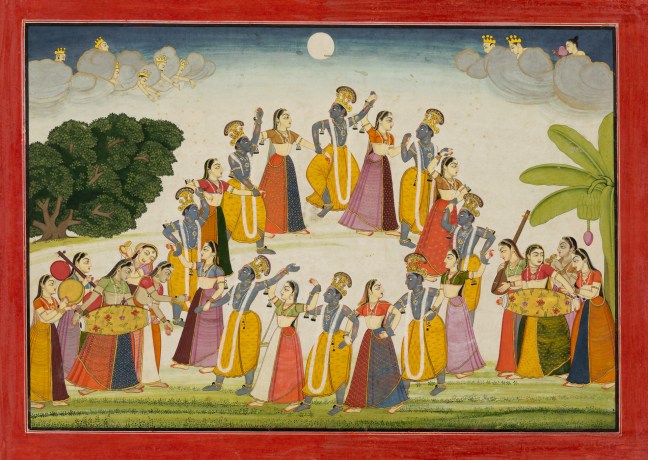
‘The Rasa Mandala Dance of Krishna and the Gopis’ – Anonymous, 1760 – Wikimedia

Arise, O Krishna! This is not a time for discretion. There is enchantment around the lake of experience. Ladies have come with fine clothes and jewellery to be adorned by you. You have to be their cup-bearer, the one presence giving to every forms of experience their gorgeous light. For what is a thought without the cup in which it grows, stands for a second, and disappears? Krishna, you alone are the meaning and beauty attached to every object that inhabit our daily living. So this is not a time to hide, but to reveal, to shed light, to glorify. The Gopis — the milkmaids of the Krishnaite folklore — have come to you in the effervescence of their longing. You are the reason for their looking so beautiful. They come to you to be revealed and embellished by your presence, by the one being that is their most precious jewel. So enter the round, O Krishna, and dance with every one of them.

Give to the thoughts that come and wander for a time in our minds their chamber of peace. Clothe them with clarity and intelligence. Appease the suffering of which they are the vehicle, and offer them the rest they deserve. Don’t let anyone unattended. Not a feeling should be left alone, frightened or sad, without benefiting from your warm embrace. No sensations should come along without your building for them a temple of awareness. Be the one present for all, infallible, unswerving. Should a Gopi be lost in the contemplation of nature, and you are here showering her vision with beauty. You are the noble harmony of every experience, and what confers to the dance of life the sweetest of melodies. And have you noticed, O Krishna, how your absence can throw a shadow of sorrow on every experience that passes unseen by you? And have you witnessed how acute is our longing for you, when you withdraw your loving gaze from the many happenings of our lives?

So now, with flowers in their hair, and boundlessness in their hearts, do the Gopis join in your endless round, O Krishna. You hold everyone, every experience, every object that stands lost and alone, in your loving arms. You create around them an armour of beauty, and clothe them in truth’s brightest apparel. That’s how we find the peace at the heart of experience: by marrying every appearance to the gentle presence that holds them. And that presence is ourself — who we are — now giving shape to every perception, every occurrence, sheltering them in the being that gives them protection and form. That’s how the Gopis are experienced as an emanation of Krishna, and how Krishna is seen to be their primordial cause. So now arise, O Krishna! Truly arise! We have come here in celebration of truth, to contemplate you and be contemplated by you. The set for the dance has been arranged. We have come to you enamoured as humble milkmaids, as the fervent Gopis of your heart.

.

~~~

Text by Alain Joly

Painting by Anonymous (1760-65)

~~~

.

Website:
Raslila (Wikipedia)

Suggestion:
Other ‘Ways of Being’ from the blog…

.
The Greatest Trick

In fact, the understanding of our true nature is the simplest thing on earth. We have to, repeatedly, not be doing anything. The problem is: we cannot help but doing something, hoping something, trying something, anything, to get us where we think we should be. Where we are is never enough; never somewhere we should go to. What we are is not satisfying; we have to attain something that is better, no matter what. Even being, we think that we have to be being it — as if we were not already being. In all analysis, there is in fact such a thing as ‘nothing to do’ in spirituality, but only at the point when we are already not doing anything. If we are doing something, well, then we are doing something. This doing is an expression of our belief in not being ‘there’ yet, in our incompleteness, in our striving to get somewhere, to be someone. Then we have de facto missed all possibility of realisation: for we are already established in doing, in efforting. At this point, it is too late to not be doing anything. We need to revise our judgement.

We have been overtrained in doing. Maybe this doing is in fact what we have become — the essence of our self as a seemingly separate entity. We are born the moment we have the impulse of doing something, of being a doer, a knower. This is our original mistake, what we should never have been doing. We think we have to be somebody; to be nobody is a curse, a shame, an emptiness that we have to fill at all cost, even at the cost of losing ourself. So there is comfort in being a self, a somebody, in achieving something, in doing anything at all. The fact that we should be suffering for it, and be limited by it, well that’s the nature of existence, are we told. We are willing to pay that price for doing something, for being somebody. So let me do. Let me be. That’s how to feel ‘I am’ for now. That’s the story which was handed down to us. That’s how we have been regimented by society. And we have by now rehearsed it long enough, to perfection. We think that we’re not doing it when the doing has already been achieved. We are in fact implementing doing all the time while believing we are not doing it. This is the greatest trick that was ever performed on us.

[…]

A playful reflection into the question of the doer… (READ MORE…)

.

The Falling of a Feather

The most extraordinary thing about this understanding is that nothing needs to perish inside you in order to access your essential being. Not a supposed self that might be getting in the way of your realisation. Not some kind of entity that you painstakingly have to dismantle before you can access the truth of your being. There is nothing to dismantle. Not a single little thing. That apparent, undesirable self is made of the fully formed self that is yet to be revealed. So don’t be fooled. Don’t even be interested in that limited self that you have bought into. There is no such self. Just a few random thoughts hanging around, and being amused by the trick they have played on you. Don’t give that self even a second glance. What kind of spiritual seeker would you be, wasting your precious time and energy on a self that has not even the beginning of a reality? Don’t get involved with any single idea about yourself.

So don’t fiddle with yourself, get busy suppressing, controlling, practicing, re-ordering. No toughness is required. No crime needed here, and not a bit of violence necessary. Only the noticing that the self you imagined yourself to be is not here. Believe me, there is an awful amount of effort that you can spare yourself. The path is already all cleared. Your true nature is in plain view just as you are. See that what you are looking for is no more than the quiet and gentle falling of a feather of awareness on your experience as it presents itself. Nothing more. A non-happening. The letting go of an idea. So be vigilant. Keep your heart open. See how wide your vision is already. Get accustomed to the light of simply being. You may need time to make it your default experience. But don’t forget that non-violence always prevails with God’s grace. But could you expect any less coming from such a loving being?

[…]

Meditating on the gentleness of the recognition process… (READ MORE…)

.

The Straight Story

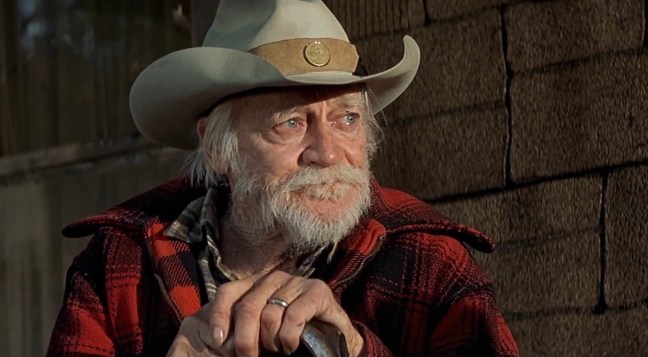
‘The Straight Story’ – by David Lynch (with Richard Farnsworth)

.

When I catch an idea for a film,
I fall in love with the way cinema can express it
.”
~ David Lynch

.

Have you ever seen a film made of love? Well, I have. And no further than this morning. A modest, not very well-known masterpiece by David Lynch, called ‘The Straight Story’. It is based on a true story: In 1994 in the United States, Alvin Straight — an old man — decides to pay a visit to his brother who has just suffered a stroke. They haven’t spoken for ages, out of an old rancour, so he wants to repair and reunite. With a clear mind, he embarks on a 390 kilometres journey from Laurens, Iowa, to Mount Zion in the Wisconsin, but he does it in his own inimitable way. On a riding lawn mower!… With bad hips and two sticks for help, and a refusal of doctors. With a maximum speed of about 8 kms per hour, and a trailer to pull. And with love as a luggage.

As often when it comes to starting a spiritual journey, it all begins with a fall and the subsequent realisation that something needs to be changed. And in order to make our quest a successful one, we have to make the journey just as important as the destination. And this is what Alvin does. His trip becomes an occasion for adventure. Everything he meets, he does with the eyes of wonder, and the now is the only time in which his travel takes place. Everything is important. Everything matters. The journey is not just a means to an end. We don’t reach infinity step by step anymore than we meet eternity in time. Every meeting with truth is made in truth’s home. And every encounter with our true nature is made within, in and as our innermost sense of being. No matter the extent of our understanding, in order to be, we have to be being. And Alvin, clearly, knows it all too well.

[…]

Some reflections on seeing this film by David Lynch… (READ MORE…)

.

Lectio Divina

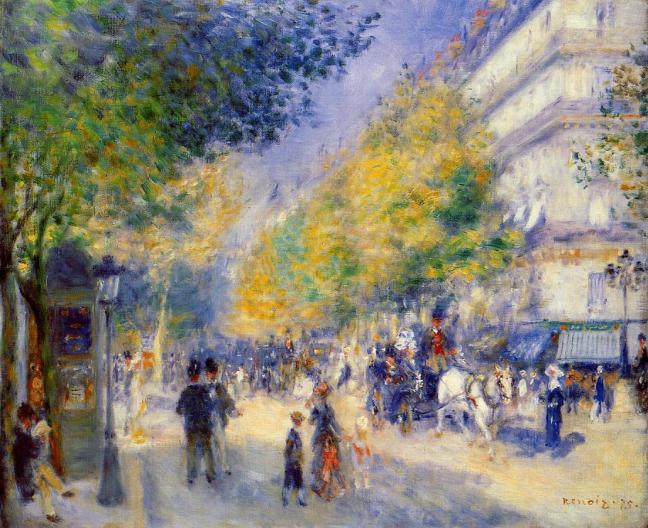
‘The Great Boulevards’ – Pierre-Auguste Renoir, 1875 – WikiArt

I have been feasting on some words recently. I was sitting leisurely on a cafe’s terrace, watching life coming and going, browsing through my phone with some ideas in mind. And there it came, and took me by surprise, like a koan suddenly unveiled, a pathway revealed without my knowing. There it came, taking the form of one single, simple phrase that seemed innocuous, by Saint Augustine:

Is any man skilful enough to have fashioned himself?
~ Augustine of Hippo

And that emptied my mind. It made me sink into no content, aware of all that is now; my self suddenly made a container for life. We all feel that we are so smart and powerful, or so stupid and powerless. That we have made ourselves what we are, and feel in consequence the pride or shame of it. That we have destroyed, or elevated ourselves. That we are responsible for our happiness, our success, our failure. That we have moulded our thoughts and actions, wilfully designed them. That our beliefs are believed. Our thoughts thought. Our words uttered by a ‘somebody’ here, inside the skull. But these are all beliefs, and beliefs are flawed from the start. Beliefs need a believer to believe them, and look as you may, you will never find such one behind your deeds. For the simple reason that there is no self behind our selfing. We have therefore never been in charge, never been truly responsible for collecting what we have collected, for misusing what we have misused, and for making the mistakes that we have made. Except in hindsight, in thoughts and beliefs, in cascades of randomly built illusions and memories in which we are caught and made blind. And these are what we have busied ourselves managing and arranging into a sensible self. And that self has gotten in the way of our living harmoniously.

[…]

The ‘Lectio Divina’ of a quote by Augustine of Hippo… (READ MORE…)

.

peace (noun)

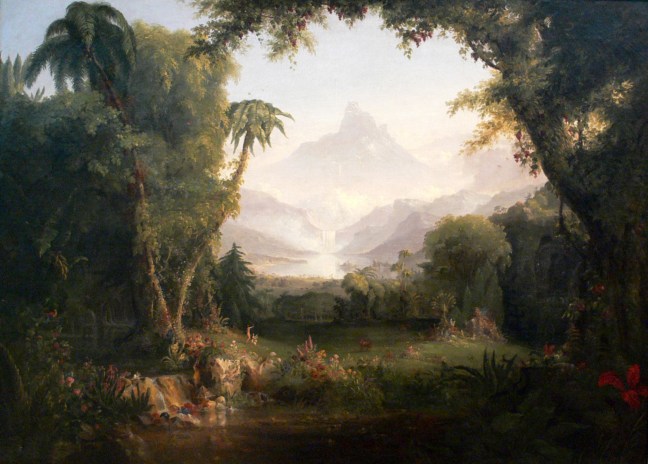
‘The Garden of Eden’ – Thomas Cole, 1828 – WikiArt

It is always revealing to reflect upon a certain word in the context of spirituality, and see how it came to appear and be chosen. Why this one and not another word. There are many synonyms to the word ‘peace’, amongst which tranquillity, calmness, or quietness, which all seem better suitable to an entity or an object than peace. Peace is profound. It stands on its own. Just its pronouncing deepens you, fills you with its referent. ‘Peace’. The word takes you somewhere else, makes you leave your habitual field of suffering, desiring, projecting, coping, aiming, all that renders life a battlefield. ‘Peace’. Peace is a mantra in itself. A prayer. An occasion to go within. It has the automaticity of something fundamental, inescapable, and the simplicity of something that everybody knows or has experienced.

The word ‘peace’ comes from the mid-12th century root ‘pes’, meaning ‘freedom from civil disorder’ or ‘absence of war’. Likewise, in the dictionary, the first meaning for peace is stated as ‘freedom from disturbance’. Peace is always negative. It is here when something else has receded or died down. It is revealed through an absence. After all, in common parlance, the word ‘peace’ has always been used to refer to the state of things that exists in the absence of conflict or disorder. The word was almost invented to refer to this moment when a war ends and one can return to the state of affairs that existed before the conflict started. It is never a new state or occurrence. It is what is usually here in the background and is disrupted by the incursion of movement, conflict, war, thought. The tiniest thing, as long as you believe it to be you, will disrupt your peace. Peace is a return. A recognition of something known but forgotten for a time, or rather eclipsed by the incursion of time. Peace is something that is always here in the background, waiting patiently for your return. Our mind as ego is the disruptive factor, the war in which we have decided to engage, and found ourselves caught and lost. Make it end and peace will come automatically. It is not a new state invented, but the pre-existing state of your deepest self as being, which only a quietening of your wrestling with the objective world will make apparent. Peace is the very foundation of your self. It is the cornerstone of the edifice of life, as is easily seen in nature, which seems to have peace as its very fabric.

[…]

An exploration of the meanings behind the word ‘peace’… (READ MORE…)

.

Where Eternity Hides

‘Daoist immortal Han Xiangzi’ – Zhang Lu, early 16th century – Wikimedia

I think that our search for the ultimate could find some relief in giving attention to what is small, unnoticed, humble. All the things unremarkable, unassuming, that we pass in life without a glance. You know these moments when we sit down doing nothing. All these things easy, like resting, breathing, eating, sleeping, that can be achieved without our forceful participation. These moments or actions are closer to god than we may think. They live in a grey area where they flirt with the non-objective and slip out of our attention to hide in the sublime, to rest in the blissful, unattached, forgotten. Their presence is made absence, like for the space between two thoughts. But don’t let them leave you. Strive to own them. This is where eternity hides. This is why presence is so much emphasised in spiritual matters; why, in Zen practice, students are encouraged to take pride in habitual, so-called boring or unimportant activities like washing dishes, serving tea, or chopping wood. Forget all your achievements of glory. Put aside your pointed quest for the sublime. Your selfish ride towards the selfless. Go for the minute, the nanoscopic. Take interest in the small and the ordinary. Have a passion for the shallow, like the sacred lotus does.

After all, god has made beauty the most accessible thing there is. And love is so close and intimate that it has been described to be nothing but our very self or being, our natural if forgotten identity. Presence is the most unassuming thing there is, almost as to be nothing. Happiness never comes when invited or provoked, and real beauty has never been seen showing off. But don’t be deceived here. Unassuming doesn’t mean not assuming. And what appears to be nothing can be revealed as the most blatant ‘something’ there is. All spiritual endeavour really boils down to seeing the unseen, and experiencing the non-objective. Your sense of simply being is the most shy presence you will ever encounter in your life, and yet you will find nothing more attractive than its discreet and humble presence. There is glory in simply being, without going for qualities, qualifications, objects, pretence. Silence is louder than noise, and truth more clamorous than any lie can be.

All that religions and spiritual traditions ever do is to proclaim this presence that is already here amongst us, as our very being, and to point towards all that is hiding it from our gaze. Simple-minded by nature, the mind has chosen to ignore it, entrenched as it is in all things objective. It has deemed it insignificant. But the so-called insignificant is simply where the mind cannot go, which is literally everywhere except in objective experience. That leaves for quite a wide field in the unknown, in the hidden, discarded as being too unremarkable to be made a conscious thing. This misjudgment is our mistake. This is our sin. For god is hiding in the small and the insignificant, in everything unremarkable to the mind. But it is not on account of its small size or nature that this presence is unreachable to the mind, but rather that the mind, as the belief in being a separate self, has taken all the place and hides the infinite from our eyes. Just as time, as an idea born of the mind, has taken all the place and veils eternity. This is the extent of the mind’s indulgence. But its conscious retiring or humbling will reveal the sheer glory of all that was left in the hidden. And in doing so will lift the veil on the real nature of our self. God’s being revealed.

.

~~~

Text by Alain Joly

Painting by Zhang Lu (1464–1538)

~~~

.

Website:
Zhang Lu (Wikipedia)

.

Other ‘Reveries’ from the blog…

.