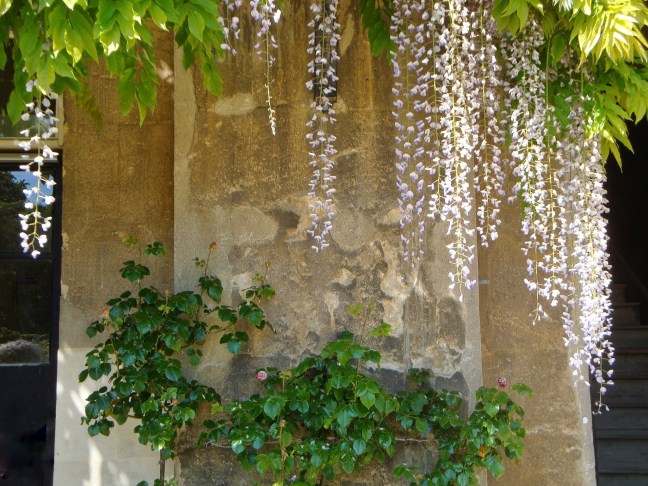
A Cathedral of Grace

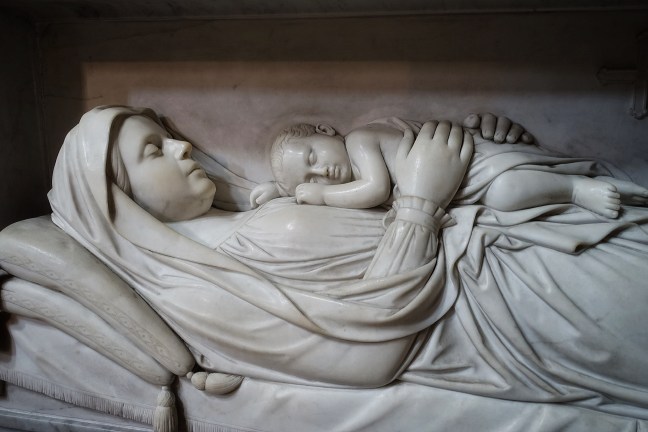
We always want to be at a distance from experience. In fact, we keep behind, we don’t get involved — at least not entirely. We are aloof. We keep experience at bay. That allows for a certain safety, we think. But that distance is the distance we keep from ourself. This is the chasm we have opened, through which we have numbed ourself. So we had to fill this chasm with a belief in separation, with the idea of a being separate from other beings and things. In this chasm is born our loneliness, and the vast field of our search for happiness. This search is but our desperate attempt to fill the gap we have created and nourished. And this chasm is how we have been made to think ceaselessly about ourself. How we have been made to judge, hope, project, regret, complain, expect, believe. These are — we think — the measure of our control in life. But they are in fact the loss of our innocence. For this chasm or distance is what our suffering is made of. It is the way we have found to not be wholly being — being appearing to be a dangerous flame, of a consuming nature. So we have stepped safely aside. In this keeping away from the flame, in this refusal to die, is our chasm, our whole precipice of pain.

But this flame of being is in fact our fountain of peace. It is what makes us present, uncompromisingly one with experience, with nowhere to go but ourself, and nothing to be but that which we already are. In this place of being, we are not allowed distance, and time is proscribed. There is nowhere to go in being. Nothing to be but being. This flame of being will cancel the distance that was your safety. It will devour you, digest all your hopes and projections, burn your regrets, crush your fear, and debunk all idea of separation. You are thus crashing in being, and are consumed in its flame. Experience is now revealed to be nothing but the experiencing of your self within your self. You are given no room for separation, and are discovering yourself to be the sublime core of all that can possibly exist. You may look all you want, you won’t find yourself anywhere, for the simple reason that there is no location for you to be in. And you will find no space for a self to have experience, for the experiencer has dissolved in experiencing. This merging of your self with experience is how suffering is made impossible. This is how you are made present here and now, one with everything and everyone. And this is how you are made to feel in awe with what you see, hear, and touch. You are ravished to just be, and are suddenly placed at the teeming heart of your self, unable to not fully, gorgeously be. You are entering a cathedral of grace, and are placed in a well of light, amongst songs of glory.

.

~~~

Text and photo by Alain Joly

~~~

.

Suggestion:
Other ‘Ways of Being’ from the blog…

.
A Course in Abandonment

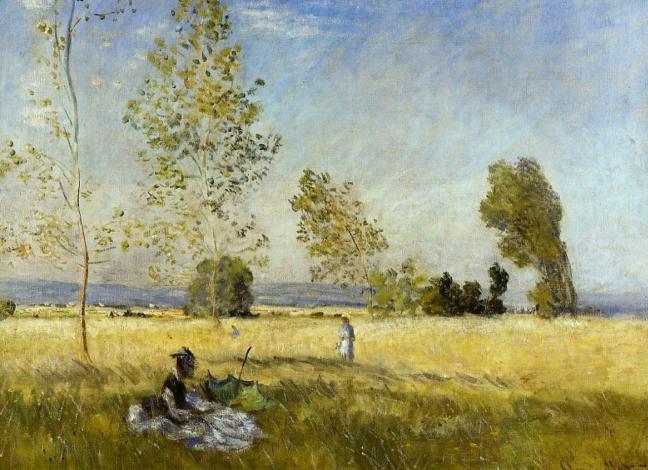
‘Meadow at Bezons’ – Claude Monet, 1874 – WikiArt

.

You only have to receive everything and let it happen.
Everything is directing you, straightening you out, carrying you.
Everything is a banner, a litter, a comfortable vehicle.
Everything is God’s hand; everything is God’s earth, air and water
.”
~ ‘Abandonment to Divine Providence’ (Muggeridge)

.

Truth is its own advocate. No matter where or when or in what obscure circumstances an expression of truth has been composed, it will find its way out into the light. This is what happened to a small book allegedly written by the French Jesuit priest Jean-Pierre de Caussade (1675-1751). Written in the first half of the eighteenth century, it remained unpublished until 1861, before being praised for its quality and lyricism, and appeared in multiple editions over time. It is known by the title ‘Abandonment to Divine Providence’. Jean-Pierre de Caussade was the author of many letters of spiritual instruction, and some of them appear in his book along with a treatise in self-abandonment. This latter text particularly ignited attention and was in style and quality so far removed from the other ‘letters’ that it became apparent that the author could not have written it.

[…]

Discover this eighteenth century treatise on abandonment… (READ MORE…)

.

Treasures of Grace

In Basilica di Santa Maria del Popolo, Rome

.“The heart is but a small vessel;
and yet dragons and lions are there,
and there likewise are poisonous creatures
and all the treasures of wickedness;
rough, uneven paths are there, and gaping chasms.

There also is God, there are the angels,
there life and the Kingdom,
there light and the apostles,
the heavenly cities and the treasures of grace:
all things are there.”

~ Macarius of Egypt (Homilies 43:7)

.

~~~

Quote by Macarius of Egypt (c. 300-391)

Photo by Alain Joly

~~~

.

Bibliography:
– ‘Fifty Spiritual Homilies of Saint Macarius the Egyptian’ – by Macarius of Egypt – (Aeterna Press)

Website:
Macarius of Egypt (Wikipedia)

Suggestions:
Sayings of the Church Fathers
Beauty in Essence (other pointers from the blog)

.

The Graceful Way

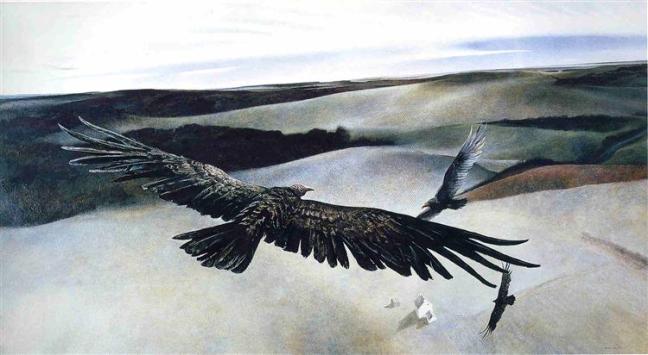
‘Soaring’ – Andrew Wyeth – WikiArt

.

I would like to live that way.
In the graceful way
Of a wild animal.
Attentive, on the watch,
Present — Always.
Present in an absolute way.
Which means wholly present.
Not in a sneaky way.
But elegantly, naturally.
In a princely way.
This is what presence is about.

And I want to be wholly myself.
To eat when I eat.
To watch when I watch.
To rest when I rest.
To abide in the peace of just being.
What else is there to be done?
To add anything to the experience
Of being is to sully it.
A wild animal is incorruptible.
It cannot even conceive
Of wasting presence.

I would like to be never yearning
To change my experience.
Such idea is unknown
To a wild animal — This is called
Silence; Humility; Vulnerability.
Each has being as its home,
And abides in changelessness.
Being has the supreme advantage
Of being always only itself;
Owned by a strange necessity.
Ah! — To live as king. As eagles do.

.

~~~

Text by Alain Joly

Painting by Andrew Wyeth (1917-2009)

~~~

.

Website:
Andrew Wyeth (Wikipedia)

Suggestion:
Voices from Silence (other poems from the blog)

.

Diary of a Country Priest

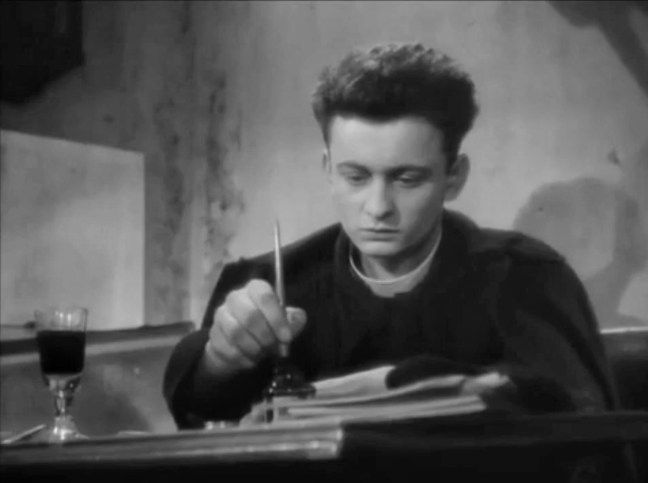
’Diary of a Country Priest’ – Robert Bresson – (With actor Claude Laydu)

.

I try to catch and to convey the idea that we have a soul
and that the soul is in contact with God.
That’s the first thing I want to get in my films
.”
~ Robert Bresson.

.

Robert Bresson is a unique film maker in the history of cinema. He has developed a very personal way of filming that wholly tends towards one thing only: conveying truth. This is achieved by means of the right use of cinema language. As the French master said in the newspaper ‘Libération’: “The true language of cinema is that which translates the invisible. I am trying to convey feelings rather than facts or actions. I am trying to substitute an internal movement for an external movement.” This is particularly well shown in his 1951 film ‘Diary of a Country Priest’, where Bresson, slowly, relentlessly, and above all with simplicity, is scanning the interior life in everything, in the dialogues, the lights, the camera movements, the acting. But this simplicity is here to serve an utter precision. The film is crafted. A skilful surgeon is here at work. And we make silence.

‘Diary of a Country Priest’ tells a simple story based on the novel of the same name by Georges Bernanos, published in 1936. A young priest arrives in his first rural parish where he and his faith will be met with misunderstandings and challenges, both from his parishioners and his declining health. The film opens with these simple lines in his diary: “I don’t think I’m doing anything wrong in writing down daily, with absolute frankness, the simplest and most insignificant secrets of a life actually lacking any trace of mystery.” In the first scene, we see the young priest appearing behind the bars of a gate, signifying that we are about to see the story of an imprisonment. The film is the description of his total dedication to his duty, which will prove to be an ordeal. We are always in a prison, when we are locked in the belief in being somebody.

[…]

Learn more about this movie by French director Robert Bresson… (READ MORE…)

.

The Seagull

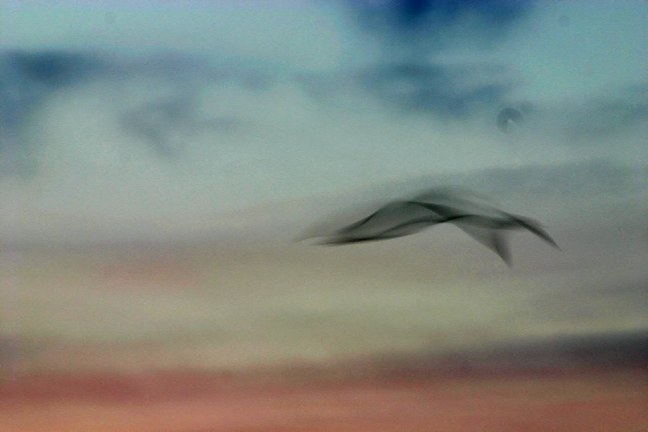
Photo by MaxNegro on Foter.com / CC BY-SA

.

It stopped my line of thoughts:
A simple seagull
Flying through the courtyard,
Both wings elegantly spread

It taught me of pure grace
And effortlessness,
And brought within its trail 
The simple taste
Of bliss — of what is given 
Down here
Not to a deserving one
Or any special being
But to only a bird passing by
In the nonchalance of a fleeting moment;
Almost non existing,
A ghost within a ghost

It taught me of the ease of being
And the silence contained
In a movement unfettered.
Could I ever feel such joy?
Could I ever be brought down
To my knees
And let myself drift
In the same infinite gift
Of being.
Could I too spread my wings
And be given
Such a splendid death

It taught me of flow and pride
And of oneness too,
Of how the bird — any bird
Any small creature,
Is but a king in its kingdom,
And how a glance
Though caught elusively
Immediately raised me
To the rank of prince,
And made me feel
My own seagull reality,
My own soaring into the sky

.

~~~

Text by Alain Joly

~~~.

.

Suggestion:
Voices from Silence (other poems from the blog)

.

Grace

“If you seek the grace of God
with your whole heart,
then you may be assured
that the grace of God
is also seeking you.”

~ Ramana Maharshi

.

~~~

Quote by Ramana Maharshi (1879 – 1950)

Photo by Alain Joly

~~~

.

Bibliography:
– ‘The Collected Works of Ramana Maharshi’ – (Sophia Perennis et Universalis)
– ‘Be As You Are’ – by Ramana Maharshi (Edited by David Godman) – (Penguin Books)

Website:
Ramana Maharshi (Wikipedia)

Suggestion:
Rendezvous with Ramana, Part II (Homage to Ramana Maharshi)

.